
Key Takeaways
- The Thought Leadership Drumbeat runs a weekly LinkedIn POV cadence against one buying committee, building memory through repeated arguments from a named expert over eight to twelve weeks.
- The Proof Loop targets late-stage shortlisting with monthly customer evidence artifacts broken into five-post sequences, measured by opportunity stage progression against a control cohort.
- The Executive POV Series uses 60- to 90-second mobile-native video paired with creator collaboration, matching how mid-sized B2B buyers actually research on mobile 4.
- The Dark Funnel Capture instruments around unattributed community influence through SME participation in 30 to 60 channels and free-text self-reported attribution on inbound forms.
- The Retargeting Ladder sequences paid social across four first-party engagement tiers, reporting cost per matched-account meeting rather than cost per click.
- The Employee Advocacy Engine assigns 15 to 40 internal voices a beat aligned to their actual job, with weekly draft hand-offs that preserve individual voice.
- The Community-Led Demand Play operates a small invite-only community of in-target practitioners, feeding sourced opportunities and content ideas to public campaigns simultaneously.
- The Event Amplification Stack treats field events as content production sets, generating 30 to 60 raw assets across two days for eight weeks of structured release.
- The Always-On AI Production Loop uses AI-assisted drafting and assembly under human approval gates, letting teams double campaign output at constant headcount 12.
What separates a pipeline-grade social campaign from content noise
Most B2B social campaigns fail the pipeline test before a single post goes live. They optimize for reach, engagement rate, and follower growth—metrics that move independently of opportunity creation. A pipeline-grade campaign starts from the opposite end: a defined buying committee, a single buying stage to influence, and a measurement loop that ends in a CRM stage change.
The behavioral evidence behind that inversion is unambiguous. Business buyers complete roughly 57% of their purchase process before contacting a supplier, according to Google's B2B Digital Evolution research on enterprise purchasing behavior 6. Roughly 49% of B2B spending now moves through online channels 5. About 42% of decision-makers report considering providers after seeing ads across search, online video, and apps 4. And in leading B2B organizations, mobile drives or influences more than 40% of revenue 7. Each figure describes the same shift: buyers self-educate on the surfaces social campaigns occupy, then arrive at sales with a shortlist already half-built.
That reality dictates the work. Campaigns aimed at pipeline have to land where the unaccompanied research is happening, carry assets that move a known buying stage forward, and feed signal back into the CRM cleanly enough that revenue teams can act on it within hours, not weeks.
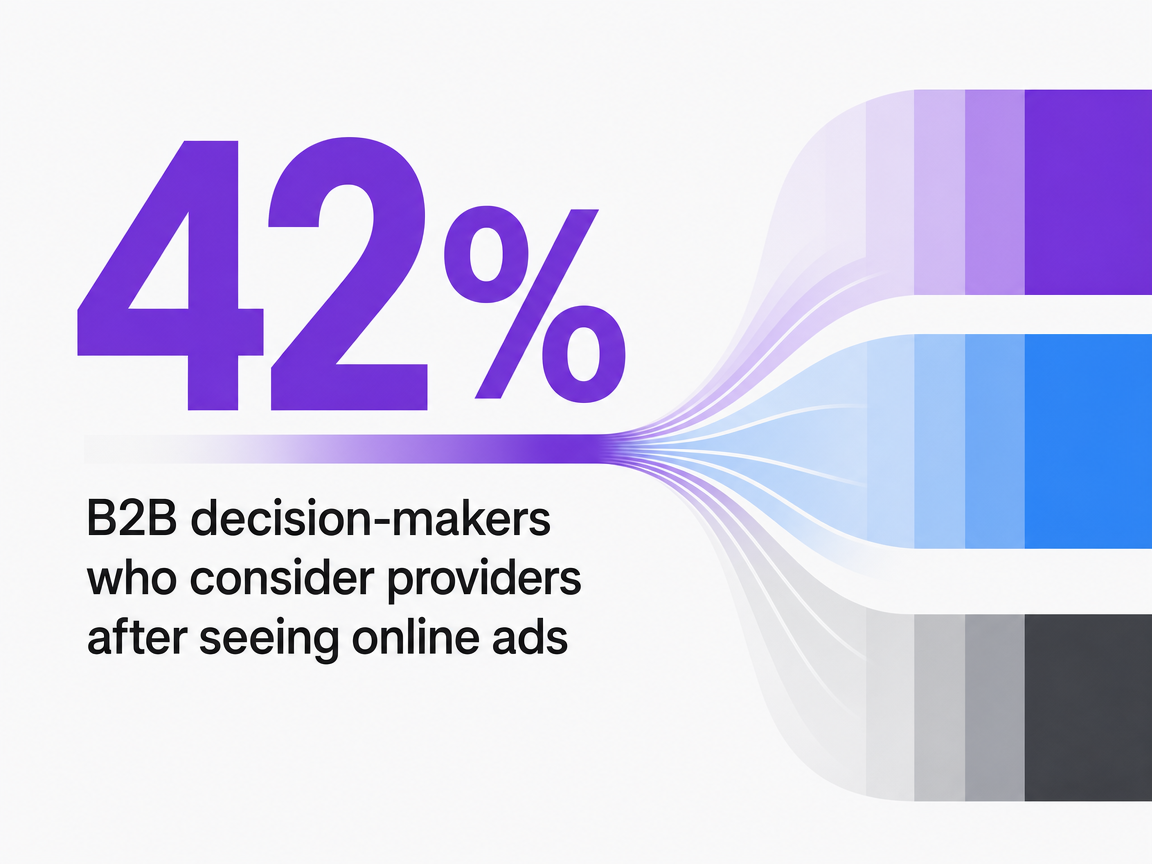 B2B decision-makers who consider providers after seeing online ads
B2B decision-makers who consider providers after seeing online ads
The shared architecture beneath every campaign that follows
Every campaign in the portfolio below runs on the same five-part skeleton, even when the surface assets look nothing alike:
- A named buying committee—not a persona document, but the actual titles a deal closes against.
- A single buying stage the campaign is built to influence: awareness, evaluation, late-stage validation, or expansion.
- An anchor asset matched to that stage—an executive POV, a customer proof artifact, a teardown, a benchmark.
- A multi-touch sequence that distributes the asset across owned posts, employee surfaces, and paid amplification, with LinkedIn carrying the heaviest weight given its dominance in B2B social initiatives 1.
- A measurement loop that ties engagement back to CRM through UTM conventions, form-fill source fields, and self-reported attribution.
Forrester's operational research on B2B social programs reinforces the same pattern: audience prioritization, messaging development, resource allocation, measurement, and cross-functional social operations separate programs that produce revenue from programs that produce dashboards 13. The nine examples that follow are variations on that spine, not departures from it.
Test Social Campaigns That Drive Qualified Pipeline
Experience data-backed campaign execution and measure pipeline growth impact before committing to a platform subscription.
Nine campaign structures B2B teams can adapt this quarter
The Thought Leadership Drumbeat: LinkedIn POV series tied to a buying committee
The Thought Leadership Drumbeat is a weekly LinkedIn cadence built around one buying committee and one contested point of view. A head of platform engineering at a 500-person SaaS company is not the same audience as a VP of revenue operations at a private equity portfolio company, and the Drumbeat refuses to treat them as the same feed. Each week the campaign publishes two POV posts from a named subject matter expert, one carousel that argues a position against a common industry default, and one comment-thread prompt designed to surface objections from the target titles.
The asset is opinion, not summary. Posts open with the position, name the counterargument, and close with the operational consequence for the buyer's team. The sequence runs eight to twelve weeks against a single committee so the same titles see the same author argue a coherent thesis multiple times, which is how memory forms on a noisy feed. Comments from in-target accounts feed a weekly review with sales, and engaged accounts route into a named list for outbound.
Measurement ties engagement back to CRM through company-level matching, not click attribution. The KPI is meetings sourced from accounts in the target list that engaged the Drumbeat at least twice in a rolling 30-day window.
The Proof Loop: customer-evidence series engineered for late-stage influence
The Proof Loop addresses the buying stage where deals slip: the silent shortlisting that happens after a demo but before procurement. Roughly 57% of the B2B purchase process is completed before a buyer contacts a supplier, according to Google's enterprise purchasing research 6, which means late-stage buyers are still researching even when sales thinks the conversation is active.
The campaign produces one customer evidence artifact per month—a teardown of how a named customer solved a specific operational problem, with numbers the buyer's CFO can defend. Each artifact is broken into a five-post sequence on LinkedIn:
- The headline result
- The before-state
- The implementation choice
- The unexpected obstacle
- The twelve-month outcome
A short video clip of the customer practitioner runs alongside the written sequence.
The Proof Loop is not a case study refresh. It targets accounts already in active opportunities, using paid amplification against a matched audience list synced from the CRM. Sellers send the relevant sequence into deals stuck in evaluation. The measurement loop tracks opportunity stage progression and close rate for accounts that engaged the Proof Loop content during evaluation, compared against a control cohort of opportunities from the same source that did not.
The Executive POV Series: founder- and operator-led video with creator collaboration
The Executive POV Series puts a founder, CRO, or domain operator on camera in 60- to 90-second mobile-native video, distributed primarily through LinkedIn and YouTube Shorts. The format matters because 70% of mid-sized B2B buyers watch product videos on mobile during their research 4, which means desktop-framed talking-head clips lose the audience the campaign is built to reach.
Each video follows a four-beat structure:
- A hook that names a specific operational failure mode
- A POV that argues against the conventional fix
- Proof from a customer or operating metric
- A CTA pointing to a longer asset
The series runs in pairs—an internal executive plus a guest creator or industry practitioner with credibility in the buyer's domain. Combining video with creator collaboration produces stronger full-funnel results than executive video alone 3.
Production is batched. One filming day per month yields eight to twelve clips, which the campaign releases on a twice-weekly cadence. The creator partner films separately and the two sides are edited into split-screen exchanges or sequential POV-and-response posts.
The measurement loop tracks two signals: video completion rate by target account, and a self-reported source field on inbound demo requests. When a buyer cites the executive by name in that field, the campaign is doing what it was built to do.
The Dark Funnel Capture: turning unattributed community signal into sales conversations
Most pipeline that social influences never shows up in attribution because the relevant conversations happen in places UTMs cannot follow—Slack groups, private LinkedIn DMs, podcast comment sections, and peer networks. Forrester now ranks social as the second most meaningful information source for B2B buyers, trailing only generative AI search 2, and a large share of that influence is unattributed.
The Dark Funnel Capture campaign accepts that reality and instruments around it. The team builds a monitored list of 30 to 60 communities where the buying committee actually talks. A designated SME or executive participates weekly—answering questions, posting teardowns, never pitching. A parallel listening layer flags mentions of competitive evaluations, RFP language, and category-defining problems.
The capture mechanism is a self-reported attribution field on every inbound form: "How did you first hear about us?" Free-text. Sales reviews that field daily and routes community-sourced leads to the SME who participated in that channel, not to a generic SDR queue.
The KPI is sourced opportunities tagged "community" or "peer referral" in the CRM, segmented by which monitored channel produced them. Channels that produce zero opportunities in two quarters get cut.
The Retargeting Ladder: paid social layered on first-party engagement signals
The Retargeting Ladder turns paid social into a sequenced response to behavior, not a frequency cap exercise. The campaign defines four engagement tiers from first-party data:
- Visited a product page
- Downloaded a teardown
- Attended a webinar
- Progressed past a pricing page
Each tier sees a different creative concept, a different offer, and a different bid.
- Tier one sees a category-level POV from the Executive Series.
- Tier two sees a Proof Loop artifact matched to the topic of the asset they downloaded.
- Tier three sees an objection-handling carousel built from sales call transcripts.
- Tier four sees a direct meeting offer with the named AE on the account.
The creative is built once and assembled into tier-specific variants. Audiences sync nightly from the CRM and the website, with suppression lists for closed-won and closed-lost accounts in the last 180 days.
The measurement loop reports cost per matched-account meeting, not cost per click. Spend reallocates monthly toward the tier producing the lowest cost per meeting and away from tiers where frequency exceeds eight without producing engagement.
The Employee Advocacy Engine: structured posting from sellers, CS, and SMEs
The Employee Advocacy Engine extends the Thought Leadership Drumbeat through 15 to 40 internal voices, on a structured schedule, with the same editorial guardrails as the corporate handle. The campaign is not a generic "share company posts" program—those produce identical reposts and feed-fatigue. The Engine assigns each participant a beat aligned to their actual job:
- An AE posts deal-pattern observations
- A CS lead posts onboarding learnings
- An SME posts technical teardowns
The operational core is a weekly content meeting that hands each participant three to five draft post options matched to their beat, which they edit into their own voice before publishing. Forrester's success-factor research identifies resource allocation and cross-functional social operations as foundational separators of programs that produce revenue 13, and the weekly meeting is what makes the Engine survive past month three.
Measurement tracks two layers: aggregate reach into target accounts, and individual conversion to sales conversations. AEs whose posts produce meetings get more support; those whose posts produce only likes from peers get rerouted to a different beat or removed from the program. The KPI is meetings sourced from advocate-led posts, attributed by recipient self-report.
The Community-Led Demand Play: private channels feeding sourced opportunities
The Community-Led Demand Play operates a small, owned community—an invite-only Slack workspace, a peer council, or a curated LinkedIn group of 200 to 800 in-target practitioners. The campaign exists to deepen relationships with accounts the team already wants, not to grow a list.
Membership is screened by title and account fit. Weekly programming includes one practitioner AMA, one operator benchmark post, and one structured discussion thread tied to a current category question. A dedicated community lead—often a former practitioner from the buyer's role—facilitates conversation and surfaces buying signals to sales without breaking the room's trust.
The content engine pulls in two directions. Community discussions feed the public campaigns: a thread about a common implementation failure becomes a Proof Loop artifact or an Executive POV video. Public campaigns route in qualified members: high-engagement accounts from the Drumbeat receive curated invitations.
The measurement loop tracks sourced and influenced opportunities from community members, segmented by tenure. Members in the community for more than 90 days should produce a measurably higher close rate than matched non-members. If they do not, the programming is wrong and the campaign needs a content reset, not more members.
The Event Amplification Stack: turning a single field moment into eight weeks of social
The Event Amplification Stack treats a field event—a customer summit, an industry conference booth, a closed-door dinner—as a content production set, not a standalone moment. Enterprise teams invested in experiential marketing at higher rates than the broader B2B cohort 11, which makes the cost-per-content economics of an event uniquely favorable when the campaign captures the right assets.
Pre-event runs four weeks: speaker POV posts, attendee shortlists, a public agenda teardown, and direct outreach from the executive who will be on site. The campaign builds anticipation against a named target account list, not the general public.
During the event, a two-person capture team films short-form interviews with customers and category practitioners, photographs whiteboard sessions, and clips speaker moments. Output target: 30 to 60 raw assets in two days.
Post-event runs four weeks of structured release:
- Week one publishes the highest-impact customer clips.
- Week two releases speaker POVs as standalone posts.
- Week three drops a benchmark or survey gathered on site.
- Week four closes with a synthesized POV piece from the executive about what the event revealed.
The KPI is meetings booked with target accounts who engaged at least three pieces of event content across the eight-week stack.
The Always-On AI Production Loop: weekly campaign cadence without a bigger team
The Always-On AI Production Loop is what makes the previous eight campaigns survive contact with a real content org. Most in-house teams cannot staff nine concurrent campaigns at full production quality. The loop uses AI-assisted production to handle drafting, variant generation, asset resizing, and first-pass scheduling, with human approval gates on every published unit.
The investment shift behind this is concrete. Among technology marketers planning budget increases, 51% are increasing investment in AI-powered marketing tools while 31% are increasing paid media 12—a clear signal that production capacity, not media weight, is the lever teams are pulling to scale output. With 49% of B2B spending now moving through online channels and 68% of buyers reporting they will increase digital use 5, the volume requirement is not optional.
Operationally, the loop runs on a weekly cadence:
- Monday: a planning pass identifies the week's anchor assets from the active campaigns.
- Tuesday and Wednesday: AI-assisted drafting produces post variants, video cutdowns, and carousel layouts, each routed to the named owner—an executive, an AE, a community lead—for edit and approval.
- Thursday: paid and organic schedules are loaded.
- Friday: a review pass reads CRM signal from the week and adjusts next week's plan.
The human role concentrates where it matters: judgment, voice, and approval. Drafting and assembly compress. The KPI is campaigns shipped per quarter at constant headcount, paired with sourced and influenced pipeline per shipped campaign. A team running four campaigns at high quality should ship eight at the same quality once the loop is in place, without adding writers.
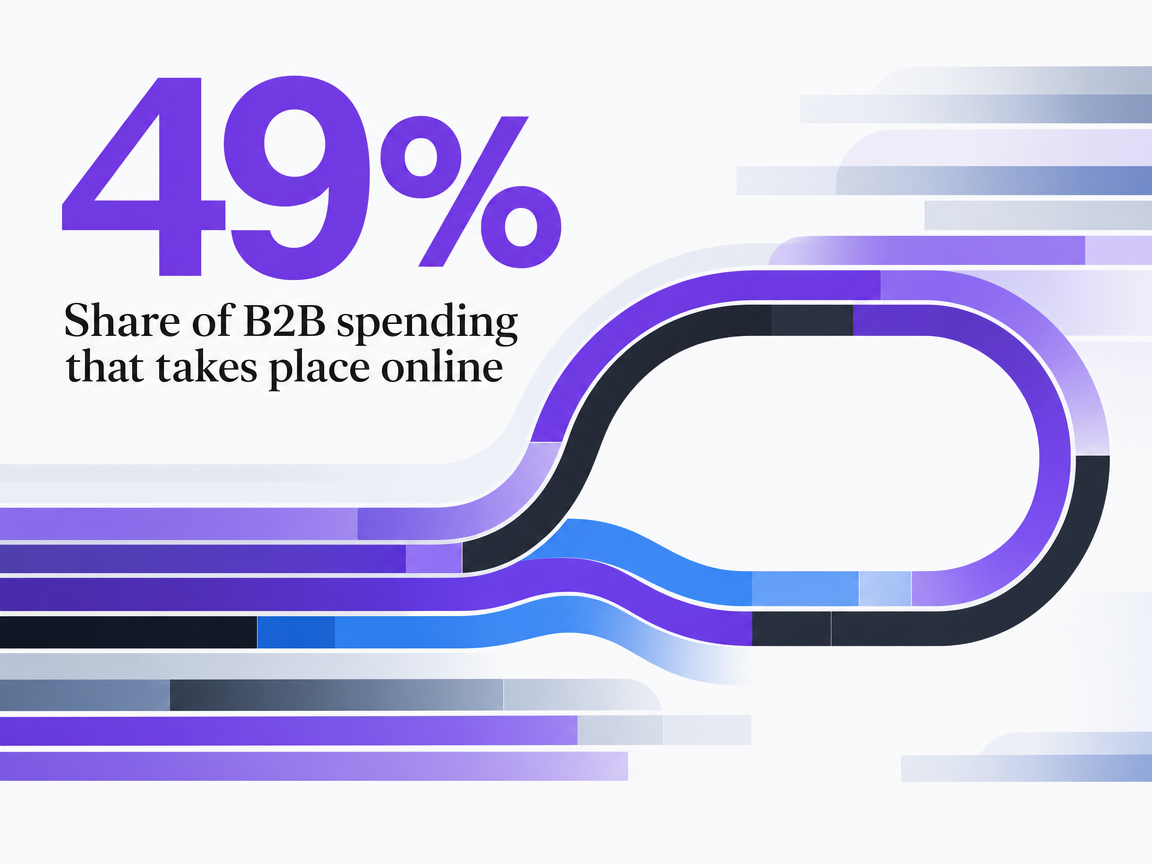 Share of B2B spending that takes place online
Share of B2B spending that takes place online
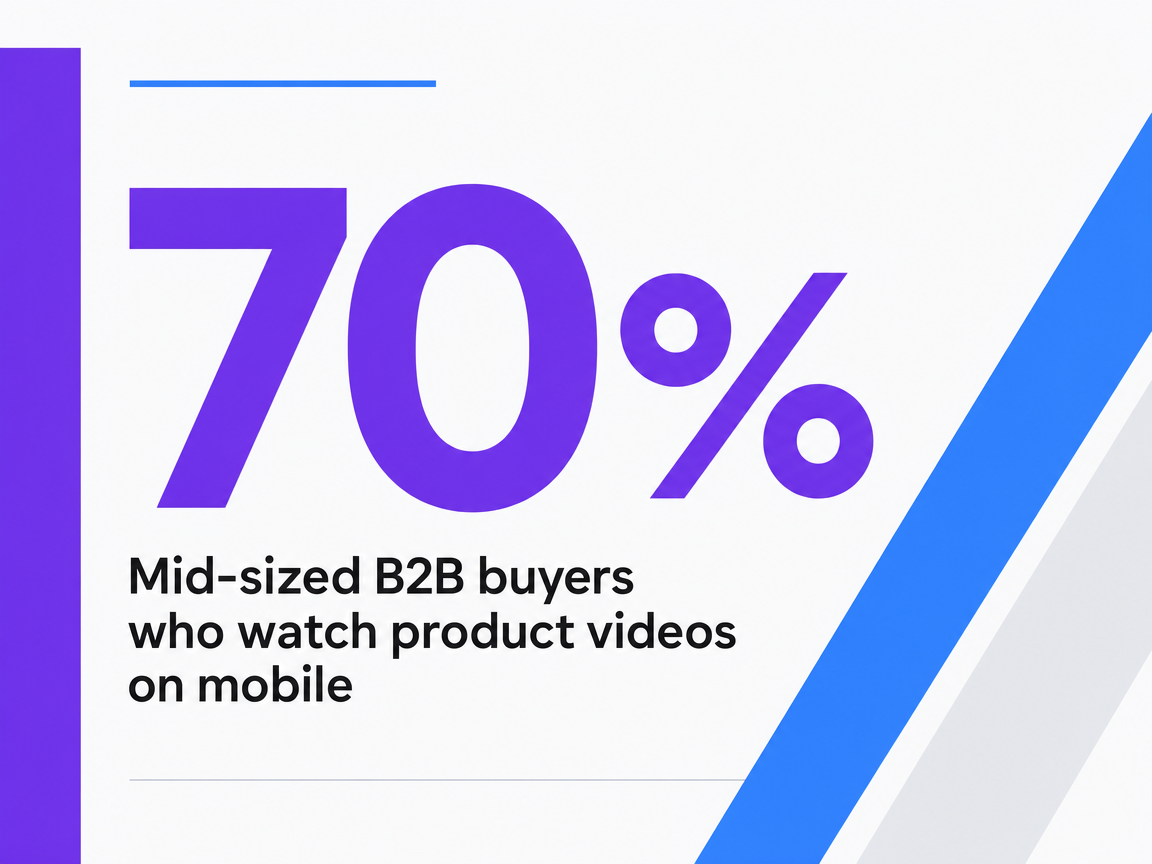 Mid-sized B2B buyers who watch product videos on mobile
Mid-sized B2B buyers who watch product videos on mobile
If you manage multiple locations or branches: a different production math
A note for readers running social across a portfolio of locations, branches, or franchised practices: the campaign math changes before the strategy does. A single corporate team producing one Drumbeat and one Proof Loop becomes a fundamentally different operation when twelve regional offices each need a localized variant, with the local market manager named in the post and the local customer cited in the proof.
The variable stack is straightforward to model without inventing figures. Locations multiplied by campaigns per quarter, multiplied by hours per localized variant, sets the production load. A four-location operator running two campaigns a quarter at six hours of localization per variant carries 48 production hours; a 40-location operator at the same cadence carries 480. The work scales linearly while the headcount budget does not.
That gap is why 51% of technology marketers are increasing investment in AI-powered marketing tools rather than matching production demand with hires 12. For multi-location teams, the Always-On AI Production Loop stops being optional. Localized variants—name swaps, regional proof, market-specific CTAs—are exactly the work AI-assisted production handles cleanly under human approval.
See How Top Teams Build High-Impact Social Campaigns for Pipeline Growth
Request a tailored walkthrough of data-backed social campaign frameworks proven to accelerate pipeline development for enterprise and agency-led initiatives.
The measurement layer: CRM fields, UTM conventions, and the social-to-opportunity loop
Most B2B social programs fail measurement long before they fail strategy. The campaigns above only produce defensible pipeline numbers when three pieces of CRM and tagging infrastructure exist before the first post ships.
- The first piece is a consistent UTM convention. Every paid and organic link carries source, medium, campaign name matching the campaign roster (Drumbeat, Proof Loop, Executive POV, and so on), content variant, and audience tier. Inconsistent naming is the single most common reason social contribution looks smaller than it is—half the traffic lands as direct or unattributed because the spreadsheet drifted in week three.
- The second piece is a free-text self-reported attribution field on every inbound form, paired with a structured first-touch source field populated from UTMs. The free-text field captures dark-social influence that click attribution misses, which matters because social now ranks as the second most meaningful information source for B2B buyers behind generative AI search 2. Sales reviews both fields on every inbound, not just marketing.
- The third piece is a weekly closed-loop review where marketing and sales walk the opportunities created in the prior seven days and tag campaign influence at the account level. Forrester's success-factor research identifies measurement and cross-functional social operations as foundational separators of B2B social programs that produce revenue from those that produce dashboards 13. The review is the operations layer that converts tagging into trustworthy reporting.
Picking two campaigns to run next quarter without overcommitting the team
Running all nine structures concurrently is a fantasy for most in-house teams. A more honest plan picks two: one campaign aimed at active opportunities and one aimed at the buying committees that have not yet entered a deal. The Proof Loop paired with the Thought Leadership Drumbeat is a defensible default—late-stage influence on one side, sustained committee exposure on the other, with shared LinkedIn distribution that does not double the production load.
The selection rule is simpler than the campaign menu suggests. Pick the stage where pipeline is currently leaking, pick the asset format the team can actually produce weekly without rotating burnout, and commit to a full quarter before judging results. Two campaigns shipped consistently for twelve weeks will outperform six campaigns launched in month one and abandoned by month two.
Frequently Asked Questions
References
- 1.The State Of B2B Social Media Marketing Strategy And Preferences 2024.
- 2.Social Media Takes Center Stage In B2B Buying — Even In The AI Era.
- 3.Why B2B Marketers Should Make LinkedIn a Strategic Priority Now.
- 4.B2B SaaS marketing: Expand beyond India - Think with Google APAC.
- 5.B2B marketing: Connecting with new & existing business buyers.
- 6.B2B's Digital Evolution.
- 7.How mobile is reshaping the B2B landscape for growth.
- 8.Unlocking Profitable Growth.
- 9.B2B Content Marketing: 2025 Benchmarks & Trends.
- 10.B2B Content Marketing Benchmarks, Budgets, and Trends: Outlook for 2024.
- 11.Enterprise Content and Marketing Trends: Insights for 2026.
- 12.Technology Content and Marketing Trends: 2026 Insights.
- 13.Ten Success Factors for B2B Social Media Marketing.
- 14.The Digital evolution in B2B Marketing.