
Key Takeaways
- Intent mapping ties keyword clusters to buyer stages and ICP attributes, ensuring content reaches problem-aware researchers rather than ranking for terms that never produce MQLs 1, 15.
- AI search readiness now belongs near the top of any rubric, since McKinsey projects over 75% of Google searches will carry AI summaries by 2028 13.
- Content production velocity only counts when paired with decay control, post-publish performance tracking, and proof of usefulness rather than word-count throughput 14.
- Technical scale across large or multi-domain sites requires weekly crawls, template-level issue segmentation, and unified Core Web Vitals reporting across every property 18.
- CRM and revenue attribution baked into reporting connects organic sessions to opportunities and closed-won deals, replacing the rankings-and-sessions reporting era 3.
- Governed automation lets a VP approve every recommendation before it ships, separating a defensible marketing system from an auto-generated content factory 8, 17.
Why pipeline is the right unit of measurement for enterprise SEO
The case for organic search inside a B2B operating plan is not subtle. SEO contributes 44.6% of B2B revenue and generates 53% of inbound leads, and 57% of B2B marketers name it the single initiative that produces more leads than any other channel they run 11, 12. Those three figures, taken together, describe a channel that behaves less like a traffic source and more like a revenue line item. They are also the reason a VP of Marketing should treat enterprise SEO as a pipeline-production system, not a rankings discipline.
The problem is that most SEO reporting still rewards the wrong unit. Sessions, impressions, and average position describe motion. Pipeline describes outcome. Ocean5's pipeline-focused framework puts it plainly: rankings and sessions do not show whether organic work is generating leads, opportunities, or revenue-influenced deals 1. Apollo's revenue-metrics analysis arrives at the same conclusion from the sales side, recommending shared dashboards that track content-influenced pipeline and conversion at each stage of the funnel rather than channel-level traffic 3.
For an in-house VP managing a lean team, this reframe has practical consequences. It changes which tools belong on the shortlist. It changes how their output is judged. And it changes the conversation with the CFO from "we grew sessions 32%" to "organic produced X opportunities at Y average deal size." Every criterion in the rubric that follows is built on that single shift.
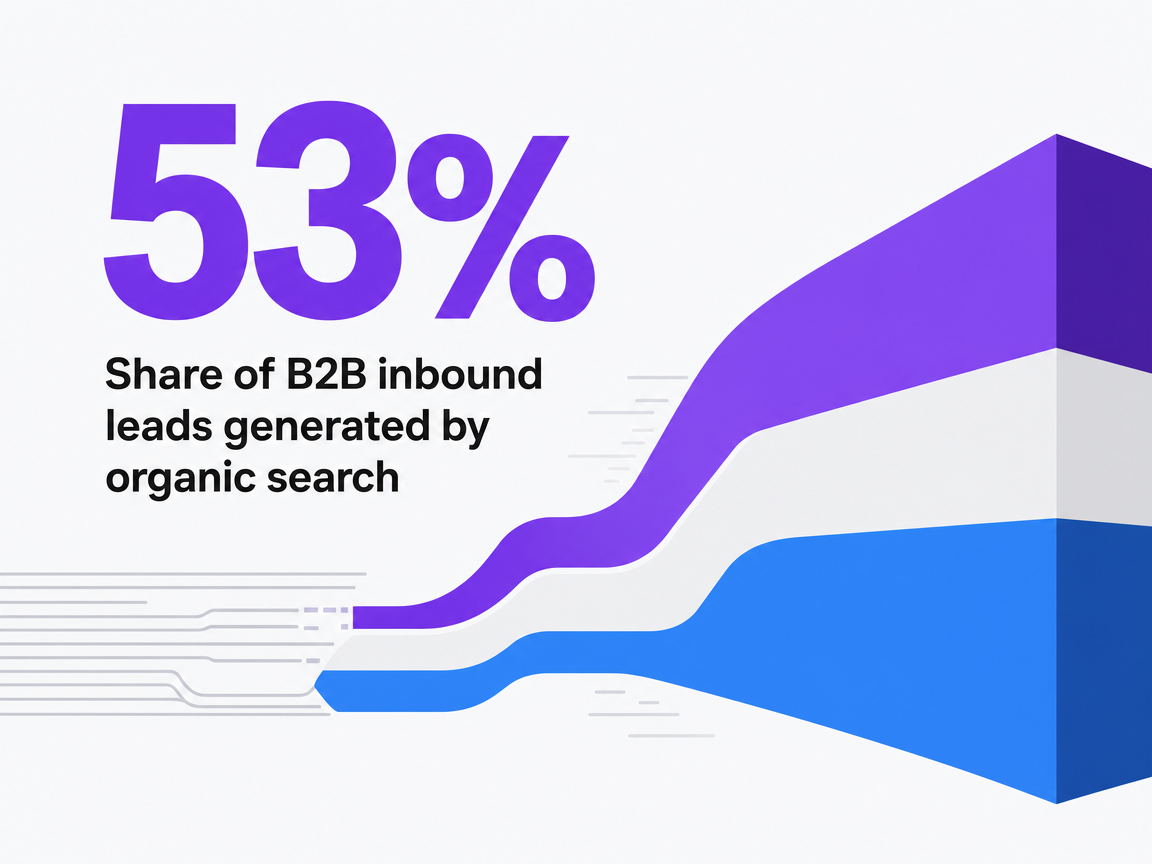 Share of B2B inbound leads generated by organic search
Share of B2B inbound leads generated by organic search
The six criteria that separate a platform from a point tool
A point tool answers a question. A platform runs a system. The distinction matters because most stacks accumulate point tools by accident, then ask a lean team to stitch them into something resembling pipeline production. Forrester argues the consolidation pressure is now structural: as SEO grows more complex and more central to customer acquisition, coordinated insights, workflows, and reporting belong inside a platform rather than a folder of dashboards 17.
Six criteria separate the two on a pipeline-first scoring lens:
- Intent mapping that ties keywords to buyer stage
- AI search readiness for GEO visibility
- Content production velocity without quality decay
- Technical scale across large or multi-domain sites
- CRM and revenue attribution inside reporting
- Governed automation that a VP can approve before anything ships
Each criterion is examined next, with intent mapping as the first lens.
The six-criteria evaluation rubric, applied
Intent mapping that aligns content with buyer-stage demand
Intent mapping is the criterion most stacks fail at first, and it shows up downstream as content that ranks but never converts. The reason is structural: 71% of B2B buyers begin their process as anonymous online research for the first three months, which means a platform's keyword graph has to recognize problem-aware queries differently from solution-aware and vendor-aware ones 15. A keyword volume number alone cannot tell a VP which terms a sales-qualified buyer actually types.
A platform earns this criterion when its taxonomy lets a team tag clusters by buyer stage, tie those clusters to ICP and persona attributes, and surface gaps where a stage has no ranking asset. Ocean5's pipeline framework calls this out directly: SEO planning should start with ideal customer profiles and journey stages, then move to high-intent keyword mapping, not the reverse 1.
The practical test for a shortlist: ask each vendor to show keyword data filtered by stage, then by which queries currently produce MQLs in the demo account. If the platform cannot answer that question without a spreadsheet export, it is a research tool, not a pipeline tool.
AI search readiness and GEO visibility
Two years ago, GEO visibility belonged in a footnote. It now belongs near the top of the scoring sheet. McKinsey estimates that roughly 50% of Google searches already carry AI summaries today, projects that share to exceed 75% by 2028, and ties approximately $750 billion in US revenue to AI-powered search by that window 13. A platform that cannot diagnose how a brand appears inside AI summaries is measuring an increasingly smaller slice of the demand surface.
The pressure shows up in performance data. Thirty percent of marketers already report traffic loss as AI engines absorb clicks that would have gone to ten-blue-link results 14. The loss is not evenly distributed. Sites that publish thin, easily-summarized content are losing ground fastest, while sites with primary research, structured data, and clear entity definitions are surfacing more often inside generative answers.
Pipeline-grade platforms now need three GEO capabilities:
- Visibility tracking inside major AI engines
- Prompt-level monitoring for branded and category queries
- Content scoring that rewards usefulness rather than word count
A VP evaluating tools in 2026 should treat the absence of these capabilities the way they would have treated the absence of mobile rank tracking in 2015.
Content production velocity without quality decay
Velocity without quality is the trap. AI engines are increasingly skeptical of high-volume thin content, and the same survey that flagged a 30% traffic loss also concluded that SEO has shifted from publishing to proving usefulness 14. A platform that ships 200 mediocre pages a quarter is not a production engine; it is a liability accelerator.
The criterion has two halves:
- Throughput: can the platform brief, draft, review, and publish at a cadence that fills the intent-stage gaps a 12-person marketing team supporting a 40-location DSO actually has?
- Decay control: does the platform track post-publish performance per asset, refresh stale pieces automatically, and retire content that draws traffic without producing leads?
The shortlist test is brutal but fair. Pull six months of a vendor's customer output, then ask what share of that content sits in the top 20 results and what share converts to MQLs. If neither number is visible, velocity is being measured in word count, not pipeline.
Technical scale across large or multi-domain sites
Technical scale is where consumer-grade SEO tools quietly fail enterprise teams. Forrester's ranking-factors framework lists crawlability and indexability alongside content quality, user experience, and backlinks as the four pillars of organic visibility 18. A platform that cannot crawl a 250,000-URL property weekly, segment issues by template, and route fixes to the right engineering ticket queue is not solving the problem at the scale it exists.
The harder test is multi-domain coordination. A holding company with eight brands, or a multi-location operator with regional subdomains, needs a single pane that shows technical health, indexation status, and Core Web Vitals across every property. Without that, the lean team rebuilds the same audit five times.
Ask vendors for a live demo on a property of comparable size to the buyer's largest site. Watch the crawl time. Watch the issue prioritization logic. The platforms that pass this test almost always pass the others.
CRM and revenue attribution baked into reporting
This is the criterion that ends the rankings-and-sessions reporting era. Apollo's revenue-metrics analysis is direct: shared dashboards tracking pipeline coverage by quarter, conversion rates at each funnel stage, and win rates by lead source are what align marketing and sales around revenue 3. None of those numbers live inside a standalone SEO tool. They live in the CRM, which is exactly where the platform's reporting needs to read from and write to.
A pipeline-grade platform connects organic sessions to MQLs, opportunities, and closed-won deals through native Salesforce or HubSpot integration, not a CSV export. It tags content-influenced pipeline at the asset level, so a VP can answer which blog cluster produced the largest opportunity volume last quarter. It surfaces conversion rates by buyer stage, so the team can see whether a problem-aware piece is feeding the funnel or just collecting impressions.
Without this layer, the shortlist conversation drifts back to traffic. With it, the platform becomes a revenue instrument the CFO will fund.
Governed automation a VP can actually approve
Automation without governance is how lean teams end up with 400 auto-generated pages they cannot defend. AI-powered SEO software is now the fastest-growing segment of the category, expanding at a 23.4% CAGR with large enterprises representing 75.9% of 2025 adoption 8. Speed is no longer the differentiator. Control is.
The criterion has a clear test: can a VP see every recommendation the platform wants to act on, see the reasoning behind it, approve or reject in one click, and audit what shipped versus what was held? Forrester's argument for platform consolidation rests on this exact point — unified workflows and reporting only work if the approval layer is real, not theatrical 17.
The shortlist should reject any tool that ships content, code changes, or schema updates without an explicit human approval step. Governed automation is what separates a marketing system from a content factory the legal team will eventually shut down.
Test enterprise SEO workflows with live publishing
Experience data-driven SEO execution and measure real pipeline impact before making a long-term commitment.
A category map of enterprise SEO tools by job-to-be-done
Audit-and-monitor platforms: the diagnostic layer
The diagnostic layer is where most enterprise stacks begin and where many of them stop. Tools in this group — BrightEdge, Conductor, seoClarity, Siteimprove, and Searchmetrics among the Forrester-evaluated set 17— crawl large properties, track rankings, surface technical issues, and visualize share of voice against named competitors. They are strong at telling a VP what is happening on the site and in the SERP.
What they are weaker at is closing the loop to pipeline. A diagnostic platform that reports a 14% lift in non-branded impressions but cannot tie that lift to MQLs in Salesforce leaves the revenue conversation incomplete. Forrester's own framework lists crawlability and indexability as one of four ranking pillars, alongside content quality, user experience, and authority 18— useful, but only the first half of a pipeline system.
The right use is targeted. Keep an audit-and-monitor platform as the diagnostic spine when the team has separate production and attribution capabilities. Drop it from the shortlist if the only output is a weekly health report no one acts on.
Content-at-scale platforms: the production layer
Production tools — Clearscope, MarketMuse, Frase, Surfer, and the newer generative platforms entering the category — sit downstream of the diagnostic layer. They brief writers, score drafts against semantic targets, and increasingly draft full pieces. Adoption has accelerated sharply: the AI-powered SEO software segment is growing at a 23.4% CAGR, with large enterprises representing 75.9% of 2025 adoption 8.
That adoption curve hides a problem. A platform that can ship 50 optimized briefs a week is only useful if the resulting content earns rankings and converts. The same practitioner data that flagged a 30% traffic loss to AI engines also warned that SEO has shifted from publishing volume to proving usefulness 14. Production platforms that reward word count and keyword density over evidence and entity coverage are now actively hurting domains they were meant to grow.
The shortlist test for this layer: does the platform score content against AI-summary inclusion, not just traditional rank? Does it track post-publish conversion per asset? If a production tool cannot answer either, it belongs in the writer's workflow, not the VP's stack.
Link and authority platforms: the trust layer
Ahrefs, Majestic, and the link-focused modules inside Semrush anchor the trust layer. Their job is narrow but important: map the backlink graph, surface unlinked brand mentions, and identify referring domains that move authority. Forrester names site authority via backlinks as one of the four ranking factors, which keeps this category load-bearing rather than optional 18.
The risk is treating links as a standalone program. A platform that ships 30 placements a quarter without coordinating with the content calendar or the technical fix queue produces authority signals pointing at thin pages. The trust layer should feed the production and diagnostic layers, not run parallel to them. Evaluate vendors on how cleanly their data exports into the platform doing the prioritization, not on the raw size of their link index.
Unified execution platforms: the consolidation layer
The newest category combines diagnostics, content production, link signals, and CRM-aware reporting inside one approval workflow. Forrester's argument for consolidation lands here: as SEO complexity grows, coordinated insights, workflows, and reporting belong in a single platform rather than a folder of dashboards a lean team has to reconcile 17. The enterprise SEO platforms market reflects that pull, expanding from USD 4.38 billion in 2024 toward USD 12.5 billion by 2032 at a 14% CAGR 6.
Vectoron sits in this consolidation layer, structured around six specialist strategists — Content, SEO, PPC, Backlinks, Social, and Call Intelligence — coordinated through a Command Center that routes every recommendation for human approval before anything ships. The pipeline-relevant point is not the AI itself. It is that the diagnostic, production, and authority work feed a single attribution surface tied to qualified calls, bookings, cost per lead, and pipeline.
For a VP weighing whether to keep stitching point tools or move to a unified layer, the deciding question is operational: how many vendor handoffs and briefing cycles sit between an organic insight and a published, measured asset? Every handoff is where pipeline contribution leaks.
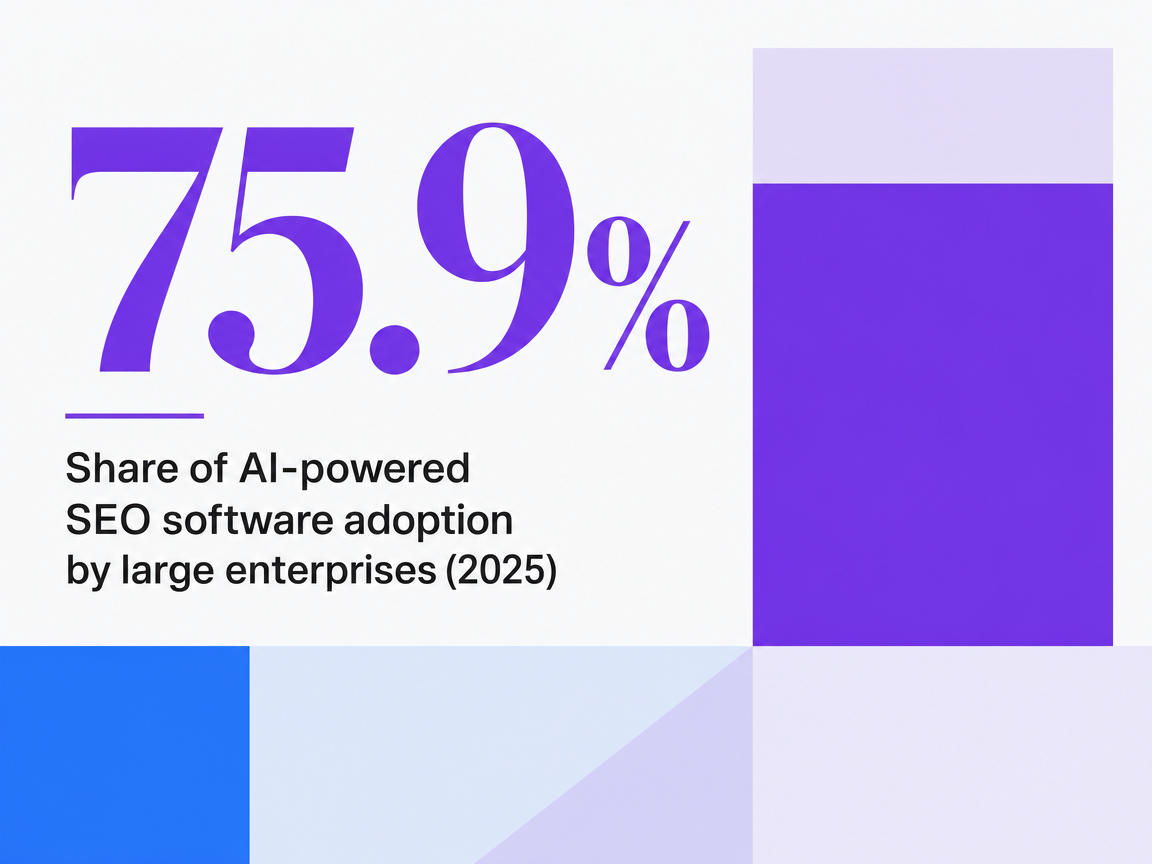 Share of AI-powered SEO software adoption by large enterprises (2025)
Share of AI-powered SEO software adoption by large enterprises (2025)
If you manage multiple locations or brands: the consolidation-economics question
The audience shifts here. Most of this article speaks to a VP running a single-domain B2B property. This section is for the VP whose remit covers a portfolio — a 40-location DSO, a behavioral health network with 12 regional brands, a home-services holding company with eight subdomains. The economics work differently at that scale, and the consolidation question stops being theoretical.
The math is what forces the conversation. A typical portfolio stack runs four to five point tools plus an agency retainer, and each layer has to be operated by someone. The line items below use the supplied Vectoron trial-conversion price of $599/month as the only named figure; every other cost is left as a labeled variable because portfolio pricing varies by site count, seat count, and contract terms.
| Layer | Stitched stack | Unified execution platform |
|---|---|---|
| Audit and monitoring | $X/mo enterprise platform | Included |
| Content optimization | $Y/mo per seat | Included |
| Rank tracking, multi-domain | $Z/mo | Included |
| Link and authority data | $A/mo | Included |
| Agency retainer | $B/mo for execution | Replaced by approval workflow |
| Headcount to coordinate | 2–4 FTEs across briefing, QA, reporting | 1 approver per brand |
| Pipeline attribution | Manual stitching across tools and CRM | Native, asset-level |
| Named cost reference | — | $599/mo trial conversion |
The deciding number is not the line-item total. It is the return assumption underneath it. SEO delivers an average ROI of 825% over three years across B2B benchmarks, which means the layer that captures the most pipeline contribution per dollar wins regardless of sticker price 12. In a portfolio context, the stitched stack loses ground in two places: coordination overhead consumes FTE capacity that could be producing assets, and attribution gaps make it nearly impossible to defend the ROI number to the CFO at the brand level. A unified layer collapses both costs into one approval surface.
See How Leading Enterprises Automate SEO Execution for Predictable Pipeline Growth
Request a tailored walkthrough of multi-channel SEO automation, data-driven prioritization, and unified reporting—purpose-built for high-volume, multi-location marketing teams seeking measurable efficiency gains.
Building a pipeline-measurement rubric for your shortlist
A shortlist that survives the CFO review needs a measurement rubric attached to it. Not a feature matrix. A scoring sheet that ties each platform to the pipeline math the marketing team will be held to at the next QBR. The rubric below is built from the demand-waterfall logic Forrester applies to SEO at emerging and enterprise companies — content quality, user experience, authority, and crawlability measured against lead, opportunity, and closed-won outcomes 18— combined with Ocean5's pipeline KPIs and Apollo's shared-dashboard recommendation.
Score every shortlisted platform against six measurement questions, each answered in the demo using the buyer's live data, not the vendor's curated example:
- Leads from organic traffic. Can the platform show MQL volume by content cluster and by buyer stage, not just session counts? Ocean5 names this as the first KPI that separates pipeline SEO from rankings SEO 1.
- Opportunities influenced by content. Does the platform tag asset-level influence on opportunities inside the CRM, or does it stop at last-touch attribution?
- Pipeline coverage by quarter. Apollo's revenue-metrics work sets a 3–5x quota target for healthy coverage 3. The platform should report organic's contribution to that coverage on demand.
- Conversion rate by funnel stage. Stage-level conversion — visitor to MQL, MQL to SQL, SQL to opportunity — exposes where organic feeds the funnel and where it stalls 3.
- Win rate by content source. Closed-won data tied back to first-touch and influenced organic content closes the demand waterfall loop 18.
- Time-to-value on new clusters. How quickly does a new intent cluster move from publish to first MQL?
Any platform that cannot answer all six inside its own reporting layer is a research tool wearing platform marketing.
A decision frame for VPs choosing in 2026
The shortlist conversation tends to collapse into a feature spreadsheet by week three. A simpler frame holds up better under CFO pressure: decide which layer of the stack is the bottleneck, then pick the platform that fixes that layer without breaking the attribution chain to the CRM.
For teams whose diagnostic data is strong but whose content output stalls in review queues, the production layer is the constraint. For teams shipping content steadily but unable to defend pipeline contribution, the consolidation layer earns the seat. The category is expanding from USD 4.38 billion in 2024 toward USD 12.5 billion by 2032 at a 14% CAGR precisely because most marketing organizations now need both 6.
Vectoron fits the consolidation-layer brief for teams that want six specialist strategists coordinated through an approval workflow tied to live pipeline signals. Whichever platform makes the shortlist, the test is the same one Forrester named years ago: does the tool unify insights, workflows, and reporting against business outcomes 17? If the answer requires a spreadsheet, keep looking.
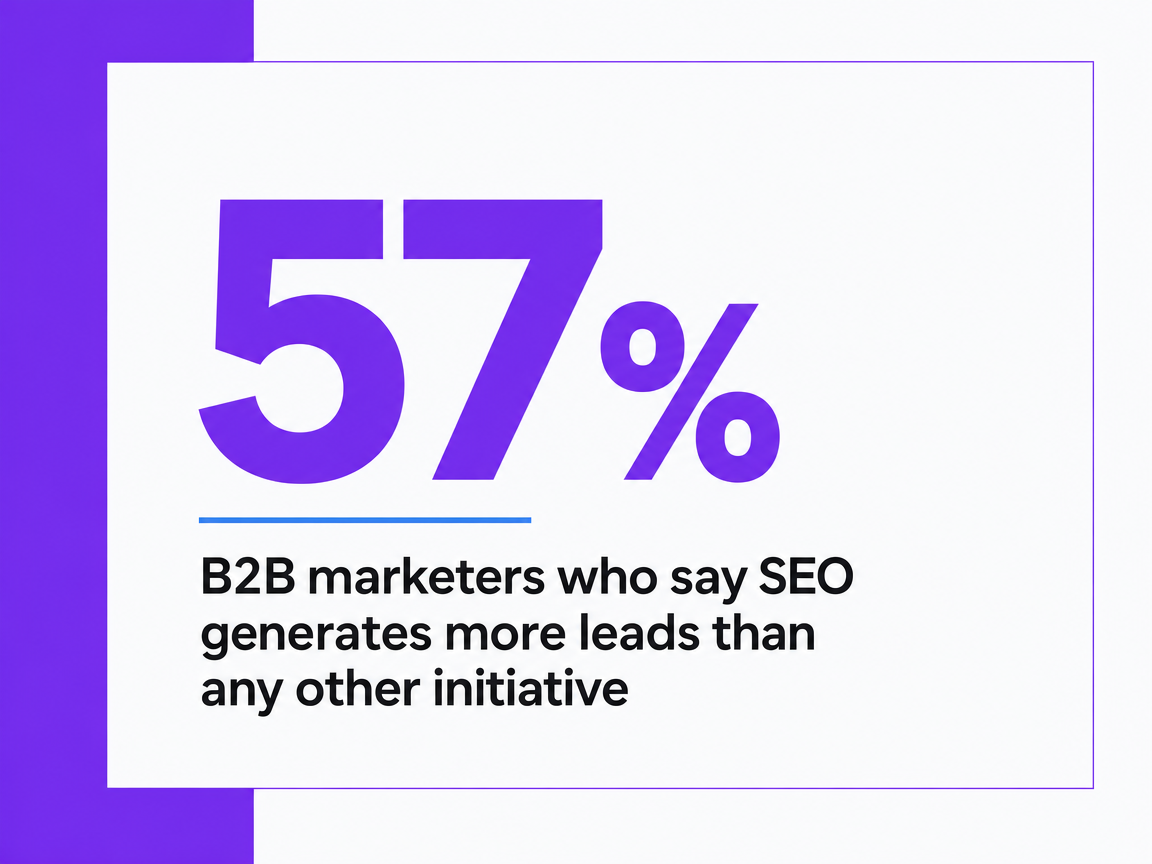 B2B marketers who say SEO generates more leads than any other initiative
B2B marketers who say SEO generates more leads than any other initiative
Frequently Asked Questions
References
- 1.How B2B SEO Strategies Can Increase Your Pipeline.
- 2.AI B2B Marketing Benchmarks 2024.
- 3.What B2B Marketing Metrics Actually Drive Revenue Growth?.
- 4.Enterprise Seo Platforms Market Share, Size, Trends | 2035.
- 5.Enterprise SEO Platforms Market Size Share & Growth Outlook.
- 6.Enterprise SEO Platforms Market Size, Share and Forecast 2032.
- 7.SEO Software Market Size, Share & Growth Report 2032.
- 8.AI-powered SEO Software Market Size | CAGR of 23.4%.
- 9.Search Engine Optimization Services Global Market Opportunities and Strategies to 2031.
- 10.SEO Services Market Analysis 2030 | Size, Share & Trend Report.
- 11.B2B Marketing Statistics & Emerging Trends.
- 12.60 B2B SEO Statistics to Shape Your Strategy.
- 13.Winning in the age of AI search.
- 14.AI's Impact on SEO Content Creation.
- 15.How Bad SEO Affects B2B Lead Generation Efforts.
- 16.Top B2B Lead Generation Statistics for 2021.
- 17.Every Company Needs An SEO Platform.
- 18.How SEO at Emerging Companies Is Like Skipping Stones.