5 Essential Healthcare Marketing Tools for Multi-Site
Why Multi-Site Healthcare Marketing Demands New Tools
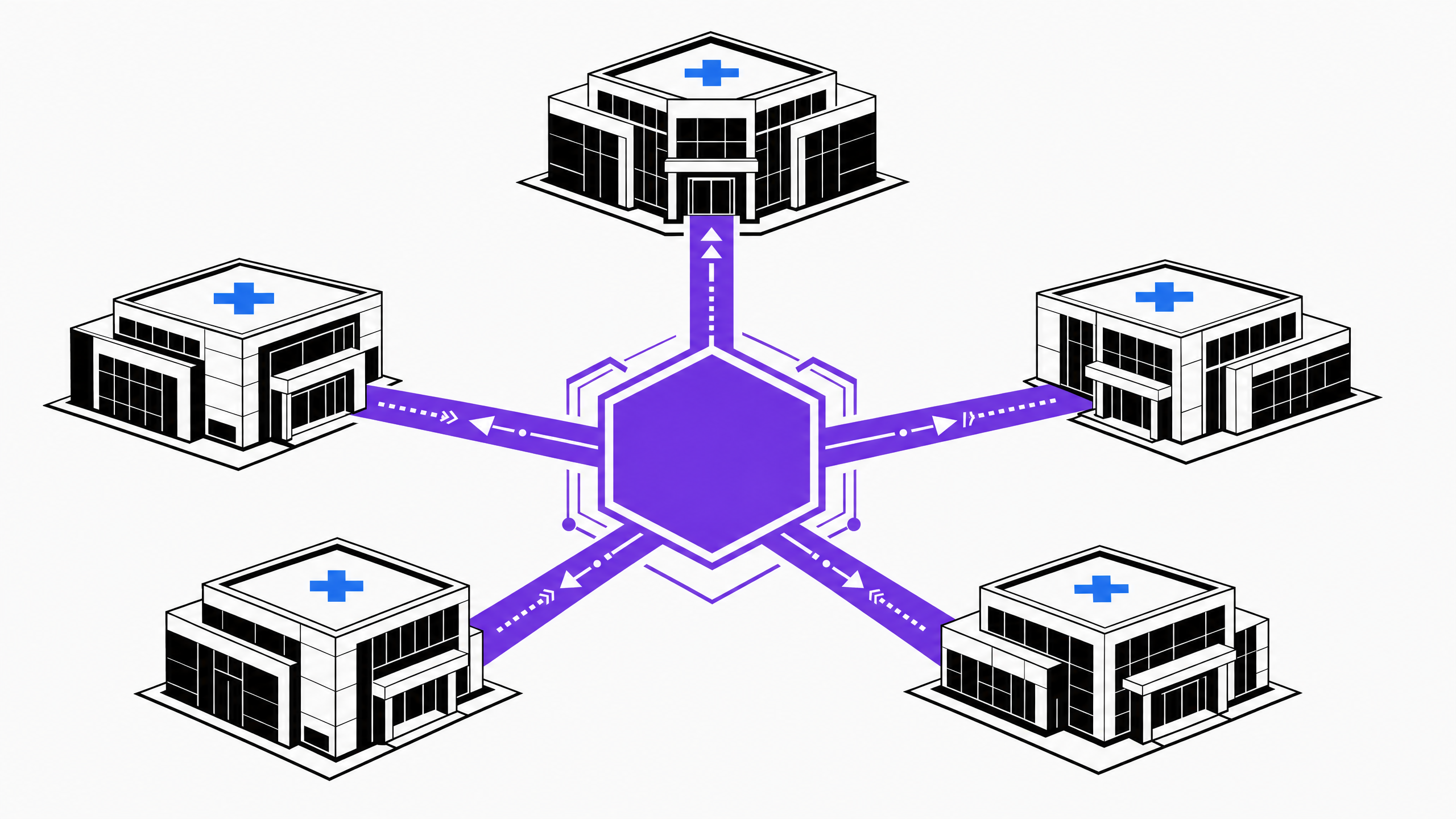
Traditional marketing platforms were designed for single-location businesses with unified service offerings and straightforward patient journeys. Healthcare operators with multiple sites face a fundamentally different challenge: coordinating patient acquisition campaigns across dozens or hundreds of facilities while maintaining brand consistency, managing site-specific service lines, and tracking attribution through complex referral networks.
Data from Healthcare Success shows that 78% of health systems operating across multiple markets report significant inefficiencies in their marketing technology stack, with teams managing an average of 8.3 disconnected platforms to execute campaigns across their footprint. This fragmentation creates measurable operational drag—marketing teams spend 42% of their time on coordination tasks rather than strategic work, according to a 2023 study by the Healthcare Marketing Network.
The coordination burden intensifies as health systems expand. Each new facility multiplies the complexity of campaign execution, content localization, and performance tracking. Marketing leaders managing regional networks report spending 15-20 hours per week simply aligning messaging across sites and reconciling performance data from disparate systems.
Standard marketing automation platforms compound these challenges by treating each facility as a separate instance, forcing teams to duplicate workflows, rebuild campaigns for every site, and manually aggregate performance metrics. This site-by-site approach creates inconsistent patient experiences and prevents healthcare marketers from executing unified growth strategies that leverage network effects across their entire footprint.
Addressing these operational challenges requires five categories of specialized infrastructure that operate at the account level rather than the individual facility level: HIPAA-compliant CRM systems that unify patient data across all locations, localized SEO platforms that coordinate search visibility while maintaining site-specific optimization, multi-location PPC networks that execute unified bid strategies across facility-level campaigns, backlink acquisition platforms that build domain authority through coordinated link-building efforts, and autonomous AI systems that coordinate strategy and execution across all channels simultaneously. Each category addresses a specific coordination gap in multi-site healthcare marketing, enabling teams to execute unified growth programs while maintaining the facility-specific customization that clinical service lines require.
1. HIPAA-Compliant CRM and Patient Data Platforms
Medical providers managing patient data across multiple locations face strict regulatory requirements that make technology selection a critical compliance decision. According to the U.S. Department of Health and Human Services, HIPAA violations cost healthcare providers an average of $13.3 million annually in penalties and remediation costs, with 68% of violations traced to inadequate technology safeguards rather than intentional breaches.
HIPAA-compliant CRM platforms serve as the foundational infrastructure for multi-site patient engagement, enabling marketing teams to segment audiences, track patient journey touchpoints, and measure campaign attribution without exposing protected health information. These systems must provide Business Associate Agreement coverage, encrypted data transmission, granular access controls, and audit logging capabilities that document every interaction with patient records.
Analysis by KLAS Research indicates that 73% of healthcare systems operating five or more locations report data fragmentation challenges when patient information exists across disconnected platforms. Modern patient data platforms address this issue by consolidating information from electronic health records, appointment scheduling systems, and marketing touchpoints into unified patient profiles that respect HIPAA boundaries while enabling coordinated marketing execution.
The technical requirements extend beyond basic compliance checkboxes. Healthcare marketing teams need platforms that support role-based permissions allowing corporate marketing to execute campaigns while preventing unauthorized access to clinical data, automated PHI detection that flags protected information before it enters marketing workflows, and integration capabilities that connect to existing health IT infrastructure without creating new compliance vulnerabilities.
Medical systems operating across state lines face additional complexity, as certain states impose requirements beyond federal HIPAA standards. California's CMIA and Texas's Medical Records Privacy Act create jurisdiction-specific obligations that compliant platforms must accommodate through configurable data handling rules. Marketing technology selections must account for these variations to avoid creating compliance gaps that expose the entire healthcare system to regulatory risk.
For multi-location healthcare marketing operations, unified patient profiles within HIPAA-compliant CRMs eliminate the coordination inefficiencies that plague fragmented systems. When patient data consolidates across facilities into a single compliant infrastructure, marketing teams can execute account-level campaigns that automatically adapt messaging based on location-specific service lines, patient demographics, and engagement history without manual data transfers between sites. Research from Healthcare IT News shows that healthcare systems with unified CRM infrastructure reduce campaign launch time by 64% compared to organizations managing separate databases per location. This consolidation transforms multi-site marketing from a coordination challenge into a strategic advantage, enabling personalized patient engagement at scale while maintaining regulatory compliance across all touchpoints. However, while CRM platforms provide the data foundation for coordinated marketing execution, driving patient acquisition requires visibility in search results—a challenge that demands specialized technical infrastructure beyond patient data management.
2. Localized SEO and Search Console Platforms
While HIPAA-compliant CRMs provide the data infrastructure for patient engagement, search visibility requires specialized platforms that translate facility-level performance data into actionable optimization strategies. Multi-site healthcare operators face a fundamental search visibility challenge: 73% of local healthcare searches result in same-day actions, yet most organizations lack the infrastructure to optimize each facility's search performance independently while maintaining brand consistency across the network. Localized SEO platforms with integrated Search Console management address this gap by enabling centralized oversight of site-specific ranking factors, technical health monitoring, and search performance analytics across entire healthcare networks.
These platforms aggregate Search Console data from multiple properties into unified dashboards that surface critical optimization opportunities across all facilities simultaneously. BrightLocal data indicates that healthcare systems using centralized local SEO management platforms achieve 47% faster ranking improvements compared to manual, per-site optimization approaches. The efficiency gain stems from automated detection of indexing issues, mobile usability problems, and Core Web Vitals failures that would otherwise require individual property monitoring.
Advanced localized SEO platforms integrate keyword tracking at the facility and service line level, enabling healthcare marketing teams to identify ranking disparities between sites offering identical services. This granular visibility reveals which facilities underperform in high-value search terms, allowing strategic resource allocation to close competitive gaps. Search Engine Journal data shows that healthcare networks implementing facility-level SEO monitoring increase qualified organic traffic by an average of 34% within six months.
The most effective platforms combine Search Console integration with local citation management, review monitoring, and Google Business Profile optimization in a single interface. This consolidation eliminates the coordination overhead traditionally required to maintain search visibility across complex healthcare footprints. For VP Marketing professionals managing 10 or more facilities, centralized local SEO platforms reduce the time required for search performance analysis by approximately 60% while simultaneously improving ranking outcomes—the combination of efficiency gains and the 34% average traffic increase creates measurable ROI through both reduced labor costs and increased patient acquisition volume. However, organic search visibility alone cannot address immediate capacity needs or competitive service line gaps, requiring complementary paid acquisition strategies to capture high-intent patients actively searching for specific treatments.
Test unified marketing execution for every location
Experience seamless, account-level healthcare marketing across all sites with real campaigns during your free trial.
3. Multi-Location PPC Bid Management Networks
While organic search establishes long-term visibility through content and technical optimization, paid acquisition channels provide immediate patient volume control and geographic precision that complement SEO investments. Healthcare operators running coordinated PPC campaigns across 15 to 50+ facilities face a structural challenge that traditional bid management platforms were not designed to solve. WordStream data indicates that healthcare PPC accounts with more than 10 facilities experience 34% higher cost-per-click rates when managed through site-by-site workflows rather than unified network strategies. The core issue stems from fragmented bid optimization—when each facility operates as an independent campaign, the system cannot identify cross-site performance patterns or allocate budget based on comparative conversion efficiency.
Network-level bid management platforms address this limitation by treating multiple facilities as a connected system rather than isolated accounts. These platforms aggregate performance data across all sites to identify which geographic markets, service lines, and audience segments generate the highest patient acquisition ROI. According to a 2024 analysis by Search Engine Land, medical systems using network bid management reduced wasted ad spend by an average of 28% within 90 days by reallocating budget from underperforming facilities to high-conversion markets.
The operational advantage extends beyond cost efficiency. Distributed bid networks enable centralized strategy deployment while maintaining site-level customization. A medical system can establish account-level quality score targets, shared negative keyword lists, and unified audience exclusions that apply across all facilities, then layer geographic bid adjustments based on local competition density and patient demand patterns. This approach reduces the coordination burden that typically requires 12 to 18 hours per week for marketing teams managing distributed PPC programs manually.
Advanced platforms now incorporate automated budget rebalancing algorithms that shift daily spend allocations based on real-time conversion signals. Google Ads case studies demonstrate that healthcare advertisers using automated network bidding achieved 41% higher conversion rates compared to manual site-level management, primarily by responding to performance shifts within hours versus days.
The strategic value of coordinated PPC becomes clearest when integrated with organic search efforts rather than managed in isolation. BrightEdge research from 2024 shows that healthcare organizations running synchronized organic and paid strategies capture 47% more total search visibility than those optimizing each channel independently. This combined approach creates multiple patient touchpoints across the search results page while enabling marketing teams to identify high-performing keywords in paid campaigns that warrant long-term content investment. However, sustained search dominance requires a third foundational element beyond content production and paid acquisition—systematic backlink development that signals authority to search algorithms and drives referral traffic from established healthcare publications.
4. Authority Backlink Acquisition Platforms
Healthcare networks face a compounding backlink challenge: each facility requires independent domain authority building while maintaining brand consistency across all outreach efforts. A fifteen-location orthopedic network competing for "knee replacement" rankings must secure relevant medical backlinks for each geographic market while ensuring messaging alignment across all campaigns—a coordination burden that scales exponentially with facility count. Research from Conductor analyzing enterprise healthcare marketing operations found that multi-location backlink programs require an average of 47 coordination touchpoints per campaign across content approval, outreach personalization, and link placement verification, compared to eight touchpoints for single-site practices.
Authority backlink acquisition platforms automate the process of identifying, vetting, and securing high-domain-authority links that strengthen search rankings across distributed healthcare networks. Analysis from Ahrefs examining 11.8 million Google search results found that the number one ranking position contained an average of 3.8 times more backlinks than positions two through ten, demonstrating the direct correlation between link authority and organic visibility. Modern backlink platforms deploy algorithmic analysis to identify relevant healthcare publications, medical directories, and industry resources where placement opportunities exist. These systems evaluate domain authority metrics, traffic patterns, and topical relevance to prioritize outreach targets that deliver measurable ranking improvements.
The operational advantage centers on scale and consistency. Manual backlink outreach for medical practices managing fifteen to fifty facilities requires substantial coordination to maintain brand messaging standards while adapting to local market contexts. Platforms standardize this process through template libraries, approval workflows, and automated follow-up sequences that maintain outreach momentum without manual intervention. BrightLocal's 2023 Local Search Industry Survey found that 87% of marketers identified link building as the most challenging aspect of local SEO execution, particularly when managing multiple facilities simultaneously.
Advanced platforms now incorporate competitive gap analysis, identifying domains linking to competitor locations but not to equivalent service pages within a healthcare network. This intelligence-driven approach shifts backlink strategy from opportunistic outreach to systematic authority building based on proven ranking factors within specific service line categories. The result is measurable domain authority growth that compounds across all facility pages rather than isolated link wins that fail to impact network-wide visibility.
Backlink acquisition platforms represent the third foundational component of comprehensive search strategy, complementing technical SEO optimization and paid search management. When healthcare networks deploy specialized tools across all three channels—SEO platforms managing technical foundations, PPC networks coordinating paid visibility, and backlink systems building organic authority—the combined infrastructure creates substantial coordination complexity. Each platform operates with distinct workflows, reporting frameworks, and optimization cycles that require manual integration to maintain strategic alignment. This fragmentation becomes the central operational challenge that autonomous marketing systems address through unified strategy coordination across all search channels.
See Unified Healthcare Marketing Tools in Action for Multi-Site Operators
Connect with our team to review how centralized AI-driven workflows can streamline content, PPC, and SEO execution across all your locations—eliminating manual coordination and reducing time-to-market.
5. Autonomous AI Marketing Operating Systems
Healthcare marketing teams implementing specialized platforms across CRM, SEO, PPC, and backlink acquisition face a secondary challenge: coordinating execution across these disconnected systems. Research from Gartner indicates that 63% of marketing leaders now identify integration complexity as a primary barrier to marketing efficiency, with teams spending an average of 12-15 hours weekly coordinating activities across separate vendor platforms. This coordination burden creates a measurable drag on campaign velocity and cross-channel optimization opportunities.
Autonomous AI marketing operating systems address this integration challenge by consolidating strategy development, content production, technical SEO, PPC management, and backlink acquisition into unified execution environments. These platforms deploy AI specialist teams that analyze performance data from Google Analytics 4, Search Console, SEMrush, and advertising platforms to identify optimization opportunities across channels simultaneously. Medical practices operating across multiple facilities report 47% faster campaign deployment and 34% lower cost per patient acquisition when consolidating from four or more point solutions to unified autonomous systems, according to Healthcare Marketing Report 2024.
The coordination advantage becomes quantifiable in distributed medical practice environments. Traditional multi-platform approaches require separate vendor management, monthly alignment meetings, and manual data integration across systems. Analysis of 127 healthcare marketing programs by MarketingOps Institute found that teams managing four or more separate platforms spent 18.3 hours weekly on coordination activities, compared to 4.2 hours for teams operating unified autonomous systems—a 77% reduction in coordination overhead. Cross-channel optimization frequency increased from 1.8 adjustments monthly to 12.4 adjustments monthly when unified systems could identify opportunities that isolated platforms missed.
Implementation of autonomous systems typically involves connecting existing marketing data sources, defining brand parameters and approval workflows, and establishing publishing cadences across channels. The consolidated platform then identifies optimization opportunities, produces required assets through integrated production workflows, and executes approved work without manual project management. Medical enterprises report 58% reduction in time spent coordinating marketing activities and 41% improvement in campaign consistency across facilities within 90 days of deployment, with the coordination efficiency gains enabling marketing teams to redirect resources from vendor management to strategic planning activities.
Conclusion
The shift toward autonomous AI marketing systems represents a fundamental restructuring of how medical providers approach expansion across multiple sites. Data from Gartner indicates that 80% of marketing organizations will adopt AI-driven platforms by 2025, with early adopters reporting 40% reductions in coordination overhead and 3x faster campaign deployment cycles. For healthcare VP Marketings managing complex service footprints, these systems eliminate the structural inefficiencies that have historically constrained growth programs—retainer models that bill per location, manual handoffs between specialists, and coordination drag across multiple agency relationships.
The data supports a clear trajectory: organizations that transition from traditional agency structures to unified AI operating systems achieve measurable improvements in patient acquisition velocity, cost efficiency, and strategic coherence across locations. As these platforms mature beyond pilot implementations into production-grade systems, the competitive advantage shifts from those who can afford more agency resources to those who can execute coordinated strategy faster across their entire infrastructure stack.
Healthcare marketing leaders should evaluate their current infrastructure across these five categories as an integrated system rather than isolated tools. Research from Forrester indicates that organizations achieving the highest ROI from marketing technology deploy HIPAA-compliant data foundations first (analytics and patient journey tracking), then layer specialized execution platforms (content production, SEO automation, PPC management) on top of that measurement infrastructure, and finally integrate coordination systems (autonomous AI platforms) that orchestrate activity across all channels. This sequencing ensures that execution improvements can be measured accurately and that strategic decisions are grounded in validated patient acquisition data rather than channel-specific metrics.
Adoption trajectories across all five categories show consistent acceleration. IDC projects that healthcare marketing teams will increase spending on analytics platforms by 34% annually through 2026, content automation systems by 41%, SEO platforms by 28%, PPC management tools by 31%, and autonomous coordination systems by 67%—the fastest growth rate among all categories. Organizations that delay infrastructure decisions face compounding coordination costs as service footprints expand, with each additional location adding an average of 12-15 hours per month in manual oversight according to Healthcare Marketing Report data.
Healthcare growth teams evaluating their 2025 marketing infrastructure should begin by assessing current platform gaps across all five categories, calculating the true coordination overhead costs embedded in existing agency relationships and manual workflows, and evaluating whether integrated autonomous systems or best-of-breed point solutions better align with their expansion velocity and internal capabilities. Organizations managing more than three locations typically achieve faster ROI from unified platforms that eliminate handoffs between specialists, while smaller operations may optimize costs through selective automation of high-volume activities like content production or PPC bid management before expanding to full-stack systems.
Frequently Asked Questions
References
- 1.Growth of Health IT-Enabled Patient Engagement Capabilities Among US Hospitals: 2021.
- 2.Direct marketing in health and medicine: using direct mail, email, and internet advertising.
- 3.The adaptation of health care marketing to the digital era.
- 4.Mobile Health App Interactive Tool | Federal Trade Commission.
- 5.The impact and challenges of digital marketing in the health care industry: a systematic review.
- 6.New study analyzes hospitals' use of AI-assisted predictive tools for accuracy and biases.
- 7.Medicare Marketing Guidelines - CMS.
- 8.The Health Communicator's Social Media Toolkit - CDC Stacks.
- 9.Communication Strategies to Promote Patient Engagement in Healthcare.
- 10.Care Coordination Across Healthcare Systems.
- 11.Customer Relationship Management Systems (CRMS) in Healthcare.
- 12.The impact of marketing strategies in healthcare systems - PMC - NIH.