
Key Takeaways
- Lead scoring is the prioritization node because every downstream use case depends on its output; machine learning models outperform static point-based rules by interpreting behavioral and engagement signals to predict real buying intent 7, 9.
- Content production and optimization supply the volume node, populating a tagged variant library that personalization later assembles; 88% of marketers already use AI daily, led by content optimization 8.
- Personalization at segment-of-one turns the content library into relevance by assembling assets against individual signals in real time, replacing rule-based targeting with dynamic creative matched to intent 10, 12.
- Media mix and budget allocation validate upstream nodes by reweighting spend toward channels and segments that show measurable response, replacing prior-quarter defaults with data-driven reallocation 2, 3.
- Churn prediction stabilizes the pipeline by flagging at-risk accounts before they leave, ensuring acquisition gains translate into net growth rather than offsetting attrition 11.
- Sales forecasting integrates scoring, conversion rates, acquisition costs, and retention into a dynamic pipeline view, giving sales leadership a defensible number that updates with behavior rather than quarterly rebuilds 2.
- Workflow automation converts forecast targets into completed work, with intelligent automation reporting 20–30% productivity gains and 25% reductions in customer acquisition cost 14.
- Account intelligence directs throughput by combining firmographic, behavioral, and intent data into a ranked list of in-market accounts ready for the next outbound touch 3.
- Agentic orchestration closes the circuit by sequencing multi-step actions across channels under an approval-first loop, turning capable but uncoordinated pilots into the scaled deployment that drives compounding value 4, 5.
The Gap Between AI Pilots and Pipeline Engines
Nearly 90% of CMOs are experimenting with AI use cases, but fewer than 10% have scaled them across workflows, according to McKinsey's research on agentic marketing operations 4. This highlights a common challenge in AI marketing: high activity with low compounding returns. Many teams operate with isolated AI tools—a content generator, a scoring model, a chatbot, or a media optimizer—that do not communicate with each other.
When pipeline targets are missed, the natural inclination is to acquire another tool. However, evidence suggests a different approach. McKinsey's global surveys indicate that high-performing organizations integrate AI across multiple connected functions, such as marketing, sales, customer operations, and product, rather than running isolated pilot programs 1, 2. The economic potential is substantial: generative AI is projected to generate $2.6 to $4.4 trillion in annual economic benefits, with approximately 75% concentrated in customer operations, marketing and sales, software engineering, and R&D 6. Realizing a significant portion of this value requires interconnected use cases that build upon each other.
This article presents nine AI marketing use cases as interconnected nodes within a single pipeline engine, rather than a mere list of tools. The key consideration is not which tool to purchase, but rather which sequence of use cases will yield a predictable revenue stream.
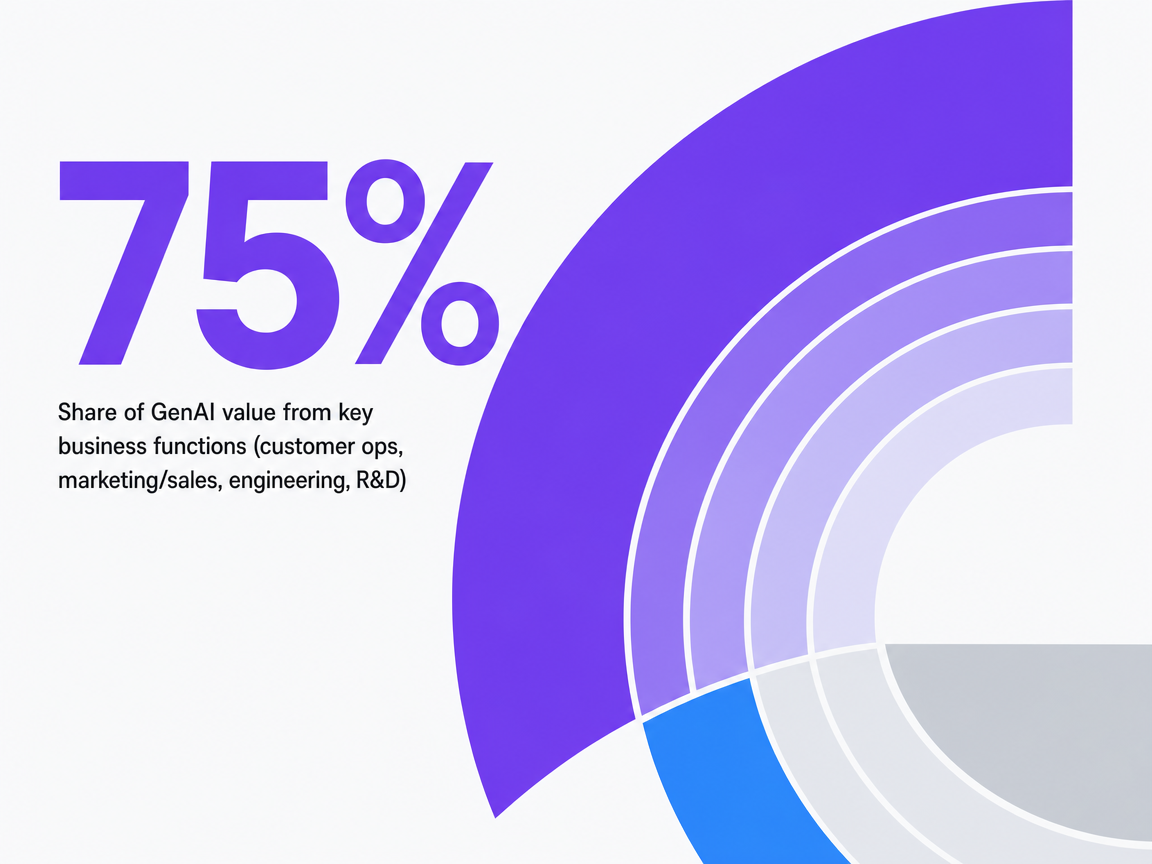 Share of GenAI value from key business functions (customer ops, marketing/sales, engineering, R&D)
Share of GenAI value from key business functions (customer ops, marketing/sales, engineering, R&D)
Why Nine Use Cases, Not One
A single AI use case rarely generates pipeline numbers that inspire confidence in a CFO. For example, a scoring model without an upstream content engine will lack data, while a content engine without a scoring model can overwhelm sales with irrelevant leads. Compounding benefits emerge when the outputs of one use case serve as inputs for the next.
This interconnectedness is why this list includes nine use cases. McKinsey's analysis of generative AI in marketing and sales identifies stacked capabilities—including segment discovery, personalized outreach, lead identification, creative production, and journey orchestration—as the drivers of measurable top-line gains, rather than any single capability in isolation 3. The 2025 State of AI survey further emphasizes this point: high performers integrate AI across functions to achieve revenue growth and competitive differentiation, whereas less successful organizations conduct disconnected pilots 2.
Each of the following nine sections describes a node, the data it consumes, and the subsequent node it feeds. These should be viewed as a circuit, not a menu. The order is crucial due to inherent data dependencies: scoring relies on behavioral signals, personalization requires content variants, forecasting needs accurate pipeline history, and orchestration integrates all these elements.
Lead Scoring: The Prioritization Node
Lead scoring is the initial node because all subsequent use cases depend on its output. Without a reliable method for identifying high-value inbound and account-level activity, content production efforts are misdirected, personalization targets the wrong individuals, and forecasting becomes inaccurate. Traditional point-based scoring, which assigns fixed values for actions like whitepaper downloads or demo requests, often relies on outdated assumptions.
A machine learning approach interprets activity data differently. A peer-reviewed B2B case study of a software company demonstrated that replacing heuristic scoring with a model trained on analytics and behavioral data significantly improved prioritization and conversion outcomes. Sales representatives subsequently focused more on opportunities identified by the model as high probability 7. Harvard's executive education analysis explains this mechanism: AI scoring integrates engagement, demographic, and behavioral signals to predict buying intent, moving beyond treating each input as an isolated data point 9.
For a VP managing a lean team, the inputs include CRM history, product usage, web activity, and intake signals. The output is a prioritized queue that sales teams can effectively manage daily. This queue then informs the next node—content production—by matching assets to the buying cycle stage of ranked accounts.
Content Production and Optimization: The Volume Node
AI adoption is particularly prevalent in content. SurveyMonkey's 2025 research indicates that 88% of marketers use AI in their daily roles, with content optimization being the leading use case, closely followed by content creation 8. This figure, representing marketers across various roles and company sizes, signifies that AI in content is now a standard practice, not an emerging tactic.
For a VP leading a lean team, the operational goal is not merely volume. The scoring node from the previous section identifies which segments and accounts require specific assets; content production then populates the matrix generated by this scoring. For instance, a behavioral health intake team scoring high-intent inquiries based on payer mix needs a different asset library than a DSO targeting new patient acquisition in multiple metropolitan areas. AI-generated drafts, briefs, headline variants, and meta descriptions can populate this library at a speed unmatched by human-only teams, while editorial review ensures brand voice and accuracy.
Optimization constitutes the other half of this node. NTT Data's analysis of generative AI in marketing highlights how organizations can now produce personalized, dynamic content at scale, a task that previously demanded disproportionate manual effort 12. In practice, this involves continuous rewriting of existing pages to align with shifts in search intent, automated A/B testing for landing pages, and content refreshes triggered by declining rankings or engagement, rather than rigid quarterly content calendars.
The output that feeds the next node is a library of content variants tagged by segment, stage, and intent. Effective personalization requires a rich repository of copy, imagery, and offer permutations that the relevance node can assemble based on individual signals.
Personalization at Segment-of-One: The Relevance Node
Personalization is where the content library demonstrates its value. A comprehensive collection of content variants, tagged by segment, stage, and intent, remains dormant until it is assembled to address an individual signal. This assembly is the function of the relevance node, a use case where generative AI has transformed operational possibilities.
McKinsey's analysis of next-generation personalization details this shift: generative AI now enables marketers to create highly relevant messages with customized tone, imagery, copy, and experiences at a scale and speed that rule-based targeting could not achieve 10. Microsegmentation is no longer a quarterly planning exercise but a real-time decision. For example, a senior living operator can present distinct landing page experiences to an adult child researching memory care versus a prospect exploring independent living in the same area, with content and visuals dynamically assembled for each visit rather than per campaign.
NTT Data's review of brand deployments documents the positive engagement effects: organizations utilizing generative AI to produce personalized, dynamic content at scale have observed significant lifts compared to the manual baselines they replaced 12. The underlying mechanism is straightforward—matching the asset to the signal for every visitor in milliseconds—but it relies on the scoring node to provide intent and the content node to supply variants. Relevance functions as a node only when fed by these upstream components.
Test AI pipeline strategies on live campaigns now
See real pipeline impact by launching and measuring campaigns during your trial—no delays, no commitments.
Media Mix and Budget Allocation: The Spend Node
Budget decisions are where the efficacy of upstream nodes is either validated or exposed. The scoring node informs the spend node about which segments convert, while content and personalization reveal which creative permutations are effective with specific audiences. Without this integrated signal, media allocation often defaults to previous quarter's spending patterns with minor adjustments.
McKinsey's analysis of generative AI in marketing and sales describes how it combines demographic, customer, and market data to identify audience segments and outreach patterns that static media plans overlook. This enables reallocation of spend towards channels and segments that demonstrate measurable response 3. The 2025 State of AI survey underscores the financial implications: high performers integrate AI across functions to drive revenue growth and competitive differentiation, rather than treating media optimization as a standalone bid-management task 2.
For a home services operator managing paid search across dispatch zones, the spend node analyzes cost per qualified call by zip code, time of day, and service line. It then reweights bids and creative based on the scoring model's definition of a qualified opportunity. The output, which feeds the next node, is a more efficient acquisition of customers with known unit economics, providing the precise data needed for churn prediction to model retention risk.
Churn Prediction and Retention: The Stability Node
Pipeline growth is not solely about new acquisitions; it also depends on customer retention. A revenue stream reliant on replacing churned customers each quarter creates an unsustainable "treadmill economics" scenario. The stability node aims to preserve the existing customer base, ensuring that upstream efforts contribute to net growth rather than merely offsetting losses.
Predictive churn analytics examine historical behavior and engagement data to identify customers likely to discontinue service before they actually do. This enables proactive retention strategies rather than reactive interventions 11. For a behavioral health group, a signal might be a decline in scheduled follow-ups compared to payer benchmarks. For a DSO, it could be a gap between completed hygiene visits and the recall window. For a home services operator, it might be a maintenance contract nearing renewal without recent dispatch activity. Each pattern triggers a specific intervention from the content and personalization nodes, such as a clinically appropriate outreach sequence, a recall offer, or a renewal email with a service credit.
The output that feeds the forecasting node is a retention-adjusted view of the current customer base. Sales forecasting cannot accurately project net new revenue without a quantified understanding of which accounts are at risk and which are stable.
Sales Forecasting and Pipeline Modeling: The Visibility Node
Forecasting is the node where the cumulative work of the preceding stages either coalesces into a defensible number for a CFO or devolves into an imprecise estimate. Scoring provides probability, content and personalization contribute conversion rates by segment, the spend node supplies acquisition costs by channel, and churn prediction offers a retention-adjusted base. AI pipeline modeling integrates these signals into a forward-looking view that updates dynamically with behavioral changes, eliminating the need for quarterly spreadsheet rebuilds.
McKinsey's 2025 survey reveals that high performers specifically connect AI across functions to drive revenue growth and competitive differentiation, with improved forecasting accuracy being a reported benefit for organizations that link marketing, sales, and customer operations data 2. For a VP, the operational implication is clear: a model that integrates scoring, creative performance, paid spend, and retention provides a pipeline number that sales leadership can confidently commit to. This number then serves as the input for the next node—workflow automation—to establish throughput targets and trigger execution.
Workflow Automation: The Throughput Node
While forecasting provides a number, throughput transforms that number into completed work. The automation node streamlines briefs, approvals, handoffs, reporting, and channel execution, aligning them with the forecast rather than consuming excessive time.
This node offers one of the strongest quantitative cases. Organizations implementing intelligent automation workflows report 20–30% productivity gains and 25% reductions in customer acquisition costs, according to a 2025 strategy guide on AI-powered marketing automation 14. These two figures directly impact the P&L: faster cycle times on the production side and lower spend per acquired customer on the demand side. A lean team leveraging both effects simultaneously gains capacity that would otherwise require additional hires.
The mechanics are practical. Reports that once took a day are now drafted in an hour. Campaign briefs auto-populate from scoring outputs and content variants, eliminating the need to start from scratch. Status updates are generated automatically from system events, replacing manual updates. WSI's practical guidance suggests starting with low-risk background tasks—such as reporting, content ideation, and SEO research—and integrating with CRM and analytics before automating customer-facing steps 15. This sequencing is vital because the throughput node is essential for all preceding use cases to actually deliver. The subsequent node, account intelligence, relies on it to surface targeting signals at a pace sales teams can utilize.
Account Intelligence: The Targeting Node
Throughput without direction wastes resources. Once the automation node is operating efficiently, the focus shifts to identifying which accounts warrant the next outbound sequence, custom landing page, or sales touch. This is the role of account intelligence: combining firmographic, behavioral, and intent data to create a ranked view of organizations or households currently in-market.
McKinsey's analysis of generative AI in marketing and sales directly describes this mechanism: gen AI integrates demographic, customer, and market data to identify additional audience segments and create personalized outreach at scale 3. For a legal intake operation, this means identifying trending case types in specific zip codes before competitors. For a senior living group, it involves flagging adult-child research patterns weeks before a tour request.
The output is a prioritized list based on opportunity size and timing. This list is then coordinated across channels by the final node—agentic orchestration—which sequences the touches already prepared by the scoring, content, and personalization nodes.
See How Leading Teams Operationalize AI to Create Predictable Pipeline
Request a walkthrough of AI-driven workflows proven to increase pipeline reliability and efficiency—without adding headcount or managing multiple vendors. See benchmarks and live data from multi-channel enterprise deployments.
Agentic Orchestration: The Coordination Node
The first eight nodes generate ranked accounts, matched content, optimized spend, retention signals, a forecast, throughput capacity, and a targeted list. However, none of these independently deliver coordinated revenue. A mechanism is needed to interpret outputs across nodes, sequence subsequent actions, and route work to the appropriate channel and human. This mechanism is agentic orchestration.
McKinsey's analysis of agentic AI directly describes this transformation: autonomous agents can execute multi-step workflows across systems and channels, fundamentally restructuring marketing operations from brief creation to campaign optimization, rather than merely acting as single-task assistants 4. A companion paper on agentic AI in the enterprise identifies marketing campaign orchestration and customer journey management as core vertical use cases for these agents, where coordination across email, paid, web, and sales touches is the primary function 5. The same paper also raises the critical question for any VP deploying these systems: governance and oversight. Agents that autonomously execute across channels can propagate errors as rapidly as they propagate successes 5.
The practical approach to address both efficiency and oversight is an approval-first loop: signal input, recommendation generation, human approval, execution, and measurement feeding back into the model. For example, a behavioral health intake team reviewing an agent's proposed campaign sequence maintains clinical and compliance judgment within the workflow. A DSO marketing lead approves creative and offer terms before deployment. The orchestration node completes the circuit of the preceding eight, transforming a set of capable but uncoordinated pilots into the scaled deployment that McKinsey's data identifies as the true source of compounding value 2.
Sequencing the Nine: A Three-Wave Adoption Roadmap
Attempting to deploy all nine nodes simultaneously often leads to stalled initiatives. Data dependencies are real, and skipping steps can result in models that score against flawed data, personalize with limited content, and forecast inaccurately. WSI's practical guidance recommends starting with low-risk background tasks—such as reporting, content ideation, and SEO research—before automating customer-facing steps. This approach ensures early successes build the necessary data foundation for subsequent nodes 15.
The first wave establishes the foundation: lead scoring and content production. Scoring requires clean CRM and behavioral history, while content production needs brand-voice guidelines and a tagged variant library. A peer-reviewed B2B case study demonstrated that replacing heuristic scoring with a machine learning model significantly improved prioritization and conversion outcomes once the underlying engagement data was sufficiently clean for training 7. Until these two nodes are operational, downstream investments will amplify incorrect signals.
The second wave focuses on activation: personalization, media allocation, and churn prediction. Each of these consumes the scoring queue and the content variant library, ultimately contributing to a more stable customer base. McKinsey's analysis of gen-AI personalization indicates that bespoke creative at scale is only effective when upstream segment and content signals are reliable 10.
The third wave involves coordination: forecasting, workflow automation, account intelligence, and agentic orchestration. These nodes assume that the first two waves are generating trustworthy data and operating efficiently—a pattern McKinsey's 2025 survey identifies among high performers who integrate AI across functions rather than running disconnected pilots 2.
If You Operate Multiple Locations: The Consolidation Economics
The preceding discussion of nodes applies to an in-house team managing a single brand. Multi-location operators—such as DSO groups, behavioral health networks, home services franchises, or senior living portfolios—face a distinct operational challenge. Each location often has its own agency, reporting cadence, and toolset, leading to the duplication of these nine use cases without data sharing across the portfolio.
The economics of consolidation highlight the value of AI execution layers. A 2025 guide to AI marketing automation for lean teams reports that organizations unifying their technology stacks under AI workflows achieve a 5.44x return per unit invested and reclaim 30 to 60 hours per week from manual processes, based on UK SME implementation data 13. A companion strategy guide for 2025 documents 20–30% productivity gains and 25% reductions in customer acquisition cost from intelligent automation workflows 14. When applied across a portfolio, these benefits compound: hours saved multiply by location, and CAC reductions impact every dispatch zone or catchment area simultaneously.
The SME scope of the ROI figure is important—it is not an enterprise benchmark—but the directional principle applies to any operator running the same playbook across multiple locations: coordination across the nine nodes, rather than their duplication, is key to improving unit economics.
Unified Platform or Point Tools: The Operating Model Choice
Nine use cases can be managed as nine separate contracts or as a single coordinated layer. The chosen operating model determines whether these nodes will compound their effects or remain siloed. McKinsey's 2023 and 2025 surveys consistently show that high performers deploy AI across multiple connected functions, linking these deployments directly to revenue growth and competitive differentiation, rather than accumulating standalone pilots 1, 2. Point tools optimize within a single node, while unified execution layers optimize across them.
The practical implications are evident in the handoffs. A scoring tool unable to interpret the content library's segment tags generates queues that sales cannot effectively act upon. A personalization engine that lacks visibility into the churn model may send retention offers to accounts already identified as high-risk. Each integration point between disconnected tools introduces potential degradation in pipeline performance. McKinsey's agentic AI analysis directly states that value stems from redesigning end-to-end workflows, not from merely layering tools onto existing process gaps 4.
For a VP evaluating this choice, the crucial test is whether the technology stack can execute an approval-first loop across all nine nodes without manual reconciliation. Platforms designed for this pattern—Vectoron among them—coordinate specialist AI strategists under a single approval workflow, ensuring that the outputs of one node seamlessly feed the next without intervening briefing cycles.
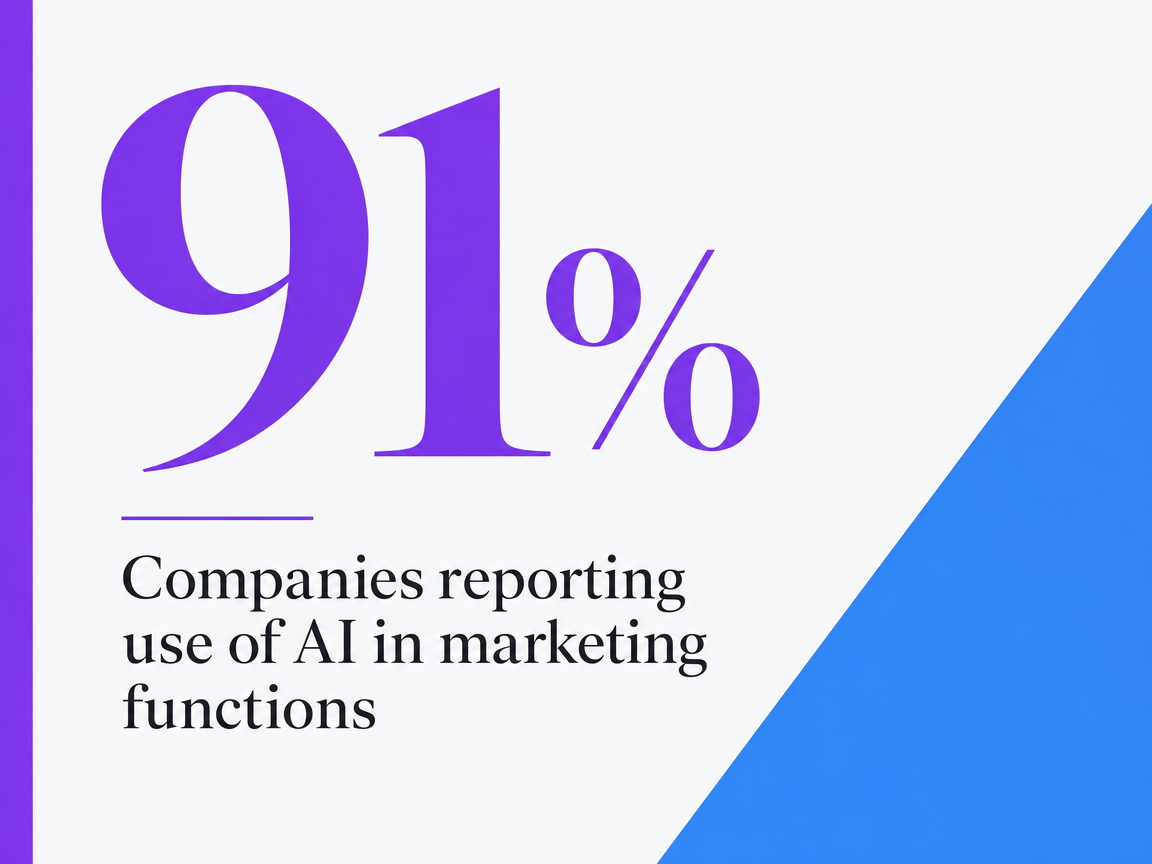 Companies reporting use of AI in marketing functions
Companies reporting use of AI in marketing functions
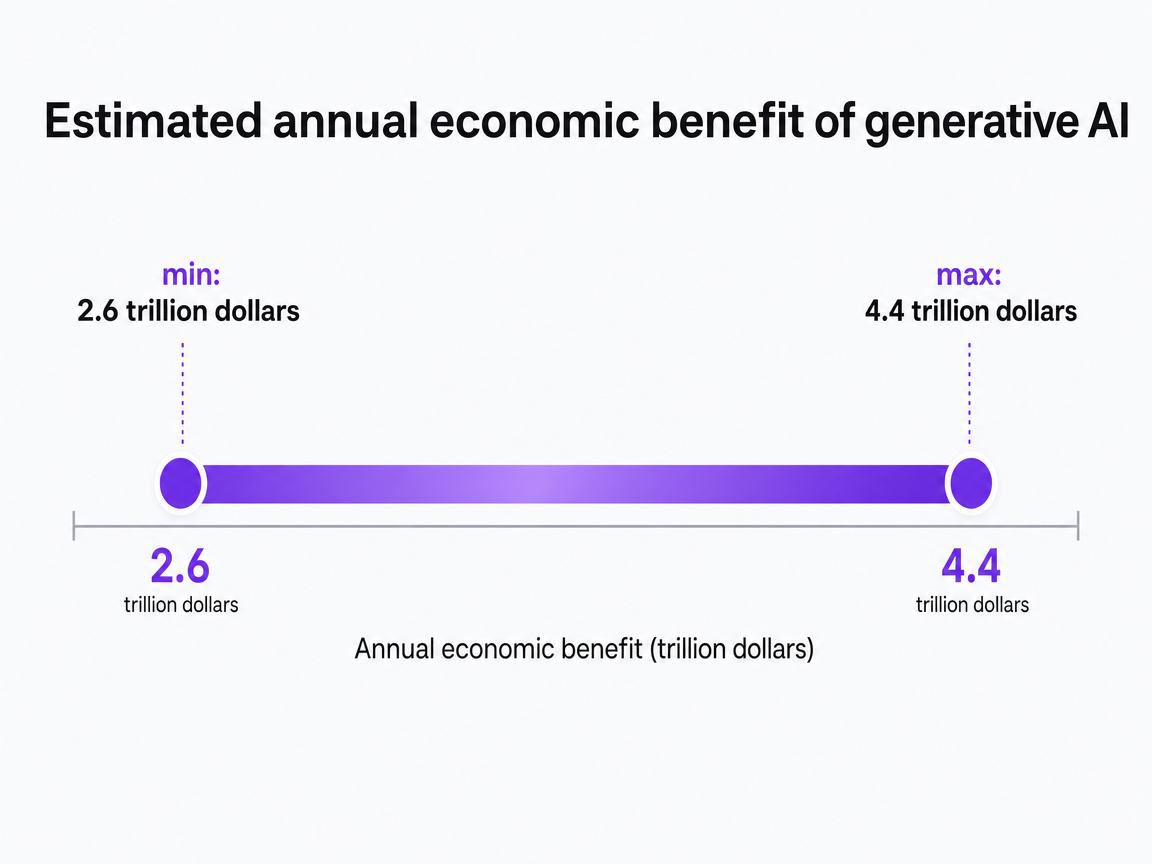 Estimated annual economic benefit of generative AI
The annual economic benefit from generative AI is estimated to be between $2.6 and $4.4 trillion across all business functions.
Frequently Asked Questions
References
- 1.The state of AI in 2023: Generative AI’s breakout year.
- 2.The State of AI: Global Survey 2025.
- 3.Marketing and sales soar with generative AI.
- 4.Reinventing marketing workflows with agentic AI.
- 5.Seizing the agentic AI advantage.
- 6.The economic potential of generative AI: The next productivity frontier.
- 7.The relevance of lead prioritization: A B2B lead scoring model based on data analytics and machine learning.
- 8.28 AI marketing statistics you need to know in 2025.
- 9.AI Will Shape the Future of Marketing.
- 10.Unlocking the next frontier of personalized marketing.
- 11.Predictive Churn Analytics: Transforming Customer Retention Strategies.
- 12.How to Unleash Cutting-Edge Marketing with Generative AI.
- 13.AI Marketing Automation: The Complete 2026 Guide for SME Teams.
- 14.Marketing Automation Workflows: AI Strategy Guide 2025.
- 15.How to Use AI in Marketing to Streamline Your Workflow.