
Key Takeaways
- Profound and Peec AI track citation share across ChatGPT, Perplexity, Gemini, and Claude, giving agencies a defensible QBR metric once results are smoothed as four-week moving averages.
- Semrush AI Toolkit and Ahrefs Brand Radar flag which client keywords trigger AI Overviews on Google, exposing the pipeline-driving terms losing clicks that rank tracking hides 2.
- WordLift and Schema App build client knowledge graphs and entity-consistent markup at scale, raising the probability that retrieval layers behind AI answers can identify and cite a source 8.
- Google Search Console and the Rich Results Test remain the free ground-truth layer for confirming schema eligibility, monitoring errors, and catching rich result display shifts before clients notice.
- AlsoAsked and Frase turn People Also Ask trees and snippet ownership into briefable content queues, which matters because voice and AI answers still lean heavily on featured snippets 5.
- Vectoron acts as the execution layer, converting diagnostics from the other tools into drafted schema, FAQ blocks, and page revisions under human approval so briefing-to-publish backlogs stop compounding across large rosters.
Why AEO analysis became a delivery requirement, not a research project
The economics of an agency SEO pod changed the moment Google started rendering AI Overviews above the tenth blue link. Traditional organic click-through rate on affected queries drops from roughly 15% without an AI Overview to 8% when one is present, and the exposure is not evenly distributed across a client's keyword set. AI Overviews appear on only 9.46% of tracked keywords but cover more than 54.61% of searches by volume, meaning the queries that actually drive pipeline are disproportionately the ones losing clicks 7.
That asymmetry is the reporting problem. A Head of SEO can hand a client a QBR showing rank stability across 800 tracked terms and still watch sessions fall, because the terms carrying the volume are the ones being summarized before the user scrolls. Rank tracking answers a question the SERP no longer asks. Agencies that cannot show which client queries trigger overviews, which brands get cited inside them, and which schema and content changes moved the needle are effectively reporting on a shrinking surface.
Answer Engine Optimization analysis exists to close that gap. It is not a research initiative or a Q3 experiment. It is a delivery function that has to sit inside the same weekly cadence as technical audits, content briefs, and link acquisition, and it has to work across 25, 50, or 80 clients without doubling the pod headcount.
The seven tools that follow are grouped by the job they do inside that delivery loop: monitoring citations across AI answer surfaces, producing and validating structured data, mapping the question space that feeds snippets and AI summaries, and shipping the resulting changes at agency scale. Feature checklists come second. What matters is which tools survive the multi-client P&L.
How to read this list: four jobs an agency AEO stack has to cover
The tools that follow split cleanly into four jobs, and every agency stack has to fill each one:
- Citation monitoring: knowing when a client brand is named, quoted, or linked inside AI Overviews, ChatGPT, Perplexity, and adjacent surfaces, and how that share moves against direct competitors.
- Schema production and validation: authoring the entity-level and page-level markup that feeds both rich results and the retrieval layers that answer engines pull from, then confirming Google can actually read it.
- Snippet and question-space analysis: mapping the People Also Ask trees, entity relationships, and featured snippet coverage that still underpin a large share of voice and AI answers 5.
- Execution: turning what the first three jobs surface into shipped pages, FAQ blocks, and marked-up templates across a 25-to-80-client roster without a linear headcount increase.
Most agency stacks are strong on jobs one and two, thin on three, and structurally broken on four. Read the list with that scorecard in mind: the goal is not to collect every tool, but to close the specific gap that keeps AEO findings from reaching a live page.
Citation trackers for AI answer surfaces
Profound and Peec AI for multi-engine citation share
Profound and Peec AI belong to a new category of trackers built specifically to measure how often a brand is cited, quoted, or linked inside AI answers across ChatGPT, Perplexity, Google AI Overviews, Gemini, and Claude. Instead of pulling a keyword rank, these tools issue a defined prompt set at a scheduled cadence, capture the model's response, and record which domains and entities the answer references. The output is a citation share number per engine, per prompt cluster, per client, which is what an agency actually needs to argue AEO progress in a QBR.
For a Head of SEO managing 25 or more accounts, the practical value is roster-level triage. A client whose brand shows up in three of ten Perplexity answers for its core commercial prompts and zero of ten in ChatGPT has a very different remediation path than a client cited nowhere. Profound leans toward enterprise buyers and expects prompt libraries to be curated by the analyst, which suits agencies willing to invest an hour per client per month building the prompt taxonomy. Peec AI is lighter, faster to configure, and more forgiving on smaller accounts.
The limitation shared by both categories is that answer engines are non-deterministic. A prompt fired twice in the same hour can return different sourced brands, and neither tool controls the underlying model's retrieval logic. That means citation share should be tracked as a moving average over at least four weekly runs, not read as a single-day snapshot. Agencies that report weekly deltas without smoothing will spend QBRs explaining noise instead of showing directional lift.
Semrush AI Toolkit and Ahrefs Brand Radar for overview-triggering query monitoring
Where Profound and Peec AI answer the question of who gets cited, Semrush AI Toolkit and Ahrefs Brand Radar answer the earlier question of which client queries even trigger an AI Overview in the first place. Both platforms overlay AI Overview presence onto an existing keyword corpus, so a Head of SEO can filter a client's tracked terms to just the subset where an overview is now rendering, then intersect that list with the terms driving pipeline. That intersection is the reporting surface most agencies are missing.
The QBR consequence is quantifiable. Ahrefs data reported by Campaign Asia shows a 34.5% CTR reduction on top-ranking pages when an AI Overview is present, with an average 15.5% CTR decline across affected keywords 2. Translated to a client with 40% of tracked keywords now overview-eligible, the math explains why sessions can fall double digits while rank tracking looks flat. Semrush AI Toolkit and Ahrefs Brand Radar give the analyst the raw list to attach to that narrative: this term triggers an overview, this brand is cited inside it, this is the projected click loss versus a pre-overview baseline.
Both tools sit inside platforms most agencies already license, which is the practical argument for adopting them first. The trade-off is coverage depth: neither replaces a dedicated citation tracker for ChatGPT or Perplexity, because their focus remains the Google surface. An agency stack that pairs one of these with Profound or Peec AI covers the two questions QBRs actually get asked, which overview queries are losing clicks and which brands are winning the citations inside them, without doubling the tooling budget. The operational move is to run a monthly export from Brand Radar or AI Toolkit into the same reporting deck as the citation tracker, so both data sets update on the same cadence.
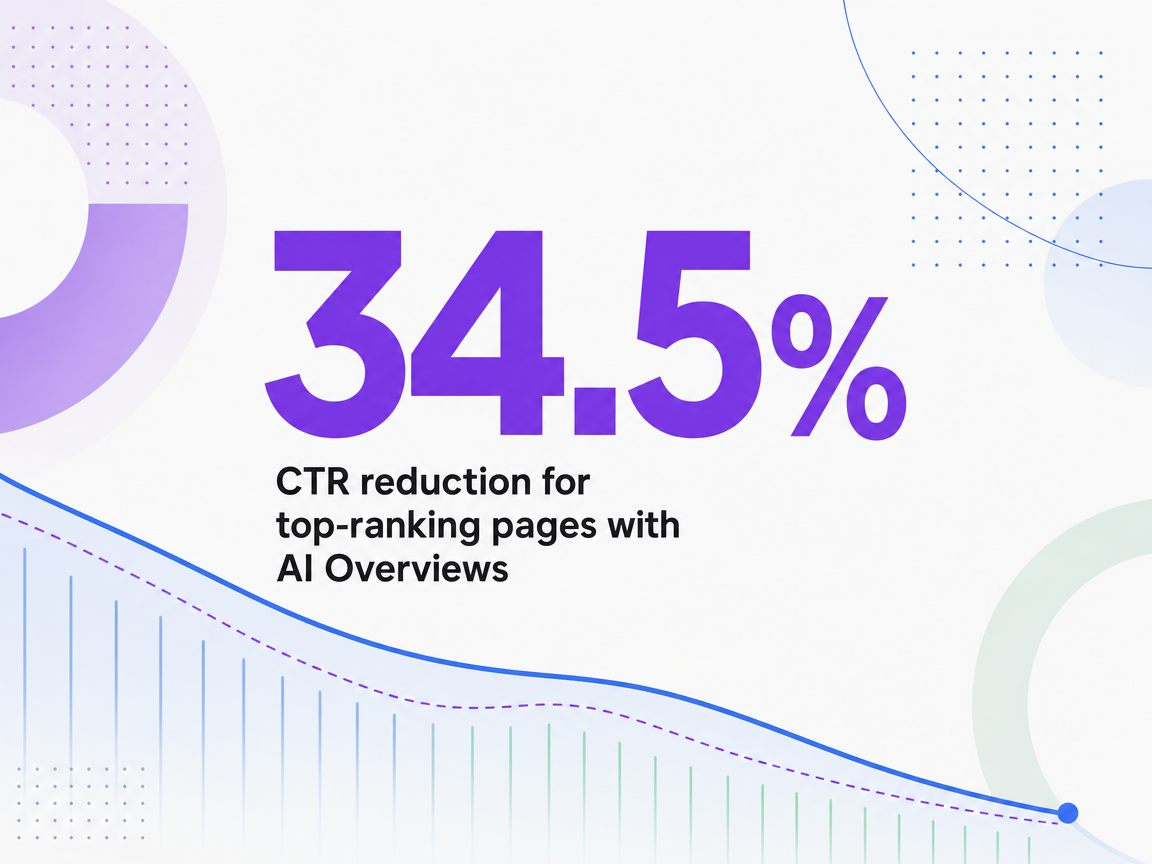 CTR reduction for top-ranking pages with AI Overviews
CTR reduction for top-ranking pages with AI Overviews
Test AEO tools on live projects instantly
Experience real-time AEO analysis and publish outcomes before making any commitment.
Schema production and validation tools
WordLift and Schema App for entity-aware markup at scale
Structured data is the layer that tells search engines and, increasingly, the retrieval systems behind AI answers what a page is actually about at the entity level. Google's own documentation frames structured data as "a standardized format for providing information about a page" that enables enhanced search features and richer surfacing 10. For an agency running content across dozens of clients, the problem is not whether to ship schema. It is how to ship entity-consistent schema across hundreds of templates and thousands of pages without hand-coding every JSON-LD block.
WordLift and Schema App are the two tools most agency stacks converge on for that job. SmarterRanking's 2026 tool comparison scores WordLift at 86 for AI-ready knowledge-graph schema and Schema App at 84 for enterprise site-wide schema 8. Both build and maintain a client-specific knowledge graph, then attach entities to pages so that a service page for a personal injury firm carries the same organization, location, attorney, and practice-area entities everywhere they appear. That consistency is what LLM retrieval layers reward when they decide which source to cite.
The operational split between the two is where agency choice usually lands. Schema App is built for enterprise deployments with site-wide governance, template-level mapping, and audit trails that a compliance-heavy vertical like healthcare or legal will actually pass. WordLift skews toward publishers and content-heavy sites where the knowledge graph is doing double duty as an internal linking and content recommendation engine. Neither is inexpensive at scale, and both are licensed per domain or per entity volume, which means adding 20 clients to a WordLift or Schema App contract is a line-item decision, not a marginal one.
The limitation both share is that a rich knowledge graph does not guarantee citation inside an AI answer. It raises the probability that an engine's retrieval step can identify the entity and pull a clean summary. Agencies that treat these tools as citation-share drivers on their own will be disappointed. Paired with the citation trackers in the previous section, they close the loop between what a client's markup says and how often it shows up as a source.
Google Search Console and the Rich Results Test as the ground-truth layer
Every schema tool in the stack produces output that has to pass through Google's own eyes before it counts. Google Search Console remains the free, non-negotiable diagnostic layer for that check, surfacing structured data errors, rich result eligibility, and index coverage in a single dashboard 3. The Rich Results Test sits alongside it as the pre-publish validator: paste a URL or a JSON-LD block, get back exactly which rich result types the page qualifies for, and see the specific properties Google is reading.
For an agency running FAQ blocks across a client roster, this pairing is the difference between shipped schema and shipped schema that actually renders. Google's FAQPage documentation makes the eligibility bar explicit, noting that properly implemented FAQPage structured data can be "eligible to be shown directly on Google Search as a rich result" 11. The Search Gallery lists every supported rich result type and its required properties, which is the reference agencies should map their templates against before rolling out schema changes at scale 4.
The workflow for a Head of SEO is straightforward:
- WordLift or Schema App produces the markup.
- The Rich Results Test confirms eligibility on a sample template.
- Search Console monitors error rates and impressions across the full property once the change ships.
When FAQ rich result display fluctuates, as it has repeatedly since 2021, Search Console is where the impact shows up first, giving the pod a signal to escalate before a client asks why a rich result disappeared. Treat this layer as free monitoring infrastructure, not a validation step to skip once the enterprise tool is in place.
Snippet and PAA coverage analysis
AlsoAsked and Frase for question-space mapping
Featured snippets and People Also Ask blocks are the connective tissue between traditional SEO and AEO. A study of 100,000 voice queries across Google Assistant, Siri, and Alexa found that 58% of voice search results are sourced from featured snippets, with Google Assistant relying on snippets 67% of the time, Siri 52%, and Alexa 45% 5. An earlier Backlinko analysis of 10,000 queries put the figure at 40.7%, a useful pre-AI-Overview baseline that shows the snippet-to-answer pipeline predates the current generative surfaces rather than being an artifact of them 6. For an agency Head of SEO, that continuity is the argument for treating snippet and PAA coverage as a durable AEO KPI, not a legacy metric on the way out.
AlsoAsked and Frase are the two tools that make the question space operational at agency scale. AlsoAsked scrapes and visualizes the PAA tree for a seed query, exposing the second- and third-order questions Google is already surfacing, which is the exact taxonomy an answer engine will pull from when it constructs a summary. Frase layers snippet ownership, competitor coverage, and content-brief generation on top of that question set, letting an analyst move from a PAA export to a ranked list of gaps in under an hour per client.
The operational value shows up in briefing throughput. A pod producing content for 30 clients cannot manually map PAA trees for every commercial cluster each month; AlsoAsked cuts that mapping to minutes, and Frase turns the output into a brief the writer or execution layer can act on. The limitation is that neither tool sees inside AI answer surfaces directly. They map the question space Google exposes on the SERP, which correlates with, but does not equal, the retrieval logic behind an AI Overview or a Perplexity citation. Pair them with the citation trackers upstream, and they become the content-planning surface that turns AEO diagnostics into a briefable content queue.
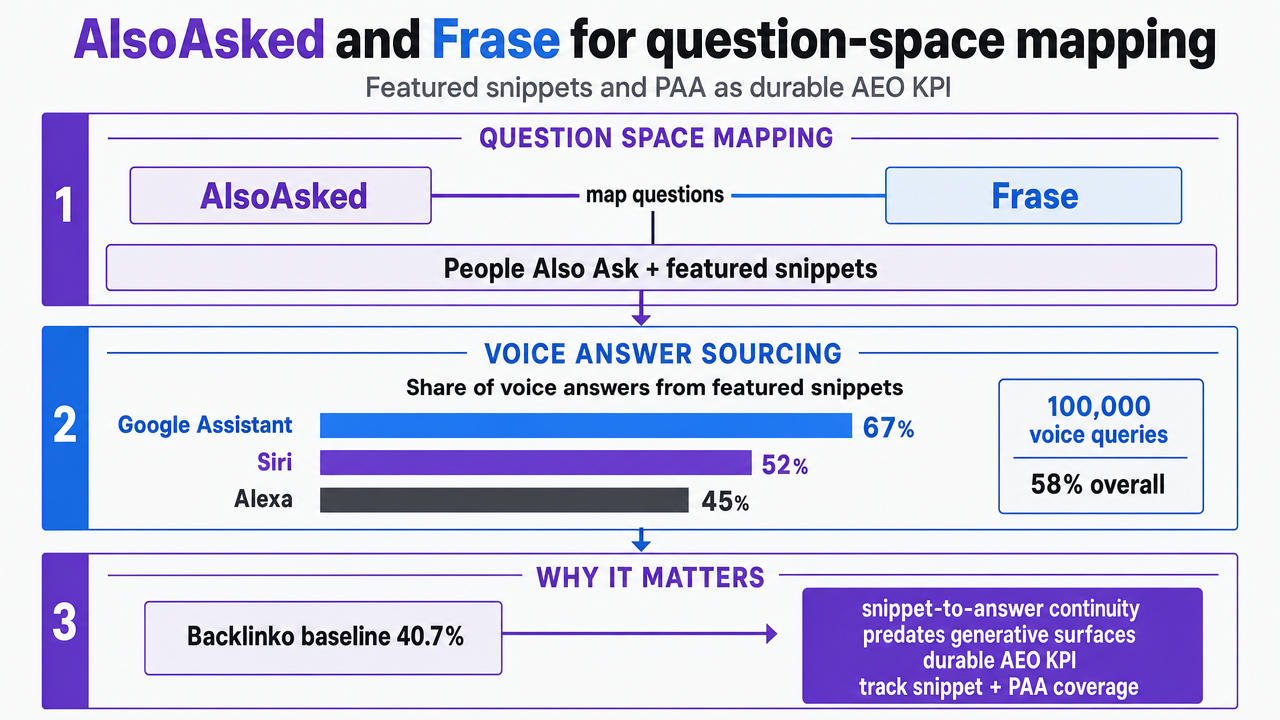 Show how voice assistants source answers from featured snippets, supporting the section's case that snippet coverage remains a durable AEO KPI
The execution layer: turning AEO findings into shipped pages
Vectoron for schema, FAQ blocks, and answer-optimized pages under human approval
The first six tools in this list produce diagnostics. None of them ship a line of code to a client site. That gap is where most agency AEO programs stall: the citation tracker flags a Perplexity blind spot on Tuesday, the schema tool identifies missing Organization entities on Wednesday, AlsoAsked exports a PAA tree on Thursday, and by Friday the pod is arguing over which writer picks up the brief. Across 40 clients, that gap compounds into a backlog measured in months.
Vectoron sits in the stack as an execution layer built for that specific bottleneck. It is an AI marketing platform with specialist strategists for content, SEO, schema, and adjacent channels, coordinated through a Command Center that routes every recommendation for human approval before anything publishes. For AEO delivery, that means citation-tracker outputs and PAA exports feed into ranked production queues, the platform drafts the FAQ blocks, JSON-LD markup, and answer-optimized page revisions, and the Head of SEO or account lead approves or rejects each change before it reaches a client CMS.
The operational value is throughput without a proportional headcount increase. A pod that would otherwise brief a writer, hand off to a developer for schema, and QA the output across a dozen templates instead reviews finished work against the AEO diagnostic that triggered it. Approval-first automation keeps the strategic judgment with the agency, which is the point most execution tools miss when they collapse review into a post-publish audit.
The trade-off is scope. Vectoron is a production and coordination layer, not a citation tracker or a schema authoring specialist in the WordLift sense. It expects the upstream diagnostics from the earlier tools in this list and turns them into shipped changes. Priced at $599 per month after a two-week trial, it competes on per-client marginal cost rather than per-seat license, which is the math that starts to matter at 25 or more accounts.
Get a Data-Driven AEO Analysis Workflow for Multi-Client Efficiency
Connect with our specialists to see how leading agencies use unified AEO tools and automation to manage analysis at scale—without increasing headcount or losing strategic oversight.
Building the stack across a client roster
Stack decisions look different at 5 clients than at 50. A boutique retainer can carry a full Profound license and a Schema App enterprise contract on two accounts because the per-client math still works. An agency running 40 to 80 accounts has to think in categories: what pays back per seat, what pays back per domain, and what pays back per shipped page. The consolidation call usually comes down to which layer of the stack is the actual bottleneck, and for most pods that layer is execution, not analysis.
The table below maps each tool category to its dominant pricing model and where cost compounds as the client roster grows. Only the Vectoron figure is a disclosed dollar amount; the rest are qualitative bands because published per-seat pricing varies by contract and is not consistent across the supplied research.
| Layer | Representative tools | Pricing model | Cost behavior at 25+ clients |
|---|---|---|---|
| Citation monitoring | Profound, Peec AI | Per-seat plus prompt volume | Compounds with prompt libraries; mid to enterprise band |
| Overview query overlay | Semrush AI Toolkit, Ahrefs Brand Radar | Per-seat on existing platform | Marginal add if platform already licensed; low band |
| Schema production | WordLift, Schema App | Per-domain or per-entity volume | Line-item per client; mid to enterprise band 8 |
| Schema validation | Google Search Console, Rich Results Test | Free | Flat; time cost only 3 |
| Question-space mapping | AlsoAsked, Frase | Per-seat with query caps | Scales with analyst headcount; low to mid band |
| Execution layer | Vectoron | $599 per month after two-week trial | Per-client marginal cost falls as roster grows |
The pattern that emerges is straightforward. Analysis tools bill per seat or per domain, so they scale linearly with either the pod or the client book. Execution tools that price on a flat platform basis change the marginal math: the cost of shipping the fortieth client's FAQ block is close to the cost of shipping the tenth. Agencies that consolidate the diagnostic layers around what their existing SEO platform already covers, and put the savings into an execution layer that removes the briefing-to-publish gap, usually protect margin faster than agencies that buy every category at enterprise tier.
A 30-day sequence for putting the stack into delivery
Buying the tools is the easy part. Getting them into a weekly delivery rhythm across a client roster is where most agency AEO programs stall. A compressed 30-day sequence keeps the rollout tight enough to defend in a partner meeting and long enough to produce QBR-ready data.
- Week 1: baseline the exposure. Export every client's tracked keyword set through Semrush AI Toolkit or Ahrefs Brand Radar to flag which terms now trigger AI Overviews. Cross-reference against pipeline-driving queries so the shortlist reflects revenue, not vanity coverage. Score each client from highest to lowest overview exposure.
- Week 2: stand up citation tracking. Build a 20-to-40-prompt library per client in Profound or Peec AI, weighted toward commercial and comparison prompts. Run the first cycle, capture the baseline citation share across ChatGPT, Perplexity, and Google AI Overviews, and note which competitor brands are winning the sourced slots.
- Week 3: audit and produce schema. Run the top 25 pages per client through the Rich Results Test, log gaps in Search Console, and route Organization, FAQPage, and entity-level fixes through WordLift or Schema App. Validate before shipping.
- Week 4: brief and execute. Convert AlsoAsked and Frase exports into a ranked production queue, push it through the execution layer for drafting, and review every FAQ block and page revision under the approval workflow before it publishes. By day 30, the pod has a repeatable weekly cadence and a QBR narrative built on measured deltas rather than anecdotes.
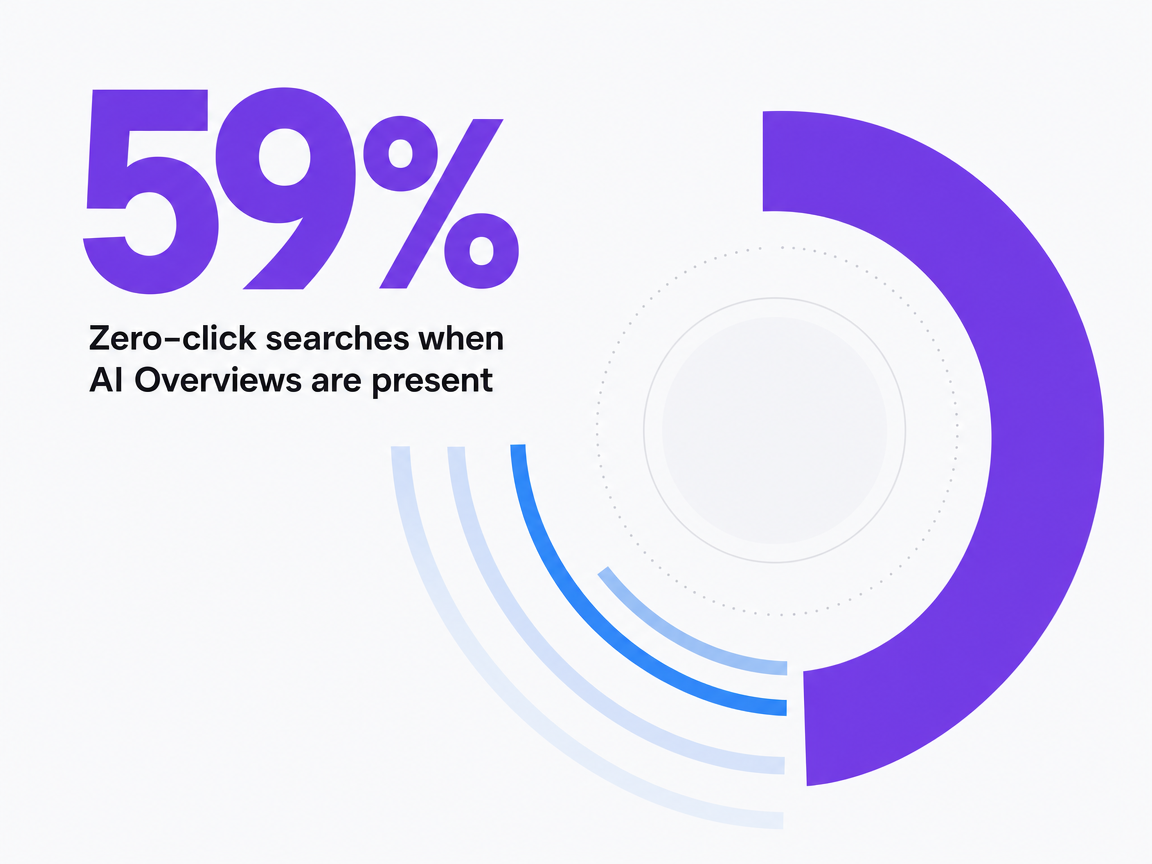 Zero-click searches when AI Overviews are present
Zero-click searches when AI Overviews are present
Frequently Asked Questions
References
- 1.How Do AI Overviews Affect SEO? (And How to Counter ....
- 2.Rethinking SEO: How Google's AI Overviews are changing the game.
- 3.Best Schema Markup Tools for SEO in 2025 | hrefStack SEO Guides.
- 4.Search Gallery | Google Search Central.
- 5.58 Percent of Voice Search Results Come from Featured Snippets.
- 6.Voice Search SEO Study: Results From 10k ....
- 7.AI Overview Statistics: What the Data Says About Google's ....
- 8.Best Schema Markup Tools (2026): Ranked & Scored · SR.
- 9.Studies Show Google AI Overviews Reduce Clicks to Websites.
- 10.Introduction to Structured Data | Google Search Central.
- 11.FAQPage structured data | Google Search Central.