
Key Takeaways
- Profound monitors citations across ChatGPT, Perplexity, Google AI Overviews, and Gemini, converting vague AI visibility questions into tracked prompt-level line items a strategist can defend.
- Peec AI scores share of voice against a defined competitor set, giving QBRs a market-share narrative that survives the collapse of click-based reporting.
- Ahrefs Brand Radar consolidates AEO monitoring inside the same interface used for backlinks and rankings, making it the low-marginal-cost choice for agencies already on Ahrefs.
- Semrush AI Toolkit adds prompt tracking to existing keyword projects, letting Semrush-native agencies extend AEO coverage without rebuilding tagging or reporting scaffolding.
- Otterly.AI solves prompt-space discovery, surfacing the queries and cited domains rank tracking cannot see, especially valuable for a book concentrated in one vertical.
- Writesonic GEO and Athena HQ engineer content for citation density and structured claims, turning monitoring alerts into rewrite briefs instead of analyst drafting hours.
- Frase accelerates answer-first briefing by extracting the questions and entities engines surface, tripling brief throughput when a shipping pipeline already exists downstream.
- Schema App governs JSON-LD across large portfolios, scaling the entity markup layer that correlates with a 30 to 40% generative visibility lift 3.
- AlsoAsked and AnswerThePublic feed observed user questions into AEO briefs at negligible cost, sharpening prompts across a full roster without ongoing management overhead.
- Vectoron orchestrates monitoring, scoring, and content signals through an approval-first Command Center, the layer that lets one strategist push past 40 accounts without breaking reporting cadence.
The delivery-margin case for adding AEO to the stack
Zero-click search is no longer a trend line to watch. Similarweb clickstream data covering the first four months of 2026 shows that 68.01% of U.S. Google sessions ended without a click to an external site, up from the 58.5% baseline SparkToro measured across American Google searches in 2024 5, 9. That roughly 9.5-percentage-point swing lands directly on agency P&Ls, because the queries most likely to resolve inside an AI answer are the informational and mid-funnel terms that historically anchored content programs and QBR narratives.
For heads of SEO managing 10 to 150 clients, the shift changes what "delivery" means. Ranking reports still populate, but a growing share of the impressions behind them never convert into a visit. Clients notice the gap between position and pipeline before the strategist does, and retention conversations start turning on a question rank tracking cannot answer: whether the brand is being cited inside the AI response that replaced the click.
Answer Engine Optimization tooling exists to close that gap. The ten platforms below are evaluated on how well each one lets a single strategist cover a roster, not on feature depth. Scaling economics, not novelty, decide which ones earn a slot in the stack.
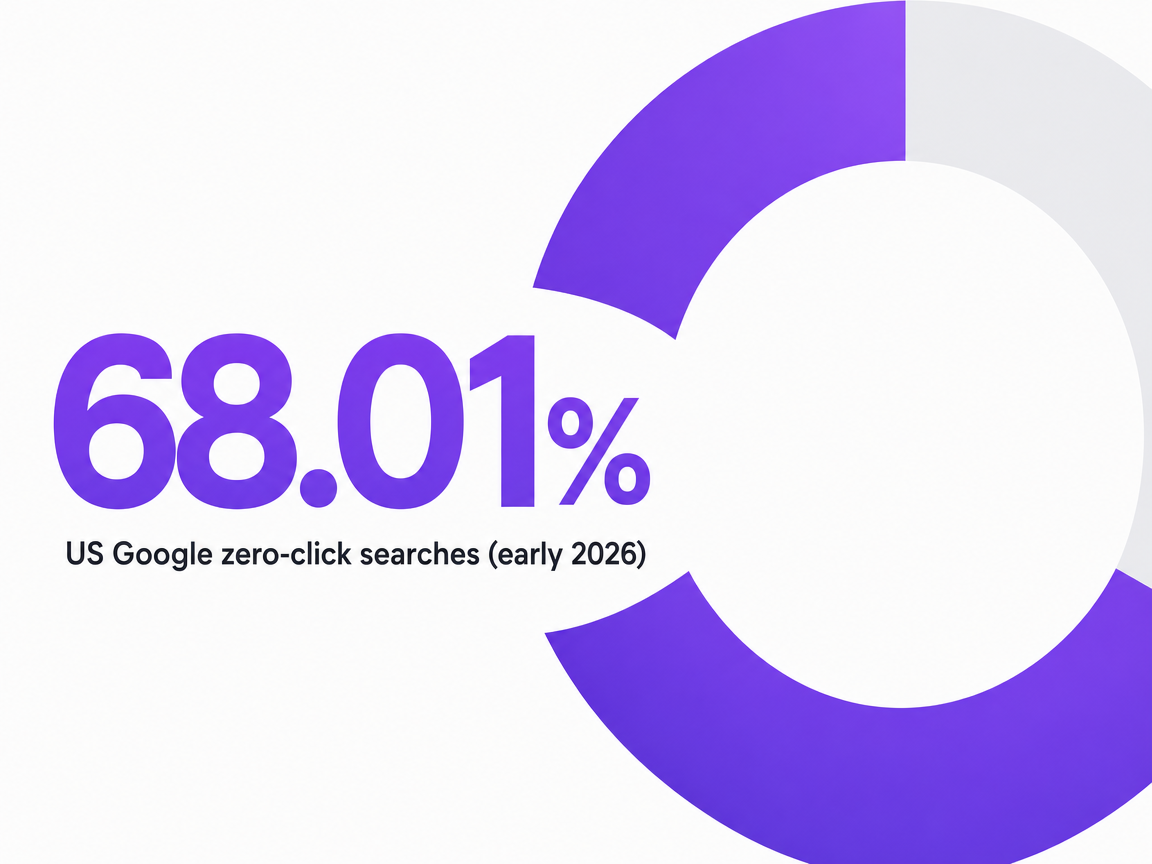 US Google zero-click searches (early 2026)
US Google zero-click searches (early 2026)
How the ten tools were evaluated
The shortlist below uses three filters, borrowed from the taxonomy AEO platforms have converged on:
- does the tool monitor citations inside AI answers,
- does it score share of voice against a defined competitive set, and
- does it produce workflow output an agency can actually ship 10.
A platform that does one of these well earns a slot. A platform that requires an analyst to translate its output before it becomes client work does not.
Feature depth was deliberately deprioritized. The scaling question for a head of SEO is whether a strategist can cover 15, 30, or 50 accounts using the tool without the reporting cadence breaking. Each entry closes with a coverage verdict expressed in that variable, not in stars or scores.
Integration also mattered. The integrated framework research treats SEO, GEO, and AEO as one optimization surface rather than three parallel workstreams 14, so tools that assume AEO is a separate silo were penalized against tools that plug into existing keyword, content, and technical audit workflows.
Strategist coverage economics: hours per client per month
The head-of-SEO question is not whether AEO belongs in the retainer. It is how many clients one strategist can carry once AEO joins the delivery list. Bain estimates zero-click behavior has already reduced organic web traffic by 15–25% across surveyed markets, with roughly 80% of consumers relying on zero-click results for at least 40% of their searches 6. That range sets the ceiling on how much ranking-only reporting can still justify a retainer, and it defines the labor problem: AEO work has to be absorbed without proportional headcount growth.
Three delivery models sit on the table:
- A manual model, where a strategist runs prompts by hand across ChatGPT, Perplexity, and Google AI Overviews, logs citations in a spreadsheet, and drafts remediation briefs from scratch.
- A point-tool model, where a monitoring platform handles citation tracking but the strategist still assembles reporting and hands content changes to production.
- An orchestrated model, where monitoring feeds a workflow layer that queues briefs, routes approvals, and pushes shipped work to CMS.
The hours-per-client math is what determines roster size. On informational queries where the CTR collapse is steepest—58% in Ahrefs data and 61% in Seer Interactive data for position-1 results with an AI Overview present 7—the manual model burns strategist time on diagnostic work that no longer converts to client-facing wins.
| Delivery model | Strategist hours per client / month | Realistic clients per strategist |
|---|---|---|
| Manual AEO (no tooling) | 8–12 | 8–12 |
| Point-tool AEO (monitoring only) | 4–6 | 16–25 |
| Orchestrated AEO (monitoring + workflow) | 1.5–3 | 33–65 |
Ranges are directional and assume mid-sized service-business retainers with an existing SEO baseline. The gap between rows is the delivery-margin argument for the tools that follow.
Test AI-driven AEO workflows on live projects
Experience measurable SEO delivery gains using real client content during your unrestricted trial period.
The ten tools
Profound: AI answer monitoring across engines
Profound sits in the monitoring category, tracking how a brand shows up inside ChatGPT, Perplexity, Google AI Overviews, and Gemini responses. Its core job is to run defined prompt sets on a schedule and log which sources each engine cites, which competitors it surfaces, and how the phrasing of the answer changes over time. That maps directly to the AEO tool taxonomy of monitoring LLM responses and flagging content the engines extract or skip 10.
For an agency, the value is not the raw data but the ability to point at a specific prompt and say the client was cited on Tuesday and dropped by Friday. That converts vague "are we in ChatGPT" client questions into a tracked line item.
Coverage verdict: Profound handles the monitoring layer well enough that one strategist can maintain prompt sets for 20 to 30 clients, provided reporting is templated. It does not produce content changes, so it needs a briefing tool downstream. Agencies treating Profound as the whole AEO answer will still burn analyst hours translating alerts into shipped work.
Peec AI: share-of-voice benchmarking for client QBRs
Peec AI focuses on the scoring layer of the AEO stack: it measures how often a brand appears in generative answers relative to a defined competitor set, then trends that share of voice across engines and prompt clusters. The output is closer to a market-share chart than a rank tracker, which is what most QBRs actually need once informational rankings stop correlating with traffic.
Where Peec earns its slot is the reporting artifact. A share-of-voice number that a strategist can defend in a client meeting, alongside the prompts driving it, gives QBRs a narrative that survives the collapse of click-based storytelling.
Coverage verdict: Peec pairs cleanly with a monitoring tool rather than replacing one. A strategist running Peec for benchmarking plus a citation monitor for surveillance can cover 15 to 25 clients before reporting assembly becomes the bottleneck. Agencies without a defined competitive set per client will get less out of it, since the score needs comparators to mean anything.
Ahrefs Brand Radar: incumbent AEO for agencies already paying for Ahrefs
Ahrefs added Brand Radar to surface mentions and citations across AI answer engines inside the same interface strategists already use for backlinks and keyword tracking. The pitch is consolidation: no new login, no new billing line, and prompt-level visibility that lives next to the SERP data teams already report on.
The integrated SEO, GEO, and AEO framework argues these disciplines share one optimization surface rather than three parallel ones 14, and Brand Radar is one of the clearer examples of that principle inside an incumbent platform. For agencies already paying Ahrefs seats across a delivery team, the marginal cost of adding AEO visibility is low.
Coverage verdict: Brand Radar is not the deepest monitoring tool on this list, but it is the most efficient for agencies with existing Ahrefs contracts. A strategist can layer it across 25 to 40 clients without adding a new workflow, since the alerts land in the same interface as backlink and rank alerts. Standalone AEO specialists still outperform it on prompt-space depth.
Semrush AI Toolkit: prompt tracking bolted to existing keyword workflows
Semrush's AI Toolkit takes a similar consolidation approach, adding AI visibility tracking, prompt monitoring, and content optimization suggestions inside the existing Semrush project structure. Clients that already sit inside Semrush as keyword projects get an AEO layer without a separate onboarding.
The practical benefit is that prompt tracking inherits the same tagging, reporting, and multi-location project structure agencies have already built. A strategist who has spent two years organizing 40 client accounts inside Semrush does not have to rebuild that scaffolding elsewhere.
Coverage verdict: The AI Toolkit is a fair fit for agencies whose delivery is already Semrush-native. A strategist can extend AEO coverage across 20 to 35 clients using it, though the depth of prompt discovery lags behind dedicated tools like Otterly. Agencies with clients in verticals where prompt behavior is highly niche—regulated healthcare, legal specialties, senior living—will find the prompt library thinner than a specialist platform, and will still need a discovery tool to fill the gap.
Otterly.AI: prompt-space discovery and citation surveillance
Otterly.AI concentrates on the discovery problem: what prompts do users actually run in the verticals a client competes in, and which sources are the engines citing when they answer. The tool tracks brand and non-brand prompts across engines and surfaces the citation graph behind each answer, which is where visibility now lives.
The Authoritas study analyzing 2,900 brand and product-related keywords across 15 industries found that Google displays SGE-style results on 91.4% of queries, and that many cited domains sat outside the top 10 organic results 15. Prompt-space discovery matters because rank tracking cannot see the domains SGE is actually pulling from. Otterly is built for that gap.
Coverage verdict: Otterly is a specialist tool that pairs with a monitoring or scoring platform rather than replacing one. A strategist using it for prompt discovery across a defined vertical—say, a book of 15 to 20 legal or dental clients—can generate briefs monitoring tools would not surface. It becomes less useful when spread thinly across unrelated verticals.
Writesonic GEO / Athena HQ: content engineering for citation density
Writesonic's GEO features and Athena HQ occupy the content engineering layer. They score existing pages against generative visibility criteria—citation density, statistical grounding, structured claims, entity clarity—and suggest rewrites intended to earn inclusion in AI answers. The premise rests on empirical work by Aggarwal et al., which found that content tuned for verifiability, statistics, and citations can boost visibility by up to 40% in generative engine responses depending on domain and metric 2.
The agency use case is remediation at scale. Once a monitoring tool flags a page that is being skipped by an engine, a content engineering tool turns the diagnosis into a rewrite brief without the strategist drafting from scratch. That is the difference between AEO as an analyst function and AEO as a production line.
Coverage verdict: Content engineering tools compress the remediation step from hours to minutes per page. A strategist paired with one can push AEO-driven rewrites across 25 to 40 clients, assuming a production team or automation layer ships the actual updates. Without a downstream execution path, the briefs stack up.
Frase: answer-first briefs that ship faster per strategist
Frase is a briefing tool built around answer-first content structure. It scrapes the SERP and generative results for a target query, extracts the questions and entities the engines are surfacing, and produces a brief a writer or AI production system can execute against. It is not a monitoring tool and does not claim to be.
The value for AEO delivery is throughput. Once a strategist has identified a prompt where a client is losing citation share, Frase compresses the briefing step—the part that usually eats two to four hours per page—into a repeatable pass.
Coverage verdict: Frase is a workflow accelerator, not a strategic layer. A strategist using it can produce two to three times the briefs per week compared to manual drafting. It fits agencies that already have a shipping pipeline downstream and need to feed it faster. Agencies without that pipeline will produce briefs that sit unread.
Schema App: entity and structured data at portfolio scale
Schema App handles structured data deployment across large sites, managing JSON-LD at a scale where hand-coding schema per page is untenable. The AEO relevance is direct: research on content built for AI-first search environments found that structured data and authentic citations correlate with a 30 to 40% visibility increase in generative results compared to unstructured content 3.
For agencies running multi-location clients or portfolios of 20-plus sites, the alternative to a schema management tool is a schema spreadsheet no one wants to own. Schema App turns entity markup into a governed, updateable layer instead of a one-time technical project.
Coverage verdict: Schema App scales the technical AEO layer that gets skipped when strategists are stretched thin. One strategist can maintain entity coverage across 30 to 50 clients using it, as long as templating is set up per vertical. Agencies without multi-location or portfolio clients will find it heavier than needed; a lighter schema generator is sufficient for single-domain accounts.
AlsoAsked and AnswerThePublic: question-mining for AEO briefs
AlsoAsked and AnswerThePublic pull the questions real users are asking around a topic, structured as trees or clusters. Neither is an AEO tool in the strict sense, but both feed the input layer of an AEO brief: the actual prompts and follow-ups that generative engines are trained to answer.
The output is question inventory, not visibility. That makes these tools cheap, fast, and best used at the start of a content cycle rather than during monitoring.
Coverage verdict: Question-mining tools cost little and require almost no ongoing management. A strategist can run them across the full client roster—50-plus accounts—without measurable time cost. They do not replace monitoring or content engineering, but they sharpen the prompts fed into both. Skipping them means briefing off assumed queries instead of observed ones.
Vectoron: the orchestration and approval layer above the monitoring stack
Every tool above produces output that still requires a strategist to translate into shipped work. That translation step is where the delivery-margin math breaks for agencies scaling past 25 or 30 clients. Vectoron sits above the monitoring, scoring, and content engineering layers as an orchestration and approval workflow, ingesting AEO signals and routing ranked recommendations through a Command Center where a strategist approves, edits, or rejects each item before execution.
The design choice that matters here is approval-first. Nothing ships without a human decision, which preserves the oversight heads of SEO refuse to give up, while removing the hours spent assembling briefs, reformatting reports, and coordinating handoffs. Specialist AI strategists handle content, SEO, backlinks, and adjacent channels inside one governed loop, so an AEO citation drop can trigger a briefed and approved rewrite in the same session rather than a three-week ticket cycle.
Coverage verdict: Orchestration is what moves a strategist from 25 accounts to 40-plus without breaking reporting cadence. Vectoron pairs with, rather than replaces, the monitoring and discovery tools above. Agencies without an upstream monitoring layer should add one before layering orchestration on top.
Building the stack: which tools combine, which cannibalize
The ten tools split into five jobs:
- monitoring,
- share-of-voice scoring,
- prompt discovery,
- content engineering, and
- workflow orchestration 10.
Stacking one tool per job is the ceiling. Stacking two tools in the same job is where budget leaks start.
Profound and Peec AI combine well because one watches citations and the other benchmarks them against a competitive set. Running both Profound and Ahrefs Brand Radar cannibalizes; the incumbent covers monitoring at lower marginal cost for agencies already inside Ahrefs. The same logic applies to Semrush AI Toolkit: it replaces a standalone monitor for Semrush-native agencies, but layering it beside Profound duplicates prompt tracking without adding depth.
Otterly.AI pairs with, not against, monitoring tools. It answers a different question—what prompts exist—before the monitor asks who is cited. Writesonic GEO and Athena HQ overlap enough that most agencies pick one; running both produces two rewrite queues no strategist has time to reconcile.
The one job with no incumbent substitute is orchestration. Monitoring tools do not ship work. Content engineering tools do not route approvals. A workflow layer sitting above the stack is what turns diagnostic output into published pages, which is the step that decides whether AEO becomes a retainer line or a research project.
See How Leading Agencies Automate AEO Execution Without Expanding Their Teams
Connect with our experts to explore AEO tools that enable scalable, approval-driven SEO delivery—backed by data, real-world benchmarks, and multi-client operational insights.
Reporting AEO to clients without inventing a new QBR
The trap most agencies fall into is bolting an AI visibility deck onto the existing QBR, doubling the length of the meeting and diluting the narrative. Clients do not want two reports. They want one story that explains why traffic moved and what the agency is doing about it.
The cleaner approach is to fold AEO into the existing sections rather than create a parallel track. Where the QBR historically led with keyword rankings, it now leads with visibility across both classic results and AI answers, using share-of-voice from a scoring tool as the headline metric. Where the report showed CTR, it now shows citation frequency inside generative responses alongside it. The research consolidating SEO, GEO, and AEO into one optimization surface supports this treatment: they are not separate disciplines requiring separate reporting cadences 14.
One structural change matters. The traffic section needs a caveat that ties movement to the zero-click shift, otherwise strategists spend the meeting defending declines that were never within their control. A single line noting that Bain estimates zero-click behavior has reduced organic traffic by 15 to 25% 6reframes the conversation from "why is traffic down" to "here is what we are winning inside the answer."
If you manage a portfolio of 50+ clients
Scope shift: the stack advice above assumes a book of 15 to 40 accounts. Once a delivery team crosses roughly 50 clients, the constraint changes from analyst hours to reporting infrastructure, and the tool choices narrow.
At that scale, standalone monitoring platforms lose against incumbent AEO layers inside Ahrefs or Semrush. The reason is not depth but seat economics and data portability. Portfolios that size already have keyword projects, backlink workflows, and technical audits inside one of the two incumbents; adding a parallel monitoring tool creates two dashboards per client and doubles the export-and-reconcile step every reporting cycle.
Content engineering and orchestration become non-negotiable in the same range. The Aggarwal et al. finding that GEO techniques can lift generative visibility by up to 40% 2only matters if remediation actually ships, and at 50-plus accounts, briefs sitting in a queue are the failure mode. A workflow layer that routes ranked recommendations through approval, rather than a strategist assembling each one, is what separates a 50-client roster from a 30-client roster with better dashboards.
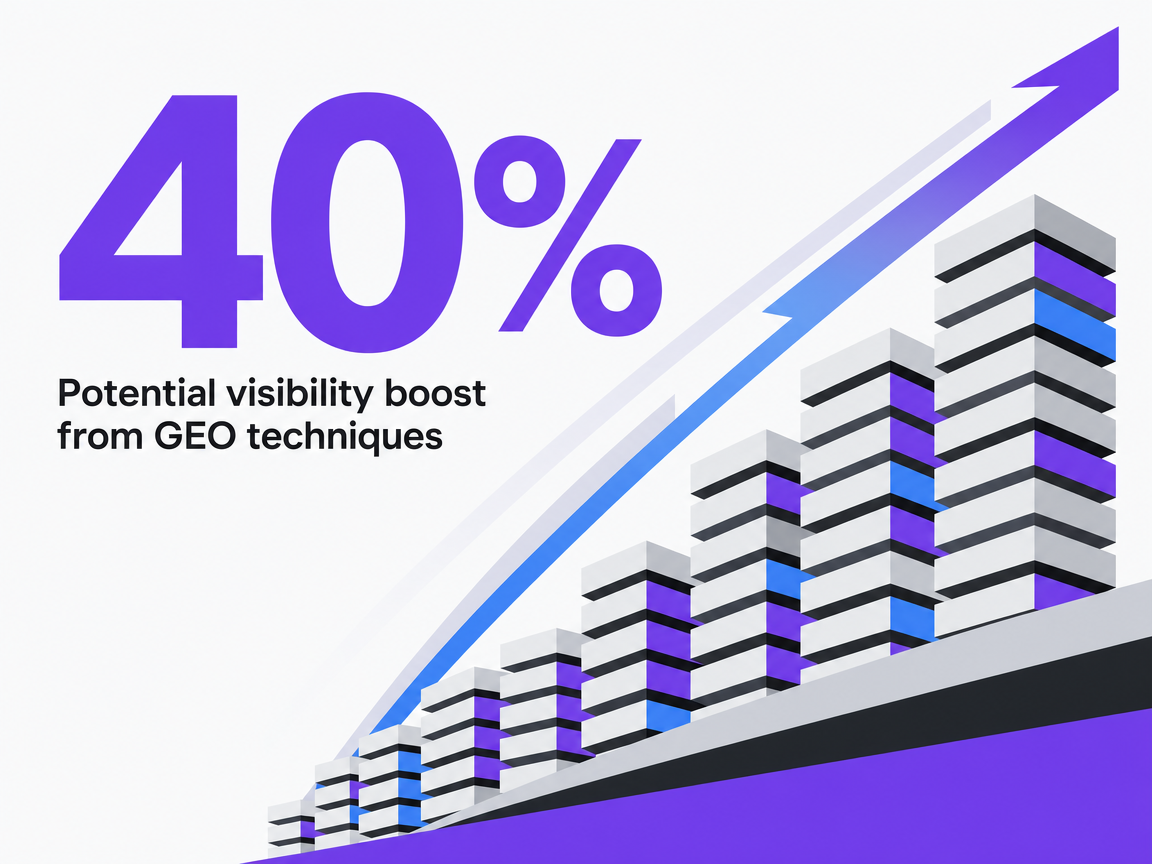 Potential visibility boost from GEO techniques
Potential visibility boost from GEO techniques
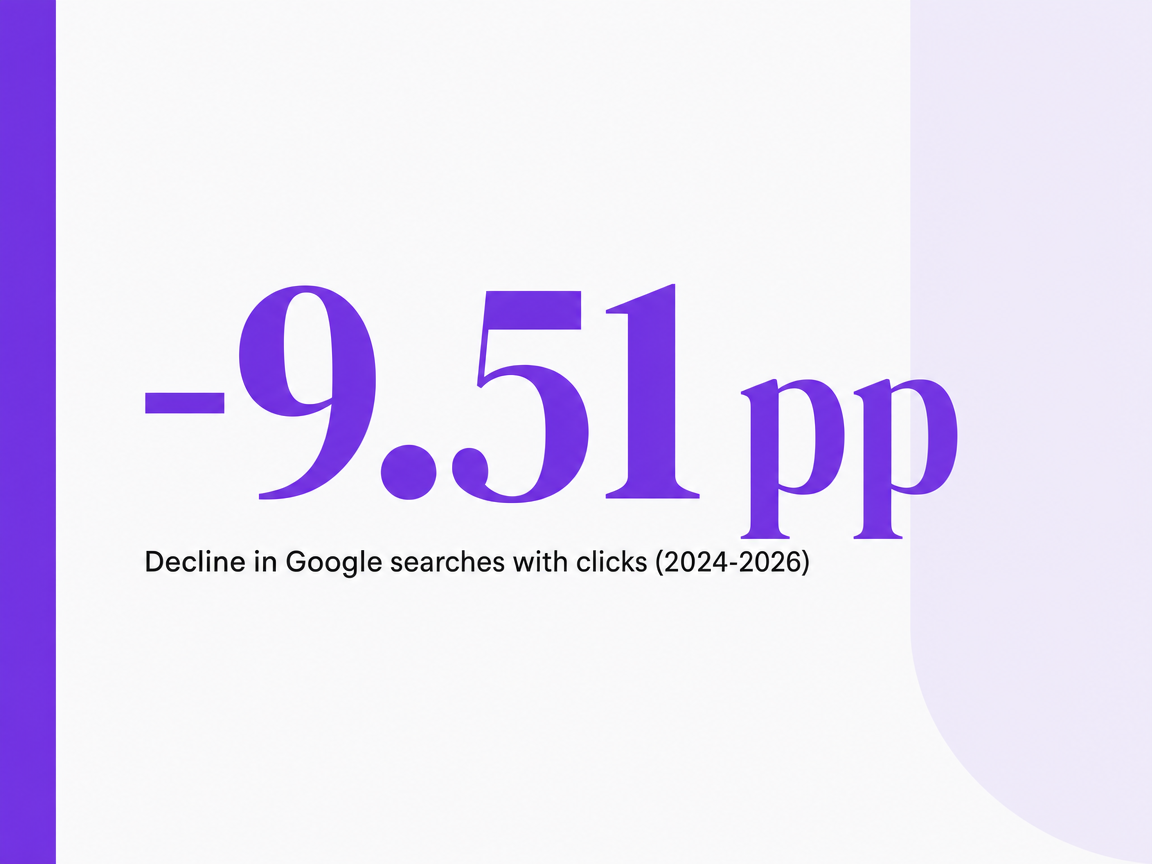 Decline in Google searches with clicks (2024-2026)
Decline in Google searches with clicks (2024-2026)
Frequently Asked Questions
References
- 1.An Exploratory Study on the Impact of Generative AI (Search Generative Experience (SGE)) on Traditional SEO Strategies.
- 2.GEO: Generative Engine Optimization.
- 3.Generative Engine Optimization (GEO): Crafting Content for AI-First Search Environments.
- 4.Generative Engine Optimization: How to Dominate AI Search.
- 5.Google zero-click searches reach 68% in early 2026: Study.
- 6.Goodbye Clicks, Hello AI: Zero-Click Search Redefines Marketing.
- 7.The Strategic Shift: Google Search Generative Experience.
- 8.Zero Click Search: What it is and How to Optimize in 2026.
- 9.Zero Click Searches | AI Overviews and CTR.
- 10.Best Answer Engine Optimization Tools: 9 AEO Platforms for AI Search.
- 11.Impact of Google AI Overviews on Organic SEO Traffic.
- 12.Will Google AI Overviews Kill Traditional SEO? An In-Depth Analysis.
- 13.A Critical Survey of Generative Engine Optimization (2023–2025).
- 14.Optimizing for the Artificial Intelligence Driven Search Era: An Integrated Framework for Search Engine Optimization, Generative Engine Optimization, and Answer Engine Optimization.
- 15.Google SGE: Study Reveals Potential Disruption For Brands & SEO.