
Key Takeaways
- Enterprise AI visibility platforms with SEO-suite integration add AI metrics to existing dashboards, avoiding duplicate reports but often skewing toward Google AI Overviews over ChatGPT, Perplexity, Claude, and Gemini.
- Multi-LLM citation trackers run governed prompt libraries across five engines and smooth run-to-run volatility into defensible scores, but stop at the dashboard and leave remediation to delivery teams.
- AI Overview and SERP feature trackers extend classic rank reports with an AI Overview column, giving account managers continuity while missing exposure on ChatGPT, Perplexity, Claude, and Gemini entirely.
- Answer Engine Optimization platforms connect earned citations to specific content actions like FAQ format and schema, but under-report the roughly 73% of brand mentions that arrive without a source link 10.
- Sentiment and source-mix specialists surface reputation risk inside AI answers for high-stakes verticals, though engine and prompt caps make full-book coverage expensive to sustain at agency scale.
- Lightweight prompt checkers deliver fast spot audits for pitches and QBRs, but lack prompt libraries and run aggregation, so they misreport monthly performance given only 30% run-to-run brand stability 10.
- Workflow-integrated execution platforms route AI visibility signals into approval-gated action queues across content and SEO, compressing measurement-to-publication cycle time in a still-consolidating tool category.
Why AI visibility became a reportable performance layer
Client questions have shifted. The account director on a Tuesday call is no longer asking about a keyword drop on page two. She is forwarding a screenshot from her CMO: "We asked ChatGPT for the best dental group in Phoenix. We weren't listed. Why?"
The pressure is quantifiable. Research synthesized in late-2025 guidance places AI Overviews in roughly 55% of Google searches as of December 2024, primarily on informational queries, and documents the average click-through rate for the top-ranking organic result falling from 7.3% to 2.6% when an AI Overview is present 3. That is a compression event, not a ranking event. The page still ranks. The clicks route differently.
Agency SEO leads have started treating AI visibility as its own performance layer for a specific reason: classic rank tracking cannot see it. A brand can hold position one on a target term and still be absent from the AI Overview source slots, the ChatGPT recommendation set, or the Perplexity citation list. Enterprise measurement guidance now organizes AI visibility as a distinct layer sitting alongside impressions, positions, and conversions rather than replacing them 7.
That framing matters for delivery economics. Agencies running 15 to 80 client accounts cannot bolt a new manual audit onto every monthly report. The seven trackers reviewed here are evaluated against that constraint: whether they produce reportable, defensible AI visibility data at the scale a modern client book demands, not whether they check a box in a sales demo.
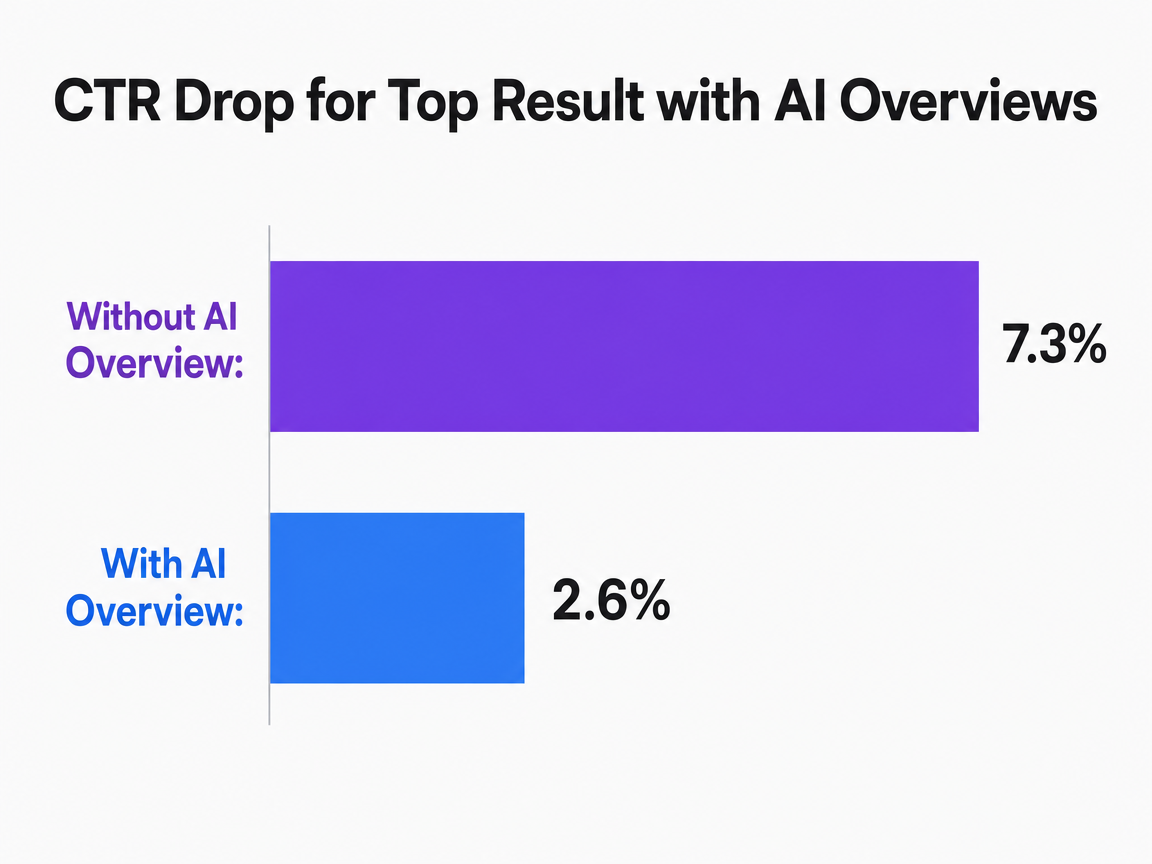 CTR Drop for Top Result with AI Overviews
Compares the average click-through rate (CTR) for the #1 organic search result with and without the presence of an AI Overview, showing a significant decline.
The measurement problem most listicles skip: volatility and ghost citations
Two numbers should sit at the top of any tracker evaluation. Analysis of AI visibility measurement finds that 73% of AI brand mentions are ghost citations, and only 30% of brands hold across back-to-back runs of the same prompt 10. Both figures reshape what a defensible client report can claim.
A ghost citation is a brand named or recommended inside an AI answer with no clickable source link back to the brand's own domain. The mention exists. The referral trail does not. Traditional web analytics never sees it, and any tracker that measures only cited URLs will undercount actual brand exposure by roughly three-quarters. Trackers that classify mentions separately from linked citations produce a fundamentally different report than trackers that only crawl the source panel.
The run-to-run stability figure is the sharper operational problem. AI engines generate probabilistically. The same prompt run twice, thirty minutes apart, returns different brand sets seven times out of ten 10. A single-snapshot audit is closer to a coin flip than a measurement. Any tracker that reports a brand's AI visibility from one query pass is selling volatility as signal.
That is why prompt-set governance and refresh cadence matter more than raw engine count. A tracker covering five engines with one weekly run per prompt will produce noisier data than a tracker covering three engines with a governed prompt library sampled multiple times per week and aggregated into rolling averages. The 8,400-prompt framework published in 2026 formalizes this: brand mention rate, share of voice, source mix, sentiment, and citation persistence are only meaningful when measured across a stable prompt library over time, not from spot checks 4.
Agency leads evaluating trackers should ask two questions before any feature comparison. How does the platform separate ghost mentions from linked citations, and how many runs per prompt does it aggregate before reporting a visibility score? If either answer is vague, the resulting client dashboard will overstate wins on lucky runs and miss steady erosion on unlucky ones.
A working taxonomy: three tracker categories agency leads keep conflating
Vendor pages talk about "AI SEO tracking" as if it were one product category. It is three. Enterprise guidance from 2025 organizes AI-era measurement around three foundational pillars: Answer Engine Optimization (AEO), AI Visibility Metrics, and SERP Feature Tracking 6. Each pillar answers a different question, tracks a different unit of exposure, and produces a different client conversation.
AEO platforms measure citations earned. The unit of analysis is the source slot inside an AI answer, the URL that gets picked up when ChatGPT, Claude, Perplexity, or Google AI Mode grounds a response. AEO tools ask which pages earn the click-through link back to the brand's domain. They are content-workflow adjacent, because the operational lever is publishing and structuring content that answer engines will cite.
AI Visibility Metrics platforms measure brand exposure inside the answer text itself. The 2026 8,400-prompt framework formalizes the metric set: brand mention rate, share of voice, source mix, sentiment, and citation persistence 4. These tools count every time a client is named or recommended in a generated response, whether or not that mention carries a link. This is the category that surfaces ghost citations.
SERP Feature Trackers measure AI Overview presence and source slot capture inside Google results. The unit is the classic SERP, extended to include the AI Overview box and its three-to-five source links. These tools sit closest to traditional rank tracking and integrate most naturally with existing client reports 6.
Agency leads who select a single tool expecting it to cover all three pillars end up under-reporting on two of them. The seven trackers below are grouped against this taxonomy so category fit, not feature count, drives the shortlist.
Test AI search visibility tracking on live sites
Monitor real client SERP movements and reporting accuracy before you commit—no sandbox limitations during your trial.
Seven operational criteria for evaluating trackers across a 40-client book
Feature checklists collapse under delivery load. A tracker that reviews well on a single flagship brand may generate two hours of manual reconciliation per client per month, which erases margin across a 40-account book. The criteria below are ordered by how much they compound at scale, not by how they demo.
Multi-engine coverage and refresh cadence
Client questions do not stop at ChatGPT. A defensible tracker covers ChatGPT, Perplexity, Google AI Overviews, Gemini, and Claude at minimum, with the option to weight engines by client vertical. Guidance from 2025–2026 advises marketers to track AI citations across all four of the major answer surfaces because share of voice fragments differently on each 3.
Cadence matters as much as coverage. A weekly refresh across five engines produces more usable data than a daily refresh across two. Agency leads should confirm how many runs per prompt the platform aggregates, and whether refresh cadence is uniform across engines or throttled on the more expensive APIs.
Prompt-set governance and citation vs. mention disambiguation
A tracker is only as strong as its prompt library. The 2026 8,400-prompt framework treats prompts as versioned assets, sampled across sectors, with brand mention rate, share of voice, source mix, sentiment, and citation persistence measured against a stable set over time 4. Agency leads should ask whether prompts are client-editable, whether they roll up into intent categories, and how the platform prevents prompt drift across quarterly reports.
Disambiguation is the second half. A serviceable tracker separates linked citations from unlinked mentions and reports both, because 73% of AI brand mentions arrive with no source link 10. Platforms that collapse the two into a single "visibility" score obscure the exposure that never reaches analytics.
Run-to-run stability, integration, and cost-per-client at scale
Stability decides whether the tracker reports signal or noise. Only 30% of brands hold across back-to-back prompt runs, so any platform that reports a monthly score from a single pass will swing wildly for reasons unrelated to client performance 10. The right question is how many runs feed a reported score and whether rolling averages smooth the volatility before it reaches the client dashboard.
Integration determines whether AI visibility becomes a separate report or a new column in the existing one. Enterprise SEO KPI frameworks already track visibility indices, share of voice, and conversions 8; a tracker that pushes AI metrics into the same reporting layer avoids duplicating dashboards. Cost-per-client at scale is the final gate: per-brand license, prompt-cap, and engine-count variables compound differently across a book of 15 accounts versus 80.
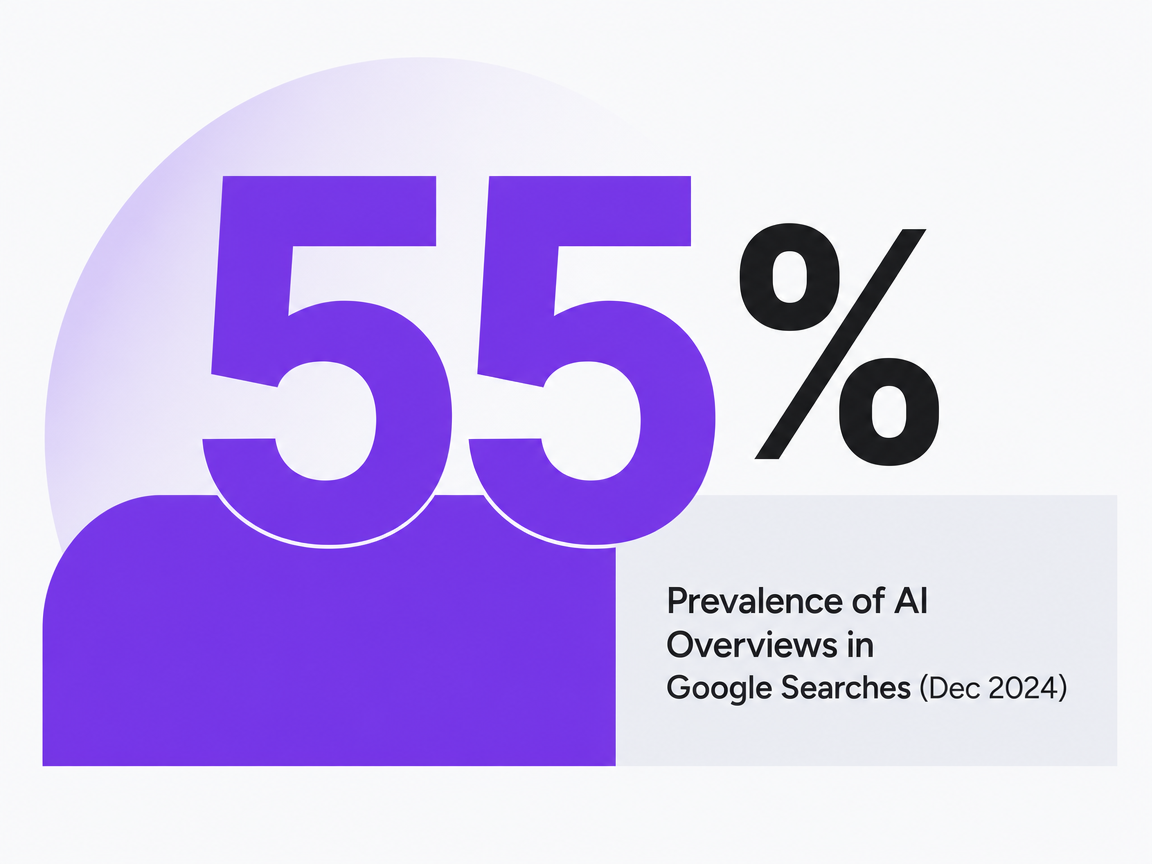 Prevalence of AI Overviews in Google Searches (Dec 2024)
Prevalence of AI Overviews in Google Searches (Dec 2024)
The seven trackers, grouped by category
The seven entries below are sorted by the taxonomy established earlier, not by vendor prominence. Each entry names the category fit, the operational strength, and the blind spot an agency lead should price into delivery before signing.
Enterprise AI visibility platforms with SEO-suite integration
The first category covers platforms that bolt AI visibility onto an existing enterprise SEO stack. Semrush and BrightEdge are the two most frequently cited in this bracket, with BrightEdge singled out for correlating AI visibility with organic traffic movement rather than treating it as a standalone metric 5. The operational strength is single-pane reporting. An agency already licensing one of these suites for rank tracking, backlinks, and site audits can add AI visibility as a new column in dashboards the account team already knows.
That integration is the point. Enterprise KPI frameworks already track visibility indices, share of voice, organic traffic, and conversions in one layer 8, so a tracker that pushes AI mention rate and citation share into the same report avoids the duplicate-dashboard tax that eats analyst hours across a 40-client book.
The blind spot is depth. Suite-integrated modules tend to prioritize Google AI Overview coverage over ChatGPT, Perplexity, Claude, and Gemini, because AI Overview data is closest to the existing SERP data model. Agency leads reporting on clients whose buyers live in ChatGPT should confirm engine parity before treating the module as complete AI visibility coverage.
Multi-LLM citation trackers focused on prompt coverage
The second category is purpose-built for the AI Visibility Metrics pillar. These platforms exist to run large prompt libraries against ChatGPT, Perplexity, Google AI Mode, Gemini, and Claude, then report brand mention rate, share of voice, source mix, sentiment, and citation persistence against a stable prompt set over time 4. The 2026 comparative analysis of more than 30 AI SEO tracking tools places this category as the new layer sitting atop traditional ranking and traffic reports, not a replacement for them 9.
The operational strength is prompt governance. A well-designed multi-LLM tracker treats prompts as versioned assets, groups them by intent, and aggregates several runs per prompt before surfacing a visibility score. That structure is what smooths the run-to-run volatility documented earlier and produces a defensible number on the monthly deck.
The blind spot is workflow. These tools report exposure with clarity, but they typically stop at the dashboard. Turning a share-of-voice drop into a content brief, an FAQ rewrite, or a schema change still lands on the delivery team's plate, which is where scaling pain shows up across a 40-account book.
AI Overview and SERP feature trackers
SERP feature trackers sit closest to what agency delivery teams already do. The unit of analysis is the Google search results page, extended to include the AI Overview box and the three-to-five source links it typically surfaces 2. These tools track whether a client appears in the AI Overview at all, which pages get pulled as sources, and how AI Overview presence correlates with position-one CTR compression.
The operational strength is continuity. Reports look like existing rank reports with an AI Overview column added. Account managers do not need retraining to explain the numbers, and clients recognize the format. For agencies whose books skew toward informational-query verticals, where AI Overview prevalence is highest 3, this category delivers the most immediate reporting lift.
The blind spot is scope. A SERP feature tracker does not see ChatGPT, Perplexity, Claude, or Gemini. It measures one surface. Agencies reporting AI visibility from a SERP feature tracker alone will accurately capture Google AI Overview performance and quietly miss the four other engines where client buyers now spend research time.
Answer Engine Optimization platforms with content workflow
AEO platforms live in the third pillar of the enterprise taxonomy 6. The metric they optimize is citations earned: which client pages get picked up as source links inside AI-generated answers across ChatGPT, Claude, Perplexity, and Google AI Mode 3. These tools trace back from a citation to the content structure that earned it, then generate recommendations for FAQ format, schema, entity clarity, and passage-level answers.
The operational strength is causal loop. AEO platforms connect measurement to a specific content action, which shortens the gap between a visibility drop and a delivery response. That matters for retention, because the client conversation moves from "we lost citations this month" to "here are the three pages queued for optimization."
The blind spot is ghost citations. AEO tools measure linked citations well and unlinked mentions poorly, because their core object is the URL that earned the click. With roughly 73% of AI brand mentions arriving without a source link 10, an AEO-only stack under-reports the exposure that never touches analytics. Pairing an AEO platform with a mention-rate tracker closes the gap.
Sentiment and source-mix specialists
A narrower category focuses on the qualitative side of AI visibility. Sentiment and source-mix specialists measure not just whether a client is mentioned, but how the mention reads and which third-party domains the engine used to construct the answer 5. The 8,400-prompt framework treats both metrics as first-class measures alongside mention rate and share of voice, because a positive mention on a competitor comparison page is a different report than a negative mention on a review roundup 4.
The operational strength is reputation coverage. For clients in legal services, behavioral health, senior living, and other high-stakes verticals where a single negative characterization inside an AI answer can move purchase intent, sentiment tracking becomes a compliance-adjacent signal that account leads want on the monthly report.
The blind spot is coverage economics. Sentiment classification is expensive to run at scale across five engines and thousands of prompts, so these platforms often cap engine count or prompt volume at tiers that get costly across a full client book.
Lightweight prompt checkers for spot audits
The lightweight category covers browser-based tools and free or low-cost prompt checkers that run a handful of queries against one or two engines on demand. The 2026 comparative analysis groups these separately from enterprise platforms because they solve a different job 9: a fast answer during a pitch, a sanity check before a QBR, or a specific engine audit for a single flagship term.
The operational strength is speed and zero-commitment access. An agency lead prepping for a new business call can run a prompt against ChatGPT and Perplexity in minutes, screenshot the result, and use it to open the conversation.
The blind spot is everything the earlier categories solve for. Spot checkers do not maintain prompt libraries, aggregate runs, or smooth volatility, and only 30% of brands hold across back-to-back runs of the same prompt 10. Using a lightweight checker as the primary reporting infrastructure will misreport client results. Its place is the sales cycle and the exception audit, not the monthly deck.
Workflow-integrated execution platforms with approval-gated recommendations
The seventh entry is a different shape. Instead of reporting AI visibility into a dashboard and handing the response back to the delivery team, workflow-integrated execution platforms treat measurement as the input to a ranked, human-approved action queue across content, SEO, and adjacent channels. This is the emerging category the 2026 tool analysis flags as AI visibility feeding execution rather than sitting adjacent to it 9.
The operational strength is delivery margin. Enterprise KPI frameworks already track visibility indices, share of voice, and conversions in a single reporting layer 8; a platform that turns a share-of-voice drop into an approved content brief, a schema update, or an FAQ rewrite compresses the cycle time from measurement to publication. For agency leads running 40 or more accounts, that compression is what removes the per-client analyst tax.
The blind spot is category maturity. Workflow-integrated platforms are newer than pure trackers, so the metric set inside them is still consolidating around the same brand mention rate, share of voice, source mix, sentiment, and citation persistence measures documented in the 8,400-prompt framework 4. Vectoron sits in this category, positioning AI visibility as one signal feeding an approval-gated queue across specialist strategists rather than a standalone report.
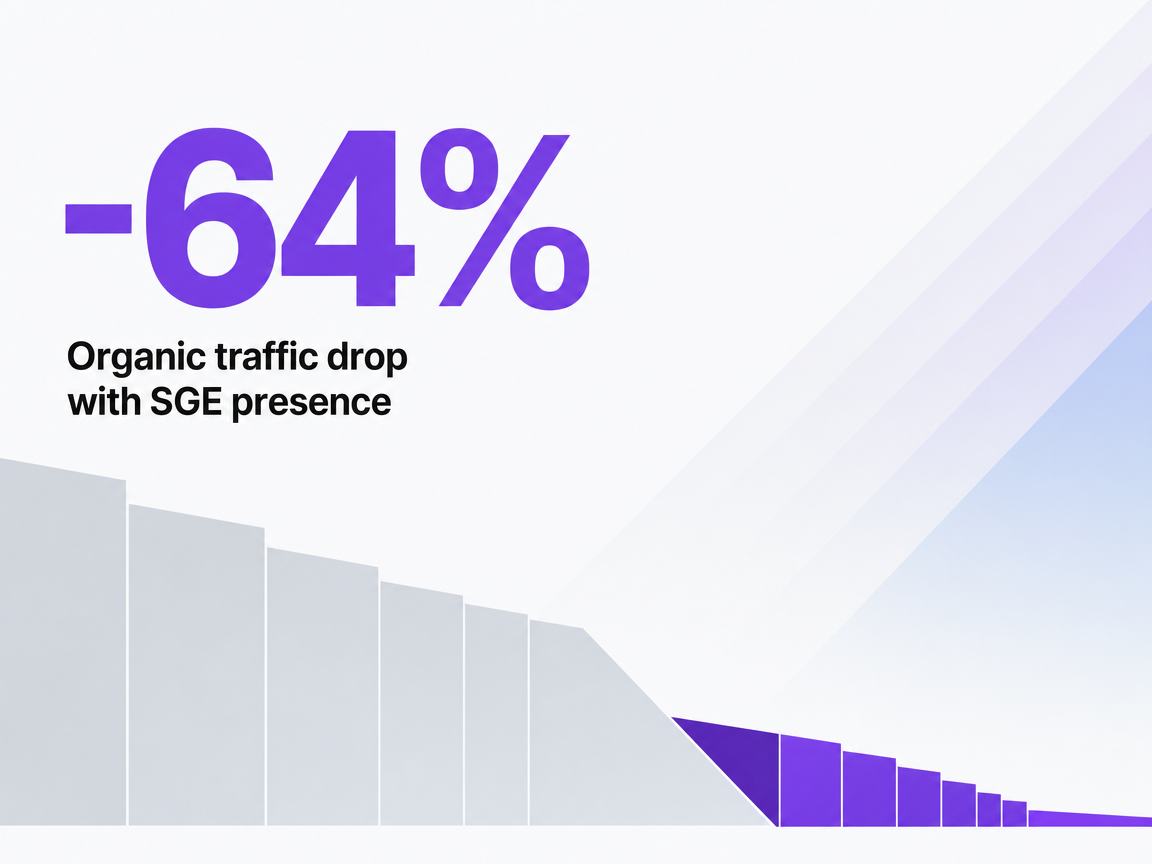 Organic traffic drop with SGE presence
Organic traffic drop with SGE presence
See How Top Agencies Quantify AI-Driven Search Visibility Gains
Connect with our team to access a full walkthrough of enterprise-grade AI visibility tracking, side-by-side platform comparisons, and practical benchmarks for multi-client reporting at scale.
If you manage multi-location clients: the per-brand license math
A quick scope switch: this section is for agency leads whose book includes multi-location operators — dental service organizations, law firm groups, senior living portfolios, home services franchises. The single-brand tracker math does not carry over cleanly, and the per-brand license variable is where delivery margin gets decided.
Most AI visibility platforms price along four variables: per-brand license, prompt cap, engine count, and refresh cadence. A 30-location DSO can be tracked one of two ways. The first treats the parent brand as a single license, running prompts like "best pediatric dentist in Phoenix" or "cheapest dental implants near me" across every market the group serves. The second spins up 30 individual brand entities, one per location, each with a localized prompt library. The reporting output looks different, the price envelope looks very different, and the client conversation lands in a different place.
A compact view of the variables:
| Variable | Parent-brand license | Per-location licenses ||---|---|---|| License count | 1 | 30 || Prompt library | Shared, geo-modified | Local per location || Engine coverage | Same across markets | Same across markets || Reporting granularity | Group-level share of voice | Location-level share of voice || Volatility exposure | Smoothed across markets | Concentrated per location |
The parent-brand path costs less and reports cleanly to a group marketing director. It hides location-level performance. The per-location path costs roughly 30x on license and prompt volume, but produces the report a regional operations lead actually acts on — which markets are absent from ChatGPT recommendations, which are winning Perplexity citation share, which have negative sentiment concentrating around a specific practice. The 8,400-prompt framework treats sector and geography as first-class dimensions of the prompt library for exactly this reason 4.
One practical middle path: license the parent brand and a sampled tier of high-priority locations, typically the top-revenue markets or the acquisition targets on the corporate roadmap. That structure keeps the group-level report intact and produces defensible location data where it drives the most retention conversation, without paying for uniform coverage across a long tail of stable markets.
Wiring AI visibility into existing client reporting without breaking rank tracking
Selecting a tracker is the easy part. The harder work is placing AI visibility inside a client report that already carries positions, impressions, clicks, conversions, and technical health, without doubling the deck length or asking clients to interpret two parallel stories. Enterprise KPI frameworks handle this by treating visibility as multi-dimensional: a visibility index, share of voice, organic traffic, and conversions read as one system rather than four separate reports 8.
The practical wiring is a three-column extension. The classic visibility index column stays. A second column adds AI visibility share of voice, sourced from the tracker's aggregated multi-run prompt library. A third column reports citation persistence, which is what tells the account team whether last month's win survived the next refresh cycle or evaporated on the following run 4. Guidance on adapting SEO metrics to AI-powered SERPs makes the same point from the reporting side: AI-driven SERP elements belong inside the existing visibility view, not in a sidecar dashboard 7.
Rank tracking does not get demoted in this structure. It answers a different question — where the client stands on the classic result set — and remains the reference layer for click and conversion attribution. AI visibility sits above it as the exposure layer, quantifying reach into answers that never generate a session. Reported together, the two layers stop contradicting each other on the monthly call.
Frequently Asked Questions
References
- 1.Impact of AI on SEO.
- 2.Changing Search Landscape.
- 3.Optimizing For AI Overviews.
- 4.AI Search Visibility Statistics 2026: 8,400-Prompt Brand Tracker.
- 5.14 best enterprise platforms for AI search visibility tracking (2026).
- 6.14 Best Enterprise AI SEO Performance Tracking Services in 2025: Complete Guide.
- 7.How to Monitor AI Visibility with SEO Metrics.
- 8.Enterprise SEO Metrics and KPIs.
- 9.AI SEO Tracking Tools 2026: Comparative Analysis of Over 30 Platforms.
- 10.AI Visibility Tracking: What It Is, Why It Matters, and How to Do It.