
Key Takeaways
- Profound delivers deep prompt volume across five major engines, giving enterprise teams the granularity to run competitive teardowns and isolate which prompt clusters a client can realistically contest.
- Peec AI solves the portfolio problem with isolated per-brand workspaces, transparent SOV math, and white-label-ready exports for agencies juggling fifteen to a hundred and fifty accounts.
- Otterly.AI focuses on citation source attribution, turning URL-level LLM data into GEO content briefs that prescribe fixes instead of just reporting symptoms 12.
- AthenaHQ treats AI visibility as a data source, exporting prompt-level records and SOV calculations into Looker or Power BI so metrics sit next to pipeline and revenue attribution 19.
- Scrunch AI pairs monitoring with technical and content auditing, surfacing schema gaps and structural fixes that align with Google's own generative AI optimization guidance 11.
- Semrush AI Toolkit extends a stack agency teams already use, lowering switching costs for adding AI visibility reporting even though prompt configuration and citation depth trail specialized tools.
- Vectoron closes the delivery gap by routing visibility signals into a GEO backlog with human-approved drafts, addressing the shipping problem monitoring dashboards alone cannot solve 12.
Reporting Surface Area Grew. Delivery Capacity Did Not.
The client-facing reporting deck used to end at ten blue links and a rankings graph. It now has to account for whether a brand shows up when a prospect asks ChatGPT for a recommendation, whether Perplexity cites the client's site or a competitor's, and whether Google AI Overviews summarize the category using the client's language or someone else's. McKinsey estimates that roughly half of consumers already use AI-powered search, with up to $750 billion in revenue in play by 2028 17. That is not a future reporting problem. It is a current one.
The delivery side did not expand to match. Most agency SEO teams still staff for keyword research, on-page work, link acquisition, and monthly reporting cycles built around SERP data. Adding prompt sampling across four or five AI engines, citation source analysis, and share-of-voice math per client, on top of that, breaks the hours-per-account model.
Forrester's guidance is direct: measure presence in generative search results alongside conventional SEO KPIs 19. The agencies that scale in this environment treat AI visibility as a governed reporting layer wired into execution, not a second dashboard to maintain by hand.
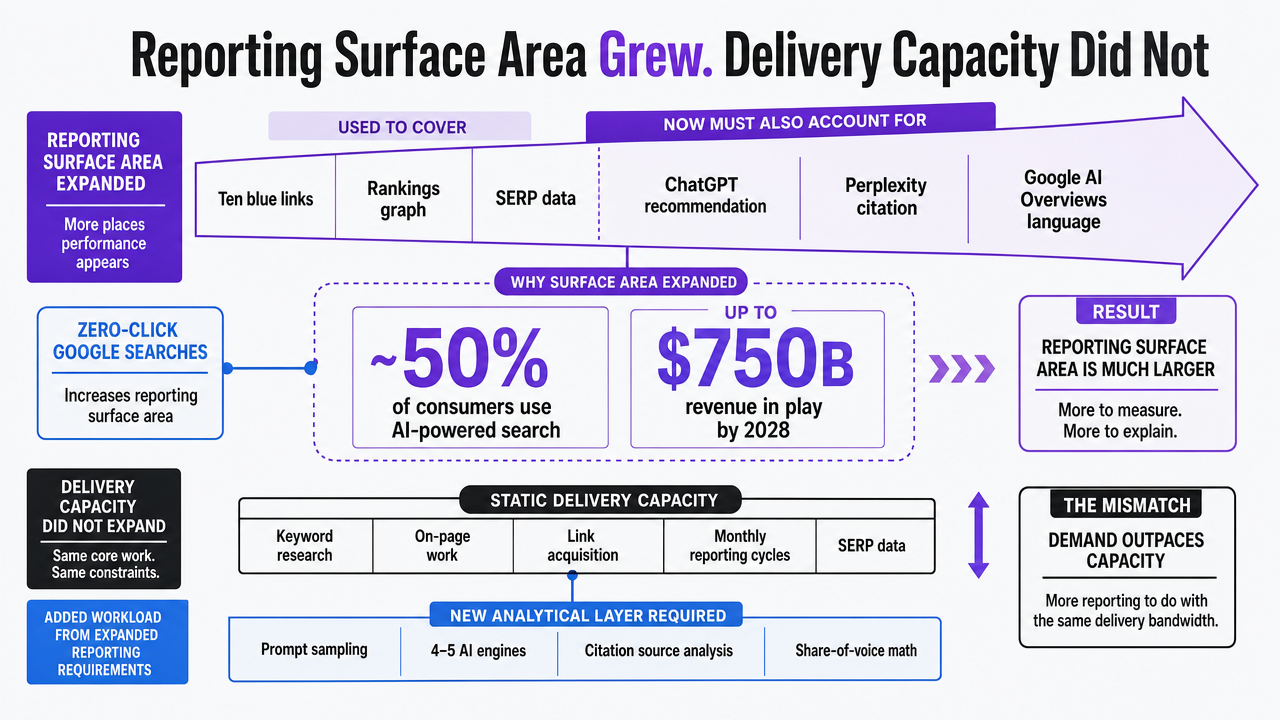 Visualize the two cited statistics on AI Overviews prevalence and zero-click Google searches, both of which are directly referenced in this section as the reason reporting surface area has expanded
What Agencies Actually Need to Measure in AI Answers
The KPI Stack That Replaces Rank Tracking
Rank tracking assumed a click was the payoff. That assumption breaks when AI Overviews appear on roughly 47% of Google searches and roughly 58% of Google searches end without a click to any external site 9. A client can hold position three on a commercial query and still lose the answer because the AI summary pulled its language, product framing, and citations from three other sources.
The KPI stack agencies now report against has to translate that reality into numbers a client can act on. Four measurements do most of the work. Mention frequency counts how often the brand surfaces across sampled prompts. Share of voice compares that count to a defined competitor set inside the same answers 7. Citation source analysis identifies which URLs the LLM actually pulled from, since those are the properties GEO work has to influence. Placement inside the answer records whether the brand appears in the recommendation sentence, a supporting list, or a passing footnote 14.
Sentiment and prompt-trigger analysis sit on top of that stack. Together, these metrics map cleanly onto categories the industry has already validated: visibility, narrative control, competition, clarity, and ROI 13. Rankings become one input among several, not the headline number.
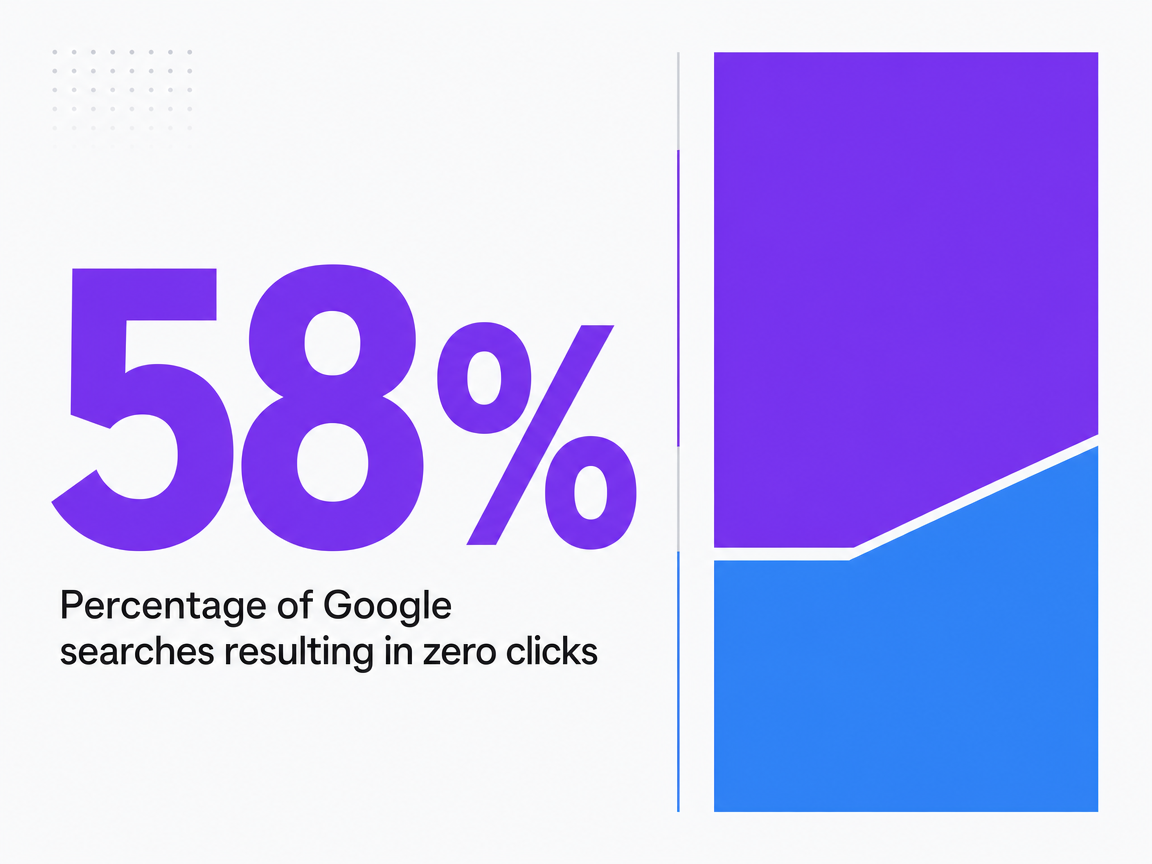 Percentage of Google searches resulting in zero clicks
Percentage of Google searches resulting in zero clicks
The Share-of-Voice Math Problem
Share of voice looks like a single number on a slide. Under the hood, it is a function of prompt selection, sampling frequency, competitor set definition, and answer parsing rules, and no two vendors calculate it the same way. The definitional baseline is straightforward: SOV in AI visibility is the percentage of brand mentions a company receives compared to competitors across AI-generated responses 4. The math around that baseline is where credibility with clients is won or lost.
Three variables move the number the most. Prompt volume and refresh cadence determine whether the sample reflects category demand or a static snapshot. Engine mix determines whether ChatGPT-heavy sampling washes out weaker performance in Perplexity or Google AI Overviews. Answer parsing rules determine whether a brand named once in a five-brand list counts the same as a brand recommended in the opening sentence 14.
Agency leads presenting SOV to a client should be able to state the prompt set size, the engines sampled, the competitor list, and the parsing rule before the chart appears. Vendors that hide those inputs produce numbers that cannot survive a competitive teardown.
A Shortlist Scoring Rubric Before the Tools
A defensible shortlist starts with a rubric, not a demo calendar. Six evaluation dimensions separate agency-grade platforms from marketer-focused dashboards, and each one maps to a specific reporting or delivery job.
- Engine coverage. The tool must sample ChatGPT, Perplexity, Gemini, Google AI Overviews, and Copilot at minimum, since brand exposure varies sharply across surfaces 14. Single-engine tools produce misleading SOV numbers.
- Prompt configuration. Custom prompts, persona filters, and refresh cadence determine whether the sample reflects real category demand 10. Locked prompt libraries force clients into generic buckets.
- Citation source attribution. The tool must identify which URLs the LLM pulled from, because those properties are the direct targets for GEO content and PR work 15. Without source attribution, agencies measure a symptom and cannot prescribe a fix.
- Multi-brand workspaces. Portfolio agencies need isolated environments per client with role-based access, not shared dashboards 10.
- BI export. Raw data has to leave the vendor UI and land in Looker, Power BI, or the agency's warehouse for white-label reporting 10.
- Execution integration. The tool either hands off to a GEO workflow or it does not. Monitoring that stops at a dashboard leaves the delivery gap unsolved 10. Score each vendor one through five on these six axes before the trial.
Benchmark AI Visibility Tracking in a Live Environment
Access real-time reporting and publish agency-grade content to validate AI-driven visibility improvements in your own accounts.
Seven Tools Worth Standardizing On
1. Profound — Enterprise Prompt Coverage for Competitive Teardowns
Profound built its reputation on prompt volume. The platform samples ChatGPT, Perplexity, Gemini, Copilot, and Google AI Overviews at cadences that hold up when a client's category has thousands of relevant question variants, which is where thinner tools produce noisy SOV numbers 14. Agencies running competitive teardowns for enterprise accounts use that depth to isolate which prompt clusters a competitor dominates and which the client can realistically contest inside a quarter.
The reporting UI leans analytical rather than marketing-friendly. Prompt-level drilldowns show which questions trigger a brand mention, where the brand lands inside the answer, and which URLs the LLM cited to produce it 15. That granularity is the input a GEO content lead needs to prioritize which pages to rewrite and which third-party properties to pursue for placement.
Profound fits the monthly competitive review cadence and executive stakeholder narrative jobs. It does less to shorten the distance between a visibility signal and a shipped content change, so agencies typically pair it with a separate execution layer.
2. Peec AI — Multi-Brand Workspaces for Portfolio Reporting
Portfolio agencies running fifteen to a hundred and fifty accounts hit a specific wall: shared dashboards leak data across clients and make role-based access a manual chore. Peec AI was designed around that constraint. Each brand sits in its own environment, with isolated prompt libraries, competitor sets, and user permissions 10.
The reporting output is built for white-label delivery. Charts export cleanly, SOV math is transparent enough to defend in a client meeting, and the tool exposes prompt volume, engine mix, and competitor set on the same page as the score 14. That transparency matters when a client's CMO asks why the number moved five points month over month.
Where Peec AI is thinner is deep citation source attribution and native BI export. Agencies that already run Looker or Power BI warehouses may need to build an ingestion layer. For a Head of SEO who needs a defensible portfolio reporting layer without a data engineering project, it earns its place on the shortlist.
3. Otterly.AI — Citation Source Analysis for GEO Content Briefs
Citation source analysis is the difference between reporting a symptom and prescribing a fix. Otterly.AI concentrates on that layer. The tool identifies which URLs an LLM actually pulled from when generating a category answer, then groups those sources by domain type, content format, and mention position 15.
That output feeds directly into GEO content briefs. If a competitor's product page is getting cited in ChatGPT while the client's equivalent page is not, the brief writes itself: match the schema, close the comparison-table gap, and pursue placement on the third-party review sites the LLM keeps returning to 3. The GEO arXiv research showed visibility can be causally moved with targeted content interventions on Perplexity 12, and citation source data tells an agency where to intervene first.
Otterly.AI's weak spot is enterprise-scale prompt volume; sampling is lighter than Profound's. Agencies typically use it as the GEO brief input tool rather than the executive dashboard, layering it under a broader monitoring platform when portfolio size demands it.
4. AthenaHQ — BI-Exportable Data for Executive Narratives
AthenaHQ is built for agencies that treat AI visibility as a data source, not a dashboard. Raw prompt-level data, citation records, and SOV calculations export cleanly to Looker, Power BI, or a warehouse of choice 10. That matters because executive narratives at the CMO or CFO level rarely live inside a vendor UI; they live in the agency's own reporting stack alongside pipeline, cost per lead, and revenue attribution.
The platform's engine coverage spans the major LLM surfaces, and its parsing rules are documented well enough to withstand a competitive teardown from a client's internal analytics team 14. Forrester's guidance to measure generative presence alongside conventional SEO KPIs lands cleanly here, because the export layer lets AI visibility metrics sit next to organic traffic, conversions, and branded search volume in the same board deck 19.
AthenaHQ is not the tool for an agency that wants a turnkey monthly report. It is the tool for one that already has a data team and wants AI visibility as a first-class column in the warehouse.
5. Scrunch AI — Auditing Paired With Monitoring
Monitoring tells an agency what is happening. Auditing tells it why. Scrunch AI pairs the two, running visibility measurement alongside technical and content audits that flag whether a client's pages are structured for LLM ingestion in the first place 10. That pairing matters because AI visibility signals still correlate with crawlability, structured data, and content clarity, per Google's own generative AI optimization guidance 11.
The audit output surfaces the mechanical fixes: schema gaps, thin comparison content, missing FAQ blocks, and pages that AI systems cannot confidently summarize. Agencies use that list as the technical GEO backlog to sit under the content and PR work Otterly-style tools recommend.
Scrunch AI covers the major engines and supports custom prompt configuration, though its portfolio workspace features are less mature than Peec AI's 14. It fits agencies whose delivery model already includes technical SEO audits and who want the AI-era version of that deliverable without spinning up a second vendor relationship.
6. Semrush AI Toolkit — Familiar Reporting Layer for Existing Stacks
Most agency SEO teams already run Semrush for keyword research, rank tracking, and backlink analysis. The AI Toolkit extends that stack into visibility monitoring across ChatGPT, Perplexity, Gemini, and Google AI Overviews, which lowers the switching cost of adding an AI reporting layer 14. Analysts do not learn a new UI, client reports keep the same visual language, and historical SEO data sits next to AI visibility data in one place.
The tradeoff is depth. Prompt configuration is more constrained than in dedicated platforms like Profound, and citation source attribution is thinner than what Otterly.AI produces 10. SOV math is serviceable for mid-market client reporting but does not carry the transparency of specialized tools.
For an agency running a hundred accounts on Semrush, the AI Toolkit is often the pragmatic starting point. It closes the reporting gap fast, then leaves room to layer a specialized monitoring or citation tool on top for enterprise accounts that need the deeper cut.
7. Vectoron — The Execution Layer Behind Visibility Signals
The first six tools produce dashboards. The gap they leave is delivery. A citation source analysis says the client's comparison page is missing schema and losing ground to a competitor's better-structured content; someone still has to write the schema, draft the content, and ship it across fifty client accounts. Vectoron sits in that gap as an execution layer rather than another monitoring surface.
The platform coordinates specialist AI strategists for content, SEO, PPC, backlinks, social, and call intelligence through a single approval workflow. Visibility signals from monitoring tools feed the GEO backlog, the content strategist drafts the fixes, and every recommendation routes through a human approval step before anything ships. That approval-first model preserves the strategic oversight agency Heads of SEO have to keep, while removing the drafting and coordination hours that break the hours-per-account model.
The GEO research showing visibility can be causally moved with content interventions is only useful if an agency can actually ship those interventions at portfolio scale 12. Vectoron is the category answer to that shipping problem, not another place to look at SOV charts.
Monitoring-Only vs. Monitoring-Plus-Execution: The Real Divide
Feature grids blur the most important distinction in this category. On one side sit tools that report what AI engines say about a brand. On the other sit platforms that turn those signals into shipped work. The gap between the two is where agency headcount either scales or does not.
Monitoring-only tools end at the dashboard. A citation report shows the client is losing ground on comparison prompts in Perplexity; someone still has to write the schema, restructure the comparison page, brief the PR team on third-party placements, and coordinate publication across accounts. Multiply that by fifty clients and the reporting layer stops being an efficiency gain.
Monitoring-plus-execution platforms close that loop. Visibility signals flow into a GEO backlog, drafts get produced, and every change routes through an approval step before it ships. The generative AI analytics market is projected to grow from $1.20 billion in 2024 to $12.45 billion by 2034 at a 26.36% CAGR 16. Agencies choosing a stack now are picking the layer they will still be running when the category consolidates around tools that pair measurement with delivery.
Portfolio Delivery Math: Hours Per Client-Month
The reporting layer is only half the cost. The other half is the drafting, coordination, and shipping work that visibility signals generate. Agency Heads of SEO running fifty or more accounts should model the AI-era workload against current capacity before signing a monitoring contract, because the tool bill is small next to the delivery hours it creates. Vendor evaluation frameworks now assume that monitoring pairs with auditing and AI-specific content delivery, which means the hours conversation has to happen upfront 10.
The math is simple to structure, if not to solve. Let Hm equal hours per client-month spent on manual AI answer sampling across five engines. Let Ha equal hours on competitor prompt audits and citation source parsing. Let Hg equal hours drafting GEO recommendations from that data. Let C equal blended agency cost per hour and N equal client count. Total monthly cost of manual delivery is (Hm + Ha + Hg) × C × N.
| Workflow stage | Manual hours per client-month | Tool-supported hours per client-month |
|---|---|---|
| AI answer sampling across engines | Hm | ~0 (automated sampling) |
| Competitor prompt audits & citation parsing | Ha | Ha × 0.2 (review only) |
| GEO recommendation drafting | Hg | Hg × 0.4 (approval workflow) |
Plug in the agency's own numbers. At fifty accounts, even modest per-client hour figures compound into a headcount decision. That is the number that determines whether AI visibility tracking scales inside the current team or requires hiring against it.
See How Top Agencies Streamline AI-Driven Visibility Tracking Across Every Client
Connect with specialists to benchmark your agency’s AI visibility tracking workflows, learn about unified multi-channel reporting, and discover practical solutions for scaling oversight without increasing headcount.
Plugging AI Visibility Into Existing SEO Reporting
AI visibility data loses most of its value when it lives in a separate slide deck. The reporting cadence a client actually reads is the monthly SEO deck that already tracks organic sessions, conversions, branded search volume, and pipeline. Visibility metrics have to land in that same document, on the same page, next to the numbers the CMO already trusts 19.
Three integration points do the heavy lifting. First, mention frequency and share of voice sit alongside impressions and clicks as top-of-funnel demand indicators, not as replacements for them. Second, citation source URLs join the backlink and referring domain report, since the properties an LLM keeps pulling from are the same properties the PR and link teams should target 15. Third, prompt-trigger data joins the keyword report, mapping which category questions surface the client and which surface competitors 14.
Google's own generative AI guidance reinforces the point: crawlability, structured data, and clear content still underpin AI presence 11. AI visibility is not a parallel discipline. It is a new column in the same reporting stack, and the tools that export cleanly to Looker, Power BI, or a warehouse make that column defensible without doubling the analyst headcount.
What to Ship in the First 90 Days
The mistake most agencies make in this category is buying a monitoring platform and then spending six months arguing about what to do with the data. A tighter sequence gets a reporting layer defensible in one quarter.
- Days 1–30: Instrument. Pick one monitoring tool and one citation source tool from the shortlist. Load a prompt library per client that reflects real category demand, define the competitor set, and lock the parsing rules that will produce share of voice. Document all four inputs on the first slide of every client report 4.
- Days 31–60: Integrate. Push prompt-level data, mention frequency, and citation URLs into the same warehouse that holds organic sessions, conversions, and branded search 19. AI visibility becomes a column in the existing SEO deck, not a parallel document.
- Days 61–90: Execute. Convert the top ten citation gaps per client into a GEO backlog and route drafts through an approval workflow. Platforms like Vectoron close that last mile without adding headcount.
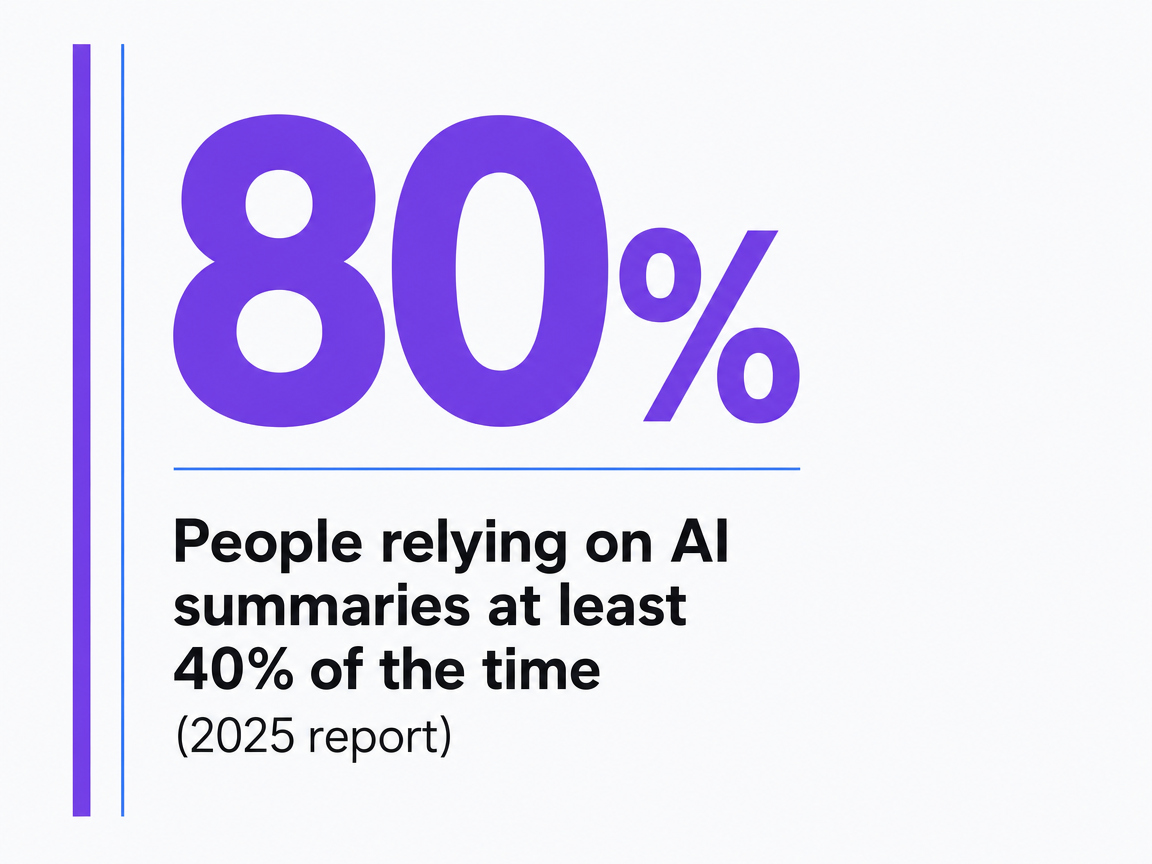 People relying on AI summaries at least 40% of the time (2025 report)
People relying on AI summaries at least 40% of the time (2025 report)
Frequently Asked Questions
References
- 1.Top Tools for Tracking AI Visibility.
- 2.Generative Engine Optimization (GEO) explained.
- 3.Generative Engine Optimization: The Future of Digital Visibility.
- 4.Share of Voice: definition, measurement and benchmarks.
- 5.How to Measure Generative Engine Optimization (GEO)? KPIs and Reporting Model for AI Visibility.
- 6.What Is Generative Engine Optimization (GEO) & How Does It Work?.
- 7.LLM Performance Tracking: A Complete Guide to Metrics and Tools.
- 8.How Reviews Influence AI Search Results and Generative SEO and GEO.
- 9.AI Overviews ARE Impacting SEO. Here's What to Do About It.
- 10.The 7 best answer engine optimization (AEO)/generative engine optimization (GEO) tools (2026).
- 11.Optimizing your website for generative AI features on Google Search.
- 12.GEO: Generative Engine Optimization.
- 13.Generative Engine Optimization.
- 14.Choosing an AI Brand Visibility Monitoring Tool in 2026.
- 15.Top Tools for Tracking AI Visibility.
- 16.Generative AI in Analytics Market Size To Hit USD 12.45 Bn By 2034.
- 17.Winning in the age of AI search.
- 18.Will Generative AI Hurt Search & Publishers?.
- 19.Marketers Must Redefine Search Strategies For Generative AI.