
Key Takeaways
- The 30-hour audit problem persists because implementation, not prioritization, is the bottleneck: only 50% to 69% of prioritized recommendations actually ship on the client side 1.
- Automating the first pass on clustering, grouping, and gap detection compresses six hours of pattern-matching into thirty minutes, freeing strategists for the judgment calls clients renew for.
- Impact-ranked triage replaces 400-row exports with seven to twelve issue clusters tied to revenue pages, template groups, and named client-side owners who can actually sequence the work.
- A standardized audit template built backward from the client's implementation environment collapses strategist variance and makes each subsequent audit cheaper than the last.
- Stack consolidation recovers hours strategists lose reconciling data across tools; Forrester's enterprise category includes BrightEdge, Conductor, Moz, Searchmetrics, Semrush, seoClarity, and Siteimprove 5.
- The automation ceiling is structural, not temporary: strategic prioritization, client risk calls, and editorial standards on money pages must stay with senior humans 2.
- A governed approval layer between AI creation and client activation batches strategist reviews around three fixed checks: revenue-page fit, downside risk, and editorial standard.
- Audits must extend to AI search surfaces, testing prompt coverage, extraction quality, and entity consistency, since 81% of brands running unified AI-SEO strategies gained traffic 9.
- Multi-location clients require the audit unit to shift from site to location, with backlink, citation, and link velocity checks running per branch to prevent unshipped fixes from compounding 4.
The 30-Hour Audit Problem Agencies Can No Longer Absorb
A single technical SEO audit still consumes 30 to 60 hours of senior time at most mid-market agencies, and the deliverable that lands in the client's inbox is often a 400-row spreadsheet that no one on their side will action within the quarter. That is the delivery-economics problem Heads of SEO are trying to solve when they talk about scaling audit work.
The SEOFOMO 2023 auditing survey of 373 SEO professionals found that technical audits are the dominant format and that more than 90% of respondents prioritize their recommendations before handing them over 1. Prioritization is not the bottleneck. Implementation is. The same survey reports that only 50% to 69% of prioritized recommendations actually get shipped by the client 1. Agencies are spending premium analyst hours producing documents whose middle third never reaches production.
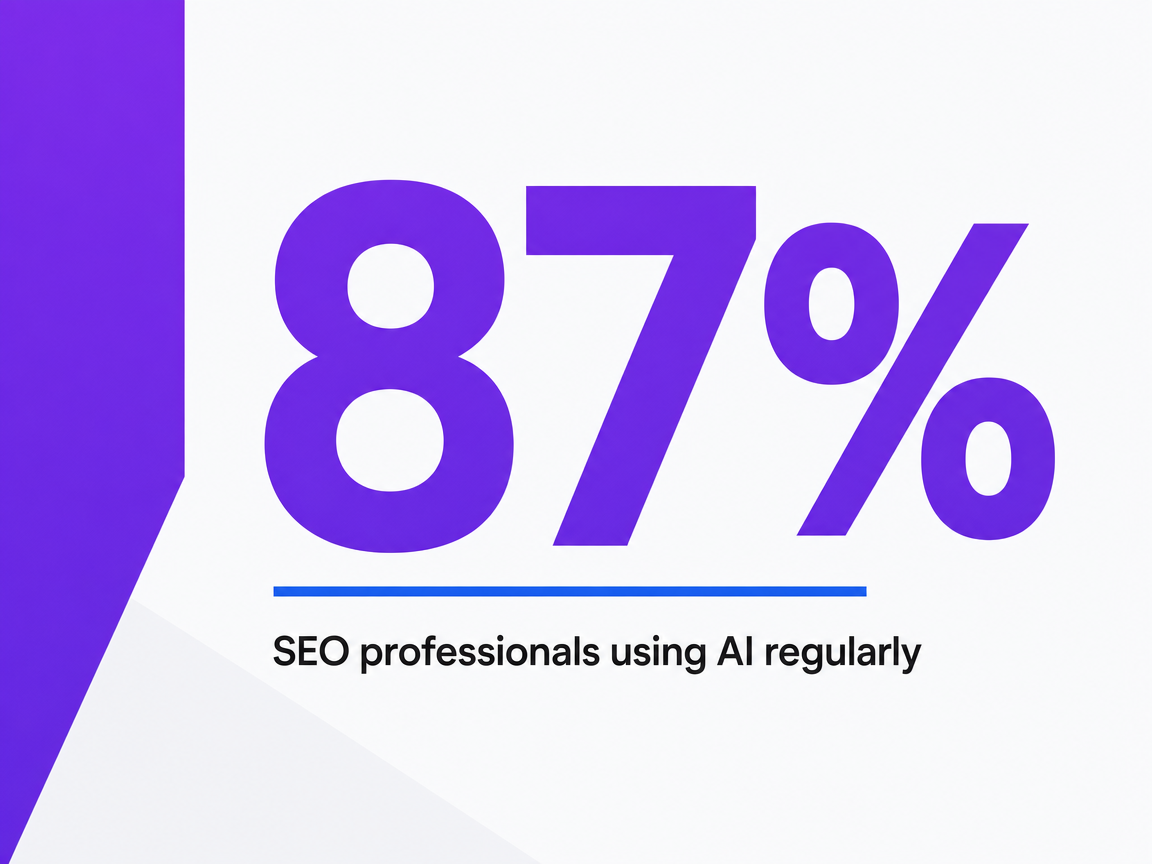
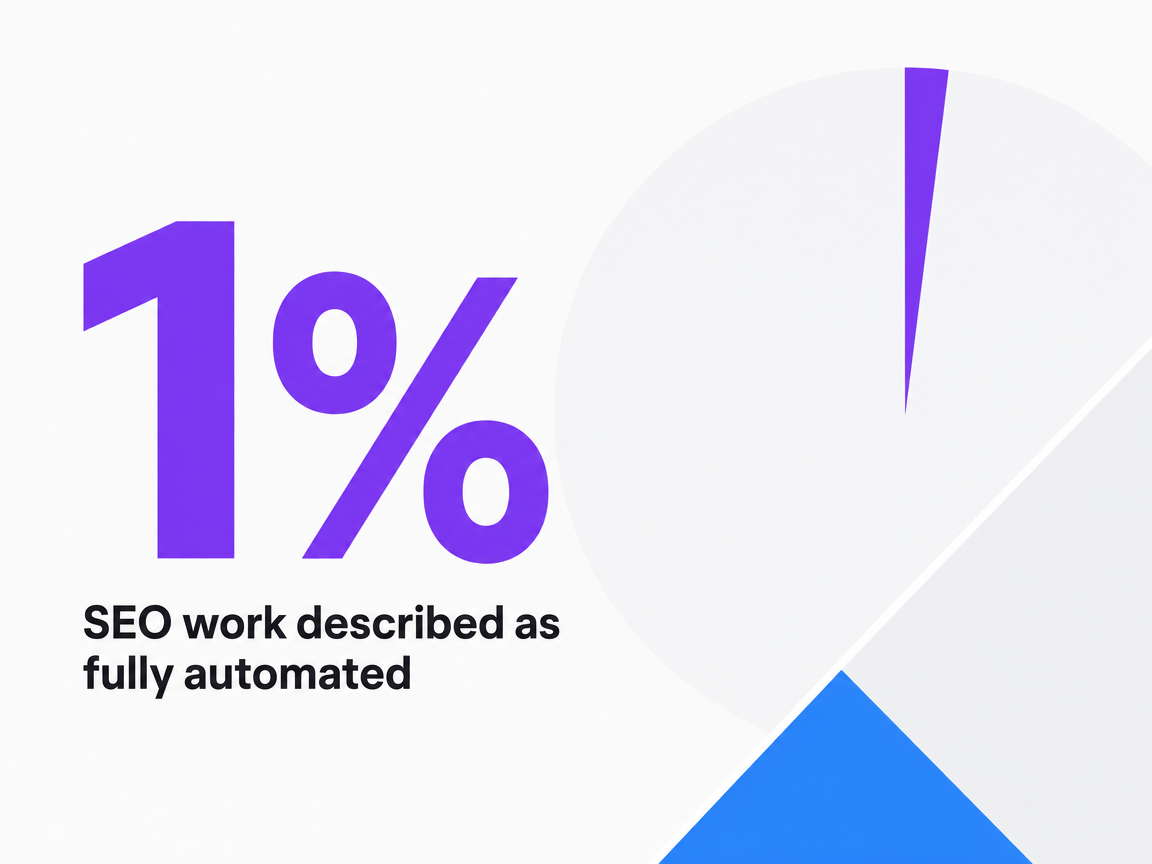
The pressure on delivery margin comes from two directions. Portfolios are growing, with many Heads of SEO now overseeing 15 to 80 accounts against flat senior headcount. And AI has changed what clients expect the first pass to cost. A separate industry survey found that 87% of SEO professionals now use AI regularly in their workflows, though only 1% describe their work as fully automated 2. The middle ground, where the first pass is machine-generated and senior strategists own the decisions, is where agency capacity is being rebuilt.
The seven shifts that follow reorganize audit workflows around that middle ground: what to automate, what to triage, what to standardize, and where senior judgment still signs the deliverable.
 SEO professionals using AI regularly
SEO professionals using AI regularly
Automate the First Pass, Keep Strategists on Decisions
Audits sit at the bottom of the AI adoption stack inside SEO teams. A 2026 survey of SEO practitioners found that:
- 58% use AI for content writing
- 51% for link building
- 40% for technical SEO
- only 28% for SEO audits 2
That gap is where senior hours are still being burned on work a machine could stage. Content and link workflows have already reorganized around AI drafting; audits have not.
The first pass is where the arithmetic changes. Clustering thousands of crawl issues, grouping duplicate title patterns, deduplicating internal link warnings, and mapping content gaps to search intent are pattern-matching tasks. Recent workflow analysis describes AI in 2026 handling the first pass on clustering, brief creation, audit grouping, content gap detection, and prospect research, with the clearest gains in keyword clustering, search intent classification, content brief generation, on-page optimization, and link prospecting 3. None of those tasks require a senior strategist's judgment. All of them consume senior time when they land in a spreadsheet.
Reorganizing the workflow around that boundary produces a specific division of labor. Screaming Frog, Ahrefs, and Semrush continue to produce the raw data. An AI layer groups the crawl output into thematic issue sets, tags them by template or page type, and drafts the initial impact hypothesis. A strategist opens a pre-grouped view rather than a 400-row export, tests the hypothesis against the client's revenue pages, and signs off on what ships.
The distinction matters because 87% of SEO professionals now use AI regularly while only 1% describe their work as fully automated 2. The economically useful pattern is not autonomous audit generation. It is compressing the first six hours of any audit into thirty minutes of machine work, then returning strategist attention to the two hours where their judgment is the deliverable. Agencies that reorganize around that split can move from one audit per senior per week to three or four without touching quality on the pages that generate client revenue.
The operational move is concrete. Audit the current audit workflow, mark every step as either pattern-recognition or judgment, and route the pattern-recognition steps through an AI layer with a fixed output schema the strategist reviews. Steps that remain manual should be steps where a wrong call has client-side consequences, not steps where a human is transcribing tool output into a slide.
 SEO work described as fully automated
SEO work described as fully automated
Replace Raw Error Exports with Impact-Ranked Triage
The 400-row crawl export is the single biggest reason audit hours do not convert into client-side results. It hands the prioritization work to whoever opens the file, which usually means a mid-level analyst on the client team who does not know which pages carry revenue. The SEOFOMO 2023 auditing survey of 373 SEO professionals found that more than 90% of agency-side respondents already prioritize their recommendations, yet only 50% to 69% of those prioritized items get implemented on the client side 1. The leak is not in the prioritization step. It is in the format the priorities arrive in.
Impact-ranked triage rebuilds the deliverable around what the client will actually ship in the next 30 to 90 days. Recent workflow analysis of 2026 SEO practice describes technical work moving away from raw error exports toward grouped, impact-based triage that ties each issue cluster to a revenue or ranking hypothesis 3. The unit of output changes from a row to a decision. Instead of 400 rows, the client receives seven to twelve issue clusters, each ranked by projected traffic or conversion impact, mapped to a template or page group, and paired with a fix owner on the client side.
The operational move has three parts:
- Kill the flat export as a client deliverable; keep it as an internal working file for the strategist.
- Group issues by root cause and template rather than by crawler category, so a duplicate title tag issue affecting 84 product pages is one line item, not 84.
- Attach a confidence and effort tag to every cluster, so the client's engineering or content team can sequence work against their own sprint capacity.
The economics of this shift are visible in retention data more than in audit hours. When implementation rates move from the 50% to 69% range toward 80% and above, the same audit produces materially more client-side ranking movement, which is what renewal conversations are actually decided on 1. The strategist's hours are the same; the deliverable format is what compounds.
Standardize the Audit Template Around Client-Side Implementation
Every strategist on a team producing audits their own way is a hidden tax on delivery margin. Two analysts looking at the same technical crawl will surface different priorities, use different labels, and hand the client a different-shaped document. When the client's engineering lead sees inconsistent formats across quarters, the fix queue stalls while someone re-reads the framework.
Standardization is the cheapest capacity gain available to a Head of SEO. The SEOFOMO 2023 survey of 373 SEO professionals found that technical audits dominate the deliverable mix and that recommendations are almost always prioritized before handoff 1. What the survey does not measure, but every delivery lead knows, is the variance in how those priorities are labeled, scored, and sequenced. A single template collapses that variance into a fixed schema the client can process the same way every time.
The template should be built backward from the client's implementation environment, not forward from the crawler's output. Four fields carry most of the weight:
- the issue cluster name
- the page group or template affected
- the projected impact tier
- the implementation owner on the client side (dev, content, product, or agency)
Each row corresponds to a decision the client will either approve or defer within a defined sprint window. Digital.gov's content audit guidance recommends running audits at least annually as a recurring discipline rather than a one-off project 10, and the same cadence logic applies to technical templates: a fixed format makes the second and third audit cheaper than the first, because the strategist is updating a known structure rather than reinventing one.
Two rules keep the template honest. The impact tier must reference a page group tied to organic revenue or lead volume, not a generic severity score from the crawler. And the owner field must name a role the client has actually staffed, so recommendations do not accumulate in a queue with no one assigned to ship them. Templates that ignore either rule regenerate the 50% to 69% implementation problem the entire workflow shift is meant to close.
Experience live agency-scale SEO execution risk-free
Test scalable workflows and publish real deliverables for multiple clients during your free trial period.
Consolidate the Stack Before Adding Another License
Most agencies add tools faster than they retire them. A crawler for technical work, a rank tracker for reporting, a backlink tool for outreach, a content brief generator for editors, a log file analyzer for the one client that asked, and three tabs of Looker Studio to stitch it all together. The line item on the P&L keeps growing while the strategist workflow keeps fragmenting across logins.
Forrester's analysis of enterprise SEO platforms defines the category as tools that manage the SEO process across stakeholders, support keyword research, track organic search performance, and audit the technical foundation of the site in one system 5. The Wave named BrightEdge, Conductor, Moz, Searchmetrics, Semrush, seoClarity, and Siteimprove as vendors meeting that bar 5. The distinction Forrester draws matters for delivery economics: point tools optimize a task, platforms coordinate a workflow. Agencies running 15 to 80 accounts are paying the coordination tax every time a strategist exports from one system and re-imports into another.
Consolidation should be evaluated against three questions before any renewal signs:
- Which tools produce data that another tool in the stack already generates, and which produces the version the strategist actually pastes into the client deliverable.
- Which integrations are load-bearing for the reporting layer, meaning the client dashboard breaks if the tool is removed.
- Which licenses are held per-seat but used by two people a month.
Roughly a third of most agency stacks fails at least one of these tests on inspection.
The consolidation move is not always onto a single enterprise platform. For agencies below the revenue threshold where BrightEdge or Conductor makes sense, the pattern that works is one crawler, one keyword and backlink suite, one AI layer that handles clustering and brief generation across both, and one reporting surface. Everything else is a candidate for cancellation at the next renewal. The Deloitte content supply chain framework organizes marketing execution around planning, creation, activation, and measurement under a single governance model 13, and the same logic applies to the audit stack: fewer systems, tighter handoffs, one place where the strategist signs off.
The capacity gain is not from the license savings, though those matter. It is from the time strategists stop spending reconciling data that three tools reported differently. A consolidated stack removes the reconciliation step from every audit cycle, which is where the hours actually leak.
Draw the Line Where Human Judgment Still Owns the Call
The most common mistake in scaling audit work is treating the automation ceiling as a temporary constraint. It is not. It is where the delivery model actually stabilizes. Recent survey data on SEO teams shows 87% of professionals now use AI regularly in their workflows, while only 1% describe their work as fully automated 2. That gap has held steady through two years of tool releases, which suggests the ceiling reflects the shape of the work rather than the maturity of the models.
Three decisions inside every audit cycle sit above the line and should stay there:
- Strategic prioritization when two impact clusters compete for the same client sprint. A model can rank issues by projected traffic; it cannot weigh a title-tag rewrite against a canonical fix when the client's dev team has capacity for one.
- Client risk. Recommending a large-scale redirect map, a schema change on a regulated vertical, or a content pruning pass on pages tied to legal review is a judgment call about downside exposure, and downside exposure is what strategists are paid to read.
- Editorial standards on money pages. AI can draft a brief and flag thin content; it cannot decide whether a competitor's angle is worth matching or whether a piece should be killed rather than optimized.
Everything below the line — clustering, grouping, first-pass briefs, on-page checks, gap detection — is where the machine earns its keep and where strategist hours should not accumulate. Heads of SEO who write this boundary into the workflow, and audit against it quarterly, stop paying senior rates for pattern-matching work while preserving the calls that clients renew for.
Build a Governed Approval Layer for Content and Technical Output
The output problem inside a scaled audit workflow is not volume. It is what ships without a second read. Once AI handles clustering, brief generation, and on-page checks across a portfolio of 15 to 80 accounts, the risk shifts from strategist overload to unreviewed work landing in client environments. A governed approval layer is what keeps that risk contained without pulling senior time back into production.
Deloitte's content supply chain framework organizes marketing execution around four stages — planning, creation, activation, and measurement — under a single automation and governance model 13. The framework is useful for agencies because it names the checkpoints. Planning is where the strategist signs off on the audit scope and the impact hypothesis. Creation is where AI drafts briefs, groups issues, and produces the first pass on on-page recommendations. Activation is where the client-side owner receives the deliverable in a fixed format. Measurement is where the strategist reads the ranking and traffic response against the original hypothesis. Each stage has a named owner and a defined artifact.
The approval layer sits between creation and activation. Every AI-generated brief, issue cluster, and on-page recommendation routes through a strategist review with three fixed checks:
- does the recommendation match the client's revenue pages
- does it carry downside risk the client has not been briefed on
- does the language meet the editorial standard the account was sold under
Recommendations that clear all three ship. Recommendations that fail any one return to the queue with a specific note, not a rewrite.
Two operational rules keep the layer from becoming a bottleneck. Reviews are batched, not interrupt-driven, so a strategist clears a queue of 20 to 40 items in a fixed daily window rather than context-switching per item. And the review interface shows the AI's reasoning alongside the recommendation, so the strategist is auditing a decision rather than re-deriving it. That is where the hours actually compress: senior time spent on the call, not on the reconstruction.
See How AI-Driven SEO Workflows Eliminate Bottlenecks for Agencies
Request a walkthrough of unified audit, content, and SEO toolchains designed to reduce manual oversight and scale delivery—without increasing headcount or sacrificing quality benchmarks.
Rebuild Audits for AI Search Visibility, Not Just Blue Links
The audit target has moved. A technical crawl that flags title tags and canonical issues still matters, but it no longer describes where a growing share of client traffic is decided. Adobe's 2026 AI Visibility Index, built on 126 million United States AI search prompts across ChatGPT, Google Gemini, Google AI Mode, and Google AI Overviews, reported that 81% of brands running a unified AI-SEO strategy gained traffic 9. Agencies whose audit templates stop at the SERP are handing that upside to whoever audits the AI surface next.
The practical addition to the audit is a visibility layer that tests how a client's revenue pages surface inside generative answers. Three checks carry most of the weight:
- Prompt coverage: which buying-intent prompts return the client, a competitor, or a directory as the cited source.
- Extraction quality: whether the client's own pages are structured so an AI answer can lift a clean, attributed passage rather than paraphrasing a competitor.
- Entity consistency: whether the client's brand, locations, and product names resolve to the same entity across the pages an AI system samples.
None of these checks replace the technical audit. They sit alongside it, on the same template, so the strategist signs off on one deliverable that covers both surfaces. The workflow shift analysts described for 2026 — AI handling the first pass on clustering, grouping, and gap detection 3— applies here as well: the visibility layer is machine-generated, the strategist decides which prompt clusters map to revenue, and the client receives a ranked fix list rather than two disconnected reports.
If You Manage Multi-Location Clients, the Audit Model Changes Shape
For agency teams running multi-location clients — dental groups, home services franchises, senior living portfolios, regional law firms — the audit model does not scale by cloning the single-site template across 40 rooftops. What produces predictable ranking movement at one location degrades non-linearly as the count grows, because citation accuracy, backlink profiles, and local link velocity vary location by location rather than aggregating cleanly at the domain level 4.
The workflow shift is to move the audit unit from the site to the location. A 90-day rollout that works across branches begins in the first 30 days with three location-level checks running in parallel:
- a backlink audit at both hub and location level
- a citation accuracy audit against the client's live NAP data
- a competitive link velocity benchmark measured per location rather than per brand 4
Those three inputs feed a single ranked queue the strategist reviews once, not 40 separate deliverables the client team has to reconcile.
The economics of this only work if the pattern-recognition steps route through an AI layer and the strategist sees a pre-grouped view 3. Below is an illustrative operator estimate of where the hours actually compress across a location-level audit cycle. Ranges are agency-reported and vary by client complexity; sourced figures carry their citations.
| Workflow stage | Traditional hours per location | AI-assisted hours per location | Governance checkpoint retained |
|---|---|---|---|
| Backlink audit (hub + location) | 3.0–4.5 | 0.5–1.0 | Strategist signs off on toxic-link disavow calls |
| Citation accuracy audit | 2.0–3.0 | 0.3–0.6 | Strategist approves NAP conflict resolution |
| Technical crawl grouping | 2.5–4.0 | 0.4–0.8 | Strategist confirms template-level fix priority |
| On-page brief per location page | 1.5–2.5 | 0.3–0.5 | Strategist reviews revenue-page briefs only |
| Reporting rollup | 1.0–2.0 | 0.2–0.4 | Strategist signs the client-facing summary |
Hours are illustrative operator estimates, not sourced benchmarks. The implementation gap the SEOFOMO survey documented — 50% to 69% of prioritized recommendations actually shipped 1— widens at multi-location scale because each unshipped fix multiplies across every branch it should have touched. Standardizing the audit unit at the location, and routing the first pass through an AI layer, is how agencies keep that gap from compounding across a 40-rooftop portfolio without adding a specialist per region.
Where This Leaves Delivery Margin
The seven shifts compound in one direction: senior hours move off pattern-matching and onto decisions clients renew for. Agencies that automate the first pass, ship impact-ranked triage, standardize templates, consolidate the stack, hold the line on judgment, govern approvals, and extend audits to AI surfaces stop trading margin for volume. The delivery model that emerges is smaller in tool count, tighter in format, and heavier at the sign-off stage — which is where the SEOFOMO implementation gap 1actually closes. Heads of SEO evaluating an approval-first AI execution layer, including platforms like Vectoron, should measure it against that split: what it removes from the strategist's queue, and what it still routes for a human decision.
 Marketers rating AI as very/critically important for success
Marketers rating AI as very/critically important for success
Frequently Asked Questions
References
- 1.The SEOFOMO SEO Auditing Survey - 2023 Edition.
- 2.The State of AI and Automation in SEO Teams.
- 3.AI Is Rebuilding SEO Workflows in 2026: What Teams Can Automate and What Still Needs Human Judgment.
- 4.Multi-Location Link Building: Scaling Across Branches and Cities.
- 5.Every Company Needs An SEO Platform.
- 6.The 2024 State of Marketing AI Report.
- 7.AI SEO Benchmark Report: Key Stats & Insights.
- 8.Search Engine Optimization in the Era of Digital Competition (ISBEST-2024 Proceedings).
- 9.Adobe: 81% of brands using unified AI-SEO strategy gain traffic.
- 10.An introduction to content.
- 11.Large Language Models for Marketing Research: A Survey and New Perspectives.
- 12.AI for CMOs: From Experimentation to Enrichment.
- 13.Turn marketing into a performance-driven growth engine.