
Key Takeaways
- Keyword clustering consolidates safely under Semrush or Ahrefs because the output is a data set, not a published asset, freeing junior analyst hours across a fifteen-account pod.
- Technical audits with Screaming Frog and Sitebulb protect both blue-link rankings and AI-surface visibility, since AI Overviews still depend on standard crawlability and indexability 3.
- Clearscope and MarketMuse turn queries into scored briefs, but the strategist still owns the angle to meet Google's originality and substantial completeness bar 1.
- SurferSEO and Frase cut first-draft time only when a strategist owns the angle and an editor owns the final read, otherwise tripping Google's ranking-manipulation spam line 2.
- InLinks and Link Whisper surface internal linking opportunities at a speed strategists cannot match, but bulk-applying suggestions without batch approval creates engineered-looking anchor patterns.
- Profound, Peec AI, and LLMPulse track brand presence across ChatGPT, Perplexity, and AI Overviews as a diagnostic layer, not a green light for a separate chatbot content pipeline.
- AgencyAnalytics and Looker Studio automate report assembly, but retention depends on strategist narration explaining why metrics moved and what changes next month.
- Vectoron connects the seven upstream layers and routes recommendations through a strategist sign-off, addressing coordination overhead that point-tool consolidation alone cannot solve 10.
The layer question has replaced the adoption question
Nine in ten US marketing agencies now use generative AI, and roughly half have moved into agentic AI for marketing execution, according to Forrester's 2026 read on the sector 10. This figure closes the debate agency leaders were still having eighteen months ago about whether to bring AI into SEO delivery at all. The question shaping delivery margin in 2026 is narrower and sharper: which layer of the SEO workflow gets automated next, and what stays under a strategist's hand.
For a head of SEO running fifteen to sixty client accounts, that reframing changes what "automatic SEO software" means on a shortlist. It is no longer a single writing tool or a rank tracker with a chatbot bolted on. It is a stack decision across eight distinct jobs, from keyword clustering to reporting to the approval workflow that ties them together.
The rest of this piece walks each layer, names the platforms doing the work, and flags where human review has to sit for the output to survive Google's people-first guidance 1. Cost economics and governance sit alongside the tool picks, because at this adoption level, the delta between agencies is no longer access. It is architecture.
How this shortlist was built
The eight entries below were selected against four filters, not a feature checklist.
- Each platform automates a distinct job inside a delivery pod, not a bundle of overlapping ones.
- The automation has to be compatible with Google's people-first guidance, which permits AI use but treats automation aimed primarily at ranking manipulation as a spam violation 2.
- Human approval has to be structurally possible at the point where output leaves the agency, not buried in a settings tab.
- Category evidence had to appear in independent 2026 agency-stack reviews 17, 18, 19, not vendor decks.
Pricing is deliberately left as a variable throughout. Seat costs shift quarterly, and Forrester's finding that most agencies absorb genAI costs rather than pass them through 15 matters more to margin math than any single sticker price. Where a platform serves multiple layers, it is placed in the category where its automation is strongest, not where its marketing positions it.
Google's people-first line, and what it means for approval-gated automation
Google's position on automated SEO output is narrower than the discourse suggests. Its core policy statement says appropriate use of AI or automation is not against guidelines, while automation used primarily to manipulate rankings is a spam violation 2. The people-first guidance sharpens that line: content should offer original information, substantial completeness, clear sourcing, and disclose automation in a way that is self-evident to readers 1. Nothing in either document rules out automatic SEO software. Both rule out unreviewed publishing at scale.
The 2026 guidance on generative AI features in Search reinforces the same point from a different angle. Google flags valuable, unique, non-commodity content as the actual moat and treats SEO fundamentals as the foundation for visibility in AI Overviews and AI Mode 4. A page still has to be indexed and eligible for Search snippets to appear as a supporting link in those surfaces 3. No exotic markup, no GEO shortcut.
For an agency running dozens of accounts, the operational read is direct: automation is allowed at every layer of the SEO pipeline, but the layer where output leaves the agency has to include a human decision. That is the structural test to apply to every tool on the shortlist that follows.
Experience automated SEO workflow at scale now
Test real-time, automated SEO delivery for active client campaigns with full publishing rights during your free trial.
The eight categories of automatic SEO software
Keyword clustering at scale: Semrush and Ahrefs as the data spine
Keyword research is the layer most agencies automated first, and it is the layer where the market has consolidated hardest. Semrush and Ahrefs both now ship clustering, intent tagging, and SERP-feature analysis as native functions, which removes the old spreadsheet middle step between export and brief. For a pod running fifteen accounts, that collapse alone reclaims a meaningful share of a junior analyst's week.
The automation is safe here because the output is a data set, not a published asset. Google's people-first guidance does not touch keyword lists 1. Human review still matters, but it sits at the strategy layer: deciding which clusters map to a client's revenue model, not whether the clustering algorithm grouped terms correctly. Independent 2026 stack reviews continue to treat one traditional SEO platform paired with Google Search Console as the non-negotiable base for every client account 17. Replacing either with a newer AI-first tool at this stage is a lateral move, not a scaling one.
Technical audits and log-file work: Screaming Frog and Sitebulb
Technical audits are the second layer to consolidate, because the work is high-frequency, pattern-based, and largely invisible to the client until something breaks. Screaming Frog remains the default crawler for scheduled audits, custom extraction, and log-file parsing at scale. Sitebulb sits alongside it for teams that want the same crawl data rendered as prioritized issue queues an account manager can hand to a developer without translation.
Both are automation without generative risk. A crawler surfaces indexation, canonical, and render issues; a strategist decides what to fix and in what order. That mapping matters because Google's AI Overviews and AI Mode still depend on standard crawlability and indexability, not on any specialized markup 3. An audit stack that catches a broken canonical or a blocked render path is protecting AI-surface visibility at the same time it protects blue-link rankings. The output is a ticket queue, and the human decision is triage, not authorship.
Brief generation: Clearscope and MarketMuse for structured inputs
Brief generation is where automation starts to touch editorial output directly, and where the approval line becomes structural rather than procedural. Clearscope and MarketMuse both turn a target query into a scored brief: entities to cover, competitor coverage gaps, suggested headings, and readability targets. A strategist who used to spend ninety minutes assembling that brief by hand now spends fifteen minutes editing one.
The residual human work is not cosmetic. Google's people-first guidance asks whether content offers original information and substantial completeness 1, and a scored brief is a coverage map, not an angle. Deciding what the client actually knows that competitors do not is the strategist's job, and it has to happen before the brief goes to a writer or a generator. Category reviews describe these tools as extensions of the team rather than replacements for judgment, which is the accurate framing 18. The brief is an input; approval sits on the angle, not the outline.
Draft production: SurferSEO and Frase inside a strategist-reviewed pipeline
Draft production is the layer where Google's policy line is sharpest and where most agencies get their automation architecture wrong. SurferSEO and Frase both generate drafts from a brief, score them against target queries, and expose the same content-editor interface to writers and editors. Used inside a pipeline where a strategist owns the angle and an editor owns the final read, the tools cut first-draft time substantially without changing the published quality bar.
Used to publish unreviewed output at volume, they trip the exact behavior Google's policy names as a spam violation: automation aimed primarily at manipulating rankings 2. The distinction is not the tool. It is whether a human decision gate sits between generated draft and published URL. Agencies that keep that gate in place report drafts as an input to editorial capacity, not a substitute for it. Agencies that remove it tend to explain the traffic loss in the next quarter's client review, not the current one.
Internal linking and on-page execution: InLinks and Link Whisper
Internal linking is the layer with the highest ratio of impact to human hours, which is why it consolidates well under automation. InLinks suggests topic-cluster links based on entity coverage across a site; Link Whisper handles the same job inside WordPress with lighter setup. Both surface link opportunities a strategist would have found by hand, at a speed a strategist cannot match across twenty accounts.
The approval gate here is coarser than in draft production but still real. Bulk-applying suggested links without review is where automation stops helping and starts creating navigation and anchor patterns that look engineered. Google's guidance on AI-surface visibility explicitly names internal linking as one of the fundamentals that still matters 3, which is another way of saying that the pattern is legible to systems that care. The operational rule for the layer is that the tool proposes, the strategist accepts in batches, and no link ships without a human clicking approve.
AI-search visibility: Profound, Peec AI, and LLMPulse for GEO monitoring
AI-search visibility is the newest category on the shortlist and the one changing fastest. Profound, Peec AI, and LLMPulse each track how a client's brand, products, and pages appear across ChatGPT, Perplexity, Google's AI Overviews, and other answer engines. The output is share-of-voice inside LLM responses, prompt-level citation tracking, and competitive presence data that traditional rank trackers do not capture. Independent 2026 stack reviews now treat this layer as a distinct product tier rather than a feature of an incumbent platform 17.
The temptation is to treat GEO as a separate discipline with its own tactics. Google's own 2026 guidance pushes back on that directly, framing valuable, unique, non-commodity content as the actual driver of AI-surface visibility and treating SEO fundamentals as the foundation 4. The right use of a visibility monitor is diagnostic: it shows where a client is missing from LLM answers so a strategist can decide whether the gap is a content problem, an authority problem, or a crawlability problem. It is not a green light for a separate content pipeline aimed at chatbots.
Multi-source reporting: AgencyAnalytics and Looker Studio connectors
Reporting is the layer where automation savings show up in delivery margin most directly. AgencyAnalytics pulls Google Search Console, GA4, rank data, and paid channels into client-branded dashboards on a schedule; Looker Studio with paid connectors does the same job for teams that want more customization and less templating. Category reviews describe these platforms as pulling data from different sources to create client-ready reports automatically, which is a fair description of the actual output 18.
The human layer here is narration, not assembly. A dashboard shows what happened; a strategist explains why it happened and what changes next month. Agencies that automate the assembly and skip the narration tend to lose accounts on the retention conversation, because the client cannot tell what they are paying for. The rule is that no automated report goes to a client without a strategist's written read on top, even if that read is three sentences.
Orchestration and approval workflow: Vectoron as the connective layer
The eighth layer is the one most stacks are missing: the orchestration surface that connects the other seven and routes every output through a human approval step before execution. Vectoron sits in this category. It coordinates specialist workflows across content, SEO, backlinks, PPC, social, and call intelligence, surfaces ranked recommendations from live account data, and routes each recommendation to a strategist for sign-off before the work ships. The automation is upstream of publishing; the human decision is the gate.
The category exists because point-tool consolidation has a ceiling. An agency can automate keyword clustering, briefs, drafts, links, visibility monitoring, and reporting, and still spend more hours coordinating between those tools than the automation saved. Forrester's 2026 read on agency AI names productivity and staff impact as the primary objectives, and warns that pure cost-efficiency framing can sacrifice effectiveness 10. An orchestration layer is what keeps the approval gate in place across all seven upstream tools without turning coordination into a full-time job. It fits agencies at the point where stack sprawl starts costing more than the tools themselves.
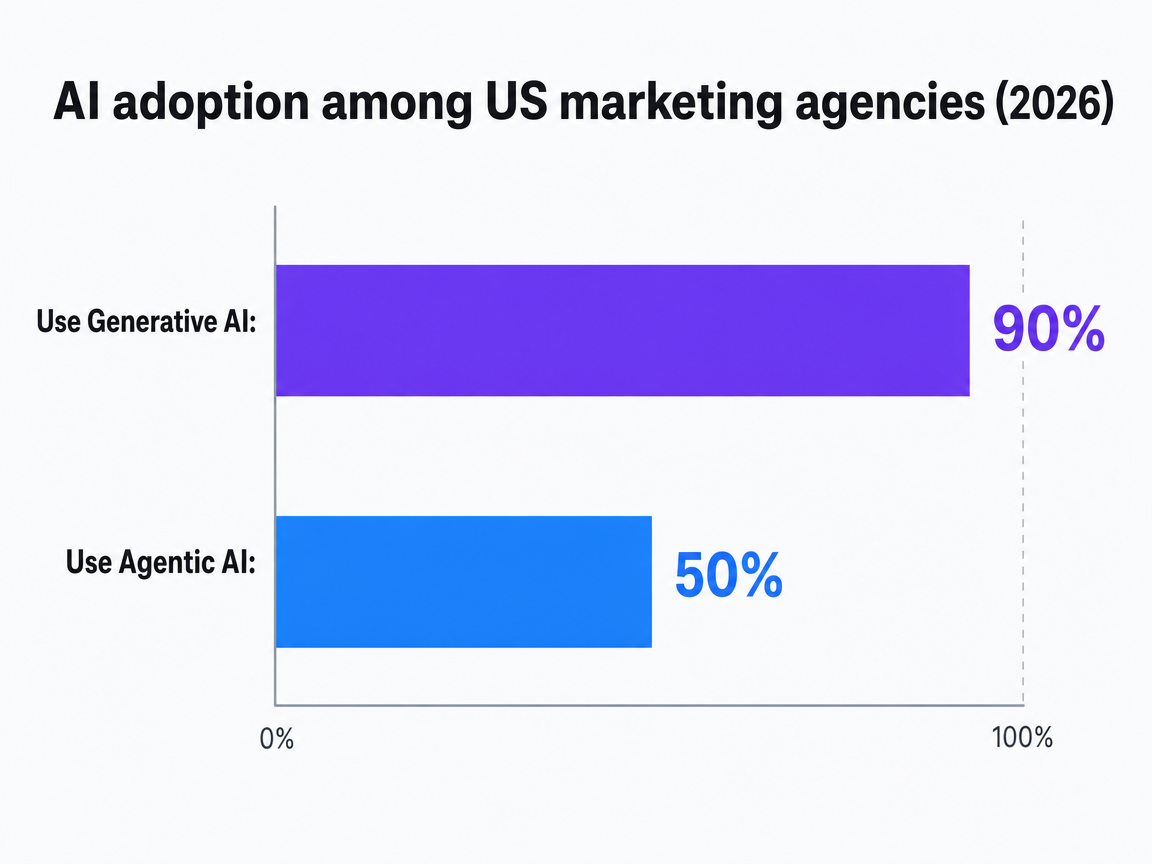 AI adoption among US marketing agencies (2026)
Forrester reports that nine in ten (90%) US marketing agencies use generative AI, and half (50%) use agentic AI for marketing execution.
Agency economics: the consolidation math on a 20-40 client book
Forrester's read on how agencies fund their AI stack matters more to margin than any single subscription line item: 75% of marketing agencies bear the costs of their genAI capabilities directly rather than passing them to clients 15. On a book of twenty to forty accounts, that pricing reality turns every added point tool into a direct hit on delivery margin, not a client pass-through.
The math gets sharper when the seven upstream layers are laid side by side. A pod running thirty accounts is typically paying seat costs across a keyword platform, a crawler, a brief tool, a draft generator, an internal-linking utility, an AI-visibility monitor, and a reporting dashboard. Each carries its own per-seat or per-account fee, its own onboarding tax, and its own human-review hours that Google's people-first guidance requires before publishing 1. Sprawl compounds faster than the automation savings on any single layer.
The matrix below shows where each layer sits on that trade. Pricing is left as a variable because seat costs shift quarterly and Forrester's cost-absorption finding 15 governs the framing more than any sticker number would.
| SEO workflow layer | Point-tool seat cost | Human-review hours per client per month | Consolidation candidate |
|---|---|---|---|
| Keyword research and clustering | $X per seat | 1-2 | No, data spine |
| Technical audits and crawling | $X per seat | 1-3 | No, specialist output |
| Brief generation | $X per seat | 2-4 | Yes |
| Draft production | $X per seat | 4-8 | Yes |
| Internal linking | $X per site | 1-2 | Yes |
| AI-visibility monitoring | $X per account | 1-2 | Partial |
| Multi-source reporting | $X per client dashboard | 2-3 | Yes |
| Orchestration and approval | $X platform fee | Aggregated | The consolidation surface |
The five layers marked as consolidation candidates are where an orchestration surface pays for itself on a thirty-account book. The two that stay separate, keyword data and crawling, are specialist outputs that lose fidelity when merged into a general-purpose platform.
Governance: mapping each tool to NIST AI RMF's four functions
NIST's AI Risk Management Framework organizes AI work into four functions: govern, map, measure, and manage 6. Applied to an SEO stack, the framework gives a head of SEO a concrete way to audit where each tool actually sits in the delivery pipeline, rather than trusting a vendor's compliance page.
Govern : The policy layer: who owns the automation decision, and what published output requires sign-off. Keyword platforms and crawlers sit outside this function because their output does not leave the agency. Brief tools, draft generators, internal-linking utilities, and orchestration surfaces sit inside it, and each needs a documented approval owner.
Map : Scope definition. AI-visibility monitors like Profound and LLMPulse belong here because their job is to identify where a client is present or missing in LLM answers, framing the problem a strategist then solves 17.
Measure : Search Console, GA4, and the reporting layer that quantifies whether the automated work moved the metrics that matter.
Manage : Where drafts get edited, links get accepted in batches, and reports get narrated before they ship. Google's people-first guidance effectively demands the manage function be human 1; the orchestration layer is what keeps that gate consistent across all seven upstream tools.
See How Leading Agencies Scale SEO Delivery With Automated Workflows
Discuss how automated SEO platforms can cut manual overhead, centralize approvals, and maintain quality standards—without adding new hires or losing strategic control across client portfolios.
Realistic output uplift: sizing the productivity claim
McKinsey's cross-functional analysis pegs the marketing productivity lift from generative AI at 5% to 15%, a range drawn from use-case modeling across content creation, personalization, and campaign operations rather than measured agency outcomes 5. The band matters because it sets a defensible ceiling on what a head of SEO should promise a CFO when the automation budget comes up for review.
Plotting that 5-15% range against an agency delivery pod suggests where the realistic zone actually sits. Pods that automate brief generation, draft production, internal linking, and reporting, while keeping human strategists on angle, editing, and narration, tend to land in the lower-to-middle half of the McKinsey band. Pods that also consolidate under an orchestration layer, removing the coordination tax between point tools, can push toward the upper half. Pods that skip the approval gate report higher short-term throughput and then give it back when Google's people-first guidance catches unreviewed output 1.
Two caveats belong in the same paragraph as the number. McKinsey's estimate is a modeled use-case range, not a benchmark of agencies that have already shipped the automation. And Forrester's 2026 read notes that agencies leading with productivity and cost efficiency can sacrifice effectiveness and creativity if the metric stack does not also track output quality 11. The honest planning number for a thirty-account book is a lift in the McKinsey band, contingent on the approval gate holding.
If you manage a portfolio of 40-plus accounts: where stack sprawl breaks first
Scope shift: this section is for heads of SEO running forty-plus accounts, where the trade-offs above compound into different failure modes than a fifteen-account pod sees.
Coordination breaks first, not tooling. At that portfolio size, a pod is typically running seven point tools across dozens of client workspaces, and the hours a strategist spends moving briefs between the clustering tool, the brief generator, the draft interface, and the CMS start to exceed the hours the tools saved. Deloitte's 2026 pulse names data quality and integration into existing systems as the primary constraint on scaled AI use cases, not the algorithms themselves 12. The symptom shows up as missed publish dates and reports that go out without a strategist's read.
The approval gate breaks second. When output volume triples but review capacity stays flat, editors start batch-approving drafts they have skimmed rather than read, which is the exact behavior Google's people-first guidance flags as low-value automation 1. Consolidating onto an orchestration surface at forty accounts is a review-capacity decision, not a cost one.
A 90-day path to picking the next layer to automate
The sequencing question comes up in every stack review: with seven upstream layers and one orchestration surface on the table, which one moves first. A 90-day path keeps the decision bounded and the approval gate intact while it runs.
- Days 1-30 are diagnostic. Pull the last quarter's timesheet data across the pod and rank the seven layers by hours consumed per client, not by vendor enthusiasm. Deloitte's 2026 pulse names data quality and integration into existing systems as the primary constraint on scaled AI use cases 12, which means the highest-hour layer is usually reporting or brief generation, not draft production.
- Days 31-60 are a scoped pilot on the top-ranked layer, running on three to five accounts with the human approval gate documented in writing, mapped to NIST AI RMF's govern and manage functions 6.
- Days 61-90 are the rollout decision: measure hours reclaimed against the McKinsey 5-15% band 5, confirm published output still meets people-first standards 1, and only then extend to the rest of the book.
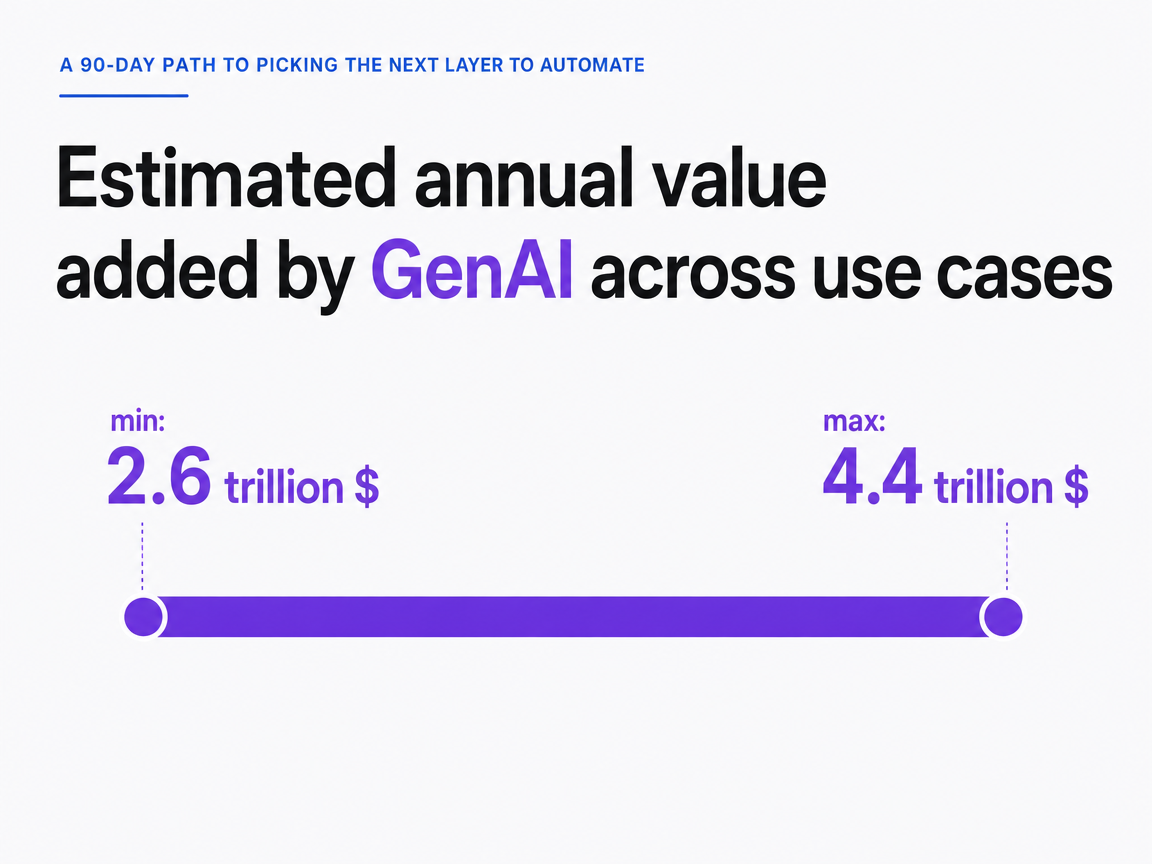 Estimated annual value added by GenAI across use cases
McKinsey estimates genAI could add $2.6 trillion to $4.4 trillion annually across all analyzed business use cases.
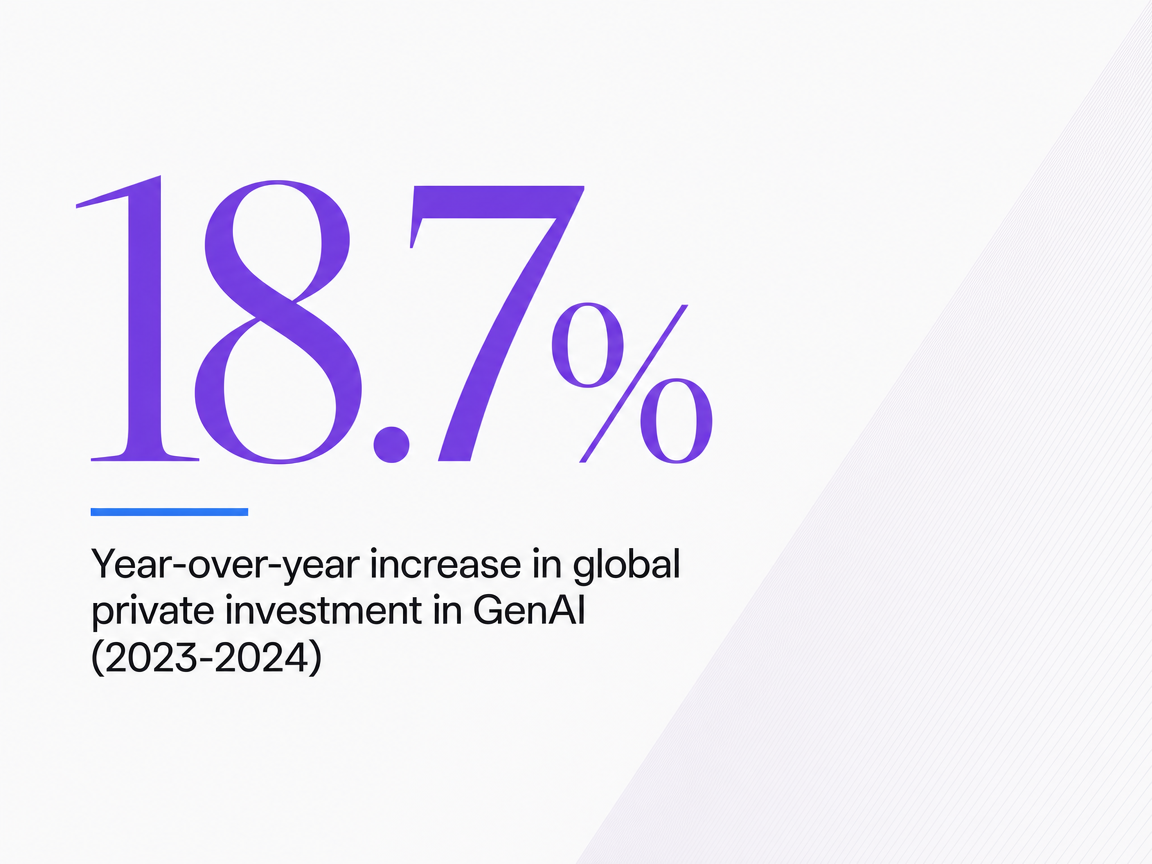 Year-over-year increase in global private investment in GenAI (2023-2024)
Year-over-year increase in global private investment in GenAI (2023-2024)
Frequently Asked Questions
References
- 1.Creating Helpful, Reliable, People-First Content.
- 2.Google Search's guidance about AI-generated content.
- 3.AI Features and Your Website | Google Search Central.
- 4.A new resource for optimizing for generative AI in Search.
- 5.The economic potential of generative AI: The next productivity frontier.
- 6.Artificial Intelligence Risk Management Framework (AI RMF 1.0).
- 7.The 2025 AI Index Report.
- 8.AI Index 2025: State of AI in 10 Charts.
- 9.The State Of Generative AI Inside US Marketing Agencies, 2025.
- 10.Forrester: Nine In 10 US Marketing Agencies Use AI To Cut Costs, Boost Productivity, And Create Content Faster.
- 11.The State Of AI Inside US Marketing Agencies, 2026.
- 12.AI for CMOs: From Experimentation to Enrichment.
- 13.Daily GenAI users see higher pay, job security and productivity - PwC.
- 14.Predictions 2025: Agencies Jettison Legacy Structures To Embrace AI-powered Content Production.
- 15.Cannes Lions 2025: The AI Challenge For Brands And Agencies.
- 16.The 2024 State of Marketing AI Report from Marketing AI Institute and Drift.
- 17.Best AI SEO Tools for Agencies in 2026: AI Visibility Edition.
- 18.7 AI SEO tools built for agencies (tested on clients).
- 19.13 best SEO automation tools I'm using in 2026.