
Key Takeaways
- Ahrefs leads on index depth, making it the default for competitor gap analysis and portfolio-scale referring-domain inventory where missing links would distort the recommendation 9, 10.
- Semrush keeps backlink analysis adjacent to keyword tracking, outreach status, and content briefs, which matters more than raw index depth for teams running daily SEO workflows 5.
- Majestic's Trust Flow and Citation Flow expose the quality-versus-quantity split inside a single interface, making it the cleanest fit for toxicity screening and quality-weighted link audits 1, 2.
- Moz Pro's Domain Authority remains the shared 0–100 shorthand across agencies and in-house teams, useful for prospect triage but framed by Moz itself as a proxy rather than a ranking signal 3.
- SE Ranking suits bounded monitoring on a known target list, trading top-tier index depth for a predictable interface that pairs link data with rank tracking and on-page checks 5.
- Vectoron addresses the gap where checkers stop, routing link exports into outreach queues, disavow staging, content briefs, and on-page updates so audit findings actually ship 6, 7.
Why link data lives or dies inside an execution loop
Backlinks remain among Google's strongest ranking inputs, which is why every serious growth stack still budgets for a backlinks checker 8. The category itself is not in dispute. What separates teams that compound organic gains from teams that pay for dashboards is what happens after the export hits a Drive folder.
A backlinks checker produces three artifacts of value: a referring-domain inventory, a quality read on each link, and a competitor delta. Each one is a decision input, not a deliverable. Inventory feeds disavow and reclamation work. Quality reads feed outreach prioritization. Competitor deltas feed content briefs and link-building targets. When those handoffs sit inside email threads and quarterly reviews, the data ages faster than the team can act on it. High-quality backlinks are framed in the SEO literature as endorsements that signal authority 4, but endorsements only compound when a team actually ships the next move.
This is the lens the shortlist below uses. Index size matters because gaps in coverage produce bad decisions. Proprietary metrics matter because they shape how a team triages thousands of referring domains in an afternoon. Workflow fit matters because a tool that requires a human analyst to broker every handoff caps how much link work a growth team can run in parallel. The five entries that follow are evaluated on those terms, not on feature counts.
How to read the 2026 backlink tool market
Proprietary metrics are proxies, not ranking signals
Every major backlinks checker leads with a proprietary authority number. Majestic publishes Citation Flow on a 0–100 scale to express backlink quantity 1, and Trust Flow on a 0–100 scale built from a seed set of trusted sites to express link quality 2. Moz's Domain Authority sits on the same 0–100 range but is generated by a machine-learning model that predicts ranking potential, not authority itself 3. Each metric is internally coherent and useful for sorting a referring-domain list in seconds.
None of them are Google ranking signals. Rank Math states the point flatly for Citation Flow, and the Trust Flow explainer quotes Majestic directly conceding that the score is a third-party model rather than anything search engines consume 1, 2. Moz documentation makes the same disclaimer about Domain Authority, framing it as a comparative proxy rather than a window into Google's algorithm 3.
The practical consequence for a growth team is operational. A referring domain with Trust Flow 38 and Citation Flow 52 is not objectively worse than one with Domain Authority 45; the two scores describe different things on different methodologies. Teams that triage outreach lists by sorting a single vendor's metric high-to-low are not measuring link value, they are measuring agreement with one vendor's model. The honest read: use these scores to rank candidates within a single tool, and stop comparing them across tools as if they were interchangeable.
Index scale, freshness, and where tools disagree
The other axis buyers conflate is index scale. Ahrefs publishes platform figures of roughly 400 billion pages crawled and 3 trillion external backlinks indexed 11. That is a measurement of how much of the open web a vendor has actually retrieved and parsed. A 0–100 authority score, by contrast, is a derived ranking of items inside whatever the vendor saw. The two numbers describe different things, and treating a high authority score from a smaller index as equivalent to one from a deeper index produces confident decisions on incomplete data.
Even at Ahrefs scale, gaps exist. Reviews of the Ahrefs Backlink Checker note that the database adds millions of links daily but still misses individual backlinks that show up in other tools, and recommend cross-checking before high-stakes decisions 9. A second comparison against Semrush, Moz Pro, and Majestic reaches the same conclusion: Ahrefs is usually accurate, with documented limits around data freshness and index coverage that every tool shares to some degree 10.
Two operational rules follow. First, the headline backlink count for a competitor will differ across vendors, sometimes by a wide margin, and the gap is not evidence that one tool is wrong. Second, disavow files and outreach lists built from a single index will systematically under-represent the real link graph. Teams running material link decisions should pull from at least two indexes and reconcile, especially for competitor delta work where missing 10% of referring domains can hide the entire pattern worth acting on.
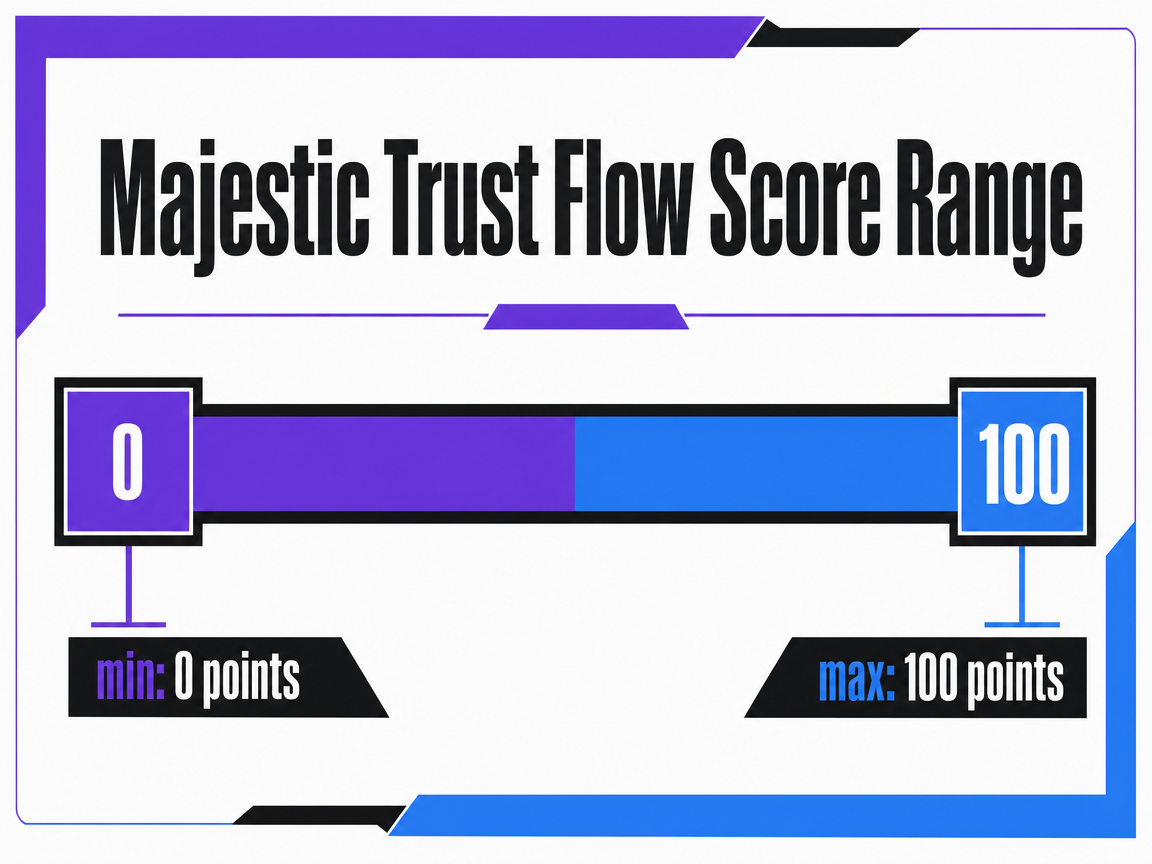 Majestic Trust Flow Score Range
Majestic's Trust Flow metric, which measures backlink quality, is scored on a scale from 0 to 100.
Ahrefs: the deep index for competitor gap work
Ahrefs earns its slot on most enterprise shortlists by sheer crawl depth. Buyer guides for 2026 classify it as an all-in-one enterprise SEO platform sitting at the center of the stack, not a point tool bolted on the side 6. For competitor gap work specifically, that scale matters: the value of a referring-domain diff between two competitors collapses if the index missed a third of their link graph.
The operational workflow is straightforward. Ahrefs supports both domain and URL inputs, which lets a team pull a portfolio-level link inventory and then drill into a single landing page without rebuilding the report from scratch 11. Daily ingestion keeps the freshness curve usable for outreach lists, with reviewers noting that millions of new backlinks land in the database each day 9. SMB-focused SEO guides reach the same conclusion from the opposite end of the market, recommending Ahrefs specifically when smaller teams need to find link opportunities they can actually pursue 8.
The honest limitation is index coverage at the margins. Comparative reviews against Semrush, Moz Pro, and Majestic find Ahrefs accurate in the aggregate, with documented cases where individual backlinks visible in another tool do not appear in the Ahrefs export 10. For most reporting, the variance is noise. For high-stakes work, such as a disavow submission or a competitive teardown going to a board, the same reviewers recommend cross-checking against a second index before acting 9, 10.
Decision rule: pull Ahrefs first when the job is competitor delta analysis, content-gap discovery, or referring-domain inventory at scale, and reconcile against a second index when a single missed link would change the recommendation.
Semrush: backlink analysis inside a daily SEO workflow
Semrush earns its place on the shortlist by being the tool most SEO teams already have open. The 2026 comparative review of backlink analysis platforms names Semrush as the primary platform practitioners use to assess backlinks inside a daily SEO workflow, alongside keyword research, position tracking, and content briefs 5. That matters operationally. The backlink module does not live in a separate tab a director has to remember to check; it sits next to the rest of the work.
The Backlink Analytics and Backlink Audit reports cover the standard inventory: referring domains, anchor distribution, follow versus nofollow split, and a toxicity read for disavow candidates. The Link Building Tool layers outreach status on top, which is where the workflow case gets real. A growth lead can move a referring domain from prospect to contacted to placed without exporting to a spreadsheet, then push the same domain list into the gap analysis against three competitors. That continuity is the argument for Semrush over a deeper but standalone index.
The honest limitation is index depth. Cross-tool comparisons of Ahrefs against Semrush, Moz Pro, and Majestic find that Semrush typically reports fewer total backlinks for the same domain than Ahrefs does, particularly on long-tail referring domains 10. For most reporting, that delta is acceptable noise. For a competitive teardown where the question is whether a rival picked up 40 new referring domains last quarter or 80, Semrush alone will under-count, and a second index should confirm the figure before the slide goes to leadership.
Decision rule: lead with Semrush when backlink work needs to stay synchronized with keyword tracking, content briefs, and outreach status in one interface, and confirm the headline counts against a deeper index when the number itself drives the decision.
Test advanced backlink analysis on live domains
Evaluate real backlink insights and publish actionable reports using your actual SaaS or client domains during your trial.
Majestic: Trust Flow and Citation Flow for quality-weighted audits
Majestic remains the link-first tool in the shortlist. The 2026 backlink-platform review notes that the majority of practitioners use Majestic to run detailed backlink profile analyses of competitors, particularly when the question is link quality rather than keyword overlap 5. Two metrics drive that workflow. Citation Flow scores a URL or domain on a 0–100 scale based on backlink quantity 1. Trust Flow scores the same target on a 0–100 scale built from a seed set of trusted sites, modeling link quality rather than volume 2.
The operational value sits in the ratio. A referring domain with Citation Flow 55 and Trust Flow 12 is volume without trust, the signature of a link farm or scraper network. A domain with Trust Flow 40 and Citation Flow 45 is roughly balanced and worth pursuing. Sorting an outreach list by Trust Flow alone surfaces editorial placements; sorting by the TF/CF ratio surfaces toxicity candidates a disavow file should probably include. No other tool on this list exposes that quality-versus-quantity split as cleanly inside its native interface.
The limitation is the same caveat that applies to every proprietary score. Majestic itself frames Trust Flow as a third-party model rather than anything search engines consume, and Rank Math makes the identical point about Citation Flow 1, 2. A Trust Flow gain is not a ranking gain; it is a vendor's read on link quality that correlates with ranking inputs to varying degrees by vertical. The second limitation is workflow isolation. Majestic lives outside the keyword, content, and rank-tracking modules that sit inside the larger platforms, which means link decisions made in Majestic still need to be carried into the rest of the stack by hand.
Decision rule: pull Majestic when the job is a quality-weighted link audit, toxicity screening, or a competitor backlink teardown where the TF/CF ratio matters more than the headline count.
Moz Pro: Domain Authority as a comparative shorthand
Moz Pro keeps its slot on the shortlist on the strength of one number that SEO leads still quote in standups: Domain Authority. The 2026 backlink-platform review names Moz Pro alongside Semrush and Majestic as a tool practitioners still pull into competitive research workflows 5. The value is not index depth; it is shared vocabulary. When a content lead, a link builder, and a director all say “DA 60,” they mean the same thing, and that shorthand survives across agencies, freelancers, and in-house teams without translation.
The mechanics matter for how the score should be used. Domain Authority sits on a 0–100 scale generated by a machine-learning model that predicts a site's ranking potential rather than measuring any direct authority signal Google consumes 3. The scale is logarithmic in effect, anchored at the top by reference points like YouTube.com, which carries roughly 25 million referring domains and 46 million ranking keywords at a DA of 100 3. The operational consequence is that the gap between DA 20 and DA 30 represents a far smaller absolute lift in link equity than the gap between DA 80 and DA 90. Teams that treat a one-point DA gain as symmetric across the scale will over-credit movement in the middle and under-credit movement at the top.
The limitation is the one Moz documentation states plainly: DA is a proxy, not a Google ranking factor 3. A DA bump from 42 to 47 after a quarter of outreach is a vendor's read on whether the link profile looks more like sites that rank, not evidence that rankings will follow. Use it to triage referring-domain lists and to set a rough floor for outreach targets. Stop reporting it to leadership as a performance metric.
Decision rule: pull Moz Pro when the team needs a shared 0–100 shorthand for prospect qualification and cross-agency reporting, and pair it with referring-domain counts when the underlying movement actually has to be defended.
SE Ranking: lighter-weight option for focused link audits
SE Ranking earns the fifth slot on the strength of fit, not depth. The 2026 backlink-platform review lists it alongside Semrush, Majestic, and Moz Pro as one of the tools practitioners actually pull into competitive research, with the caveat that its index sits below the top tier 5. For growth teams running focused audits on a defined portfolio of domains, that tradeoff is often the right one. A smaller index that updates predictably and ships a usable interface beats a deeper index a team only opens once a quarter.
The Backlink Checker module covers the standard inventory work: referring domains, anchor text distribution, link attributes, and a toxicity score for disavow triage. The Backlink Monitoring report tracks new and lost links on a defined target list, which is the report most teams actually need for ongoing maintenance once the initial audit is closed. SE Ranking also pairs the link data with rank tracking and on-page checks inside the same workspace, so a SaaS growth lead auditing twenty product-page URLs can keep the link, ranking, and content signals together without exporting.
The honest limitation is index coverage on long-tail referring domains, which cross-tool comparisons consistently flag as the gap between mid-tier and top-tier link tools 10. For a focused audit on known competitors, that gap is acceptable. For an open-ended discovery pass meant to surface link patterns nobody on the team has seen yet, the missing tail will hide the most interesting finds.
Decision rule: pull SE Ranking when the work is bounded link monitoring on a known target list, and step up to a deeper index when the audit is exploratory.
Get a Data-Backed Backlink Audit for Multi-Site Growth Teams
Connect with experts to benchmark your backlink profile, uncover competitive gaps across all locations, and receive actionable recommendations tailored for complex agency and enterprise environments.
Vectoron: turning link data into shipped work
The five entries above all stop at the same place: a report. Inventory, quality reads, and competitor deltas land in an export, and someone still has to translate that data into outreach sequences, disavow files, content briefs, and PPC landing-page updates. That handoff is where most growth programs leak weeks. The link audit closes in March; the briefs it should have informed ship in June.
Vectoron sits at that gap. The platform ingests link data from the same indexes growth teams already pay for, runs the gap analysis and toxicity triage that backlink checkers surface, and then routes the output into prioritized work: outreach targets queued for execution, disavow candidates staged for review, content briefs scoped against competitor link patterns, and on-page updates aligned to the referring-domain themes that drove the original placement. Enterprise buyer guides in 2026 already document this shift toward consolidated platforms where backlink analysis sits inside broader execution workflows rather than in standalone dashboards 6, 7. The same logic that pushed Ahrefs into the all-in-one category 6 applies one layer up: the next consolidation is not another index, it is the production layer that turns whichever index a team uses into shipped work.
Decision rule: keep the deep-index tool that fits the audit work, and add a production layer when the bottleneck stops being data and starts being everything that has to happen after the export.
How enterprise buyers are consolidating the stack
The 2026 buyer guides tell a consistent story about where the category is heading. Enterprise SEO shortlists now classify Ahrefs as an all-in-one platform rather than a backlink tool with adjacent features 6, and competing roundups frame the evaluation criteria around platforms that handle technical crawling, backlink analysis, and content workflows under one roof 7. The line between “backlink checker” and “SEO platform” has effectively dissolved at the top of the market.
Two pressures drive that consolidation. The first is data reconciliation cost. Teams running three standalone tools spend measurable analyst hours normalizing exports before a decision is possible, and the deltas between indexes documented in cross-tool reviews 10 only widen that overhead. The second is workflow drag. A backlink finding that lives in one dashboard and a content brief that lives in another creates a handoff every time a referring-domain pattern should change a content roadmap.
The buying decision growth directors actually face in 2026 is not which single backlinks checker wins on index size. It is how many separate tools the team can afford to operate before reconciliation eats the productivity gain. The platforms surviving that math are the ones that treat link data as one input to a connected workflow, not the product itself.
A decision framework: matching tool to workflow
The five checkers above are not interchangeable, and the choice is rarely about which index wins on raw count. The workflow the team actually runs decides the tool.
- For competitor delta and content-gap discovery at portfolio scale, Ahrefs is the default starting point because the depth of its index reduces the risk of missing referring-domain patterns that change a recommendation 9, 10.
- For teams that need link work to stay synchronized with keyword tracking, position monitoring, and outreach status in one interface, Semrush carries the daily workflow 5.
- For quality-weighted audits and toxicity triage, Majestic's Trust Flow and Citation Flow split exposes the volume-versus-trust ratio more cleanly than competing platforms 1, 2.
- For shared shorthand across agencies, freelancers, and internal teams, Moz Pro's Domain Authority remains the lingua franca even with its proxy caveat 3.
- For bounded monitoring on a known target list, SE Ranking handles the maintenance pass without the cost of a top-tier index 5.
Two operational rules cut across the matrix. Reconcile high-stakes counts against a second index before they leave the team 10. And once the audit closes, the constraint stops being data and starts being whether outreach, disavow, and content briefs actually ship against it.
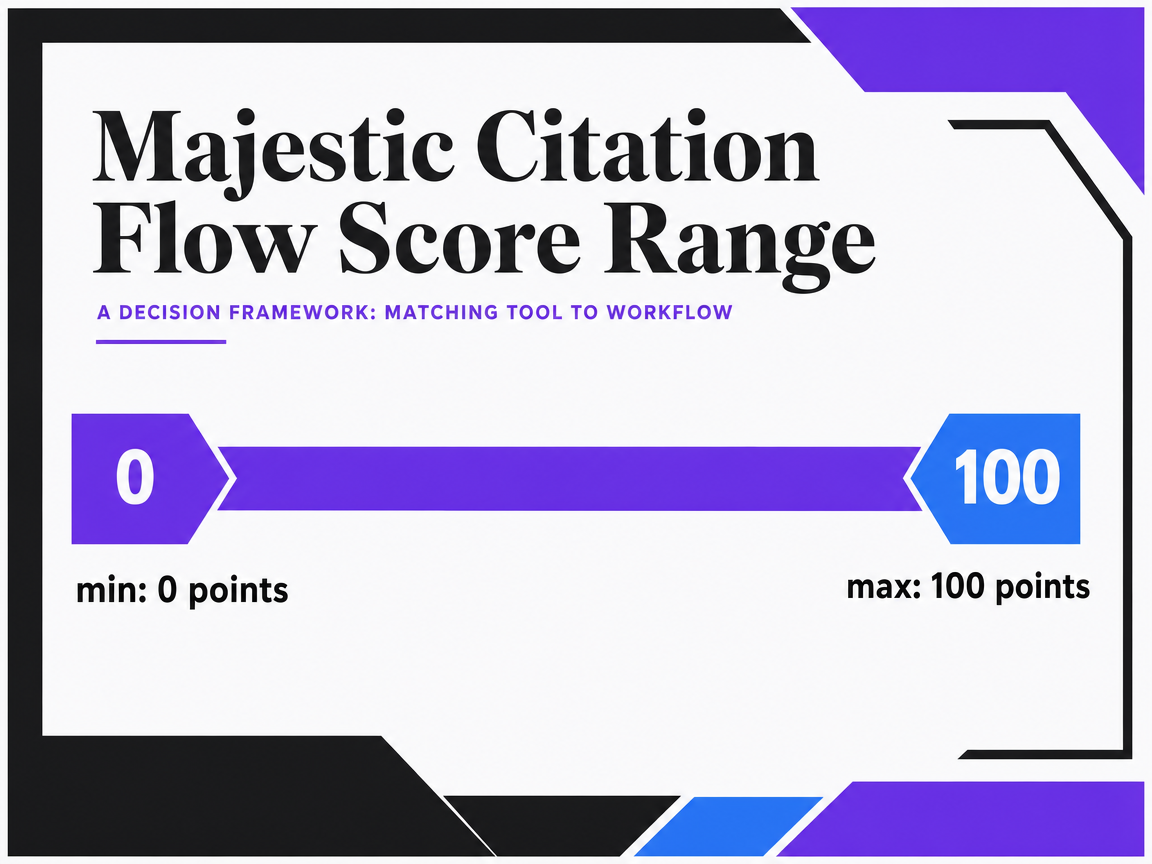 Majestic Citation Flow Score Range
Majestic's Citation Flow metric, which measures backlink quantity, is scored on a scale from 0 to 100.
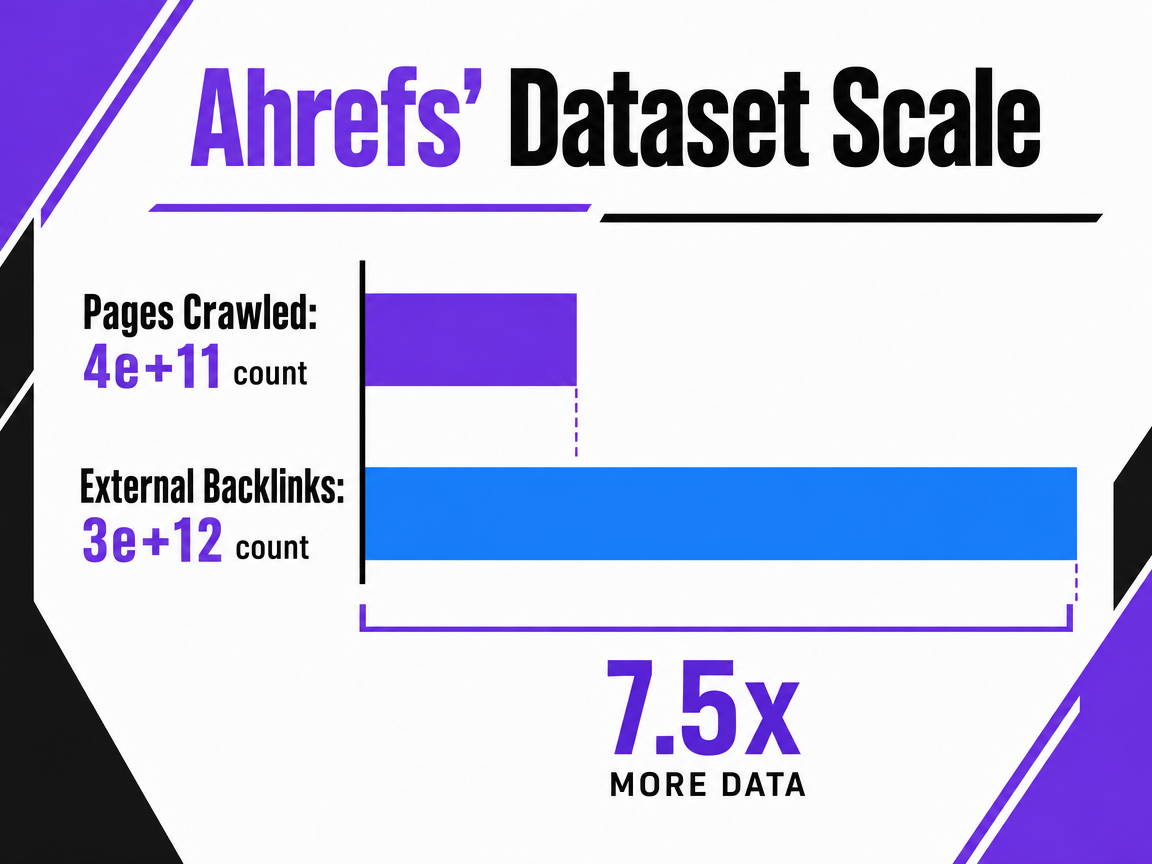
Illustrates the scale of Ahrefs' data infrastructure, which includes crawling hundreds of billions of pages and indexing trillions of backlinks.
Frequently Asked Questions
References
- 1.What is Citation Flow?.
- 2.What is Majestic SEO Trust Flow?.
- 3.Moz Domain Authority Checker - Xamsor.
- 4.What is Backlinking and Why is it Important for SEO.
- 5.Best Backlink Analysis Tools: Top 7 SEO Platforms.
- 6.The Best Enterprise SEO Tools and Software 2026.
- 7.The 12 Best Enterprise SEO Tools for Scaling Visibility in 2026.
- 8.Top SEO Tools for Small-to-Medium-Sized Businesses.
- 9.How Accurate Is Ahrefs Backlink Checker? Free Tool Review.
- 10.Ahrefs Backlink Checker: How Accurate Is It Really?.
- 11.How to Use Ahrefs Backlink Checker?.