
Key Takeaways
- Clearscope strengthens content production through term-based recommendations and citation-friendly drafting, but lacks native schema generation, AI-surface citation tracking, and built-in approval logging for portfolio-scale AEO work.
- MarketMuse is valuable for diagnosing topical coverage gaps across large client inventories, yet answer-shaped production, schema automation, generative-surface measurement, and governance workflows fall outside its scope.
- Surfer SEO delivers high-volume production speed with NLP term guidance, but keyword-coverage output, absent schema deployment, and thin governance leave three of the four AEO capabilities uncovered.
- Frase supports question-then-answer drafting through People Also Ask mining, aligning with generative citation patterns, though manual schema, limited measurement, and minimal governance restrict its use as a full AEO layer.
- Writesonic AEO prioritizes brand-mention tracking across ChatGPT, Perplexity, and AI Overviews, but variable draft quality and missing reviewer attribution require agencies to bolt on a separate governance layer 2, 18.
- Profound offers strong citation measurement across ChatGPT, Perplexity, AI Overviews, and Copilot, but production, schema, and governance are out of scope, making it a measurement complement rather than a standalone platform.
- Vectoron integrates production, schema, cross-surface measurement, and approval-first governance through a Command Center with human sign-off, aligning with the four-capability rubric and Google's scaled content abuse boundary 2.
Why AEO Tooling Is Really an Operating-Model Decision
Selecting the best AEO software is less about feature parity and more about the operating model an agency wants to run. AI answer surfaces have already changed the traffic dynamics that made traditional SEO delivery predictable.
Pew Research Center's analysis of 68,879 Google searches found that users clicked a traditional result on 8% of visits when an AI summary was present, compared with 15% when it was not. Only 1% of visits with an AI summary produced a click on a cited source, and 26% ended the browsing session entirely 7. This behavioral pattern rewards being directly within the answer, not merely adjacent to it.
This reality reshapes what an SEO delivery team produces. Answer-shaped content, validated structured data, freshness cycles across numerous client sites, and citation earning are now distinct workstreams. Forrester's content operating model research argues that generic output is no longer sufficient; organizations need models built for expertise and credibility at scale 12.
Evaluating AEO software against a feature matrix misses this crucial point. The correct framework is whether a platform integrates production, schema, measurement, and governance into one cohesive loop, or if it merely adds another tool to an already complex stack. This guide applies that lens to the tools agency leads are considering.
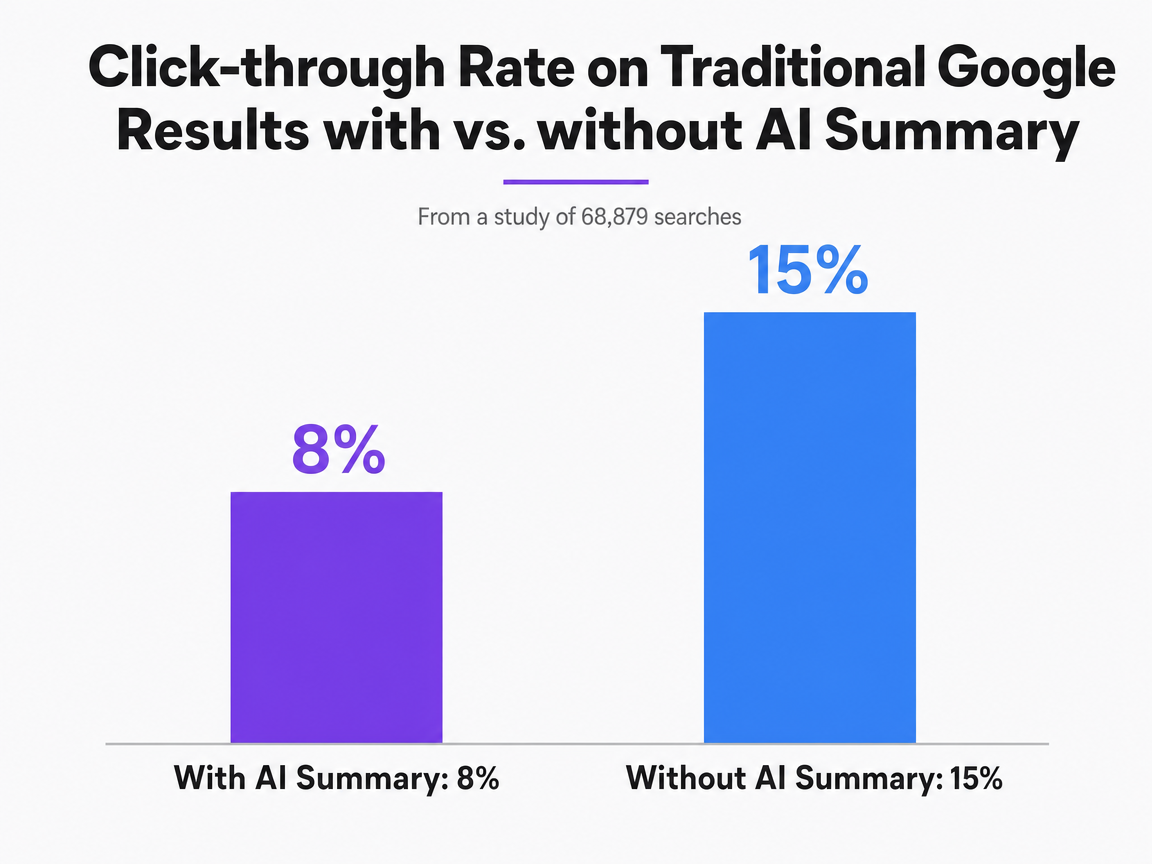 Click-through Rate on Traditional Google Results with vs. without AI Summary
Comparison of the percentage of Google search visits where a user clicked a traditional (non-AI) result, based on whether an AI summary was present. From a study of 68,879 searches.
The Four-Capability Rubric for Evaluating AEO Platforms
Answer-Shaped Content Production
A key criterion for AEO software is its ability to produce content that generative engines cite. The GEO benchmark paper found that rewrites emphasizing citations, quotations, and statistics increased source visibility in generative-engine responses by up to 40% 8. This empirically tested intervention with a measurable effect on AI-answer inclusion makes answer-shaped production a top priority.
Production quality within an AEO platform should be assessed on three specifics:
- Whether the tool composes paragraphs around a direct claim followed by a sourced supporting figure, rather than expanding topic outlines into keyword-dense prose.
- Its ability to enforce citation density as a template rule across a portfolio, not just on a per-article basis.
- If the drafting layer preserves original quotations from primary research instead of paraphrasing them.
Platforms that treat AEO as a keyword-clustering exercise with an AI writer often fail these tests. Google's guidance reinforces this direction: AI-assisted content is acceptable when it meets Search Essentials standards for accuracy, quality, and relevance 1. The standard is not automation itself, but the quality of its output.
Structured Data Deployed at Portfolio Scale
Schema deployment is a common pain point for agencies. Consistently applying Article, FAQ, Organization, and service-specific markup across many client sites requires either robust CMS template governance or an AEO platform that generates and validates JSON-LD as part of the publishing workflow.
Google's guidance is clear: structured data must accurately represent visible page content and not describe hidden information 4, 5. This rules out AEO tools that inject speculative markup, such as fake FAQ blocks or invented author bios, as a shortcut to rich results. Article schema, in particular, must adhere to Google's guidelines for eligibility 6.
Key evaluation questions include:
- Does the platform generate JSON-LD linked to actual page elements?
- Does it validate against Google's requirements pre-publication?
- Does it version schema with content updates to prevent outdated structured data?
Tools that meet these criteria reduce technical debt, freeing up senior specialist hours.
Cross-Surface Visibility Tracking Across Google and Bing AI
Agencies often underestimate the importance of measurement. Traditional rank tracking, which focuses on keyword position, increasingly fails to correlate with pipeline when AI summaries mediate clicks. An AEO platform lacking visibility tracking across generative surfaces is measuring outdated metrics.
Microsoft addressed this by launching AI Performance in Bing Webmaster Tools public preview. This feature reports how often publisher content appears across Microsoft Copilot, AI-generated summaries in Bing, and partner integrations, identifying referenced URLs 15. This data should be integrated into the AEO workflow.
Google's native reporting is less comprehensive, raising the bar for what platforms should ingest. Effective AEO tools track citation appearance in AI Overviews, Perplexity, and ChatGPT search results at the URL and query level, then map these citations back to the content interventions that produced them. Bing's webmaster guidelines still emphasize useful, original content and technical best practices 14, so measurement without a production feedback loop is incomplete. The best platforms close this loop: identifying what was cited, on which surface, and from which content revision.
Governed Approval Workflows That Sidestep Scaled Content Abuse
Governance distinguishes AEO platforms designed for agencies from simple AI writers. Google's spam policies define scaled content abuse as generating many low-value pages, regardless of whether automation, humans, or both produced them 2, 3. The March 2024 policy explicitly targets content produced at scale to boost rankings 18.
For agencies managing client portfolios, this policy represents a live enforcement risk. A platform that publishes AI drafts without a human sign-off layer, which adds expertise or verification, moves the agency toward the exact behavior Google's policy targets. Google's original stance—that appropriate AI use is permitted, but automation to manipulate ranking is a spam violation 17—draws the line at intent and quality, not tool choice.
Approval-first workflows are the operational solution. Key evaluation questions include:
- Does the platform require documented human sign-off before publication?
- Does it log who approved what and when?
- Does it surface the strategic reasoning behind AI recommendations for reviewer judgment?
Forrester's research highlights that credibility now relies on such infrastructure, not just volume 12. Tools lacking this push the governance burden back onto specialists.
Test AI-driven AEO workflows on live projects
Experience streamlined AEO campaign execution and publish real client content with measurable performance insights included.
The Shortlist: AEO Platforms Scored Against the Rubric
Clearscope
Clearscope excels in content production. Its content grader and term-based recommendations guide writers toward comprehensive topic coverage, which correlates with the citation density valued by generative engines 8. The editor consolidates competing pages, related entities, and readability targets, streamlining the brief-to-draft cycle for scaled content programs.
Against the four-capability rubric, Clearscope is a partial fit. Schema generation is not native, requiring external tools or CMS integration. Measurement remains keyword-position centric, lacking first-party visibility into AI Overview or Copilot citations. Governance is workflow-adjacent via integrations, not built-in approval logging. Clearscope is valuable for optimizing individual articles, but agencies seeking a portfolio-level AEO solution will need to supplement it with schema and cross-surface tracking.
MarketMuse
MarketMuse focuses on topic modeling and content inventory analysis. Its Compete and Optimize applications identify coverage gaps across a site, which is crucial for agencies managing client portfolios with extensive legacy content. The platform's strength is diagnostic: it identifies pages with topical authority, those needing consolidation, and areas for new content.
Production quality for answer-shaped output can be inconsistent; briefs often prioritize breadth over the citation and quotation density that the GEO benchmark rewards 8. Schema automation is absent. Measurement is limited to rank and coverage scores, without AI-surface citation tracking like Bing's AI Performance 15. Governance workflows are minimal. MarketMuse is suitable for agencies prioritizing portfolio audits, but it covers only one of the four AEO capabilities as a full operating layer.
Surfer SEO
Surfer's Content Editor and SERP Analyzer are designed for high-volume production. NLP-based term recommendations, structure suggestions, and internal linking prompts align with many agencies' existing client delivery workflows. Its AI Humanizer and article generator offer speed, though the output often prioritizes keyword coverage over the specific claims-plus-sources structure that can boost generative visibility by up to 40% 8.
The rubric highlights its limitations. Schema deployment is not integrated into the publishing loop. Measurement remains keyword-rank focused, lacking native AI Overview and Copilot citation tracking. Governance is limited to the drafting layer, without documented approval logs needed to avoid Google's scaled content abuse definition 18. Surfer excels in production speed but is weaker on the three capabilities critical for AEO durability.
Frase
Frase combines SERP research with an AI writer, suitable for agencies with high article volume. Its question-mining feature integrates People Also Ask data and forum questions into brief templates, which aligns well with the answer-shaped format cited by generative engines. Teams aiming to compose direct question-then-answer paragraphs—a structural pattern linked to citation lift in the GEO paper—find Frase's brief scaffolding useful 8.
On the rubric, production is capable, but schema is manual, measurement is limited, and governance is minimal. Frase does not natively generate or validate JSON-LD, meaning adherence to structured data guidelines (e.g., true representation of visible content 4) relies on external review. AI-surface visibility tracking is not part of the platform. For agencies producing FAQ-heavy service pages for mid-sized client rosters, Frase is a serviceable production engine but not a complete AEO operating layer.
Writesonic AEO
Writesonic has reoriented parts of its platform toward AEO, including a Generative Engine Optimization tracker that monitors brand mentions across ChatGPT, Perplexity, and Google AI Overviews. This measurement layer is its most relevant feature, as most competitors treat AI-surface citation as an afterthought, while Writesonic prioritizes it alongside traditional rank tracking.
Production quality varies, with AI drafts often requiring more editorial refinement than those from Clearscope or Frase for complex topics. Schema deployment is partial and depends on the destination CMS. Governance is its weakest point for agency use: approval logging and reviewer attribution are not built into the publishing flow, which is critical given Google's spam policy on scaled content abuse 2, 18. Writesonic is worth considering for its measurement approach, with the caveat that agencies will need to implement a separate governance layer.
Profound
Profound is a newer entrant focused almost exclusively on measurement. The platform tracks brand and URL appearance across ChatGPT, Perplexity, Google AI Overviews, and Copilot, mapping citation frequency to specific queries and prompts. For agencies needing to confirm client content citation within generative answers, Profound provides data that traditional rank trackers do not, complementing Bing's AI Performance preview 15.
The rubric reveals a profile inverse to Clearscope's: strong measurement, but production, schema, and governance are largely out of scope. Profound is an analytics platform, not a content operations system. Agencies typically pair it with separate production and CMS stacks, which can reintroduce the coordination overhead that a unified AEO operating model aims to reduce. It is useful as a measurement layer within a broader stack but insufficient as a standalone AEO platform.
Vectoron
Vectoron addresses AEO as a coordination challenge across specialist strategists—Content, SEO, PPC, Backlinks, Social, and Call Intelligence—managed through a Command Center that requires human approval before publication. This structure directly aligns with the four-capability rubric: content drafts are handled by the content strategist, schema and technical work by the SEO strategist, cross-surface measurement integrated into reporting, and governance enforced by the approval-first workflow.
Its production layer emphasizes claim-plus-source structure and citation density, aligning with interventions linked to visibility lift in the GEO paper 8. Schema generation is tied to visible page content, adhering to Google's structured data guidelines 4. The approval log addresses the operational aspect of Google's scaled content abuse definition 2. Vectoron is a comprehensive marketing execution platform, which might be broader than needed for agencies seeking only a narrow AEO point tool.
If You Manage a Client Portfolio: Consolidation Economics
The economic calculation changes when the unit of analysis is a portfolio of 15 to 40 client sites, rather than a single brand. At this scale, the four AEO capabilities become labor lines. Every hour a senior specialist spends reconciling schema across a client's 200 service pages is an hour not dedicated to strategy or retention.
McKinsey estimates that generative AI can improve marketing productivity by 5% to 15% of total marketing spending, positioning marketing and sales as significant value pools for this technology 10. Applying this to specialist hours per client per month reveals the difference between two operating models: a stack of four point tools with manual handoffs, or a unified AEO platform where production, schema, measurement, and governance share a single workflow.
The following comparison uses specialist hours per client per month as the variable, treating the McKinsey range as the defensible band for productivity delta.
| Capability | Point-Tool Stack (hrs/client/mo) | Unified AEO Platform (hrs/client/mo) |
|---|---|---|
| Answer-shaped content production | 8–12 | 6–9 |
| Schema deployment and validation | 3–5 | 1–2 |
| Cross-surface visibility tracking | 2–4 | 1–2 |
| Editorial governance and approval logging | 3–5 | 1–2 |
| Coordination and handoff overhead | 4–6 | 1–2 |
| Total | 20–32 | 10–17 |
Agencies often underestimate coordination overhead. Forrester's research on content operations notes that generative AI capabilities within CMS platforms are reshaping team efficiencies and cost drivers, and that friction between disconnected tools becomes the dominant expense as volume rises 13. A 15-client portfolio using the point-tool model absorbs 300 to 480 specialist hours monthly across the four capabilities. The unified model, for the same client count, ranges between 150 and 255 hours. This delta falls within McKinsey's 5%–15% productivity band, making consolidation an agency P&L question, not just a tooling preference.
See How Leading Agencies Scale SEO with Automated AEO Workflows
Get a walkthrough of AI-powered AEO solutions proven to streamline content and entity optimization across high-volume client portfolios—without increasing headcount or sacrificing quality oversight.
Selection Sequence: How to Move From Rubric to Rollout
Scoring platforms is straightforward; sequencing the rollout across a live client portfolio is where many agencies falter. A defensible order of operations begins with governance, not production, because the approval log is crucial for keeping the entire operation clear of Google's scaled content abuse definition 2.
- Document the sign-off chain before any AI-assisted draft is published. This includes who approves, against what checklist, and where the log is maintained. Google's guidance considers intent and quality as the dividing line for AI-assisted content 1, making the paper trail as important as the output.
- Establish a schema baseline. Audit existing structured data across the top 20% of URLs per client, remediate any misrepresentation issues, and then enable automated JSON-LD generation only after this baseline is clean. Publishing new markup on top of broken markup exacerbates technical debt.
- Production retooling. Migrate one content type—typically service or location pages—into the answer-shaped template before addressing the blog backlog. Measure citation appearance for this cohort over 60 to 90 days using Bing's AI Performance data 15 and any generative-surface tracking provided by the chosen platform.
- Portfolio expansion. Only after the initial cohort demonstrates citation lift and clean schema should the model scale to the rest of the client roster.
Agencies that reverse this sequence—starting with volume production before stable governance and schema—often learn why Forrester frames content operations as a model problem rather than just a tooling problem 12. Platforms like Vectoron are designed to integrate within this sequence, not replace the strategic judgment behind it.
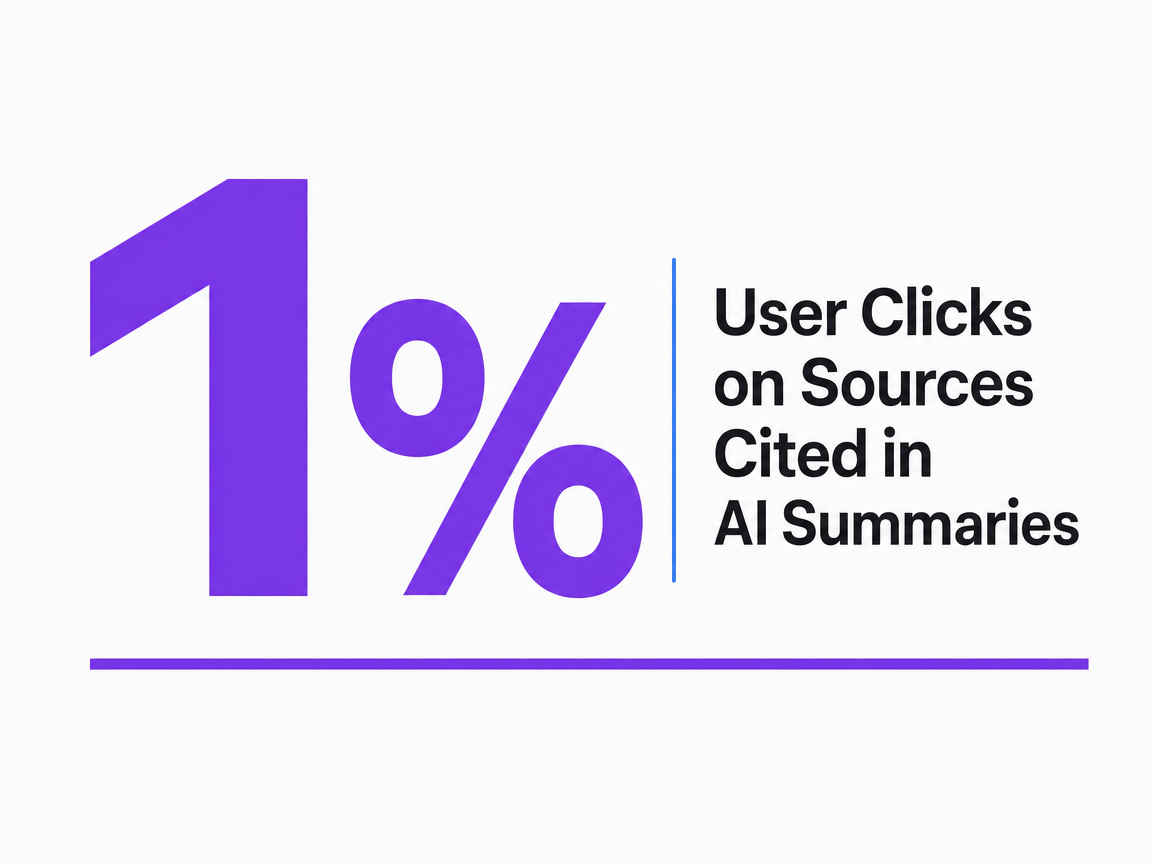 User Clicks on Sources Cited in AI Summaries
User Clicks on Sources Cited in AI Summaries
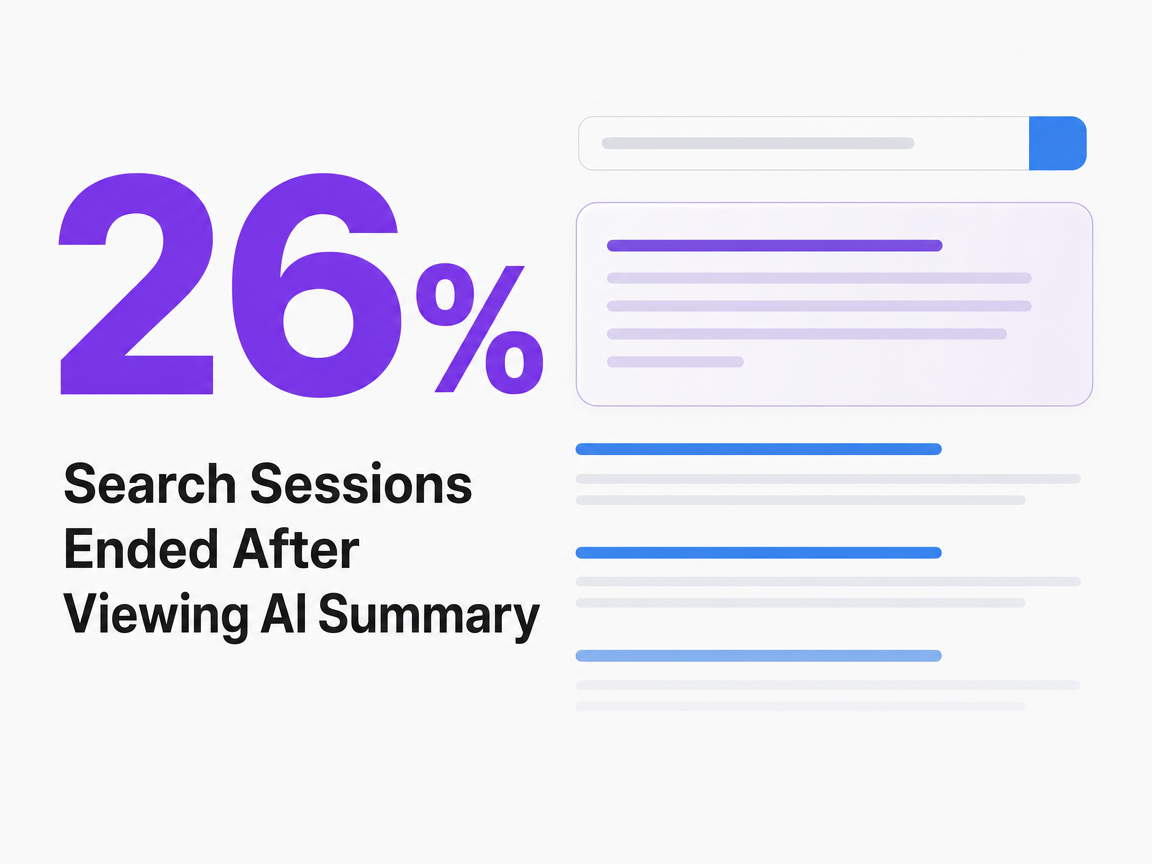 Search Sessions Ended After Viewing AI Summary
Search Sessions Ended After Viewing AI Summary
Frequently Asked Questions
References
- 1.Google Search's guidance on using generative AI content on your website.
- 2.Spam Policies for Google Web Search.
- 3.our March 2024 core update.
- 4.General Structured Data Guidelines.
- 5.Introduction to structured data markup in Google Search.
- 6.Learn About Article Schema Markup.
- 7.Google users are less likely to click on links when an AI summary appears in the results.
- 8.GEO: Generative Engine Optimization.
- 9.The State of AI: Global Survey 2025.
- 10.Economic potential of generative AI.
- 11.Marketing and sales soar with generative AI.
- 12.To Survive The Content Apocalypse, Reinvent Your Content Operating Model Now.
- 13.New Research — Content Management Systems.
- 14.Webmaster Guidelines.
- 15.Introducing AI Performance in Bing Webmaster Tools Public Preview.
- 16.AI in the workplace: A report for 2025.
- 17.Google Search's guidance about AI-generated content.
- 18.New ways we're tackling spammy, low-quality content on Search.