
Key Takeaways
- Profound treats each prompt as the tracked entity, running libraries across Perplexity, ChatGPT Search, AI Overviews, and Gemini with isolated multi-workspace architecture built for agency portfolios.
- Peec AI parses every answer into raw text, ordered citations, and brand sentiment, exposing retrieval volatility and flagging citations that sit next to competitor recommendations.
- AthenaHQ governs prompt portfolios like code, giving every prompt version stamps, authors, and change logs so citation-share shifts can be audited against phrasing edits 6.
- Semrush AI Toolkit bolts answer-engine tracking onto its existing suite, consolidating reporting for mid-market agencies but offering shallower citation extraction and minimal prompt versioning.
- Ahrefs Brand Radar tracks citation share alongside backlinks and keywords with a strong competitor overlay, though thin prompt versioning limits its use as an enterprise system of record.
Why AI Answer Visibility Broke Keyword Rank Tracking
The old contract between search and SEO was simple. A user typed a query, ten ranked results appeared, and a rank tracker recorded position one through one hundred. That contract is dissolving. McKinsey reports that roughly 50% of Google searches now surface an AI-generated summary, while only 16% of brands systematically track their performance inside AI search results 1. The gap between where discovery happens and where measurement happens has become the defining problem of the category.
Perplexity, Google's AI Overviews, and similar answer engines do not return a ranked list. They return a synthesized answer with a handful of cited sources. A brand either appears inside that answer or it does not. Position 4 versus position 7 stops mattering. What matters is whether the source URL was retrieved, quoted, and attributed. Traditional rank trackers were built to crawl SERPs and log positions. They were never designed to parse an AI answer, extract citation lists, or measure share of voice inside a generated response.
The measurement problem gets worse because answer engines rewrite the input before retrieval. A tracked keyword is no longer the query the system actually runs. That single change breaks the assumption that keyword-level rank data reflects real user visibility, and it forces agency SEO leaders to rethink what their tools are actually recording.
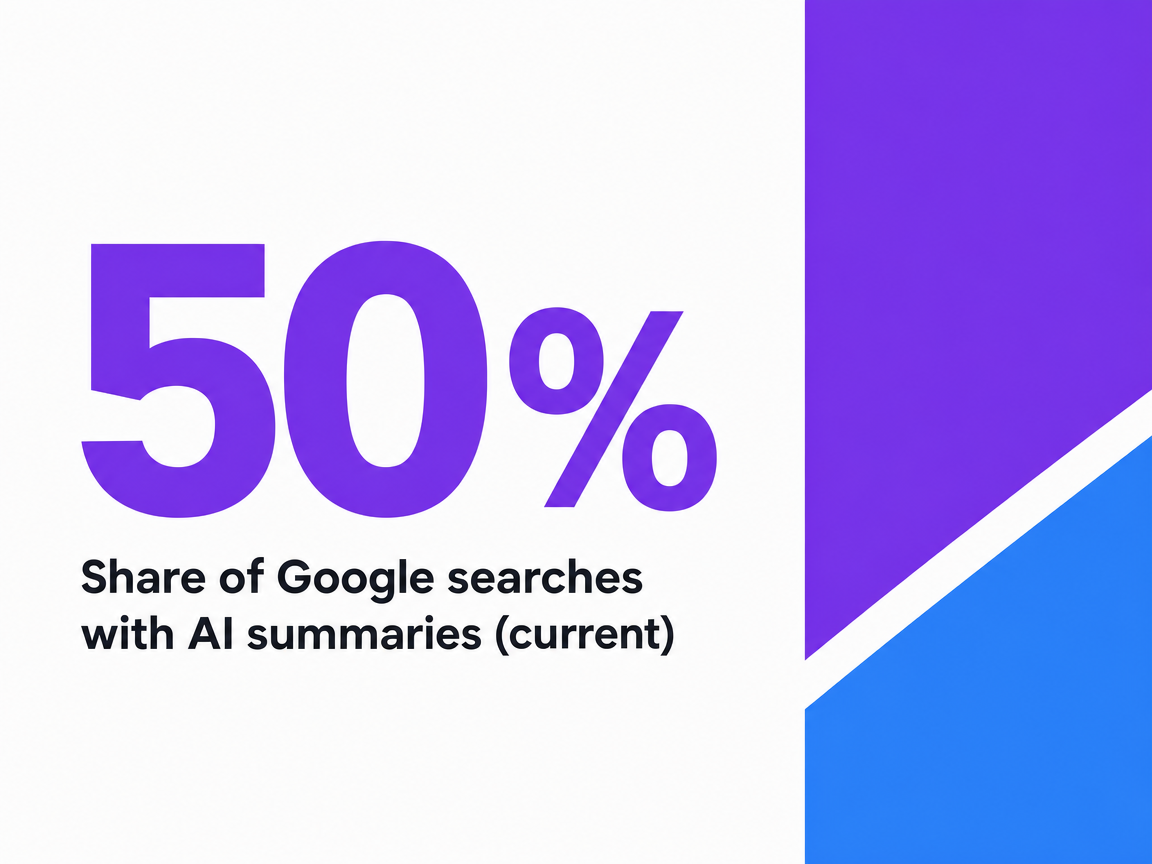 Share of Google searches with AI summaries (current)
Share of Google searches with AI summaries (current)
What Perplexity Tracking Actually Measures
Prompt Space, Not Keyword Space
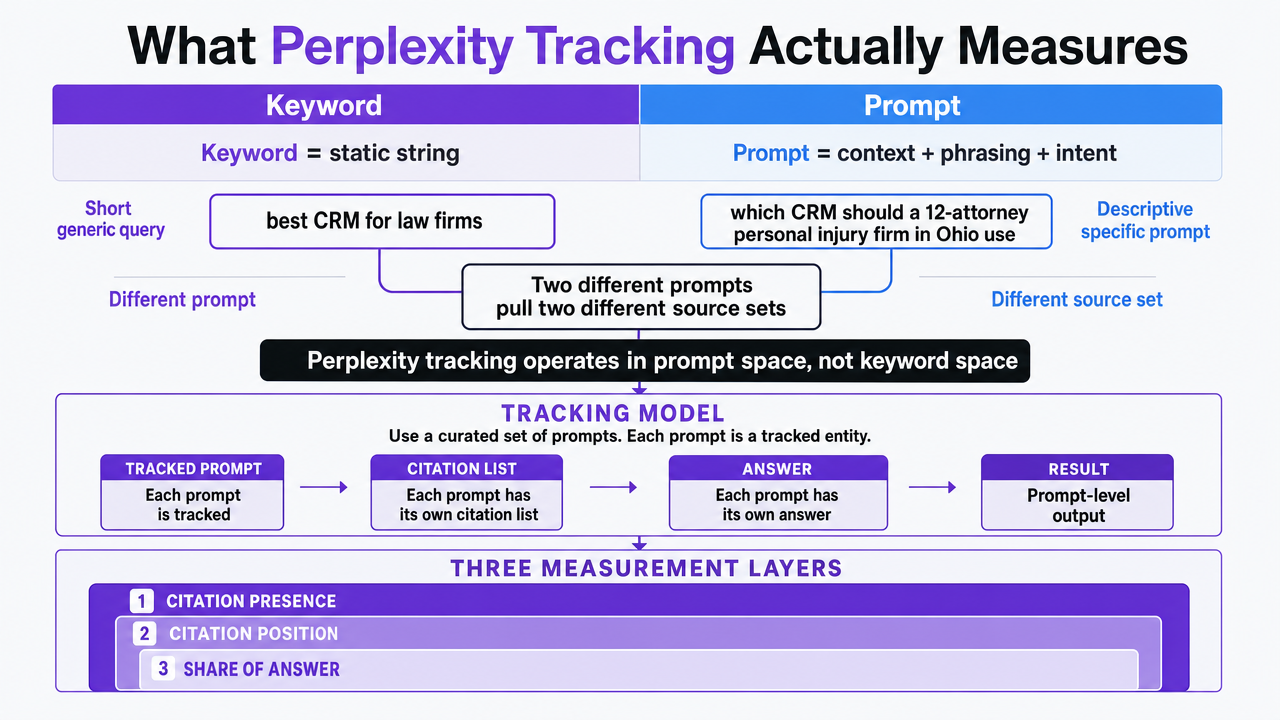
A keyword is a static string. A prompt is a request with context, phrasing, and intent embedded in it. Perplexity's own documentation is direct on this point: input strongly shapes search behavior, and descriptive, specific phrasing produces different retrieval than short generic queries 6. That means "best CRM for law firms" and "which CRM should a 12-attorney personal injury firm in Ohio use" are not variants of the same keyword. They are two different prompts that pull two different source sets.
Agency SEO leaders need to shift the unit of measurement. Instead of tracking 500 keywords per client, an AI visibility program tracks a curated set of prompts that mirror how buyers actually phrase questions to answer engines. Each prompt becomes its own tracked entity, with its own citation list, its own answer body, and its own share of voice. A rank tracker that only ingests keyword strings misses this layer entirely.
Citations, Source URLs, and Share of Answer
Perplexity returns an answer paragraph followed by a short list of numbered citations. Each citation is a source URL the model retrieved and used. That citation list is the new SERP. If a brand's URL appears there, the brand is visible. If it does not, the brand is invisible for that prompt, regardless of where it ranks in Google.
Three metrics matter at this layer.
- Citation presence: did any URL from the tracked domain appear in the answer?
- Citation position: was the domain cited first, third, or last, since order influences how often users click through to verify.
- Share of answer: across a prompt set of, say, 200 questions for a client, on what percentage did the domain get cited at all?
A tracker that logs only the first metric turns AI visibility into a binary. Agencies reporting to CMOs need all three.
Why Query Rewriting Changes the Measurement Contract
Answer engines do not run the user's prompt verbatim. They rewrite it. Cloudflare's AI search documentation describes query rewriting as a retrieval-quality step that reshapes follow-up queries before the system fetches sources 3. Microsoft's Azure AI Search documentation is more specific: the semantic ranker corrects spelling and expands queries with synonyms before retrieval runs 4. Research on rewrite robustness confirms that retrieval outputs are sensitive to the rewrite strategy itself, not just the original input 5.
For a rank tracker, this is a design constraint, not a footnote. The literal prompt submitted is not the query the engine executes. Two trackers pinging Perplexity with the same prompt string can receive different citation sets if rewrite logic evolves between runs. That volatility must be exposed, not hidden. A credible tool logs the retrieved answer, the cited sources, and enough metadata to distinguish real visibility change from rewrite drift. Anything less produces a dashboard that looks precise and behaves like noise.
 Visualize the three-layer measurement framework described in the section: citation presence, citation position, and share of answer
The Agency-Grade Evaluation Rubric
Before naming tools, agency SEO leaders need a scoring frame that survives a CMO's questions. Six dimensions separate a real AI answer visibility tracker from a repackaged SERP crawler.
Citation tracking depth. : The tool must extract every source URL an answer engine attributes, not just the top one. Partial extraction hides the tail of the citation list where competing domains often sit.
Prompt versioning. : Prompt sets evolve as clients and buyer language shift. The tracker needs version history on each prompt so a citation-share drop can be traced to a genuine visibility change rather than a prompt edit. Perplexity's own guidance is that phrasing changes retrieval outcomes, which makes version discipline a measurement requirement, not a preference 6.
Source-URL attribution. : The tool must log the exact URL cited, not just the root domain. A brand cited on a stale legacy page is a different signal than a brand cited on the target landing page.
Multi-workspace isolation. : Agencies running 25 to 200 clients need hard separation between accounts: distinct prompt libraries, distinct users, distinct exports. Shared workspaces create data leakage and reporting errors.
API and reporting exports. : Raw data must move into BI stacks and client dashboards on a schedule. White-label PDF exports are table stakes.
Execution workflow integration. : Tracking that does not feed a content or optimization queue is a cost center. The rubric weighs how cleanly outputs hand off to production.
Profound: Prompt-Level Citation Tracking Built for Agencies
Profound built its product around a single premise: the prompt is the tracked entity, not the keyword. That framing lines up with Perplexity's own documentation, which states that input phrasing shapes retrieval outcomes directly 6. Instead of asking an agency to import a keyword list, Profound asks for a prompt library per client, then runs each prompt against Perplexity, ChatGPT Search, Google AI Overviews, and Gemini on a scheduled cadence.
The output is not a rank number. It is a structured record of the full answer body, every cited source URL, the citation position within the list, and a computed share-of-answer score across the prompt set. For an SEO lead reporting to a CMO, that means a client-level view that reads: across 180 tracked prompts this month, the domain was cited in 42% of answers, held the first citation slot in 11%, and lost eight prompts to two competing domains that now hold the top citation.
Multi-workspace architecture is where Profound separates from lighter tools. Each client sits in an isolated workspace with its own prompt library, tagging schema, and export permissions. Analysts can move between accounts without prompt bleed, and white-label PDF exports carry client branding. API access exposes the raw citation records so agencies can pipe results into Looker or a warehouse rather than living inside the vendor dashboard.
The limit worth naming: Profound does not fix the rewrite-drift problem 5. It logs the retrieved answer and citations, but interpreting week-over-week movement still requires prompt version discipline on the analyst side.
Test advanced keyword rank tracking workflows now
Experience live keyword tracking and data analysis with unrestricted access during your trial—publish and measure actual ranking shifts.
Peec AI: Multi-Engine Answer Monitoring with Source Attribution
Peec AI takes a different design bet than Profound. Instead of centering the prompt as the primary tracked object, it centers the answer itself. Every scheduled run captures the full response from Perplexity, ChatGPT Search, Google AI Overviews, Gemini, and Claude, then parses each answer into three data layers:
- the raw text,
- the ordered citation list with source URLs, and
- a computed sentiment score for how the tracked brand is described inside the answer body.
That last layer is what separates Peec from citation-only trackers. A brand can be cited in an answer that recommends a competitor two sentences later. A dashboard that reports only citation presence would score that as a win. Peec flags the sentiment mismatch and surfaces the specific answer text, which lets an agency analyst decide whether the citation is helping or hurting a client's positioning.
Source attribution runs at the URL level, not the domain level, so agencies can see which specific pages answer engines pull from most often. That granularity matters because query rewriting shifts which pages get retrieved between runs 3, 4. Peec exposes retrieval volatility rather than smoothing it away.
The trade-off: multi-workspace controls are lighter than Profound's, and agencies running 100-plus client accounts often layer their own tagging discipline on top to keep prompt libraries clean across teams.
AthenaHQ: The Underused Contender for Prompt Portfolio Governance
AthenaHQ is the tool most agency shortlists skip and then quietly add six months later. Its bet is that the hardest problem in AI visibility tracking is not capturing citations, it is governing thousands of prompts across dozens of clients without the library rotting. The product treats prompt sets as versioned assets, closer to how engineering teams treat code than how SEO teams treat keyword lists.
Every prompt in AthenaHQ carries a version stamp, an author, a change log, and a tag hierarchy that maps to client, service line, funnel stage, and buyer persona. When a citation-share number moves, an analyst can pull the prompt history and see whether the shift followed a phrasing edit or a genuine retrieval change. That audit trail matters because Perplexity's documentation confirms that specific phrasing produces different retrieval than generic phrasing, so an unversioned prompt library makes month-over-month comparisons unreliable 6. Research on rewrite robustness reinforces the same point at the retrieval layer 5.
The tool tracks Perplexity, ChatGPT Search, Gemini, and Google AI Overviews, logs full answer bodies and cited URLs, and computes citation share across any tag slice. Reporting is thinner than Profound's polished PDFs, so agencies typically pair AthenaHQ's API with their own client dashboards. That trade favors shops that already run a BI layer and want governance over gloss.
Semrush AI Toolkit: Legacy Suite with a Bolted-On AI Visibility Layer
Semrush chose the retrofit path. Rather than build a standalone answer-engine tracker, it extended its existing SEO platform with an AI Toolkit that monitors brand mentions and citations inside Perplexity, ChatGPT Search, Google AI Overviews, and Gemini. For agencies already running Semrush across their client base, that continuity is the entire pitch: one login, one billing relationship, one export pipeline, and AI visibility data sitting next to the keyword and backlink datasets analysts already use.
The toolkit logs whether a tracked domain appears in an AI answer, which competitors show up alongside it, and how citation share moves week over week. Prompt sets are user-defined, and reports can be sliced by market or client project. For a mid-market agency reporting on both classic SERP positions and AI answer presence in the same monthly deliverable, that consolidation cuts real reporting hours.
The limits show up under scrutiny. Citation extraction is shallower than what dedicated tools like Profound or Peec AI expose. Prompt versioning is minimal, so a citation-share swing cannot always be traced to a phrasing edit versus a genuine retrieval shift, which matters given that answer engines rewrite queries before retrieval 3, 4. Multi-workspace isolation follows the legacy Semrush project model, which was designed for keyword campaigns, not for governing hundreds of prompt libraries across regulated client verticals. Agencies with fewer than 40 clients and simple reporting needs get real value. Shops running enterprise portfolios usually pair Semrush with a specialist tracker rather than replace one with the other.
Ahrefs Brand Radar: Citation Share Inside a Familiar Stack
Ahrefs took the same retrofit route as Semrush but bet on a different feature surface. Brand Radar, its AI visibility module, sits inside the standard Ahrefs workspace and tracks how often a domain appears as a cited source across Perplexity, ChatGPT Search, Google AI Overviews, and Gemini. For agencies whose analysts already live in Ahrefs for backlink audits and keyword research, the appeal is proximity: citation share, referring domains, and keyword positions in one view.
The module logs which prompts trigger a citation, which competing domains show up in the same answer, and how citation share trends against a defined competitor set. That competitor overlay is where Brand Radar pulls ahead of Semrush's toolkit for accounts where positioning against three or four named rivals drives the reporting narrative.
The constraints are familiar. Prompt versioning is thin, so retrieval shifts caused by query rewriting are hard to distinguish from real visibility loss 3, 4. Workspace isolation follows the existing Ahrefs project model, which handles 40 to 60 client accounts comfortably and strains beyond that. Agencies running enterprise portfolios typically use Brand Radar as a supplementary lens next to a dedicated prompt-first tracker rather than as the system of record.
See How Leading Agencies Benchmark Perplexity Keyword Rankings at Scale
Connect with our team for a data-driven walkthrough of advanced keyword rank tracking solutions built for multi-client, multi-channel agency workflows.
Citation Quality Is a Tracking Requirement, Not a Nice-to-Have
Citation presence is a floor, not a ceiling. What matters next is whether the sources an answer engine cites are actually trustworthy, because a client's brand sitting next to a weak citation set inherits the credibility of the neighborhood. A peer-reviewed comparison of health information quality found Google scored 3.70 on the JAMA credibility measure and 3.33 on DISCERN, while ChatGPT scored lowest across the same quality dimensions 2. The gap is not academic. It tells agency SEO leaders that answer engines pull from source sets of uneven reliability, and that the specific URLs a tracker exposes carry different weight depending on where they come from.
That reality reshapes the tracker requirement. A tool that reports only "cited" or "not cited" hides the composition of the citation list. A credible tracker exposes the full URL for every source in the answer, the domain authority context around it, and any competing sources cited in the same response. Agencies working in regulated verticals like healthcare, legal, or financial services need that granularity to defend a monthly report. If a client's page is cited alongside three low-authority forum threads, that is a different visibility story than a citation alongside two peer sources and a government domain.
Source-URL fidelity is the tracking requirement that separates real answer visibility measurement from a citation checkbox.
Where Tracking Meets Execution: The Approval-First Gap
A citation report that lives in a dashboard is a diagnostic, not a fix. The harder question for an agency SEO lead is what happens the day after the report ships. If a client lost eight prompts to two competing domains, someone has to write, edit, and publish the pages that recover them. Every tracker named above stops at the measurement boundary. The production work still routes through briefs, freelance writers, editorial review, and legal sign-off, which is where the month-over-month gains stall.
The tooling shift underway is closing that gap by pairing prompt-level tracking with an approval-first execution layer. Citation gaps get triaged into ranked recommendations. A strategist reviews each recommendation with the reasoning attached, approves or rejects, and the approved work moves to production without a new briefing cycle. Given that generative tools can produce incorrect or fabricated citations if left unsupervised 12, the approval gate is not optional. It is the control that keeps AI-assisted execution defensible in front of a CMO. Vectoron built its platform around that loop for agencies scaling AI visibility work without adding headcount.
For Agency Operators Running Client Portfolios: Prompt Economics
This section shifts scope from single-client tracking to portfolio operators managing 25 to 200 accounts. The unit cost of AI visibility tracking is not the vendor license. It is the analyst time required to curate prompts, review answer bodies, and reconcile citation-share swings against genuine retrieval change. Query rewriting means the same prompt can pull different sources across runs 3, 4, so QA is not optional overhead. It is the work.
A compact model helps sizing. Let P equal prompts monitored per client per month and M equal analyst minutes per prompt for curation plus review at a blended internal rate R.
| Portfolio size | Prompts / client / month | Total monthly prompts | Analyst minutes (P × M) | Reporting cadence |
|---|---|---|---|---|
| 25 clients | 150 | 3,750 | 3,750 × M | Monthly |
| 75 clients | 150 | 11,250 | 11,250 × M | Monthly + mid-month flag review |
| 200 clients | 150 | 30,000 | 30,000 × M | Bi-weekly with tiered QA sampling |
At M = 3 minutes and R = $65/hour, a 75-client book absorbs roughly 562 analyst hours per month before a single recommendation ships. At 200 clients, that figure clears 1,500 hours. The economics only work when prompt libraries are versioned, QA is sampled rather than exhaustive at scale, and citation-gap triage feeds an execution queue instead of a manual brief cycle.
Why This Matters Beyond the Dashboard
AI answer visibility has moved from a curiosity to a channel with measurable exposure. Pew reports that 65% of U.S. adults at least sometimes encounter AI summaries in search results, and 45% see them often or extremely often 8. That is the audience discovering brands inside generated answers rather than through classic result lists, and it is the audience agency clients are asking about on quarterly reviews.
Institutional adoption is reinforcing the trend. Federal agencies including the FDA and GSA have deployed AI-powered summarization and search workflows into operational use 7, 11. When public-sector buyers rely on AI retrieval to shorten research cycles, private-sector buyers behave the same way. For agency SEO leaders, the question is no longer whether to track Perplexity and its peers. It is which tool logs citations cleanly, scales across a client portfolio, and feeds an approval-first execution loop that turns visibility gaps into shipped work.
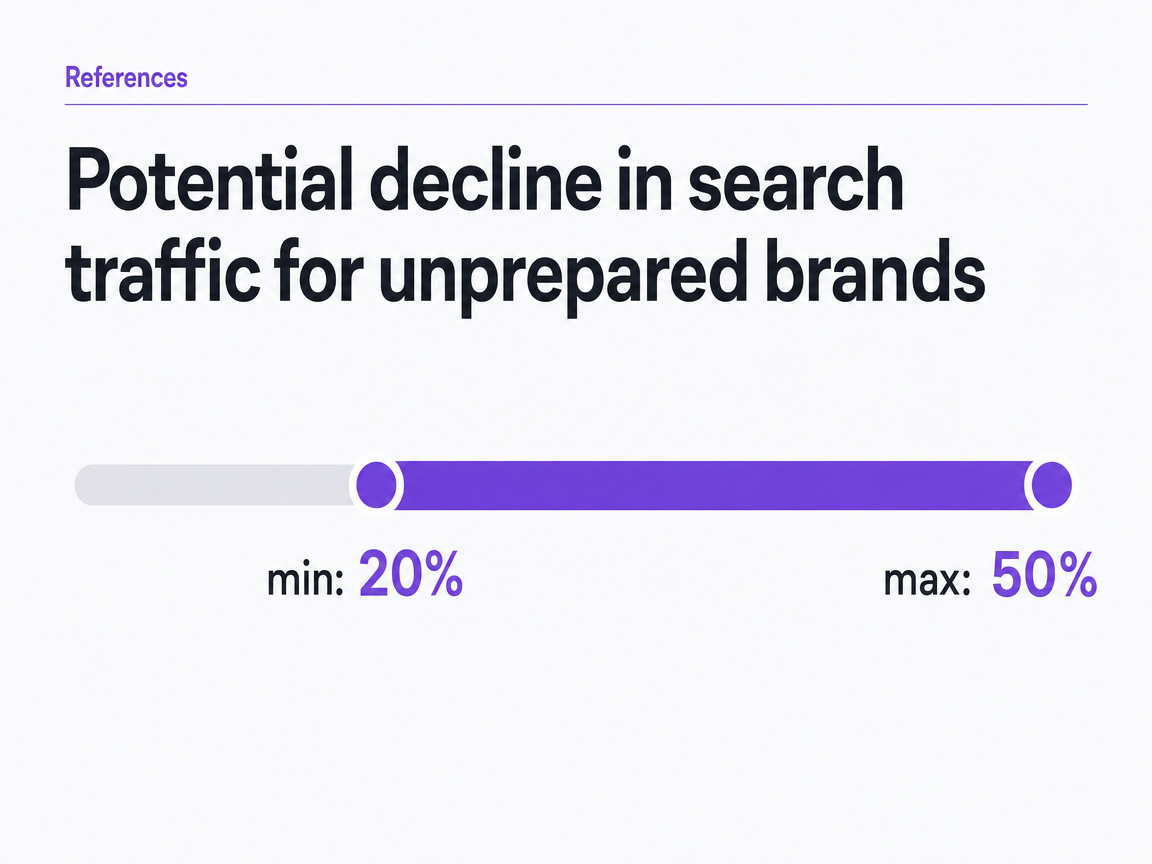 Potential decline in search traffic for unprepared brands
Brands unprepared for the shift to AI search could see a decline in traffic from traditional search channels of 20% to 50%.
Frequently Asked Questions
References
- 1.Winning in the age of AI search - McKinsey.
- 2.The Reliability Gap: How Traditional Search Engines Outperform Artificial Intelligence (AI) Chatbots in Rosacea Public Health Information Quality.
- 3.Query rewriting - AI Search.
- 4.Rewrite queries with semantic ranker in Azure AI Search (Preview).
- 5.Crafting the Path: Robust Query Rewriting for Information Retrieval.
- 6.Prompt Guide - Perplexity API.
- 7.FDA Launches Agency-Wide AI Tool to Optimize Performance for American People.
- 8.Americans have mixed feelings about AI summaries in search results.
- 9.How Americans View AI and Its Impact on People and Society.
- 10.Striking findings from 2025 - Pew Research Center.
- 11.2025 GSA AI use cases.
- 12.Verifying and Citing Generative AI - Generative AI Tools for Students.
- 13.National Artificial Intelligence Research Resource | NSF.