
Key Takeaways
- Semrush Enterprise anchors the research layer with broad coverage across SEO, PPC, and AI visibility, though backlink depth and native reporting remain its ceiling 3, 6.
- Ahrefs Enterprise prioritizes backlink and organic traffic depth over breadth, making it the pick for link-driven strategies in competitive commercial verticals 3, 6.
- Screaming Frog remains a non-negotiable technical crawler at ~£199/year, exposing site issues with a fidelity native audits in Semrush or Ahrefs cannot match 4, 6.
- BrightEdge suits enterprise portfolios with its Data Cube and Recommendations engine, but its $2,000–$3,000+ monthly floor makes it wasteful for fragmented SMB books 7.
- Conductor sits in the same enterprise price band but weights toward content governance and approval trails, fitting regulated verticals like legal and medical 7.
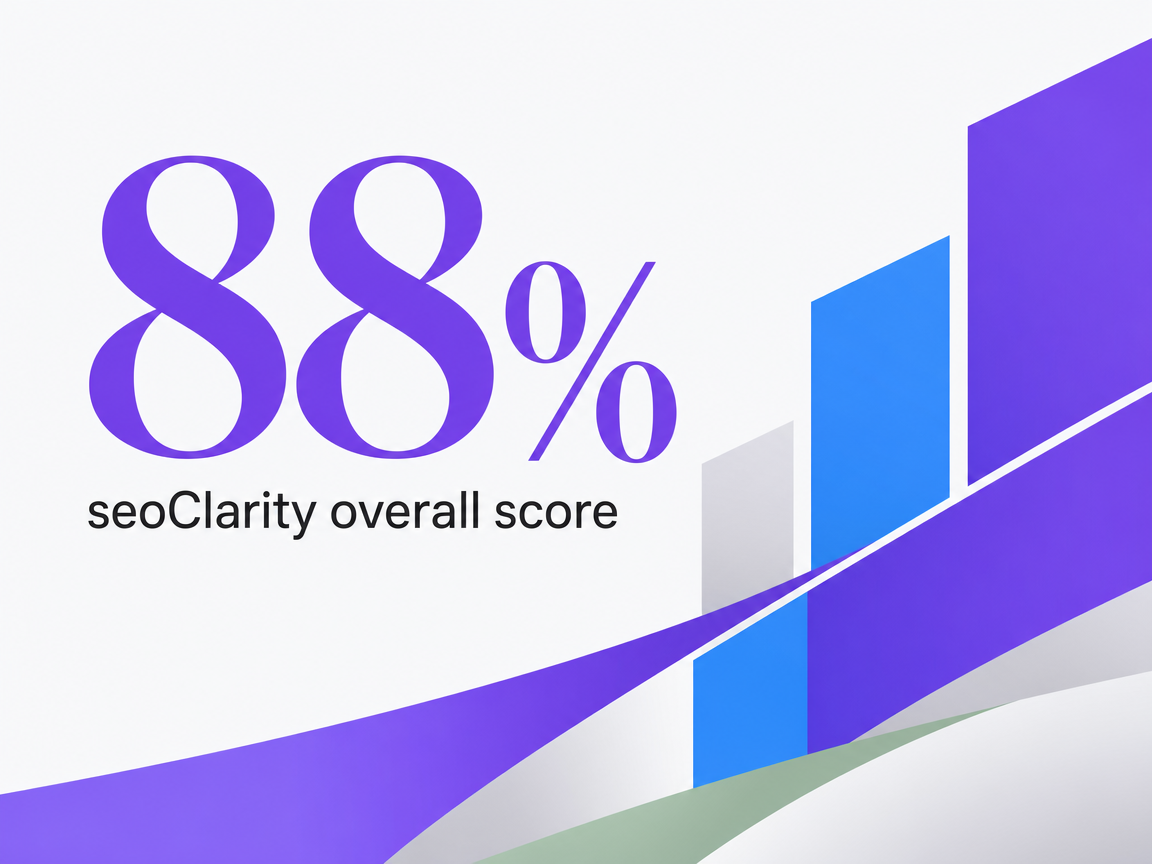
- seoClarity owns the reporting and analytics layer, scoring 8.8/10 in the 2026 Worldmetrics ranking and centralizing white-labeled dashboards for larger client contracts 2.
- An AI execution layer replaces the specialist production hours—briefs, drafts, on-page work, publishing—that Forrester expects to become commoditized as agency value shifts to strategy 10.
Why the Stack Question Replaced the Suite Question in 2026
The question a Head of SEO asks in 2026 is no longer "which suite covers the most SERP features" but "which layers do we assemble, and where does the execution work go." This shift is evident in Forrester's June 2026 study of US marketing agencies, which found that roughly nine in ten agencies use generative AI and about half use agentic AI inside content, media, SEO, and strategy workflows 9. This high adoption rate means the competitive edge has moved from keyword-finding tools to the operating layer that produces, publishes, and reports work across a client book.
Forrester's analysis argues that when machines generate content, optimize media, and automate workflow, execution itself becomes a commodity, and value migrates toward strategy, data, and proprietary algorithms 10. For an agency managing 15 to 100 client accounts, this redefines the buying decision. A research suite is still important, but it alone cannot absorb the delivery load. The 2026 agency stacks that maintain margin pair a research platform with a technical crawler, a reporting layer, and, increasingly, an execution layer that displaces production hours rather than replicating them 4, 5. This article ranks seven options by the layer they own, not by a flat leaderboard.
How to Read the Seven Options: Layers, Not Rankings
Flat leaderboards fail agency buyers because no single platform owns every layer of delivery. The comparison that follows sorts seven options by the layer each is built to carry:
- Research (keyword, backlink, competitive data)
- Technical crawl (site audits and log-file analysis)
- Reporting (multi-client dashboards)
- Execution (the production work that used to sit with specialists)
Industry stack guides in 2026 converge on the same shape—an all-in-one research platform paired with a technical crawler, a reporting layer, and a category-specific tool—rather than a monolithic suite 4, 5.
Each entry below states what the platform replaces inside an agency, where its ceiling sits, and roughly what it costs at agency-relevant tiers. A tool ranked lower is not weaker; it owns a different layer. A Head of SEO reading this should be picking two or three entries to combine, not one. The stack economics section that follows quantifies the trade-off between lean modular configurations and enterprise-tier suites 3, 7.
The Seven Platforms, Ranked by the Layer They Own
Semrush Enterprise — Research Layer, Broad Coverage
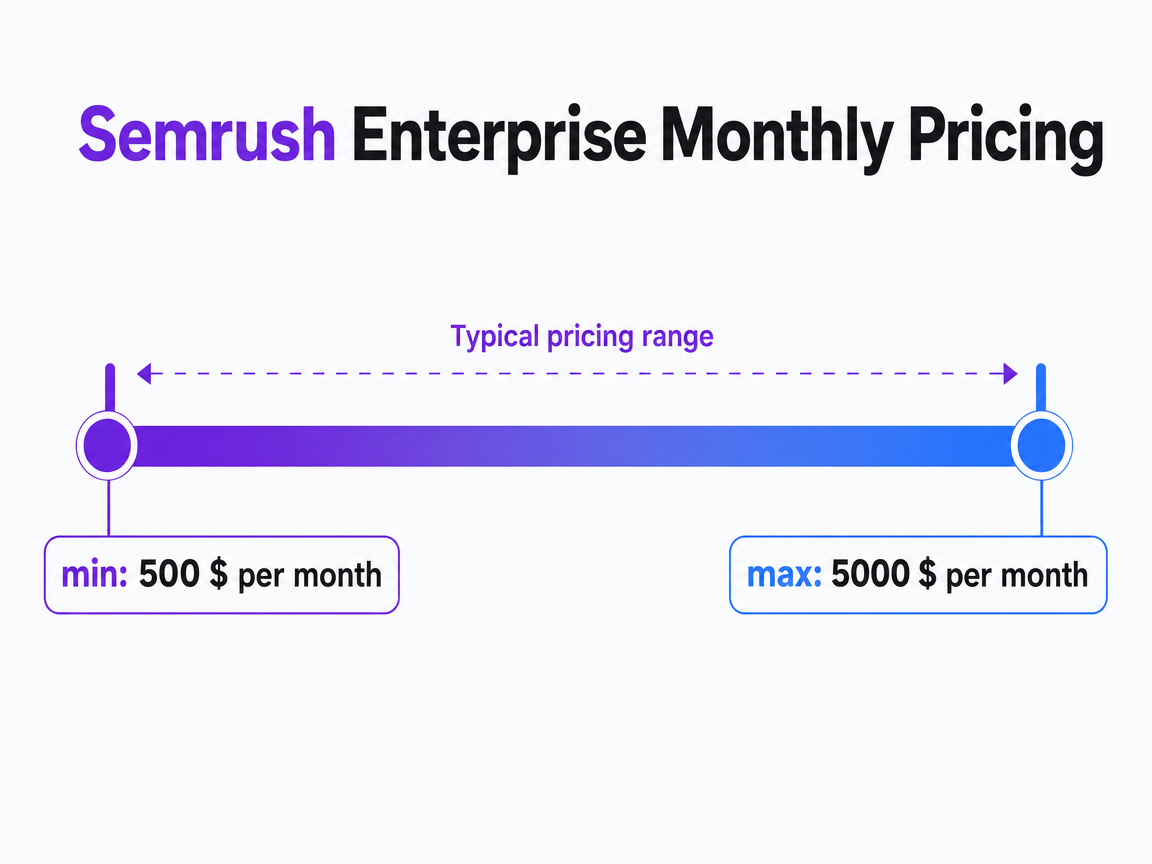
Semrush Enterprise anchors the research layer for most mid-market agencies due to its wide coverage: keyword data, backlinks, competitor tracking, site audits, PPC intelligence, and AI visibility monitoring in one login. Industry comparisons position it as an "all-in-one SEO + PPC + social + PR + AI visibility" suite, with pricing ranging from $500 to $5,000+ per month depending on seat count and add-ons 3. This range is wide because Semrush prices on projects, tracked keywords, and API calls, all of which scale with client count.
It replaces the patchwork of point tools a junior analyst would otherwise juggle for competitive gap analysis, backlink monitoring, and on-page audits. A Head of SEO managing 15 to 100 accounts gains defensible coverage on the research side without asking specialists to switch contexts across multiple interfaces 6.
The ceiling shows up in two areas. Backlink data depth trails Ahrefs for high-authority link discovery, and the reporting layer, while functional, often falls short for clients expecting white-labeled multi-channel dashboards. Agencies frequently pair Semrush with AgencyAnalytics or a dedicated reporting suite instead of relying on Semrush's native client portal 6. Choose Semrush when the portfolio requires breadth across SEO, PPC, and AI search visibility in a single research seat; bypass it when the work is heavily link-driven or demands enterprise-grade log-file analysis.
Ahrefs Enterprise — Research Layer, Data Depth Over Breadth
Ahrefs Enterprise, starting at $999+ per month, prioritizes depth in backlink and organic traffic data over Semrush's feature breadth 3. Its crawler indexes more link data than most competing suites, and its Site Explorer, Content Explorer, and Keywords Explorer modules are favored by SEO specialists for competitor analysis.
For agencies with a link-building practice or clients in competitive commercial verticals—such as legal, finance, or home services—Ahrefs justifies its price by replacing a dedicated backlink prospecting tool and often a rank tracker. The included Rank Tracker at higher tiers handles daily monitoring at portfolio scale, and Site Audit identifies on-page issues without requiring a separate crawler for smaller sites 6.
Ahrefs' limitation lies in workflow. It is a research and analysis platform, not an execution or reporting platform. Client-ready dashboards require export or a third-party layer, and content production remains a team responsibility. Agencies typically select Ahrefs when their SEO methodology is data-first and their content workflow is managed elsewhere. Choose Ahrefs when link intelligence and competitor analysis drive strategy; skip it when the agency's primary bottleneck is production throughput or multi-client reporting, both of which necessitate additional layers regardless of the chosen research suite 4.
Screaming Frog — Technical Crawl Layer, Non-Negotiable
Screaming Frog is nearly a mandatory tool in an agency stack. At approximately £199 per year per license, it is the technical crawler consistently recommended alongside a research suite in 2026 stack guides 4, 6. It excels at one task: crawling a site and exposing its technical state with a fidelity that Semrush's and Ahrefs's native audit tools cannot match on large or complex sites.
Screaming Frog replaces the hours a technical SEO would otherwise spend manually compiling status codes, redirect chains, hreflang errors, structured data validation, and orphan page detection from disparate sources. Features like log-file analysis, JavaScript rendering, and integrations with GA4 and Search Console allow a single analyst to audit a mid-sized client site in an afternoon instead of a week.
Its limitation is the scale of concurrent audits. Screaming Frog runs locally, not in the cloud, so an agency auditing dozens of sites simultaneously may eventually pair it with a hosted crawler like Botify or Lumar for the largest enterprise clients. For most agency portfolios, this pairing is unnecessary. Screaming Frog remains in the stack regardless of the chosen research suite 5.
BrightEdge — Enterprise Suite for High-Governance Portfolios
BrightEdge and Conductor operate at a different market tier. Starting prices range from $2,000–$3,000 per month and can climb into high five figures annually for larger contracts 7. This positions them outside most mid-market agency budgets and within the scope for agencies serving enterprise clients or brands with in-house SEO teams that require governance workflows, approval chains, and organization-wide dashboards.
BrightEdge's value proposition for agencies lies in its Data Cube and Recommendations engine, which identify prioritized SEO opportunities across large site inventories. For a Head of SEO managing enterprise clients with hundreds of thousands of URLs, this ranked opportunity queue reduces analyst hours spent manually identifying optimization priorities. The platform's AI features have significantly matured by 2026, with automated content briefs and forecasting now standard 7.
Its ceiling is client fit. BrightEdge is priced and configured for enterprise programs, not for a portfolio of 50 SMB accounts. Agencies attempting to apply it to a small-client model often pay for unused capacity. Choose BrightEdge when at least two or three clients individually justify a $2,000+ monthly seat, and the agency is being evaluated against in-house SEO teams familiar with the platform; bypass it when the portfolio is fragmented across smaller accounts, where the same budget could cover a full research-plus-execution stack.
Conductor — Enterprise Suite Weighted Toward Content Governance
Conductor shares a similar price band with BrightEdge—starting at $2,000–$3,000 per month, scaling with site count and seats 7—but emphasizes content workflow, brief generation, and organizational governance over pure data breadth. Agencies with clients in regulated verticals often prefer Conductor for its approval trails and role-based permissions, which align well with legal or medical review processes.
Within an agency, Conductor's benefit is seen in content operations. Its Content Guidance module generates optimization briefs that writers can directly execute, and its integration with Google Search Console and analytics platforms links recommendations to actual performance rather than solely relying on search volume estimates 7.
The trade-off against BrightEdge is data cube depth. Conductor's competitive intelligence is capable but narrower. Agencies whose retention depends on outperforming a specific competitor across thousands of terms typically favor BrightEdge's analytical power. Choose Conductor when content production and multi-stakeholder review are the bottleneck; skip it when the strategic question is competitive share of voice at scale, where BrightEdge or a Semrush-plus-execution-layer configuration will provide more value per dollar.
seoClarity — Reporting and Analytics Layer
seoClarity is frequently cited when the reporting layer becomes the primary constraint. In the 2026 Worldmetrics ranking of enterprise SEO reporting software, seoClarity scored 8.8 out of 10, topping tools evaluated specifically on features, ease of use, and value for organizations requiring consistent, dashboardable SEO analytics 2.
It replaces the ad-hoc reporting stack: a mix of Semrush exports, Search Console pulls, GA4 dashboards, and manual slide deck creation. seoClarity centralizes this layer with white-labeled dashboards, custom KPI configurations, and the ability to segment reporting by client, region, or product line without rebuilding queries monthly. For agencies struggling with "where's my report" client conversations, this consolidation saves hours per account per month.
The ceiling is its enterprise scale. Agencies with 15 accounts under $2,000/month each generally cannot justify it against lighter reporting tools like AgencyAnalytics, which industry guides continue to name the default white-label reporting dashboard for mid-market agencies 6. Choose seoClarity when the reporting layer poses a retention risk and the client mix leans towards larger contracts; keep it out of the stack if reporting complaints are actually a symptom of weak strategy commentary, which no dashboard will resolve.
AI Execution Layer — What Replaces Production Hours
The seventh option is a category rather than a single legacy vendor. AI execution platforms operate below the research and reporting layers, taking on the production work that historically consumed most of an agency's delivery hours: brief creation, draft production, on-page optimization, internal linking, publishing, and cross-channel coordination. Forrester's June 2026 analysis clearly states the mechanism: as machines generate content, optimize media, and automate workflow, execution becomes a commodity, and agency value shifts toward strategy, data, and proprietary algorithms 10.
An AI execution layer replaces the specialist hours that convert research outputs into published, optimized deliverables across a client book. For a Head of SEO whose margin is compressed by production throughput rather than research capacity, this is where hiring pressure truly lies. Forrester projects agencies will move toward solution-based offerings and bespoke brand algorithms rather than hourly execution fees, repricing the entire delivery model 11.
This category is newer, and maturity varies. Evaluation criteria distinguishing serious platforms from mere wrappers include approval workflows for human sign-off on every deliverable, integration with existing research and analytics layers, and support for an agency's specific verticals. Vectoron is one platform in this category, built around specialist AI strategists coordinated through an approval-first Command Center. Agencies considering an execution layer should test it on a single client for a defined period before restructuring their delivery model; bypass the category entirely if the real constraint is strategy quality rather than production capacity.
seoClarity overall score
Test AI-powered SEO execution in real campaigns
Measure live SEO impact with published content during your trial—no delays, no mockups, full operational access.
Stack Economics: Three Configurations for a Head of SEO
Three stack configurations cover most agency portfolios in 2026, with a significant price gap between them that can influence hiring plans. A Head of SEO evaluating platform spend should view the table below as a budget envelope per agency, not per client—each configuration serves a book of clients, and the delivery load it absorbs determines whether headcount pressure eases or intensifies.
| Configuration | Monthly Platform Cost | Layers Covered | Where Headcount Pressure Lands |
|---|---|---|---|
| Lean modular stack (Ahrefs or Semrush + Screaming Frog + rank tracker + reporting layer) | ~$250–$500 4 | Research, technical crawl, basic reporting | Production and content operations—every deliverable still ships from specialist hours |
| Enterprise suite stack (BrightEdge or Conductor + Semrush Enterprise) | $2,500–$8,000+ starting; BrightEdge/Conductor from $2,000–$3,000 7, Semrush Enterprise $500–$5,000+ 3 | Research at depth, technical, governance, enterprise reporting | Content production and multi-channel coordination remain manual; enterprise clients absorb the cost |
| Lean stack + AI execution layer | Lean base ~$250–$500 4 plus execution-layer subscription | Research, technical, reporting, plus production and publishing throughput | Strategy and QA—specialists shift from drafting to reviewing and approving |
The lean modular stack is the default for agencies with 15 to 50 accounts under roughly $2,500 monthly retainers. It adequately covers research, technical audit, and reporting, and industry stack guides consistently recommend it as the capable minimum 4. However, it does not solve production throughput. Every optimized page, brief, and audit summary still relies on a specialist's time, leading to margin compression as the client book grows.
The enterprise suite configuration is suitable when the portfolio includes enterprise clients who individually justify a $2,000+ monthly seat and expect governance workflows their in-house teams already use 7. Below that client mix, the suite provides capacity the agency cannot bill through. The third configuration—lean base plus an AI execution layer—directly addresses the throughput problem by absorbing brief creation, drafting, on-page optimization, and publishing coordination that would otherwise require additional specialist hires. The economic question is whether the execution layer displaces more headcount cost than it adds in subscription and review time.
 Semrush Enterprise Monthly Pricing
Typical pricing for Semrush Enterprise is between $500 to $5,000+ per month, plus add-ons.
Matching the Stack to Portfolio Size and Client Vertical
Portfolio composition, not agency headcount, determines which configuration is most effective. Three brackets cover most 2026 agencies. For 10 to 25 clients, mostly on retainers under $2,500, the lean modular stack—Ahrefs or Semrush, Screaming Frog, a rank tracker, and a white-label reporting layer like AgencyAnalytics—provides full research and technical coverage for approximately $250–$500 per month for the entire agency 4, 6. Adding a BrightEdge or Conductor seat at this scale would be an inefficient use of budget.
Between 25 and 75 clients, the primary challenge shifts from research to production. Research suite spending increases with tracked keywords and seats, but the more pressing issue is that specialist hours per client compress margin faster than platform fees. An execution layer added to the lean base can alter the hiring curve by absorbing briefing, drafting, and on-page work, rather than duplicating research the team already performs 10.
Above 75 clients, or when even a few accounts individually justify a $2,000+ monthly seat, the enterprise suite conversation becomes relevant 7. The client vertical is as important as the client count: legal, medical, and financial portfolios with stringent review requirements favor Conductor's governance workflows, while high-volume commercial and e-commerce businesses rely on BrightEdge's Data Cube or a Semrush-plus-execution-layer combination to maintain competitive share of voice 3, 7.
See How Leading Agencies Streamline SEO Execution Across All Clients
Connect with a specialist to explore data-backed workflows for scaling SEO delivery, maintaining content quality, and optimizing resource allocation—without increasing headcount or losing oversight.
If You Manage Multi-Location or High-Stakes Vertical Clients
This section focuses on agencies whose client base heavily features multi-location operators—such as dental groups, law firms with regional offices, home services franchises, or senior living portfolios—or single-location clients in high-stakes verticals where every published page carries review risk. The stack calculus changes significantly when a single client operates 40 locations or when medical and legal review cycles gate every deliverable.
Multi-location work exacerbates the reporting problem before it impacts the research problem. A 40-location dental group requires local rank data segmented by market, Google Business Profile signals per location, and a client-facing dashboard that doesn't consolidate the picture into a single national line. seoClarity handles reporting complexity at the top of the market, and AgencyAnalytics covers it for mid-market retainers, but neither produces the location-level content and citation work that actually drives local rankings 2, 6. This production load is where the AI execution layer most directly impacts the hiring curve, as the volume of near-duplicate, location-specific pages is precisely the type of work that erodes specialist margin 10. For legal, medical, and senior living portfolios, Conductor's approval trails and role-based permissions align with the review workflows that enterprise suites were designed for 7—pair it with a research suite and an execution layer that respects human sign-off on every deliverable.
Where the Category Is Heading and How to Compose Your Stack
Forrester's 2026 predictions frame the trajectory in economic terms: agencies are moving toward solution-based offerings and bespoke brand algorithms, with digital agencies fading as all marketing becomes digital 11. For a Head of SEO, this reprices what a platform stack is meant to do. Research suites and technical crawlers remain essential because the underlying data problem persists. What changes is the layer beneath them—the production and coordination work that once justified a payroll of specialists.
A stack that maintains margin through 2027 begins with one research suite chosen for the portfolio's needs—Semrush for breadth or Ahrefs for link depth—plus Screaming Frog as the essential technical crawler 4. Add a reporting layer scaled to the client mix: AgencyAnalytics for mid-market, seoClarity when enterprise dashboards drive retention 2, 6. Reserve BrightEdge or Conductor only when specific enterprise accounts justify the cost 7. Then, determine if the constraint is research capacity or production throughput. If it is throughput—which it is for most agencies beyond 25 accounts—the execution layer is where the next hire may not be necessary.
Frequently Asked Questions
References
- 1.Best SEO Platform for Agencies in 2026: 8 Compared.
- 2.Best Enterprise SEO Reporting Software 2026.
- 3.Best Enterprise SEO Software: 15 Platforms Compared (Pricing & Use Cases).
- 4.Best SEO Software for Agencies (2026): The Stack We Use.
- 5.SEO Tools for Agencies: 2026 Guide to the Best Stack.
- 6.15 Secret SEO Tools Top Agencies Use to Rank Fast.
- 7.Best AI SEO Tools for Enterprises in 2026.
- 8.The State Of AI Inside US Marketing Agencies, 2026.
- 9.Nine In 10 US Marketing Agencies Use AI To Cut Costs At The Expense Of Creativity.
- 10.AI Forces A Redesign Of How Marketing And Agencies Work.
- 11.Predictions 2024: AI Accelerates Agencies' Shift To Solutions.