
Key Takeaways
- Semrush works as the horizontal breadth benchmark, consolidating keyword research, audits, and backlinks into one seat structure, though reporting standardization strains past 50 accounts.
- Ahrefs holds the enterprise tier on link-graph depth competitors haven't matched, making it essential for competitive verticals where reverse-engineering backlink patterns drives delivery.
- seoClarity is built for portfolio-level rank data and multi-brand reporting, with Client Portals and API access reducing hours senior specialists spend assembling narratives from exports.
- Profound measures share of voice across ChatGPT, Perplexity, and Google's AI Mode, exposing citation gaps traditional rank trackers cannot see in synthesized answers.
- AthenaHQ delivers prompt-level tracking for Google's AI Overviews and AI Mode, letting account teams catch citation drops within days rather than at quarterly review.
- Clearscope tightens the loop between keyword targeting and finished draft by scoring content against live SERP data, giving editorial leads a repeatable QA checkpoint.
- Vectoron coordinates content, SEO, PPC, and channel output through a single approval queue, addressing specialist-hour load between audit finding and published change rather than raw data.
- Google Search Console remains the required first-party layer under every paid tool, with 2025 Insights and 2026 Generative AI performance reports covering both classic and AI surfaces 10.
Why agency tooling decisions now hinge on AI-search visibility
Ranking has stopped meaning what it used to mean. Pew Research's 2025 metered browsing sample found that Google users clicked a traditional search result on 15% of visits when no AI summary appeared, but only 8% of visits when an AI summary sat above the blue links 6. Clicks on links inside the AI summary itself accounted for just 1% of visits 6. That gap, measured across a real user panel rather than a vendor's sample, is the analytical hinge every agency Head of SEO now works against.
The consequence for tooling is direct. A rank tracker that reports a client sitting at position three tells a partial story if that position three sits under a synthesized answer absorbing the query intent. Google's own guidance confirms AI Overview eligibility runs on the same indexing and snippet signals classic SEO already governs 3, which means the fundamentals still matter — but measurement now needs a second layer showing where and how often a client's content is being surfaced, summarized, or bypassed inside AI answers.
Agency leads managing dozens of accounts cannot solve this with more dashboards. The question is which platforms in the current market cover both the classic SERP and the AI-search surface, which ones fold that coverage into workflow that reduces specialist hours, and which ones still produce reporting a client will accept. The eight tools ranked in this piece are evaluated against those three axes, not against feature lists.
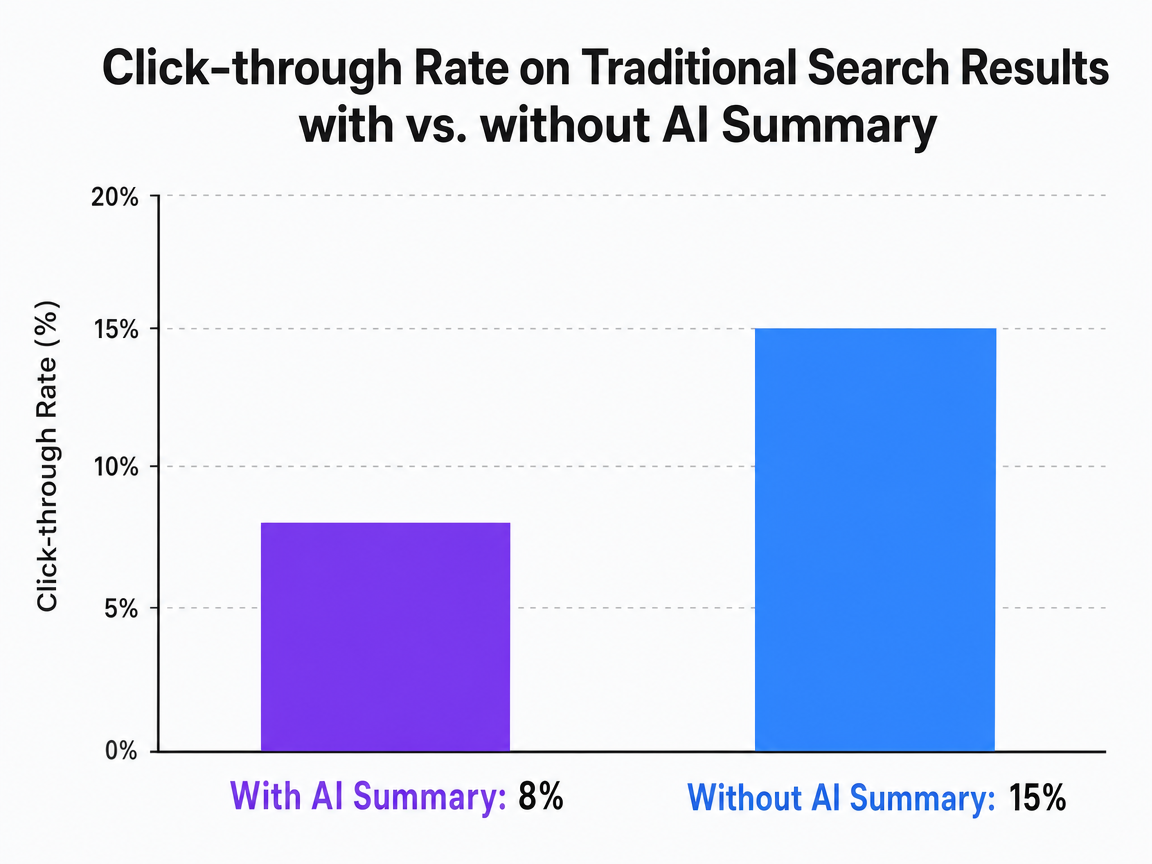 Click-through Rate on Traditional Search Results with vs. without AI Summary
Compares the percentage of user visits that result in a click on a traditional (non-AI) search result, based on whether a Google AI summary was present on the results page. Data from a 2025 Pew Research study.
Three axes that separate scaled agency tools from keyword trackers
Vendor comparisons at the agency level fail when they treat every platform as a variation on the same rank-tracking primitive. The eight tools ranked in this piece are evaluated against three axes that actually predict delivery outcomes when an agency runs 15, 50, or 150 accounts on the same stack.
Axis one: coverage across classic SERP and AI-search surfaces. A ranking tool that reports only ten-blue-link positions now measures a shrinking share of user attention. Google confirms that AI Overview eligibility runs on the same indexing and snippet signals that govern classic ranking 3, so classic position data still matters — but agencies also need visibility into how often client content is cited, summarized, or omitted inside AI answers. Tools that ignore the second layer produce reports that no longer match what clients see when they check their own brand queries.
Axis two: workflow depth that compresses specialist hours per client. The Forrester Wave for SEO Solutions, Q3 2025, evaluates enterprise platforms across current offering, strategy, and customer feedback 8— a frame that reflects how the category has moved from data access to workflow governance. Tools that stop at data export force an SEO specialist to spend hours per account translating findings into briefs, tickets, and QA cycles. Tools that fold audit findings, content scoring, and approval routing into one loop change the headcount math directly.
Axis three: reporting that survives client scrutiny. Google's ranking systems draw on many signals across hundreds of billions of pages, continuously tested and adjusted 2. Reports built on a single position number invite arguments an agency lead cannot win. Platforms that expose share of voice, impression trends, and AI-surface citations give account teams defensible narratives when a client asks why a keyword moved.
The free baseline layer most tool comparisons skip
Every paid ranking platform in this ranking sits on top of a first-party layer that agencies underuse. Google Search Console received a redesigned Insights report in June 2025 that surfaces total clicks and impressions, top pages, top queries, and trending queries inside one view, without exporting to a third-party dashboard 9. In June 2026, Google added Search Generative AI performance reports to Search Console, extending measurement to AI search surfaces alongside classic Web results 10. Together, these reports form a free baseline that most tool comparisons treat as a footnote.
The layering argument is straightforward. Search Console produces the ground-truth impression and click data for each client property. Paid platforms add competitive context, rank position at scale, share of voice, backlink graphs, and workflow. An agency running an enterprise suite without wiring every client's Search Console into it is paying for competitive data while ignoring the primary feedback loop from Google itself. When AI Overview performance began reporting inside Web search data 10, that gap widened — first-party data now covers a surface most paid rank trackers still approximate.
Practical implication for delivery leads: audit which client properties feed Search Console into the paid stack before renewing seat counts. Insights and Gen-AI reports should be the default weekly read for every account manager, with paid platforms handling scale, comparison, and forecasting on top.
Test Real-Time Ranking Automation Across Client Sites
Experience full-scale SERP monitoring and publish test optimizations for live client campaigns during your free trial.
Enterprise SEO suites: broad coverage, high specialist load
Semrush — the horizontal breadth benchmark
Semrush earns its place as the horizontal breadth benchmark because it covers keyword research, position tracking, site audit, backlink analysis, and content briefs inside one seat structure. For agencies running 15 to 50 accounts across mixed verticals, that breadth is the reason it usually lands in the stack first — a single platform reduces the tab-switching tax an account manager pays every morning.
The scaling constraint shows up around portfolio depth. Position Tracking scales cleanly to hundreds of keywords per project, but cross-client rollup reporting still leans on manual project templates and exports. AI-search coverage has expanded through separate modules for AI Overview tracking, but those modules sit alongside the classic rank tracker rather than fully replacing the position-based worldview. Google's ranking systems draw on hundreds of signals across billions of pages 2, and Semrush surfaces enough of those signals — technical audit issues, Core Web Vitals status 4, content gaps — to give a specialist a defensible starting point for any client.
Where it breaks first past 50 accounts: reporting standardization. Client reports are template-driven and require a designated ops person to keep formatting, branded exports, and data windows consistent across a growing book.
Ahrefs — backlink and content depth for competitive verticals
Ahrefs sits in the enterprise tier for one reason its competitors have not fully closed: link-graph depth. Agencies running SEO delivery in competitive verticals — legal, financial services, home services in dense metros — depend on backlink data that reflects the true competitive set, not a sampled approximation. Site Explorer and Content Explorer remain the reference points other tools benchmark against when a specialist needs to reverse-engineer a competitor's ranking pattern.
The platform's Keywords Explorer and Rank Tracker cover classic SERP measurement well, and Site Audit maps against the technical fundamentals Google's Search Essentials define as prerequisites for eligibility 1, including Core Web Vitals metrics like LCP, INP, and CLS below 0.1 4. AI-search coverage has been added incrementally, with AI Overview flags surfacing inside SERP data rather than as a separate product surface.
The scaling constraint is workflow, not data. Ahrefs delivers exceptional raw intelligence but expects the specialist to translate findings into briefs, tickets, and client narratives outside the platform. Past roughly 40 accounts, agencies typically pair Ahrefs with a content operations tool or accept that senior specialist hours per client stay high.
seoClarity — enterprise workflow and portfolio-level rank data
seoClarity is built for the portfolio-level view most rank trackers approximate. Daily rank tracking at scale, share-of-voice reporting across large keyword sets, and content optimization scoring sit inside one platform designed around multi-brand and multi-domain reporting. It appears in enterprise evaluations for good reason — Forrester's Q3 2025 SEO Solutions Wave evaluates vendors across current offering, strategy, and customer feedback 8, and seoClarity is among the platforms built to be measured on that frame rather than on keyword volume alone.
For agency heads, the practical draw is the reporting layer. Client Portals, custom dashboards, and API access reduce the hours a senior specialist spends assembling narratives from raw exports. Content Fusion adds scoring against ranking targets, and technical audit modules cover the signals Google's ranking systems weigh across page-level and site-wide factors 2.
Where it breaks first: cost structure and onboarding load. Seat and query volume pricing rewards agencies with concentrated large accounts and penalizes stacks of small ones, and initial configuration typically requires a dedicated implementation lead before delivery teams see workflow gains.
AI-visibility monitors: measuring the surface that broke ranking
Profound — share of voice across LLM answer engines
Profound sits in a category that did not exist in most agency stacks two years ago: measuring brand presence inside answers generated by ChatGPT, Perplexity, Google's AI Mode, and other LLM surfaces. The premise is straightforward — if a client's competitors are being cited in synthesized answers to commercial-intent prompts and the client is not, that gap will not appear in any traditional rank tracker.
The platform runs prompt panels against multiple LLMs, tracks which sources each model cites, and rolls the results into share-of-voice reporting an account team can put in a client review. For agencies with clients in verticals where prospects now open an LLM before opening Google — B2B software, financial services, technical products — that visibility layer is the difference between a report that reflects the customer journey and one that measures a shrinking slice of it. Google itself confirms AI Overview eligibility uses standard indexing and snippet signals 3, so classic SEO work feeds this surface, but only a dedicated monitor tells an agency whether the work is landing.
Where it breaks first: prompt design discipline. Share-of-voice numbers move with the prompts an agency chooses to track, and untrained teams generate reports that look precise but measure the wrong queries.
AthenaHQ — prompt-level tracking for AI Overviews and AI Mode
AthenaHQ focuses tighter than the multi-LLM monitors, concentrating on Google's AI Overviews and AI Mode at the prompt level — which pages get cited, how citations shift when Google's models retrain, and how the same query yields different synthesized answers across geographies. The category exists because exposure is no longer a niche condition. Pew Research's May 2025 metered browsing report, drawn from a real user panel, found that 58% of respondents conducted at least one search engine query that produced an AI-generated summary during the study period 7. Any tool a client's competitors can reach is a tool their prospects likely already see.
For agency delivery, AthenaHQ's value is prompt-level granularity applied to Google surfaces specifically. Account teams can watch which client pages hold citation position across a defined set of high-value prompts, catch drops within days rather than at quarterly review, and produce evidence when a client asks why an AI Overview stopped referencing them. Combined with Search Console's Generative AI performance reports 10, the layered view gives specialists both first-party impression data and third-party citation context.
Where it breaks first: coverage limits outside Google. Agencies running clients whose buyers use ChatGPT or Perplexity as primary research surfaces need to pair it with a broader multi-LLM monitor or accept incomplete visibility.
Execution and workflow platforms: closing the audit-to-publish gap
Clearscope — content scoring against ranking targets
Clearscope earns its place in the execution tier by tightening the loop between keyword targeting and finished draft. Its content scoring runs against live SERP data for a target query, grading drafts on term coverage, readability, and structural completeness — the same dimensions Google's people-first guidance frames when it asks whether content provides original information, comprehensive coverage, and expert trust signals 5. For agency editorial leads, that scoring is a repeatable QA checkpoint that survives writer turnover.
The workflow value shows up at the brief-and-review stage. Writers see the target grade before submission, editors see the same grade during review, and account leads can enforce a floor score before publish. Readability signals matter here beyond compliance — research on web search results has found that features such as mean line length and sentence text ratio associate with both readability and relevance 11. Clearscope's structural grading pushes writers toward the shape that tends to perform.
Where it breaks first past 50 accounts: it scores drafts but does not manage them. Editorial calendars, approval routing, and publishing sit outside the tool, so agencies still assemble the wrapper workflow around it.
Vectoron — approval workflow across content and channel output
Vectoron sits in the execution tier as a workflow platform rather than a rank tracker, and evaluating it on keyword volume misses what it actually does. The platform coordinates content, SEO, PPC, backlinks, social, and call intelligence through specialist strategists that surface ranked recommendations, then routes every decision through a single approval queue before anything ships. For an agency head managing 50-plus accounts, the operational question it answers is not "what does my client rank for today" — that stays with Semrush, Ahrefs, or seoClarity — but "how many specialist hours does each account consume between audit finding and published change."
The design reflects how Google describes its own systems: many factors and signals weighed continuously across hundreds of billions of pages 2. Delivering against that surface at scale requires the audit-to-publish path to be governed rather than improvised across tabs and Slack threads. Approval-first automation means recommendations arrive with strategic reasoning attached, the account lead approves or edits, and execution happens without another briefing cycle.
Where it breaks first: it is not the tool an agency picks if the primary need is deep raw ranking data or link-graph exploration. It layers over those systems, closing the gap between what they surface and what actually gets shipped.
Google Search Console — the first-party layer under everything
Search Console belongs on this list because no paid platform in the ranking replaces it, and because its 2025 and 2026 updates changed what agencies can pull from it without export scripts. The redesigned Insights report surfaces total clicks and impressions, top pages, top queries, and trending queries inside one view 9, and the June 2026 addition of Search Generative AI performance reports extended measurement to AI search surfaces alongside classic Web results 10. That combination gives an account team ground-truth data on both the classic SERP and the AI layer.
The operational move for agency heads is treating Search Console as the required data feed under every paid tool, not as an afterthought. Wire every client property in, set the weekly Insights read as a standing account-manager task, and use paid platforms for the comparison, portfolio rollup, and forecasting Google does not do. That layering keeps the primary signal from Google in every conversation.
See How Top Agencies Streamline SEO Ranking Across Clients at Scale
Connect with our team to benchmark your current search ranking workflow and discover evidence-based frameworks for multi-client SEO execution—no additional headcount required.
Delivery-model math: how tooling choice shifts specialist hours
Tooling decisions become headcount decisions once an agency crosses roughly 30 accounts. The question is not which platform surfaces the most keywords — it is how many senior specialist hours each account consumes between a finding and a shipped change. Three delivery models dominate the current market, and the specialist-hour load per client per month varies enough between them to reshape delivery margins.
The ranges below are calibration variables, not benchmarks. Each agency should substitute its own numbers based on account complexity, vertical, and content velocity. What matters is the relative shape, which reflects how much translation work sits between the platform and the client deliverable. Forrester's Q3 2025 SEO Solutions Wave frames the enterprise-suite tier around current offering, strategy, and customer feedback 8, a scoring lens that captures why raw data access alone no longer defines the category.
| Delivery model | Typical stack shape | Senior specialist hours per client per month | Where hours concentrate |
|---|---|---|---|
| Point-tool stack | Rank tracker + audit tool + content tool + reporting tool | 8–14 | Cross-tool reconciliation, brief creation, report assembly |
| Enterprise SEO suite | Single suite (Semrush, Ahrefs, seoClarity) + Search Console | 5–9 | Translating audit findings into tickets, editorial QA |
| Integrated execution platform | Enterprise suite for data + workflow platform for approval-to-publish | 3–6 | Approval review, strategic edits, client narrative |
The pattern is consistent across agencies that have tracked it. Point-tool stacks look cheap on the seat-cost line and expensive on the payroll line because reconciliation between tools is unbilled specialist time. Enterprise suites compress the reconciliation cost but leave the audit-to-publish gap unmanaged. Integrated execution layers close that gap by governing the workflow itself. Google's ranking systems weigh many signals across hundreds of billions of pages, continuously retested 2— delivering against that surface at scale is a workflow problem before it is a data problem.
How to select against three axes without buying twice
Selection failures at agency scale usually trace back to buying twice: an enterprise suite chosen for data breadth, then a second contract signed a year later when AI-search reporting or workflow governance becomes urgent. The three axes introduced earlier — SERP-plus-AI coverage, workflow depth, and defensible reporting — prevent that pattern when applied as sequential filters rather than a weighted score.
Start with coverage. Map each current and near-term client vertical against where its buyers actually search. Verticals where prospects open ChatGPT or Perplexity before Google need a multi-LLM monitor layered onto whichever suite handles classic ranking. Verticals still anchored in Google-first behavior can lean on AI Overview reporting inside the suite plus Search Console's Generative AI performance data 10, without paying for a second monitor yet.
Then filter for workflow. Count the specialist hours between audit finding and shipped change on the current stack. If that number sits above six per client per month on accounts with steady content velocity, a workflow layer changes delivery margin more than any additional data source. If it sits below three, the constraint is elsewhere. Finally, pressure-test reporting against the toughest client on the roster. Any platform whose exports cannot survive that conversation will not scale — and Google's ranking systems remain a moving target 2, so the report format matters as much as the numbers inside it.
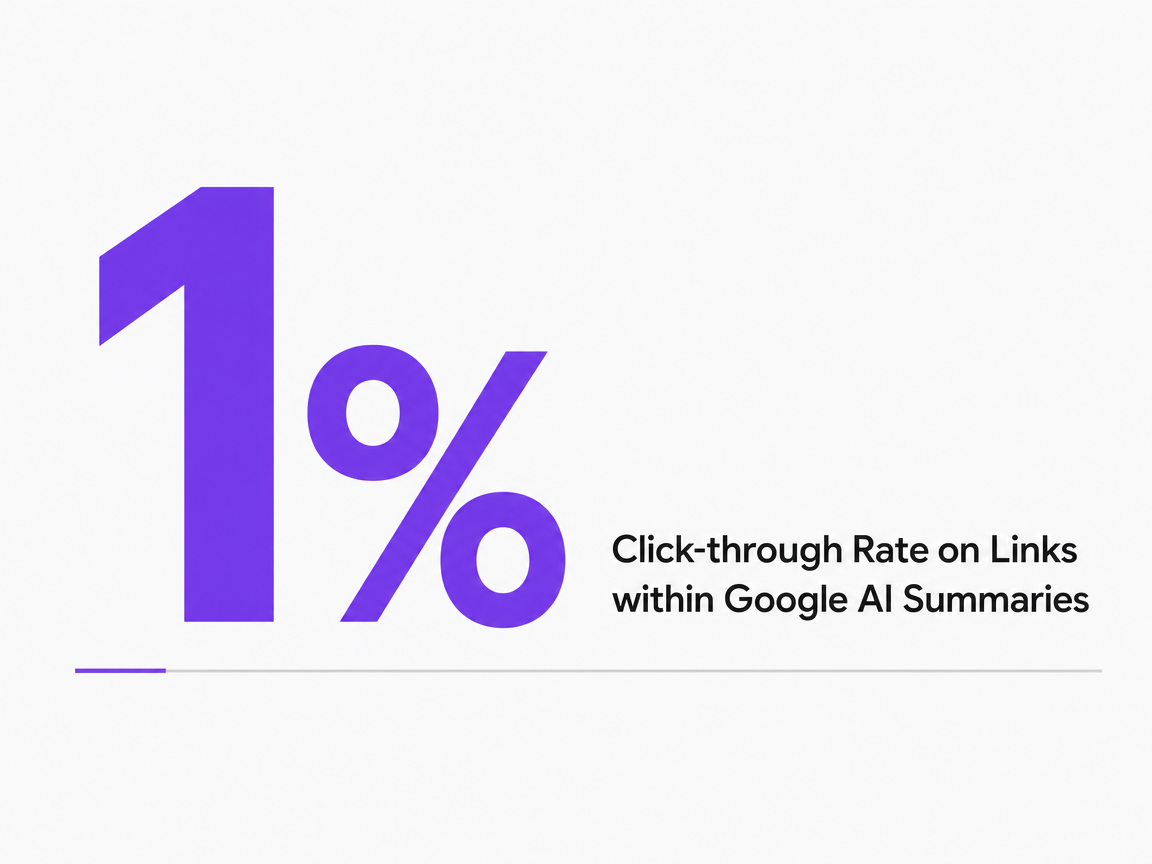 Click-through Rate on Links within Google AI Summaries
Click-through Rate on Links within Google AI Summaries
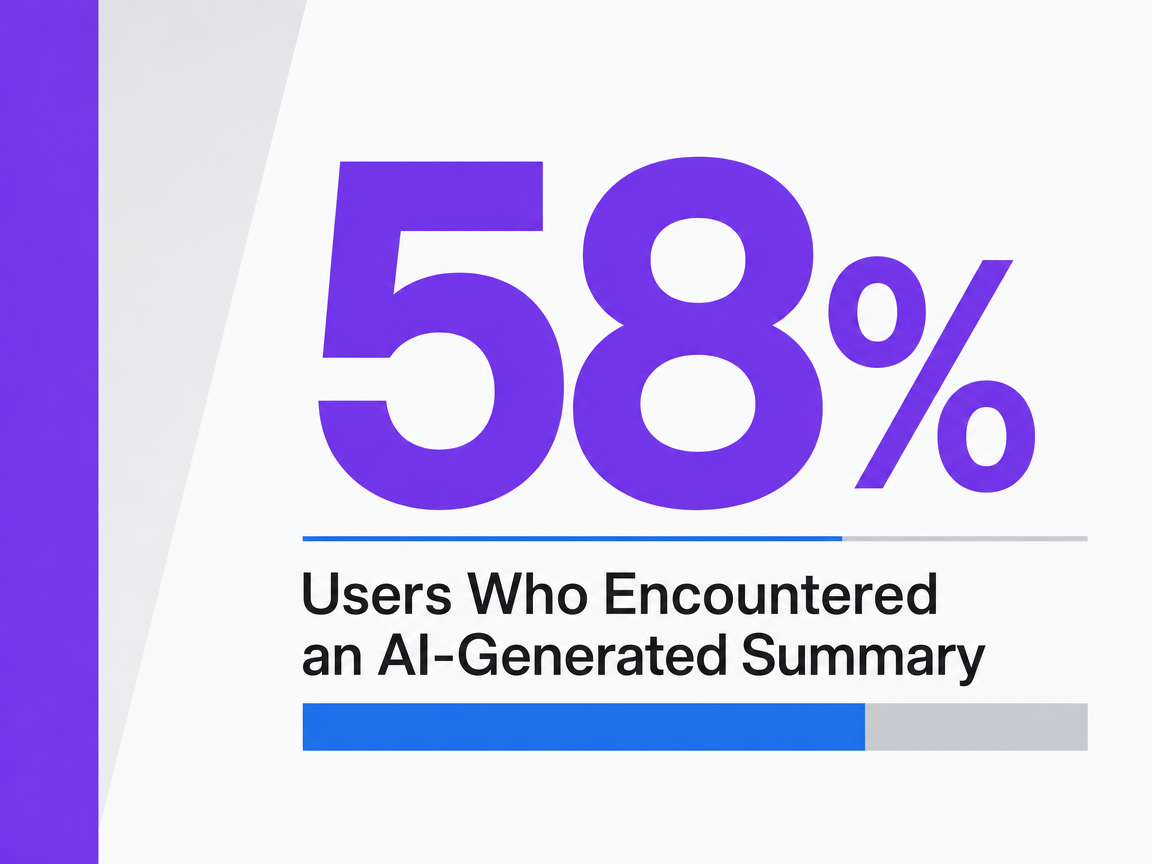 Users Who Encountered an AI-Generated Summary
Users Who Encountered an AI-Generated Summary
Frequently Asked Questions
References
- 1.Search Engine Optimization (SEO) Starter Guide.
- 2.A Guide to Google Search Ranking Systems.
- 3.AI Features and Your Website.
- 4.Understanding Core Web Vitals and Google search results.
- 5.Creating Helpful, Reliable, People-First Content.
- 6.Do people click on links in Google AI summaries?.
- 7.Pew Research Center AI summary browsing data report.
- 8.Search Engine Optimization Solutions, Q3 2025.
- 9.The new Search Console Insights report is here.
- 10.Introducing Search Generative AI performance reports in Search Console.
- 11.Assessing the Readability of Web Search Results for Searchers with Dyslexia.
- 12.On The Applicability of Readability Models to Web Texts.