
Key Takeaways
- Rank platforms by labor compression, not feature lists: the real question is how many client-hours per specialist FTE a stack absorbs before quality slips.
- Split the 16 enterprise vendors into three tiers—diagnostic, execution, and AI execution—because each absorbs a fundamentally different kind of agency labor 1.
- Ahrefs, Semrush, Moz Pro, SE Ranking, and STAT sharpen specialist judgment but do not route work, which caps their value once client counts climb.
- Conductor, BrightEdge, and seoClarity earn their premium past 30 clients by removing content routing, opportunity discovery, and multi-domain data-wrangling taxes respectively 4.
- The 92% versus 58% rank-prediction accuracy gap matters because reliable forecasts let specialists commit to fewer, higher-conviction targets and drop expensive hedging 2.
- AI has landed hardest where hours are highest and differentiation lowest: 68% of SEO pros use it for keyword research, 45% of agencies for content optimization 6.
- Consolidation savings show up less on the invoice and more in the 0.3 to 0.6 FTE per specialist recovered from moving data between disconnected systems.
- Portfolio agencies past 50 clients face governance, seat sprawl, and vendor concentration risks that push most toward a two-vendor rule rather than full consolidation 5.
- The most-shared MarTech landscape is sponsored by Conductor, so triangulate it with Forrester and independent adoption data before building a shortlist 1, 10.
- A working 2025 stack pairs one execution platform as system of record with one diagnostic tool for independence, then deliberately places the AI execution layer.
The Labor-Compression Test: How Scaling Agencies Should Actually Rank Platforms
The market data agencies read most often gets the ranking question wrong. Analyst forecasts show enterprise SEO platforms growing from roughly $8.18 billion in 2023 to $35.67 billion by 2032 at a 17.78% CAGR 4, and Forrester now treats the category as mature enough to warrant a full Wave evaluation 10. That maturity matters less for feature comparisons than for what it signals about agency operations: platform selection has moved past keyword-database size and into labor economics.
The question a Head of SEO running 15 to 150 clients needs to answer is narrower than the trade press suggests. It is not which platform has the deepest index or the cleanest UI. It is how many client-hours per specialist FTE a given stack can absorb before quality degrades. Rank tracking, on-page audits, and content briefs are commodity work. Strategic oversight, client narrative, and technical judgment are not. The platforms worth ranking are the ones that compress the first category so specialists spend more time on the second.
This piece uses that lens throughout. Each vendor is evaluated by the agency workflow it removes labor from, not by the length of its feature list. The taxonomy that follows separates diagnostic tools from execution platforms from the emerging AI execution layer, because those three tiers absorb labor in fundamentally different ways.
A Three-Tier Taxonomy: Diagnostic, Execution, and AI Execution Layers
The MarTech enterprise landscape profiles 16 platforms that agencies routinely put in the same evaluation deck: Ahrefs, BrightEdge, Conductor, Moz Pro, Semrush, seoClarity, SE Ranking, and STAT among them 1. Treating those tools as one category is where most agency stack decisions go wrong. They absorb different kinds of labor, and stacking them on the same spreadsheet flattens distinctions that determine whether a specialist can hold 12 clients or 22.
The taxonomy that carries the rest of this piece splits the 16 into three tiers. Diagnostic platforms answer questions. Ahrefs, Semrush, Moz Pro, SE Ranking, and STAT sit here. They pull rankings, index backlinks, surface keyword opportunities, and score technical health. A specialist still writes the brief, still triages the audit, still builds the report. The platform sharpens judgment; it does not replace hours.
Execution platforms coordinate work. Conductor, BrightEdge, and seoClarity anchor this tier 1. They wrap diagnostics inside content workflows, publishing hooks, multi-site governance, and stakeholder reporting. A specialist stops copying data between tabs. Briefs route through the platform. Client dashboards render themselves. The labor saved is coordination overhead, which for agencies past roughly 30 clients is where the specialist-hour math breaks.
The AI execution layer is the newest tier and the least settled. Rather than reporting what happened or coordinating who does what next, these systems produce the work: keyword clusters, on-page recommendations, drafted briefs, technical fixes queued for approval. The MarTech guide flags generative AI as the defining vector of new feature development in the category 1, and Forrester's 2025 Wave treats the shift as mature enough to evaluate on strategy criteria 10. Whether an agency treats this tier as an add-on to an execution platform or as a replacement for parts of the diagnostic and execution stack is the central 2025 stack question.
Each of the next three sections evaluates one tier under the same lens: which specialist hours it actually absorbs, and at what client count the math starts to work.
Diagnostic Platforms: Where Ahrefs and Semrush Still Earn Their Seat
The diagnostic tier gets underrated in scaling-agency conversations because its labor math is unglamorous. Ahrefs, Semrush, Moz Pro, SE Ranking, and STAT do not remove workflow steps. They sharpen the ones a specialist was going to run anyway: keyword expansion, SERP inspection, backlink audits, competitive gap analysis, technical crawls. What they compress is decision time, not headcount, and the MarTech landscape places all five inside the enterprise-grade set for exactly that reason 1.
For agencies under roughly 25 clients, diagnostic tools carry more weight than execution platforms. A single specialist covering eight to twelve accounts spends most billable hours on judgment work: which cluster to chase, which internal link map to rebuild, which competitor's rising subfolder signals a strategic threat.
- Ahrefs earns its seat on backlink index depth and SERP feature tracking.
- Semrush earns it on breadth across paid, organic, and content workflows in one interface.
- Moz Pro holds ground on domain authority modeling that clients still ask for by name.
- SE Ranking and STAT anchor the low-cost rank-tracking layer that portfolio agencies use to bulk-monitor hundreds of domains without per-seat inflation.
The ceiling on this tier is coordination. Diagnostic platforms report; they do not route. A specialist still exports the technical audit, still writes the brief, still assembles the client deck. Past a certain client count, the copy-paste tax between tabs consumes the hours the platform's speed was supposed to return. That is where execution platforms start to matter, and where the diagnostic tier's role shifts from primary system of record to embedded reference layer.
The operational takeaway for a Head of SEO staffing a growing roster is not to displace diagnostic tools but to stop asking them to do coordination work. Keep Ahrefs and Semrush as the analyst's lens. Move the workflow burden to a tier built for it.
Execution Platforms: Conductor, BrightEdge, and seoClarity Under the Multi-Client Lens
Somewhere around 30 active clients, the diagnostic-tier stack stops scaling. Specialists start losing hours to reporting cadence, brief handoffs, and multi-stakeholder approval loops that no rank tracker was built to hold. Execution platforms exist to absorb that coordination layer, and Market Research Future's forecast of enterprise SEO platforms growing from $8.18 billion in 2023 to $35.67 billion by 2032 at a 17.78% CAGR 4 reflects the underlying pull: agencies past a certain client count cannot keep coordinating in tabs and slide decks.
Conductor sits at the content-governance end of the tier. Its value for scaling agencies is workflow: brief creation, editorial routing, content scoring against target queries, and stakeholder reporting all live in one governed environment. A specialist stops assembling the monthly client story from four exports. The platform assembles it. For agencies where content is 60% or more of delivery hours, Conductor's coordination absorption is where the FTE math changes. The caveat worth naming: the MarTech enterprise guide most agencies read on this category is sponsored by Conductor 1, which shapes how the vendor gets framed in comparative coverage.
BrightEdge leans the other direction, toward data intelligence and real-time SERP monitoring at portfolio scale. Its recommendation engine surfaces opportunities across sites without a specialist having to hand-run gap analyses. For agencies whose retention story depends on demonstrating proactive opportunity capture rather than post-hoc reporting, that shift matters. Data Insights Market places BrightEdge alongside seoClarity and Semrush among the concentrated set of dominant vendors in the category 5, which is both a stability signal and a lock-in signal depending on how a Head of SEO weighs it.
seoClarity's differentiator for multi-client operations is architectural. Its data model was built for large keyword sets, multiple domains, and cross-client comparative analysis, which is the pattern portfolio agencies actually run. The platform absorbs the technical-audit and rank-monitoring coordination that otherwise consumes junior specialist hours. Where Conductor removes the content coordination tax and BrightEdge removes the opportunity-discovery tax, seoClarity removes the multi-domain data-wrangling tax.
The operational read across all three: execution platforms do not make a specialist better at judgment. They remove the hours between judgment calls. For a 30-to-100-client agency, that gap is where margin lives. The next tier goes further, moving from coordinating work to producing it.
Test AI-driven SEO execution workflows risk-free
Experience full-scale SEO delivery and publish live content during your trial—no limitations, no delays.
The AI Execution Layer: What the 92% Rank-Prediction Number Actually Means for Delivery
The number scaling agencies keep hearing about this tier is a single comparison: AI-driven rank trackers predict keyword rankings at 92% accuracy versus 58% for traditional tools 2. That figure comes from a Moz 2023 study aggregated into a 2026 verified-data brief, and it is a single-source finding on one specific task—rank prediction, not the full SEO workflow. The scope matters. It is not a claim that AI platforms outperform legacy stacks across every function. It is a claim that on the narrow task of forecasting where a page will land, the accuracy gap is roughly 34 percentage points.
For an agency Head of SEO, the operational read is not about the tracker itself. It is about what a reliable forecast changes downstream. When rank prediction runs at coin-flip-plus accuracy, specialists hedge. They pitch broader clusters, wider content programs, more experimental briefs to protect against forecast error. That hedging is expensive in specialist hours and client-narrative complexity. When prediction accuracy climbs past 90%, the hedging premium collapses. A specialist can commit to fewer, higher-conviction targets and defend the choice with a probability estimate the client can actually read.
That is the labor-compression mechanism the AI execution layer offers, and it is why the tier is worth evaluating separately from diagnostic and execution platforms even though several established vendors now embed AI features. The MarTech guide flags generative AI as the primary vector of new feature development across all 16 platforms it profiles 1, which means the line between an execution platform with AI modules and a native AI execution layer is blurring quickly.
The functional distinction that still holds: AI execution layers produce artifacts, not just insights. They draft the brief, cluster the keywords, generate the on-page recommendation, queue the technical fix. A specialist reviews and approves rather than assembles from scratch. That approval-first pattern is what lets one specialist hold more accounts without quality slippage—the platform does the drafting labor; the human does the judgment work. Forrester's Q3 2025 Wave treats vendor strategy on this axis as evaluable in its own right 10, which is the clearest signal that the category has moved past experimental.
The unresolved question for a scaling agency is not whether to add AI execution to the stack. It is where the layer sits: bolted onto an existing Conductor or seoClarity deployment, or run as the primary production system with diagnostic tools relegated to reference. The next section examines which workflow stages have actually absorbed AI in practice, which grounds that placement decision in observed agency behavior rather than vendor marketing.
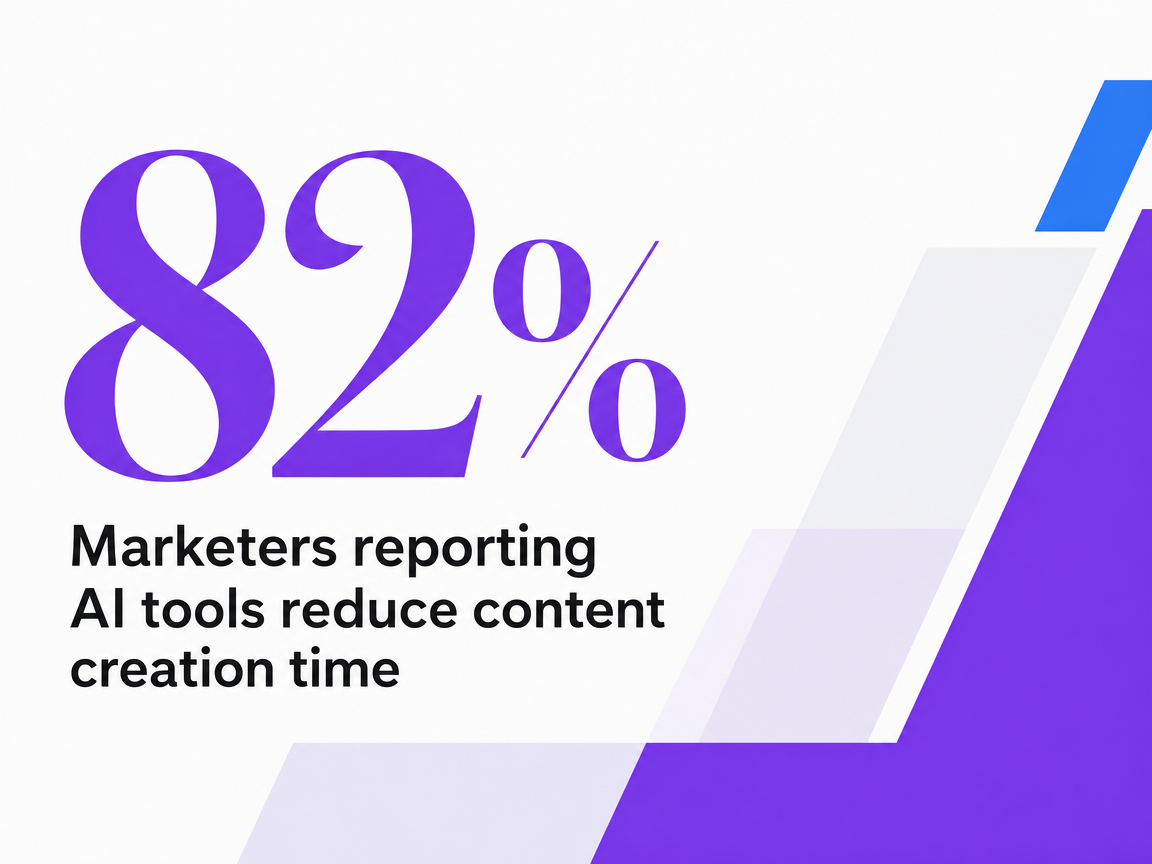 Marketers reporting AI tools reduce content creation time
Marketers reporting AI tools reduce content creation time
Where AI Actually Absorbs Hours: Keyword Research, Content Optimization, Reporting
The adoption data settles the question of where AI has actually landed inside agency workflows, which is different from where vendors say it has landed. As of 2023, 68% of SEO professionals reported using AI tools for keyword research, and by Q2 2024, 45% of digital marketing agencies had integrated AI-driven content optimization into their SEO workflows 6. Two stages, two very different absorption rates, and both point to the same operational read: AI has moved into the parts of the workflow with the highest hour count per client and the lowest strategic differentiation.
Keyword research is the more advanced stage because it is the most templatable. Clustering, intent classification, SERP feature mapping, and long-tail expansion follow patterns AI models handle well. A specialist who used to spend three hours building a quarterly keyword map now reviews a generated cluster set and edits. The judgment stays with the human; the assembly does not. That 68% adoption figure reflects a stage where the tool-to-approval ratio has flipped decisively.
Content optimization is earlier in the curve, and the 45% figure explains why. On-page recommendations, brief generation, and content scoring are more sensitive to brand voice, client-specific style guides, and topical authority signals that vary by vertical. Agencies integrate AI here more cautiously because the output touches published work and client review cycles. The stage still absorbs hours, but each output carries higher review overhead than a keyword cluster does.
Reporting is the stage the adoption data does not yet quantify but that agency operators consistently identify as the next absorption target. Monthly client narratives, executive summaries, anomaly detection across rank and traffic data, and stakeholder-specific dashboards consume junior specialist time that scales linearly with client count. The workflow logic that made keyword research a fit for automation applies equally to reporting: high volume, patterned output, judgment concentrated at the edit rather than the draft.
The strategic implication for a Head of SEO is straightforward. AI absorption is not evenly distributed across the workflow, and platforms that market end-to-end AI often overstate coverage on the stages where adoption is still cautious. The stack question worth asking is which specific hours a platform's AI features actually remove, measured against the two adoption benchmarks the industry has already published rather than the roadmap the vendor is selling.
Consolidation Economics: What Happens to Margin When One Platform Absorbs Three Subscriptions
The margin case for consolidation is not a licensing story. It is a specialist-hours story that shows up on the licensing line. When one platform absorbs rank tracking, technical audit, content optimization, and reporting, the visible saving is the two or three subscription lines that disappear. The larger saving is the 0.3 to 0.6 FTE per specialist that stops moving data between systems. That second number does not appear on any invoice, which is why agency CFOs consistently underprice consolidation and Heads of SEO consistently overprice it.
The adoption data provides one usable benchmark for pacing the math. As of Q2 2024, 45% of digital marketing agencies had integrated AI-driven content optimization into their SEO workflows 6, which means the median agency is running a hybrid stack: consolidated in some stages, point-tool elsewhere. That transitional state is where margin compression hides. Two subscriptions get canceled, one gets added, and the specialist still runs both workflows in parallel during the migration quarter.
The table below frames the tradeoff in variables rather than dollar figures, because supplied research does not publish per-seat or per-domain pricing for named vendors. A Head of SEO can plug in current quotes.
| Stack line | Point-tool stack | Consolidated execution platform | AI execution layer |
|---|---|---|---|
| Rank tracking | Per-domain | Included | Included |
| Technical audit | Per-seat | Included | Included, drafted fixes |
| Content optimization | Per-seat | Per-seat | Included, drafted briefs |
| Backlink analysis | Per-seat | Included or add-on | Add-on |
| Reporting / workflow | Manual assembly | Included | Included, drafted narrative |
| Specialist hours per client / month | Baseline | ~30 to 40% lower | ~50 to 65% lower |
The hour-reduction ranges above track the labor-compression thesis rather than any vendor's quoted claim. What they suggest for margin is directional: an agency running 80 clients at a baseline of eight specialist hours per client per month spends 640 hours. A consolidated execution platform pulling that toward five hours returns roughly 240 hours a month, which is more than one full FTE at standard utilization. The subscription delta between three point tools and one enterprise platform rarely erases that gain. The migration quarter often does, which is why the consolidation question is a sequencing question, not a purchasing one.
See How Leading Agencies Streamline SEO Operations Without Adding Headcount
Connect with a platform specialist to benchmark your current SEO workflows and explore data-backed methods for scaling execution, maintaining content quality, and improving oversight across multiple client accounts.
If You Manage a 50-Plus Client Portfolio: Governance, Seat Sprawl, and Vendor Concentration Risk
The operator profile shifts here. A 15-client agency runs on specialist judgment and light governance. A 50-plus-client agency runs on access controls, seat economics, and vendor-risk math that a smaller shop can safely ignore. The platform question at that scale is not which tool has the best keyword database. It is which vendor an agency can afford to have absorb three functions across 50 client workspaces, and what happens if that vendor changes pricing, gets acquired, or deprecates a module mid-contract.
Governance is the first pressure point. Portfolio agencies need per-client workspace isolation, role-based access that separates a junior specialist's edit scope from a strategist's approval authority, and audit trails that survive client offboarding without leaking data into the next engagement. Diagnostic tools were not built for this. Execution platforms were, which is part of why Conductor, BrightEdge, and seoClarity carry the enterprise premium the MarTech landscape documents 1.
Seat sprawl is the second. When 12 specialists each need access to five diagnostic tools plus one execution platform plus a reporting layer, per-seat licensing turns into a line item that scales linearly with headcount rather than with client revenue. That is the specific economic pattern consolidation targets, and it is why the hour-reduction math in the previous section matters more than the subscription-cancellation math.
Vendor concentration is the third and least discussed. Data Insights Market notes moderate concentration in the enterprise SEO platforms category, with seoClarity, BrightEdge, and Semrush holding significant share 5. For an agency committing 50 client workspaces to one of those vendors, that concentration cuts both ways: stability and support depth on one side, pricing leverage and roadmap dependency on the other. The mitigation most portfolio agencies land on is a two-vendor rule—one execution platform as the system of record, one diagnostic tool retained as an independent data check—rather than full single-vendor consolidation.
The Sponsored-Research Problem: Reading Analyst Coverage of This Category Carefully
One detail worth naming plainly before a Head of SEO builds a shortlist: the most widely circulated enterprise SEO platform guide agencies pass around—MarTech's 78-page landscape covering 16 vendors—is sponsored by Conductor 1. That does not disqualify the research. It does shape how vendors get framed, which capabilities get emphasized, and which comparative weaknesses get softened. Reading it without adjusting for that sponsor relationship is a common evaluation mistake.
The Forrester Wave Q3 2025 and Landscape Q1 2025 sit on the opposite end of the incentive structure: paywalled, subscription-funded, and analyst-driven 9, 10. That model has its own bias—vendors that pay for briefings get more analyst airtime—but the sponsor-of-record problem is different. Market forecasts from Market Research Future, Data Insights Market, and the LinkedIn outlook piece show valuations diverging by a factor of three or more for the same category 4, 5, 7, which is a signal that even the market-sizing layer of this research should be triangulated rather than quoted single-source.
The practical read: use MarTech's landscape for vendor breadth, Forrester for strategy evaluation, and independent adoption data for behavioral benchmarks. No single report carries the shortlist alone.
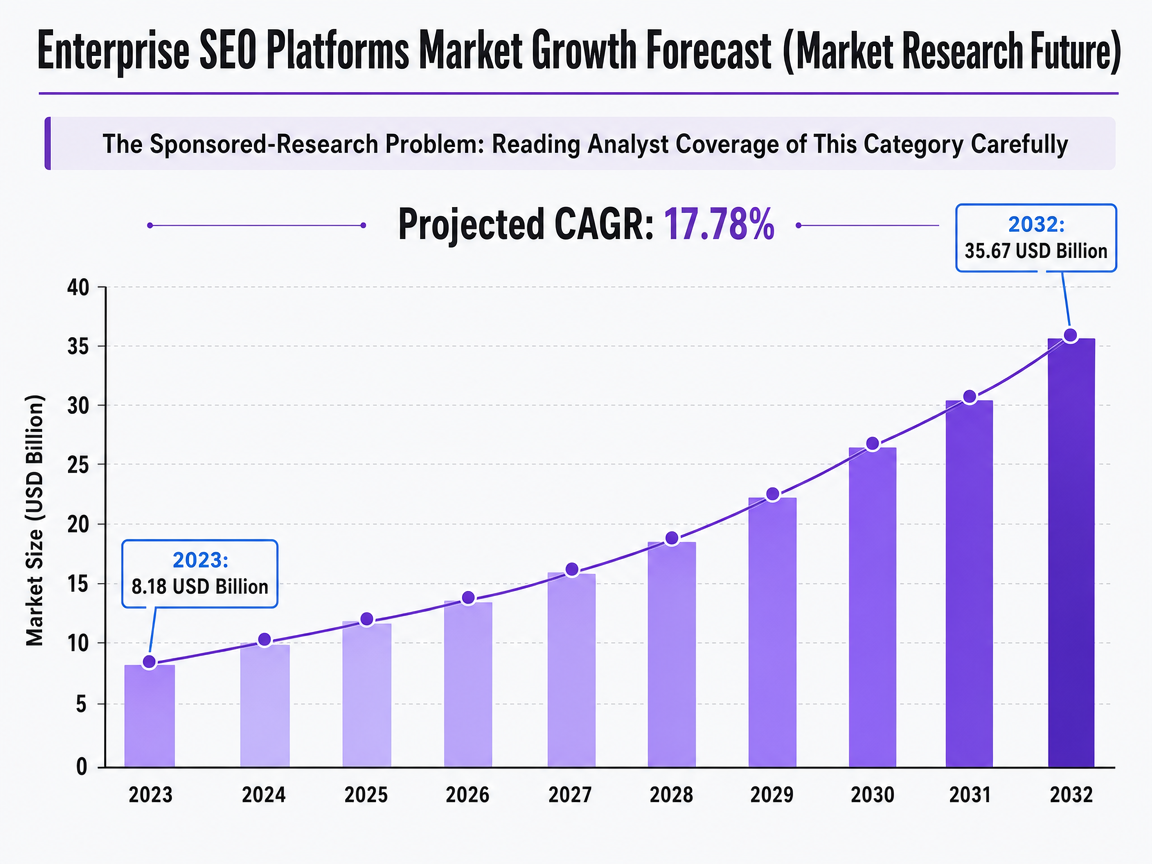 Enterprise SEO Platforms Market Growth Forecast (Market Research Future)
Market forecast showing growth from $8.18 billion in 2023 to $35.67 billion by 2032, with a projected CAGR of 17.78%.
A Working Shortlist for Heads of SEO Evaluating Their 2025 Stack
The shortlist worth carrying into a Q1 evaluation is short by design. Agencies past 30 clients converge on a two-vendor pattern: one execution platform as the system of record, one diagnostic tool retained as an independent check. Conductor, BrightEdge, or seoClarity fill the first slot, chosen by which coordination tax dominates the delivery model—content routing, opportunity discovery, or multi-domain data wrangling 1. Ahrefs or Semrush fill the second, kept for the judgment work no execution platform absorbs cleanly.
The third slot is where the 2025 stack question lives. AI execution layers—including newer entrants like Vectoron that push production and approval routing into one governed loop—are moving from bolt-on to primary system in the agencies willing to rebuild their delivery model around approval-first automation. Forrester's Q3 2025 Wave treats vendor strategy on this axis as evaluable in its own right 10, and the 45% agency AI-content-optimization adoption figure 6 suggests the median agency is already halfway through that transition without a clean architectural decision behind it.
The operational read: pick the execution platform by which tax it removes, keep one diagnostic tool for independence, and decide deliberately where the AI layer sits rather than letting vendor roadmaps decide by default.
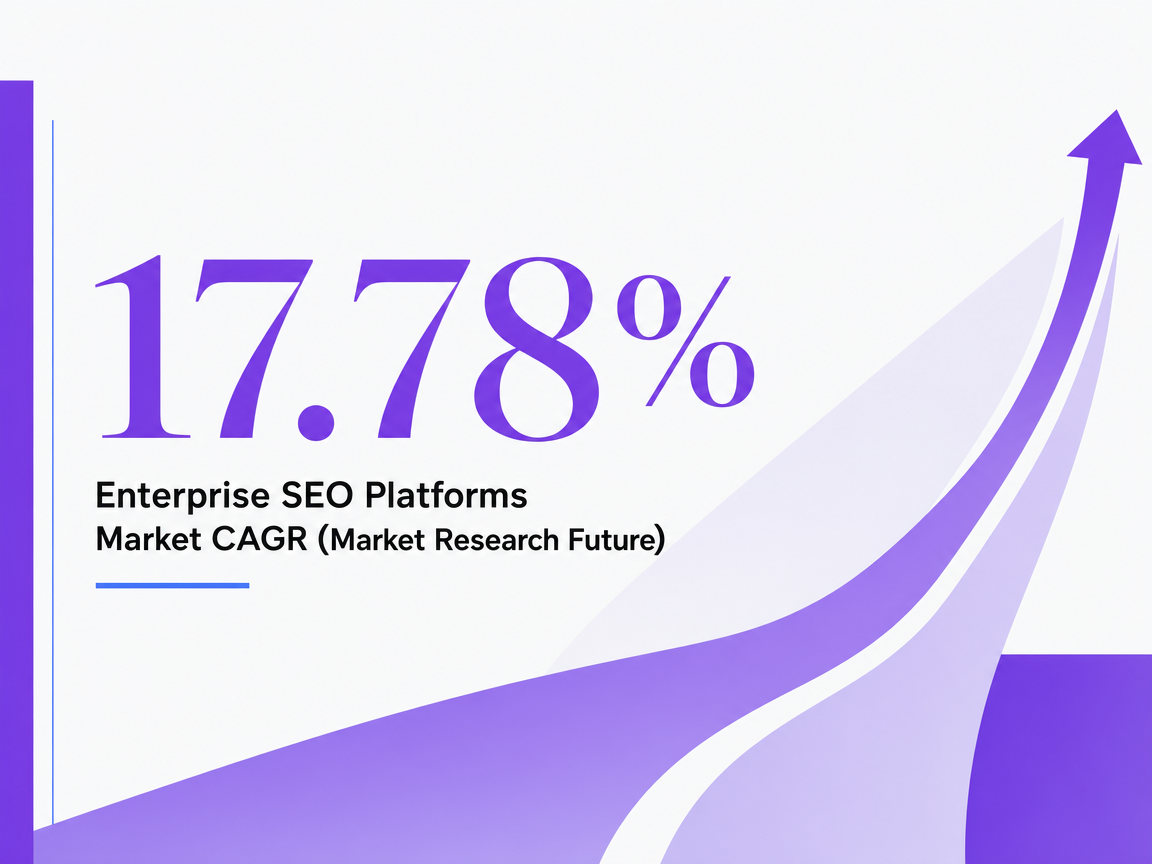 Enterprise SEO Platforms Market CAGR (Market Research Future)
Enterprise SEO Platforms Market CAGR (Market Research Future)
Frequently Asked Questions
References
- 1.Enterprise SEO Platforms: A Marketer’s Guide.
- 2.AI In The SEO Industry Statistics | Verified 2026 Data.
- 3.Enterprise SEO Platforms Market Size Share & Growth Outlook.
- 4.Enterprise SEO Platforms Market Research Report…Forecast to 2035.
- 5.Enterprise SEO Platforms Analysis 2025 and Forecasts 2033.
- 6.AI In The SEO Industry Statistics: Market Data Report 2026.
- 7.Global Enterprise SEO Platforms Market Outlook 2026-2033.
- 8.Impact of AI on SEO (Moore, 2024).
- 9.The Search Engine Optimization Solutions Landscape, Q1 2025.
- 10.Search Engine Optimization Solutions, Q3 2025.