
Key Takeaways
- Google Search Console is the non-negotiable base layer because it's the only source of real query, click, and impression data from Google's index 12.
- The Search Analytics API turns GSC from a per-account report into a standardized reporting layer across a full portfolio, extending the 16-month data ceiling 8.
- Pairing GSC with GA4 covers pre-click and post-click behavior, which is the actual measurement architecture for agencies reporting on qualified conversions 6.
- Semrush earns its line item on competitor visibility and consistent real-time SERP positions that GSC's smoothed average position metric cannot deliver 9.
- Ahrefs answers questions GSC can't, surfacing competitive backlink profiles and adding CrUX and schema auditing inside the same interface as link research 11.
- SE Ranking fits mid-market books where Semrush or Ahrefs seat costs stretch margin, delivering comparable real-time SERP data at a lower per-account cost 9.
- Screaming Frog produces the developer-grade crawl diagnostics—canonicals, schema, response codes—that sit under every ranking claim a rank tracker makes 11.
- Sitebulb covers the same crawl territory as Screaming Frog but adds prioritized hint explanations and client-ready visuals that cut analyst hours per audit.
- Surfer collapses SERP analysis into repeatable structural briefs, accelerating content production across a portfolio without being treated as a ranking KPI 1.
- Clearscope's editorial-grade grading earns its cost in legal, healthcare, and financial verticals where briefs must clear compliance review before shipping 13.
- Search Console's generative AI performance report is the first authoritative measurement surface for AI Overviews and AI Mode impressions and clicks 4.
- Profound and Peec AI provide directional signal on LLM citations, but no mainstream tool measures AI citation rates cleanly enough to headline as a KPI 11.
Why 'best ranking tool' is the wrong question for agency stacks
Agency SEO leaders searching for the best ranking tool are usually asking the wrong question. Rankings are a lagging signal produced by a measurement stack, not by a single dashboard. The tools that survive procurement at scale earn their place by covering a specific job in that stack, not by claiming to do everything.
The evidence for treating this as a stack problem is direct. Google Search Console is the only source of real query, click, and impression data from Google's index, and no third-party tool replicates it 12. Rank trackers like Semrush, SE Ranking, and Ahrefs produce more consistent real-time SERP positions than GSC's average position metric, which smooths across regions and devices 9. Those two data sets barely overlap. Treating them as substitutes is how agencies end up paying twice for half the picture.
The 2026 shift makes this sharper. Search Console now reports impressions and clicks from AI Overviews and AI Mode as distinct surfaces 4, while no mainstream tool directly measures AI citation rates yet 11. The right question is which tools cover which jobs, and where the gaps still sit.
The six jobs a modern agency measurement stack has to cover
Break the ranking-tool question into six distinct jobs and the shortlist writes itself. Each job has a data source that owns it, and the tools that try to own two or three jobs at once tend to be mediocre at all of them.
- First-party truth: what a site actually shows for, what got clicked, and how Google's index sees it. Only Search Console reports real query, click, and impression counts, and no third-party crawler can reproduce that data 12.
- Competitive rank tracking, where dedicated trackers pull more consistent real-time SERP positions than GSC's averaged position metric, which smooths across regions and devices 9.
- Technical crawl and index diagnostics: schema validation, canonical logic, response codes, and Core Web Vitals at scale, which sit under every ranking claim 11.
- Content optimization tied to SERP structure and intent.
- AI-search visibility, which now includes AI Overviews and AI Mode as a distinct measurement surface inside Search Console 4, plus a still-forming third-party layer that no tool measures cleanly yet 11.
- Orchestration: pulling GSC, GA4, and rank data into client-ready reporting and turning findings into approved work 14.
The practical consequence for a portfolio lead is that redundancy across these six jobs is where agency margin leaks. Two rank trackers per client is waste. A rank tracker used as a crawler is a blind spot. The tool-by-tool evaluation that follows maps each option to exactly one of these jobs.
First-party truth: the tools nothing else replicates
Google Search Console: the non-negotiable base layer
Search Console is the only source that reports what a site actually shows for in Google's index, with real query, click, impression, and average position counts pulled directly from Google 12. No paid platform replicates that data, and treating third-party estimates as equivalent is a category error 10.
The Performance report is where most agency work starts: traffic broken down by query, page, country, device, and search appearance 1. For portfolio leads, three surfaces matter beyond the base report. Insights consolidates trending queries and content into a client-ready summary, showing total clicks and impressions against the previous period 2. The 24-hour view reports data with only a few hours of delay, which changes how quickly a team can confirm whether a publish, redirect, or template change moved anything 3. And the newest addition, the generative AI performance report, tracks impressions and pages appearing in AI Overviews and AI Mode as a distinct surface 4.
Agencies that skip GSC as the anchor and lead reporting with a rank tracker end up defending estimated positions when the client asks what actually got clicked. The answer to that question lives in Search Console.
GSC's Search Analytics API: where reporting standardization actually happens
The Performance report is useful; the API is what makes it scale. The Search Analytics query method exposes the same data as the Performance report, but programmatically, so an agency can pull queries, clicks, impressions, CTR, and position across every client property on a schedule 8.
That matters for two reasons at portfolio scale. First, the 16-month data window inside the GSC interface is a hard ceiling; pulling to a warehouse extends historical context indefinitely 12. Second, standardized reporting across a 20-client book cannot depend on analysts logging into each property to export CSVs. The API feeds Looker Studio, BigQuery, or an in-house reporting layer, and the same schema powers every account. That is the difference between reports that take a day to assemble and reports that assemble themselves.
GA4 paired with GSC: pre-click meets post-click
Search Console reports what happens before a person arrives from Google Search: impressions, clicks, queries, position 6. GA4 reports what happens after that click: sessions, engagement, events, conversions. Neither tool answers the full question on its own, which is why Google's own guidance walks through combining them directly 6.
For agencies running verticals where the conversion is a booked call, a form fill, or a scheduled consult, this pairing is the actual measurement architecture. The practical framing from practitioners writing about 2026 workflows: use GSC for queries and SERP truth, GA4 for user behavior after the click, and third-party trackers for local SERP shifts 14. Rankings are a leading indicator; qualified conversions are the outcome the client is paying for. A stack that reports one without the other leaves the strategic conversation half-finished.
Competitive rank tracking: where third-party tools earn their line item
Semrush: competitive intelligence at portfolio scale
Semrush earns its keep in an agency stack on two axes GSC cannot cover: competitor visibility and portfolio-wide keyword discovery. Its rank tracker produces more consistent real-time SERP positions than GSC's averaged position metric, which smooths across regions and devices in ways that mislead when a client asks why a specific keyword moved 9. That gap is why controlled tests show third-party trackers reflecting SERP shifts more precisely than the Performance report's smoothed average 9.
The 2025 Site Audit addition of an AI Search Health score signals where the platform is investing, though it still does not measure AI citation rates directly 11. For portfolio leads, the practical win is location and device segmentation across dozens of accounts under one login, plus competitor position tracking that no first-party source will ever surface 10. The failure mode is treating Semrush's estimated organic traffic figures as equivalent to GSC clicks. They are not, and defending them in a client review is a losing exercise.
Ahrefs: backlink index and the questions GSC can't answer
Ahrefs answers a different set of questions than a rank tracker, which is why it sits alongside Semrush rather than replacing it in most mature stacks. Its crawler and link index surface backlink data Google will not show, including most of a site's referring domain profile and every competitor's link acquisition pattern 12. GSC reports a partial view of links; Ahrefs reports a competitive one.
The 2026 additions matter for portfolio work: CrUX performance metrics and schema auditing bring technical diagnostics into the same interface where link and keyword research already live 11. That reduces context-switching for analysts running audits across 20 accounts. The tool's own comparison against GSC makes the division explicit: no third-party source reports what a site actually ranks for with real impression and click counts, and no first-party source reports competitive backlink or index context 12. Agencies that budget for one and skip the other are guessing on half the questions clients ask.
SE Ranking: the mid-market rank tracker for growing books
SE Ranking occupies the space between GSC and the enterprise suites, and it earns its slot in agency stacks servicing mid-market and local clients where Semrush or Ahrefs seat costs stretch margin per account. Practitioner reviews in 2026 place it alongside those platforms specifically for rank tracking and budget keyword research, with community ratings that reflect steady adoption across smaller books 13. In controlled comparisons against GSC, it produces the same kind of consistent real-time SERP position data as its larger competitors 9.
The operational fit is agencies scaling from 10 to 40 accounts where per-project reporting cadence matters more than deep competitive intelligence. Where it falls short is backlink index depth and enterprise-grade competitor research, which is why it complements rather than replaces an Ahrefs seat for accounts that need both.
Test Real-Time SEO Ranking Insights Now
Experience live ranking data and publish optimized content for your actual client campaigns during your free trial.
Technical crawl: the audit layer under every ranking claim
Screaming Frog: developer-grade crawl depth
Screaming Frog is the tool that answers questions rank trackers physically cannot: which URLs actually resolve, which templates return the wrong canonical, where schema breaks at scale, and which pages Google's crawler will treat as duplicate before a single position is measured. The 2026 technical-SEO comparison places it alongside GSC as the two anchors of the audit layer, with Screaming Frog handling developer-grade crawl depth and schema validation while GSC reports indexation truth 11.
The technical baseline it audits against is not theoretical. The 2025 Web Almanac reports HTTPS at 91.7% of desktop pages and 91.5% of mobile pages, with structured data present on 50% of home pages 5. That is the floor a ranking claim sits on: if a client site misses schema, misfires canonicals, or serves inconsistent HTTPS, no rank tracker in the stack will explain why performance stalls. For portfolio leads, Screaming Frog earns its seat by producing that diagnostic layer at a per-audit cost that scales across a book of clients.
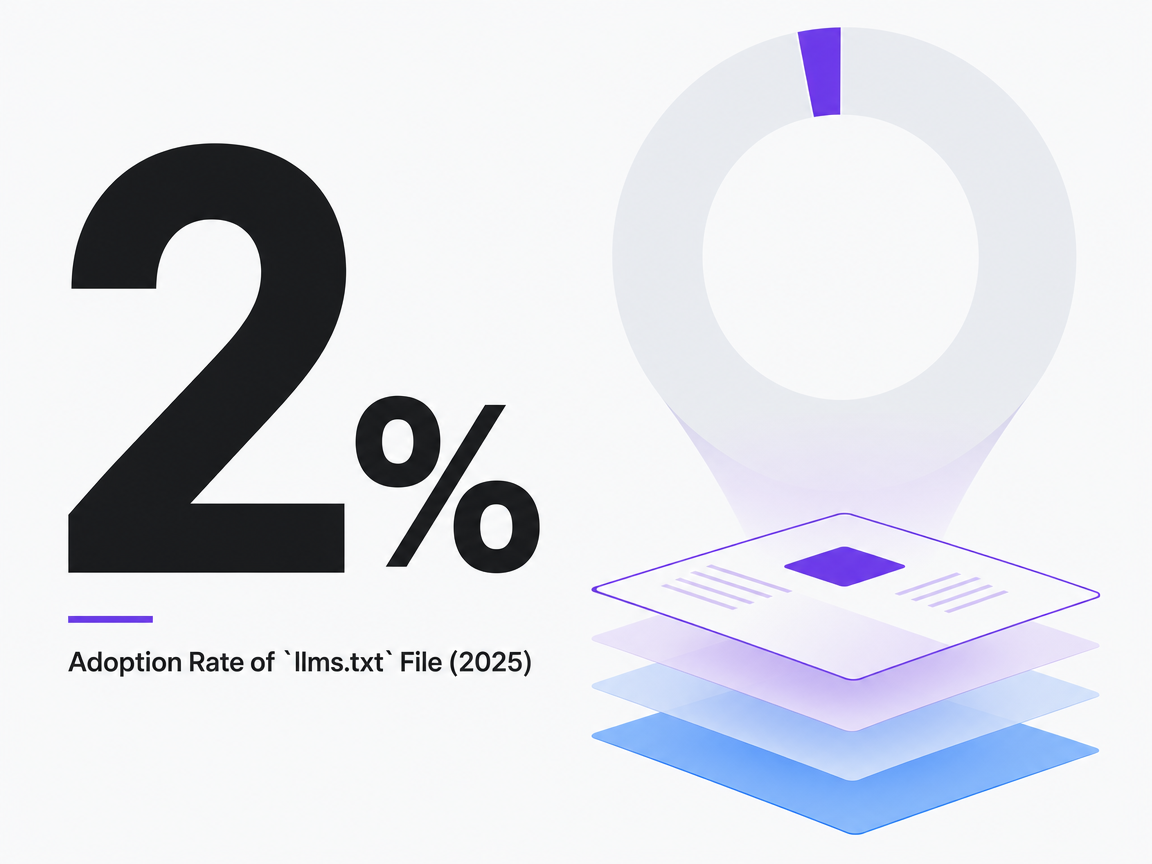 Adoption Rate of llms.txt File (2025)
Adoption Rate of llms.txt File (2025)
Sitebulb: crawl auditing with client-ready explanations
Sitebulb covers the same crawl territory as Screaming Frog but layers on prioritized hint explanations and visual reports built for stakeholders who do not read raw crawl exports. That translation layer is where it earns a slot in agency stacks servicing clients whose in-house teams need to act on findings without an analyst walking them through every row.
The division of labor inside an audit workflow is straightforward. Screaming Frog goes deeper on custom extraction and large-site crawls; Sitebulb produces the deck-ready explanation of what the crawl found and why it matters. For a Head of SEO standardizing audits across 20 accounts, that difference shows up in analyst hours per audit, not feature parity. Neither tool substitutes for GSC's index coverage report, which remains the only authoritative source on what Google actually indexed 10.
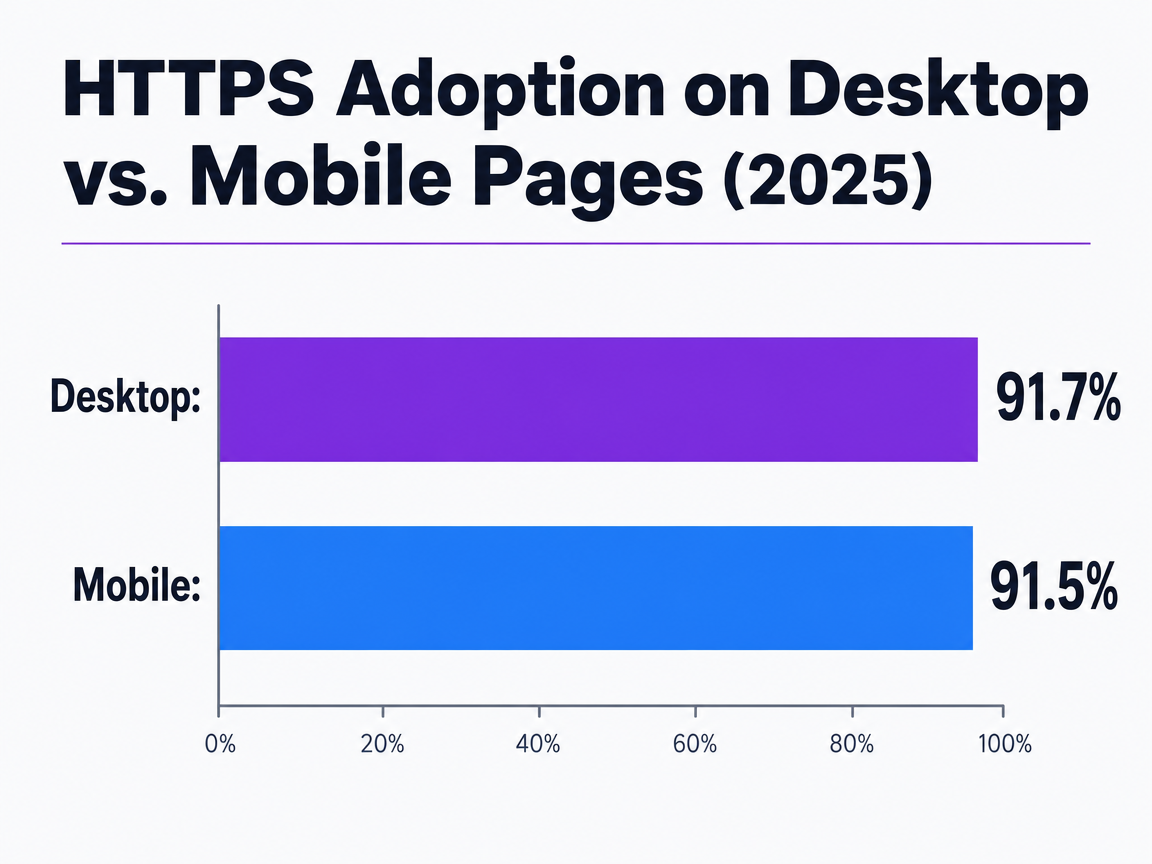 HTTPS Adoption on Desktop vs. Mobile Pages (2025)
Data from the 2025 Web Almanac showing the percentage of desktop and mobile pages served over HTTPS. Suitable for a bar chart comparison.
Content optimization: turning query data into briefs
Surfer: on-page optimization tied to SERP structure
Surfer's job in an agency stack is narrow and worth paying for: it turns a target query into a structural brief grounded in what already ranks. Term coverage, heading depth, word count bands, and internal linking cues get pulled from live SERP data, which shortens the distance between a keyword export and a writable outline. Practitioner reviews covering 2026 tool stacks place it in the content-optimization slot alongside intent discovery and rank tracking, not as a substitute for either 13.
Where it pays off is production velocity across a portfolio. An analyst writing briefs for 15 clients cannot rebuild SERP analysis by hand for every target query, and Surfer collapses that step into a repeatable input. Where it fails is treating its score as an outcome. The score correlates with SERP-shaped drafts, not with what Search Console will eventually report as clicks and impressions 1. Use it as a brief accelerator, not a KPI.
Clearscope: editorial-grade content grading for regulated verticals
Clearscope covers the same optimization job as Surfer but leans harder on editorial polish, which is why it lands on stacks servicing legal, healthcare, and financial clients where copy has to survive both a compliance review and a SERP. Its grading interface is built for editors and writers rather than SEO analysts, which reduces the handoff friction that burns hours in regulated verticals.
The operational trade-off is straightforward. Clearscope costs more per document than Surfer and offers less workflow tooling around SERP structure, but it produces briefs an in-house counsel or medical reviewer will actually approve without rewriting. For a Head of SEO running an editorial pipeline across 20+ accounts in high-stakes verticals, that acceptance rate is the metric that matters, and it does not show up in any ranking report 13.
AI-search visibility: the measurement surface most stacks are missing
Search Console's generative AI performance report
The generative AI performance report is the first authoritative measurement surface for AI-search visibility, and it landed inside Search Console rather than a paid platform. It tracks impressions, pages, countries, devices, and dates for URLs surfaced in AI Overviews and AI Mode, treating those as distinct search features rather than folding them into standard organic reporting 4. For portfolio leads, that separation is the point: a client whose blue-link clicks fell 12% quarter-over-quarter may be gaining or losing impressions inside AI features, and the two trends require different responses.
The operational implication is direct. Any 2026 client report that omits the generative AI surface is reporting on a shrinking share of the SERP. The report inherits the same 24-hour view and hourly graphs added to Search Console's Performance report, so shifts after a publish or template change show up with only a few hours of delay 3. Add it to the standard reporting template alongside Performance and Insights 2, not as a separate deliverable.
Profound and Peec AI: third-party attempts at AI citation tracking
Third-party platforms like Profound and Peec AI have started building the layer Search Console does not: tracking whether a client's brand or URLs get cited across ChatGPT, Perplexity, Gemini, and Claude responses. The 2026 technical-SEO comparison is blunt about the maturity gap. No mainstream tool directly measures AI citation rates yet, and the category is still forming around sampled prompts and inferred visibility rather than first-party data feeds from the LLM providers 11.
The honest read for portfolio work: treat these platforms as directional signal, not source of truth. They surface which prompts trigger a client's inclusion, which competitors dominate specific query patterns, and where content gaps sit against LLM-preferred sources. That is useful for editorial prioritization. Reporting AI citation share as a client KPI, with the same confidence as GSC clicks, invites the same defense problem that estimated organic traffic already creates. Sample it monthly, brief on it, do not headline it.
See How Leading Agencies Streamline SEO Ranking Analysis Across All Clients
Request a walkthrough of unified workflows that consolidate SEO ranking data, automate reporting, and enable oversight at scale—purpose-built for agencies managing high client volumes.
Orchestration: what happens after the data comes in
Looker Studio: consolidating GSC, GA4, and rank data into client reports
Looker Studio is where the measurement stack becomes a report. It connects natively to Search Console and GA4, and it accepts rank-tracker exports through their APIs, which lets a single template render queries, sessions, conversions, and positional data for every client property on one canvas. The practitioner framing carries directly into the build: GSC for queries and SERP truth, GA4 for users after the click, and third-party trackers for local SERP shifts, all reconciled in one view 14.
For portfolio leads, the operational payoff is template reuse. One well-built Looker Studio template, fed by the Search Analytics API 8and a GA4 property connector 6, eliminates the assemble-a-deck step across a 20-client book. The failure mode is treating Looker Studio as analysis. It renders; it does not decide. What the client actually pays for happens after the dashboard loads.
Vectoron: approval-first execution on top of the measurement stack
The orchestration gap most agency stacks share is not reporting; it is the distance between a dashboard flagging a drop and approved work shipping against it. GSC surfaces a query cluster losing impressions 1, GA4 confirms the conversion path degraded 6, the rank tracker shows two competitors overtook the page 9, and then an analyst spends three days assembling a brief, routing it, and chasing sign-off.
Vectoron sits on top of that stack as an execution layer. Specialist strategists read the same GSC, GA4, and rank data agencies already pull, rank the interventions by expected impact, and route each recommendation through a Command Center where the Head of SEO approves or rejects before anything ships. The measurement tools stay in place. What changes is how quickly signal becomes approved output across a portfolio.
If you manage a 20+ client portfolio: the consolidation economics
Portfolio scope changes the math. A stack that works fine for one in-house team burns margin when it multiplies across 20, 30, or 50 client accounts. The question stops being which tool has the best features and becomes which tools earn their seat cost per account, and which jobs can be consolidated without losing signal.
The 2026 technical-SEO comparison lays out pricing tiers for the major platforms, with Google Search Console at zero, Screaming Frog on a per-seat license, and Semrush and Ahrefs on subscription tiers that scale with users and projects 11. Stacking a rank tracker, a crawler, and a content-optimization tool per client account is defensible; stacking two rank trackers or two crawlers is where margin quietly leaves.
| Tool category | Role per client | Standardization across 20+ accounts | GSC/GA4 integration cost ||---|---|---|---|| First-party data (GSC, GA4) | Truth source for queries, clicks, conversions | High — same schema every account 8| Native || Rank tracking | Competitive SERP positions 9| Medium — seat + project caps | API export required || Technical crawl | Indexation, schema, canonicals 11| Medium — per-seat license | Manual reconciliation || Content optimization | SERP-shaped briefs 13| Low — per-document cost | Loose coupling || AI-search visibility | AI Overviews/Mode impressions 4| High inside GSC; low outside | Native for GSC report || Orchestration | Reporting + approved execution 14| High if templated | Direct connectors |
The consolidation move that pays back fastest is collapsing four reporting tools into one templated layer fed by the GSC API 8, then keeping the specialist tools narrow.
How core updates and volatility should change tool usage
Core updates expose which tools in a stack are calibrated for signal and which are calibrated for noise. Google's own guidance is explicit: wait until at least a week after a broad core update finishes rolling out before drawing conclusions from Search Console data 7. Rank trackers pulling daily positional shifts during the rollout will show volatility that looks like a problem and often isn't.
The practical protocol for portfolio work: freeze diagnostic conclusions during the rollout window, but keep instrumentation running. The 24-hour Performance view catches template or publish issues that coincidentally landed mid-update and would otherwise get blamed on the algorithm 3. After the rollout completes, GSC's query-level Performance data becomes the anchor for what actually moved, and rank-tracker data provides the competitive context for which URLs took the position share 9. Reporting a client's core-update impact from rank-tracker screenshots taken on day three is how agencies talk themselves into remediation work the data doesn't support.
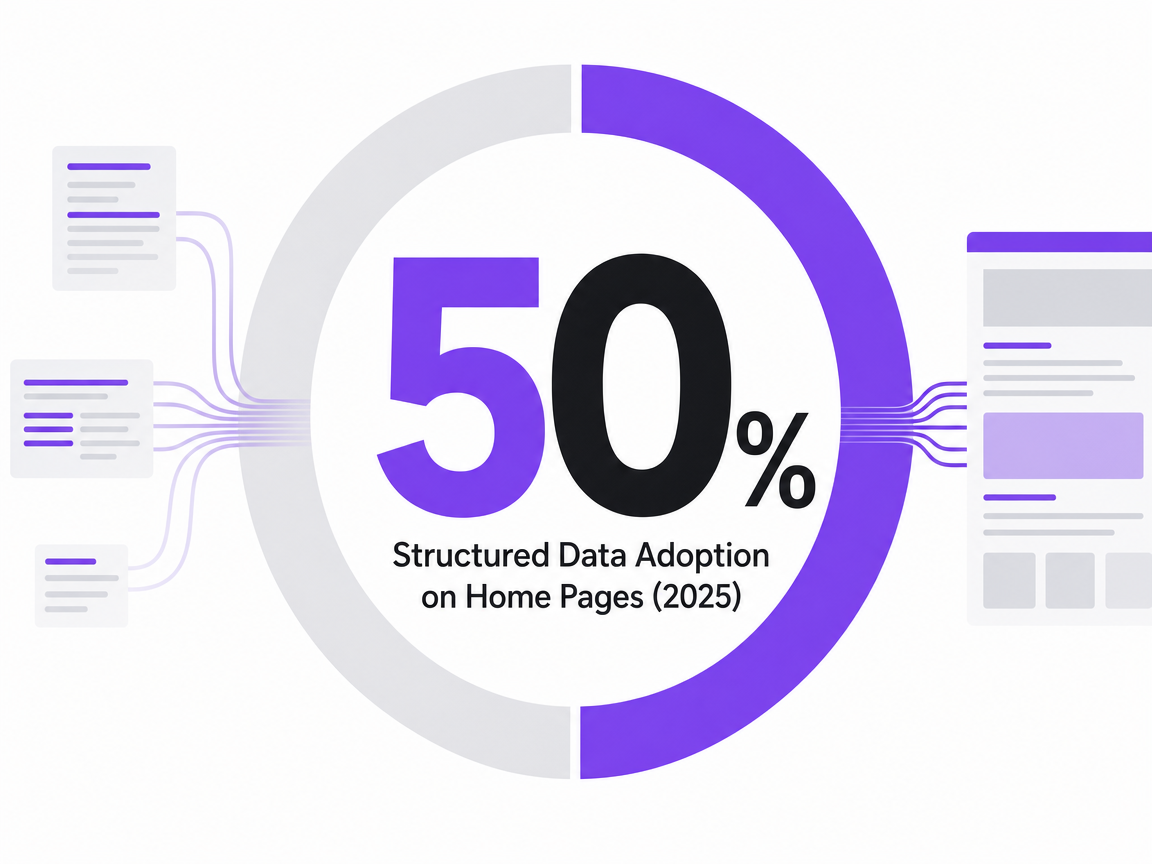 Structured Data Adoption on Home Pages (2025)
Structured Data Adoption on Home Pages (2025)
Frequently Asked Questions
References
- 1.How To Use Search Console.
- 2.The new Search Console Insights report is here.
- 3.An improved way to view your recent performance data in Search Console.
- 4.Introducing Search Generative AI performance reports in Search Console.
- 5.SEO | 2025 | The Web Almanac by HTTP Archive.
- 6.Using Search Console and Google Analytics Data for SEO.
- 7.Google Search's Core Updates.
- 8.Query your Google Search analytics data.
- 9.Google Search Console Keyword Ranking vs Ranking Tools.
- 10.Google Search Console: Free SEO insights straight from Google’s index.
- 11.Technical SEO Tools Comparison: Auditing for Search and AI Visibility.
- 12.Google Search Console vs Ahrefs Webmaster Tools.
- 13.24 best SEO tools I'm using in 2026 (free + paid).
- 14.Best Ways to Combine GSC, GA4, and Third-Party Tools for True SEO Insight.