
Key Takeaways
- Treat discoverability as a gate, not a deliverable—accounts failing crawl, canonical, sitemap, or Search Console checks will not respond to content investment no matter how much senior time is spent 7.
- Build content for scanning behavior instead of word-count targets, front-loading answers under literal headings so juniors can produce pages that convert on structure rather than prose polish 8.
- Diversify across the ranking systems Google runs in parallel by mapping each client's query mix to local, informational, transactional, and news surfaces during intake 3.
- Ship structured data as a validated sequence—JSON-LD against Google's Search docs, Rich Results Test, Schema Markup Validator, deploy, sitemap push—because sloppy markup fails silently 5, 6.
- Anchor site architecture to crawl, index, understand in that order, resolving duplicate URLs, canonicals, and internal anchors before assuming content is the problem 2, 7.
- Use the Search Quality Rater Guidelines as a diagnostic review lens, not a checklist, since rater judgments are not direct ranking inputs and E-E-A-T is not a factor to optimize 12, 13.
- Templatize repeatable work like audits, page structure, and schema deployment, then route only schema-type selection, consolidation calls, and pre-publish review to senior strategists 7.
- Run delivery as a governed loop of signal, ranked recommendation, human approval, execution, and KPI feedback so approvals take minutes and nothing ships without senior sign-off 2.
Why Pipeline Predictability Is a Systems Problem, Not a Tactics Problem
Most agencies do not lose clients because their SEO tactics are wrong. They lose clients because pipeline goes flat between quarters, and no one on the delivery team can explain why one account compounds while another stalls. The tactics are usually fine. The system around them is not.
Google's own documentation quietly makes this point. The Search Essentials framework rests on three pillars—technical requirements, spam policies, and key best practices—and states that meeting the requirements still does not guarantee crawling, indexing, or serving 1. The Starter Guide is blunter: there are no secrets to automatic rankings, only practices that help search engines crawl, index, and understand content 2. Neither document reads like a tactics list. Both read like operating instructions for a system.
That reframing matters for agency leads managing five to fifty accounts. Predictable pipeline is not the output of any single strategy running well. It is the output of eight strategies running together, in the right order, with senior judgment applied at the decision points and junior execution handling the repeatable work. The rest of this piece treats those eight strategies as levers inside that system.
The Foundation Layer: What Google Actually Says Before Any Tactic Runs
Search is a durable channel because search behavior is durable. Pew's early 2012 survey of US adults found 91% of online adults used search engines and 59% used one on a typical day 11. That figure predates smartphones as the dominant device, predates zero-click SERPs, and predates AI-generated answers. It is not a claim about current traffic share. It is a floor: search as a daily habit was already a mainstream behavior more than a decade ago, which is why compounding organic investments still outperform channels that reset every quarter.
What sits underneath that channel is the layer most agency delivery skips over. Google's Search Essentials names three pillars—technical requirements, spam policies, and key best practices—and states that the main best practices are to create helpful, reliable, people-first content and to make links crawlable 1. The Starter Guide adds a warning that industry veterans still ignore: there are no secrets to automatic rankings, and several persistent tactics, including meta keywords targets and prescribed word counts, are explicitly dismissed as myths 2.
Two operational implications follow. First, an account that fails discoverability checks—blocked crawl paths, broken canonicals, missing sitemaps—will not respond to content investment no matter how much senior time gets spent on it. Second, the pillars are ordered. Technical requirements gate everything. Spam policy compliance gates trust. Best practices produce the compounding return. Agencies that run all three in parallel without sequencing them tend to see uneven results across a portfolio, because a subset of accounts is quietly failing the gate before the tactics ever get evaluated.
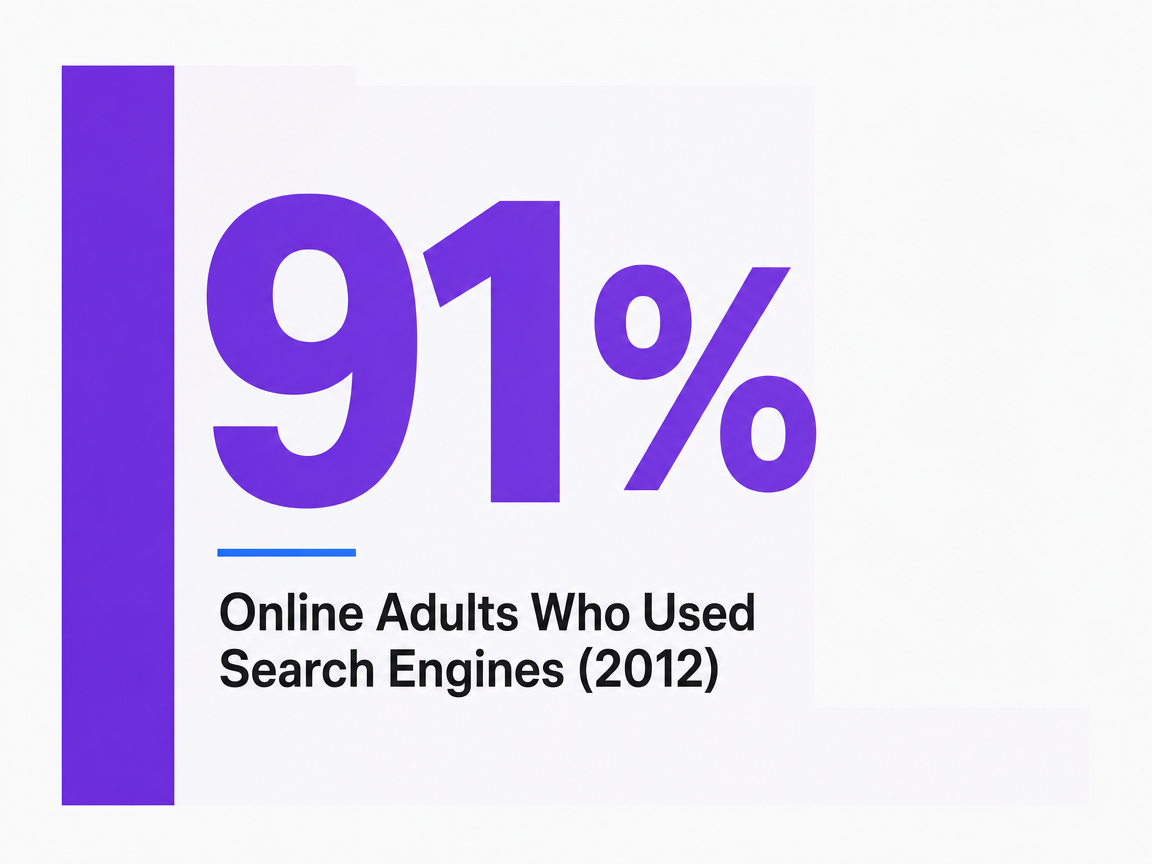 Online Adults Who Used Search Engines (2012)
Online Adults Who Used Search Engines (2012)
Strategy 1: Treat Discoverability as a Precondition, Not a Deliverable
Discoverability is not a line item on a client roadmap. It is the gate that decides whether anything else on that roadmap will produce return. Google's technical documentation names the levers explicitly: robots.txt, sitemaps, redirects, hreflang, structured data, mobile friendliness, HTTPS, and Search Console coverage 7. None of these are strategic in the sense a client would recognize. All of them determine whether strategic work gets seen.
The Starter Guide reinforces the point from a different angle. It states plainly that best practices help search engines crawl, index, and understand content, and that there are no shortcuts to automatic rankings 2. Agencies that skip a discoverability audit at the start of an engagement tend to spend the first two quarters producing content against a broken foundation, then blame algorithm volatility when pipeline fails to materialize.
Operationally, this means every new account should pass a fixed discoverability gate before any content or link investment is scheduled. The gate is short:
- crawl paths open
- canonicals resolving
- sitemap submitted
- HTTPS clean
- mobile rendering intact
- Search Console verified with coverage errors triaged
Accounts that fail the gate get remediation as the first billable deliverable, not content. Accounts that pass move into the compounding layer.
The reason this belongs first in the eight is unglamorous but decisive. Discoverability failures are silent. They do not surface as a ranking drop; they surface as an account that never gains traction, six months in, with no obvious cause. Treating the audit as a precondition removes that failure mode from the portfolio.
Strategy 2: Build Content for Scanning Behavior, Not Word-Count Targets
Word-count targets are a myth Google's Starter Guide explicitly dismisses 2. What actually shapes on-page performance is whether a scanner can extract the answer in the first few seconds. Nielsen Norman Group's eye-tracking research has documented for years that people rarely read online word for word; they scan, and they scan in predictable patterns that reward front-loaded answers, clear headings, and bulleted lists 8. That is a claim about web reading behavior, not a Google ranking factor. The distinction matters, because agencies that conflate the two end up defending page structure to clients on the wrong grounds.
The operational translation is straightforward. The first sentence under each heading states the answer. Supporting evidence follows. Headings are literal rather than clever, because a scanner uses them as a table of contents, not a tagline. Lists appear where the underlying information is genuinely enumerable, not as decoration.
For agency delivery, this is one of the highest-leverage templatable rules in the eight. A junior writer given a scanning-first structural spec produces pages that convert at roughly the same rate as a senior writer's, because the structural decisions—where the answer lives, how headings map to intent, what gets bulleted—are the ones that carry most of the conversion weight. Prose polish helps at the margin. Structure decides whether a scanner ever gets to the prose.
What this replaces is the recurring client conversation about word count. The correct target is not 1,500 or 2,500 words. It is the shortest page that resolves the query completely, structured so a scanner finds the resolution without reading linearly.
Test AI-powered SEO delivery at full scale
Experience live, publishable SEO campaigns with measurable results before making any commitment.
Strategy 3: Diversify Across Ranking Systems Instead of Chasing One
Google runs multiple ranking systems in parallel, each surfacing different result types depending on query and content 3. That single fact contradicts the way most agency roadmaps are built. A plan organized around one tactic—say, informational blog content aimed at featured snippets—optimizes for one system while leaving local packs, news surfaces, and product results untouched. Portfolios built that way produce spiky pipeline: strong quarters when the target system rewards the work, dead quarters when query mix shifts.
The Search Essentials framing supports the same conclusion from a different direction. Google names helpful content and crawlable links as the main best practices, then adds that meeting requirements does not guarantee crawling, indexing, or serving 1. Read alongside the ranking-systems documentation, the implication for delivery is that content coverage should map to the query types a client actually receives, not to whichever tactic the strategist prefers.
Operationally, an account plan should name which ranking surfaces matter for that client—local, informational, transactional, news-adjacent—and allocate production against each. Agencies that run this mapping in intake stop discovering, two quarters in, that half the client's demand lives on a surface no one built for.
Strategy 4: Ship Structured Data as a Validated Workflow, Not a One-Off
Structured data is one of the few SEO deliverables where sloppy execution produces silent failure. Markup either parses and enables richer search appearances, or it does not, and the page reverts to a plain result without any error surfacing to the client. That failure mode is why schema belongs inside a repeatable workflow, not as a one-time deployment task assigned to whichever developer has capacity.
Google's structured data documentation names JSON-LD as the recommended format and states clearly that Search documentation, not schema.org alone, is the definitive source for how markup behaves in Google Search 4. Practitioners who validate against schema.org and skip the Search-specific requirements ship markup that passes generic validation and still fails to produce rich results. The distinction is not academic; it decides whether the work compounds.
The validation stack Google publishes has two tools with different jobs. The Rich Results Test confirms eligibility for specific rich-result features. The Schema Markup Validator handles generic schema validation 5. Both belong in the workflow, in that order. The dataset structured data guidance goes further and instructs teams to use the Rich Results Test and then update the sitemap to keep Google informed of changes 6. That sitemap step is the one agency delivery skips most often, and it is why deployed markup sometimes takes weeks to surface.
For a portfolio, the operational form is a fixed sequence:
- author JSON-LD against Google's Search documentation
- run the Rich Results Test
- run the Schema Markup Validator
- deploy
- push the sitemap update
A junior can execute the sequence. A senior reviews only the schema-type selection and the field mapping, which are the decisions that carry judgment.
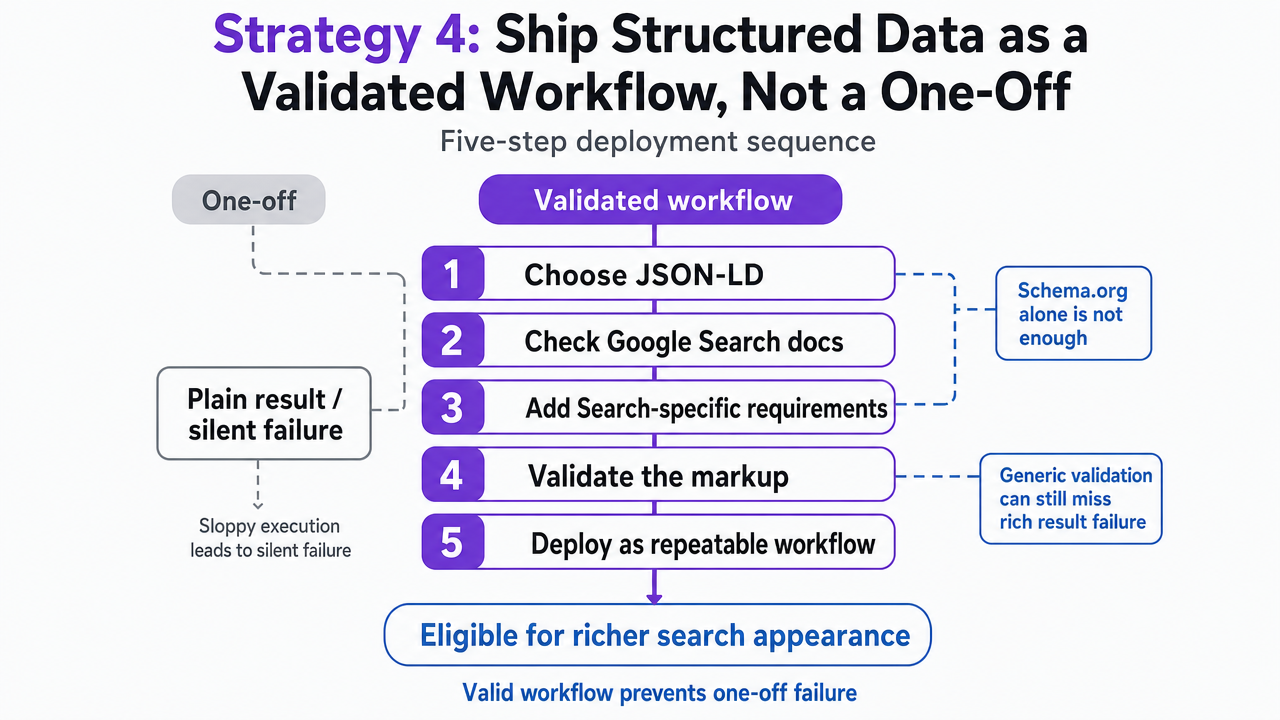 Visualize the cited five-step structured data deployment sequence explicitly described in this section
Strategy 5: Anchor Site Architecture to Crawl, Index, Understand
Site architecture is where most agency audits stop at diagnosis and never reach prescription. The three verbs in Google's Starter Guide—crawl, index, understand—are the only architectural test that matters, and they run in that order 2. A URL that cannot be crawled will not be indexed. A URL that is indexed but not understood will not rank for the queries the client actually cares about.
The technical documentation names the levers that decide each stage:
- robots.txt and sitemaps govern crawl access
- redirects and canonicals govern index consolidation
- internal linking with descriptive anchors plus structured data governs understanding 7
Most portfolio-level architecture problems live in the second stage. Duplicate URLs from faceted navigation, inconsistent trailing slashes, and orphaned pages left over from prior migrations quietly dilute index signals across accounts that otherwise look healthy.
For delivery, this collapses to a repeatable review. Map the site's URL patterns, confirm each pattern resolves to one canonical, verify internal links use descriptive anchors that reinforce topical meaning, and check that the sitemap reflects only indexable URLs. Junior specialists can run the map. Senior judgment decides which URL patterns deserve consolidation versus preservation.
Strategy 6: Use Quality Signals the Way Raters Do, Not the Way Gurus Claim
The quality conversation in SEO circles has drifted into folk taxonomy. E-E-A-T gets treated as a checklist of ranking factors, when Google's Starter Guide dismisses that framing outright and states there are no secrets to automatic rankings 2. The correction is worth making early: rater ratings are not direct ranking inputs. The Search Quality Rater Guidelines exist to help human raters evaluate result quality at scale, and the published overview is dated November 2023 12. What raters produce is feedback on whether Google's systems are surfacing useful results, not a scoring rubric that agencies can reverse-engineer.
That distinction changes what quality work should look like in a delivery system. The full General Guidelines describe how raters assess relevance and usefulness across queries 13, and the operational read is that quality signals are diagnostic, not prescriptive. Agencies that build content against a rater checklist tend to over-invest in author bios, credential displays, and disclosure boilerplate while under-investing in whether the page actually resolves the query.
The better use of the rater framework is as a review lens. Before publish, a senior strategist asks the questions a rater would ask: does this page match the query's intent, is the information reliable and current, is the source identifiable. Those questions catch the quality failures that matter. Chasing E-E-A-T as a factor does not.
See How Leading Agencies Automate SEO Strategy Without Adding Headcount
Request a walkthrough of AI-powered workflows that enable multi-client SEO delivery with measurable pipeline impact—no added staff, no loss of oversight. Designed for agencies and enterprise teams managing high-volume programs.
Strategy 7: Templatize the Repeatable, Reserve Senior Judgment for the Rest
The bottleneck in agency SEO delivery is almost never junior throughput. It is senior review time spread across too many decisions, most of which do not require senior judgment. The fix is to draw a hard line between what templatizes cleanly and what does not, then staff each side of the line differently.
What templatizes:
- Discoverability audits against the technical checklist Google publishes—robots.txt, sitemaps, redirects, hreflang, structured data checks, HTTPS, mobile rendering, Search Console coverage 7.
- Scanning-first page structure, where the first sentence under each heading resolves the query and headings function as a table of contents 8.
- Structured data deployment sequences, where JSON-LD is authored against Google's Search documentation, validated with the Rich Results Test and Schema Markup Validator, then followed by a sitemap push 5.
- Internal linking audits that confirm descriptive anchors and one canonical per URL pattern.
What does not templatize:
- The initial mapping of a client's query mix to the ranking surfaces that actually matter for that account 3.
- Schema-type selection and field mapping, where the wrong choice ships silently.
- The pre-publish quality review that asks whether a page resolves intent, whether the source is identifiable, and whether the information is current 13.
- Consolidation decisions on which URL patterns to preserve versus collapse.
The operational discipline is to write the templates once, keep them versioned, and route only the judgment-heavy decisions to senior review. That is what makes the ratio of accounts per strategist a lever instead of a ceiling.
Strategy 8: Run Delivery as a Governed Production Loop
The seven strategies above describe what to do. The eighth describes how to run them without the wheels coming off at fifteen accounts. Delivery has to be a governed loop, not a to-do list distributed across specialists.
The loop has four stages:
- Signal — from the data an account actually produces: Search Console coverage, ranking-system exposure across query types 3, structured data validation status 5, and the discoverability checks Google names as core technical levers 7.
- Ranked recommendation — translate those signals into a prioritized queue: which account needs remediation before content, which needs schema deployment, which is ready for the next content wave.
- Human approval — where senior judgment gates the decisions that cannot be templatized: schema-type selection, consolidation calls, pre-publish quality review 13.
- Execution — runs the approved work against the templates.
KPI feedback closes the loop by feeding outcome data back into the next round of signals.
Two properties make the loop governable at scale. First, nothing ships without approval, which keeps senior strategists in control of the decisions Google's own guidance says have no shortcuts 2. Second, every recommendation carries the reasoning behind it, so approvals take minutes instead of meetings. That is the difference between a strategist governing five accounts and one governing twenty-five.
If You Manage Multi-Location Service Clients: The Pipeline Math Changes
Where Senior Strategist Hours Actually Go Across Locations
The audience shift here is deliberate. Agencies serving single-site clients can absorb inefficiency in the delivery loop; agencies serving multi-location service verticals—law firms with regional offices, DSOs, home services franchises, senior living operators, healthcare networks—cannot. The pipeline math compounds with location count, and so does the hidden cost of ungoverned strategist time.
Senior hours on a multi-location account do not distribute evenly. A disproportionate share goes to three activities:
- mapping each location's query mix against the ranking surfaces Google actually uses 3
- resolving canonical and hreflang decisions across near-duplicate location pages 7
- pre-publish quality review on location-specific content that junior specialists cannot fully judge 13
Everything else on the account—discoverability audits, schema deployment, internal linking checks—templatizes. The senior time gets consumed by the judgment work, or it gets consumed by review debt that piles up when junior output ships without governance.
A Variables-Based View of Governance Ratio
The right way to size a multi-location engagement is not by retainer bands. It is by variables that determine how many accounts one senior strategist can govern. Four variables carry most of the weight:
| Variable | What it measures | Why it drives governance ratio |
|---|---|---|
| Locations per client | Count of distinct physical or service-area pages requiring unique content and schema | Each location multiplies discoverability and structured data validation work 5 |
| Pages per location | Service pages, practitioner pages, and localized content per site | Determines templatable output volume versus judgment-requiring pages |
| Senior hours per location per month | Time spent on query-mix mapping, canonical decisions, and pre-publish review | The only line item that does not templatize 2 |
| Approval workflow type | Manual briefing cycles versus ranked recommendations with reasoning attached | Decides whether approvals take minutes or meetings |
The ratio a senior strategist can govern is the fourth variable operating on the first three. A manual briefing workflow keeps the ratio low regardless of tooling. An approval-first workflow, where every recommendation ships with the reasoning behind it, is what makes twenty-five accounts governable by one strategist instead of five.
How the Eight Strategies Fit Together in One Delivery System
The eight strategies do not sit side by side on a checklist. They stack. Discoverability gates everything. Site architecture decides whether indexed pages get understood. Scanning-first structure and diversified ranking-surface coverage decide whether understood pages convert. Structured data and quality review sharpen the signal Google receives. Templatization and the governed loop decide whether any of it survives at scale.
Ordered that way, the delivery system produces predictability because failure modes surface early. Accounts that fail the discoverability gate get remediation before content spend, not after two quarters of stalled traction 2. Accounts that pass move into templatized production against Google's core technical levers 7, with senior judgment routed only to the decisions that cannot be encoded—schema-type selection, consolidation calls, query-mix mapping across ranking surfaces 3, and pre-publish review 13.
That is what turns senior strategist time from a ceiling into a lever. Platforms like Vectoron are built around this approval-first model, where ranked recommendations arrive with reasoning attached and execution follows sign-off. The eight strategies are the content of the loop. The loop is what makes them repeatable.
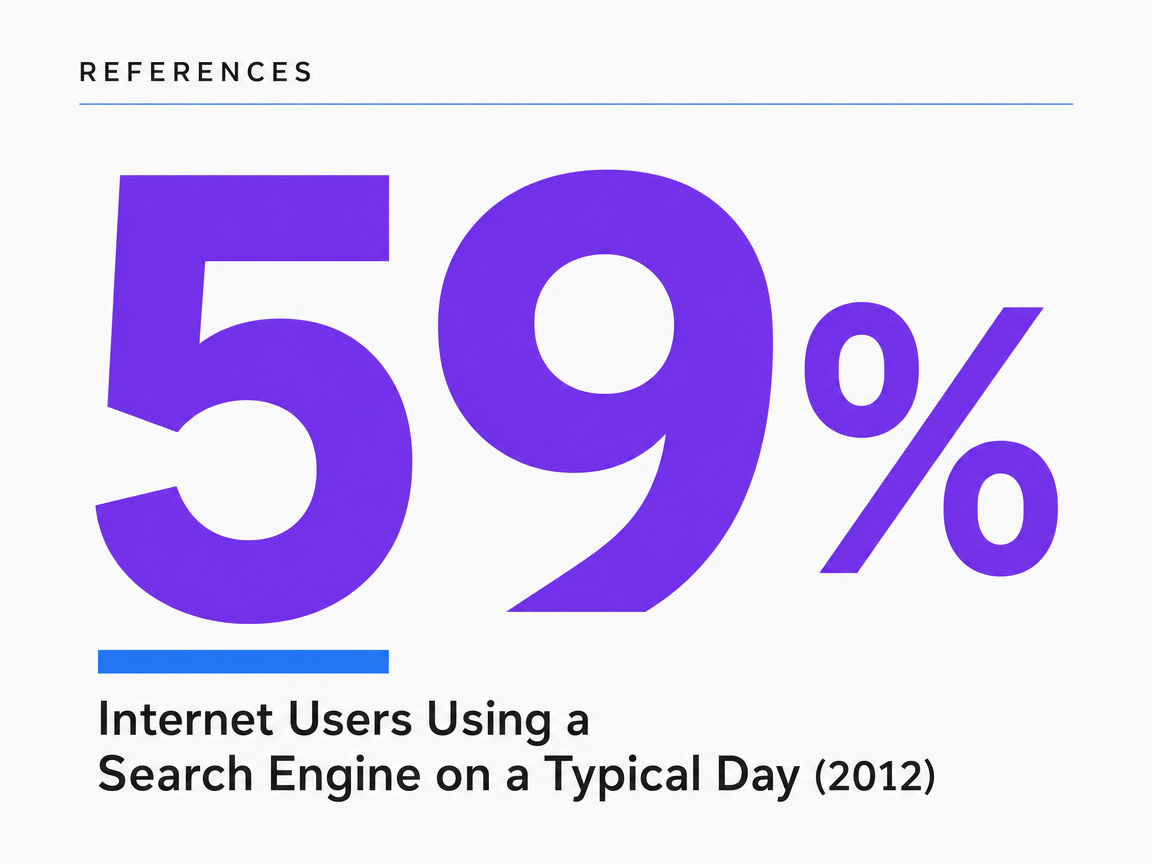 Internet Users Using a Search Engine on a Typical Day (2012)
Internet Users Using a Search Engine on a Typical Day (2012)
Frequently Asked Questions
References
- 1.Google Search Essentials (formerly Webmaster Guidelines) | Google Search Central | Documentation | Google for Developers.
- 2.Search Engine Optimization (SEO) Starter Guide.
- 3.A Guide to Google Search Ranking Systems.
- 4.Introduction to structured data markup in Google Search.
- 5.Schema Markup Testing Tool | Google Search Central | Google for Developers.
- 6.Dataset Structured Data | Google Search Central.
- 7.Technical SEO Techniques and Strategies.
- 8.How People Read Online: New and Old Findings.
- 9.How People Read Online: The Eyetracking Evidence.
- 10.Search Engine Use.
- 11.Search Engine Use 2012.
- 12.Search Quality Rater Guidelines: An Overview.
- 13.General Guidelines.