
Key Takeaways
- The category-definition explainer nominates a vendor as front-runner before the shortlist forms, targeting the champion who has to name the category in a first stakeholder conversation.
- The point-of-view teardown of a competing approach forces a defensible position on evidence, giving answer engines something specific to cite and skeptics a reason to reject the incumbent path.
- The 'what to look for' evaluation framework arms the evaluation lead with a disciplined rubric of six to nine criteria that gets pasted into internal scoring docs.
- The internal-benchmark self-assessment converts a passive read into a scored artifact the operator can carry into a budget conversation with category-specific language attached.
- The cross-functional business case template hands the champion a fill-in-the-blank artifact for the 13 internal stakeholders and 9 external influencers documented in Forrester's survey 5.
- The stakeholder-specific answer piece is written for one role's vocabulary and workflow, earning quotation in role-specific answer-engine queries that generic overviews lose.
- The self-serve comparison guide matches how Millennial and Gen Z buyers, now 64% of manager-and-up roles, actually research, with honest side-by-side tables including losses 7.
- The distributed-proof roundup curates external analysts, practitioners, and named customers into cited, attributed sources that answer engines prefer when deciding what to quote.
- The procurement-ready implementation cost breakdown answers license, onboarding, ramp, and exit questions procurement now asks earlier in the buying process 10.
- The trial and pilot design guide walks evaluation leads through scope, metrics, and go/no-go criteria, addressing the trials Forrester ties to procurement's risk-reduction push 10.
- The named customer story handled to FTC standard discloses material connections on the page itself, meeting the revised Endorsement Guides in effect since July 26, 2023 1, 3.
- The front-runner defense FAQ answers the hardest late-stage objections on the record, either holding a lead position or giving the buying network reasons to reopen the shortlist.
Why the old blog-idea list stopped producing pipeline
The standard blog-idea list was built for a buyer who opened a search engine, clicked three blue links, and read vendor sites end-to-end. That buyer is now a minority. Forrester's 2025 buyer survey found that 94% of B2B buyers used AI somewhere in their purchase process, and twice as many buyers named generative AI or conversational search as their most meaningful information source compared with any other single source, including analyst content, peer communities, and vendor websites 6. The study measured self-reported source influence during active purchase cycles, not casual browsing, which makes the shift harder to dismiss as early-adopter noise.
A blog post now has two audiences. The first is the human reader who may or may not arrive through a click. The second is the answer engine that decides whether to quote, summarize, or ignore the page when a buyer asks a research question. Topics selected for broad awareness volume tend to lose both audiences: they are too generic to be quoted with attribution and too shallow to move a buying committee.
The twelve archetypes in this article are chosen against that reality. Each one targets a specific behavior documented in current buyer research, from front-runner preference to procurement-led risk review. None of them are brainstormed. Each carries a headline pattern, a target stakeholder, and a pipeline signal a content manager can defend in a quarterly review.
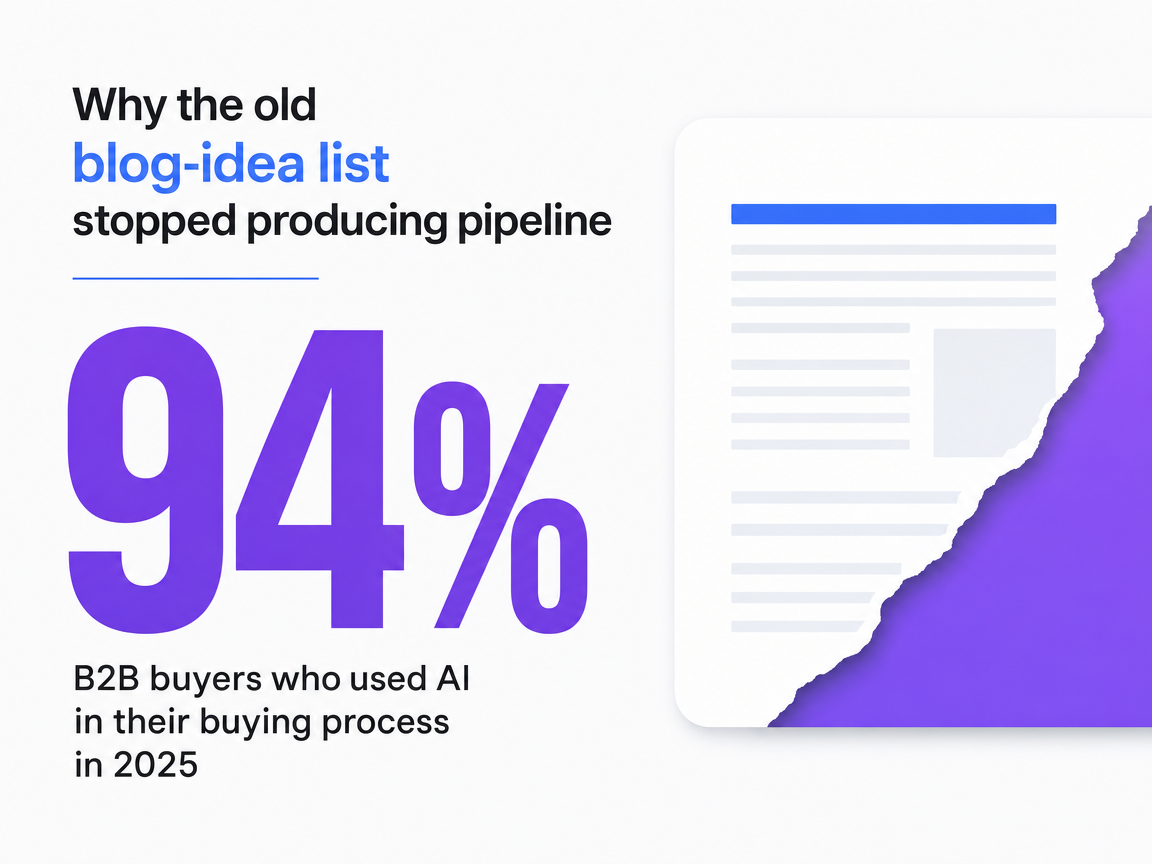 B2B buyers who used AI in their buying process in 2025
B2B buyers who used AI in their buying process in 2025
How the twelve archetypes are organized
Forrester's buying-networks framing treats a B2B purchase as a distributed decision made across internal departments, external advisors, and AI research tools rather than a single buyer moving through a funnel 4. The twelve archetypes below map to three jobs that content has to do inside that network.
The first tier, four archetypes for building category preference, targets the pre-vendor stage where a front-runner gets chosen. The second tier, four archetypes for arming the buying network, produces content that internal champions can forward, procurement can cite, and answer engines can quote when a stakeholder asks a stage-specific question. The third tier, four archetypes for reducing late-stage risk, addresses the trials, cost breakdowns, and proof that Forrester's 2026 buying research ties to procurement's expanding role 10.
Each archetype below carries the same four fields: a headline pattern a writer can copy, the primary keyword shape it targets, the buying-network stakeholder it is written for, and the pipeline signal a content manager should measure. Read it as a portfolio to allocate against, not a checklist to complete in order.
Four archetypes that build category preference
The category-definition explainer
Preference gets set long before an RFP. Forrester found that 68% of B2B buyers already have a front-runner vendor in mind at the start of the purchasing process, and that front-runner wins 80% of the time, based on its 2025 buyers' journey survey of active purchase decisions 11. Category-definition content is how a vendor gets nominated for that front-runner slot before the buyer has named the shortlist.
The archetype answers one question: what is this category, what problem does it solve, and how is it different from the adjacent categories a buyer might confuse it with.
- Headline pattern: "What is [category], and how it differs from [adjacent category]."
- Primary keyword shape: definitional queries and "[category] vs [adjacent category]."
- Target stakeholder: the internal champion who has to name the category in a first stakeholder conversation.
- Pipeline signal: assisted conversions on branded and category-plus-brand searches within 60 days of publication.
The point-of-view teardown of a competing approach
A teardown takes a widely used approach in the category, names it, and argues on evidence why it underperforms an alternative. It is not a competitor hit piece. It is a structured critique of a method, a workflow, or a legacy model that the reader has probably tried.
The teardown works because it forces a position. Answer engines quote pages that make an argument with sources; broad overviews get summarized and stripped of attribution. A page that says "the retainer-and-brief model produces X hours of coordination overhead per article, here is the measurement, here is the alternative" gives an answer engine something specific to cite.
- Headline pattern: "Why [common approach] underdelivers for [reader role], and what to do instead."
- Primary keyword shape: "[approach] problems," "[approach] vs [alternative]."
- Target stakeholder: the skeptic on the buying committee looking for reasons to reject the incumbent path.
- Pipeline signal: scroll depth above 70% and demo requests attributed to the URL.
The 'what to look for' evaluation framework
Buyers building their own shortlist need a rubric. The evaluation-framework archetype gives them one, structured around the criteria the category should actually be judged on rather than the feature list a specific vendor happens to lead with. Done well, it becomes the checklist a champion pastes into an internal doc.
The writing discipline here is restraint. A framework that lists 40 criteria reads as feature stuffing. A framework that names six to nine criteria, defines each, and explains why the criterion matters in operational terms gets forwarded. Include at least two criteria the reader would not have thought of on their own; that is what earns the page its authority.
- Headline pattern: "How to evaluate [category] platforms: the [N] criteria that matter."
- Primary keyword shape: "how to choose [category]," "[category] evaluation criteria."
- Target stakeholder: the evaluation lead building a scoring matrix.
- Pipeline signal: downloads of any companion scorecard and returning-visit rate on the URL.
The internal-benchmark self-assessment
The self-assessment archetype gives readers a way to score their current state before they ever compare vendors. It could be a maturity model, a diagnostic quiz, or a scored checklist. What matters is that the reader finishes it with a number, a tier, or a gap list attached to their own operation.
Self-assessments earn pipeline because they convert a passive read into a documented internal artifact. A content manager who scores 42 out of 90 on a content-operations maturity assessment now has language to bring to a budget conversation. That language tends to include the category name and, if the assessment is written honestly, the class of solution that closes the identified gaps.
- Headline pattern: "The [category] maturity assessment: score your current [function]."
- Primary keyword shape: "[function] maturity model," "[function] assessment."
- Target stakeholder: the operator who has to justify a project internally.
- Pipeline signal: assessment completions and follow-on visits to pricing or comparison pages.
Test High-Intent Blog Ideas With Real Publishing
Experiment with live content production and measure SEO impact directly in your workflow before committing.
Four archetypes that arm the buying network
The cross-functional business case template
The champion who wants to buy is rarely the person who signs. Forrester's 2025 buyers' journey survey found that 73% of B2B purchases involve three or more departments, with an average of 13 internal stakeholders and 9 external influencers weighing in on a single decision 5. The survey measured active purchase cycles, not hypothetical org charts, which means those 22 people actually left fingerprints on the deal.
A business case template gives the champion a document to walk into that room with. The archetype is not a whitepaper. It is a fill-in-the-blank artifact: problem statement, current-state cost, proposed-state cost, risk register, and a stakeholder objection table with pre-written responses for finance, IT, legal, and operations.
- Headline pattern: "The [category] business case: a template for [reader role] presenting to [approving body]."
- Primary keyword shape: "[category] business case," "[category] ROI template."
- Target stakeholder: the internal champion assembling the buy-side coalition.
- Pipeline signal: template downloads matched to accounts that later enter opportunity stage within 90 days.
The stakeholder-specific answer piece
Broad overviews assume one reader. A stakeholder-specific piece assumes the opposite: it is written for one role in the buying network, uses that role's vocabulary, and answers the question that role actually asks. A finance-focused piece on the same category reads nothing like the IT-security piece, even when the underlying product is identical.
Answer engines reward this specificity. A page titled "What [category] means for the CFO's monthly close" gets quoted in a query about CFO impact; a general "benefits of [category]" page gets summarized and stripped of the vendor name.
- Headline pattern: "[Category] for [stakeholder role]: what changes in [their specific workflow]."
- Primary keyword shape: "[category] for [role]," "[role] guide to [category]."
- Target stakeholder: named by title in the headline.
- Pipeline signal: role-matched traffic segments, measured through form-fill job-title data or LinkedIn ad audiences retargeted from the URL.
The self-serve comparison guide for digital-native buyers
Younger buyers are now the majority of the room. Forrester reported that 64% of B2B buyers at manager level and above were Millennials or Gen Z in 2025, based on its survey of active purchase decisions across manager-and-up roles 7. That cohort researches independently, expects side-by-side comparison tables, and treats a request-a-demo wall as a signal to look elsewhere.
The self-serve comparison guide names three to five real alternatives, including the reader's likely incumbent, and compares them on criteria the buyer already cares about. The discipline is honesty about where the publishing brand loses, not just where it wins. A comparison that never shows a weakness gets ignored by both readers and answer engines.
- Headline pattern: "[Category] platforms compared: [Vendor A] vs [Vendor B] vs [Vendor C] for [use case]."
- Primary keyword shape: "[vendor] vs [vendor]," "best [category] for [use case]."
- Target stakeholder: the self-serve evaluator building a shortlist without sales help.
- Pipeline signal: outbound clicks to competitor pages and return visits within 14 days.
The distributed-proof roundup with external voices
External voices carry weight the brand cannot generate on its own. Forrester's 2025 predictions estimated that more than 50% of younger B2B buyers would rely on external sources, including social media and their value network, to make buying decisions 8. The prediction reflected survey work on buyer information sources during active purchase cycles, not passive brand awareness.
A distributed-proof roundup collects those external voices into one page: independent analysts, practitioner posts, community threads, industry survey data, and named customers speaking in their own words. The brand's job is curation and synthesis, not narration. Each external source is quoted, attributed, and linked, which is exactly the structure answer engines look for when deciding what to cite.
- Headline pattern: "What [role] are actually saying about [category]: [N] sources, one summary."
- Primary keyword shape: "[category] reviews," "is [category] worth it."
- Target stakeholder: the skeptic seeking non-vendor validation before recommending internally.
- Pipeline signal: time on page above 3 minutes and downstream visits to a case study or pricing URL.
Four archetypes that reduce late-stage risk
The procurement-ready implementation cost breakdown
Procurement now sits inside the buying network earlier and with more authority than most content plans assume. Forrester's 2026 review of business buying found that buying groups are becoming larger and more collaborative, procurement is more influential, and trials are increasingly essential to reduce purchase risk, based on its 2025 Buyers' Journey Survey of active B2B decisions 10. A vague pricing page does not survive that review.
The implementation cost breakdown archetype answers the questions procurement actually asks:
-
What is the license or subscription cost, and how does it scale with usage or seats.
-
What internal hours are required for onboarding, integration, and change management.
-
What is the ramp period before the operation sees measurable output.
-
What is the exit cost.
-
Headline pattern: "What [category] actually costs to implement: a line-item breakdown for [buyer role]."
-
Primary keyword shape: "[category] cost," "[category] implementation cost."
-
Target stakeholder: procurement and the finance approver reviewing the champion's business case.
-
Pipeline signal: page visits from accounts already in an open opportunity stage.
The trial and pilot design guide
Trials have moved from nice-to-have to expected. The same Forrester 2026 report ties the growing use of trials directly to procurement's push for risk reduction on larger, more collaborative buying decisions 10. A buyer who cannot design a defensible pilot often defaults to the incumbent, which is why this archetype earns its slot.
The guide walks the reader through pilot scope, success metrics, timeline, stakeholder responsibilities, and the exit criteria that convert a pilot into a rollout or a clean walk-away. It names the traps:
-
Pilots scoped so narrowly they cannot prove value.
-
Pilots run without a control comparison.
-
Pilots evaluated by the wrong stakeholder.
-
Headline pattern: "How to design a [category] pilot: scope, metrics, and go/no-go criteria."
-
Primary keyword shape: "[category] pilot," "[category] proof of concept."
-
Target stakeholder: the evaluation lead who has to defend the pilot design to procurement and finance.
-
Pipeline signal: trial or pilot requests attributed to the URL within 30 days.
The named customer story, handled to FTC standard
A named customer story is the highest-conversion asset most content teams publish and the one most likely to create legal exposure if handled casually. The FTC's revised Guides Concerning the Use of Endorsements and Testimonials in Advertising took effect July 26, 2023, and the agency's business guidance is explicit that material connections between an endorser and the brand must be clearly and conspicuously disclosed 1, 3. The 2023 update was framed by the FTC as a response to deceptive reviews and modern advertising practices, and it applies to written case studies as squarely as it does to social posts 2.
Operational implications for this archetype are narrow and specific. Payments, discounts, free service, or any other material benefit given in exchange for the endorsement get disclosed on the page itself. Results are attributed to the named customer's operation, not extrapolated. Any composite or edited quote is labeled as such.
- Headline pattern: "How [named customer] [outcome] with [category]: methodology, timeline, and results."
- Primary keyword shape: "[category] case study," "[customer name] case study."
- Target stakeholder: the skeptic who trusts named peers more than vendor prose.
- Pipeline signal: pricing or demo-page visits within the same session.
The front-runner defense FAQ
When a vendor is the front-runner going into an evaluation, late-stage content has one job: hold the position. When a vendor is not the front-runner, it has to give the buying network reasons to reopen the shortlist. The front-runner defense FAQ archetype does both by addressing, on the record, the specific objections that surface in the final weeks of a decision.
The format is not a marketing FAQ. It is a working document that names the hardest questions a buyer would raise in a final internal meeting: security review outcomes, data handling, integration limits, service-level commitments, renewal terms, and the two or three areas where the category as a whole underperforms. Answering the hard questions directly is what earns quotation inside answer-engine summaries at decision stage.
- Headline pattern: "[Category] questions to ask before signing: what buyers verify in the final review."
- Primary keyword shape: "[category] questions to ask," "[vendor] concerns."
- Target stakeholder: the final approver.
- Pipeline signal: opportunity progression from late stage to closed-won within the quarter.
Accelerate High-Intent Content Production With Unified AI Workflows
Discover how leading teams are increasing blog output velocity and pipeline impact using AI-powered approval workflows—while maintaining full oversight and brand consistency across every channel.
If you manage content across multiple locations or brands
This section shifts audience. The reader here runs one editorial calendar against 20, 50, or 200 locations, brands, or practices, and needs the archetypes above to scale without turning into 200 hand-written articles per topic.
The pattern that works is archetype-times-location. A single archetype, say the implementation cost breakdown, gets templated once against the buying-network job it does, then executed across every location or brand with the local variables plugged in. The math is simple and worth writing on the wall before the quarter starts:
| Variable | Definition |
|---|---|
| N | Number of locations or brands |
| A | Archetypes prioritized per location per quarter |
| H | Production hours per templated article |
| R | Blended writer rate |
| Quarterly output | N × A articles |
| Quarterly hours | N × A × H |
| Quarterly cost | N × A × H × R |
Two disciplines keep this from collapsing into duplicate content. Local variables, such as regulator, staffing model, cost band, and named competitors, have to actually change the article, not just the H1. And each archetype needs one central page per brand that the location pages link into, so answer engines can attribute the argument to the parent brand rather than fragmenting it across 200 near-duplicates.
Producing this calendar without adding headcount
Twelve archetypes, executed against a real editorial calendar, is a production problem before it is a strategy problem. A team of two writers and an editor can plan the portfolio in a week and then miss it every quarter because the throughput math does not close.
Three constraints tend to break the plan:
- Briefing cycles: every archetype needs a stakeholder interview, a keyword pass, and a compliance check before a writer starts.
- Source discipline: an answer engine will not quote a page that hedges, and hedging is what happens when a draft is written without the underlying research in front of the writer.
- Publishing overhead: schema, internal links, and tracked images take hours per article that never show up in the outline.
The teams holding the line without new headcount are collapsing brief, draft, and publish into one governed workflow, with AI handling the mechanical steps and humans approving every decision that reaches the site. Vectoron is built around that pattern: specialist strategists surface ranked topics against live pipeline signals, produce the draft against the supplied research, and route each piece for approval before anything ships.
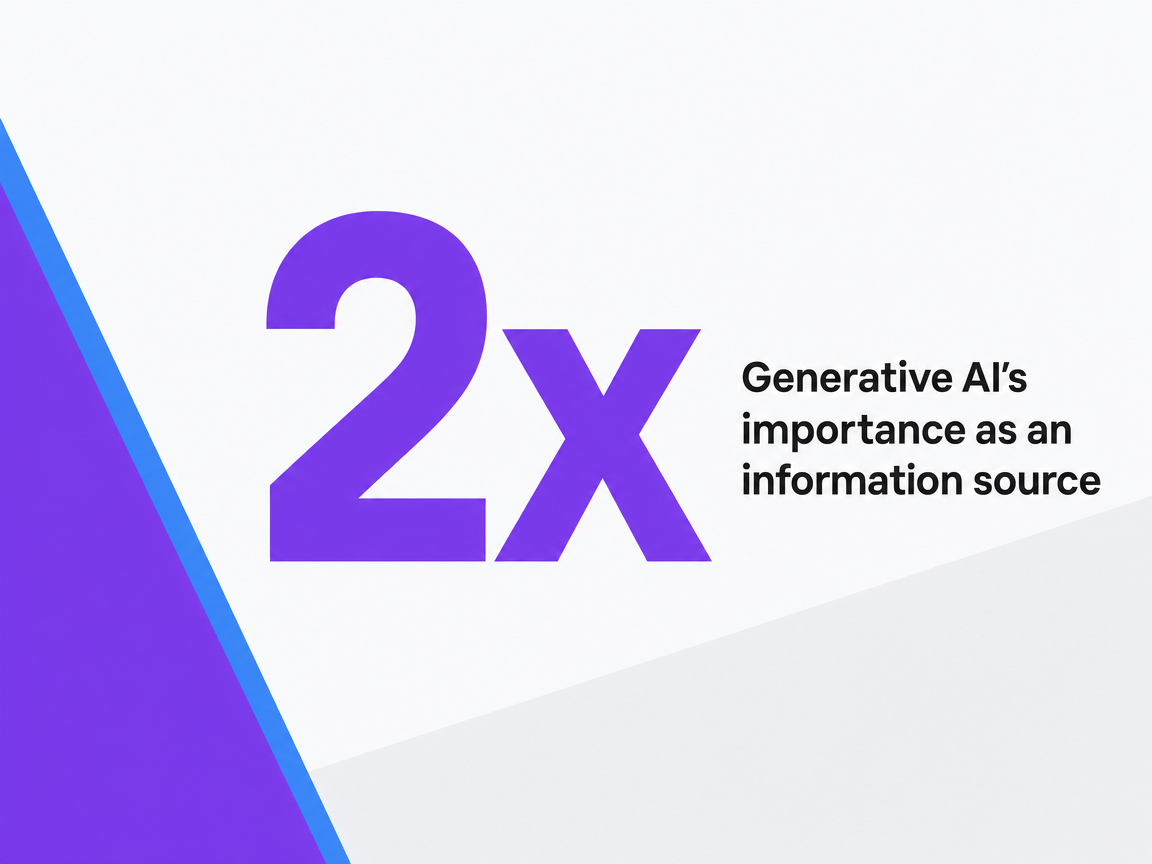 Generative AI's importance as an information source
Generative AI's importance as an information source
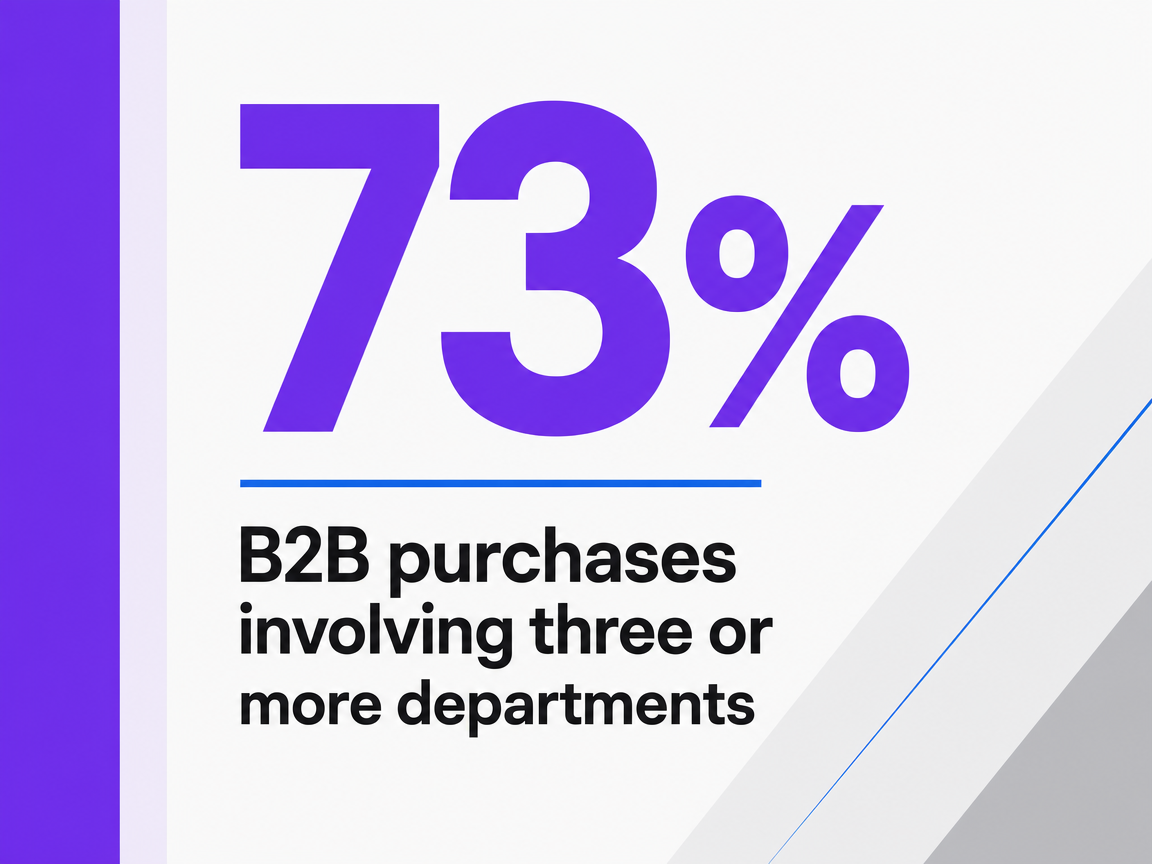 B2B purchases involving three or more departments
B2B purchases involving three or more departments
Frequently Asked Questions
References
- 1.Endorsements, Influencers, and Reviews.
- 2.Federal Trade Commission Announces Updated Advertising Guides To Combat Deceptive Reviews and Endorsements.
- 3.Federal Register, Volume 88 Issue 142 (Wednesday, July 26, 2023).
- 4.Buying Networks: Your Buyers' New Reality.
- 5.Three Realities About B2B Buying Networks.
- 6.B2B Buyers Make Zero-Click Number One.
- 7.Digital Natives Are Rewriting B2B Buying.
- 8.Forrester's B2B Marketing & Sales Predictions 2025.
- 9.Countering AI-generated misinformation with pre-emptive source ....
- 10.The State Of Business Buying, 2026.
- 11.Building Preference Is The Key To Winning B2B Buyers.
- 12.How AI-Generated Content Shapes User Trust: The Roles of ....