
Key Takeaways
- Client SEO now works as a three-layer stack: technical foundation priced as infrastructure, topical authority sold as quarterly cluster commitments, and instrumented outcomes tying impressions and citations to pipeline.
- Fixed retainers built on article counts break when AI summaries compress traditional organic clicks to 8% of visits versus 15% without a summary 1, so scopes should commit to visibility positions instead of production units.
- Margin holds when strategy, subject-matter review, and editorial approval stay human while first drafts, schema, monitoring, and reporting move to AI-assisted workflows under a real approval gate, bounded by McKinsey's up-to-30% cost-to-serve ceiling 2.
- Run a five-question diagnostic on the current roster—AI-summary exposure, scope commitments, production-to-strategy hours, reporting breadth, and substantiation gaps 4—to identify which accounts need restructuring before the next renewal.
The delivery model, not the tactics, is what needs rebuilding
Agency principals asking what a modern client SEO strategy looks like are usually asking the wrong question. The tactics have not changed as much as the trade press suggests. Crawlability still matters. Topical depth still matters. Search Console still tells the truth. What has broken is the delivery model most agencies wrapped around those tactics: a fixed retainer, a monthly deliverables list, and a production line of human-written articles priced against click volume that no longer arrives at the rate it did three years ago.
The operators who kept SEO profitable through 2025 stopped selling articles per month and started selling a visibility system with three distinct layers. Technical foundation. Topical authority. Instrumented outcomes tied to Search Console impressions, cited-source presence in AI answers, and the pipeline signals the client's sales team already tracks. Each layer maps to different work, different talent, and different automation potential. Collapsing them into one retainer line item is what causes margin to disappear when a channel compresses.
This piece treats client SEO as a P&L and delivery architecture problem, not a ranking-tactics problem. It walks through why the manual-content retainer is breaking, what the three-layer stack looks like in scope documents, how to reprice around visibility outcomes, where automation belongs in production, and what the FTC substantiation exposure looks like in the sales copy agencies use to win the work in the first place.
Why the retainer built on manual content output is breaking
The click compression reshaping retainer economics
The math on a manual-content retainer assumed a click volume that no longer arrives at the same rate. Pew's March 2025 browsing study of 900 U.S. adults found that Google users clicked a traditional organic result on 8% of visits when an AI summary appeared on the results page, compared with 15% of visits when no summary was present 1. Cited links inside the summary itself were clicked on just 1% of visits 1.
That is roughly a 47% relative compression in traditional organic click-through on the queries where AI summaries surface. Agency owners should sit with what that does to a $3,500 monthly retainer that was implicitly priced against a session volume the client's dashboard tracked in 2022. If the deliverable count stays the same and the underlying click yield falls by nearly half on AI-summary queries, the client's implied cost per session doubles on that share of the keyword footprint. Nothing about the agency's work has changed. The channel's conversion of impressions to clicks has.
Retainer packages built around a fixed number of articles, a fixed number of backlinks, and a monthly ranking report were never truly priced on effort. They were priced on the expected traffic those deliverables would generate, marked up. When impressions hold steady but clicks compress, the retainer's economics quietly invert: the same production cost now produces a smaller measurable outcome, and the client's finance team notices before the account manager does.
The operators who caught this early stopped defending click volume as the primary KPI. They started reporting impressions, average position on AI-eligible queries, and the share of client-branded queries where the client's domain appears as a cited source. Deliverable counts became a production input, not a pricing anchor.
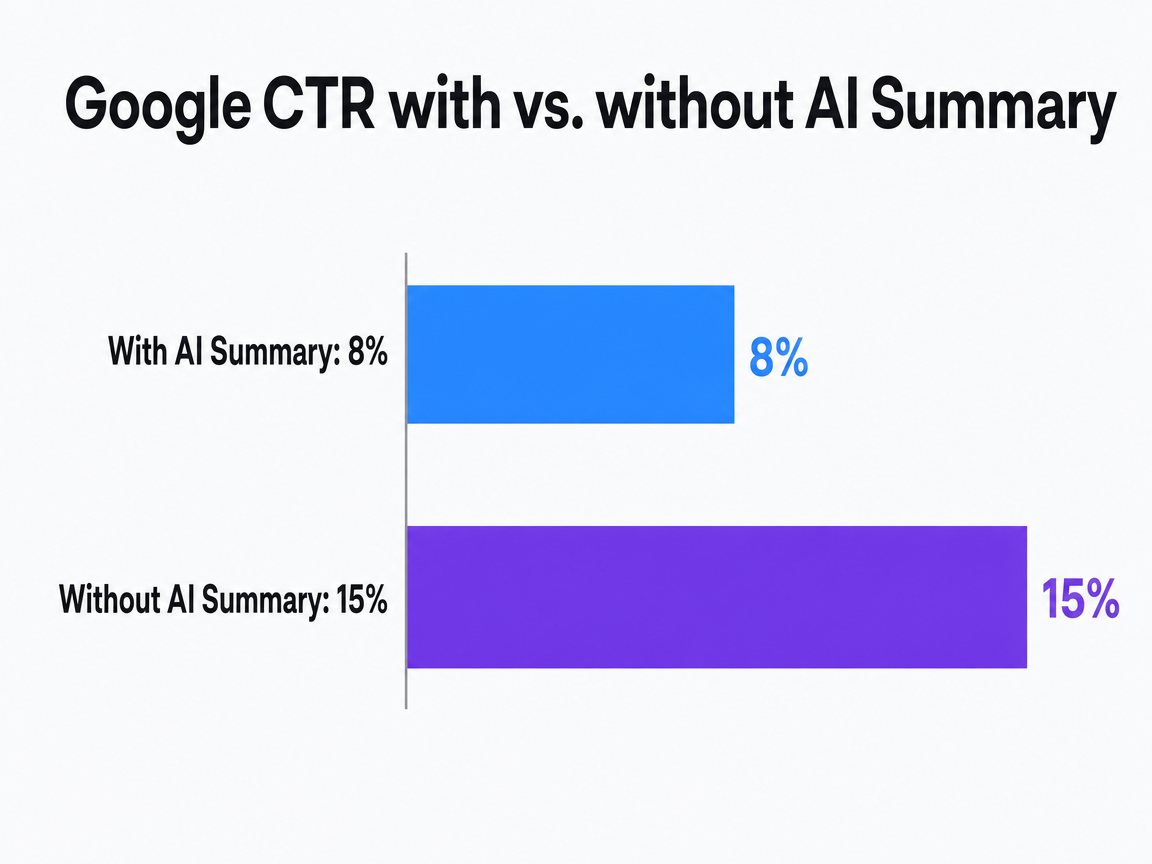 Google CTR with vs. without AI Summary
Pew Research data shows that when a generative AI summary is present, users are less likely to click on traditional organic search results.
From blue-link rank to cited-source presence
Rank tracking as the headline metric assumes the user still scrolls a list of ten blue links. A growing share does not. McKinsey's 2025 survey on AI search behavior reported that 44% of AI-powered search users treat AI search as their primary and preferred source of insight, ahead of traditional search 3. That is not a projection about future behavior. It is a description of a segment of the current user base whose first read of any given query is a synthesized answer, not a ranked list.
For agency delivery, the practical consequence is that the measurable win shifts from position one on a keyword to inclusion as a cited source inside an AI-generated answer. Those are different production problems. Ranking rewards on-page optimization, internal linking, and backlink authority against a specific query. Citation rewards structured claims, clear attribution, factual density, and content that reads as a source rather than a landing page. A page can rank well and still fail to be summarized. A page can be summarized and never crack the top three.
Agencies still tracking only average position and organic sessions are measuring the smaller half of the visibility surface for a widening share of client queries. The reporting stack has to widen: cited-source appearances in AI answers, entity presence in knowledge panels, and share of voice inside summary boxes belong on the same dashboard as Search Console impressions. The retainer keeps its shape. The scoreboard changes.
The three-layer client SEO stack
Technical foundation: what stays non-negotiable
The technical layer is the one part of client SEO that has resisted disruption. Crawlability, indexation logic, canonical hygiene, structured data, Core Web Vitals, and internal link architecture still determine whether any of the higher-layer work can be read, ranked, or cited. When a page is not eligible to appear, no amount of topical depth compensates.
What has changed is who does this work and how often. A one-time audit at onboarding is no longer sufficient. Schema requirements have expanded, JavaScript rendering issues surface after every deployment the client's dev team ships, and AI crawlers weigh structured markup more heavily than the classic ten-blue-link algorithm did. Agencies keeping technical hygiene profitable treat it as continuous monitoring with monthly diagnostic passes, not a deliverable measured in article count.
This layer belongs in scope documents as a fixed operational baseline with a defined uptime SLA: index coverage, schema validation, page experience thresholds, and log-file review on a set cadence. It is priced as infrastructure, not campaign work. Junior analysts and automation handle the recurring monitoring. Senior technical staff handle escalations and migrations. Nothing about this layer should be sold on click volume.
Topical authority: the layer AI summaries actually read
Topical authority is the layer that decides whether a client's domain gets cited inside an AI answer or ignored while a competitor's does. Summary engines pull from sources that read as authoritative on a subject, not from pages that rank once for a query and then say nothing else about the topic. The unit of measurement shifts from individual page rank to cluster completeness across an entity.
For a client in a defined service category, topical authority means covering the full question surface a prospect asks across the decision journey: definition, comparison, cost, risk, process, aftercare, edge cases. Each page attributes claims, cites sources, names the practitioners or products involved, and links internally to the rest of the cluster. This is what a summary engine treats as a source. A single hero page surrounded by thin supporting posts is not.
Agencies delivering this layer well have moved from monthly article counts to quarterly cluster commitments with explicit coverage maps. The deliverable is a defined topic footprint, not twelve blog posts. Production can be AI-assisted under human editorial approval, but the strategic input, subject-matter review, and attribution standards stay with senior staff who understand the client's regulatory and commercial context.
Instrumented outcomes: Search Console, citations, and pipeline signal
The third layer is the one most agencies still under-build. Instrumented outcomes means the client sees, in one view, how visibility work connects to pipeline. Three data streams belong on that view:
- Search Console impressions and query coverage at the cluster level
- Cited-source appearances inside AI answers on tracked queries
- The client's own pipeline signal—qualified calls, form submissions, booked consultations—joined back to the entry page or query where the session originated
Search Console remains the ground truth for organic reach because it reports impressions independent of click yield. When impressions rise on a topic cluster while clicks stay flat, the agency has a defensible reading: visibility is expanding, but AI summaries are absorbing the click. That reading is only defensible if the reporting stack shows both series side by side. Citation tracking closes the second gap. Tools that monitor whether client pages appear as cited sources in AI-generated answers on tracked queries are still maturing, but the ones that exist give agencies a measurable proxy for summary inclusion.
Pipeline signal is what turns the report from an SEO scorecard into a business review. Agencies that hand clients a dashboard tying impressions and citations to calls, bookings, and revenue keep the conversation on outcomes and out of ranking screenshots.
Experience End-to-End Client SEO Execution Instantly
Test a complete client SEO workflow and publish live results before committing to a new model.
Repricing around visibility outcomes, not deliverable counts
Repricing starts with a scope document that stops promising units of production and starts committing to visibility positions. A retainer that lists twelve articles, forty backlinks, and one monthly report has no defense when clicks compress. A retainer that commits to defined impression coverage across a topic cluster, a documented technical baseline with SLA thresholds, and a monthly outcomes review tied to the client's own pipeline data has a defense the finance team can read.
Agency principals moving to this structure typically split the retainer into three line items that mirror the delivery stack:
- Technical foundation is priced as a fixed operational fee, indexed to site complexity and deployment cadence, not to article count.
- Topical authority is priced against a quarterly cluster commitment with a defined coverage map, where production volume is an input the agency manages against margin, not a promise the client counts.
- Instrumented outcomes is priced as a reporting and analysis fee that includes Search Console query coverage, citation tracking on tracked AI queries, and pipeline attribution against the client's CRM.
The repricing conversation with existing clients is easier than most owners expect when the reporting stack is already showing impression growth alongside flat clicks. The data does the argument. What clients resist is a price change with no change in what is being sold. What they accept is a restructured scope where the agency takes accountability for visibility positions the client can verify, and where the deliverable count becomes an internal production variable rather than a contractual promise the channel can no longer honor.
Production margin math: what stays human, what gets automated
The margin problem inside a manual-content retainer is not that human writers are expensive. It is that human writers are billed against a click yield the channel no longer delivers evenly across the keyword footprint. Agencies protecting margin through 2026 are drawing a clear line between the work that requires human judgment and the work that does not, then automating the second category under editorial approval.
What stays human: strategic input, subject-matter review, attribution decisions, primary-source interviews, quote sourcing, competitive positioning, cluster architecture, and the final editorial pass on any page that makes a substantive claim in a regulated or high-stakes vertical. This work compounds. It is where the agency's expertise is visible in the deliverable and where a client's regulatory exposure is either created or contained. It should not be automated and it should not be discounted.
What gets automated: first-draft production against approved briefs, schema markup generation, internal link mapping, technical audit passes, rank and impression pulls, citation monitoring across tracked AI queries, and the assembly of the monthly outcomes report. These are high-volume, low-judgment tasks where AI-assisted production under a human approval gate produces output indistinguishable from the manual equivalent at a fraction of the production hours.
McKinsey's 2026 analysis found that AI-driven personalization and automation can reduce cost to serve by up to 30% while lifting revenue 5 to 8% across the marketing operations it studied 2. That 30% ceiling is the reasonable upper bound on margin expansion an agency should model when shifting production from manual to AI-assisted workflows. The realistic operating range is narrower. Agencies that move roughly 60 to 80% of first-draft production, technical monitoring, and reporting assembly into an approval-gated automation layer typically see production hours per client fall meaningfully, while senior staff time reallocates toward strategy, review, and client-facing analysis.
The repricing implication is direct. If production hours per client fall and the retainer stays flat, margin expands and the agency absorbs the click compression without a price change. If the retainer restructures around visibility outcomes as the earlier section described, the agency captures both effects: a defensible scope tied to measurable positions, and a production cost base that no longer scales linearly with content volume. The margin math only works when the approval gate is real. Automated production without human review reintroduces the compliance exposure the next section addresses.
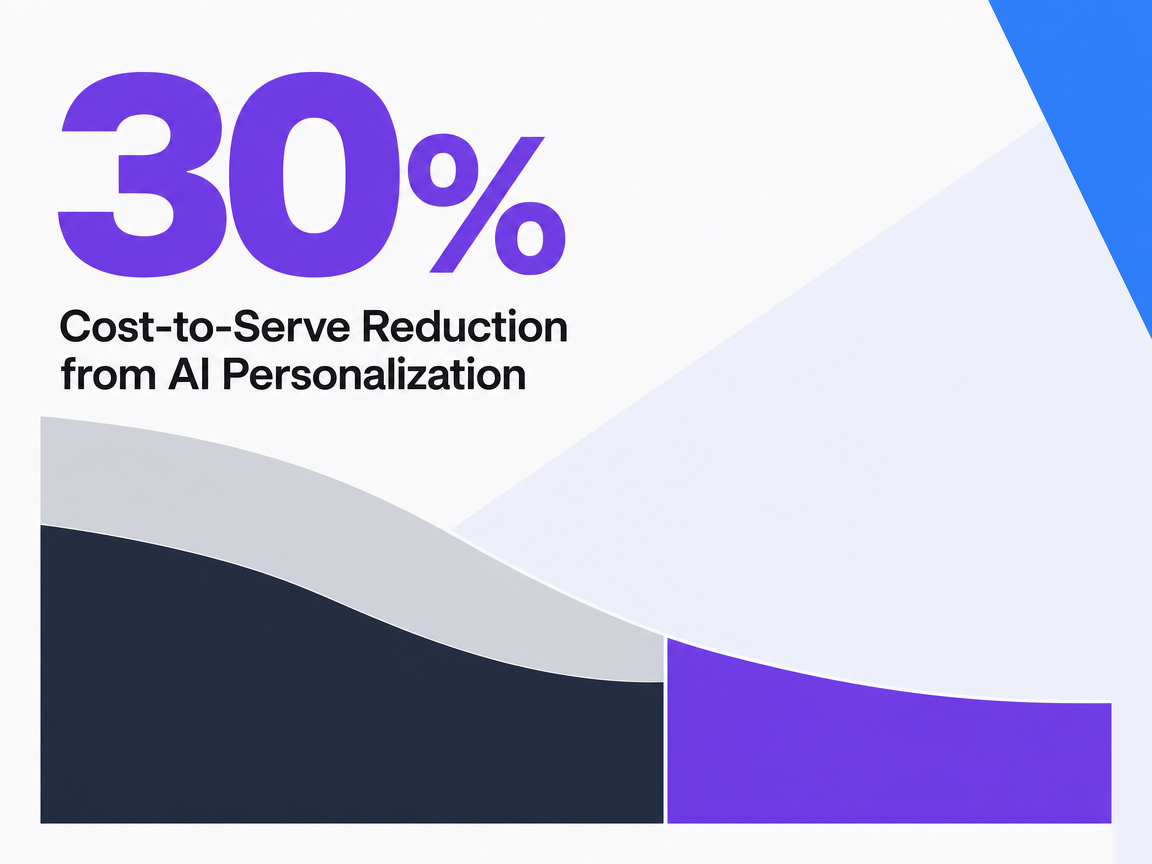 Cost-to-Serve Reduction from AI Personalization
Cost-to-Serve Reduction from AI Personalization
Substantiation risk in SEO sales copy and client deliverables
The sales copy agencies use to win SEO retainers is often the least reviewed writing in the shop. It is also the writing most likely to create legal exposure. The FTC's substantiation policy is direct: advertisers and ad agencies must have a reasonable basis for objective claims before those claims are disseminated 4. A pitch deck promising a specific ranking outcome, a case study asserting a traffic lift without documented methodology, or a landing page claiming guaranteed first-page results all sit inside the class of objective claims the policy covers.
The FTC's online advertising guide adds that advertising must tell the truth and not mislead consumers, and that claims require substantiation regardless of the channel 5. Agency pages that function as lead funnels are advertising under this framework. A separate FTC post on claim clarity emphasizes that marketing language should be unambiguous and not misleading in context 8, which is where SEO copy tends to fail: hedged promises about "proven results" or "top rankings" that a client's counsel could read as objective performance claims.
Enforcement in this category is not hypothetical. In 2018, the FTC obtained a court order against operators who tricked small businesses into paying for unsolicited SEO-related services they never ordered 9. The action targeted deceptive sales practice, not the SEO work itself, which is the point agency owners should sit with. The exposure lives in how the service is sold and how outcomes are described, not in the technical delivery.
The operational takeaway is narrow. Every performance claim in sales collateral, case studies, and client-facing reports should have a source file behind it: the Search Console export, the analytics screenshot with date range, the CRM record. Boilerplate promises about rankings, traffic, or revenue lift should be replaced with documented client outcomes attributed to a specific engagement and time window. When AI-assisted production writes first drafts of case studies or service pages, the human approval gate is where substantiation gets verified, not where it gets skipped.
See How Leading Agencies Eliminate SEO Production Bottlenecks—Without Losing Client Oversight
Request a demo to benchmark your current client SEO workflow against AI-driven, approval-first processes proven to cut production time and overhead for multi-location and high-stakes service accounts.
If you manage multiple locations: consolidation economics
Why multi-location portfolios amplify the production problem
A note on scope: this section narrows to agencies running SEO for multi-location operators—DSO groups, home services franchises, senior living portfolios, regional law firms, behavioral health networks. Single-site delivery does not face the same math.
Multi-location work multiplies the production layer without multiplying the strategy layer. A ten-location client needs the same three-layer stack, but the topical authority and technical foundation work fans out across ten sets of location pages, ten sets of service-area combinations, and ten sets of local schema. Pew's local-business research found that 51% of adults seeking information on nearby businesses relied on the internet and 38% used search engines specifically 6, which is why location pages carry disproportionate pipeline weight for these clients.
The production overhead per location is where margin either compounds or collapses. Agencies that price multi-location retainers on a per-location content quota discover the same click-compression problem the earlier sections described, multiplied by the location count.
A variable-driven delivery cost framework at 10, 25, and 50 locations
The framework below is a variable-driven model, not a benchmark table. Agency principals should populate it with their own writer cost per article, PM hours per location, and retainer per location. The only sourced number is the upper bound on cost-to-serve reduction: McKinsey's finding that AI-driven personalization and automation can reduce cost to serve by up to 30% across the marketing operations studied 2.
W : the fully loaded cost of one location-page or supporting article under manual production
P : the monthly PM and QA hours per location, multiplied by the loaded hourly rate
A : the article volume per location per month
Traditional monthly delivery cost per location is (W × A) + P. Portfolio delivery cost scales linearly: 10 locations equals 10 × [(W × A) + P], 25 locations equals 25 × [(W × A) + P], 50 locations equals 50 × [(W × A) + P].
Under AI-assisted production with a human approval gate, W and P do not fall to zero. Editorial review, subject-matter approval, and local claim verification remain human. What compresses is first-draft production time and recurring technical monitoring. Using McKinsey's up-to-30% cost-to-serve ceiling as the outer bound, the modeled range for AI-assisted delivery cost per location is between 0.70 × [(W × A) + P] at the ceiling and something closer to 0.85 × [(W × A) + P] at realistic operating rates.
Worked illustrative example, inputs clearly placeholder: if an agency's W is $250, A is 4, and P is $600, traditional per-location cost runs $1,600 monthly. At 50 locations, that is $80,000 in monthly production cost. Applying a 20% reduction under AI-assisted workflows brings the portfolio cost to $64,000, holding the retainer flat. That $16,000 monthly delta is where the click-compression absorption lives.
A quarterly diagnostic for the current client roster
Agency principals do not need a new framework to act on the shifts described above. They need a diagnostic they can run against the current book of business before the next quarterly review. Five questions, applied to every active retainer, surface where the delivery model is exposed.
- What percentage of each client's tracked query set now returns an AI summary on the results page? Search Console does not report this directly, but a manual sample of the top 50 queries per client, pulled once a quarter, gives a defensible read. Clients whose query set is more than half AI-summary-eligible are the accounts where click compression is already priced into next quarter's renewal risk.
- Does the current scope document commit to deliverable counts, visibility positions, or both? Scopes that promise units of production without a visibility commitment are the accounts to restructure first.
- How many hours per client per month go to first-draft production, technical monitoring, and report assembly versus strategy, review, and analysis? If the ratio favors production, the margin is exposed to the automation shift competitors are already making.
- Does the monthly report show impressions and citations alongside clicks and rank? Reports that only show clicks and rank will lose the renewal argument when clicks compress.
- Does any performance claim in the sales deck, case studies, or landing pages lack a source file behind it 4? That is the compliance gap to close before it becomes a client dispute.
Agencies that run this diagnostic honestly will find two or three accounts where the delivery model needs restructuring within a quarter, and a broader roster where the reporting stack and production mix need to shift over the next two. That is the operational work of moving client SEO from a deliverables list to a visibility system—and it is what platforms like Vectoron are built to support underneath the approval gate.
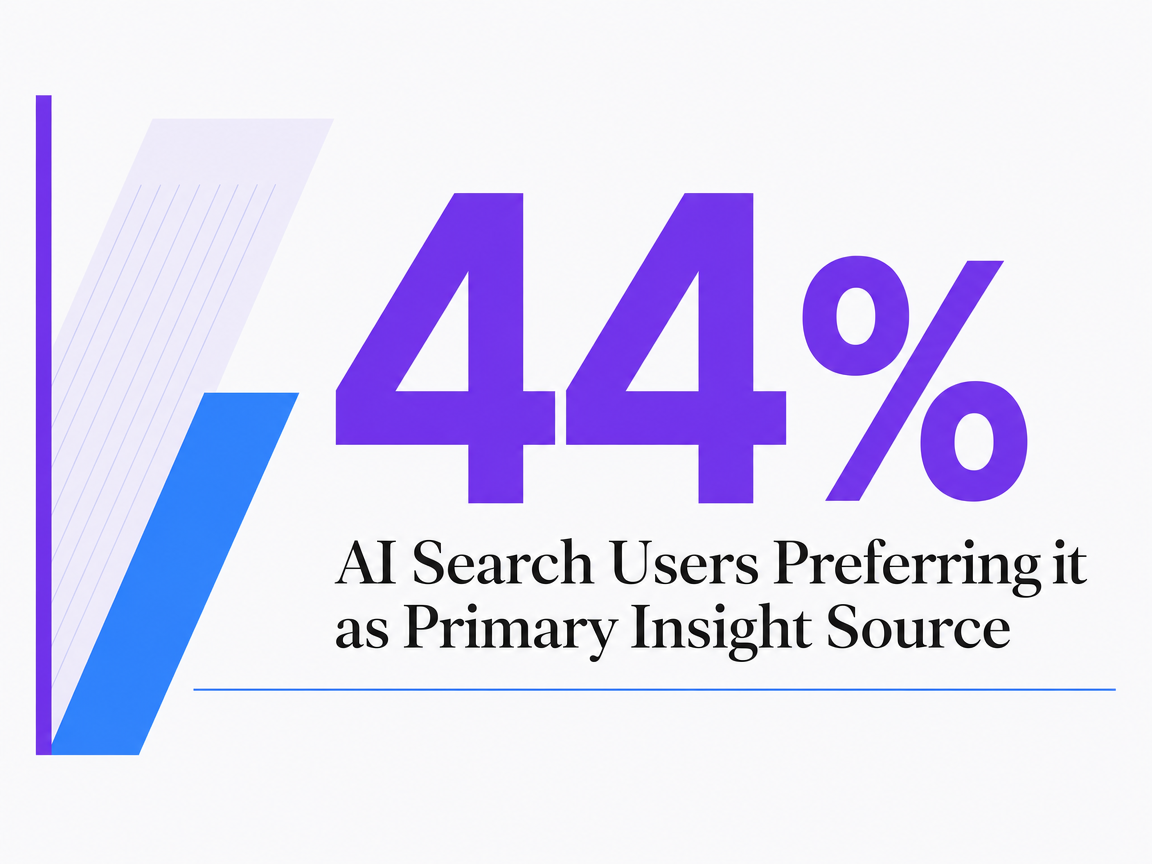 AI Search Users Preferring it as Primary Insight Source
AI Search Users Preferring it as Primary Insight Source
Frequently Asked Questions
References
- 1.Do people click on links in Google AI summaries?.
- 2.The future of marketing in the age of AI.
- 3.New front door to the internet: Winning in the age of AI search.
- 4.FTC Policy Statement Regarding Advertising Substantiation.
- 5.Advertising and Marketing on the Internet: Rules of the Road.
- 6.Where people get information about restaurants and other local businesses.
- 7.Accessibility | NIST.
- 8.Make your claims crystal clear.
- 9.FTC Obtains Court Order Barring U.S. and Canadian Scammers Marketing and Selling Internet-Related Services.
- 10.Main findings.