
Key Takeaways
- Content optimization is now an operating model decision, not a tactics question, with the coordination layer inside retainer agencies eroding as AI absorbs research, drafting, and editing work [ref-1].
- Optimization in 2026 spans four surfaces: classic organic, AI overviews, standalone assistants, and the third-party sources they cite, with GEO performance often trailing SEO by 20 to 50 percent [ref-8].
- Governed execution inverts the briefing cycle by letting AI produce artifacts in parallel while a human approver holds the release gate, compressing cycle time from weeks to days.
- Marketing leaders should baseline current cycle time and AI search visibility, run a parallel approval-first lane against the retainer, and reallocate scope based on measured cycle time and quality.
The Operating Model Question Behind Every Content Budget
Most content optimization conversations still open with tactics: entity coverage, internal linking, refresh cadence, schema. The harder question sits one level up. Who executes the work, under what governance, at what unit cost, and how quickly does that unit cost drop as AI absorbs more of the production loop?
McKinsey's analysts have put a number on the scope of that absorption. Their view is that agentic AI could power as much as two-thirds of current marketing activities, including content generation, testing, and media planning 1. That estimate covers the activity mix, not a headcount forecast, but it reframes what a content budget is buying. Increasingly, it is buying orchestration and judgment rather than hours at a keyboard.
Marketing leaders running mid-market and multi-location service brands sit at the center of that reframing. Retainer agencies were built for a briefing-cycle world where every asset required account managers, strategists, writers, and editors moving in sequence. AI-native execution collapses that sequence. The question is no longer whether the model changes, but which operating model a VP wants to defend to a CFO in the next planning cycle.
This article treats content optimization strategy as an operating model decision. It examines what the traditional agency stack is losing on cost and speed, what optimization now covers across classic search and AI search surfaces, and how governed execution, meaning AI production with human approval gates, compares against agency retainers and in-house buildouts on the metrics that determine pipeline.
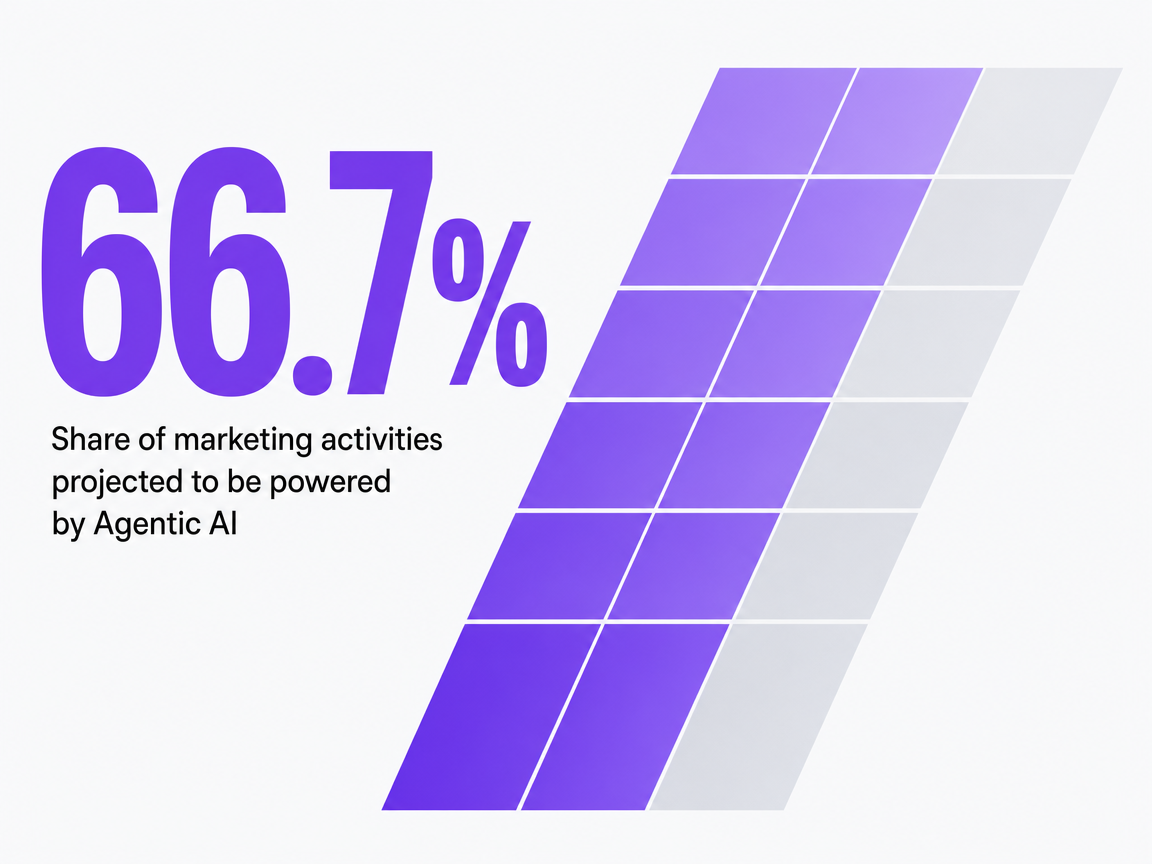 Share of marketing activities projected to be powered by Agentic AI
Share of marketing activities projected to be powered by Agentic AI
Why the Traditional Agency Model Is Losing the Optimization Math
Structural Displacement, Not a Cyclical Dip
Agency budgets have contracted before. What is happening now looks different. Forrester projects that US advertising agencies and related services firms will shed 32,000 jobs to automation by 2030, roughly 7.5% of the agency workforce, with losses concentrated in creative production, media operations, and the coordination roles that hold retainer work together 6. That forecast covers US ad agency employment specifically, not all marketing roles, which matters when a VP is estimating how much of a current retainer's labor stack is exposed.
The composition of the loss tells the strategic story. The roles most at risk are the ones a mid-market brand pays for indirectly through blended hourly rates: production designers, junior copywriters, media traffickers, QA reviewers, project coordinators. Those are the same functions a content optimization retainer bills against every month, whether or not the assets moved a pipeline number.
Forrester frames the shift as permanent rather than cyclical. The firm's analysts expect concerns over AI misuse to trigger about a 10% increase in agency reviews as brands audit how their partners are using AI on their behalf 4. Two forces meet in that number. Clients suspect their retainers include AI-produced work already, and they want governance visibility they are not getting.
For a marketing leader watching CFO scrutiny tighten, the read is straightforward. The labor arbitrage that made the retainer model efficient in 2015 is eroding from the inside. The question is what replaces the coordination layer that retainer fees used to fund.
The Hidden Coordination Tax on Retainer Work
The visible line item on an agency invoice is the deliverable. The invisible line item is the coordination cost required to produce it. A single optimized long-form asset typically passes through a brief, a kickoff call, a strategist outline, a writer draft, an internal edit, a client review, a revision round, a legal pass in regulated verticals, and a publish handoff. Each step introduces queue time, and queue time is what a monthly retainer actually rents.
McKinsey's operating-model work on AI-powered enterprise workflows makes the same point from a different angle. The firm argues that the limiting factor in scaling AI is rarely model quality; it is interoperability across the systems, roles, and approvals that surround the work 7. Retainers are the analog equivalent of that problem. They stitch together handoffs between people who do not share tooling, and the client pays for the stitching.
Two operating metrics expose the tax. Cycle time from brief to publish, which for a typical optimization asset runs three to six weeks under agency conditions. And revision throughput, which caps how many assets a retainer can turn regardless of headline scope. Neither metric appears on a scope-of-work document, but both determine whether pipeline moves in the quarter the CFO cares about.
Removing the coordination layer, rather than negotiating a lower hourly rate, is where the optimization math actually shifts.
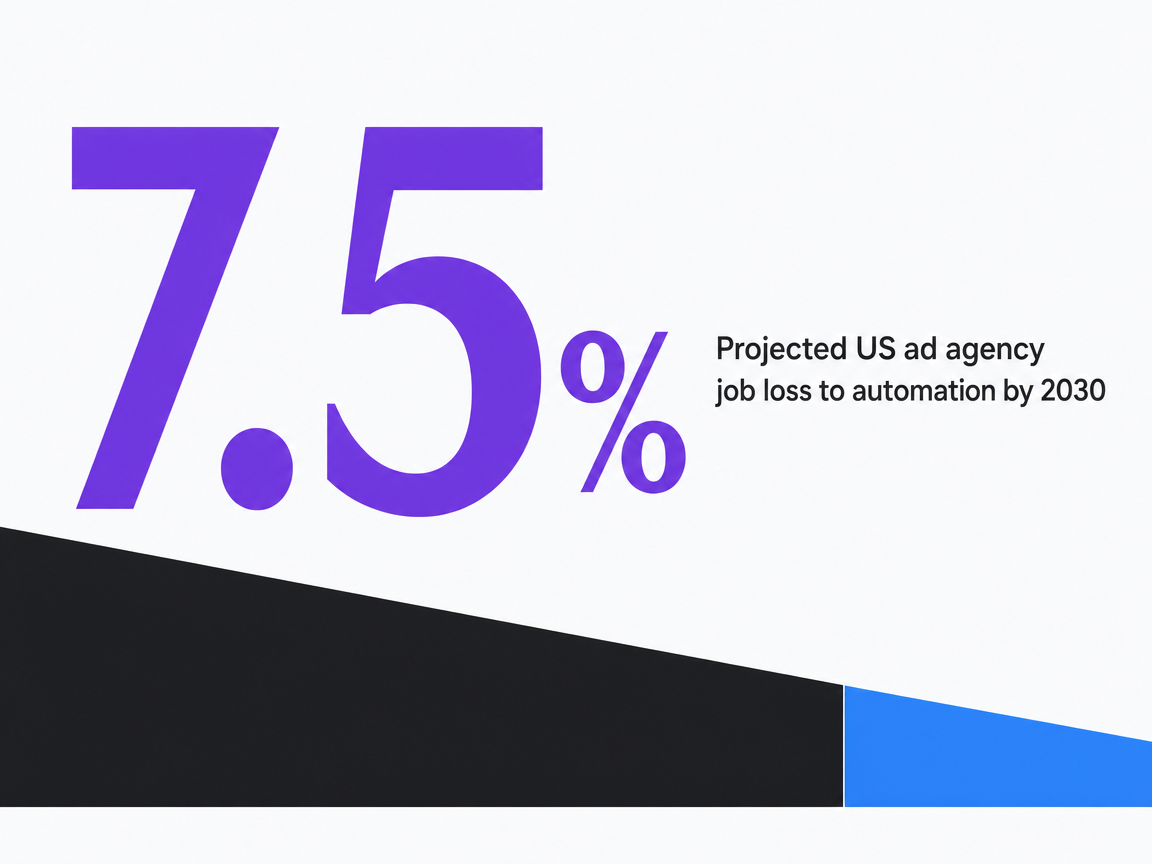 Projected US ad agency job loss to automation by 2030
Projected US ad agency job loss to automation by 2030
What Content Optimization Actually Means in 2026
From Keyword Tuning to Cross-Surface Visibility
Ten years ago, content optimization meant onpage work: title tags, header hierarchy, keyword density, internal links, schema markup. The deliverable was a page that ranked. The measurement was position on a search engine results page. That definition is now incomplete.
A single optimized asset in 2026 has to earn visibility across at least four surfaces:
- Classic organic listings, which still rewards depth, authority signals, and query-intent alignment.
- AI overviews inside those same results, which reward structured claims, source clarity, and passage-level extractability.
- Standalone AI assistants that answer without a click.
- The third-party sources those assistants cite when they compose an answer, which reward mentions on independent domains the model trusts, sitting outside anything an onpage checklist can produce.
Assistant citations reward mentions on independent domains the model trusts, which sits outside anything an onpage checklist can produce.
The operating consequence is that optimization has become a portfolio activity rather than a page-by-page one. A VP is now managing a mix of owned assets tuned for extractability, earned mentions that reinforce entity presence, and structured data that makes claims machine-readable. McKinsey's operating-model work argues that scaling this kind of cross-system output depends on interoperability across tools and roles, not on any single content team producing more 7.
That reframing changes what a content team needs to be good at. Less time on tactical page edits. More time on entity strategy, claim structure, and measurement across surfaces a keyword tracker was never designed to see.
AI Search and the GEO Performance Gap
The share of search behavior mediated by AI has moved past a threshold that changes the optimization calculus. McKinsey's analysis puts roughly 50% of Google searches today as including AI summaries, with that figure projected to exceed 75% by 2028 8. That estimate covers Google's AI Overviews specifically, not the full universe of AI assistants, though the direction of travel across ChatGPT, Perplexity, Gemini, and Claude is consistent.
The strategic problem sits inside the same report. McKinsey observes that even for industry leaders, generative engine optimization (GEO) performance can lag traditional SEO performance by 20 to 50 percent 8. In practical terms, a brand that ranks first for a bottom-funnel query in classic organic results may still be absent, misrepresented, or under-cited when an AI summary answers the same query. The signals that produced the SEO ranking do not fully translate to the signals that drive AI citation.
Three shifts explain the gap:
- AI answers pull heavily from third-party sources, review sites, and community content that a brand does not directly publish.
- They favor structured, extractable claims over long narrative pages.
- They cite based on entity association and factual density rather than backlink-weighted authority alone.
For an in-house team, GEO changes the brief itself. Optimization now covers:
Claim architecture : Whether facts are stated as discrete, sourceable statements.
Off-domain presence : Whether the brand appears in the sources AI models actually retrieve from.
Citation monitoring : Whether the brand is being represented accurately when it does appear in an AI answer.
Only 16% of brands systematically track AI search performance today, which means the marketing leaders who build the measurement layer first will be quantifying a channel their competitors are still guessing about 8. That head start compounds through 2028, when the traffic distribution behind a $750 billion revenue pool routes through AI-mediated search rather than around it 8.
Experience automated content optimization at scale today
Test a real-time content pipeline, publish live assets, and validate measurable impact before making a long-term commitment.
Governed Execution: The Approval-First Alternative
Why Approval Gates Beat Briefing Cycles
The retainer model produces work by pushing a brief down a chain of specialists. Governed execution inverts that sequence. AI specialists produce the draft, the structured claims, the schema, the internal linking pass, and the cross-surface variants in parallel. A human approver reads the finished artifact and either releases it, edits it, or sends it back with a specific correction. The brief is not the input; the approval is.
That inversion changes what a VP is paying for. Under the retainer, the fee covers the coordination that carries an idea across eight desks. Under approval-first execution, the fee covers the model orchestration, the data connections, and the interface where a marketing leader decides yes or no. Forrester expects the concerns driving that shift to increase agency reviews by roughly 10% as brands audit how partners are actually applying AI on their behalf 4. The reviews are not about whether AI is being used. They are about whether the client can see it, correct it, and stand behind the output.
Approval gates solve three problems the briefing cycle cannot:
- They compress cycle time from weeks to days because production runs in parallel rather than in sequence.
- They preserve creative control because the VP or a delegated editor signs off on the artifact itself, not a brief written weeks earlier.
- They produce a durable audit trail, since every approved asset carries a record of what was proposed, what changed, and who released it.
The tradeoff worth naming is decision load. Approval-first workflows shift some review responsibility from an account team back to the client. The gain is that the review is happening on the finished asset, when a correction is cheap, rather than on a brief, when a correction is theoretical.
Where AI Already Earns Its Keep in Content Work
Skeptics of the approval-first model often argue the tasks are too creative to hand off. The field data says otherwise. Pew's survey of workers who used AI chatbots at work found 57% applied them to research, 52% to editing written content, and 47% to drafting written content 10. Those three tasks describe the bulk of what a content optimization retainer bills for. The survey covers workers who had actually used AI chatbots on the job, not the full workforce, which makes the pattern more useful, not less: it maps to demonstrated behavior rather than intent.
Research, editing, and drafting are also the three stages where AI's productivity gains show up most reliably. McKinsey's function-level modeling estimates generative AI could lift marketing productivity by 5 to 15% of total marketing spend, with content creation, personalization, and performance optimization identified as the primary drivers 2. That range is a productivity-of-spend estimate, not a headcount reduction, and it reads as a floor rather than a ceiling once approval workflows remove the coordination overhead surrounding each task.
The operational read for a VP is that governed execution is not asking the team to trust AI with creative judgment. It is asking the team to trust AI with the drafting, research, and editing scaffolding, then to apply judgment at the approval gate. That split maps to how workers are already using the tools in practice. It also maps to where the productivity math is best supported in the analyst literature.
What changes is where human attention is spent. Less time producing first drafts. More time deciding what ships.
Operating Economics: Three Paths to 20 Optimized Assets a Month
A useful stress test for any content optimization strategy is to hold output constant and vary the operating model. Twenty optimized assets a month is a reasonable benchmark for a mid-market service brand running organic pipeline across two to four service lines. Under a retainer agency, that volume typically requires a lead strategist, one to two writers, an editor, a project manager, and shared production support billed against a monthly fee. Under an in-house buildout, it usually maps to a content lead plus one or two senior writers, with SEO and design pulled from adjacent teams. Under a governed AI platform, execution runs through specialist models with a single approver holding the release gate.
The cost variables move in different directions across the three paths:
- Agency retainers scale with hours; the fee grows with revision rounds, added surfaces, and coordination overhead.
- In-house fully-loaded FTE cost is fixed and predictable but slow to reconfigure when priorities change.
- Platform subscriptions scale with usage rather than headcount, and the marginal cost of the twenty-first asset drops sharply once the workflow is configured.
McKinsey's function-level modeling estimates generative AI can lift marketing productivity by 5 to 15% of total marketing spend, driven primarily by content creation and personalization work 2. That range compounds fastest in operating models that remove the coordination layer, not the ones that lower a per-hour rate.
| Variable | Retainer Agency | In-House Buildout | Governed AI Platform |
|---|---|---|---|
| Cycle time, brief to publish | 3–6 weeks | 2–4 weeks | 2–7 days |
| Headcount required for 20 assets/month | Blended team of 5–7 | 2–3 FTE | 1 approver, fractional editor |
| Cost driver | Retainer fee + change orders | Fully-loaded FTE cost | Platform subscription + approval time |
| Governance model | Client review on drafts | Internal editorial standards | Approval gate on finished artifact |
| Measurement transparency | Monthly report, mediated | Direct, tool-limited | Live, per-asset attribution |
| Marginal cost of asset 21 | Change order | Overtime or delay | Near zero within tier |
The row that most often decides the CFO conversation is cycle time. Six weeks to three days is not a productivity delta; it is a different unit economics.
Managing the Sentiment Gap Inside the Team
The hardest part of moving to a governed content operation is rarely the tooling. It is the room full of people who have to work inside it. Digital Marketing Institute's 2025 compilation found 69% of marketing professionals feel hopeful about AI's impact on their jobs, a figure drawn from marketer-specific surveys rather than the broader workforce 5. That number is the ceiling. It reflects the population already thinking in campaign metrics, not the analysts, designers, writers, and coordinators sitting one layer below the marketing leader.
Pew's cross-industry data from the same period shows a different picture. Roughly 52% of workers said they feel worried about how AI may be used in the workplace, while 36% said they feel hopeful 12. That survey covers all US workers, not just knowledge functions, but the sentiment gap it captures is the one a VP will actually encounter during a rollout: leadership optimism running well ahead of team-level comfort.
Two moves close the gap without pretending it does not exist:
- Name where AI does the work and where humans hold the decision. Approval-first execution gives the team a concrete answer, because the release gate stays with a person on the marketing side.
- Tie the change to workload the team already resents. Drafts that die in revision. Status meetings that recap a Slack thread. Reviews on briefs no one remembers approving. Removing that friction is a more durable adoption argument than any productivity forecast.
Sentiment does not need to be uniform for the operating model to work. It needs to be honest enough that the team trusts what the approval gate is actually for.
See How AI-Driven Content Optimization Outperforms Traditional Agency Models
Request a data-backed walkthrough of multi-channel content optimization strategies proven to improve conversion rates and pipeline efficiency—without expanding your team or managing multiple vendors.
If Marketing Leaders Run Multiple Locations
The economics shift again when a marketing leader is responsible for more than one location. A single-site brand can absorb a slow retainer because the volume ceiling is low. A portfolio operator with fifteen dental practices, forty home services branches, or eight behavioral health facilities cannot. The optimization work multiplies by location, service line, and local market, and the coordination tax compounds with every added site.
Three cost drivers behave differently across a multi-location footprint:
- Local landing pages need per-market claim structures, review integration, and schema that a national template cannot cover.
- Service-line content has to reconcile a shared brand voice with regulated language that varies by state or specialty.
- AI search visibility, which McKinsey projects will mediate more than 75% of Google searches by 2028, has to be earned market by market because assistants often cite location-specific third-party sources when answering local intent 8.
A retainer priced against a national scope rarely covers that granularity without change orders.
Governed execution changes the arithmetic. A single approver can release fifty market-specific variants in the time it takes an account team to reconcile one round of edits, because the specialist models produce the variants in parallel and the approval gate reads finished artifacts rather than fifty separate briefs. The unit that scales is decisions per week, not writers per location.
For a portfolio operator, that is the number worth modeling before the next planning cycle.
A 90-Day Path to a Governed Content Engine
The transition from retainer to governed execution does not need to be a rip-and-replace. A ninety-day sequence produces enough evidence to defend the model to a CFO before the next planning cycle closes.
- Days 1–30: Baseline and instrument. Document current cycle time, revision throughput, and cost per optimized asset under the existing retainer. Map the review path each asset actually travels, including the informal steps that never appear on the scope of work. Stand up AI search visibility tracking, since only 16% of brands measure it today and the baseline is where the negotiation starts 8.
- Days 31–60: Run a parallel lane. Route a defined slice of the backlog, typically four to six assets covering one service line, through an approval-first workflow. Keep the retainer producing in parallel. Compare cycle time, edit volume at the approval gate, and measurable output against the same metrics on the agency side.
- Days 61–90: Reconcile the model. If the parallel lane holds on quality and moves faster on cycle time, reallocate scope rather than renegotiate rate. Platforms like Vectoron are built for this reallocation, keeping approval authority with the marketing leader while removing the coordination layer the retainer used to fund.
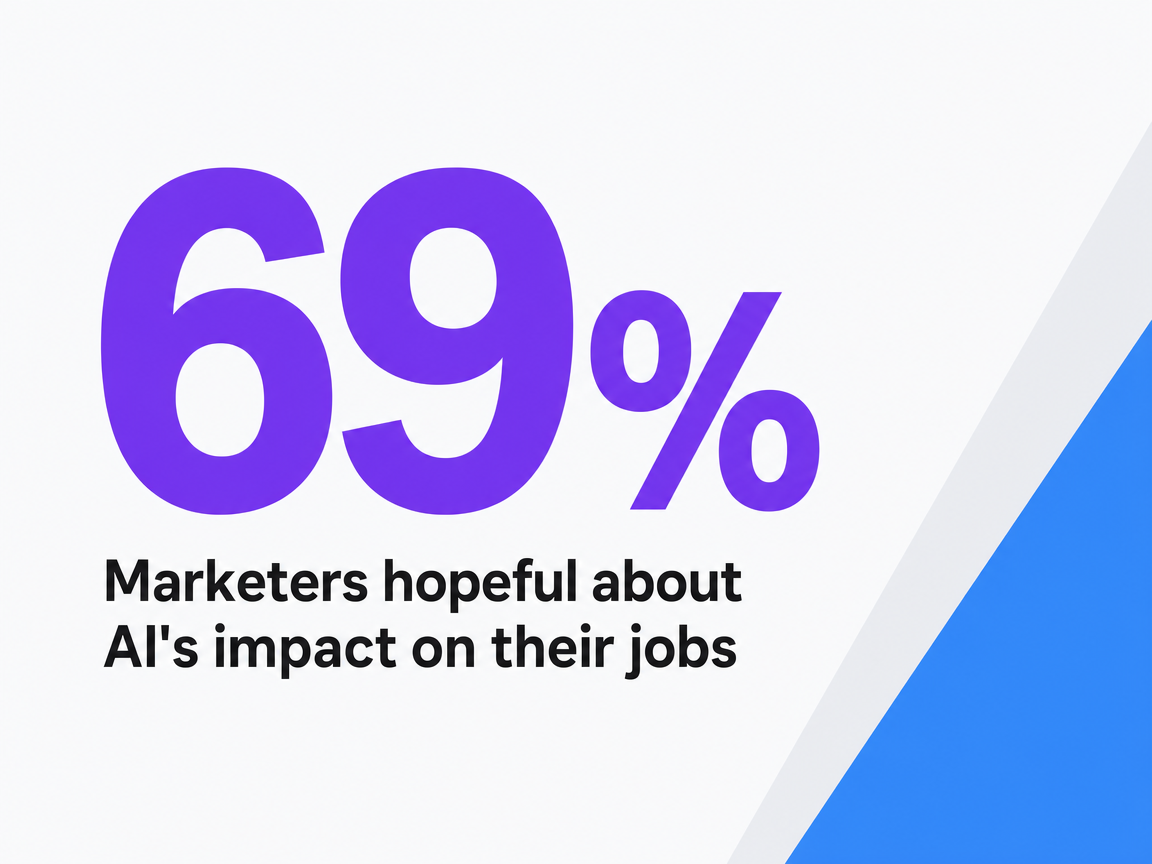 Marketers hopeful about AI's impact on their jobs
Marketers hopeful about AI's impact on their jobs
Frequently Asked Questions
References
- 1.Re-inventing Marketing with agentic AI, the McKinsey method.
- 2.The economic potential of generative AI: The next productivity frontier.
- 3.Predictions 2024: AI Accelerates Agencies' Shift To Solutions.
- 4.AI will permanently upend the agency landscape in 2024, Forrester says.
- 5.10 Eye Opening AI Marketing Stats in 2025.
- 6.Advertising Agencies In The US Will Automate 7.5% Of Jobs By 2030.
- 7.Transforming the enterprise through AI-powered workflows.
- 8.Winning in the age of AI search.
- 9.The economic potential of generative AI: The next productivity frontier.
- 10.3. Workers' experience with AI chatbots in their jobs.
- 11.Which workers use AI in their jobs.
- 12.2. Workers' views of AI use in the workplace.
- 13.Key findings about how Americans view artificial intelligence.
- 14.How the US Public and AI Experts View Artificial Intelligence.