
Key Takeaways
- Clearscope grades drafts against SERP competitors at the brief stage, removing writer ambiguity and driving keyword footprint growth on optimized pages 2.
- MarketMuse models topical authority across clusters, turning coverage gaps into a prioritized page queue for sites large enough to generate meaningful internal signal 5, 9.
- Surfer SEO overlaps with Clearscope on draft grading but wins on Google Docs integration; teams should keep one, not both, to eliminate redundancy 10.
- Ahrefs surfaces backlink profiles and competitive keyword gaps, with link acquisition correlated to domain rating, traffic, and ranking gains in documented case work 4, 10.
- Semrush converts competitor and query tracking into a weekly artifact, though scraped positions should be cross-checked against Search Console before upstream reporting 3.
- Google Search Console reports what Google itself recorded, making it the ground-truth reference when Ahrefs and Semrush numbers disagree on position or traffic 8.
- Screaming Frog crawls sites like a search engine, exposing broken links, duplicate tags, and redirect chains that feed technical fixes producing site-wide traffic lifts 3, 7.
- Google PageSpeed Insights isolates Core Web Vitals against Chrome UX Report field data, guiding the rendering and interaction fixes Google weighs directly in ranking 5.
- Jasper accelerates first drafts from approved briefs within brand voice guardrails, but throughput without editorial review erodes the content quality that drives visibility 10, 5.
- Vectoron orchestrates signals from the other three layers into ranked, approval-gated execution, compressing cycle time between optimization insight and published change 8, 2.
Why the 2025 optimization stack is a four-layer problem, not a shopping list
Most listicles rank content optimization tools alphabetically or by popularity, which is the wrong mental model for a content marketing manager auditing next quarter's spend. The tools worth keeping do not compete with each other. They occupy four distinct functional layers: semantic content scoring, keyword and rank intelligence, technical auditing, and AI-assisted production. A manager who buys three tools from the same layer overpays and still ships the same volume.
The aggregate evidence supports treating the stack as an integrated system rather than a collection of point solutions. A 2024 meta-analysis of ten studies published between 2022 and 2024 reported a Cohen's d of 1.049 for SEO implementation across organic rankings and traffic outcomes, a very strong effect size sustained across heterogeneous industries and methods 10. That number matters here for one reason: it establishes that the category delivers, so the operator question is not whether to invest but which layer to strengthen next.
Combining tool categories also outperforms single-tool reliance. Survey work on SEO tooling finds that pairing analytics platforms, Search Console, and commercial rank trackers produces more reliable monitoring than any one source alone 8. The rest of this piece maps ten tools to those four layers and names what each is actually good for.
What the evidence actually shows about content optimization ROI
The case for maintaining an optimization stack rests on published deltas, not vendor testimonials. Two recent studies bracket the range a content manager should expect from disciplined on-page and technical work.
A single-site case study on an Indonesian training platform documented a 33.52% lift in organic traffic and a 39.19% increase in organic keywords within one month of implementing on-page changes targeted at a single high-intent query, with the featured article moving to the second position in Google SERPs 2. The scope matters: one site, one primary keyword cluster, one month. Managers should read that as an upper-bound illustration of what focused on-page optimization can produce when applied to an under-optimized page, not as a portfolio-wide forecast.
A separate study on the news site Prodesanews.com, which layered keyword and metadata work with technical fixes, reported a 1.6% click-through rate improvement from metadata optimization and a 35% organic traffic lift attributed to technical SEO changes such as XML sitemap deployment and responsive design 3. Because the interventions ran in parallel, the 35% figure is a combined-treatment outcome, not a clean isolate of technical work alone.
Read together, the two studies tell a specific story. Metadata alone moves CTR in single digits. On-page semantic work can shift keyword footprints by double digits within weeks on individual pages. Technical fixes can produce site-wide traffic changes when the baseline is neglected. The stack a manager keeps should reflect which of those gaps is actually open on the current site, not which category has the loudest marketing.
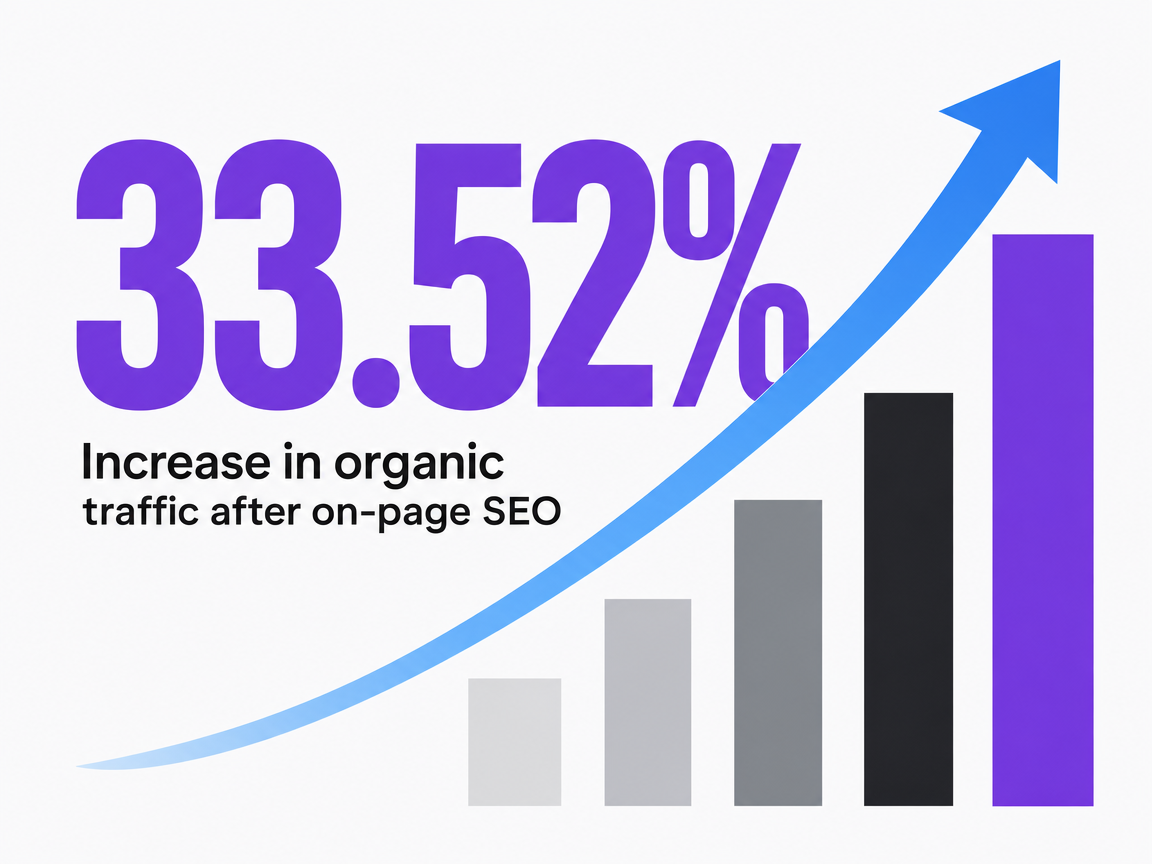 Increase in organic traffic after on-page SEO
Increase in organic traffic after on-page SEO
The functional taxonomy: mapping ten tools to four jobs
Ten tools, four jobs. That is the working frame for the rest of this piece. Semantic content scoring covers Clearscope, MarketMuse, and Surfer SEO, which grade drafts against topical coverage models and tell writers what a competitive page on the same query already includes. Keyword and rank intelligence covers Ahrefs, Semrush, and Google Search Console, which answer what a site currently ranks for, what competitors rank for, and what Google itself reports back. Technical auditing covers Screaming Frog and Google PageSpeed Insights, which surface crawl-level defects and Core Web Vitals problems that no amount of copy work will fix. AI-assisted production and orchestration covers Jasper and Vectoron, which move approved briefs into draft and published form faster than a manual queue.
Quantitative comparison of SEO strategy weights places technical optimization slightly ahead of off-page factors for first-page placement, with keyword relevance closely trailing 7. This argues for coverage across all four layers, with technical audit and semantic scoring defended first if the budget forces a cut.
Layer one: semantic content scoring
Clearscope for editorial brief scoring
Clearscope's functional job is to convert a target query into a coverage report that a writer or editor can act on before publishing. It scrapes ranking pages, extracts the terms and entities they share, and grades a draft against that model with a letter or numeric score. For a content marketing manager, the practical value sits in the brief stage, not the post-publish audit. A brief that ships with a target Clearscope score, a required-terms list, and a recommended word range removes most of the ambiguity a freelance writer will otherwise invent.
The measurable outcome category is keyword footprint growth on optimized pages, consistent with case evidence that focused on-page work can produce double-digit lifts in organic keywords within a single reporting cycle 2. The caveat is well documented: Clearscope's grade reflects competitive parity, not intent match. A high score on a page targeting the wrong query still underperforms, which is why the tool belongs upstream of writing, paired with a keyword intelligence source that confirms the query is worth optimizing for in the first place.
MarketMuse for topical authority modeling
MarketMuse operates one layer above draft grading. It scores a domain's coverage of a topic cluster, identifies gaps against competitive sites, and recommends which pages to write, update, or consolidate. Where Clearscope answers "is this draft competitive on this query," MarketMuse answers "which queries should this site own next, and what pages must exist to own them."
The outcome category is cluster-level ranking coverage rather than single-page lift. Research reviewing on-page SEO fundamentals consistently identifies content quality, internal linking, and topical structure as central inputs to visibility gains 5, 9. MarketMuse operationalizes that finding by turning it into a queue.
The caveat is scale-dependent. On a site with fewer than 50 published pages, the topical authority model has too little internal signal to produce sharp recommendations, and the subscription rarely earns back its cost. On a site running hundreds of pages across multiple clusters, the planning output is difficult to replicate manually.
Surfer SEO for on-page content grading
Surfer SEO overlaps with Clearscope on the surface: both score drafts against SERP competitors and recommend terms, headings, and length. The practical difference sits in workflow integration. Surfer's editor plugs directly into Google Docs and its content editor supports outline generation, making it the more common choice at teams where writers work in Docs and editors want inline grading rather than a separate tab.
The outcome category is the same as Clearscope's: on-page semantic fit tied to keyword coverage gains of the magnitude documented in short-cycle case work 2. Meta-analytic evidence identifies content quality and keyword optimization as among the most influential variables in aggregate SEO outcomes, which is the job semantic scoring tools directly address 10.
Running Surfer and Clearscope in parallel is the most common redundancy this piece is trying to eliminate. Managers auditing overlap should pick the one whose editor their writers actually use and cut the other.
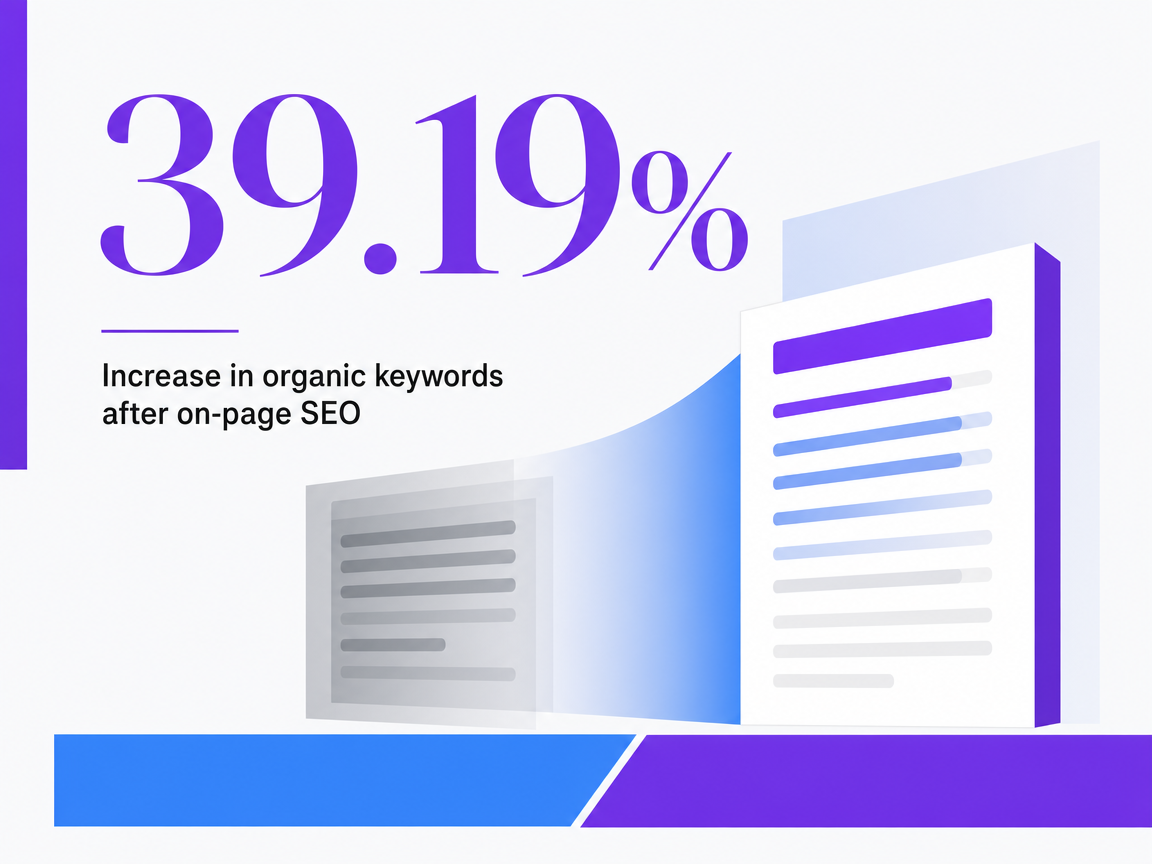 Increase in organic keywords after on-page SEO
Increase in organic keywords after on-page SEO
Test AI-driven optimization on real content now
Evaluate content optimization impact using published articles and live SEO data during your trial access.
Layer two: keyword and rank intelligence
Ahrefs for backlink and keyword universe analysis
Ahrefs answers two questions no semantic scoring tool can: what does the referring domain profile of a page actually look like, and what queries does the wider competitive set already rank for that the current site does not. Its Site Explorer and Content Gap reports are the practical entry points for a content manager sizing next quarter's editorial calendar against real competitive coverage rather than a hunch.
The measurable outcome case for keeping Ahrefs in the stack is documented in link-intelligence work. A study of the Klodev digital development firm used Ahrefs for backlink analysis alongside GA4 and Search Console for performance monitoring, and reported a strong correlation between acquiring authoritative backlinks and gains in domain rating, organic traffic, and keyword rankings 4. Meta-analytic evidence across ten studies from 2022 to 2024 identified backlinks alongside content quality and keyword optimization as among the most influential variables driving aggregate SEO outcomes 10.
The caveat is metric provenance. Domain rating is a proprietary Ahrefs score, not a Google signal, and treating it as ground truth invites the exact single-tool overreliance the next entries are meant to correct.
Semrush for competitive rank tracking
Semrush earns its slot on the strength of its position-tracking cadence and its keyword gap workflow, which lets a manager watch a defined competitor set move against a defined query set on a schedule the team actually reviews. For editorial planners, the Position Tracking and Keyword Gap tools convert competitive intelligence into a weekly artifact rather than a quarterly export.
The outcome category is rank movement visibility across a tracked cluster, which matters because the Prodesanews.com study used Semrush alongside Ahrefs and GA4 to attribute a 1.6% click-through rate lift to metadata work and a 35% organic traffic lift to combined technical interventions 3. Neither number is recoverable without disciplined rank tracking against a stable competitor list.
The caveat is that Semrush position data is scraped estimation, not Google's own reporting. Weekly directional accuracy is high; single-day precision is not. Managers should treat Semrush trend lines as decision inputs and cross-check absolute positions against Search Console before reporting them upstream.
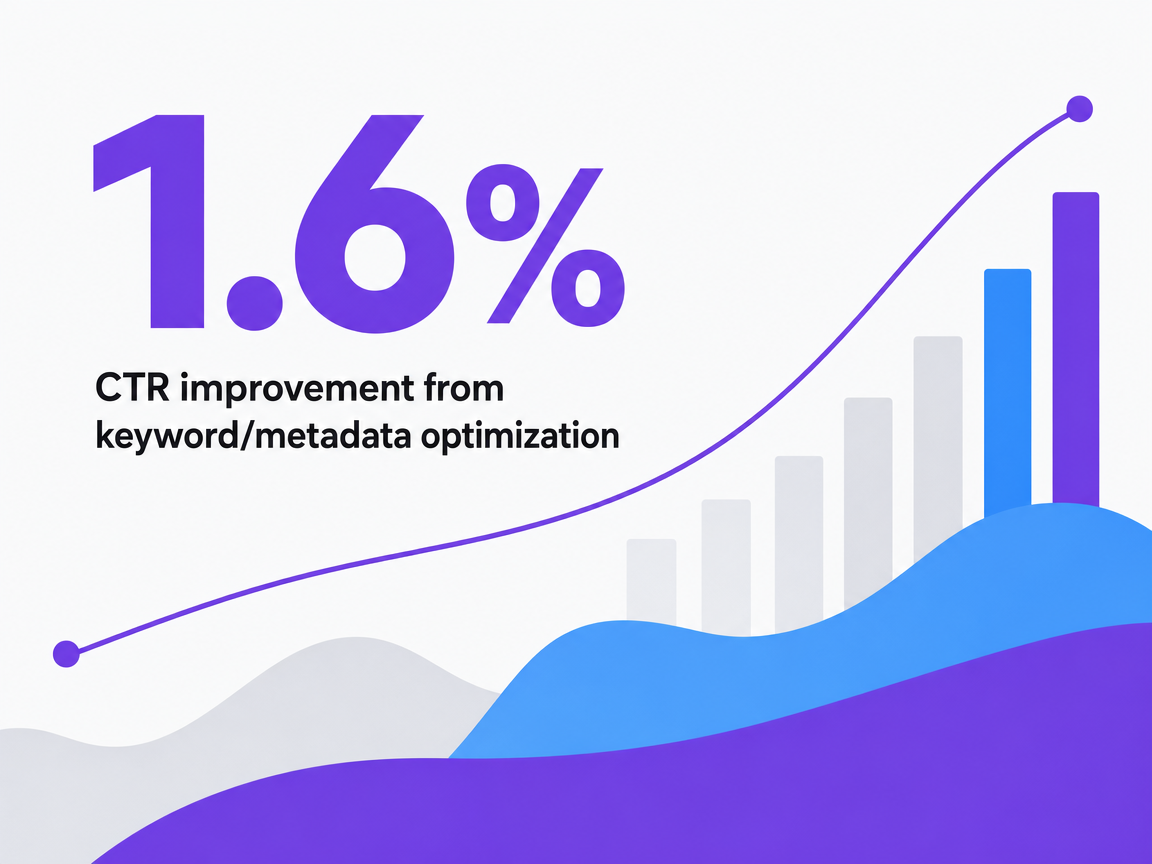 CTR improvement from keyword/metadata optimization
CTR improvement from keyword/metadata optimization
Google Search Console as the ground-truth reference
Search Console is the only source in this layer that reports what Google itself recorded: impressions, clicks, average position, and the queries that produced them, tied to specific URLs. Every other keyword intelligence tool in the stack is modeling behavior Search Console observes directly. That asymmetry is the point.
The measurable outcome case is the one commercial vendors quietly rely on. The Klodev backlink work used Search Console alongside GA4 to confirm the traffic and ranking gains attributed to authoritative link acquisition 4. Survey work on SEO tooling identifies Search Console as essential to tracking organic visit growth and evaluating whether optimization strategies actually worked, precisely because it removes the vendor-metric variance built into commercial platforms 8.
The operational discipline is straightforward: when Ahrefs, Semrush, and Search Console disagree on position or traffic for a tracked query, the number that goes into the board deck is the Search Console number. The other two explain why it moved.
Layer three: technical audit
Screaming Frog for crawl-level diagnostics
Screaming Frog does what no semantic scoring or rank intelligence platform can: it crawls a site the way a search engine would and returns a full inventory of what is actually indexable. Broken internal links, duplicate title tags, orphaned pages, redirect chains, missing canonicals, and hreflang errors surface in a single export. For a content marketing manager inheriting an editorial calendar layered on top of years of legacy pages, that inventory is the difference between publishing new content into a healthy site and publishing into a leaking one.
The measurable outcome case sits in combined-treatment studies. The Prodesanews.com research attributed a 35% organic traffic lift to technical SEO interventions such as XML sitemap deployment and responsive design, alongside a 1.6% CTR lift from metadata work 3. Quantitative comparison of SEO strategy weights places technical optimization slightly ahead of off-page factors for first-page placement 7. Screaming Frog is the tool that produces the punch list those interventions come from. The caveat is scope: it diagnoses, it does not fix. A manager without a developer relationship will collect a backlog and ship no changes.
Google PageSpeed Insights for Core Web Vitals
PageSpeed Insights narrows the technical audit to the metrics Google publicly weighs in ranking: Largest Contentful Paint, Interaction to Next Paint, and Cumulative Layout Shift, reported for both mobile and desktop against real-user field data from the Chrome UX Report. Where Screaming Frog surfaces structural defects, PageSpeed Insights isolates rendering and interaction problems that degrade the user experience Google measures directly.
The outcome category is the same technical performance envelope that produced the 35% organic traffic lift in the Prodesanews.com combined-intervention study, which used PageSpeed Insights among its diagnostic tools 3. Research reviewing on-page SEO fundamentals consistently identifies mobile responsiveness and site performance as core inputs to visibility gains 5. The caveat is interpretation. Lab scores and field scores diverge, and a green lab result on a lightly trafficked page can mask a red field result once real users load it. Managers should report field data to the CMO and treat lab scores as engineering guidance.
Layer four: AI-assisted production and orchestration
Jasper for draft acceleration inside brand guardrails
Jasper's functional job is throughput. It converts an approved brief, a target-terms list, and a style guide into a first draft faster than a human writer working from scratch, and it stores brand voice profiles that constrain output toward a defined register rather than a generic model default. For a content marketing manager running a calendar that outpaces available writer hours, the practical value sits in first-draft velocity on briefs that have already cleared semantic scoring upstream.
The measurable outcome category is throughput per editorial cycle, feeding the same content-quality lever that meta-analytic work identifies as one of the most influential variables in aggregate SEO outcomes 10. Jasper does not rank pages. It shortens the distance between a Clearscope-scored brief and a draft an editor can shape.
The caveat is quality-control cost. Draft velocity without editor bandwidth produces published pages that fail the on-page fundamentals content-focused research consistently identifies as central to visibility 5. The tool belongs in a stack with defined editorial review, not as a substitute for it.
Vectoron for optimization-signal-to-execution workflows
Vectoron sits one layer above draft generation. Its functional job is orchestration: pulling signals from the semantic scoring, keyword intelligence, and technical audit layers already covered, ranking the resulting recommendations against live business data, and routing approved work into execution through a single Command Center. Where Jasper accelerates the draft step, Vectoron manages the queue that decides which drafts get written at all, and it does so through specialist AI strategists rather than a general-purpose writing model.
The outcome category is cycle time between optimization signal and published change, which compresses the operational distance that survey work on SEO tooling identifies as the reason multi-tool stacks outperform single-vendor reliance in the first place 8. It is the layer that connects the deltas documented in on-page and technical case studies to a repeatable workflow rather than a one-time project 2, 3.
The caveat is governance. Approval-first automation only pays back when the manager actually reviews the queue. A stack that automates execution without a disciplined approval cadence ships fast and off-strategy in the same quarter.
See How Leading Teams Streamline Content Optimization Across Channels
Request a walkthrough of unified workflows that accelerate content production, integrate SEO insights, and provide measurable impact—purpose-built for agencies and enterprise brands managing complex, multi-channel marketing operations.
Triangulating outputs: which metric to trust from which tool
Every tool in the stack produces a number that looks authoritative in isolation. The discipline that separates a functional stack from an expensive one is knowing which number is a modeled estimate and which is a direct observation, then reporting the observation and using the estimates to explain it.
The operating rule is straightforward. For ranking position and impression-to-click behavior on the current site, Search Console is the source of record. Ahrefs and Semrush model those same values from third-party crawls and clickstream data, so their absolute positions and traffic estimates drift, sometimes by material margins, from what Google actually served. For competitive coverage the site has no visibility into, such as what a rival ranks for or which referring domains point at their pages, Ahrefs and Semrush become the primary sources because Search Console cannot see other properties. For on-page semantic fit, Clearscope and Surfer scores are internal comparisons against SERP competitors, not signals Google publishes; they guide drafting, not reporting. For technical health, Screaming Frog reports observed crawl state and PageSpeed Insights reports Chrome UX Report field data, both direct rather than modeled.
Survey work on SEO tooling reaches the same conclusion from the opposite direction: pairing analytics platforms, Search Console, and commercial rank trackers produces more reliable monitoring than any single vendor's dashboard, because discrepancies between them are the diagnostic signal 8. Report the Search Console number. Keep the others to explain why it moved.
If you manage multiple locations or brands: consolidating overlapping subscriptions
The frame shifts here from single-site operators to content managers running editorial across multiple locations, brands, or franchise units. At that scale, the audit question flips: not "which tool should we add," but "which of the four functional layers is billing us twice." The most common overlap sits in semantic scoring and rank intelligence, where per-seat licenses multiply across brand teams without producing additional coverage.
A disciplined consolidation review maps active subscriptions to the four-layer taxonomy, then costs each subscription in variables the finance team already tracks. The table below is the working template.
| Functional layer | Typical function | Cost/effort variable to track |
|---|---|---|
| Semantic content scoring | Draft grading against SERP competitors | Per-seat licenses × active writers per brand |
| Keyword and rank intelligence | Competitive coverage and position tracking | Tracked-domain slots × brands × keyword volume |
| Technical audit | Crawl inventory and Core Web Vitals | Crawl credits × site count × audit frequency |
| AI-assisted production | Draft velocity and orchestration | Hours saved per optimized brief × briefs per month |
Survey work on SEO tooling supports keeping at least one source per layer rather than doubling up within one, because discrepancies between platforms in the same category rarely justify the second license once Search Console is treated as ground truth 8. If the audit forces a single cut, quantitative comparison of SEO strategy weights places technical optimization slightly ahead of off-page factors for first-page placement, which argues for defending the technical audit layer before trimming keyword intelligence redundancy 7. Cut the second semantic scorer first. Consolidate rank tracking to one commercial vendor plus Search Console next.
A forward directive for the content manager sizing next quarter's stack
The stack a content marketing manager should ship next quarter is not the one with the most licenses. It is the one that covers all four functional layers with a single defensible source in each, treats Search Console as the reporting ground truth, and closes the loop between optimization signal and published change fast enough to compound within the quarter rather than the fiscal year.
The operator directive follows from what the evidence supports. Content quality, keyword optimization, and backlinks are the variables that move aggregate outcomes; technical health decides whether those inputs get counted at all. Audit the current stack against the four-layer map, cut the second tool in any layer where a duplicate exists, and route the reclaimed budget into the layer that shortens the distance between an approved brief and a live page. Platforms such as Vectoron sit in that orchestration layer for teams already publishing at volume. The managers who outperform next quarter will be the ones who stopped adding tools and started removing the ones that were producing the same number twice.
Frequently Asked Questions
References
- 1.Analisis Dampak Penerapan SEO On-Page dan Optimasi Kata Kunci.
- 2.Optimasi SEO On-Page dalam Meningkatkan Organic Traffic dan Peringkat Website.
- 3.Search Engine Optimization Strategies to Improve Prodesanews.com Performance.
- 4.Strategic Use of Backlinks to Enhance Domain Rating and Website Performance.
- 5.A Study on On-Page Off-Page Search Engine Optimization Techniques.
- 6.IMPLEMENTASI SEO ON PAGE PADA WEBSITE LADDER.
- 7.Optimizing online visibility: A comprehensive study on effective SEO strategies and their impact on website ranking.
- 8.SEO Tools And Techniques To Unlocking Online Visibility.
- 9.On-Page SEO Strategy to Increase Organic Traffic and Visibility.
- 10.Meta-Analysis of SEO Effectiveness in Digital Marketing Strategies.