
Key Takeaways
- Google Keyword Planner and Google Trends anchor demand discovery, but strategists must still convert ranged volume signals into commercial value calls and reconcile cannibalization across client ranking sets.
- Keyword Insights and ChatGPT with browsing cover SERP clustering and intent classification, though free rate limits throttle heavy sessions and classifications age quickly as SERP features shift weekly.
- Claude and Gemini free tiers generate defensible briefs from long prompts, but message caps and missing workspace controls turn client data separation into a governance risk before a cost one.
- Surfer's free Chrome extension and Yoast's WordPress plugin compress metadata drafting, matching the 81% of agencies using genAI to lift staff productivity 3, with editors still checking brand voice.
- Google Search Console and Bing Webmaster Tools cover technical triage without query caps, but GSC's 1,000-row export ceiling forces API access once portfolio reporting spans more than a handful of clients.
- Link Whisper and Search Console's Links report handle internal linking from CMS and audit angles, though neither restructures the site graph or reasons across multiple client properties at once.
- Google's Rich Results Test and Schema.org's validator QA structured data at any volume, while ChatGPT and Claude draft JSON-LD that developers must validate against visible page content before deployment.
- Grammarly and Hemingway handle surface editorial review, but free AI detection tools carry the substantiation burden the FTC imposed on Workado 6, keeping originality verification firmly with editors.
- Looker Studio scales reporting across portfolios with no viewer cap, while ChatGPT and Claude compress narrative writing, provided account managers verify summaries against underlying data before client delivery.
- Zapier and Make free tiers prove out orchestration workflows, but 100-task ceilings and scenario caps collapse fast once automation runs across multiple client accounts without human approval gates.
- Vectoron consolidates the previous ten stages behind a single Command Center approval gate, addressing the substantiation and control gaps that surface when agencies use agentic AI for execution 3.
What agency scale actually demands from a free tier
Free AI SEO tools have moved from the fringe of the stack to the middle of it. Forrester's 2026 agency study finds that 9 in 10 US marketing agencies now use generative AI, and half already use agentic AI for execution work 3. Two years earlier, the same research line put agency adoption at just over 60% of decision-makers and 78% among large agencies, with 74% using genAI for creative ideation 1. That slope matters: a Head of SEO evaluating a free tier in 2026 is not testing whether AI belongs in the pipeline, but which tool survives at agency volume.
Agency volume is the operative phrase. A free tier that works for a solo consultant running one site tends to collapse the moment it meets 40 client workspaces, five simultaneous audits, and a shared login policy. The useful evaluation questions are narrower than the marketing pages suggest:
- How many queries per month before the tool throttles?
- How many seats before pricing kicks in?
- Does export survive at scale, or does the free tier cap CSV rows at a number that breaks reporting?
- Can the tool sit inside an approval workflow, or does it push output directly to live pages?
The eleven tools that follow are organized by where they plug into the delivery pipeline, not by popularity. Each entry names the workflow stage it serves, the point where the free tier stops working for agency-scale delivery, and the human oversight the output still requires.
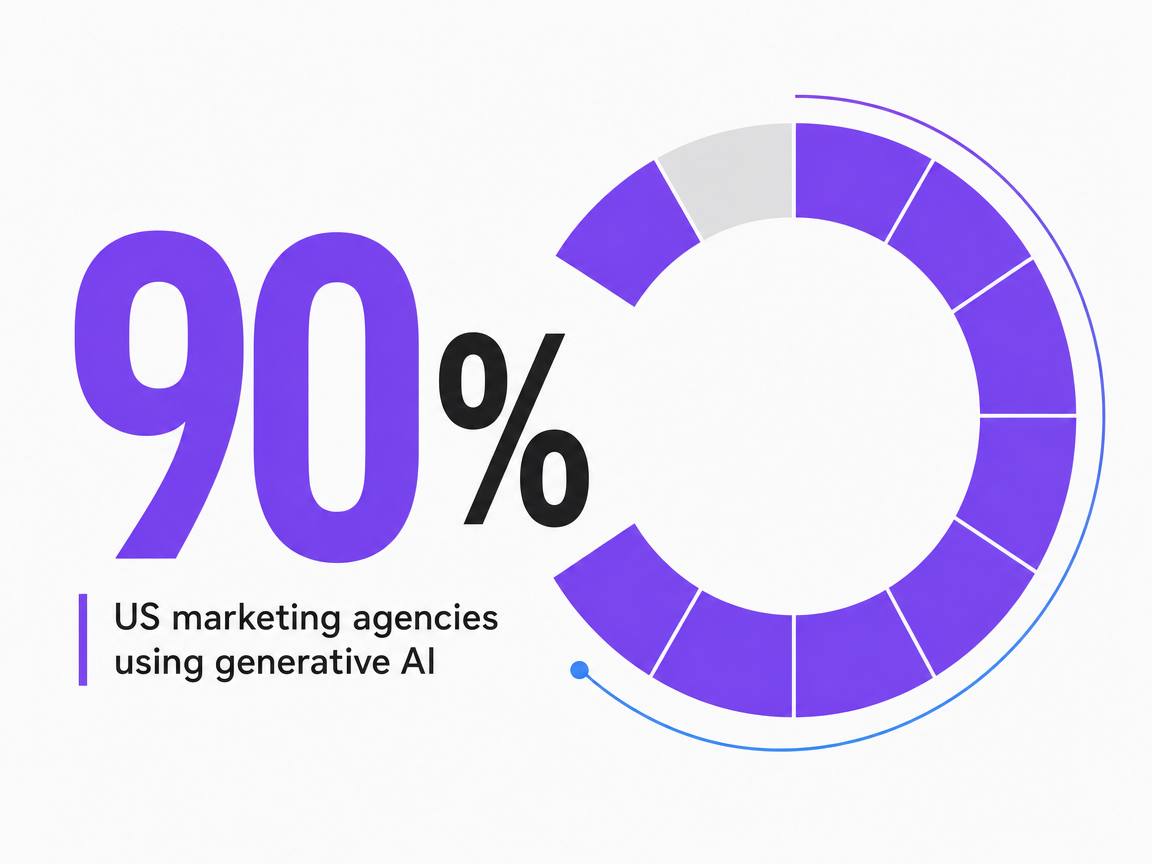 US marketing agencies using generative AI
US marketing agencies using generative AI
How to evaluate a free AI SEO tool against a delivery pipeline
Feature checklists are the wrong evaluation instrument. A Head of SEO running 30 client accounts needs to know where a tool sits in the production line, what it replaces, and what it forces a human to still verify. Five questions do most of the work.
- Where does the output enter the pipeline? Research and briefing tools feed strategists. Drafting and on-page tools feed editors. Technical and schema tools feed developers. A free tier that produces output no one downstream is set up to consume creates friction, not leverage.
- What is the free tier ceiling? Query caps, seat caps, export row limits, and client workspace limits are the four ceilings that matter. The tool is free until one of them breaks at agency volume.
- What does the tool substantiate? The FTC's 2025 final order against Workado made clear that accuracy claims about AI products need competent and reliable evidence 6. Vendor marketing is not evidence. A Head of SEO should be able to reproduce the tool's claimed output on a known dataset before it touches client work.
- Does it fit an approval workflow? Forrester's 2026 data shows half of agencies now use agentic AI for execution 3. Tools that publish directly to client sites without a human gate are a governance problem, not a productivity gain.
- What layer of oversight does the output still require? Name it before the tool ships work.
Test AI-driven SEO workflows at real scale
Experience agency-level publishing with full platform access before committing—publish live, production-ready SEO content during your trial.
The 11 free AI SEO tools mapped to workflow stage
Keyword research and demand discovery
Google Keyword Planner remains the default free entry point for demand discovery. Its data is native to the ad auction, so volume estimates lean broad, but the tool holds up for seed expansion across dozens of client accounts inside a single Google Ads MCC login. The free tier ceiling is analytical, not operational: without an active campaign, Planner shows ranged volumes rather than exact figures, which forces strategists to triangulate against Search Console query data.
The second option in this stage is Google Trends. It carries no query cap and no seat limit, which makes it durable for agency use across a portfolio of local, national, and seasonal accounts. Trends earns its slot as the fastest way to test whether a keyword cluster is expanding, flat, or decaying before a brief is written.
Human oversight requirement: a strategist still has to convert directional demand signals into a targeting decision. Neither tool assigns commercial value, and neither reconciles cannibalization across a client's existing ranking set.
SERP analysis and intent classification
Keyword Insights (free trial tier) and ChatGPT with browsing cover this stage from opposite ends. Keyword Insights clusters queries by SERP overlap, which is the most defensible way to group intent at scale. Its free trial caps at a small number of queries, so the tool functions as a proof-of-concept before a paid seat is negotiated.
ChatGPT with browsing handles the qualitative half: pulling the top ten results for a query, summarizing the dominant content format, and flagging whether the SERP is transactional, informational, or mixed. Free-tier rate limits throttle heavy sessions, but the tool is durable for one-off intent audits.
The free tier stops working when a Head of SEO tries to cluster more than a few hundred queries per month or needs API access for automated pipelines. Human oversight: SERP feature composition changes weekly, and intent classification from a model snapshot ages quickly. Strategists should re-run classification before publishing calendars are locked.
Brief generation and outline structuring
Claude (free tier) and Gemini (free tier) are the two models most agencies now use for brief generation. Both accept long prompts, which matters because a defensible brief needs a target query, the top five ranking URLs, an intent classification, a client's brand voice notes, and internal linking targets fed in as context. The free tiers hold up for a handful of briefs per day per user.
The free tier ceiling arrives faster than most agencies expect. Message caps reset on rolling windows, and neither free tier offers workspace-level controls, which means client data separation depends on individual strategist discipline. That is a governance problem before it is a cost problem.
Human oversight requirement: brief output should be treated as a first-draft structural argument, not a strategic decision. Editors still have to verify that the outline matches SERP intent, that the H2 sequence supports the target query, and that no fabricated statistics have entered the brief. The FTC's action against Workado underscored that AI-generated accuracy claims require competent and reliable evidence 6.
On-page optimization and metadata drafting
Surfer SEO (free Chrome extension) and Yoast SEO (free WordPress plugin) anchor this stage. Surfer's free extension surfaces on-page term coverage and word count guidance directly inside Google Docs, which drops the metadata drafting cycle from hours to minutes across a content team. Yoast's free tier handles title, meta description, and slug optimization at the CMS layer, which matters when a single production editor is publishing across 30 client sites.
Forrester's 2026 data lands hard here. Eighty-one percent of agencies now use generative AI with the explicit objective of improving staff productivity, and 63% use AI agents for the same purpose 3. That marks a functional shift from the 2024 baseline, when 74% of agencies used genAI primarily for creative ideation 1. Metadata drafting is the clearest expression of that shift.
The free tier stops working when export, bulk editing, or multi-site management is needed. Human oversight: metadata still needs an editor's eye for brand voice and click-through framing.
Technical audit and log analysis
Google Search Console is the non-negotiable free tool at this stage. Coverage reports, Core Web Vitals data, and index status feed directly into technical triage. The free tier has no query ceiling for a verified property, but the 1,000-row export limit per report is the point where agency-scale reporting breaks. Teams working across 40 clients typically pair GSC with the Search Console API to bypass the row cap.
Bing Webmaster Tools covers the other half of the index picture and includes a free site scan that catches on-page and structural issues Google's tooling does not surface as directly. It carries no seat cap, which matters when a technical lead wants read-only access distributed across the team.
Human oversight requirement: both tools report symptoms, not causes. A technical SEO still has to decide whether a coverage drop reflects a canonical issue, a rendering issue, or a crawl budget issue. AI-assisted log parsing helps, but the diagnostic call stays human.
Internal linking and site architecture
Link Whisper (free tier) and Google Search Console's Links report handle internal linking from two directions. Link Whisper suggests inbound and outbound internal links inside WordPress during drafting, which is where the linking decision is cheapest to make. The free tier caps suggestions per post, which limits it to single-site accounts rather than portfolio-wide deployment.
The Links report inside Search Console is the free audit lens. It shows which internal pages point to which targets, and the export tells a strategist where anchor concentration is thin. Neither tool restructures the site graph. That still requires an information architect's judgment.
The free tier stops working when an agency needs to reason across multiple client sites at once, or when internal link opportunities need to be surfaced from crawl data rather than CMS data. At that point, most teams move to a paid crawler with a link-intersection view. Human oversight: link suggestions should be reviewed against topical relevance, not accepted as blanket recommendations.
Schema generation and structured data QA
Google's Rich Results Test and Schema.org's validator are the free QA layer. Neither has a query ceiling that matters at agency scale. Both tell a developer whether a markup block will render as a rich result and where the syntax breaks.
For schema generation itself, ChatGPT and Claude free tiers produce first-draft JSON-LD for common types (Organization, LocalBusiness, FAQPage, Article) faster than manual authoring. The free tier ceiling is context length: a strategist can only feed so much page content per session before hitting a rate cap.
Human oversight requirement: schema generated by a model must be validated against the live page content before deployment. Marking up entities that do not appear in visible content is a manual action against Google's spam policies, and no free tool prevents that mistake automatically. The QA step stays with the developer.
Content QA, originality checks, and editorial review
Grammarly (free tier) and Hemingway Editor handle the surface layer of editorial review at no cost. Grammarly's free tier catches grammar and clarity issues; Hemingway flags readability grade and passive construction. Both scale across an editorial team through individual accounts, though the free tiers cap advanced suggestions.
Originality checking is the harder problem. Free AI detection tools carry a real substantiation risk. The FTC's 2025 final order against Workado required the company to stop making accuracy claims about its AI content detection product unless backed by competent and reliable evidence 6. A Head of SEO who forwards a detection score to a client is inheriting that substantiation burden.
Human oversight requirement is highest at this stage. Detection scores should inform an editor's judgment, not replace it. Originality verification for client work rests on source review, not a probability score. The free tier stops working the moment a client asks how the score was generated.
Reporting and client-facing dashboards
Looker Studio is the free reporting layer most agencies already run. Its native connectors to GA4, Search Console, and Google Ads make it durable at portfolio scale, and there is no cap on the number of reports or viewers. The free tier's ceiling shows up in refresh frequency and in the manual effort required to build a template that scales across 30 clients.
ChatGPT and Claude free tiers compress the narrative half of reporting. Pasting a month of GSC and GA4 data and asking for a plain-English performance summary drops report-writing time significantly. The free tier caps arrive quickly when a strategist is running summaries across a full client roster in one sitting.
Human oversight requirement: the narrative is the account manager's argument to the client, not the model's. AI-generated summaries frequently overstate correlation as causation and gloss over algorithm-driven variance. Every summary should be reviewed against the underlying data before it reaches a client's inbox.
Workflow orchestration across the stack
Zapier (free tier) and Make (free tier) are the orchestration layer that connects the ten stages above. Zapier's free tier covers 100 tasks per month and single-step Zaps, which is enough to prove out a workflow but breaks the moment agency-scale automation runs across multiple client accounts. Make's free tier offers more operations per month but caps scenario complexity.
Both tools solve the same problem: a brief generated in Claude needs to land in a Google Doc, trigger a Slack notification, and update an Airtable production tracker without manual copy-paste. Orchestration is where free tier ceilings hit fastest, because every client site multiplies the task count.
Human oversight requirement is architectural, not per-run. A Head of SEO has to decide which workflows are safe to automate end-to-end and which need a human approval gate. Publishing workflows, in particular, should never run without one. That governance line is the reason free orchestration alone rarely holds up past a handful of clients.
Approval-gated execution: Vectoron as a consolidation layer
The tenth item exposes the eleventh problem. A Head of SEO running the previous ten tools at agency scale is managing ten logins, ten free tier ceilings, ten sets of vendor claims to substantiate, and no unified approval gate. Forrester's 2026 data shows half of US marketing agencies now use agentic AI for execution work 3, which raises the governance stakes on any tool that ships output without human sign-off.
Vectoron occupies the eleventh slot as a consolidation layer rather than a point tool. It coordinates content, SEO, PPC, backlinks, social, and call intelligence through specialist strategists that surface ranked recommendations, route every recommendation through a Command Center approval step, and execute only after sign-off. There is no free tier; the trial period is two weeks. It belongs on the list because the alternative to eleven free tools is one governed workflow with the approval gate built in.
Human oversight requirement is the product design itself: nothing ships without a strategist's approval, which resolves the substantiation and control questions the previous ten tools leave open.
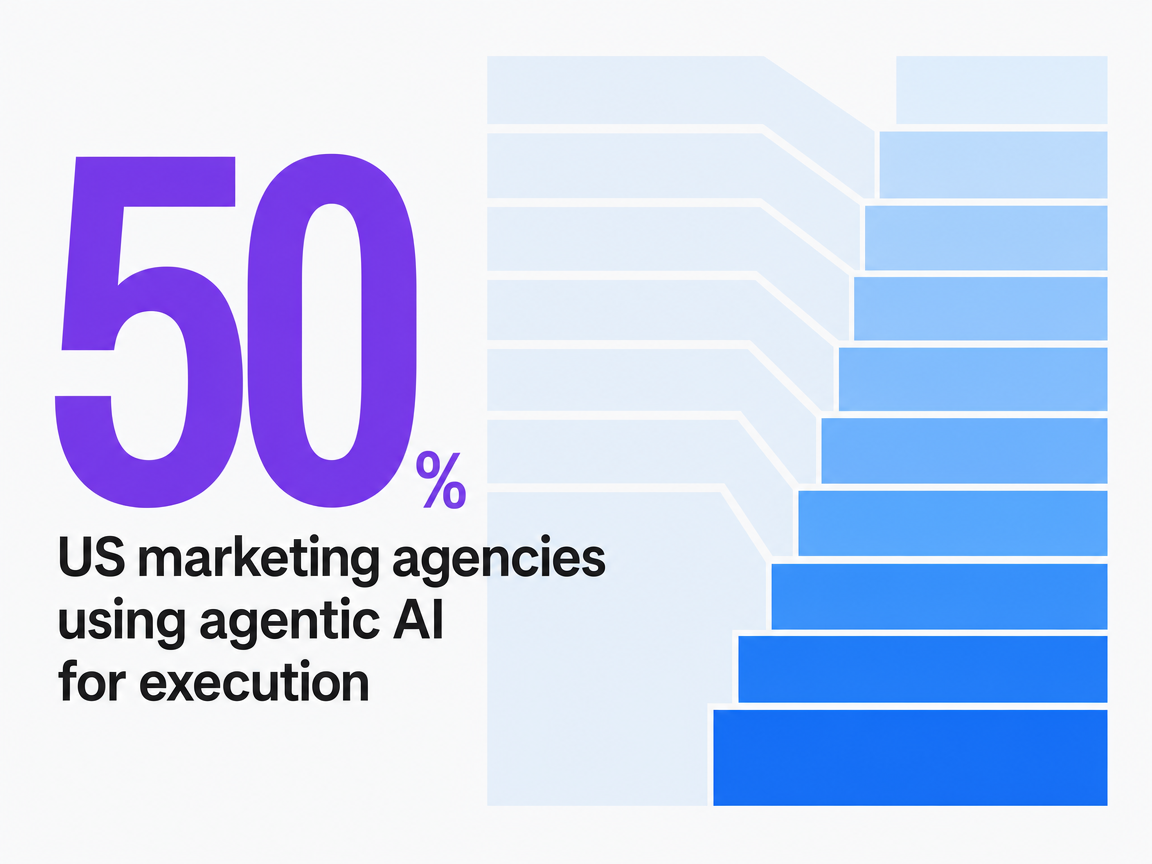 US marketing agencies using agentic AI for execution
US marketing agencies using agentic AI for execution
If you manage multiple client portfolios: a consolidation view
The scope shifts here. The rest of this piece speaks to a Head of SEO evaluating tools stage by stage. This section is written for the operator running the P&L across a 30 to 80 client portfolio, where free tier sprawl is a margin problem before it is a workflow problem.
McKinsey put the productivity ceiling on generative AI in marketing at 5% to 15% of total marketing spend 7. That range is the upper bound of what tool consolidation and AI-assisted execution can return, and it assumes redeployed labor time actually converts to billable output. At agency scale, the delta between the low end and the high end is the difference between covering a seat's cost and funding a new production pod.
The table below maps the workflow stages covered earlier against typical free tier ceilings and the point where paid becomes forced. Dollar figures are deliberately absent; ceilings are expressed as the operational variable that actually breaks first.
| Workflow Stage | Typical Free Tool | Free Tier Ceiling | Point Paid Becomes Forced | Human Oversight |
|---|---|---|---|---|
| Research | Keyword Planner, Trends | Ranged volumes only | Exact-volume reporting | Commercial value call |
| Briefing | Claude, Gemini free | Message caps, no workspaces | Client data separation | Intent verification |
| On-page | Surfer extension, Yoast | Single-site, no bulk edit | Multi-site publishing | Brand voice edit |
| Technical | GSC, Bing WMT | 1,000-row export | Portfolio-wide reporting | Diagnostic call |
| Reporting | Looker Studio | Manual template build | Automated refresh at scale | Narrative accuracy |
| Orchestration | Zapier, Make free | 100 tasks/month | Multi-client automation | Approval gate design |
Eleven logins produce eleven approval gaps. The consolidation math is straightforward: every free tier ceiling multiplied by the client count is the point where the portfolio operator is paying anyway, just across more invoices and more governance surface area.
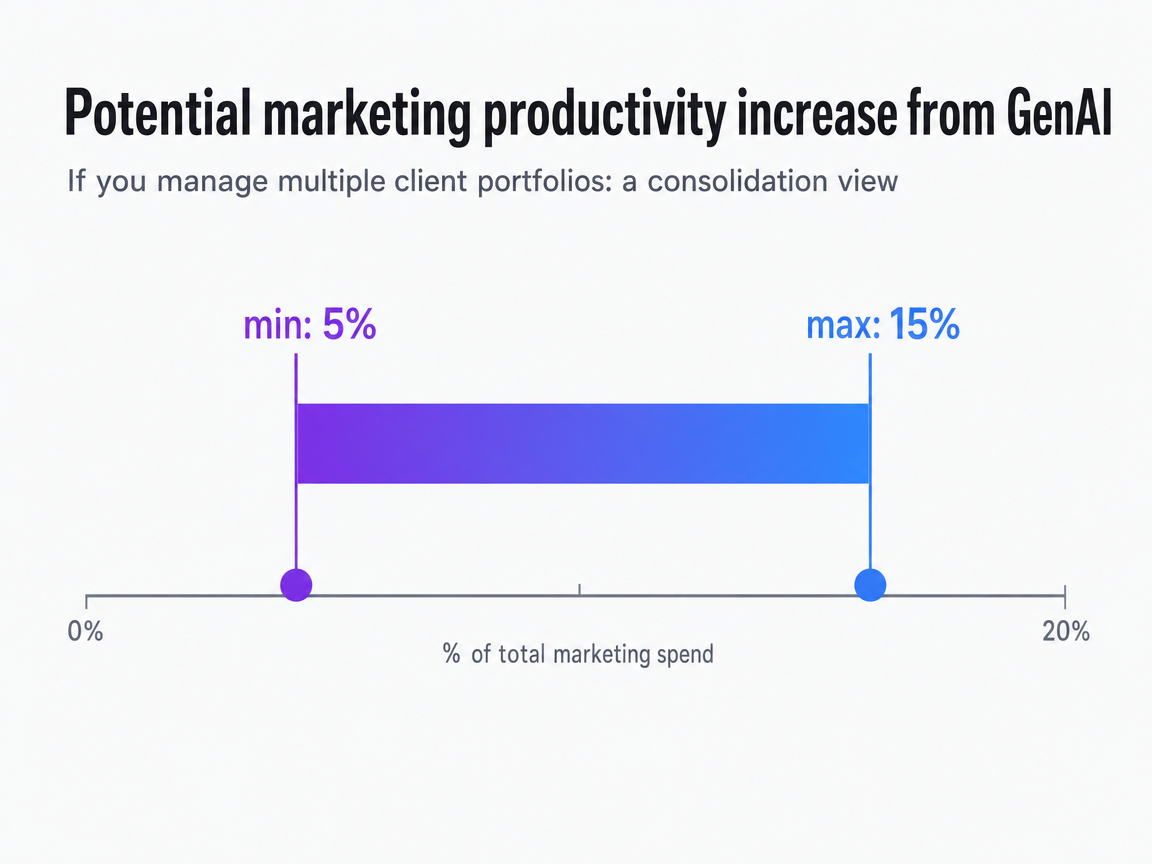 Potential marketing productivity increase from GenAI
McKinsey estimated that generative AI could increase marketing function productivity by 5% to 15% of total marketing spend.
Move Beyond Free: See How Leading Agencies Automate SEO Execution at Scale
Connect with our team for a data-driven walkthrough of AI-powered SEO workflows proven to increase output, reduce manual overhead, and maintain strategic oversight across all client accounts.
Governance: what regulators and frameworks expect before free AI touches client work
Client procurement teams have started asking questions that a Head of SEO could once punt on. What model produced this brief? What data was fed to it? Who approved the output before publication? Free AI SEO tools do not sidestep those questions; they concentrate them, because the vendor is not on the client's paper.
Two reference points anchor the answer. The NIST AI Risk Management Framework is voluntary, but it has become the default vocabulary for describing trustworthy AI use, and it directs organizations to incorporate trustworthiness considerations into the design, development, use, and evaluation of AI systems 5. Translated to an SEO delivery pipeline, that means a written record of which tools produce which artifacts, which humans approve them, and how errors get caught before they reach a client site.
The FTC's 2025 final order against Workado gave the enforcement half of that picture. The company was barred from making accuracy claims about its AI content detection product unless the claims were backed by competent and reliable evidence 6. A Head of SEO who repeats a free tool's accuracy or ranking-lift claim to a client is adopting that substantiation burden without a contract to fall back on.
Five controls close the gap before any free AI SEO tool touches client work:
- a documented tool register per account,
- client data separation at the workspace level,
- a named human approver for every artifact class,
- a substantiation file for any vendor claim repeated to the client, and
- a kill-switch for tools that publish without a gate.
Where free tiers break and paid becomes forced
Every free tier on the list above has a specific failure point. Naming them in one place gives a Head of SEO a defensible timeline for when procurement conversations start rather than a surprise mid-quarter.
Query-based tools break first. Keyword Insights and the model-based free tiers hit rate caps within a single strategist's afternoon once query volume crosses a few hundred per month. Export-limited tools break next. Search Console's 1,000-row cap per report is the ceiling that forces API access or a paid crawler once portfolio reporting spans more than a handful of clients. Seat-limited tools follow. Surfer's free extension and Link Whisper's free tier assume single-user, single-site deployment and stop scaling the moment a shared production pod needs concurrent access.
Orchestration breaks fastest of all. Zapier's 100-task monthly ceiling is consumed by a single automated brief-to-doc-to-tracker workflow running across 15 clients. That is the point where free tier sprawl stops being economical and a consolidated execution layer with a built-in approval gate becomes the cheaper answer.
Frequently Asked Questions
References
- 1.US Agencies Are Currently Leading Generative AI Adoption.
- 2.The State Of Generative AI Inside US Marketing Agencies, 2025.
- 3.The State Of AI Inside US Marketing Agencies, 2026.
- 4.Predictions 2026: Marketing Agencies.
- 5.AI Risk Management Framework.
- 6.FTC Approves Final Order against Workado, LLC, Which Misrepresented the Accuracy of Its Artificial Intelligence Content Detection Products.
- 7.Economic potential of generative AI.
- 8.The state of AI in early 2024: Gen AI adoption increases and starts to generate value.
- 9.How generative AI can boost consumer marketing.
- 10.The economic potential of generative AI: The next productivity frontier.