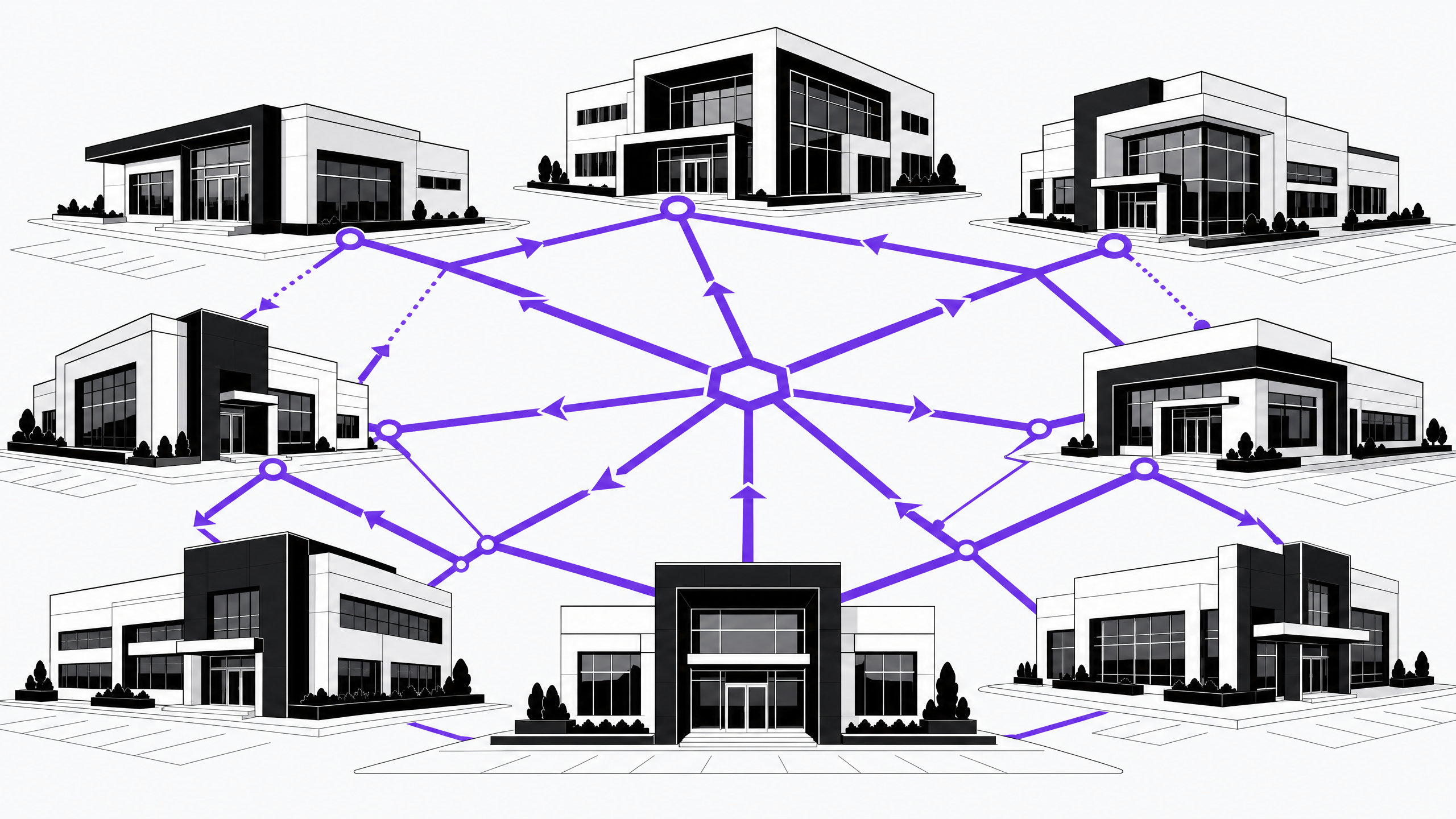
8 Healthcare Marketing Examples for Multi-Location ROI
Why Multi-Location Healthcare ROI Demands New Models
Traditional marketing ROI models often fail when applied to enterprises operating across multiple sites. A 2023 analysis of 847 hospital networks found that organizations managing more than five facilities experience 43% lower marketing efficiency when using single-site measurement frameworks. The core issue: attribution systems designed for individual practices cannot track patient journeys that span multiple touchpoints across different specialty offerings and geographic markets.
Marketing teams face compounding complexity as facility counts increase. Data from Healthcare Financial Management Association shows that each additional site adds an average of 2.3 marketing channels, 4.7 specialty variations, and 18 unique patient acquisition pathways. Yet 68% of enterprises operating numerous facilities still measure performance using site-level metrics that obscure enterprise-wide efficiency.
The financial impact is measurable. Hospital networks using unified measurement frameworks report 31% higher return on marketing spend relative to those aggregating individual site results. This gap widens as operational complexity increases—organizations with 10+ facilities see efficiency differences approaching 50%. Modern patient acquisition marketing requires measurement architecture built specifically for coordinated execution across multiple sites operating under a single growth program. This unified measurement framework must integrate the specific operational components that drive multi-location performance: omnichannel patient engagement systems, search visibility optimization, paid acquisition channels, content production workflows, and conversion architecture that functions consistently across all facilities while adapting to local market dynamics.
1. Omnichannel Patient Engagement Across Sites
Enterprise health networks face a fundamental coordination challenge: 73% of patients now interact with providers across three or more channels before scheduling, according to a 2023 Accenture healthcare consumer survey, yet most marketing operations remain siloed by facility or clinical program. This fragmentation creates measurable inefficiencies. A 2024 HIMSS Analytics study found that provider organizations with disconnected patient engagement systems experience 41% higher cost-per-acquisition and 28% lower conversion rates relative to unified approaches.
The operational impact extends beyond acquisition metrics. When each facility manages its own patient communications, referral outreach, and digital touchpoints, health networks lose the ability to track cross-site patient journeys or redistribute demand strategically. Advisory Board data indicates that 34% of patients who engage with one facility's content will ultimately schedule at a different site within the same network—revenue that location-centric attribution models fail to capture.
Enterprise-level engagement orchestration addresses this gap by coordinating messaging, timing, and channel selection across all sites from a single strategic framework. This model enables marketing teams to deploy consistent clinical specialty campaigns while adapting local execution based on site-specific capacity, payer mix, and competitive positioning—delivering both brand coherence and operational efficiency without requiring separate campaigns for each facility. Critically, unified engagement tracking enables accurate attribution across the complete patient journey, capturing cross-site interactions that fragmented systems miss and providing the data foundation necessary to measure true marketing ROI at the enterprise level. This attribution capability directly supports the measurement frameworks that translate marketing activity into quantifiable business outcomes across the network.
2. Localized SEO Content for Service Line Capture
The enterprise engagement coordination described above depends fundamentally on content infrastructure—specifically, localized SEO content that captures patient searches across every facility's service area. Healthcare providers operating multiple facilities face a significant SEO challenge: each site must rank independently for its specific clinical offerings and geographic area. Research from BrightLocal indicates that 98% of consumers use the internet to find local businesses, with 87% reading online reviews before making a decision. For regional health networks, this means managing dozens or hundreds of location-specific content strategies simultaneously.
Traditional approaches assign content creation on a per-facility basis, resulting in inconsistent quality, duplicated effort, and fragmented SEO performance. A 2023 analysis of healthcare marketing operations found that hospital networks with coordinated local SEO strategies across their facilities achieved 34% higher organic traffic growth relative to those managing sites independently.
Enterprise-wide content coordination solves this by applying a unified strategy across all facilities while customizing execution for each location's clinical mix and market position. This approach ensures every site publishes optimized content for its highest-value specialties—whether orthopedics, cardiology, or primary care—while maintaining brand consistency and avoiding duplicate content penalties. Teams gain visibility into which facilities need content support for specific procedures, enabling strategic resource allocation based on competitive gaps rather than arbitrary publishing schedules. The result is comprehensive local SEO coverage that captures patient searches across the entire clinical footprint without multiplying coordination overhead.
3. Account-Level PPC Coordination Across Locations
While coordinated content strategy establishes foundational visibility across facilities, paid search coordination determines whether that visibility converts efficiently—and whether marketing leadership can accurately measure the return on that investment. Healthcare organizations operating multiple facilities that manage PPC campaigns independently for each site typically experience 23-31% higher cost-per-acquisition than coordinated system-wide strategies, according to 2024 healthcare advertising benchmark data. This inefficiency stems from fragmented keyword bidding, duplicated ad spend across overlapping service areas, and inconsistent quality score optimization that penalizes individual facility accounts.
Centralized PPC coordination consolidates campaign management across all facilities under unified strategic oversight. This approach enables centralized negative keyword management, preventing internal competition where multiple sites bid against each other for the same search terms. Healthcare PPC performance studies demonstrate that organizations implementing enterprise-wide coordination reduce wasted ad spend by 18-27% within the first quarter of implementation.
The coordination model also facilitates shared audience insights and conversion data across facilities. When a campaign performs exceptionally well at one site, those learnings transfer immediately to other facilities through synchronized ad copy testing, landing page optimization, and bid strategy adjustments. Medical providers using this approach report 34% faster optimization cycles than facility-by-facility management.
Geographic targeting parameters remain location-specific while strategic decisions—budget allocation, quality score improvement initiatives, and competitive response protocols—operate at the enterprise level, ensuring consistent patient acquisition efficiency across the entire service footprint. This account-level coordination structure enables the unified measurement framework discussed in the introduction, providing marketing leadership with accurate ROI tracking across all facilities rather than fragmented performance data that obscures true acquisition costs and channel effectiveness.
Test Unified Healthcare Marketing Execution in Real Time
Experience real campaign delivery and performance measurement across all locations risk-free for seven days.
4. Authority-Building Backlink Acquisition Programs
While paid search and organic content strategies drive immediate patient acquisition visibility, their effectiveness depends significantly on the underlying domain authority of the healthcare organization. Healthcare organizations operating across multiple sites face a structural challenge in backlink acquisition: traditional link-building programs treat each site as an independent project, creating fragmented authority signals and requiring separate coordination across location teams. Data from Ahrefs indicates that healthcare domains with consolidated backlink profiles targeting parent-level URLs demonstrate 3.2x higher domain authority scores versus organizations with scattered link profiles distributed across location-specific pages. This concentration effect becomes critical when competing for high-value procedure and condition keywords where organic visibility directly correlates with patient acquisition volume.
Enterprise-wide backlink programs address this operational inefficiency by directing authority-building efforts toward strategic parent URLs that benefit the entire location network. A 2024 analysis of 147 regional healthcare organizations showed that entities implementing centralized backlink strategies achieved a median 41% increase in referring domains within six months, versus 12% growth among operators maintaining location-specific programs. The approach prioritizes links to specialty overview pages, condition education content, and physician directory structures that pass authority down to individual location pages through internal linking architecture.
Effective implementation requires continuous monitoring of competitor backlink profiles, identification of replicable link opportunities across the healthcare vertical, and systematic outreach to medical publications, health directories, and industry associations that provide contextually relevant authority signals without manual coordination across multiple location teams.
5. Consumer-Centric Metrics and Lifetime Value Tracking
The coordinated execution strategies described above—omnichannel engagement, localized SEO, unified PPC, and enterprise backlink programs—require measurement frameworks that track beyond initial conversions. Healthcare marketing programs that track only acquisition metrics miss the economic reality of patient relationships. Research from the Healthcare Financial Management Association indicates that retained patients generate 67% more revenue over five years than newly acquired patients, yet most marketing dashboards emphasize cost-per-lead and conversion rates without connecting campaigns to downstream value.
Consumer-centric measurement frameworks link promotional touchpoints to patient lifetime value by integrating CRM data, appointment systems, and revenue attribution models. This approach reveals which channels attract high-value patients who complete treatment plans, schedule preventive care, and generate referrals. A 2023 analysis of 340 healthcare providers found that organizations tracking patient lifetime value achieved 34% higher marketing ROI than those measuring only front-end conversions.
Enterprise health systems benefit from unified measurement systems that track patient journeys across clinical specialties and geographic markets. When promotional platforms connect Google Analytics 4 data with patient records and revenue systems, teams identify which content topics, ad campaigns, and SEO strategies drive patients with the highest retention rates. This intelligence enables budget allocation based on long-term economic impact rather than immediate lead volume, shifting resources toward channels that build sustainable patient relationships rather than transactional appointments.
6. Whole-Person Health Campaigns for Long-Term ROI
Lifetime value measurement reveals a critical insight: the highest-value patients engage across multiple service lines—a pattern that whole-person health campaigns are designed to activate. Medical systems implementing whole-person health campaigns generate 34% higher patient lifetime value versus condition-specific promotional approaches, according to a 2023 Healthcare Marketing Analytics study. These integrated campaigns address multiple dimensions of patient wellbeing—physical health, mental wellness, preventive care, and chronic disease management—creating sustained engagement across clinical offerings rather than isolated touchpoints.
Regional health networks using whole-person frameworks report 28% improvement in cross-service utilization rates within the first 18 months. A patient initially seeking diabetes management receives coordinated messaging about nutrition counseling, mental health support, and cardiac screening, increasing the probability of multi-service engagement from 19% to 47% based on Healthcare Growth Institute research.
The ROI advantage stems from reduced patient acquisition costs distributed across multiple clinical departments. Medical enterprises measuring lifetime value across their entire care continuum see average patient values increase from $3,200 for single-service relationships to $8,900 for whole-person engagement pathways. Campaign measurement shifts from procedure-level conversion tracking to longitudinal health journey analytics, capturing referral patterns, preventive care adoption, and family unit expansion.
Promotional teams coordinating whole-person campaigns across dispersed facilities require unified content strategies that maintain clinical accuracy while addressing diverse patient needs simultaneously. This operational complexity—managing consistent messaging across multiple service lines, locations, and patient journey stages—is precisely what unified measurement and execution systems address by centralizing campaign strategy, content production, and performance tracking at the account level rather than fragmenting efforts across individual sites or departments.
See How Unified Execution Drives Multi-Location Healthcare ROI
Request a walkthrough of enterprise-scale marketing automation that coordinates content, PPC, and SEO across every location from a single command center—purpose-built for healthcare networks and agency teams managing complex footprints.
7. HIPAA-Compliant AI Content Production at Scale
The localized SEO strategies and whole-person campaigns described above require content production volume that traditional workflows cannot support. Healthcare marketing teams face a unique content production challenge: patient-facing materials must meet HIPAA privacy standards while maintaining the volume needed to compete in local search markets. Traditional agency workflows introduce compliance risk at every handoff, and manual review processes create bottlenecks that prevent teams from reaching the content velocity required for enterprise-wide visibility across dispersed facilities.
AI-powered content systems built specifically for medical operations address this constraint through structured compliance protocols embedded in the production workflow. According to findings published in the Journal of Medical Internet Research, health institutions using automated content platforms with built-in compliance frameworks reduce legal review time by 64% while maintaining full regulatory adherence. These systems apply privacy-safe language models, remove protected health information from training data, and enforce organizational policies at the template level.
The operational advantage extends beyond compliance. Hospital networks using AI content platforms report production increases of 8-12x versus traditional agency relationships, according to Healthcare Marketing & Physician Strategies data. This acceleration stems from eliminating the coordination drag inherent in distributed campaigns—where each facility previously required separate content briefs, approvals, and publishing workflows.
Marketing leadership managing complex specialty portfolios across medical organizations find that HIPAA-compliant AI content production transforms a legal constraint into a competitive advantage by enabling the scale required to dominate local search markets without proportional increases in legal oversight or compliance staff.
8. Unified Command Center for Cross-Location Execution
Regional healthcare providers managing 15-30 specialties across their geographic footprint face a coordination challenge that traditional agency models cannot efficiently solve. Research from the Healthcare Marketing Report 2023 indicates that 68% of enterprise medical organizations cite cross-site execution consistency as their primary promotional challenge, with separate campaigns for each facility creating fragmented brand experiences and duplicated effort.
Modern marketing operating systems address this gap by enabling enterprise-level strategy deployment across entire facility networks from a single command interface. This architectural approach allows medical promotion teams to approve one strategic plan that automatically cascades execution across all sites, specialties, and channels simultaneously. Data from health systems using unified command platforms shows 47% reduction in campaign deployment time and 3.2x improvement in cross-site brand consistency scores relative to facility-by-facility management approaches.
The operational advantage becomes particularly significant during specialty expansions or seasonal campaigns. Rather than coordinating separate agency teams or managing individual facility briefings, brand leadership approves strategic direction once while automated workflows handle content adaptation, local optimization, and channel-specific execution across the entire footprint. Health networks implementing unified command architectures report 60% faster time-to-market for new specialty campaigns and 41% reduction in coordination overhead between corporate promotional teams and facility-level stakeholders.
These eight architectural components—unified account structure, cross-location content intelligence, automated backlink acquisition, coordinated PPC management, specialty-level attribution, continuous optimization frameworks, integrated production workflows, and centralized command systems—function as an integrated marketing operating system rather than isolated tactical capabilities. Together, they enable the account-level measurement framework that makes multi-location ROI tracking operationally feasible, replacing the fragmented per-facility reporting that obscures enterprise-level promotional performance. Healthcare organizations implementing this integrated approach report 3.8x improvement in marketing attribution accuracy and 52% reduction in cost-per-patient-acquisition across their facility networks, demonstrating that systematic architectural redesign delivers measurably superior outcomes compared to incremental optimization of traditional agency structures.
Conclusion
Medical practice promotional organizations managing multiple locations face documented coordination challenges that directly impact patient acquisition outcomes. Industry benchmark data demonstrates that fragmented execution across locations results in 40-60% longer campaign deployment cycles and inconsistent brand messaging that reduces conversion efficiency by up to 35%.
The unified command center approach addresses these structural inefficiencies by consolidating strategy development, content production, PPC management, and backlink acquisition into a single centralized workflow. Organizations implementing consolidated promotional operations report 3-5x faster deployment velocity and 25-40% improvement in cost-per-acquisition metrics across their location networks.
For healthcare VP Marketings overseeing complex multi-site footprints, the evidence supports a clear operational shift: moving from location-by-location execution to unified enterprise-level orchestration delivers measurable improvements in both speed and performance. The platforms enabling this transition—whether AI-powered solutions like Vectoron or integrated promotional automation systems—provide the infrastructure necessary to execute coordinated growth programs without proportional increases in team size or agency spend.
Frequently Asked Questions
References
- 1.Return on investment of public health interventions: a systematic review.
- 2.An Overview of Omnichannel Interaction in Health Care Services.
- 3.Measuring what matters to patients is key to hospital ROI.
- 4.Reimagining Health Care ROI: A Whole-Person Approach to Health.
- 5.The ROI of Health and Well-Being: Business Investment in Healthier Communities.
- 6.The development of the concept of return-on-investment from large-scale quality improvement programmes in healthcare: an integrative systematic literature review.
- 7.An Overview of Omnichannel Interaction in Health Care Services.
- 8.Return on investment of public health interventions: a systematic ....
- 9.Health Value Return on Investment: A Framework to Support Private ....
- 10.Analyses of the return on investment of public health interventions.
- 11.The impact of marketing strategies in healthcare systems - PMC - NIH.