
Key Takeaways
- Strategist inputs—cluster maps, detailed briefs, and intent tags on every keyword—decide whether AI-assisted volume compounds into topical authority or scatters into orphaned posts that never rank 3.
- AI should generate first drafts, headline variants, H2/H3 scaffolding, and FAQ blocks against a tight brief, while original data, quotes, and regulated claims stay with humans who can verify them 6.
- The editorial gate runs three passes—voice against a style guide, accuracy against sources, and E-E-A-T for depth and trustworthiness—so AI drafts never reach publish without human sign-off 3, 5.
- Restructured pipelines cut production time 30–50%, pushing per-writer output from 8–10 posts monthly to 13–20 without new headcount, but only when cluster design and gate quality hold 1, 2.
- Semantic SEO rewards pillar-and-supporting cluster architecture over scattered keyword coverage, so throughput compounds only when every draft lands inside a defined topical territory the site is claiming 3.
- Governance means humans own strategy, sourcing, voice, and final approval while AI handles cheap-variation drafting stages, with review records tracing every artifact back to a specific gate 6, 8.
- Four predictable failure modes—unedited drafts, volume without clusters, AI bolted onto unchanged habits, and no measurement loop—convert throughput gains into orphaned URLs if not designed against early 1, 8.
- Measurement runs at the cluster level across operational, ranking, and pipeline-contribution tiers, because search engines evaluate topical authority by cluster rather than by individual post 10, 3.
The Real Bottleneck Isn't Writer Headcount
Ask a content manager why blog output has stalled and the answer is almost always the same: not enough writers. The staffing math looks reasonable. The Content Marketing Institute pegs the average blog post at roughly 1,400 words and three hours 48 minutes of production time, with biweekly publishing as the minimum cadence for teams reporting strong results 2. Multiply that against a topic cluster strategy and the calendar breaks before the year does.
But the same benchmarks show something worth sitting with. Only about 20% of bloggers report strong results, down from 30% five years ago 2. Adding writers to a pipeline where four out of five posts underperform doesn't fix the ranking problem. It scales it.
The actual constraint is workflow architecture. Teams that publish more, rank more, and spend less have restructured production into a governed sequence: human strategists define intent, clusters, and briefs; generative AI produces first drafts, variations, and optimization passes; human editors govern voice, accuracy, and E-E-A-T 1. Writer headcount stops being the lever. Draft-to-publish cycle time, cluster coverage, and editorial gate throughput do.
The rest of this piece treats blog production as a system to design, not a role to hire. The framing shift matters because every downstream decision—brief format, AI role definition, editor checkpoints, measurement—follows from it.
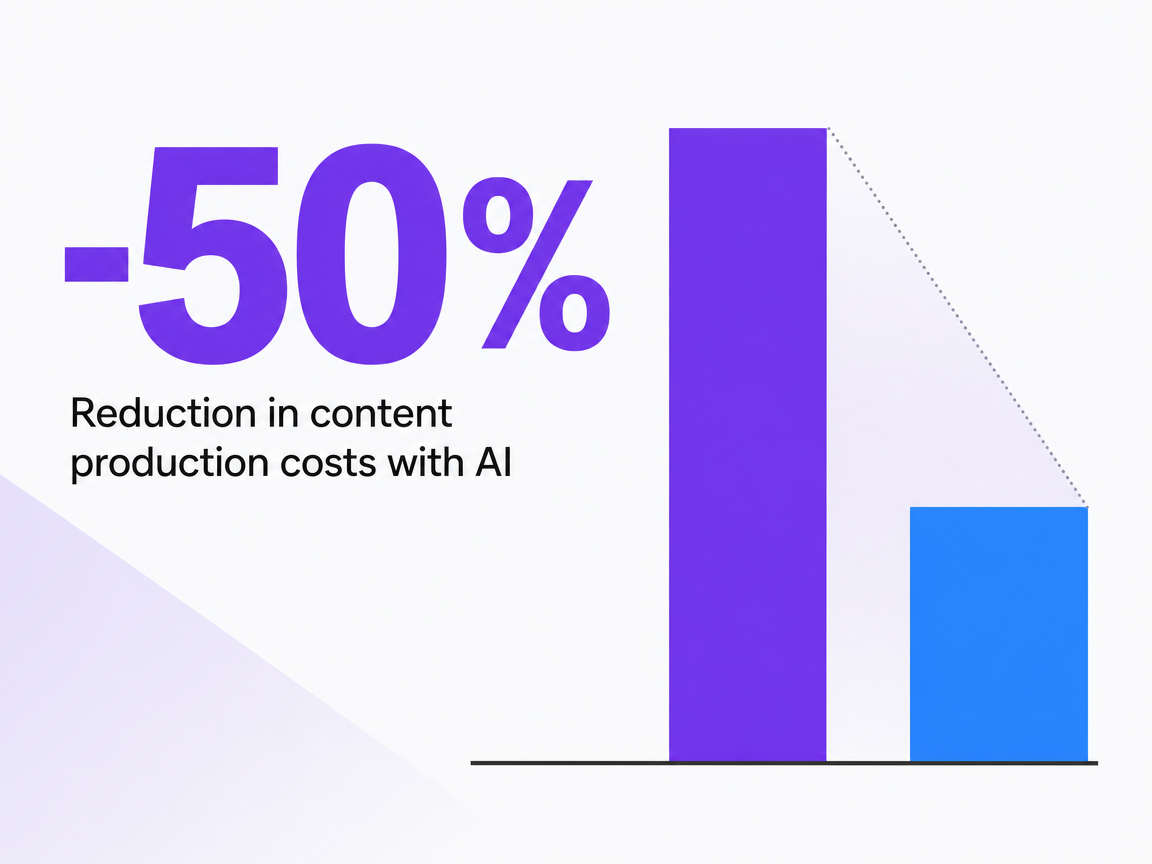 Reduction in content production costs with AI
Reduction in content production costs with AI
Why Ad-Hoc AI Use Fails and Governed Pipelines Win
Most content teams already use generative AI. Individual writers open a chat window, draft an intro, paste it back, edit for voice. Output ticks up. Quality drifts. Brand voice fragments across contributors because each person prompts differently, accepts different tradeoffs, and edits to a different bar. This is the ad-hoc pattern, and it plateaus fast.
The CalStateLA workflow study formalized what separates that pattern from teams that actually scale. When marketing organizations moved from fragmented individual use to coordinated pipelines with defined roles, oversight, and training, they reported 30–50% reductions in content production time and up to 50% cost savings 1. The paper studied marketing teams applying the AI Collaboration Maturity Model across campaign and content workflows, not blog production in isolation, so the deltas describe operational integration broadly rather than a single blog benchmark. The mechanism, though, transfers cleanly: the gain came from workflow design, not from better prompts.
Three properties define a governed pipeline:
- Tasks are decomposed before AI touches them—keyword clusters, intent, brief, draft, edit, SEO QA, publish—so each stage has a defined input and output.
- Roles are assigned per stage; the strategist owns intent, the AI owns first draft, the editor owns voice and E-E-A-T, the SEO reviewer owns on-page structure.
- Checkpoints are explicit. Nothing advances without sign-off at the editorial gate.
Ad-hoc use skips all three. It treats AI as a personal productivity tool rather than a shared production stage, which is why teams see individual speed gains that never compound into calendar-level throughput. The pipeline version compounds because every post moves through the same defined stages with the same quality gates, and cycle time becomes a metric the team can actually manage.
The Market Context Content Managers Are Operating In
The pipeline redesign isn't happening in a vacuum. Copywriting teams that have integrated generative AI into their workflows report roughly 60% productivity increases, driven by AI absorbing routine drafting and variation work so humans can spend cycles on higher-cognitive tasks like strategy, editing, and E-E-A-T review 4. That figure describes copywriting specifically, not marketing broadly, and the productivity gain assumes the AI is actually integrated rather than opened in a browser tab between other tasks.
The volume side of the equation is moving just as fast. Gartner projects that 30% of outbound marketing messages from large enterprises will be synthetically generated by 2025, up from under 2% in 2022 4. The forecast covers outbound messaging across channels rather than blog content in isolation, but the trajectory is directional: search results, competitor blogs, and the ambient content environment content managers publish into are being reshaped by AI-assisted production at every tier.
Two consequences follow. First, teams still operating on pre-2023 production math—one writer, one draft, one editor, one publish cycle per week—are being outpaced by competitors running governed pipelines against the same keyword clusters. Second, the quality bar is rising even as volume rises, because search evaluators and readers are both getting better at spotting undifferentiated AI output. McKinsey frames the shift as moving from campaign-based production to continuous growth, where content pipelines run always-on rather than in quarterly sprints 10. Content managers who haven't restructured yet are competing against teams that have. The pipeline question isn't whether to redesign—it's how fast.
Accelerate Blog Production Without Extra Hiring
Test-drive streamlined SEO blog workflows and publish actual articles before committing to a full subscription.
Designing the Content Pipeline
Strategist Inputs: Clusters, Briefs, and Intent Mapping
The pipeline starts before any prompt gets written. Strategist inputs determine whether AI-assisted volume compounds into topical authority or dilutes into scattered posts that never rank. Three artifacts do the work: a cluster map, a brief template, and an intent tag on every keyword the team commits to.
The cluster map is the strategic aim point. Semantic SEO now rewards content organized around pillar topics with supporting posts that cover the subject holistically, using schema markup and depth signals to establish topical authority 3. A strategist working ahead of the pipeline defines the pillar, the 8–20 supporting subtopics, and the internal link structure before the first draft is queued. Without that map, an AI-assisted team publishes faster into the same coverage gaps competitors are already exploiting.
The brief is where strategist judgment translates into AI-consumable input. A working brief specifies the primary keyword, secondary and semantic variants, search intent (informational, commercial, transactional), the specific reader persona, target word count, mandatory sources, internal links, and a short list of angles the post must cover and questions it must answer. The keyword research work itself—seed terms, difficulty scoring, competitor gap analysis, outline construction—remains a human task because it depends on business context AI cannot read from a prompt 9.
Intent mapping is the third artifact and the one most teams skip. Each keyword gets tagged with what the searcher is trying to do and what stage of the funnel they occupy. Gartner's guidance is direct: identify and list content tasks that benefit from generative AI before scaling, and clarify how AI fits into the team's workflow rather than bolting it onto existing habits 8. Intent tags are what let the editorial calendar prioritize clusters by pipeline contribution, not just search volume.
The AI Draft Stage: What to Generate and What to Withhold
With a brief in hand, the AI draft stage produces the raw material an editor will shape. Large language models can generate a first draft of a 1,400-word blog post in seconds rather than the hours a human writer would spend on the same task, which is the mechanism behind the reported productivity gains in copywriting workflows 6. The stage works because the brief already resolved the hard questions. Structure, intent, sources, and angle are decided. The model executes against a defined specification.
What to generate at this stage:
- The full first draft against the brief
- Two or three alternative introductions
- Meta title and description variants
- H2 and H3 structure aligned to the outline
- Internal link candidate suggestions based on the cluster map
- FAQ blocks derived from the semantic keyword set
Producing variations at draft time is cheaper than producing them later, and it gives the editor material to choose from rather than a single fragile artifact to defend.
What to withhold from the draft stage:
- Original data
- Direct quotes attributed to named people
- Statistics not present in the supplied source set
- Competitive claims
- Legal or regulated-industry assertions
These belong to the strategist and editor because the model cannot verify them and will confabulate confidently when asked. McKinsey frames the broader capability as expanding what marketers can produce and how quickly, using examples like generating multiple versions of ad copy and personalized emails at scale 10. The same logic applies to blog drafts: generate abundantly at the stages where variation is cheap, and reserve human cycles for the claims that carry risk.
The Editorial Gate: Voice, Accuracy, and E-E-A-T Review
The editorial gate is where a governed pipeline earns its ranking gains and where ad-hoc AI use collapses. AI cannot replace content creators; it supports ideation, drafting, and repurposing while humans hold final responsibility for voice and judgment 5. The gate exists to enforce that division of labor consistently, post after post, rather than trusting each contributor to apply it differently.
Three review passes structure the gate:
- The voice pass checks the draft against a documented style guide: sentence rhythm, forbidden phrases, brand terminology, reading level, and the tonal register the publication has committed to. Voice drift is the first symptom of ad-hoc AI use and the fastest way brand equity erodes when synthetic content proliferates 1.
- The accuracy pass verifies every statistic, quote, source citation, and factual claim against the underlying references, replacing anything the model produced without direct support in the brief's source set.
- The E-E-A-T pass is the one most teams underinvest in. It checks whether the post demonstrates expertise (specific mechanisms, not surface summaries), experience (concrete examples grounded in real operations), authoritativeness (named sources, credentials where relevant), and trustworthiness (transparent citations, no unsupported claims). Semantic SEO and topic clusters only compound when the underlying posts carry E-E-A-T signals search evaluators can actually detect 3.
Editors at the gate operate as reviewers of AI output rather than originators of prose, which is the role redefinition documented across teams that have restructured production—humans move to review, refinement, and orchestration while AI handles initial creation 6. Cycle time at the gate becomes the throughput metric the operation manages.
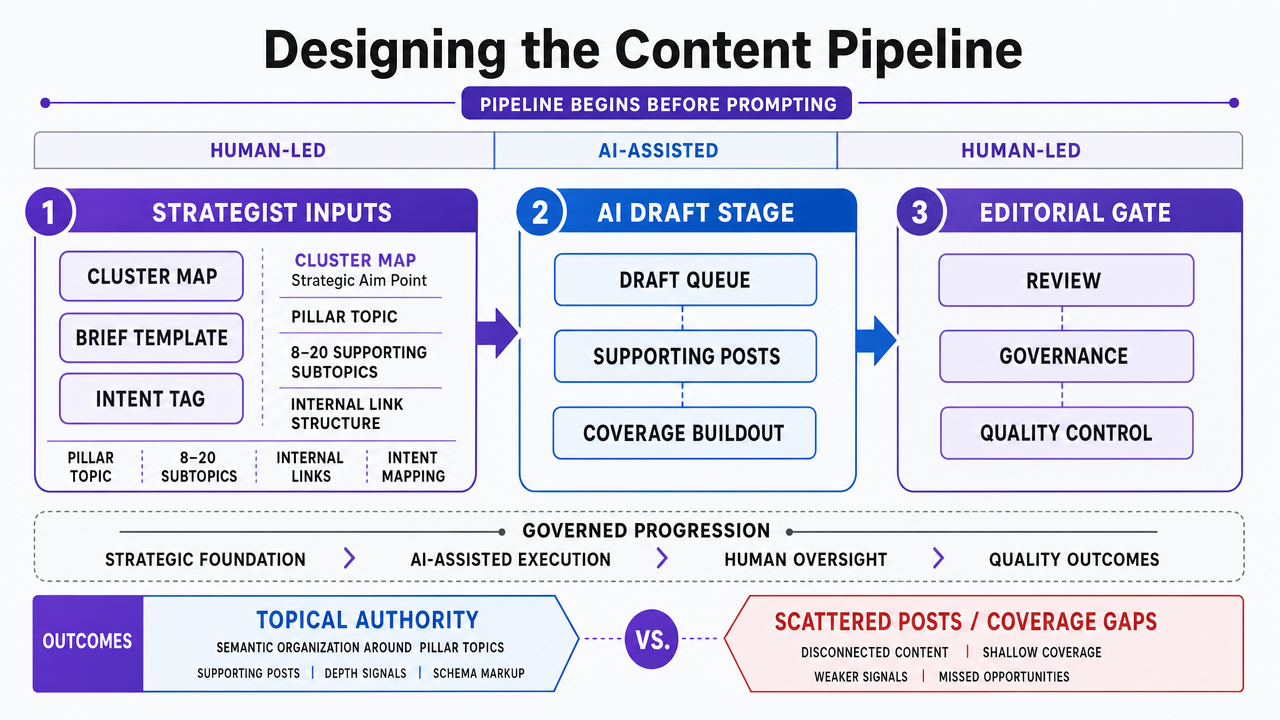 Visualize the governed pipeline stages described in the section: strategist inputs, AI draft stage, and editorial gate, showing role decomposition between humans and AI
Throughput Math: What the Pipeline Actually Produces
Numbers make the pipeline argument tractable. Start from the industry baseline: a 1,400-word average post, three hours 48 minutes of production time per post, biweekly cadence as the minimum for teams reporting strong results, and roughly 20% of bloggers actually reporting those strong results 2. A single writer operating at that baseline produces about two posts per week, or roughly 8–10 per month once meetings, revisions, and cluster planning are absorbed into the same hours.
Apply the sourced deltas from teams that restructured production around AI. The CalStateLA workflow study documented 30–50% reductions in content production time and up to 50% cost savings when marketing organizations moved from ad-hoc AI use to coordinated pipelines with defined roles and oversight 1. Those figures describe marketing workflows broadly, not blog production in isolation, and the range reflects variance across teams at different maturity stages of the AI Collaboration Maturity Model. The mechanism—decomposed tasks, AI at the draft stage, humans at the gate—transfers to blog operations directly.
| Metric | Baseline (CMI benchmarks) | AI-assisted pipeline |
|---|---|---|
| Production time per post | ~3h 48m 2 | ~1h 54m–2h 40m (30–50% reduction) 1 |
| Posts per writer per month | 8–10 at biweekly minimum 2 | 13–20 with same headcount |
| Cost per post | Baseline | Up to 50% lower 1 |
| Publishing cadence | Biweekly minimum 2 | 2–3x per week per cluster |
Two caveats sit inside the table. The 30–50% and 50% figures come from teams that completed the workflow redesign, not teams still bolting AI onto existing habits, so the deltas describe the ceiling of the transition rather than the first month of it. And throughput gains only convert into ranking gains when the extra posts land inside a defined cluster with editorial-gate quality controls. The same benchmarks show that only about 20% of bloggers report strong results 2; a pipeline that doubles output without fixing the cluster and gate design doubles the share of posts that never earn organic traffic. Throughput is the enabling metric. Cluster coverage and gate-adjusted quality determine whether it compounds.
Semantic SEO and Topic Clusters as the Aim Point
Volume without architecture is the fastest way to dilute a content operation. A pipeline that can produce 15 posts a month against no cluster map produces 15 orphaned URLs competing with each other for the same weak signals. The strategic question isn't how many posts the team can ship. It's what topical territory those posts collectively claim.
Semantic SEO now rewards content organized around pillar topics with supporting posts that cover the subject holistically, using schema markup and in-depth authoritative treatment to establish topical authority 3. That guidance describes the current search evaluation frame, not a tactical checklist. The mechanism is that search engines increasingly assess whether a site treats a subject comprehensively rather than whether individual pages hit keyword density targets. A cluster of 12 interlinked posts covering a pillar topic outperforms 12 disconnected posts targeting adjacent keywords, even when raw word counts match.
For AI-assisted pipelines, this reframes what the strategist points production at. Each cluster becomes a defined publishing target: one pillar page covering the subject at depth, 8–20 supporting posts addressing subtopics and long-tail intent, and an internal link structure that signals relatedness to search evaluators. The AI draft stage executes against briefs that already sit inside this map. The editorial gate checks whether each post reinforces the cluster's topical claim or drifts into adjacent territory the site hasn't committed to owning.
Cluster design also determines which posts get built first. Pillar pages carry the topical anchor and need the deepest editorial investment; supporting posts convert throughput gains into coverage. A team running the pipeline against three well-defined clusters will out-rank a team running the same pipeline against 30 scattered keywords, because the underlying signal density is stronger. Throughput compounds only when it lands inside architecture.
Scale SEO-Optimized Blog Production—No Additional Writers Required
See how leading teams accelerate SEO content velocity with AI-driven workflows. Discover evidence-based strategies to increase output and ranking impact without increasing headcount or compromising editorial standards.
Governance: Role Decomposition Between Humans and AI
Governance is where the pipeline stops being a diagram and starts being an operating manual. The question isn't whether humans or AI produce better output in isolation. It's which tasks belong to which actor, and what evidence supports the split.
Human strategists own the decisions that require business context AI cannot read from a prompt: keyword research and difficulty scoring, cluster architecture, brief construction, source selection, editorial voice enforcement, and E-E-A-T review 9, 3. These stages carry the risk. A weak cluster map or an unverified statistic doesn't get better because the draft was fast. AI handles the stages where variation is cheap and specification is tight: first drafts against the brief, meta title and description variants, H2 and H3 scaffolding, FAQ blocks derived from semantic keyword sets, and internal link candidate lists 6, 10.
The Gartner-aligned framing is practical. Before scaling AI use, teams should identify and list the specific content tasks that benefit from generative AI and clarify how each fits into the existing workflow rather than layering AI on top of unchanged habits 8. That guidance addresses AI integration across marketing operations broadly, not blog production specifically, but the decomposition step is what prevents governance from collapsing into vague oversight.
Two governance mechanics keep the split honest:
- Every AI-produced artifact carries a review record noting who approved it against which criteria, so voice drift and factual errors trace back to a specific gate.
- AI is never granted the last approval on published content—humans hold sign-off authority at the editorial gate and the SEO QA pass.
Role redefinition is documented across teams that restructured production: humans move to review, refinement, and orchestration while AI handles initial creation 6. Governance is what makes that division durable across dozens of posts a month rather than a policy that erodes by the third quarter.
Failure Modes to Design Around
The pipeline breaks in predictable places. Naming the failure modes up front is cheaper than debugging them at post 50.
- Unedited AI drafts are the most common failure and the most damaging. A draft that passes through the editorial gate without a voice pass, an accuracy check, and an E-E-A-T review carries the same surface fluency as a strong post and none of the signal density. Fragmented individual AI use produces inconsistent quality and brand voice risks even when output rises 1. The remedy is not better prompts. It is refusing to publish anything that hasn't cleared all three gate passes.
- Volume without cluster architecture is the second failure. A team that doubles output against scattered keywords doubles the share of orphaned URLs. Semantic SEO rewards depth and topical coverage, not raw page counts 3. Posts that sit outside a defined cluster compete with the site's own pages for weak signals and rarely earn organic traffic.
- Bolting AI onto unchanged habits produces individual speed gains that never reach the calendar, which is why Gartner's guidance starts with task decomposition before scaling 8.
- Running the pipeline without a measurement loop hides which clusters convert and which posts drift, leaving throughput unaudited.
Design against these four modes early, or spend the next two quarters unwinding them.
Measurement: Closing the Loop from Draft to Pipeline Contribution
A pipeline that ships posts faster without a measurement loop is a pipeline running blind. The metrics worth tracking split into three tiers, and each tier answers a different question about whether throughput is converting into ranking and revenue.
- Operational metrics measure whether the pipeline itself is healthy: draft-to-publish cycle time, editorial gate pass rate on first review, posts per cluster per month, and share of drafts that clear all three gate passes without rework. These are the signals that catch voice drift and brief quality erosion before they show up in traffic reports.
- Ranking metrics measure whether the cluster architecture is working: pillar page rankings for target head terms, supporting post rankings for long-tail intent, cluster-level share of voice, and internal link equity distribution.
- Pipeline contribution metrics close the loop: organic sessions per cluster, assisted conversions, and revenue influenced by cluster—not just raw traffic.
McKinsey's framing of continuous growth over campaign cycles matters here 10. Measurement runs against the cluster, not the individual post, because that is the unit search engines evaluate. A team publishing 15 posts a month with no cluster-level dashboard has velocity without direction. The loop is what turns the pipeline from a production system into a compounding asset.
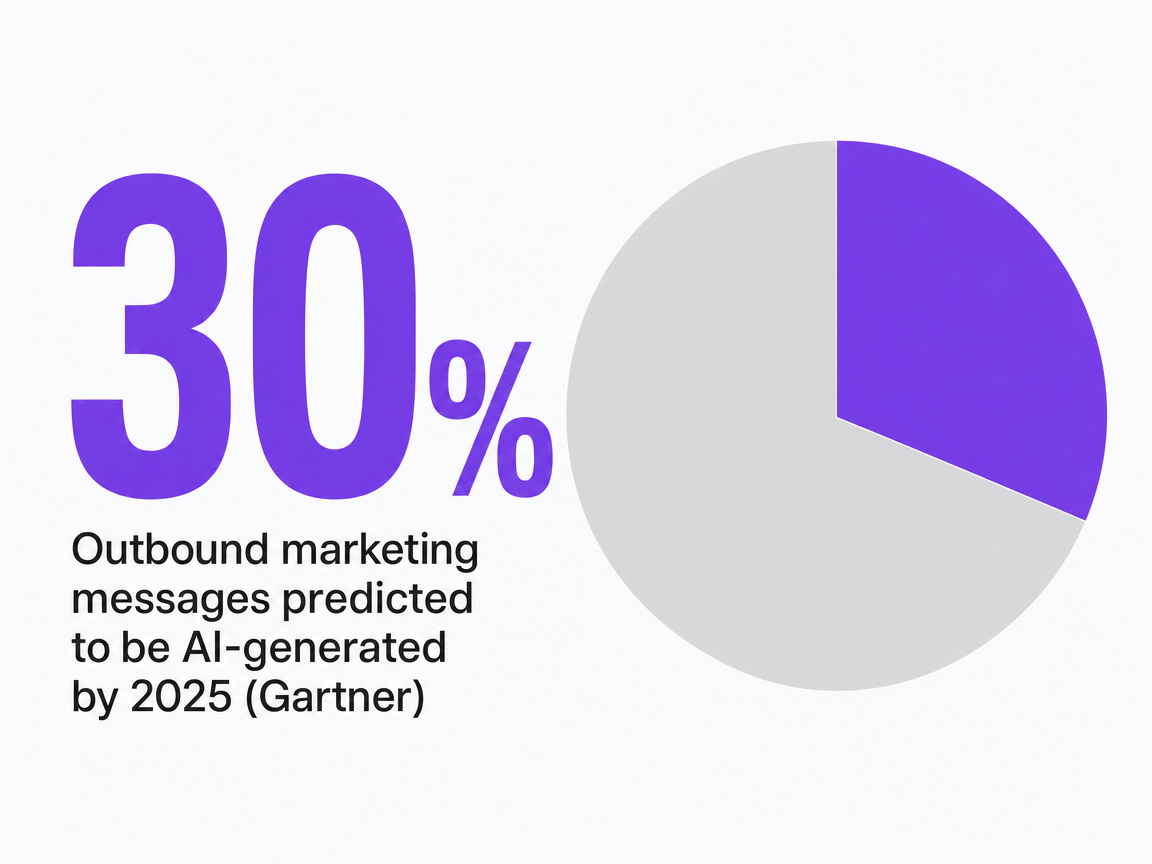 Outbound marketing messages predicted to be AI-generated by 2025 (Gartner)
Outbound marketing messages predicted to be AI-generated by 2025 (Gartner)
Frequently Asked Questions
References
- 1.Integrating Generative AI Into Team-Based Marketing Workflows.
- 2.57+ Content Marketing Statistics To Help You Succeed in 2025 and Beyond.
- 3.Content Marketing Trends Experts Predict for Success in 2025.
- 4.How Generative AI Is Disrupting Content Creation and Marketing.
- 5.How AI Is Changing Digital Marketing, Content Creation, and CRM.
- 6.Generative AI in Marketing: Content Creation, Campaign Optimization, and Creative Automation.
- 7.How Generative AI Is Impacting Marketing Teams: A Strategic Guide.
- 8.Gartner's Key Insights: Integrating AI Into Marketing.
- 9.How to Do Keyword Research for Your Blog (Step-by-Step with Keysearch).
- 10.From campaigns to continuous growth: AI capabilities shaping marketing.