
Key Takeaways
- Scaling organic output on a frozen headcount depends on cutting the coordination tax between briefing, drafting, review, publishing, and reporting, not on hiring more writers or agencies.
- A governed production loop with five stages—signal, recommendation, approval, execution, measurement—keeps humans in charge of strategy and quality while automating the repetitive middle layer.
- Classic rankings and generative citations reward the same traits, so a single upgraded content standard with named sources, quantified claims, and clear Q&A structure serves both surfaces 9, 15.
- Teams should start with a 90-day plan: diagnose handoffs, install one approval gate on a single content lane, then expand into technical hygiene and retire redundant vendors 16.
The Coordination Tax Nobody Puts on the Budget
A marketing VP with a frozen headcount and a doubled pipeline target needs their existing writers to spend fewer hours on briefing documents, revision threads, and status calls. This gap between hours worked and hours shipped is the coordination tax, a common reason in-house SEO programs stall.
This tax is often hidden. A single blog post typically involves a keyword brief, a freelance draft, internal editing, legal review, CMS build, internal linking, and reporting updates. Each step introduces queue time, potential context loss, and rework. While not a direct line item, this process consumes valuable time that should be dedicated to growth initiatives.
Leading organizations are addressing this as a throughput problem, similar to revenue operations playbooks that identify bottlenecks, automate repetitive tasks, and centralize data before increasing staff 16. This approach applies equally to organic search; scaling is achieved through a repeatable engine, not by expanding the team 20.
This article outlines how lean marketing teams can double organic output by redesigning the workflow between strategy, production, publishing, and measurement, rather than simply hiring more personnel.
Why Adding Headcount Stopped Working
SEO Output Is Bottlenecked by Handoffs, Not Talent
When asked about the SEO calendar, marketing VPs often find that time is consumed by briefing, follow-ups, reviews, reformatting, and reporting on existing drafts, not by the actual writing. Adding more writers typically extends these queues rather than shortening them.
This pattern is also observed in other functions. RevOps leaders, when scaling lean teams, prioritize diagnosing bottlenecks and automating repetitive tasks before adjusting the organizational structure 16. For organic search, this means throughput is limited by the number of times a task changes hands, not by individual productivity.
Sales operations emphasizes that scalability comes from a repeatable system, not from assigning more people to every new challenge 20. For an in-house SEO team of three to eight people, the primary lever for growth is reducing handoffs per published asset, rather than hiring more freelancers to feed an inefficient pipeline.
The Baseline Has Already Shifted to AI-Assisted Operations
Most marketing teams now incorporate AI into their workflows. In 2024, 69.1% of marketers used AI for operations, while only 35.1% used it for content production, a decrease from 44% the previous year as teams became wary of publishing unedited AI drafts 14. This disparity highlights a key trend.
The higher adoption of AI in operations, coupled with a decline in content production use, suggests that marketing leaders find lasting value in AI for workflow elements like data intake, task routing, quality checks, and reporting. They remain cautious about directly publishing AI-generated content, indicating a growing fatigue with unedited outputs.
For VPs facing frozen headcounts, this implies that the scalable advantage lies not in faster chatbot prompting by writers, but in streamlining the coordination around each asset. This aligns with where the broader marketing industry is already investing its AI budget. While human judgment remains crucial for content quality, automation can manage intake, prioritization, briefing scaffolds, internal linking, and performance rollups, freeing up valuable hours for lean teams to meet growth targets.
The Governed Production Loop
Signal, Recommendation, Approval, Execution, Measurement
Teams achieving high organic pipeline per employee operate a five-stage loop, each with a clear owner and artifact, rather than a traditional content calendar.
Signal involves data intake. : This includes Search Console queries, rank changes, crawl errors, conversion patterns, call outcomes, and competitor activity, all feeding into a single intake layer. If a marketing coordinator needs to pull multiple exports to understand daily performance, the loop is inefficient. Signal data should arrive continuously and be centralized.
Recommendation is about ranked prioritization. : Based on the signals, the team determines weekly priorities, such as a new cluster brief, a decaying page refresh, a broken internal link cleanup, or a schema fix affecting multiple URLs. This layer proposes specific actions with supporting rationale, preventing isolated task evaluations.
Approval serves as the human gate. : A VP or content lead accepts, edits, or rejects each recommendation before production begins. This stage integrates human judgment, distinguishing a governed system from an uncontrolled one.
Execution encompasses drafting, publishing, linking, and schema work initiated by approved recommendations. : Since Google's pipeline relies on crawling, indexing, and serving 2, execution must produce pages that meet these technical requirements without manual copy-pasting into the CMS.
Measurement closes the loop by feeding outcomes back into the Signal stage, tracking what ranked, converted, or decayed. : This loop operates weekly, not quarterly.
What Humans Still Own in a Lean SEO Function
Automation centralizes human judgment rather than eliminating it.
Three critical decisions remain with human oversight:
- The strategic framework: determining which audiences, service lines, and geographies warrant organic investment for the quarter. No automated model should dictate the growth thesis.
- The approval gate. Every recommendation, brief, and draft must pass through a human who can approve, edit, or reject it. This ensures compliance with Google's guidance on helpful, people-first content 15. A lean team cannot afford to publish content that wouldn't withstand editorial scrutiny.
- Exceptions. Cases involving legal risk, patient safety, executive positioning, or claims requiring specific substantiation are routed to subject-matter experts. The system is designed to direct these instances outside the automated workflow.
This approach automates tasks that traditionally consumed significant time: intake, sorting, briefing scaffolds, first drafts, internal linking maps, and reporting rollups. By automating this layer, a three-to-eight-person team can double organic output without increasing payroll.
Test Predictable SEO Execution Without Adding Staff
Experience automated, measurable SEO improvements and publish live content—no team expansion or vendor management required.
Technical Hygiene as a Continuous Job, Not a Quarterly Audit
Many lean teams still approach technical SEO as a project. An agency might deliver an audit in January, with the team addressing some issues by March, only for the report to become outdated as templates change, redirects accumulate, and crawl budget is wasted on irrelevant pages.
Google's search pipeline is unforgiving. It operates in three stages—crawling, indexing, and serving—and pages failing at any stage will not be considered for ranking 2. Issues like a broken canonical, an accidental noindex tag, or a slow template affecting hundreds of URLs are not minor defects; they silently undermine all subsequent content investments.
The scalable solution is to transform audits into continuous monitoring. Sitemap coverage, index status, redirect chains, orphan pages, schema validity, and Core Web Vitals should be checked weekly. Exceptions should be routed to the same approval queue used for content recommendations. This approach doesn't require a dedicated technical SEO hire; it needs a system that flags critical issues and proposes fixes, allowing a human to approve in minutes rather than spending hours diagnosing. Continuous hygiene ensures crawl budget is focused on pages that drive conversions.
Content That Earns Both Classic Rankings and Generative Citations
For years, in-house teams primarily optimized for the ten blue links in search results. While still important, this is no longer the sole performance metric for well-written content. AI Overviews are increasingly common for informational and narrow queries, which are crucial for the top of a service-business funnel 10. Content must perform effectively in both traditional search and AI-generated contexts to maximize return on investment.
A valuable insight for lean teams is that both surfaces reward similar content traits. Research on generative engine optimization (GEO), which studies how content is selected and cited in AI-generated answers, found that incorporating citations, direct quotations, and statistics into source pages increased visibility in generative responses by up to 40% across various queries 9. While this figure comes from an academic study and varies by query type, the underlying principle aligns with Google's long-standing emphasis on helpful, specific, people-first content 15.
Operationally, this means marketing teams don't need separate content systems. A single, consistently applied production standard can serve both. Every long-form page should include named sources, at least one quantified claim per major section, and specific examples over generic assertions. Headings should reflect common questions, as generative engines often extract answers in a question-answer format. Schema markup is not merely decorative; it helps machines understand the page's content.
The pitfall is treating GEO as a distinct content type. Creating a separate library of "AI-friendly" summaries dilutes authority and doubles maintenance, which is unsustainable for headcount-constrained teams. The scalable approach is to enhance the existing content standard and apply it to every new asset approved through the queue.
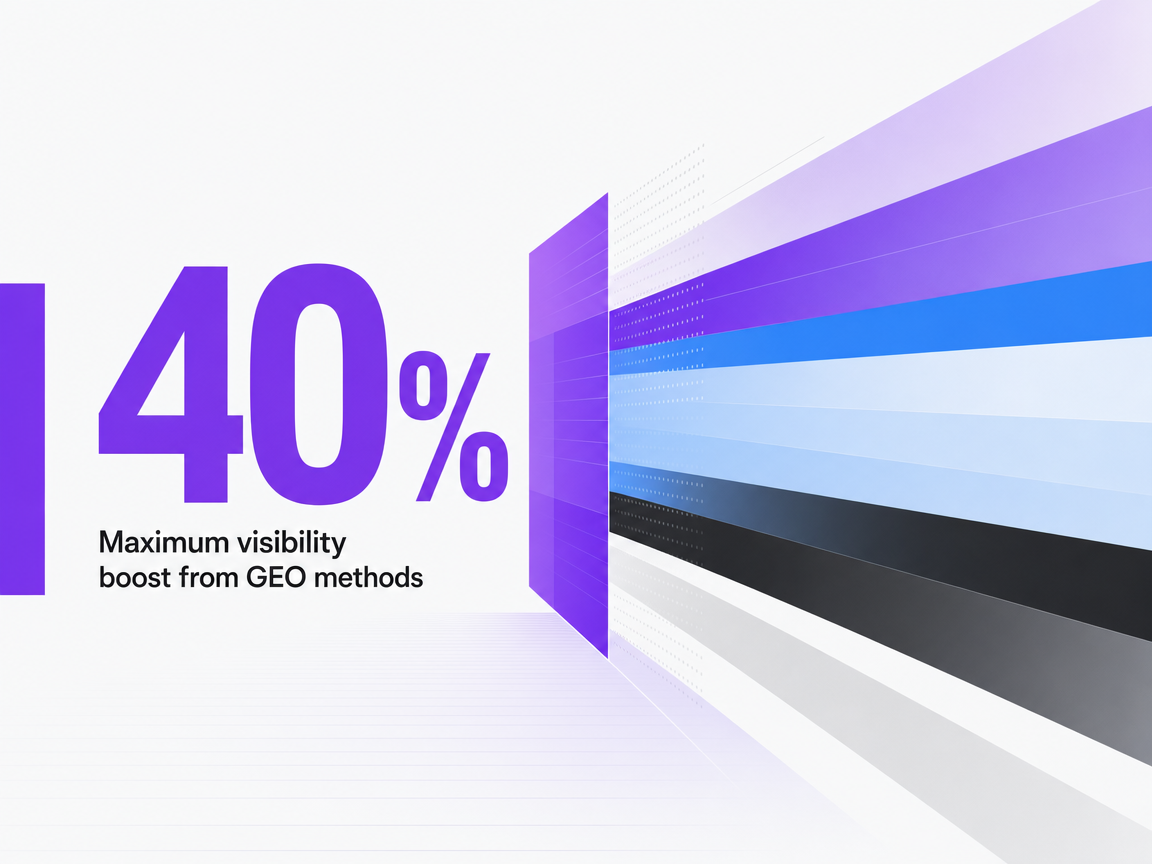 Maximum visibility boost from GEO methods
Maximum visibility boost from GEO methods
Consolidating the Vendor Stack
What a Traditional Stack Actually Costs in Coordination
The direct costs of a traditional SEO stack are easily quantifiable: content agency retainers, link-building vendors, freelance writers, technical SEO consultants, rank-tracking subscriptions, and a reporting analyst. These are the visible expenses.
The invisible cost is coordination. Each vendor requires separate briefs, kickoffs, review cycles, and invoicing. The in-house marketing manager becomes a project manager for multiple external relationships, none of which share data seamlessly. For example, if the link-building vendor needs a target URL list, someone must retrieve it from the content agency's roadmap. If the reporting analyst needs conversion data, it must be exported from the CRM and manually transferred.
None of this coordination directly contributes to page rankings. It exists because the stack was built piecemeal, with each vendor addressing a narrow problem. RevOps leaders identify this fragmentation as a prime target for consolidation: repetitive, siloed tasks that consume time without producing output 16. The same logic applies here: the retainer isn't the most expensive part; the handoffs are.
Comparison: Agency-and-Freelancer Stack vs. In-House Execution Platform
The following comparison outlines functions typically outsourced by mid-market marketing teams against two delivery models. Dollar figures are provided where a specific anchor exists; agency retainers are presented as ranges due to market and scope variations.
| Function | Traditional agency + freelancer stack | In-house team + AI execution platform |
|---|---|---|
| Content strategy | Agency strategist, monthly briefings, quarterly roadmap deck | In-house lead reviews ranked recommendations weekly |
| Writing and editing | Freelance roster billed per piece; editor coordinates revisions | Automated first drafts routed through in-house editorial approval |
| Technical SEO | Consultant retainer, quarterly audit, ticketed fixes | Continuous monitoring, exceptions routed to approval queue |
| Link acquisition | Separate outreach vendor with its own reporting | Integrated into the same recommendation loop |
| Reporting | Analyst compiles decks from multiple exports | Unified dashboard tied to Signal stage of the loop |
| PPC coordination | Separate paid media agency, minimal SEO data sharing | Shared query and conversion data across channels |
| Pricing anchor | Typical mid-market retainers stacked across 3–5 vendors | Platform subscription (variable by scope); Vectoron post-trial pricing starts at $599/mo |
| Coordination load | Multiple briefs, review cycles, and status calls per week | One approval queue, one review cadence |
The primary operational saving isn't just in subscription costs; it's in time. Fewer briefing documents, status calls, and context switches per published asset unlock throughput for headcount-constrained VPs. This mirrors how non-marketing operations leaders replace brute-force staffing with systems that empower people to focus on strategy while technology handles repetitive tasks 18.
If a team manages multiple locations, brands, or practice sites
For organizations managing multi-location portfolios, the economics shift significantly. A single marketing team overseeing numerous dental offices, home-service branches, or behavioral health clinics cannot scale by hiring a marketing coordinator for each market. This approach is neither financially viable nor does local market judgment easily transfer.
Instead, a governed production loop can be applied to each location's data. Local Search Console signals, call outcomes, competitor movements, and schema validity all feed into the same recommendation layer, but the outputs are location-specific. The in-house team reviews ranked recommendations across the entire portfolio through a single queue, eliminating the need for multiple agency reports.
The coordination tax at a portfolio scale is where traditional stacks fail most dramatically. Each additional location under an agency model multiplies briefings, invoices, and reporting decks. With a unified execution model, the marginal cost of adding a location is closer to a data connection than a new retainer. At this point, consolidation becomes essential for driving pipeline growth directly.
See How Leading Brands Scale SEO Impact Without Adding Staff
Request a walkthrough of AI-powered multi-channel execution workflows proven to increase organic pipeline and conversion rates—without expanding your internal team or vendor roster.
Change Management: Why Adoption Fails Without Human Gates
The primary reason AI-assisted SEO initiatives fail is rarely the technology itself, but rather the team's willingness to adopt it.
Pew Research found that workers regularly using AI chatbots reported significant benefits: 54% found them highly helpful for speeding up work, and 41% for improving quality 7. However, these figures apply only to existing users. Among the broader workforce, sentiment is more cautious, with roughly half expressing worry about future AI use in the workplace, compared to 36% who feel hopeful 8.
This disparity is what a marketing VP encounters during a rollout. Editors may fear losing their bylines, specialists may worry about their judgment being audited by recommendation layers, and freelancers may be concerned about shrinking rosters. These are valid concerns that cannot be resolved with a simple kickoff presentation.
The solution lies in the approval gate. When every recommendation, brief, and draft passes through a named human reviewer who can accept, edit, or reject it, the tool becomes a workbench rather than a replacement. Editors retain control, and specialists maintain their veto power. The change is in the volume of work reaching them in a reviewable state, not in their authority to decline. Teams that bypass this gate for speed often lose their best editors within a quarter, leading to a noticeable decline in quality and subsequent ranking issues.
Another crucial design choice is making the reasoning transparent. A recommendation like "refresh this page" without showing decayed queries, competitor movements, or internal linking gaps will likely be ignored or overruled. Conversely, a recommendation that clearly presents the underlying signals facilitates a quick decision and helps reviewers develop pattern recognition skills. Adoption is driven by transparency, not persuasion.
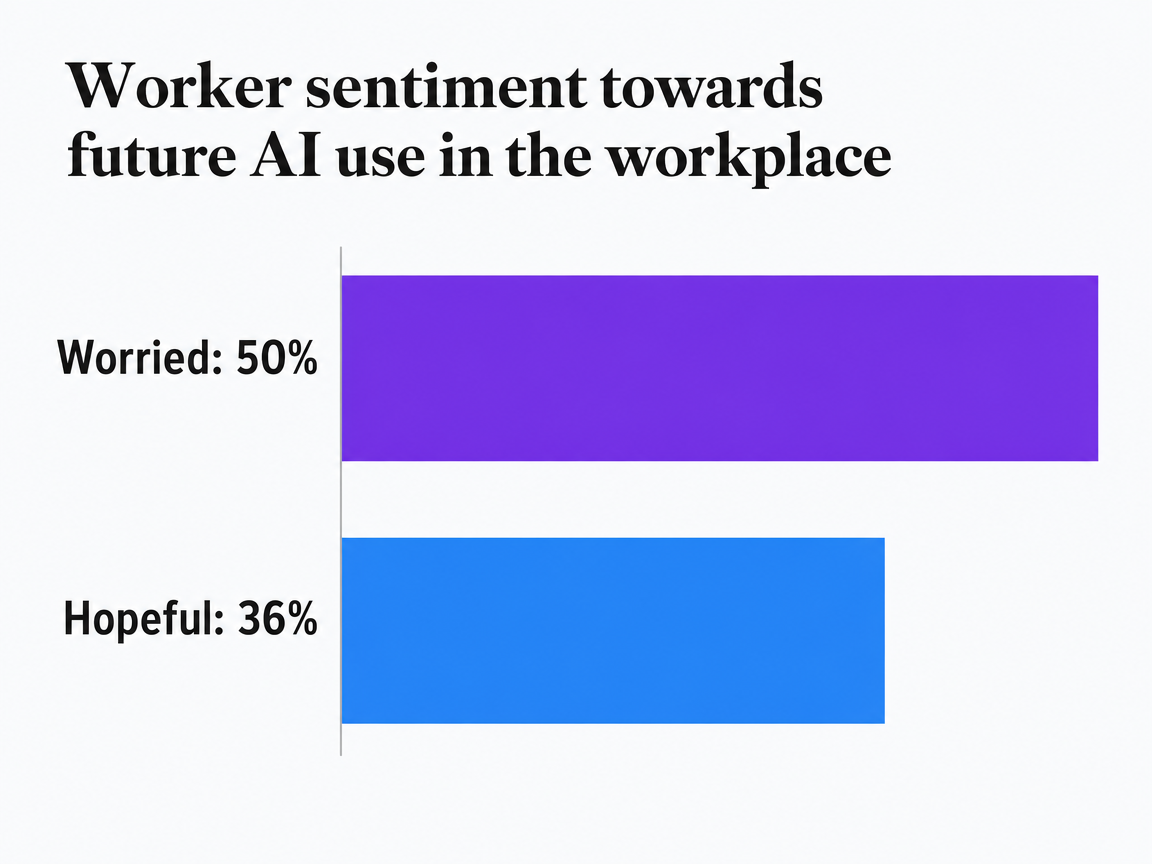 Worker sentiment towards future AI use in the workplace
This comparison from Pew Research contrasts the percentage of workers who feel worried versus hopeful about the future implementation of AI in their jobs. 'About half' is represented as 50%.
Governance, Substantiation, and the Regulator's Line
The core governance question for AI-assisted SEO is not whether to use the tools, but whether their outputs can be defended.
Two key references frame this answer. The NIST AI Risk Management Framework, a voluntary federal framework, provides marketing leaders with a governance vocabulary familiar to CFOs and general counsel: documented oversight, defined risk owners, and traceable decisions 4. While guidance, it establishes a reasonable-care standard that VPs should be able to articulate.
The FTC has taken a stricter stance. Through Operation AI Comply, the agency has acted against companies using AI to facilitate deceptive or unfair conduct, clarifying that the issue is not AI use itself, but unsubstantiated claims about AI's capabilities or outputs 5. For SEO teams, this mandates a specific discipline: every quantified claim on a service page, every language model-refreshed testimonial, and every efficacy statement in a service description must have a verifiable source file before publication. If the approval gate cannot instantly produce substantiation, the claim should not go live.
In this model, governance is embodied by the approval queue itself, with reasoning attached to each recommendation and a defensible audit trail for every published word.
A 90-Day Operator Plan for Lean SEO Teams
Addressing a frozen headcount and doubled pipeline target requires a structured plan, not just a strategy offsite. The following ninety-day plan guides a three-to-eight-person team from a vendor-heavy stack to a governed production loop without disrupting existing commitments.
- Days 1–30: Diagnose the coordination tax. Audit every recurring SEO task, documenting who touches it, the number of handoffs, and queue times between steps. This mirrors the initial step in lean revenue operations: identifying bottlenecks before implementing automation 16. Simultaneously, establish unified signal intake so Search Console, rank data, crawl errors, and conversion outcomes are centralized.
- Days 31–60: Install the approval gate. Select one content lane, such as decaying pages or a specific service-line cluster, and route all recommendations, briefs, and drafts through a designated human reviewer. Track the cycle time per asset and rework rate. The objective during this period is not increased output, but a shorter loop with transparent reasoning behind each recommendation.
- Days 61–90: Expand and consolidate. Extend the loop to include technical hygiene monitoring and internal linking. Discontinue vendors whose functions are now integrated into the queue, retaining specialists only for exceptions requiring expert judgment. By day ninety, the key metric is throughput per reviewer hour, not merely the number of pieces published.
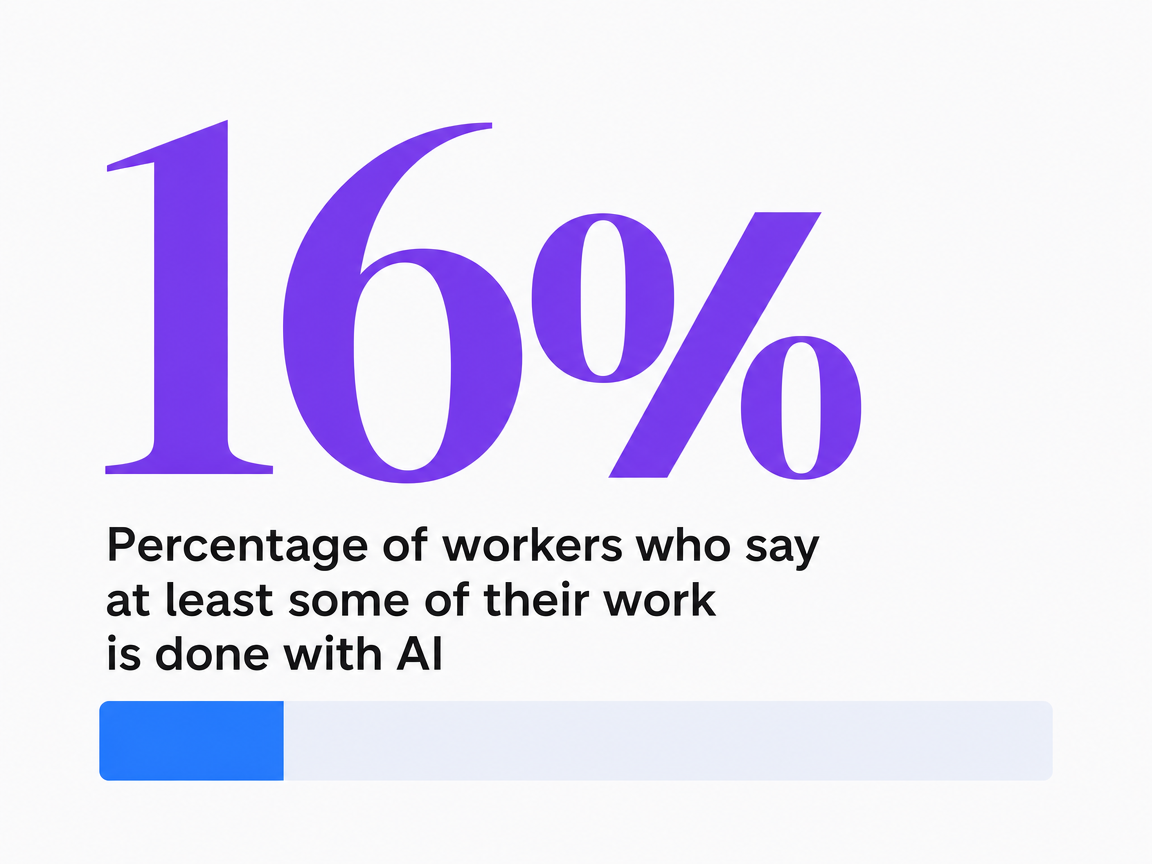 Percentage of workers who say at least some of their work is done with AI
Percentage of workers who say at least some of their work is done with AI
Frequently Asked Questions
References
- 1.Google Search Essentials (formerly Webmaster Guidelines).
- 2.In-Depth Guide to How Google Search Works | Documentation.
- 3.Search Engine Optimization (SEO) Starter Guide.
- 4.AI Risk Management Framework | NIST.
- 5.FTC Announces Crackdown on Deceptive AI Claims and Schemes.
- 6.Which workers use AI in their jobs - Pew Research Center.
- 7.Workers' experience with AI chatbots in their jobs - Pew Research Center.
- 8.Workers' views of AI use in the workplace - Pew Research Center.
- 9.GEO: Generative Engine Optimization.
- 10.An Empirical Study of Google Search, Gemini, and AI Overviews.
- 11.1 Introduction - arXiv.
- 12.FTC Authorizes Compulsory Process for AI-related Products and Services.
- 13.FTC Proposes New Protections to Combat AI Impersonation of Individuals.
- 14.AI Marketing Statistics: How Marketers Use AI in 2025.
- 15.AI's Impact on SEO and Content Marketing.
- 16.How to Scale Revenue Operations Without Scaling Headcount.
- 17.How SaaS Startups Can Scale Operations Without Expanding Headcount.
- 18.Scaling Revenue Without Adding Headcount.
- 19.AI and the New Era of SEO: How Search is Transforming (2024–2025).
- 20.Scaling Sales Isn't About Headcount, It's About Repeatable Pipeline.