
Key Takeaways
- Keyword Insights uses SERP-overlap clustering with adjustable thresholds and intent labels, making it defensible in client meetings and well-suited for converting large audits into brief-grade output 1.
- SE Ranking Keyword Grouper trades precision for throughput, clustering 50,000 to 200,000 keywords quickly as a first-pass layer that later routes priority groups to more precise tools 7.
- Surfer Keyword Research uses semantic proximity to surface adjacent queries SERP-overlap methods miss, making it strong for gap discovery but risky when its clusters bypass SERP validation 8.
- Semrush Keyword Manager wins on integration, pushing hybrid SERP-similarity clusters into briefs, tracking, and reporting under one topical framework, though intent labels often need overriding in local and healthcare verticals 6.
- ClusterAI delivers cheap, fast SERP-overlap clustering for pitch cycles and audit sprints, but its lack of persistence makes it unsuitable as an ongoing production tool 11.
- WriterZen Topic Discovery clusters by NLP-based semantic relatedness, excelling at multi-language and multi-market gap analysis where thin SERPs make overlap-based grouping unreliable 12.
The Buying Axis: SERP-Similarity vs. Embedding-Based Clustering
Every keyword clustering tool on the market sorts into one of two methodological camps. SERP-similarity clustering groups queries by the URL overlap in their live search results: if the top ten pages for "personal injury lawyer near me" and "car accident attorney" share five or more URLs, the queries collapse into one cluster and one brief. Embedding-based clustering groups queries by semantic vector proximity, using transformer representations to detect that two phrases mean roughly the same thing even when their SERPs diverge.
This distinction is crucial. SERP-similarity clustering treats Google's own ranked results as the ground truth for the cluster hypothesis, which states that documents in the same cluster behave similarly with respect to relevance to information needs 1. This makes its output defensible in client meetings. For example, if a partner at a law firm asks why "truck accident lawyer" and "18-wheeler attorney" share a URL, the empirical answer is that the SERPs already treat them as having the same intent. Cornell's research on cluster-smoothed retrieval further supports that clusters approximating true corpus facets, rather than surface-level term similarity, produce measurable relevance gains 6.
Embedding-based clustering, conversely, offers broader reach. It identifies adjacent queries that SERP-similarity methods might miss because their search results haven't yet converged, which is vital for gap analysis 5, 8. It also effectively groups queries with volatile or thin SERPs, where URL overlap would generate noise rather than meaningful signals.
Neither method is inherently superior; they serve different purposes. SERP-similarity helps determine what to publish next and against which URL. Embedding-based clustering identifies topics the portfolio has not yet addressed. Understanding this distinction is key to selecting the right tools for your workflow.
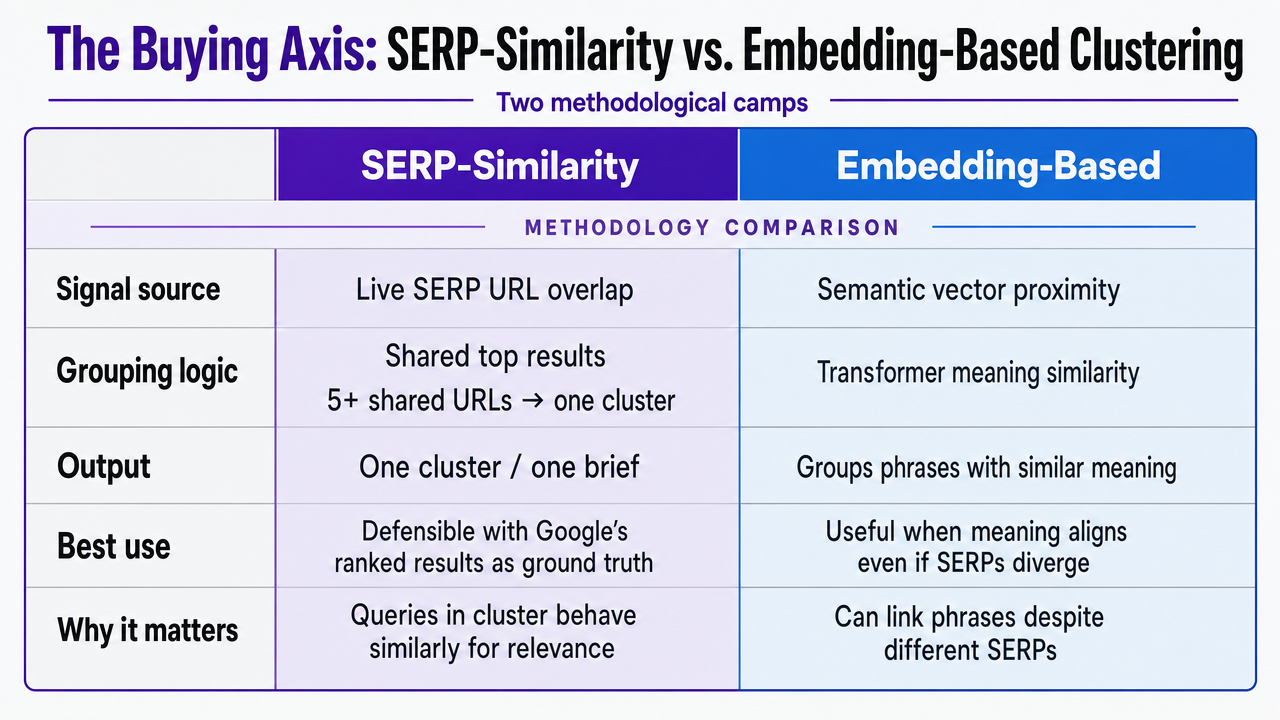 Compare the two clustering methodologies discussed in this section side by side, showing their signal source, output type, and best use case
Why Clustering Became the Load-Bearing Layer of Agency SEO
Clustering has evolved from a simple tidying step within keyword research to a pivotal decision point between research and production. It now dictates which content briefs are written, which URLs are assigned to specific queries, and how analyst time is allocated. This shift occurred because the sheer volume of queries agencies manage has outpaced the capacity of human analysts.
The adoption of generative AI in marketing further underscores this change. A 2024 NIM survey reported that 49% of respondents frequently use generative AI for marketing activities 15. This means planning, ideation, and content production are increasingly AI-assisted, requiring the clustering step to produce machine-actionable output, not just spreadsheets for strategists to interpret.
Modern AI content workflows explicitly position topic generation, clustering, and prioritization as the initial stage, preceding drafting, review, and approval 16. Inaccurate clusters lead to incorrect briefs, misassigned URLs, and a backlog of unwanted work. Therefore, cluster quality directly impacts the approval rate of briefs, a critical metric for agency profitability.
Beyond operational efficiency, the strategic importance of clustering is rooted in the IR cluster hypothesis: documents within the same cluster are relevant to similar information needs 1. A content portfolio built on well-formed clusters achieves compounding topical coverage, rather than isolated ranking wins. Conversely, a single misclustered pillar can derail a significant portion of a client's editorial calendar by assigning content to URLs that fail to consolidate authority.
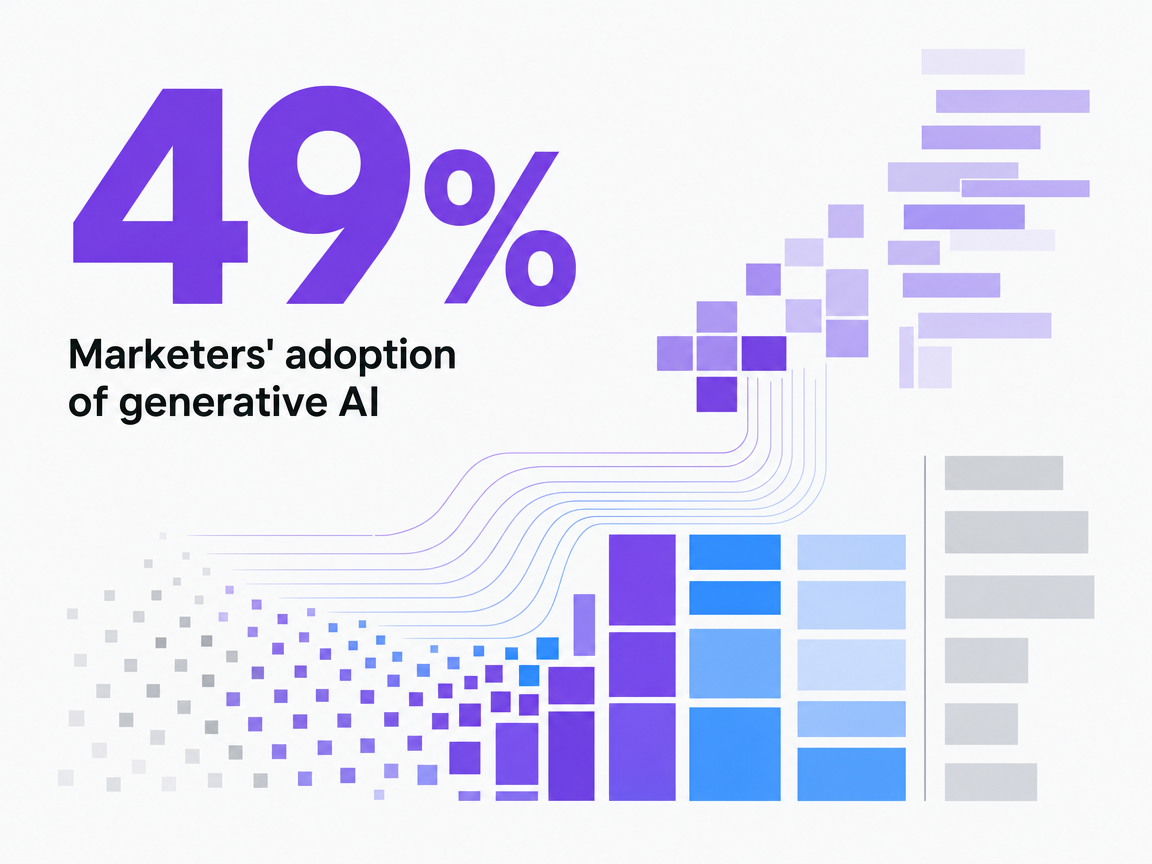 Marketers' adoption of generative AI
Marketers' adoption of generative AI
The Six Tools, Mapped to Workflow Stage
Keyword Insights: SERP-Based Clustering for Decision-Grade Briefs
Keyword Insights performs live SERP scrapes for each seed query and clusters them based on shared ranking URLs. It offers adjustable overlap thresholds, allowing operators to fine-tune groupings based on the commercial nature of the vertical. For instance, a personal injury account might use an overlap of four, while a broad B2B SaaS account might use three. The tool then assigns search intent labels and suggests a pillar query per cluster, making its output ready for brief creation.
This tool is highly defensible in client discussions because its groupings reflect Google's own treatment of queries as substitutable, aligning with the operational form of the cluster hypothesis 1. Research confirms that SERP structure itself provides sufficient signal for coherent topical grouping without extensive semantic modeling 11.
Keyword Insights excels in the audit-to-brief transition, condensing a 12,000-keyword audit into hundreds of cluster briefs, each mapped to an existing or proposed URL, without manual analyst intervention. However, it struggles with thin-SERP verticals and emerging queries; if the top ten results are unstable, the overlap threshold can produce singleton clusters that appear as noise. Analysts should anticipate manually merging 5-10% of clusters in volatile SERP audits and budget review time accordingly.
SE Ranking Keyword Grouper: Bulk SERP Clustering at Portfolio Scale
SE Ranking's Keyword Grouper employs the same SERP-overlap logic but is designed for high-volume processing. Agencies managing 50,000 to 200,000 keywords across multiple clients monthly use it as a throughput layer rather than a strategic one. Its output is a flat clustered list with primary keyword suggestions and volume rollups, sufficient for prioritization but typically not for direct brief generation.
Its methodology aligns with the standard IR cluster model, where queries are matched to cluster centroids for efficiency at scale, trading some effectiveness for significant gains 7. This trade-off is evident: clustering that might take Keyword Insights hours is completed in minutes, though with looser groupings that may require further analyst refinement.
A common strategy is to use SE Ranking for an initial pass across the entire portfolio, then route only high-priority clusters to a more precise tool for brief-grade refinement. A large agency cannot afford to run every query through a slow, precise clusterer, nor can it publish directly from fast, loose output without a second pass. The tool performs as advertised; workflow missteps often lead to perceived failures.
Surfer Keyword Research: Embedding-Assisted Topic Discovery
Surfer's keyword research module leverages semantic proximity to uncover adjacent queries that pure SERP-overlap methods miss, positioning it as a discovery tool. It groups queries by meaning-level similarity and provides content scoring against ranking pages, allowing strategists to identify both what to write about and the content of top-ranking pages.
This approach is grounded in NLP research, where vector representations capture relatedness beyond co-occurrence or SERP overlap 8. Semantic clustering, representing documents as topic matrices, ensures coverage of terms that share meaning even if they don't yet share rankings 5. This is particularly useful for new client engagements focused on identifying topical gaps.
Surfer is invaluable during the initial 30 days of an engagement for gap analysis. However, using its clusters directly for brief inputs can be problematic. Semantic proximity might group "personal injury settlement calculator" with "average settlement amounts," but their SERPs often demand different page types. Treating semantic clusters as SERP clusters can result in pages that fail to rank, emphasizing that discovery output should inform, not bypass, the SERP layer.
Semrush Keyword Manager: Cluster Layer Bolted to an Existing Data Stack
Semrush's Keyword Manager integrates clustering within its existing ecosystem, which includes keyword databases, competitive gap tools, and rank tracking. Its clustering is a hybrid approach, applying SERP-similarity to Semrush's own SERP index with intent tagging. While not the most precise, its integration is a key advantage. Clusters seamlessly flow into content briefs, position tracking, and share-of-voice reporting without manual CSV transfers.
The strategic benefit lies in how well-designed clusters improve retrieval and reporting by approximating real corpus facets 6. When the same cluster definition drives the brief, tracking dashboard, and client report, the entire account operates with a consistent topical framework. Disparate clustering logics across tools can lead to reporting discrepancies that don't align with actual editorial output.
A common pitfall is over-reliance on Semrush's intent labels. While effective for clear commercial and informational distinctions, the classifier can confuse navigational and transactional queries in sectors like local services and healthcare. Agencies in these verticals should treat intent labels as a starting point and anticipate overriding approximately 20% of them before briefs enter production, especially for queries that blend booking and research intent.
ClusterAI: Lightweight SERP Clustering for Audit Sprints
ClusterAI is a tool for agencies needing a rapid, SERP-based cluster pass without a full platform commitment. It takes a keyword list, pulls SERPs, and returns URL-overlap-based clusters with a minimal interface and low per-run cost. It lacks brief generation, rank tracking, and advanced intent tagging.
Its value lies in its narrow focus. During pitch cycles or audit sprints, when strategists have limited time to convert a prospect's Search Console export into a topic map, ClusterAI provides a defensible first draft. Its output is based on the same empirical foundation as more comprehensive tools: SERP overlap as a signal for topical grouping 11. The difference is simply the surrounding software.
ClusterAI's limitation is its lack of persistence beyond a sprint. Cluster metadata does not integrate with production systems, meaning agencies with ongoing portfolios spend more time re-exporting than clustering. Using ClusterAI as a permanent production tool necessitates rebuilding workflows each cycle, which is why most agencies reserve it for pre-sales and audit phases, routing ongoing work to tools with persistent cluster IDs.
WriterZen Topic Discovery: Semantic Grouping for Gap Analysis
WriterZen's Topic Discovery clusters based on semantic relatedness derived from NLP feature extraction, aligning with modern text clustering pipelines involving preprocessing, embedding-based feature extraction, similarity computation, and grouping 9. It is designed for strategists identifying future content opportunities, not for assigning queries to specific URLs.
Its primary use case is large-scale content gap analysis, particularly for multi-language or multi-market portfolios where SERPs are thinner and semantic signals are more critical. Research on automating content gap analysis for Portuguese search keywords demonstrated that semantic grouping produced coherent topical coverage in markets with volatile SERPs, where overlap-based methods were less reliable 12. Agencies managing Spanish-language home services or bilingual legal portfolios face similar conditions.
The tool's weakness emerges when its clusters are used for brief production without SERP validation. Semantic clusters often combine informational and transactional queries with sharply diverging ranking pages, leading to well-written but poorly ranking content. The effective strategy is to use WriterZen for discovery, then route prioritized cluster themes to a SERP-based tool for URL-level decisions. This two-layer approach is common in scaled agency stacks and forms a core argument of this article.
Test real keyword clusters on live projects
Validate clustering workflows by publishing content and measuring impact across multiple client accounts during your free trial.
Portfolio Economics: When Clustering Tools Actually Pay For Themselves
The financial calculus for clustering tools shifts significantly when considering an entire portfolio of clients rather than a single account. A strategist can manually cluster 2,000 keywords for one client over a week without a noticeable labor cost. However, scaling this across a roster with quarterly audits makes the labor cost substantial. This section examines the economics from a portfolio perspective, a key consideration for agency heads.
Key variables determining payback include:
- keywords clustered per month per client,
- analyst hours per 1,000 keywords for manual versus tool-assisted workflows,
- blended analyst cost per hour, and
- license costs.
Manual clustering typically requires 6-10 analyst hours per 1,000 queries for brief-grade quality. SERP-based tools like Keyword Insights reduce this to under an hour of review time for stable SERPs, with more time needed for volatile ones. Pricing models vary: per-keyword credits (ClusterAI, Keyword Insights), seat-based access (Semrush, Surfer), and volume-tiered subscriptions (SE Ranking), each suiting different portfolio profiles.
| Variable | Manual | Tool-Assisted |
|---|---|---|
| Analyst hours per 1,000 keywords | 6–10 | 0.5–2 |
| Blended analyst cost | $X/hour | $X/hour |
| License cost | $0 | $Y/month or per-keyword |
| Cost per clustered keyword | (6–10 × $X) / 1,000 | ((0.5–2 × $X) + $Y allocation) / 1,000 |
The trend towards AI-driven SEO tools is supported by data showing AI-driven rank trackers predicting keyword rankings with 92% accuracy, compared to 58% for traditional tools 17. While this specifically addresses rank prediction, it illustrates why agency budgets are shifting towards AI components across the SEO stack 13. Clustering tools become cost-effective when the portfolio volume reaches a point where the cost of analyst review time for tool output is less than manual grouping—typically around 8,000 to 12,000 keywords per month across the client roster, depending on the required brief quality.
If You Manage Multiple Locations or a Client Portfolio: Stack Recipes
This section focuses on the needs of portfolio operators, such as agency heads managing many client accounts or marketing leads overseeing multi-location brands with numerous competing geographic pages. The tool stack suitable for a single client often fails to scale across a large portfolio.
A 20-client agency, processing approximately 4,000 keywords per client quarterly, benefits most from a single decision-grade SERP-based clusterer combined with a lightweight discovery tool for new engagements. Keyword Insights can serve as the production layer, ClusterAI for pitch and audit sprints, and a dedicated semantic layer can be deferred until an engagement matures beyond 90 days. At this scale, strategists can mentally track topical gaps, making a third tool an unnecessary expense that erodes margin without improving output.
A 50-client agency operates at a different volume. Here, SE Ranking handles bulk first-pass clustering across the entire portfolio. Keyword Insights refines top-priority clusters into brief-grade output, while Surfer or WriterZen conducts quarterly gap analysis per account. The two-layer stack, where embedding-based discovery informs SERP-based decisions, becomes essential, with both feeding the brief queue 5, 11.
Multi-location operators managing 40 to 300 near-duplicate location pages face a unique challenge. Their queries are heavily influenced by geographic modifiers, leading to SERPs that vary significantly by location. This makes semantic clustering crucial for determining whether "emergency dentist Austin" and "emergency dentist Round Rock" should share a template or require distinct briefs. Research on semantic clustering for content gap analysis in specific language markets shows that semantic signals are more critical when SERPs are thinner or more volatile 12. The recommended approach involves WriterZen or Surfer for template-versus-branch decisions, Keyword Insights for non-geographic head terms, and a persistent cluster-ID system to avoid re-clustering location pages every audit cycle 13.
See How Leading Agencies Automate Keyword Clustering at Scale
Connect with experts to review workflow benchmarks and discover how top agencies streamline keyword clustering, reduce manual effort, and maintain strategic control across high-volume client portfolios.
Failure Modes: Where Each Tool Breaks and Human Review Is Non-Negotiable
Each tool in this stack has predictable failure modes, and understanding these is more valuable than knowing its feature list.
- Keyword Insights generates singleton clusters on volatile SERPs, which, if shipped without merging, lead to briefs for queries that will never consolidate authority.
- SE Ranking's speed advantage can result in loose groupings that mix commercial and informational intent, and bypassing the second-pass refinement is a common cause of content calendar damage.
- Surfer and WriterZen share an opposite failure: semantic proximity groups queries that mean similar things but require different page types. Briefs created directly from these clusters often produce content that reads well but fails to rank 5, 8.
- Semrush's intent classifier can misinterpret navigational and transactional splits in local services and healthcare, necessitating overrides for about 20% of labels before production.
- ClusterAI lacks a persistence layer, meaning context must be rebuilt for any work beyond an audit sprint.
The common thread is that clustering algorithms optimize for statistical similarity, not commercial judgment. Text clustering surveys explicitly state that different algorithms produce significantly different groupings from the same input, underscoring why automated output cannot be the final decision 3. Human review remains essential at three critical points: merging singletons on thin SERPs, splitting semantic clusters whose SERPs diverge, and overriding intent labels in verticals where booking and research queries share vocabulary. Agencies that allocate review time as a percentage of clustering throughput, rather than an afterthought, can mitigate these failure modes without missing production deadlines 13.
The Approval Layer That Sits on Top of Clustering Output
Clustering tools generate groupings, but they do not make decisions. The gap between a clean cluster export and an approved brief in production is where agency margin often erodes, as strategists re-read CSVs, account leads seek context, and editors rewrite briefs due to shifting URL assignments. The tool comparison is only half the purchasing decision; the other half is the process between clustering output and the writer's queue.
In scaled AI content workflows, the emerging pattern is explicit: planning and ideation, including topic generation and clustering, feed directly into a governed draft-review-approval loop, not a spreadsheet handoff 16. Cluster IDs persist as first-class objects, each linked to a URL assignment, a brief, an approver, and a KPI outcome. This structure transforms clustering from a research artifact into a production input. AI-powered SEO stacks are consolidating around approval-first automation, with human sign-off at each decision point 13. Vectoron operates in this approval layer, integrating with any clustering tool an agency uses to route output into ranked briefs for strategist approval before content is shipped.
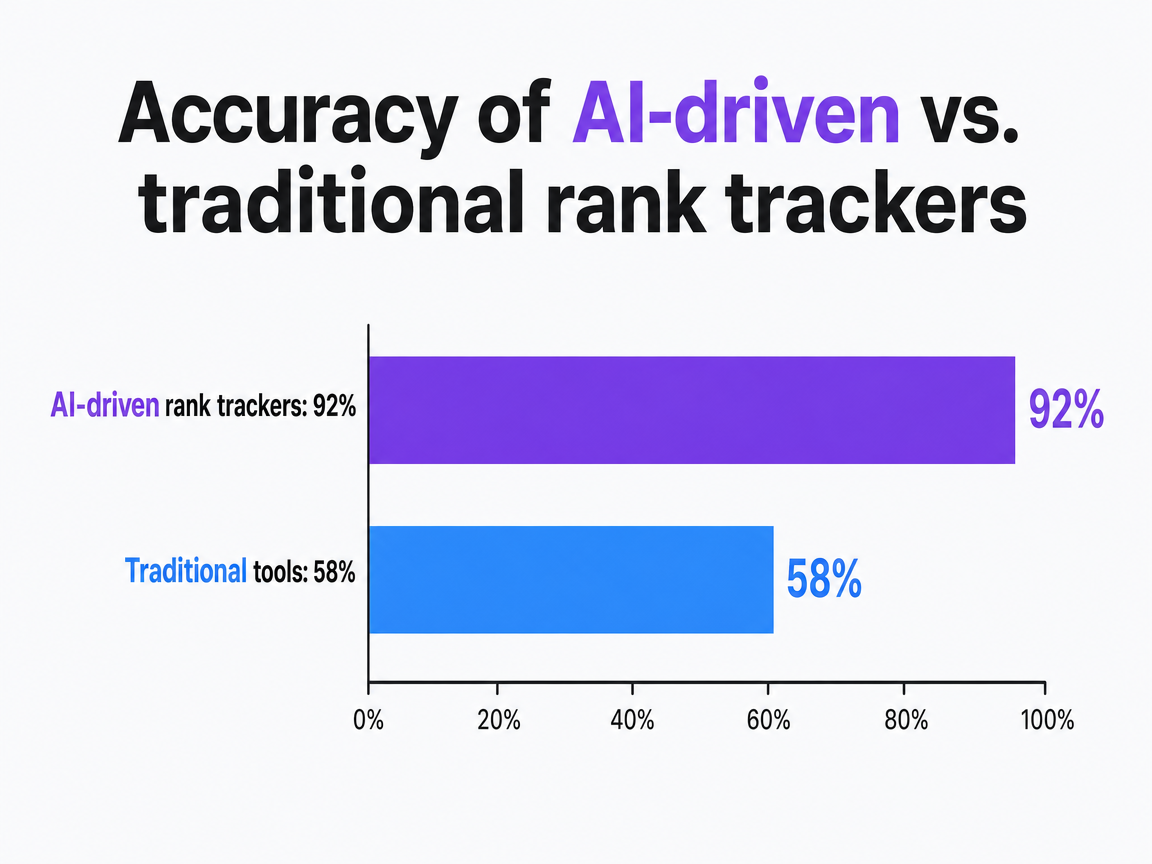 Accuracy of AI-driven vs. traditional rank trackers
Comparison of the predictive accuracy for keyword rankings between AI-driven rank trackers and traditional tools, according to 2023 data from Moz cited in a 2026 report.
Frequently Asked Questions
References
- 1.Clustering in information retrieval.
- 2.Lecture 7: Clustering.
- 3.A Survey of Text Clustering Techniques: Algorithms, Applications, and Challenges.
- 4.Statistical Natural Language Processing – Clustering.
- 5.A Semantic Clustering Approach for Indexing Documents in Information Retrieval.
- 6.Corpus Structure, Language Models, and Ad Hoc Information Retrieval.
- 7.TEXT CLASSIFICATION AND INFORMATION RETRIEVAL – Cluster Model in Information Retrieval.
- 8.Word clustering approach for improving Semantics.
- 9.Clustering Methods For Unsupervised Text Classification.
- 10.What is text clustering in NLP?.
- 11.Google Search Result Clustering Based on SEO Concept Dimensions (Chinese title).
- 12.Master Degree Program in Data Science and Advanced Analytics – Semantic Clustering of Portuguese Search Keywords.
- 13.A Study on AI-Powered SEO Optimization.
- 14.Beyond the Buzz: Creating Marketing Value with Generative AI.
- 15.Beyond the Buzz: Creating Marketing Value with Generative AI (full PDF).
- 16.Generative AI for Content Marketing Workflows: Blogs, Ads, SEO at Scale.
- 17.AI In The SEO Industry Statistics | Verified 2026 Data.