
Key Takeaways
- Profound delivers enterprise-grade multi-engine sampling with exposed run counts and auditable trails, making it defensible for regulated verticals where clients demand methodological transparency behind monthly reports.
- Peec AI centers reporting on prompt-level share of voice against a defined competitor set, fitting European agencies whose narrative revolves around competitor displacement rather than absolute coverage.
- AthenaHQ tags citations by source tier — first-party, earned media, aggregator, forum, Wikipedia — giving digital PR teams the diagnostic needed to plan earned placements outside a client's domain.
- Otterly.AI offers accessible mention and citation reporting for smaller rosters, but default sampling cadences sit below the seven-runs-per-prompt floor methods research considers defensible 4.
- Semrush AI Toolkit bolts visibility tracking onto an existing stack, giving continuity for agencies already reporting through Semrush, though citation-tier detail and run-count transparency are thinner.
- Ahrefs Brand Radar ties mention discovery to the backlink graph, working best for mid-market to household brands where third-party mention density is dense enough to be diagnostic 2.
- Scrunch AI uses agents to generate and score prompt sets from a client's category, removing the labor bottleneck of hand-building prompts when onboarding new accounts at scale.
Why AI visibility resists a single number
Rank tracking used to describe what a client saw on a results page. That description no longer holds. Google's AI Overviews now appear on up to 47% of keywords and, when they render, consume between 40% and 67% of the above-the-fold screen on desktop and mobile 11. The organic link a client paid to rank for still exists in the index, but it often sits below a synthesized answer that may or may not mention the brand at all.
This is the measurement problem an agency SEO lead now has to solve for a book of clients. Presence in an AI answer is not a position; it is a bundle of signals. A brand can be mentioned in prose without being cited as a source, cited as a source without being mentioned by name, or appear in one run of a prompt and vanish in the next. The academic literature already reflects this fragmentation: a recent survey of generative engine optimization catalogs at least nine distinct quantities that researchers call "visibility," and argues for treating visibility as a vector rather than a scalar rank 3.
That distinction matters for tool selection. A platform that reports a single "AI visibility score" is compressing a multi-dimensional signal into a number that will not survive client scrutiny when the underlying components move in opposite directions. The seven platforms evaluated below are scored against the dimensions those signals actually decompose into, starting with how mention rate and citation rate diverge, and ending with whether the output can feed a production workflow rather than a dashboard.
The five dimensions any measurement stack has to cover
Mention rate vs citation rate: two signals, not one
A brand name appearing in the prose of an AI answer and a brand's URL appearing in the citation footer are two separate events. They can, and often do, move independently. A recent study tracking AI search mentions concluded that a single metric cannot capture AI visibility, which is why the researchers reported mention rate and citation rate as distinct measurements rather than folding them together 5.
For an agency, the practical consequence is that a client can win the citation and lose the mention, or the reverse. A financial services client cited as a source but never named in the answer text gets none of the brand lift. A client mentioned by name but never cited loses the referral pathway. Any platform that reports a composite "AI presence" number without exposing these two signals separately is hiding the diagnostic that determines what the content team should actually fix.
Share of voice, prompt coverage, and sentiment as separate axes
Beyond mention and citation, three more dimensions carry independent weight. Share of voice measures how often a client's brand appears relative to a defined competitive set for a given prompt cluster. Prompt coverage measures the breadth of queries where the brand surfaces at all, which is the denominator problem the GEO literature keeps flagging: a report that only counts activated prompts overstates performance by ignoring the queries where the brand never had a chance 10.
Sentiment is the third, and the most volatile. Research measuring brand visibility across engines at scale found sentiment unstable across runs, meaning a single snapshot of tone toward a client should not be treated as a reading of how the engines "feel" about the brand 2. The formal survey of the field catalogs at least nine distinct quantities the literature files under the label visibility, which is why a platform's scoring model matters more than its dashboard 3. Agencies should require each dimension be exposed as a separate series, not blended.
Sampling rigor: why one run per prompt lies to you
Generative engines produce stochastic output. The same prompt, sent twice, returns different answers, different citations, and sometimes a different brand. The methods paper that formalized this problem recommends at least seven runs per prompt per day for brand-level monitoring, and eight when the source-level citation matters 4. A platform that samples once per day is not measuring visibility; it is sampling one draw from a distribution and calling it a reading.
The volatility is not theoretical. Aggregated weekly benchmark data from January to February 2026 showed brand visibility inside AI answers in the US falling from 1.92% to 1.23%, a 35.9% decline in six weeks 8. A single-run measurement taken at the peak and repeated at the trough would report the same brand as either winning or collapsing depending only on when the query fired. Continuous multi-run sampling, with the distribution reported rather than the mean alone, is the only defensible way to file that report with a client. Any platform that cannot expose the run count and variance behind its score should not be the one an agency puts on a monthly report.
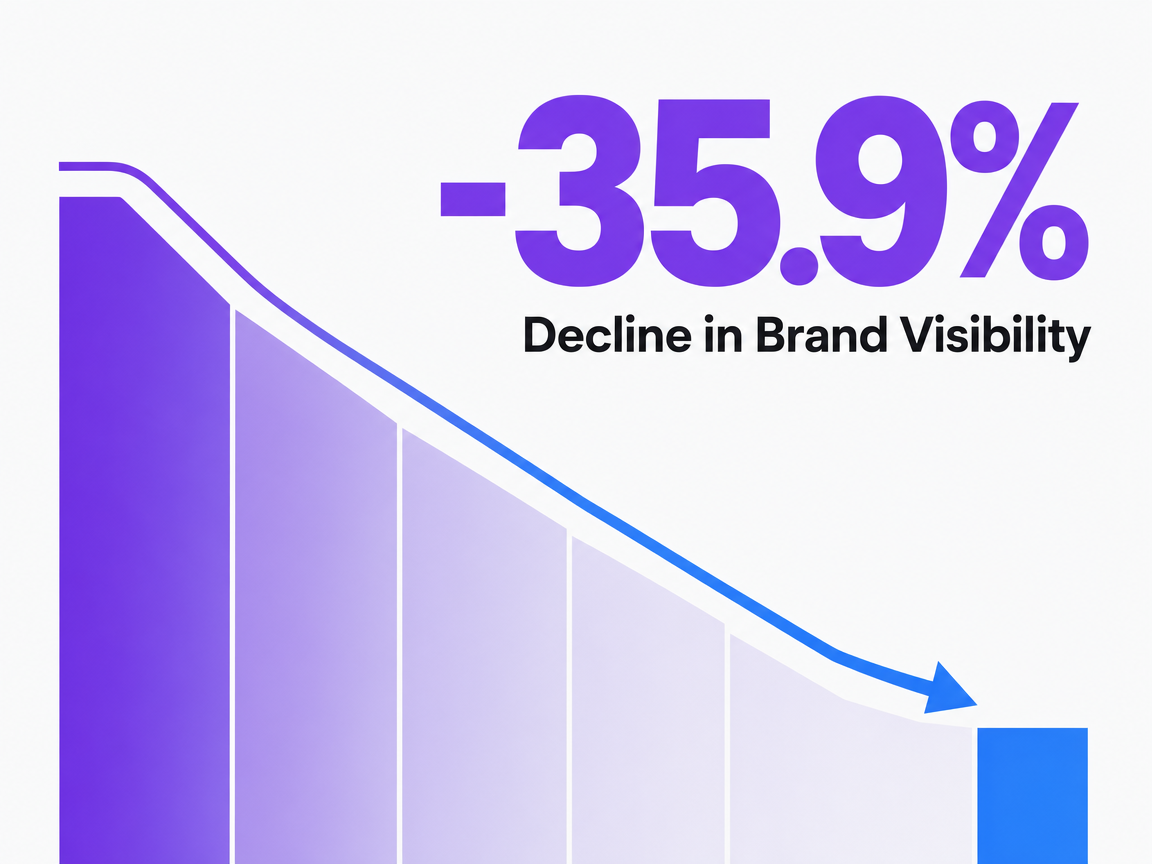
Decline in Brand Visibility
Test AI-driven visibility metrics in live campaigns
Measure real-time SEO impact across clients using live data and published content during your free trial.
How the seven platforms score against those axes
Profound: enterprise-grade multi-engine sampling
Profound was built around the sampling problem the GEO methods literature keeps flagging. Its measurement layer runs prompts across ChatGPT, Google AI Overviews, Perplexity, Gemini, and Copilot at high frequency, and exposes the run count behind each score rather than collapsing the distribution into a single reading. That matches the methodological floor of at least seven runs per prompt per day the field considers table stakes for defensible brand monitoring 4.
On the four axes, Profound separates mention rate from citation rate cleanly, reports share of voice against a defined competitor set, and tracks prompt coverage with a stated denominator. Sentiment is available but treated with appropriate caution, which reflects the finding that tone toward a brand is unstable across runs and should not be read as a fixed signal 2.
Where Profound earns its enterprise price is engine breadth and API access. Agency heads managing a book heavy in regulated verticals, where a client will ask for the raw run log behind a monthly report, get an auditable trail. What the platform does not do is push signal into a production workflow. Its output is a data layer the content team still has to translate into briefs and assets.
Peec AI: prompt-level share of voice for European agency books
Peec AI has built a following among European agencies because it treats share of voice as the primary reporting unit rather than a derived one. For each prompt cluster, the platform ranks how often a client's brand appears relative to a defined competitor set, and exposes the underlying mention list so the SEO lead can see which competitors are absorbing share on which query types.
Engine coverage spans ChatGPT, Perplexity, Google AI Overviews, and Gemini, with sampling frequency configurable per project. The platform separates mention from citation and reports both, which aligns with the finding that a single AI presence number obscures the diagnostic content teams actually need 5. Sentiment is offered but, again, secondary.
The practical fit is agencies with 15 to 40 clients where each account has a clearly bounded competitive set and the reporting narrative revolves around competitor displacement rather than absolute coverage. Peec is weaker for clients where the useful question is not "who is beating us in the answer" but "are we showing up at all across the query universe." Prompt discovery is manual, so the analyst still has to build the prompt sets that get sampled.
AthenaHQ: citation-tier tracking with source attribution
AthenaHQ's differentiator is how it treats citations. Rather than counting a citation as a binary event, the platform tags the source tier behind each cited URL — first-party brand site, earned media, aggregator, forum, Wikipedia — and reports the mix over time. That maps directly to the McKinsey observation that brand-owned sites comprise only 5 to 10 percent of what AI engines draw on when generating answers, which means most of a client's citation footprint sits outside their domain 6.
On the evaluation axes, AthenaHQ handles mention and citation separately, samples at the eight-runs-per-prompt threshold the source-level literature recommends, and exposes prompt coverage with the strict denominator the survey work calls for 10. Engine coverage is solid across ChatGPT, Perplexity, and Google AI Overviews, with Gemini support more limited.
The output is diagnostic rather than prescriptive. An agency gets a clear picture of which third-party sources the AI engines are pulling from, which is the input a digital PR or link team needs to plan earned placements. What AthenaHQ does not do is turn that diagnostic into content. The bridge to production still runs through the agency's own workflow.
Otterly.AI: lightweight brand monitoring for smaller client rosters
Otterly.AI sits at the accessible end of the market. The platform runs prompt-based monitoring across the major engines, reports mention rate and citation rate side by side, and produces client-ready summaries without requiring a dedicated analyst to interpret them.
Sampling is where the trade-off shows. Default cadences on lower tiers sit below the seven-runs-per-prompt floor the methods literature recommends for defensible brand-level readings 4. That is a genuine limit, not a nitpick: a brand visibility decline of 35.9 percent inside AI answers was observed across a six-week window in early 2026, which means a platform sampling once daily can miss the entire trajectory of a client's collapse or recovery 8.
For an agency running 10 to 25 accounts where clients want a monthly "are we in the answer" reading and the budget will not support Profound or AthenaHQ, Otterly is a reasonable entry point. The output is a report, not a signal into production, and the analyst should present the numbers with the run count visible so the client understands the confidence interval behind them.
Semrush AI Toolkit: bolt-on visibility inside an existing stack
The Semrush AI Toolkit exists because most agencies already pay Semrush and would rather not add a line item. The toolkit tracks brand mentions across major AI engines, reports a visibility score against a competitor set, and surfaces the prompts where a brand appears. For agencies with 30 to 80 clients where the reporting narrative already runs through Semrush dashboards, that continuity has real operational value.
The evaluation axes tell a mixed story. Mention rate is reported, citation-tier detail is thinner than what AthenaHQ or Profound expose, and sampling frequency is not surfaced in a way that lets the analyst show a client the run count behind a score. That matters given the field's consensus that visibility is a distribution rather than a point estimate 4.
The correlate signals Semrush already tracks — branded search volume, backlink profile, referring domain growth — are useful inputs, given that off-site mentions and multi-platform presence rank among the strongest correlates of AI visibility 9. Semrush is the pragmatic choice for agencies that need AI visibility inside client reports next quarter, not the rigorous choice for a book where clients demand methodological defensibility.
Ahrefs Brand Radar: mention discovery tied to backlink graph
Ahrefs Brand Radar approaches AI visibility from the mention-discovery side rather than the prompt-sampling side. The platform ingests where a client's brand is being mentioned across the web — publications, forums, third-party sites — and cross-references those mentions against the backlink graph Ahrefs already maintains. The premise is that the third-party surface AI engines pull from is largely visible in Ahrefs' index already.
That premise is defensible when the brand tier is set correctly. Large-scale measurement across AI search engines found household brands appearing in 73 percent of relevant AI answers on first run, mid-market brands in 44 percent, and niche or small brands in just 11 percent — a gap that tracks closely with the depth and diversity of third-party mentions each tier accumulates 2. Brand Radar is strongest for clients in the mid-market to household range, where the correlate signal is dense enough to be diagnostic.
What Brand Radar does not do well is direct prompt sampling. It reports where a brand is being talked about, not what an AI engine actually said in an answer. Agencies typically pair it with a prompt-level tool — Peec, Profound, or AthenaHQ — rather than treating it as the primary visibility metrics platform.
Scrunch AI: agent-driven prompt discovery and competitor benchmarking
Prompt discovery is the quiet cost center of AI visibility measurement. If the analyst has to hand-build the prompt set for every client, the labor doesn't scale past 20 or so accounts. Scrunch AI addresses this directly: agents crawl a client's category, generate candidate prompts across the buyer journey, and score which ones actually surface competing brands in AI answers. The prompt set becomes an output of the platform rather than an input the agency has to source.
On the evaluation axes, Scrunch reports mention and citation separately, samples across ChatGPT, Perplexity, Google AI Overviews, and Gemini, and benchmarks against a competitor set the agent constructs from the category rather than one the analyst has to enumerate. Sampling depth sits within the multi-run range the methods literature considers defensible 4.
Where Scrunch fits is agencies onboarding new clients quickly and needing a defensible prompt set on day one. Where it strains is highly specialized verticals — behavioral health, legal, specific medical subspecialties — where agent-discovered prompts miss the vocabulary a domain expert would immediately recognize. In those verticals, the analyst still has to prune and augment before the report goes to the client.
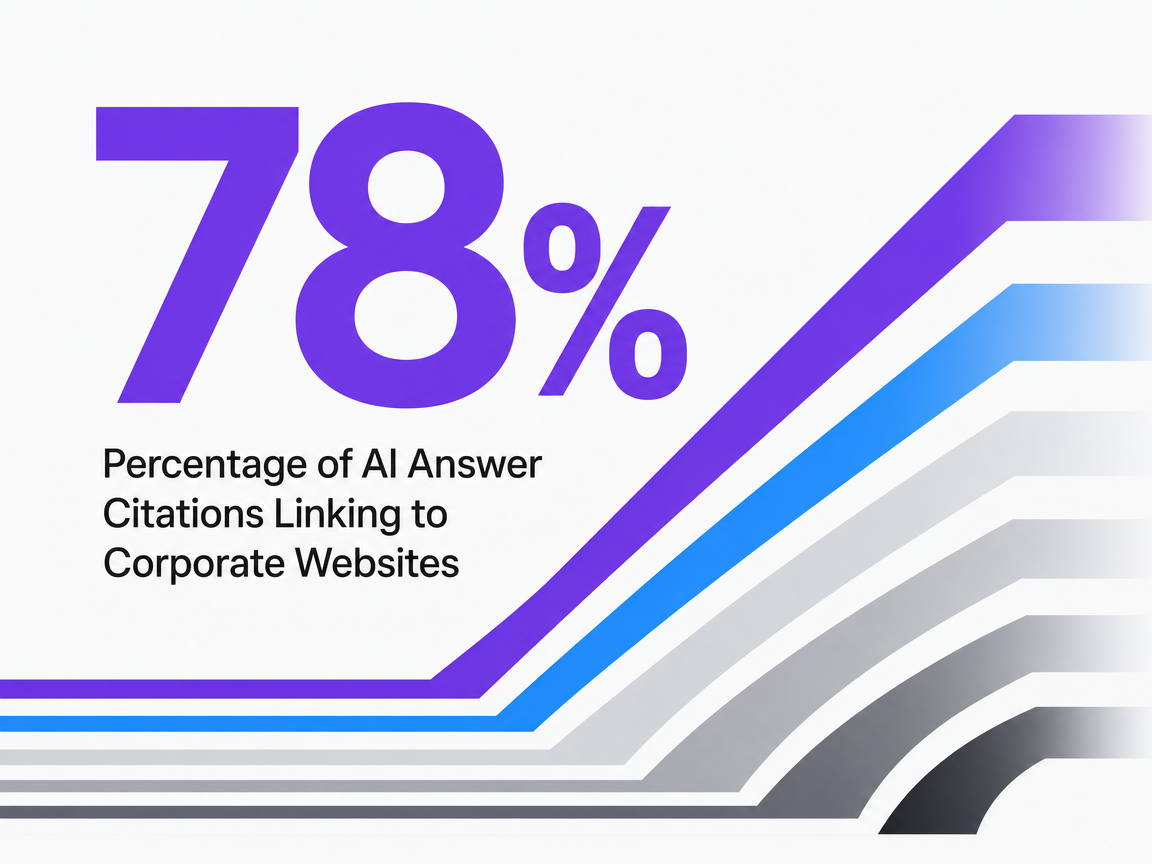 Percentage of AI Answer Citations Linking to Corporate Websites
Percentage of AI Answer Citations Linking to Corporate Websites
Portfolio economics: what measurement actually costs at agency scale
The shift from evaluating one platform for one client to running measurement across a book of 30, 50, or 80 accounts is where most agency SEO leads underestimate the bill. Cost scales on four multipliers, not one: prompts per client, runs per prompt per day, engines sampled, and the per-query rate the platform charges. Under the methods literature's floor of seven runs per prompt per day, a modest client with 40 tracked prompts across four engines generates 40 × 7 × 4 = 1,120 queries per day, or roughly 33,600 per month before any competitor sampling or expansion 4. Multiply that across a portfolio and the query volume, not the seat license, becomes the line item that moves.
The variables agency heads should model directly, using their own vendor quotes:
| Input | Symbol | Typical range |
|---|---|---|
| Prompts per client | P | 25–150 |
| Runs per prompt per day | R | 7–8 minimum 4 |
| Engines sampled | E | 3–5 |
| Cost per query | $/q | Vendor-specific |
| Monthly cost per client | P × R × E × 30 × $/q | Model against quote |
Two portfolio implications follow. First, prompt discipline matters more than platform choice. An analyst who lets prompt sets drift to 150 per client without pruning is paying to sample queries that never had a chance of returning the brand — the same denominator problem the GEO survey work keeps naming 10. Second, sampling depth is not negotiable downward. Weekly benchmark data showed brand visibility inside US AI answers moving from 1.92% to 1.23% across six weeks in early 2026, and a portfolio sampled once per day would report that swing as noise rather than trend 8. The economics only work when the prompt set is tight, the run count is defensible, and the reporting cadence matches the volatility of the signal being measured.
See How Top Agencies Standardize AI Visibility Metrics at Scale
Request a walkthrough of enterprise-grade AI visibility tracking—compare benchmarks, audit current workflows, and identify efficiency gains for multi-client SEO operations.
From dashboard to production: where the measurement layer stops
Every platform reviewed above stops at the same wall. Each one reports what an AI engine said, which competitor absorbed share, or which third-party source got cited. None of them writes the citation-worthy asset, files the digital PR pitch, or updates the client's category page to include the statistic that would make an engine more likely to quote it. The measurement layer produces a signal. Turning that signal into a change in the answer requires production.
The GEO literature is unusually direct about what production actually has to do. Including citations, quotations from relevant sources, and statistics inside content produced a visibility lift of over 40 percent across a range of queries in the foundational GEO benchmark study 1. That is a content-level intervention, not a rank-tracking one. Correlate research reinforces the point: brand mentions across the web and multi-platform presence are among the strongest signals tied to AI visibility, which means the work is split between on-site content changes and off-site earned mentions 9. A dashboard cannot execute either.
This is where the Vectoron AI Content Platform sits relative to the seven measurement tools above. It is not another visibility scorecard. It consumes the signal a Profound, AthenaHQ, or Scrunch run produces — which prompts are underperforming, which citation tiers are missing, which competitors are absorbing share on which query clusters — and turns that diagnostic into ranked content actions the agency's approvers can sign off on before anything ships. The measurement stack tells the analyst what changed. The production layer decides what to write, revise, or place next.
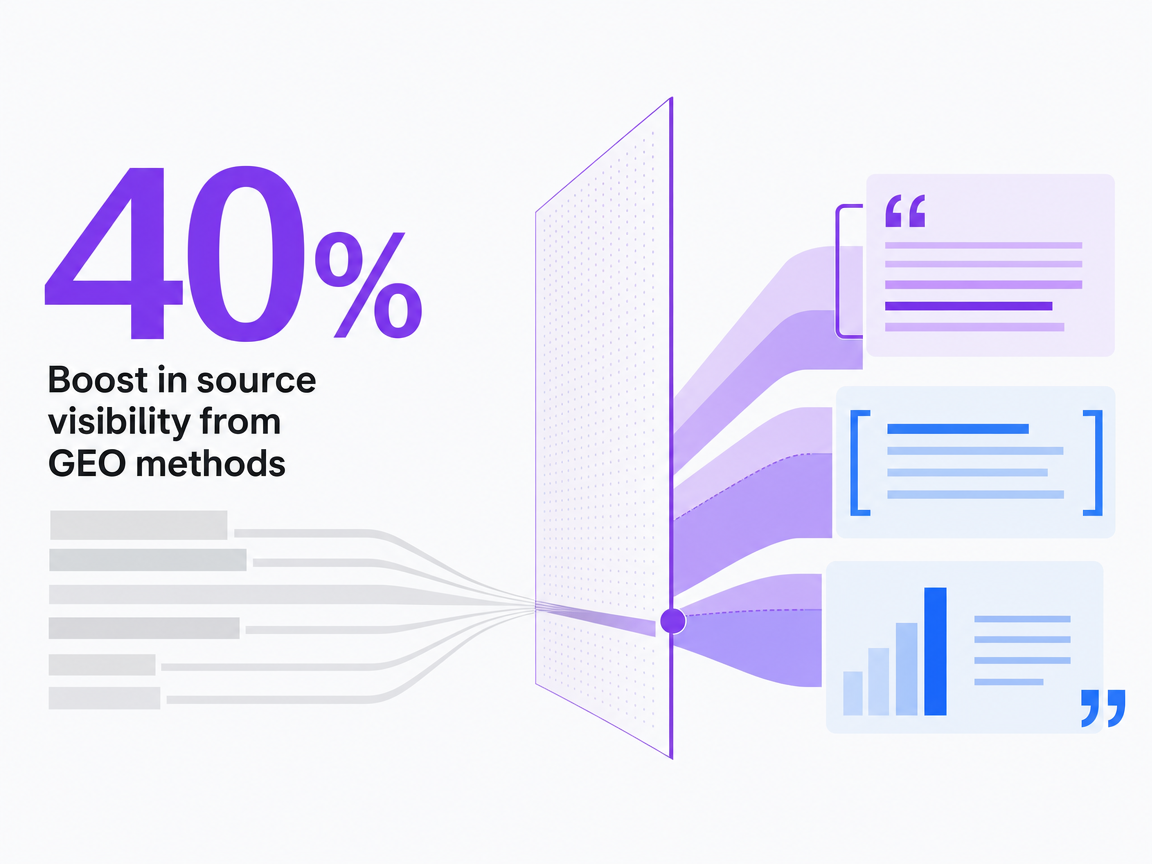 Boost in source visibility from GEO methods
Boost in source visibility from GEO methods
Picking a stack by agency profile
The seven platforms above solve different problems, and the honest answer for an agency SEO lead is that stack composition follows client mix, not vendor preference. Three profiles cover most of the market.
Agencies with 10 to 25 clients, mid-market to niche brands. Otterly.AI or Peec AI as the primary measurement layer, paired with Ahrefs Brand Radar for off-site mention discovery. The correlate signal matters more here because niche brands appear in only 11% of relevant AI answers on first run 2, which means the diagnostic work sits upstream in earned mentions rather than in prompt-level tuning.
Agencies with 25 to 60 clients across regulated verticals. AthenaHQ or Profound as the primary layer for its citation-tier reporting and defensible run counts, with Scrunch AI handling prompt discovery at onboarding. Clients in legal, health, and financial services will ask for the methodology behind a monthly report, and the sampling floor of seven runs per prompt per day is the number the analyst has to be able to defend 4.
Agencies with 60-plus clients running through Semrush already. The Semrush AI Toolkit as the reporting layer clients see, with Profound or AthenaHQ running underneath on the accounts where methodological rigor is billable. Whatever the stack, the measurement layer only earns its cost when its output routes into a production workflow that ships the citation-worthy content, earned placements, and page-level changes the signal calls for.
Frequently Asked Questions
References
- 1.GEO: Generative Engine Optimization.
- 2.Generative Engine Optimization at Scale: Measuring Brand Visibility Across AI Search Engines.
- 3.A Critical Survey of Generative Engine Optimization (2023–2026).
- 4.Don't Measure Once: Measuring Visibility in AI Search (GEO).
- 5.90% Of Brands Have Zero AI Search Mentions, New Study ....
- 6.New front door to the internet: Winning in the age of AI search.
- 7.In Graphic Detail: How AI search is changing brand visibility.
- 8.AI Search Statistics 2026: 60+ Data Points on Visibility and Traffic.
- 9.AI Search Visibility in 2026: What the Data Says ....
- 10.Optimizing Visibility in Generative Engines: A Critical Survey.
- 11.AI Overviews Study: Inside Google's New Search Reality.