
Key Takeaways
- Per-link pricing transfers outreach variance, vetting attrition, and content production risk onto agency margin, while training clients to count units that ranking outcomes do not reward 3.
- Billing anchors that hold up under scrutiny are referring-domain velocity to target URLs, ranking lift on a defined query set, and organic sessions to commercial pages.
- Retainer band, not per-link rate, decides profitability: cost-to-earn above $350 erases margin in the $1,001–$2,500 band where most agencies operate 8.
- Crawlability fixes, landing-page depth, and FTC disclosure review 1belong inside the link scope as delivery inputs, since acquired links only convert when the receiving page and compliance posture hold.
Why per-link pricing quietly destroys agency margin
Per-link pricing looks clean on a proposal. One line, one number, one deliverable. It also transfers every operational risk in a link-building program directly onto the agency selling it.
The mechanics are unforgiving. When an agency quotes $250 or $600 per placement, it has committed to a fixed revenue ceiling before the real cost of earning that link is known. Outreach response rates fluctuate. Publisher vetting kills roughly half the shortlist. A single sponsored placement that requires clear and prominent disclosure under FTC guidance changes both the publisher pool and the negotiation posture 1. None of that variance shows up in the invoice, so it lands in gross margin.
The framing also distorts what clients think they are buying. A 2024 ranking-factor study found that top-ranking pages carry a median of 13 backlinks, with a much higher average pulled up by a small number of link-rich outliers 9. That skew breaks the volume logic entirely. Selling ten mid-tier links per month against a target page that competes with a median of 13 does not scale ranking outcomes, but it does scale delivery hours.
Agencies that price per link end up subsidizing the gap between what the client counts and what the search result actually rewards. The sections that follow break down where that gap hides — in vetting labor, publisher variance, disclosure obligations, and the crawlability of the pages links are meant to lift.
The cost drivers hiding behind a 'link'
Outreach hours, vetting, and content production as the real unit cost
A link is a receipt. The cost sits upstream, in the labor required to earn it.
Break the delivery chain into its actual steps and the unit economics become visible.
- Prospect research and topical mapping.
- Contact enrichment and pitch drafting.
- First-touch outreach, follow-ups, and reply handling.
- Publisher vetting against traffic, topical fit, and editorial standards.
- Content production for the placement itself, whether that is a guest post, a data contribution, or a resource asset.
- Anchor-text negotiation and final QA against the client's crawlable target page 3.
Each step consumes specialist hours, and the hours do not scale linearly with output.
Response rates set the ceiling. A campaign that converts 3% of outreach into placed links needs roughly 33 qualified prospects per acquired link before any vetting attrition. Vetting typically removes another 40% to 60% of shortlisted targets once traffic, spam signals, and topical relevance are checked. Content production adds fixed hours per placement regardless of publisher tier, and premium publishers demand more editorial rigor, not less.
The blended cost-to-earn — total delivery hours plus content and tooling divided by acquired links — is the number that determines whether a retainer is profitable. Most agencies do not track it. They track link count, invoice against link count, and discover the margin gap only when a difficult vertical or a compliance-heavy placement blows through the hour budget.
Publisher quality variance and why volume packages break
Volume packages assume publishers are interchangeable. They are not, and the ranking data makes the mismatch measurable.
The 2024 Ranking Factors study reports that top-ranking pages carry a median of 13 backlinks, while the average is materially higher — a distribution skewed by a small number of link-rich outliers that concentrate authority 9. Two implications follow. First, most competing pages do not need dozens of links to rank; they need the right links against a specific query set. Second, the pages that do carry high link counts are pulling from a long tail of contextual, topically aligned domains that a volume package cannot reliably reproduce.
Publisher quality variance is where the pricing model fractures. A guest post on a DR 65 site with genuine editorial standards, verifiable traffic, and topical alignment costs three to five times the delivery hours of a placement on a DR 40 site with loose editorial gates. Volume packages price the average across that spectrum, then deliver toward the cheap end to protect margin. Clients who audit referring domains six months later find the pattern. Renewals stall.
Google's own guidance reinforces the point: links carry value when they connect users and search engines to relevant content, which makes context and trust the operative variables, not raw count 3. Historical SEO research treats backlinks from well-reputed and top-ranked websites as the meaningful ranking lever, not backlinks in general 6. Pricing by volume ignores both.
Pricing against outputs, not link counts
Referring-domain velocity, ranking lift, and commercial-URL traffic as billing anchors
Output pricing replaces the unit that clients count with the unit that actually moves revenue. Three anchors carry the weight:
- referring-domain velocity to targeted URLs,
- ranking lift on money pages against a defined query set, and
- organic traffic to commercial landing pages tracked as sessions and assisted conversions.
Referring-domain velocity — new unique domains linking to a specific target URL over a rolling 90-day window — measures the acquisition curve without rewarding duplicate placements from the same publisher. It absorbs publisher-quality variance because a slow month on premium domains still registers correctly, while a volume month of thin placements does not inflate the number.
Ranking lift ties billing to the SERP positions the client actually cares about. An agency scoping ten priority queries per money page can bill against average position movement, top-ten entries, and top-three entries over the retainer term. This anchor also protects the agency: it aligns revenue with the contextual, topically aligned links that Google's own guidance treats as valuable connectors between users and relevant content 3, rather than any placement that resolves a URL.
Commercial-URL traffic closes the loop. Organic sessions to revenue-generating pages, filtered to non-brand queries, translate the link program into a number the client's CFO recognizes. Peer-reviewed SEO research treats scalable link building as one component of a strategy that shapes broader brand positioning outcomes 10, which is the frame these three anchors together make billable.
Fixing crawlability before selling links
Selling links into a site that cannot serve them is the fastest way to burn a retainer. Google's developer guidance is direct: links must be crawlable, with descriptive anchor text and accessible URL structures, or the discovery path breaks before authority can flow 4. Acquired links pointing at pages blocked in robots.txt, buried behind JavaScript that fails to render, or trapped inside faceted navigation return a fraction of their potential lift.
The pricing consequence is straightforward. An agency that runs a technical audit before proposing a link scope converts a portion of the first-month budget into crawl fixes — internal linking gaps, orphaned money pages, redirect chains, and canonical inconsistencies — and defers link acquisition until the target pages can actually receive value. That sequence protects the campaign's measurable outputs and, by extension, the agency's renewal.
Google's foundational SEO guidance frames links as connectors between users and relevant content 3. Connectors require both ends to work. Pricing that treats the acquisition side in isolation ships links to a broken receiver and reports activity instead of lift. A month of crawlability work billed inside the same retainer costs less than three months of link spend against pages the crawler cannot process.
Landing-page quality as a ROI multiplier on acquired links
A link earns its cost when the page it points to converts the traffic it attracts. Landing-page quality — content depth, readability, and topical alignment with the linking context — multiplies or dilutes the return on every acquired referring domain.
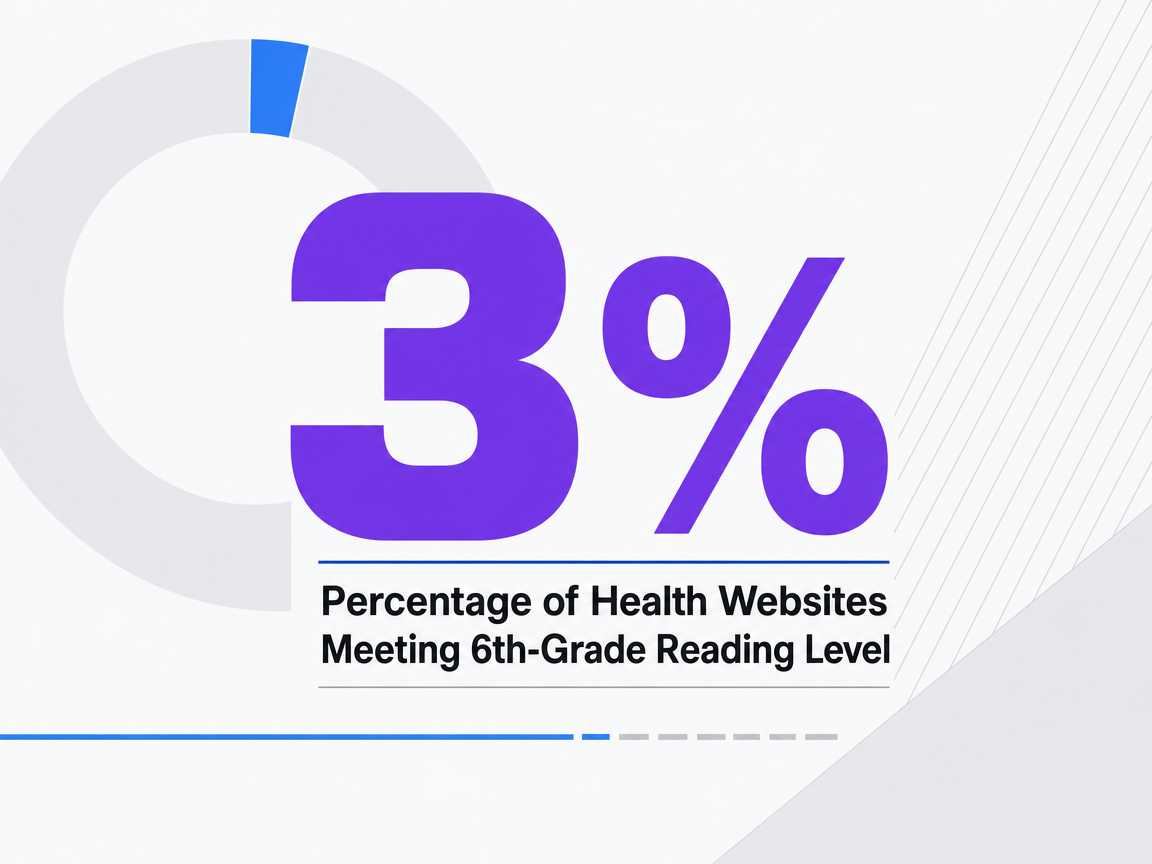
A 2024 peer-reviewed analysis of diabetic retinopathy websites found that authority score correlated with monthly visits at r = 0.60 (P < 0.001), with the average reading level across analyzed sites measured at 10.5 5. The study is correlational, single-vertical, and does not establish causation, but it documents a measurable relationship between page-level quality signals and organic traffic within its sample. Agencies scoping link programs for regulated verticals — health, legal, financial — can treat readability and content depth as adjacent levers rather than optional polish.
Operationally, this reframes the retainer scope. A month allocated to strengthening the target page's content — expanded coverage of the query intent, tightened readability, corrected internal links — often produces more ranking movement than the same month spent chasing incremental placements. Agencies pricing against outputs can bundle landing-page revisions into the link scope and bill against the composite lift, rather than segregating content and links into separate line items that compete for the same retainer share.
 Percentage of Health Websites Meeting 6th-Grade Reading Level
Percentage of Health Websites Meeting 6th-Grade Reading Level
Test AI-driven link building workflows risk-free
Experience automated, approval-based link acquisition and monitor real-time impact on campaign efficiency during your trial.
Retainer-band economics for portfolio operators
Where link-building scope competes for retainer share
Link building rarely sells as a standalone line. It fights for share inside a retainer that already funds strategy, content, technical work, and reporting. The size of that retainer sets the ceiling on what a delivery team can actually earn.
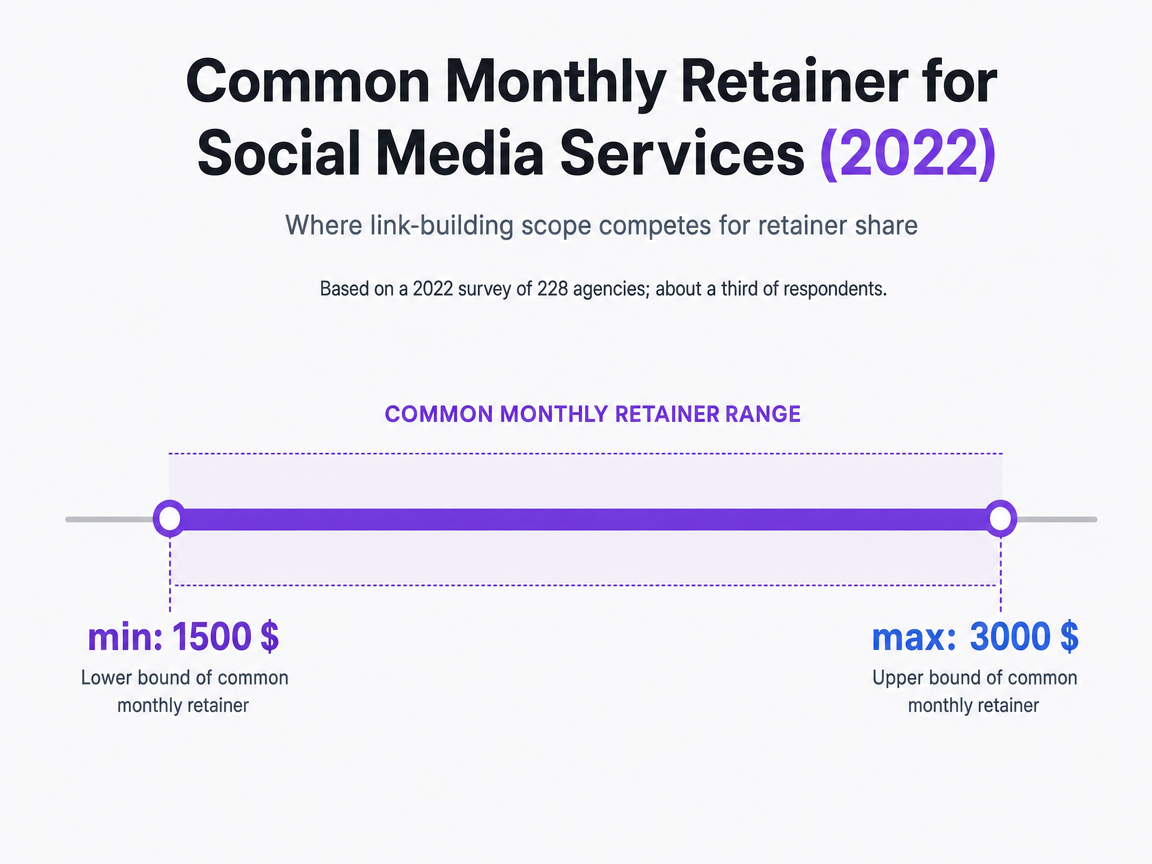
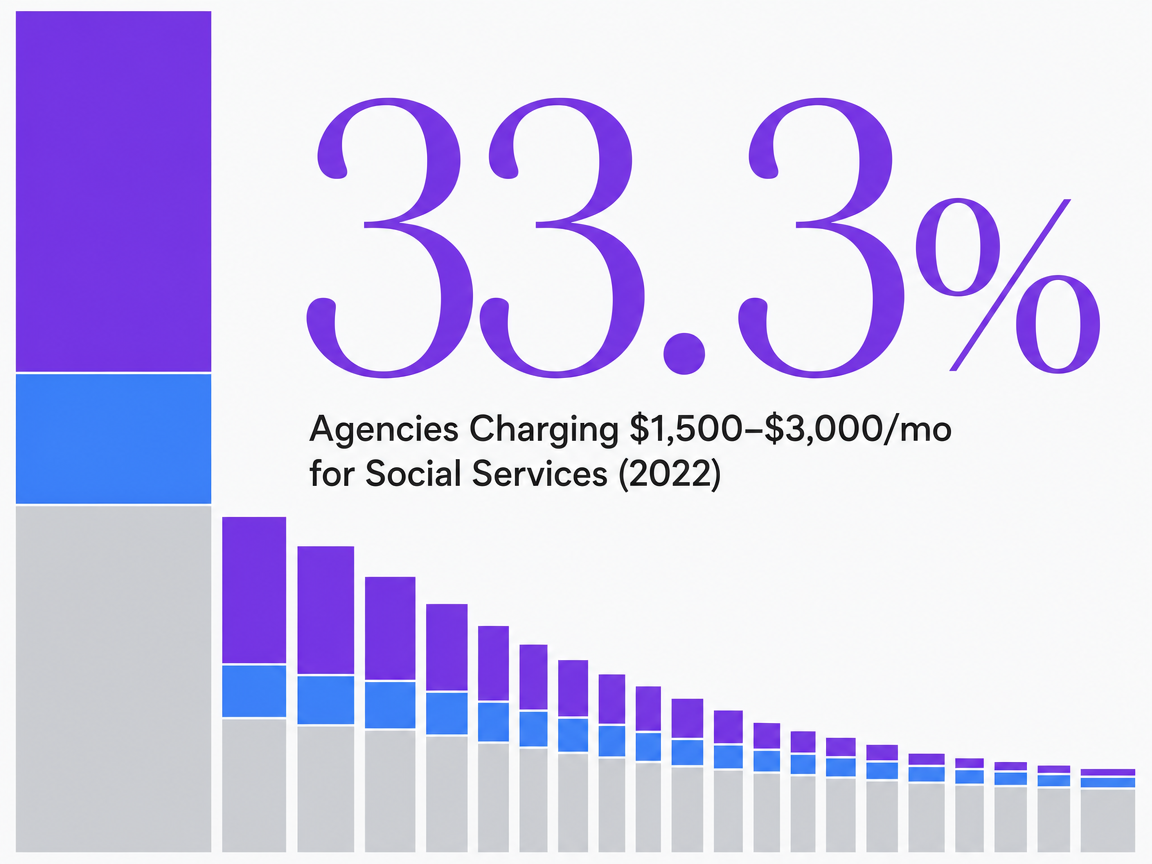
The distribution is narrower than most pricing decks assume. A 2021 agency outlook survey found that more than half of agencies reported average monthly retainers between $1,001 and $2,500 8. Adjacent evidence from a 2022 survey of 228 agencies showed roughly one-third of respondents charging $1,500 to $3,000 per month for social specialist services — a specialist line inside broader engagements 7. The two data points are not directly comparable, but together they sketch the operating envelope: most mid-market agencies work inside a $1,000 to $3,000 monthly band per client for the majority of accounts, with specialist services carving a portion of that band rather than sitting on top of it.
Inside a $1,500 retainer, link building competes with keyword research, on-page work, content briefs, and reporting hours. Allocating $600 to link acquisition leaves $900 for everything else. Inside a $2,500 retainer, that same $600 allocation preserves more room for the crawlability fixes and landing-page work that determine whether acquired links convert to ranking lift 3. The retainer band, not the per-link quote, is the variable that decides whether a link program can be delivered profitably.
Agencies that scope link building without mapping it against the client's actual retainer band end up either underdelivering on the link count promised or overspending against every other line in the SOW. Both outcomes compress margin. The pricing question is not what a link costs. It is what share of a known retainer the link program can defensibly claim before the rest of the scope starves.
Distribution of typical monthly agency retainers, with specialist service pricing bands overlaid — the space link-building scope must fit inside 7, 8.
 Common Monthly Retainer for Social Media Services (2022)
Based on a 2022 survey of 228 agencies, a third of respondents reported charging between $1,500 and $3,000 per month for social media services.
If you manage a multi-client portfolio: margin sensitivity across cost-to-earn assumptions
The frame shifts here from a single account to portfolio operations. A head of SEO running 20 to 60 active retainers is not pricing one campaign — they are allocating specialist capacity across a book of business where a swing of $200 in cost-to-earn per acquired link, multiplied across the portfolio, decides whether the link practice funds itself or draws from other service lines.
Three cost-to-earn assumptions bracket the realistic range for most agencies:
- $150 per acquired link when delivery is heavily systematized, outreach is templated across topical clusters, and content production runs on shared editorial infrastructure;
- $350 when publisher vetting is manual and content is produced per placement; and
- $600 when premium editorial standards, custom research, or regulated verticals push production hours per link into the double digits.
These are configurable variables, not sourced benchmarks — every agency's actual cost-to-earn depends on tooling, seniority mix, and vertical.
Crossed against the retainer bands documented by industry surveys, the margin picture separates quickly.
Gross margin sensitivity for link-building scope inside three retainer bands, crossed with three configurable cost-to-earn assumptions. Retainer bands sourced from industry surveys 7, 8; per-link costs are agency-configurable operating variables.
| Retainer band | Typical link scope allocation | Referring-domain velocity target | Margin at $150/link | Margin at $350/link | Margin at $600/link |
|---|---|---|---|---|---|
| $1,001–$2,500 8 | 25–35% of retainer | 2–3 new RDs/mo | Healthy | Thin | Negative |
| $2,501–$5,000 | 30–40% of retainer | 4–6 new RDs/mo | Healthy | Healthy | Thin |
| $5,001+ | 35–50% of retainer | 7–12 new RDs/mo | Healthy | Healthy | Healthy |
The pattern is not subtle. In the modal retainer band that more than half of agencies operate within 8, a $600 cost-to-earn erases margin on the link scope entirely. The same cost structure is defensible only in the upper retainer band, which represents a minority of most portfolios. Agencies running the majority of their book at $1,001 to $2,500 either drive cost-to-earn below $350 through systematized delivery or accept that link building subsidizes other service lines rather than contributing to gross margin.
Portfolio-level pricing decisions follow from the sensitivity, not from a per-link market rate. Cap link scope in the lower retainer band at a cost-to-earn the delivery system can actually hit. Concentrate premium-publisher, high-cost placements in the upper band where the retainer absorbs them. Track cost-to-earn monthly across the portfolio, not per campaign — the average across 40 accounts is the number that determines whether the practice scales.
 Agencies Charging $1,500–$3,000/mo for Social Services (2022)
Agencies Charging $1,500–$3,000/mo for Social Services (2022)
FTC disclosure as a pricing input, not a footnote
Disclosure obligations change the cost structure of a link before the outreach email is sent. Any placement where an agency, its client, or the publisher receives payment or material consideration falls inside FTC guidance, and the FTC frames the standard plainly: transparency is the watchword, and any necessary disclosure must be clear and prominent 1. That standard is not a compliance afterthought bolted onto a finished campaign. It is a variable that reshapes publisher selection, negotiation, and per-placement production time.
The delivery consequences are specific. Sponsored articles and advertorials require disclosure placed as close as possible to the triggering claim, with hyperlinks labeled clearly and unambiguously 2. Publishers who enforce those standards write disclosures into their editorial templates, which reduces legal risk but also removes some of the ranking value clients expect from a paid placement. Publishers who do not enforce them create exposure that the agency ultimately owns when a client is audited or a regulator asks how a link was earned.
Pricing should absorb three costs the standard proposal ignores.
- Legal or senior editorial review time on any placement that touches paid consideration.
- A narrower vetted publisher pool, since compliant outlets are a subset of the reachable universe and cost more per placement.
- A discount on the ranking value of disclosed placements when scoping referring-domain velocity targets.
Agencies that price these inputs into the retainer defend margin. Agencies that treat disclosure as a checkbox absorb the cost after the invoice is sent.
Compare Link Building Pricing Models With Real Agency Metrics
Request agency-focused benchmarks and see how leading teams structure link building costs, margin, and workflow for scalable, outcome-driven delivery—without increasing headcount.
Delivery models compared: in-house, outsourced, AI-assisted
Delivery model determines cost-to-earn before pricing strategy has anything to work with. Three configurations dominate the agency market, and each carries a different throughput ceiling, oversight profile, and disclosure risk.
In-house link teams give the agency full control over publisher vetting, anchor negotiation, and editorial standards. That control comes at fixed cost. A specialist link builder loaded with tooling, seniority, and management overhead rarely produces enough placements per month to distribute their salary across more than a handful of accounts without diluting quality. Throughput is bounded by hours; oversight is direct; compliance with FTC disclosure standards on paid placements can be enforced in-workflow 1. The model scales linearly with headcount, which is the constraint most heads of SEO are trying to escape.
Outsourced vendors invert the tradeoff. Fixed per-link pricing from a vendor moves cost-to-earn off the agency's P&L and onto a supplier margin, but transfers publisher-quality variance back to the agency's client-facing reporting. Vendors optimize for their own margin, which usually means volume placements on the cheaper end of the publisher distribution — the same distribution that fails to reproduce the contextual, topically aligned links that Google's guidance treats as valuable connectors 3. Oversight thins. Disclosure enforcement depends on vendor practice, and the agency owns the exposure when a placement is audited 2.
AI-assisted delivery restructures the middle. Prospect research, contact enrichment, pitch drafting, and first-touch outreach — the labor stack documented earlier as the real unit cost — compress into systematized workflows where specialist hours concentrate on vetting, negotiation, and editorial QA rather than volume production. Approval-first platforms such as Vectoron route each recommendation through human sign-off before execution, which preserves the oversight in-house teams offer while raising throughput past what a single link builder can produce. Cost-to-earn drops toward the systematized end of the range referenced in the retainer-band economics above, and disclosure review can be built into the approval step rather than bolted on after placement.
The decision is not which model is best in general. It is which model produces a defensible cost-to-earn against the retainer bands the portfolio actually operates within 8. In-house works when the account mix concentrates in premium retainers. Outsourced vendors work when the agency is comfortable pricing publisher-quality variance into a margin buffer. AI-assisted delivery works when portfolio scale exceeds what specialist headcount can cover without compressing oversight.
Packaging link building for scalable brand outcomes
The pricing model an agency ships is a bet on which unit the client will renew against. Per-link invoices bet on activity. Outcome-indexed retainers bet on referring-domain velocity, ranking lift on money pages, and organic sessions to commercial URLs — the same anchors that peer-reviewed research treats as components of a scalable link-building strategy tied to brand positioning 10.
Packaging follows from that bet. A defensible link scope inside a mid-market retainer names three deliverables the client can audit: a monthly referring-domain target against specified URLs, a query set with position benchmarks, and a commercial-traffic delta reported against non-brand baselines. It prices publisher vetting, disclosure review, and landing-page readiness as delivery inputs rather than optional add-ons. It caps cost-to-earn against the retainer band the account actually sits inside.
Agencies scaling past headcount limits are packaging these anchors into approval-first delivery systems — platforms such as Vectoron among the options — where oversight stays with the SEO lead and volume production compresses into systematized workflows. The margin protection comes from the model, not the markup.
Frequently Asked Questions
References
- 1.Native Advertising: A Guide for Businesses.
- 2..com Disclosures: How to Make Effective Disclosures in Digital Advertising.
- 3.Search Engine Optimization (SEO) Starter Guide.
- 4.SEO Guide for Web Developers.
- 5.Search engine optimization and its association with readability and accessibility of diabetic retinopathy websites.
- 6.A distinctive approach to obtain higher page rank through search engine optimization.
- 7.The agency pricing & packaging report.
- 8.Back on Track.
- 9.Ranking Factors.
- 10.Search engine optimisation (SEO) strategy as determinants to online brand positioning.