
Key Takeaways
- Service + city + insurance accepted queries pre-qualify searchers on proximity and coverage, which patient surveys rank as the top two facility-selection factors 7, and should route to verified intake calls.
- Specialty + condition + city queries identify searchers seeking specialist-level care in a defined catchment and should produce booked consults matched to the specific clinician handling the on-page condition.
- Provider A vs Provider B comparison queries signal an active decision, and honest side-by-side pages that acknowledge competitor strengths earn consult requests attributed directly to the comparison URL.
- Problem + jurisdiction + eligibility queries describe legal situations rather than practice areas, so pages should walk through standing and filing windows and be measured by intakes passing conflict and eligibility screens.
- Cost and price-range queries indicate budgeting intent, not early research, and ranged itemized price pages convert into quote requests tracked by quote-to-close attach rate.
- Urgency + service + location queries collapse the research phase, so thin availability-first pages win on connected calls within the promised service window rather than depth of content.
- Qualification + audience queries are self-sorts on benefits, age, or status, and audience-scoped pages with eligibility criteria should be measured by eligibility-confirmed intakes per page.
- Next-step question queries sit closest to transaction, and step-numbered answer pages should log the exact verb in the query (book, verify, download) as the conversion event.
Why Modifier Semantics Beat Query Length
The default assumption in most keyword briefs is that longer queries convert better because they signal narrower intent. The underlying research does not support that shortcut. A study of query specificity concluded that the length of an individual query is not, by itself, a reliable indicator of information-need specificity or a strong predictor of search action, and that behavior across a session carries more signal than word count on a single query 2. Treating length as the targeting rule produces keyword lists that look sophisticated and perform like a traffic report.
What actually separates a pipeline-grade long tail keywords example from a vanity one is the modifier attached to the root. A service term paired with a city, an insurance plan, a jurisdiction, an urgency marker, or a comparison name carries buying-stage information that a three-word query never will. The eight examples in this article are organized around those modifier types, not around industries or query length, because the same modifier logic transfers from a dental group to a personal injury firm to a senior living operator.
Each example below pairs the query pattern with the CRM event it should produce, the content format that converts it, and the measurement signal that proves it moved pipeline rather than analytics dashboards.
How to Read These Eight Examples
Each archetype below follows the same four-part structure so the examples can be compared across verticals rather than read as isolated case studies.
- Modifier pattern — written as a template with bracketed variables that a demand gen manager can swap for their own service lines and geographies.
- Buying-stage read — what the modifier reveals about where the searcher sits between unaware and ready to transact.
- CRM event the page should produce — written as a specific object in the pipeline (qualified call, booked consult, verified intake, quote request) rather than a generic conversion.
- Content format and measurement signal — what confirms the page moved revenue, not sessions.
Industries are named only where the research scope requires it. A reader running demand gen for a dental group should read the legal archetype for its modifier logic, and a legal marketer should read the healthcare archetypes the same way. The modifier is the portable asset.
The Eight Modifier Archetypes
Service + City + Insurance Accepted
The template reads [service] [city] [accepts insurance plan], as in "family dentist Austin accepts Delta Dental" or "outpatient therapy Phoenix accepts Aetna." The modifier set does two jobs simultaneously: it filters by catchment and it filters by financial feasibility before the searcher ever reaches a phone.
The behavior behind this template is well documented in healthcare. A study combining anonymized query logs with user surveys found that nearly 40% of participants searched online for information about a healthcare facility before a visit, and when asked to rank facility-selection factors, respondents named proximity at 53%, insurance coverage at 39%, and reputation at 31% as most important 7. Proximity and insurance are the top two factors; this archetype packages both into a single query.
The CRM event this page should produce is a verified intake call, not a form fill. A searcher who typed the insurance name is pre-qualifying themselves against the practice's panel, and the page should route them to an intake coordinator who can confirm the plan in real time. The content format is a service-plus-location page with a visible, current list of accepted plans and an intake number tied to a call-tracking line. The measurement signal is insurance-verified calls per page, not sessions or rankings.
Specialty + Condition + City
The template reads [specialty] [condition] [city], as in "endodontist cracked molar Charlotte" or "orthopedist torn meniscus Denver." The modifier combination tells the page who the searcher is (someone with a diagnosed or suspected condition), what resolution they want (specialist-level care), and where they will accept delivery.
This exact template is how researchers reconstruct the actual advertising surface for healthcare services. A content analysis of online healthcare-service advertisements used 45 healthcare-related keywords expanded with city names because provider searches are often local, and after removing duplicates the analysis covered 323 unique advertisements 9. The study's methodology is itself the proof: specialty-plus-condition-plus-city is the keyword skeleton practitioners already compete on.
The CRM event is a booked consultation with the correct specialist, which means the page should present provider-level bios, credentialing, and the condition's treatment pathway rather than a generic practice overview. Content format is a condition page scoped to one specialty and one city, with scheduling that routes by sub-specialty. Measurement signal is booked consults per page, segmented by whether the booking matched the condition on the page. A booked consult that lands on the wrong clinician is a false positive for this archetype.
Provider A vs Provider B + Quality Qualifier
The template reads [provider A] vs [provider B] [quality qualifier], as in "Memorial vs St. Joseph cardiac outcomes" or "Smith Dental vs Aspen cleaning reviews." The comparison modifier is the clearest buying-stage signal in the eight archetypes because it narrates an active decision between two named options.
Comparison and quality queries map directly to how patients evaluate providers on public quality-reporting sites. A peer-reviewed analysis of traffic to public hospital and outpatient-provider quality websites found that search accounted for 63.95% of unique visits, and among consumers who visited to choose a provider, 78.4% said they were likely or very likely to use the information for that provider choice 6. The study scope is public hospital and outpatient quality-reporting sites, not private provider marketing pages, but the behavioral read transfers: searchers who arrive at a comparison surface are overwhelmingly there to decide.
The CRM event is a booked consult or appointment request from a named-competitor landing page. Content format is a side-by-side comparison that documents credentials, outcomes, and process honestly, including points where the competitor leads. The measurement signal is consult requests attributed to comparison URLs, with a secondary read on which named competitor produced the request so sales can prepare the conversation. Comparison pages that hide the competitor's strengths lose the trust the modifier created.
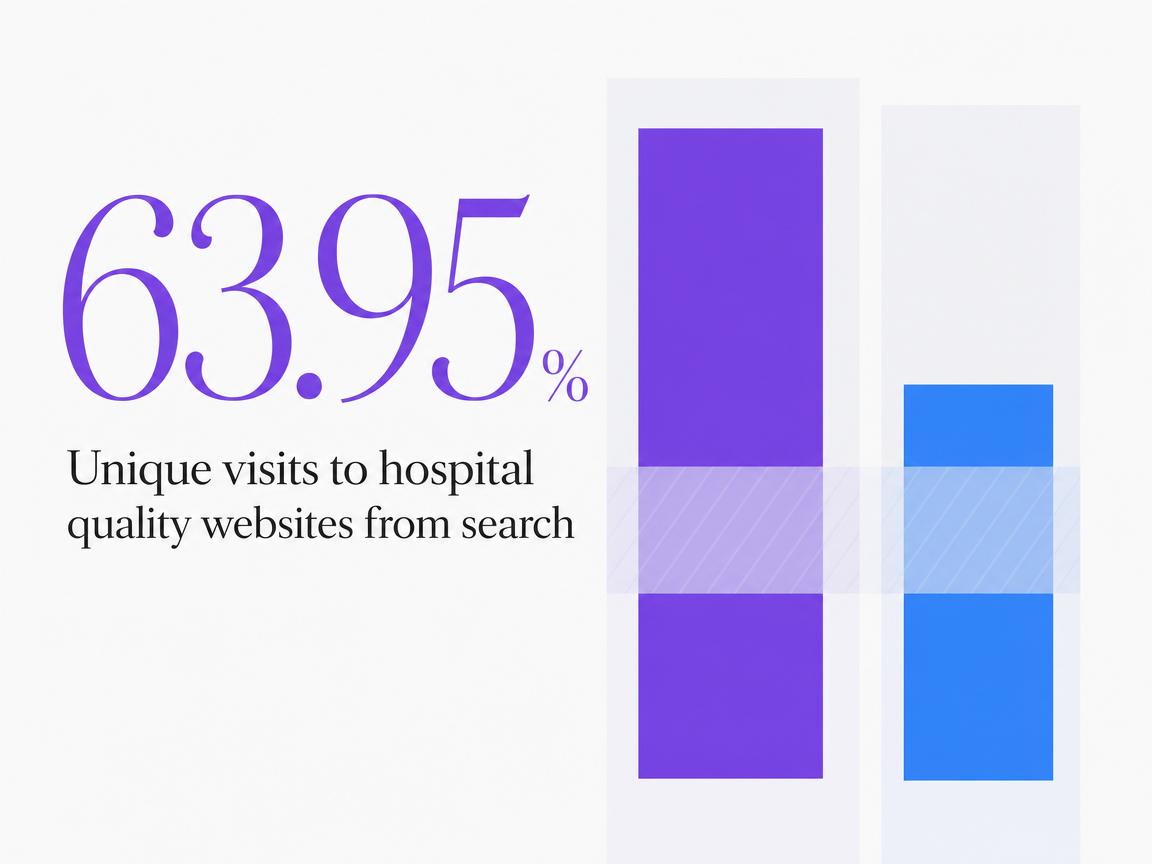 Unique visits to hospital quality websites from search
Unique visits to hospital quality websites from search
Problem + Jurisdiction + Eligibility (Legal)
The template reads [concrete legal problem] [jurisdiction] [eligibility condition], as in "wage theft lawsuit Illinois non-exempt employee" or "guardianship petition Harris County grandparent standing." Legal searchers rarely type practice-area terms; they describe a life problem and attach the jurisdictional and eligibility facts that determine whether a case exists at all.
Stanford Law School research on how laypeople search for legal help documents this behavior directly. The empirical study examines how people search for resources to resolve legal issues and assess legal-help services online, including perceived usability, trustworthiness, and value 10. A companion paper reports that an overwhelming majority of respondents who used the internet first visited Google, with only a small minority using other search engines, which concentrates the ranking surface for this archetype on a single channel 11.
The CRM event is a qualified intake call screened against the eligibility fact in the query. The content format is a problem-scoped page that walks through jurisdiction, filing windows, standing or eligibility, and what documentation the intake team will request. The measurement signal is intake calls that pass the firm's conflict and eligibility screen, divided by page sessions. Volume without screen-passage means the modifier isn't doing its filtering job.
Service + Cost or Price Range
The template reads [service] cost or [service] price [range qualifier], as in "dental implant cost without insurance" or "roof replacement price 2,000 square feet." The cost modifier is often dismissed as early-funnel because it does not name a provider, but the opposite is true: a searcher who types a price qualifier has moved from research to budgeting.
The reason cost pages convert when they are built honestly is that direct answers to specific long-tail questions do real work. Stanford's Tail Answers study, which included a user experiment with 361 participants, found that direct answer components clearly addressed intent in 58% of unique long-tail queries, improving the ability to solve the information need 1. A cost page that states ranges, variables, and exclusions is exactly that kind of focused answer.
The CRM event is a quote request or financing inquiry. Content format is a ranged, itemized price page with the drivers that move the number up or down and a next step tied to a quote. Measurement signal is quote requests per page and the attach rate between quote and close.
Urgency + Service + Location (Same-Day, Emergency, Weekend)
The template reads [urgency marker] [service] [location], as in "same-day crown repair Nashville," "emergency HVAC Saturday Tampa," or "after-hours psychiatrist telehealth Oregon." The urgency modifier is unusual among the archetypes because it collapses the research phase entirely; the searcher is choosing based on who can answer the phone.
Users who search before a facility visit do not treat all facilities as substitutes. The health-search study cited earlier found that nearly 40% of participants searched online for information about a healthcare facility before a visit, and the facility-selection factors they ranked highest included proximity and reputation 7. For urgency queries, proximity becomes availability: the nearest provider who confirms a slot wins.
The CRM event is a connected call within the service window promised on the page. Content format is a thin, fast-loading page that leads with current availability, service hours, and a tracked phone number; comparison content and biographical depth belong elsewhere. Measurement signal is connected calls within promised hours divided by page sessions, with a dropped-call rate reported alongside. A high ranking that cannot answer the phone is a lead given to the next result.
Qualification + Audience (For Seniors, For Medicaid, For First-Time)
The template reads [service] for [qualified audience], as in "memory care for veterans," "orthodontics for adults with Medicaid," or "estate planning for first-time homeowners." The qualification modifier does two things at once: it narrows the audience and signals that the searcher has already placed themselves in a category the provider either serves or does not.
Patient-centered content analysis of healthcare advertisements shows how deeply audience qualification shapes conversion surfaces. The study's keyword set and city expansions produced 323 unique advertisements because specialty, condition, and audience modifiers consistently segment the market providers compete in 9. The same logic holds for behavioral health, senior living, and legal aid: an audience modifier is a self-sort the provider should honor on the page.
The CRM event is an intake call that confirms audience eligibility (benefits, age, residency, status) before scheduling. Content format is an audience-scoped page with eligibility criteria, accepted documentation, and the specific services configured for that group. Measurement signal is eligibility-confirmed intakes per page. Intakes that fail eligibility on the call indicate the page over-promised the qualification.
Next-Step Question + Service (How to Book, What to Expect, How to Verify)
The template reads [next-step verb] [service], as in "how to book a sleep study," "what to expect at a Suboxone intake," or "how to verify a contractor's license in Ohio." These queries sit closest to the transaction because the searcher is no longer evaluating whether to act; they are rehearsing the act itself.
Direct-answer formats earn disproportionate value on this archetype. The Stanford Tail Answers research, based on a user study with 361 participants, found that focused answer components addressed the intent of 58% of unique long-tail queries 1. Next-step queries are the clearest case: the page either answers the procedural question completely or loses the searcher to a competitor who does.
The CRM event depends on the verb:
- "How to book" should produce a booking.
- "What to expect" should produce a saved appointment or a return visit with higher engagement depth.
- "How to verify" should produce a tracked outbound action (license lookup click, document download) that correlates with later intake.
Content format is a step-numbered answer page with the next action embedded at the natural decision point. Measurement signal is the specific next action named in the query, logged as an event rather than inferred from session time.
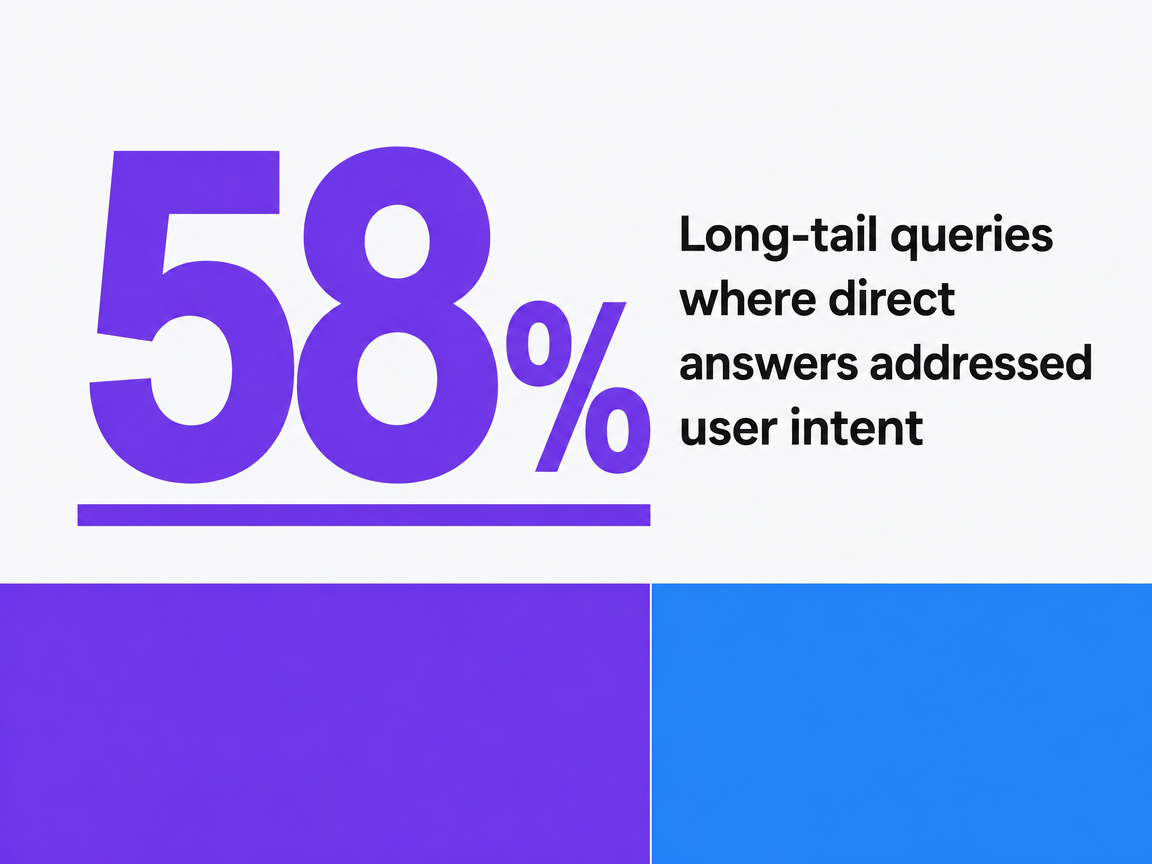 Long-tail queries where direct answers addressed user intent
Long-tail queries where direct answers addressed user intent
Test pipeline-focused keyword strategies in real time
Measure live results from published long-tail content during your free trial—no delays, no commitments.
The Modifier-Archetype Matrix at a Glance
The eight archetypes collapse into a single operating table that demand gen managers can hand to a strategist, a writer, and an analyst without further translation. Each row names the modifier type, the buying stage it reveals, the CRM event the page should produce, the content format that converts it, and the measurement signal that proves it moved pipeline. The format column is where most long-tail programs fail: a comparison query served with a focused answer page under-converts, and a next-step query served with a comparison page over-explains. Stanford's Tail Answers research, built on a user study with 361 participants, found that focused answer components addressed the intent of 58% of unique long-tail queries, which is why next-step and cost archetypes earn answer pages while comparison and provider-selection archetypes earn comparison or intake surfaces 1.
| Example Archetype | Modifier Type | Buying Stage | CRM Event | Content Format | Measurement Signal |
|---|---|---|---|---|---|
| Service + City + Insurance Accepted | Location + Coverage | Pre-qualifying | Verified intake call | Service-location page with live plan list | Insurance-verified calls per page |
| Specialty + Condition + City | Clinical + Local | Specialist selection | Booked consult with correct clinician | Condition page scoped to one specialty | Consults matched to on-page condition |
| Provider A vs Provider B + Quality | Comparison | Active decision | Consult request from comparison URL | Honest side-by-side comparison page | Requests attributed to comparison URLs |
| Problem + Jurisdiction + Eligibility | Legal Qualifier | Case formation | Screen-passing intake call | Problem-scoped eligibility page | Intakes passing conflict and eligibility screen |
| Service + Cost or Price Range | Budget | Budgeting | Quote or financing inquiry | Ranged, itemized price answer page | Quote requests and quote-to-close attach rate |
| Urgency + Service + Location | Urgency | Immediate transact | Connected call within promised window | Thin availability-first intake page | Connected calls in-window, dropped-call rate |
| Service + Qualified Audience | Audience Qualifier | Eligibility sort | Eligibility-confirmed intake | Audience-scoped page with criteria | Eligibility-confirmed intakes per page |
| Next-Step Question + Service | Procedural | Rehearsing the act | Named next action (book, verify, download) | Step-numbered focused answer page | Logged event for the exact verb in query |
Read the matrix left to right when planning a new page, and right to left when auditing an existing one. If a page cannot name the CRM event it produces or the signal that confirms it, the modifier was chosen for volume rather than pipeline.
Trust Requirements for YMYL Long-Tail Pages
Long-tail pages in healthcare, behavioral health, legal, senior living, and financial services operate under Your Money or Your Life conditions, which means the modifier only works when the page itself clears a trust bar. A peer-reviewed review of online health information seeking identifies accuracy, currency, and ease of understanding as the qualities consumers value most in health websites 8. For the archetypes above, that translates into three non-negotiables:
- Insurance panels and pricing ranges carry a visible last-reviewed date.
- Clinician and attorney credentials link to the licensing board or state bar record.
- Procedural answers are written by or reviewed by a named practitioner whose scope matches the page.
Pages that fail any of the three convert worse regardless of ranking, because the modifier promised a specificity the body never delivered. Audit YMYL long-tail pages quarterly against the same three checks a reader applies in the first ten seconds.
If You Manage Multiple Locations: Templating the Modifier Across a Portfolio
This section shifts the audience from single-site demand gen to multi-location operators: DSOs, behavioral health networks, home services groups, senior living portfolios, and multi-office legal brands. The economics change because a modifier template, once validated at one location, becomes a production asset that scales with location count rather than with writer hours.
The portable unit is the template, not the page. A validated template such as [service] [city] [accepts insurance plan] or [problem] [county jurisdiction] [eligibility] can be instanced across every location in the portfolio with local variables swapped at generation time. The content analysis that mapped healthcare advertising surfaces used exactly this method: 45 keywords expanded with city names because provider searches are local, producing 323 unique advertisements after deduplication 9. The same expansion logic drives organic surface area for an operator with 20 or 200 locations.
The portfolio math is a formula, not a forecast. Operators should populate it from their own CRM rather than from borrowed benchmarks:
| Variable | Source | Role in Formula |
|---|---|---|
| Templates validated | Archetypes shipped and measured | Breadth of the production asset |
| Pages per location | Templates × local variables (services, plans, conditions) | Surface area per site |
| Locations | Portfolio count | Multiplier |
| Qualified events per page | CRM, by archetype | Conversion input |
| Event-to-close rate | CRM, by service line | Revenue conversion |
| Average contract value | Finance | Revenue per close |
Templates × pages per location × locations defines surface area. Surface area × qualified events per page × event-to-close × ACV defines sourced revenue. The cost line that changes under templating is production: a validated template amortizes across every instance, while a one-off brief does not. Operators who treat the template as the asset, and the location instance as a configuration, convert portfolio size into a long-tail advantage competitors with single-site content models cannot match.
See How Precision Long-Tail Keyword Targeting Can Accelerate Sales Pipeline
Request a tailored review of your current keyword mix with actionable data on which long-tail queries are most likely to drive qualified, high-conversion pipeline for complex B2B and multi-location service models.
Measuring Long-Tail Against Pipeline, Not Impressions
The reporting problem for long-tail programs is not that measurement is hard; it is that the easy metrics are the wrong ones. A Government Accountability Office review of digital marketing evaluation found that establishing roles, developing an evaluation framework, using statistical modeling, conducting ongoing analysis, and explicitly attributing outcomes are the actions that separate advertising measurement from advertising reporting 12. Impressions and clicks sit above that line; qualified events and closed revenue sit below it.
A second GAO review made the attribution gap concrete. The Coast Guard reported collecting impressions, clicks, website visits, and online inquiry forms, but officials said they could not determine whether a person who clicked eventually applied 4. A long-tail program measured only to the inquiry form reproduces that same gap: the modifier did its job, the page produced an event, and no one can tell finance which page produced the closed deal.
The reporting line that holds up in a budget review runs page → tracked CRM event → stage conversion → sourced revenue, segmented by modifier archetype. Each archetype in this article names its own event (verified intake call, booked consult, screen-passing intake, quote request, connected call in-window, eligibility-confirmed intake, logged next-step action), so the signal is already defined at the page level. Three practices make the line defensible:
- Assign a tracked phone or form endpoint per archetype so the CRM record carries the page identifier.
- Report the conversion ratio from event to the next pipeline stage, not just event volume.
- Attribute closed revenue to the archetype that originated the record, with a secondary read on assisting touches.
Rankings and sessions belong in a diagnostic tab, not the pipeline report the CMO sends upstairs.
Where This Fits in an AI-Mediated Discovery Stack
Long-tail answer surfaces are no longer evaluated only by human searchers. Forrester reports that 89% of B2B buyers in its 2024 Buyers' Journey Survey used generative AI tools at every stage of the purchase process, which means the pages built for the eight archetypes above now feed two readers at once: the prospect and the model summarizing results for them 13. The implication for a demand gen manager is practical. The same qualities that make a modifier-matched page convert a human (specific scope, honest ranges, named credentials, step-numbered answers) are what make it citable by an AI layer. Teams that already run approval-first production, such as the workflow Vectoron operates, can scale template instancing across the archetype matrix without expanding headcount or ceding oversight on YMYL claims.
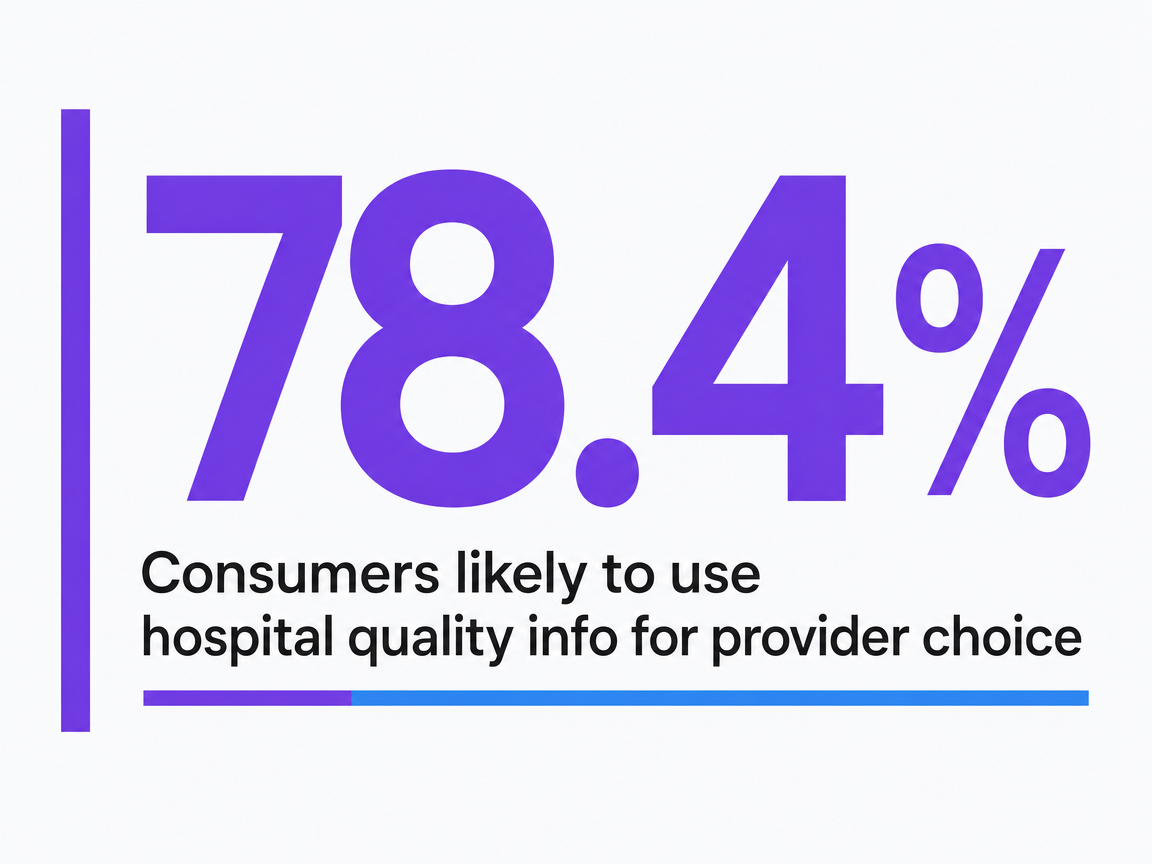 Consumers likely to use hospital quality info for provider choice
Consumers likely to use hospital quality info for provider choice
Frequently Asked Questions
References
- 1.Direct Answers for Search Queries in the Long Tail.
- 2.Understanding the specificity of web search queries.
- 3.Actions Needed to Address Digital Marketing Challenges.
- 4.GAO-25-107224, COAST GUARD.
- 5.Shopping for Health Care Goods and Services: A Selected Review of Consumer Information.
- 6.Sources of Traffic and Visitors' Preferences Regarding Online Public Reporting of Hospital Quality.
- 7.From health search to healthcare: explorations of intention and utilization via query logs and user surveys.
- 8.Online Health Information Seeking Behavior.
- 9.Patient-Centered Care and Healthcare Consumerism in Online Healthcare Service Advertisements.
- 10.The User Experience of the Internet as a Legal Help Service: Defining Standards for the Next Generation of User-Friendly Online Legal Services.
- 11.The User Experience of the Internet as a Legal Help Service.
- 12.Actions Needed to Address Digital Marketing Challenges.
- 13.Shifting Search Behaviors Demand Smarter Content Strategies.