
Key Takeaways
- AccuRanker earns its spot through on-demand refresh cadence and API access, letting agencies pipe ranking snapshots into a warehouse alongside GA4 and CRM data for portfolio-scale reporting.
- Semrush Position Tracking stands out for flagging AI Overviews, featured snippets, and People Also Ask blocks, giving agencies the SERP context to explain flat traffic despite steady rankings.
- Ahrefs Rank Tracker fits agencies needing portfolio-level share-of-voice and competitor visibility, with Search Console integration that pairs scraped rank against Google's own click data.
- SE Ranking consolidates reporting labor for delivery orgs running 50 to 200 accounts through white-label scheduled reports and a native GA4 connector that attaches sessions and conversions automatically.
- Nozzle suits agencies with a data warehouse, piping full structured SERP data into BigQuery so analysts can model how specific SERP features and AI Overviews suppress CTR 7.
Why Rank-Only Reports Are Losing Retention Battles
The rank tracker used to be the closer. A screenshot showing three keywords moving from page two to page one was enough to renew a retainer. That artifact no longer survives contact with a client's finance team, because the link between position and traffic has weakened in ways rank data alone cannot explain.
Pew Research analyzed real browsing data from 900 U.S. adults across 68,879 Google searches and found that users clicked a traditional search result on 15% of visits when no AI summary appeared, but only 8% of visits when an AI summary was present. Clicks on the source links embedded inside the AI summary itself came in at just 1% 4, 5. The scope matters: this is U.S. consumer browsing, not enterprise B2B queries, and behavior varies by intent. Even with that caveat, the direction is clear enough that a client CFO will notice the gap between a ranking improvement and a flat sessions line.
The exposure is not niche. A follow-up Pew survey found that 65% of U.S. adults say they at least sometimes encounter AI summaries in search results 6. Agencies delivering monthly reports built on average position and keyword count are now defending a metric that predicts less of the traffic outcome than it did eighteen months ago.
This is the analytical hinge for every tool decision that follows. Rank tracking software still matters, but it earns its place in a client report only when it feeds a stack that can attribute position movement to clicks, sessions, and revenue. The rest of this evaluation ranks platforms by that standard, not by keyword database size.
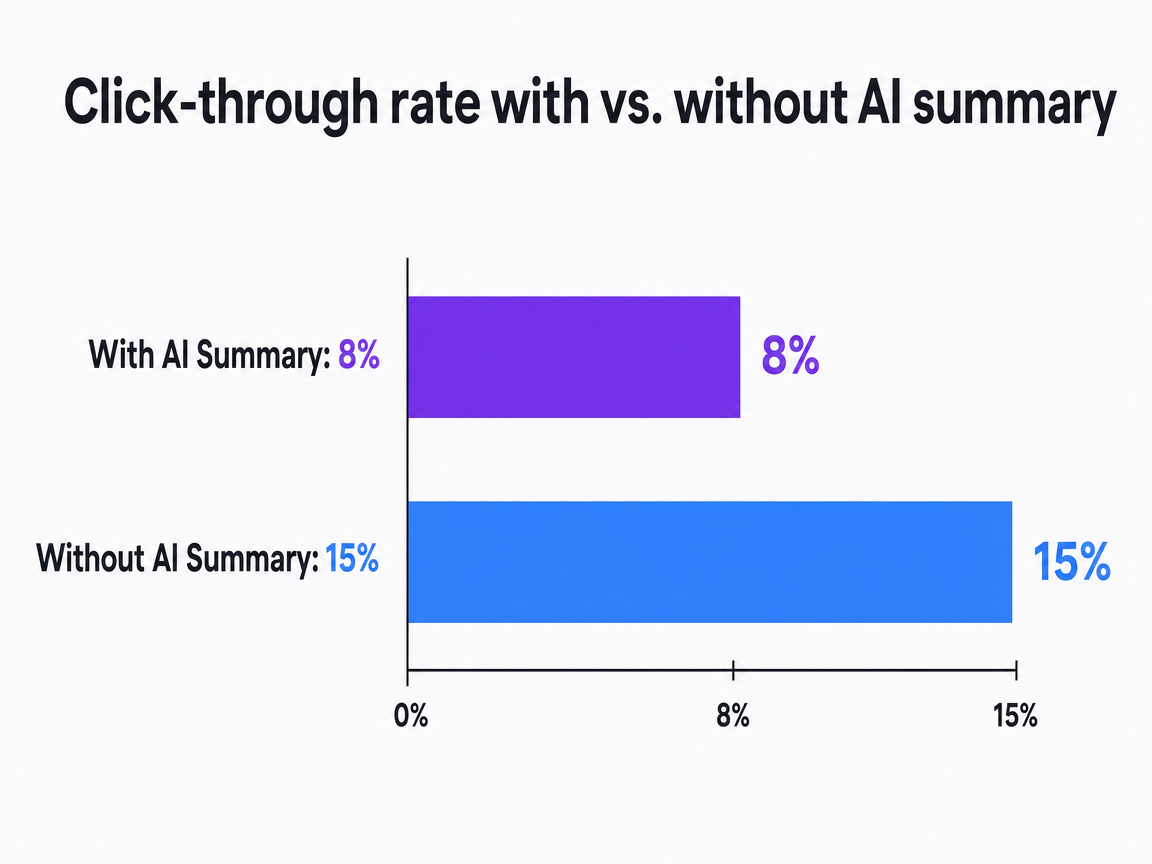 Click-through rate with vs. without AI summary
Compares the percentage of Google search visits where a user clicked a traditional (non-AI) search result, contrasting visits that included an AI summary with those that did not.
The Reporting Stack a Rank Tracker Must Plug Into
Search Console: Impressions, Clicks, Position, and Now AI Surfaces
Every credible rank tracking evaluation starts with the same question: does the tool ingest Search Console data, or does it rely solely on its own scraped SERP snapshots? Google's Search Analytics API exposes clicks, impressions, CTR, and position for every query and page combination 2. Any tracker that skips this integration is asking clients to trust third-party rank observations over Google's own click and impression counts.
The stakes changed again in 2026. Google introduced Search Generative AI performance reports inside Search Console, surfacing impressions, pages, countries, devices, and dates for URLs appearing in AI Overviews and AI Mode 3. That is the first sanctioned visibility signal for AI surfaces, and it lives in the same property agencies already report from.
Rank trackers that pull only from their own crawlers cannot see AI Overview impressions. Trackers that authenticate against Search Console and pipe those fields into client reports can. When a client asks why keyword positions held but sessions dropped, the answer often lives in the impressions column of the AI performance report — not in the position column of a scraped rank database 12.
GA4 and CRM: Where Rank Data Becomes Revenue Evidence
Search Console shows what happened before the click. GA4 shows what happened after it. Google's own documentation frames the split cleanly: Search Console covers impressions, clicks, and queries, while Analytics adds post-click behavior and conversions 1. A rank tracker that stops at position and impression data hands the agency a leading-indicator report and asks the client to trust that revenue will follow.
The four-layer reporting stack an agency-grade tool must feed looks like this: the rank tracker surfaces position and SERP-feature context, Search Console contributes clicks, impressions, average position, and AI Overview impressions 3, GA4 attaches sessions, engagement, and conversion events, and the CRM closes the loop with lead quality, pipeline stage, and revenue. Reporting frameworks converge on the same structure — keyword position movement paired with organic conversions and revenue attributed to organic search 11, 13.
The four-layer reporting stack: Rank Tracker → Search Console → GA4 → CRM.
When evaluating tools, the operative question is not "how many keywords does it track" but "how many of those four layers does it consolidate into one client-facing view?" Trackers that stop at layer one produce reports a CFO will discount. Trackers that reach layer four produce reports that renew retainers 9.
Evaluation Criteria: Ranking Tools by ROI-Proof Capability
A useful shortlist starts with a scoring rubric, not a feature checklist. The tools that survive a client QBR share four characteristics, and each maps to a specific data flow rather than a marketing claim.
- Search Console integration depth. The tool must authenticate against Search Console and ingest clicks, impressions, CTR, and average position at the query and page level through the Search Analytics API 2. Bonus weight goes to platforms that already pull the new AI Overviews and AI Mode impression data from the generative-AI performance reports Google shipped in 2026 3.
- GA4 and CRM attribution. Position data becomes revenue evidence only when it is joined to sessions, conversion events, and pipeline stage 1. Tools that stop at impressions force the agency to stitch reports together in a spreadsheet, which is where reporting labor quietly consumes retainer margin.
- SERP-feature and device context. A ranking of three means different things depending on whether a featured snippet, People Also Ask block, or AI Overview sits above it. SERP features have been shown to suppress organic CTR on average across 24 studied feature types 7. Trackers that log SERP composition alongside position let agencies explain flat traffic without blaming the algorithm.
- Automated multi-client reporting. Delivery orgs running 50 to 200 accounts need scheduled, white-label output that separates leading indicators from lagging ones — rank and impressions on one axis, sessions and conversions on the other 10, 11. The rubric penalizes tools that require manual export for each account.
Track Client Rankings With Live Data Insights
Measure ranking shifts on real campaigns and prove client ROI using actual published content during your trial.
The Rank Tracking Software Shortlist for Agencies Proving ROI
AccuRanker: Speed and API Access for High-Frequency Reporting
AccuRanker's argument to agencies is refresh cadence. Rankings update on demand rather than on a weekly crawl schedule, which matters for delivery orgs that field client questions in real time after algorithm updates or content pushes. The tool authenticates against Search Console and pulls clicks, impressions, CTR, and position through the Search Analytics API, so the rank column and the impressions column live in the same view 2.
The API access is where AccuRanker earns its shortlist spot for ROI reporting. Agencies running 50 or more accounts can pipe ranking snapshots into a warehouse alongside GA4 conversion events and CRM pipeline data, then rebuild the client-facing dashboard once and reuse it across the portfolio. That workflow collapses the reporting-labor line item that quietly erodes retainer margin.
SERP-feature detection is present and granular, which matters given that SERP features suppress organic CTR on average across the 24 feature types studied in the arXiv analysis 7. AI Overview visibility, however, still depends on pairing AccuRanker's SERP snapshots with the AI performance reports Google shipped inside Search Console in 2026 3. AccuRanker will show whether an AI Overview appeared; Search Console will show whether the client's URL was cited inside it. Agencies need both surfaces stitched together in the report.
Semrush Position Tracking: SERP Feature and AI Overview Coverage
Semrush earns its place on this shortlist for the breadth of SERP-feature and AI Overview reporting layered on top of its position tracker. The Position Tracking tool flags when a tracked keyword triggers an AI Overview, a featured snippet, a People Also Ask block, or any of the other SERP features that have been shown to depress organic CTR across 24 studied feature types 7. That context is the difference between a client conversation about a flat traffic line and one about SERP composition.
The platform ingests Search Console data for clicks, impressions, CTR, and average position at the query and page level 2, which gives agencies a defensible traffic number to sit next to the scraped rank number. When Google's own AI Overview impression data becomes available through the new Search Console generative-AI performance reports, agencies using Semrush as the rank layer still pull that visibility signal from Search Console itself rather than trusting a third-party interpretation 3.
Where Semrush falls short for ROI proof is CRM attribution. The platform stops at organic sessions and Search Console conversion events. Revenue and pipeline stage still require GA4 plus a CRM join, which is why delivery orgs typically pair Semrush with a reporting layer that closes the loop between position movement and closed-won revenue 11.
Ahrefs Rank Tracker: Portfolio Visibility with GSC Integration
Ahrefs Rank Tracker is the strongest fit for agencies that want a portfolio-level share-of-voice view without stitching multiple tools together. The Traffic Share and Visibility metrics roll up across projects, which is useful when a client asks how they compare to three named competitors on a fixed keyword set. The tool authenticates against Search Console and imports clicks, impressions, CTR, and average position, letting agencies compare the scraped rank against Google's own click data in the same dashboard 2.
SERP-feature logging is included, and Ahrefs surfaces AI Overview presence per keyword. That matters because SERP features exert a net negative effect on organic CTR across the 24 feature types studied 7. Agencies can annotate the ranking report with the SERP context that explains why a position-three result generated fewer clicks than the position-three baseline would predict.
The gap for ROI proof is the same one every rank-first tool shares: Ahrefs does not natively join to GA4 conversion events or CRM revenue. Agencies typically export the Ahrefs ranking data into a BI layer that already holds GA4 and CRM records, then rebuild the client report from the joined dataset 1, 11.
SE Ranking: White-Label Client Reporting at Portfolio Scale
SE Ranking is where delivery orgs running 50 to 200 accounts spend less time on report production. The white-label report builder handles scheduled delivery, agency branding, and client-specific KPI templates without a separate BI tool. Search Console authentication pulls clicks, impressions, CTR, and average position into the same view as the scraped rank, so the client report shows both the rank movement and Google's own click evidence side by side 2.
The GA4 connector is native, which is where SE Ranking pulls ahead of tools that stop at Search Console. Sessions, engagement, and conversion events attach to the ranking report automatically, giving agencies the leading-indicator and lagging-indicator split that client-reporting frameworks converge on — rank and impressions on one axis, sessions and conversions on the other 10, 11.
SERP-feature detection is present, and the platform flags AI Overview presence per keyword. CRM revenue attribution still requires an outbound integration, but SE Ranking gets closer to a one-tool client deliverable than the pure rank platforms. For agencies whose retainer margin is being compressed by manual report assembly, that consolidation is the whole argument 9.
Nozzle: SERP-Layer Data for Advanced Attribution Work
Nozzle is the shortlist entry for agencies whose reporting sits inside a data warehouse. The platform captures the full SERP for every tracked query and exposes it as structured data — every organic result, every SERP feature, every pixel position, and every AI Overview citation — piped directly into BigQuery. That structure lets analysts model the exact question the arXiv research raised: how much of the CTR drop on a given keyword traces to a specific SERP feature rather than to position movement 7.
Search Console integration is standard, and the AI Overview impression data from Google's 2026 generative-AI performance reports slots into the same warehouse alongside Nozzle's SERP capture 3. Agencies join that to GA4 conversion events and CRM revenue records in SQL, which produces the four-layer report a CFO will accept 1.
The tradeoff is operator overhead. Nozzle assumes a data engineer or a senior analyst is available to model the joins. Delivery orgs without that in-house capacity will spend less time on report production with SE Ranking; agencies with a warehouse and a modeling function will get more attribution precision from Nozzle.
A Defensible Traffic Forecast Model for Client Pitches
Most pitch decks contain a slide titled "projected organic traffic" with a hockey-stick curve and no math behind it. Clients have learned to discount that slide. The version that survives scrutiny uses public CTR-by-position estimates and the client's own Search Console impression volume, then discounts the result for SERP context.
The Strzelecki analysis of Google organic search behavior estimates a top-position CTR of 9.28%, with position two at 5.82% and position three at 3.11% 8. Those numbers are device-dependent and drawn from clicks and impressions data, not survey estimates, which is why they hold up in a room with a CFO.
Estimated organic CTR by position: 9.28% at position 1, 5.82% at position 2, 3.11% at position 3 8.
The forecast model is arithmetic. Pull the client's current monthly impression volume for a target keyword from the Search Analytics API 2. Multiply by the CTR delta between the current position and the target position. A keyword sitting at position three with 10,000 monthly impressions produces roughly 311 clicks; moving that keyword to position one produces roughly 928. The projected lift is 617 monthly clicks on that query.
Two adjustments make the number defensible rather than optimistic. First, discount for SERP features on the query. The arXiv analysis of 24 SERP feature types found a net negative effect on organic CTR when features occupy the SERP 7. Second, discount again for AI Overview presence on the query, which the Pew browsing data ties to materially lower click behavior 4. Agencies that publish the model with those discount factors visible give clients a forecast they can defend internally, and give themselves an artifact that outperforms the generic hockey stick.
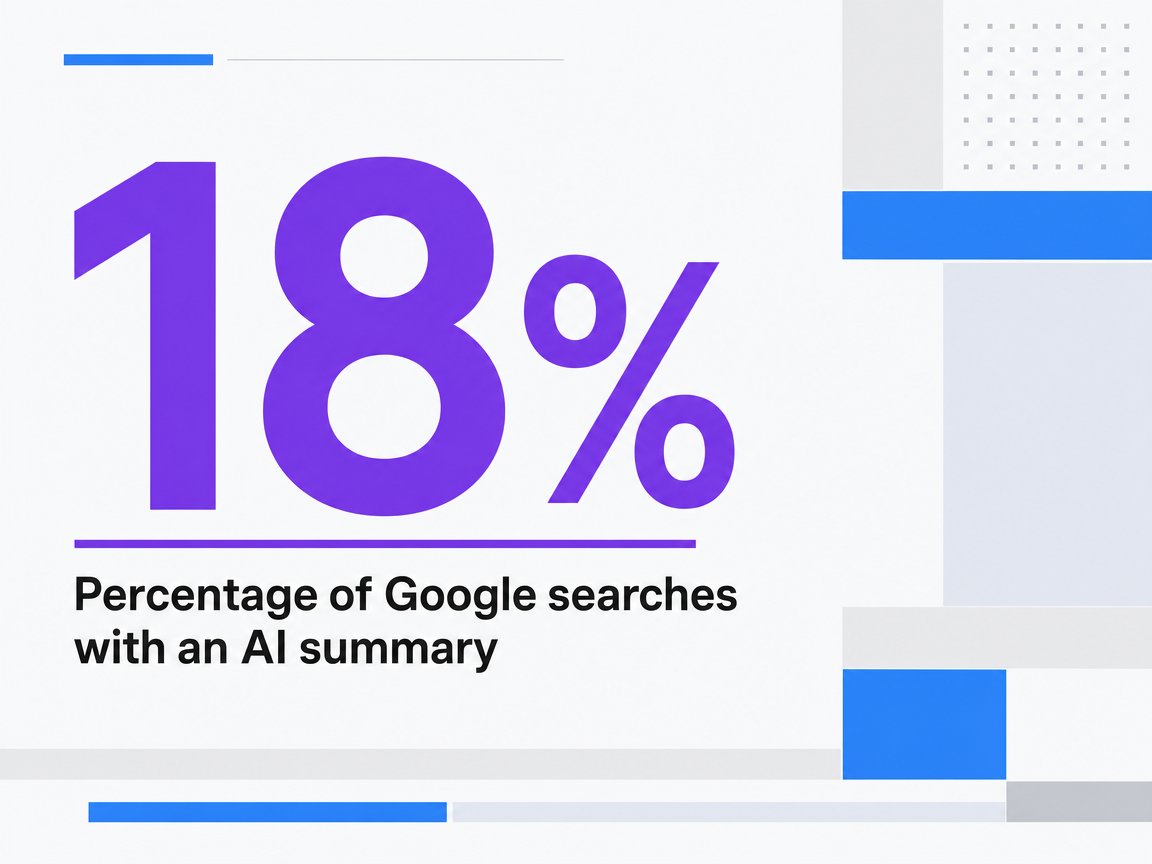 Percentage of Google searches with an AI summary
Percentage of Google searches with an AI summary
What to Stop Reporting to Clients This Quarter
Three metrics survived the AI-summary shift, and three did not. Agencies still emailing the old three are burning credibility they will need at the next renewal.
- Stop reporting total keyword count in the top 100. A tracked-keyword tally correlates poorly with clicks when SERP features and AI Overviews sit between position and traffic 7. Clients read "1,247 keywords ranking" and then check their sessions line, which has not moved. That gap is what triggers the retention conversation.
- Stop reporting average position across the full keyword set. A portfolio-wide average smooths over the queries that actually drive pipeline. Report position on the priority query set that maps to booked revenue, and report it alongside Search Console impressions and clicks for the same queries 2, 12.
- Stop reporting raw ranking screenshots without SERP context. A position-three result on a query with an AI Overview and a featured snippet is not the same asset as a position-three result on a clean SERP. Client-reporting frameworks now expect the SERP composition to appear next to the rank 13.
What replaces them: priority-query rank paired with impressions and clicks, organic conversions from GA4, and revenue or qualified leads from the CRM 9, 11. That is the report a CFO signs off on.
See How Unified Rank Tracking Drives Clearer Client ROI Attribution
Request a walkthrough of coordinated rank tracking and reporting workflows that streamline multi-client oversight and deliver transparent, data-backed ROI metrics for every campaign.
If You Manage 20+ Client Sites: Consolidating Reporting Labor
This section shifts scope from single-account delivery to portfolio operations. Agencies running 20 or more client sites face a different math problem than boutique shops: reporting labor scales linearly with account count, and every hour spent assembling a deck in a spreadsheet is an hour subtracted from strategy work the client is actually paying for.
The variables are straightforward: hours per client report, loaded hourly rate for the analyst assembling it, and client count. A delivery org running 50 accounts at four hours per monthly report and a $75 loaded rate is spending $15,000 a month on report production alone. That number is before any strategy, content, or link work reaches the client.
Three consolidation paths change that math. The table below uses the reader's own variables — no fabricated SaaS pricing — to compare monthly reporting labor across approaches.
| Approach | Hours per client / month | Monthly labor at 50 clients ($75/hr) |
|---|---|---|
| Manual reports from a standalone rank tracker | 4.0 | $15,000 |
| Rank tracker + BI dashboard with GSC and GA4 joins | 1.5 | $5,625 |
| Integrated platform with scheduled multi-client output | 0.5 | $1,875 |
The savings come from removing the spreadsheet stitch step. When the rank tracker already ingests Search Console clicks, impressions, CTR, and position 2 and joins to GA4 sessions and conversions 1, the analyst edits a narrative instead of rebuilding a dataset. Reporting frameworks converge on the same output — priority-query rank paired with organic conversions and revenue — regardless of which tool produces it 9, 11.
The operational takeaway for a 20-plus account portfolio: audit the hours-per-report line before adding another rank tracker seat. The margin recovery lives in consolidation, not in a larger keyword database.
Where an Execution Layer Sits Above the Tracker
Every tool on the shortlist above answers the same question: what happened in the SERP, and how did that translate into clicks, sessions, and conversions? None of them answer the next question a client actually asks in the QBR — what is the agency going to do about it, and when.
That gap is where an execution layer sits. The rank tracker surfaces the position change. Search Console adds the click and impression evidence 2. GA4 attaches the conversion event 1. The AI performance report flags the AI Overview impression 3. A senior strategist still has to read those four signals, decide which query set to prioritize next, brief a writer, route the draft for approval, and confirm the publish. That decision-and-execution loop is what consumes the margin a rank tracker was supposed to protect.
Vectoron sits in that loop, not in the tracker itself. The platform reads the same Search Console, GA4, and CRM signals the reporting stack already exposes, ranks the next actions by expected pipeline impact, and routes each recommendation for human approval before anything ships. Rank tracking software proves the position moved; the execution layer decides which position to move next and gets the work done.
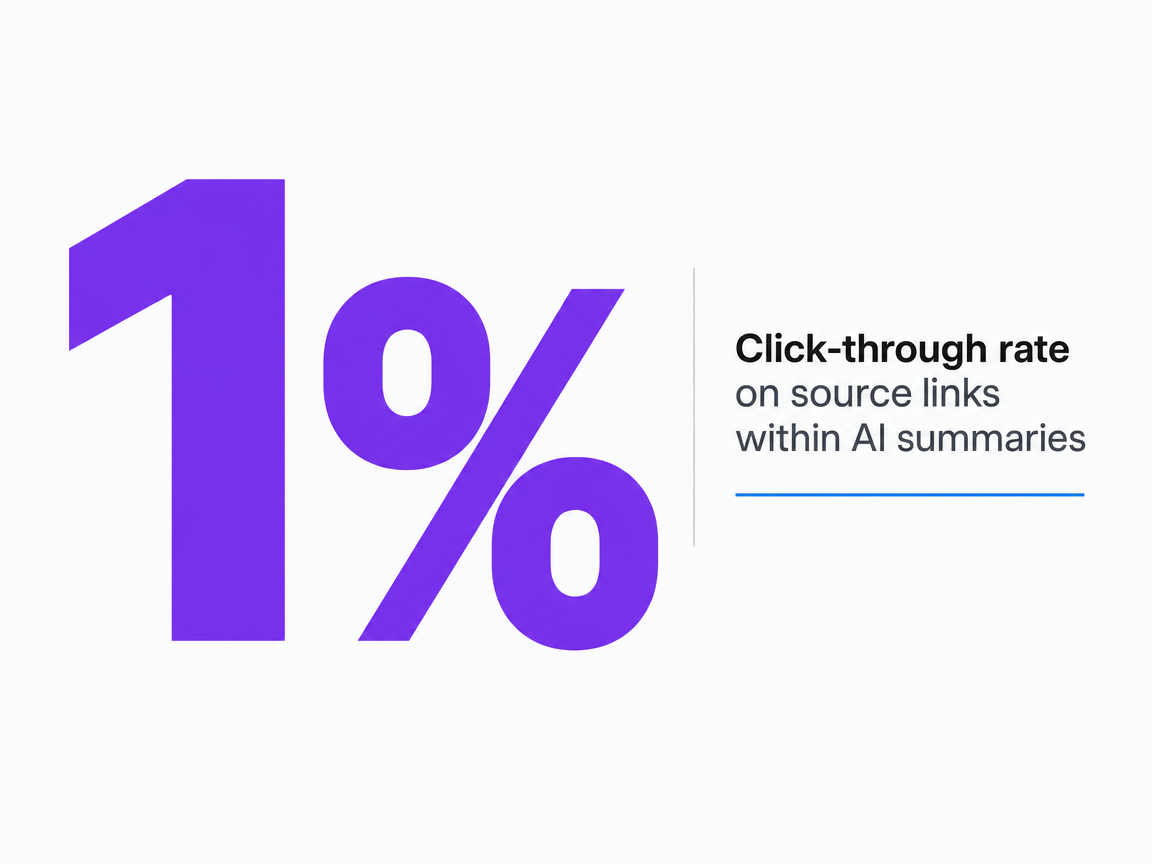 Click-through rate on source links within AI summaries
Click-through rate on source links within AI summaries
Frequently Asked Questions
References
- 1.Using Search Console and Google Analytics Data for SEO.
- 2.Query your Google Search analytics data.
- 3.Introducing Search Generative AI performance reports in Search Console.
- 4.Do people click on links in Google AI summaries?.
- 5.What Web Browsing Data Says About AI and Search.
- 6.Americans have mixed feelings about AI summaries in search results.
- 7.Exploring the Impact of SERP Features on Organic Click-through Rates.
- 8.Device-dependent click-through rate estimation in Google organic search results based on clicks and impressions data.
- 9.19 SEO Client Reporting Best Practices That Retain Clients - theStacc.
- 10.SEO Reporting: Client Dashboard & Metrics Guide.
- 11.SEO Reports for Clients: Complete Guide (2025) | Arvow.
- 12.SEO Client Reporting: Templates, Metrics, and Best Practices.
- 13.SEO Reporting for Clients: Metrics, Examples & Templates.
- 14.Search insights and trends 2025.