
Key Takeaways
- Screaming Frog SEO Spider handles batch overnight crawls across ten to fifteen domains, cutting audit prep from a full day per site to roughly ninety minutes of specialist review.
- Sitebulb ranks technical findings by severity and effort, letting one specialist review three client audits per day instead of drafting one narrative from raw crawl data.
- Ahrefs Site Audit joins scheduled crawls to backlink and keyword context, giving specialists a single interface to diagnose traffic drops on the timeline Search Console's 24-hour view now demands.
- Clearscope standardizes briefs against top-ranking corpora, returning roughly ninety editor hours a month across a four-editor team while leaving originality and expertise to the writer.
- Frase compresses SERP research and outline work from an hour to fifteen minutes per piece, but only stays on the right side of Google's guidance when humans write on top of the skeleton 1.
- Schema App turns structured data into a governed template layer across client domains, backed by the 25% and 82% CTR lifts Google published for Rotten Tomatoes and Nestlé rich results 3.
- AccuRanker delivers daily rank refreshes and threshold alerts that match the hourly cadence Search Console's 24-hour view exposed, letting analysts triage a portfolio in under an hour a day 5.
- Semrush Position Tracking aggregates share-of-voice against defined competitor sets, giving strategists a replicable QBR dashboard covering local pack, device, and featured snippet ownership.
- Profound monitors citation and mention frequency inside AI Overviews and AI Mode, filling the gap classic rank trackers cannot cover as generative surfaces intercept high-intent queries 4, 8.
- Majestic grades referring domains through Trust Flow, Citation Flow, and Topical Trust Flow, turning outreach and disavow work from manual review into filtered prospect lists a junior analyst can process.
- Approval-first orchestration platforms rank recommended actions across content, technical, and schema workstreams for specialist sign-off, lifting clients per specialist from five to ten or twelve at portfolio scale.
The Capacity Math Behind Agency SEO Tool Selection
Agency Heads of SEO face a widening gap between demand and delivery capacity. The global SEO services market is projected to grow from $92.74 billion in 2025 to $203.83 billion by 2030, a 17.1% compound annual growth rate 12. Client rosters expand faster than specialist hiring cycles allow, and the specialists themselves are pulled toward strategic oversight rather than execution.
The math is unforgiving. A senior technical SEO can crawl, diagnose, and write up findings for roughly two mid-complexity domains per week without tooling assistance. Multiply that against a 30-client portfolio and the delivery cadence stretches to fifteen weeks per full audit cycle. Content production runs into a similar wall: Google's people-first guidance rewards originality, completeness, and demonstrated expertise, and explicitly discourages mass-produced output made primarily to attract search visits 1, 9. Adding pages faster does not solve the problem if the additions cannot clear that quality bar.
Tool selection at the agency level is therefore capacity math, not feature comparison. Each seat in the stack has to compress specialist labor into a governed workflow, extend measurement across the surfaces Google now reports on, and hold the quality ceiling Google enforces through its content systems. The eleven tools that follow are ranked by that standard.
How This List Is Ranked: Delivery Function, Not Feature Count
Ranking SEO tools by feature parity produces the same predictable shortlist every year. Ranking them by delivery function surfaces a different answer: which seat compresses the most specialist labor per week, and which one holds Google's quality bar while it does so.
The eleven entries that follow are grouped by the bottlenecks that actually cap agency throughput. Technical audit and crawl tooling determines how many domains a specialist can diagnose against Google's Search Essentials baseline 7. Content production tooling governs whether faster output still clears the people-first standard 1. Structured data validation, rank tracking, AI-visibility monitoring, backlink intelligence, and workflow orchestration each map to a distinct capacity ceiling that Search Console's expanded reporting surface now makes measurable 4, 5.
Every entry is scored against three questions:
- What specialist task does the tool replace or compress?
- What measurable capacity gain does it produce, expressed in audits per week, pages per editor, or domains per analyst?
- At what portfolio size does the seat cost stop paying for itself?
Tools that answer those questions clearly earn a place. Tools that only add features to a specialist's screen do not.
Technical Audit and Crawl Tooling
Screaming Frog SEO Spider: Batch Crawl Coverage for Portfolio Audits
Screaming Frog earns its seat as the workhorse crawler for agencies running large client rosters. A single specialist can queue overnight crawls across ten to fifteen mid-size domains, pulling response codes, redirect chains, canonical conflicts, hreflang errors, and orphan pages into structured exports by morning. That shifts audit prep from a full day per domain to roughly ninety minutes of specialist review per site.
The tool's value in portfolio work comes from scheduled recurring crawls and list mode. Agencies can batch-check every client's XML sitemap against actual indexable URLs, which is the crawlability baseline Google documents in its developer guide 6. Custom extraction pulls schema blocks, canonical tags, and meta directives at scale, so a specialist reviewing thirty domains can flag drift without opening each site.
Screaming Frog stops earning its seat when the portfolio outgrows desktop compute. Crawls over one million URLs bog down local machines, and JavaScript rendering across many enterprise clients pushes teams toward cloud crawlers. For agencies below that threshold, it remains the lowest-cost path to consistent technical coverage across a wide book of business.
Sitebulb: Prioritized Technical Findings That Cut Audit Write-Up Time
Sitebulb solves a different bottleneck. Screaming Frog produces the data; Sitebulb ranks the findings. Its hint system scores each technical issue by severity and effort, which cuts the specialist's write-up time from hours of manual triage to a reviewed export.
For an agency delivering monthly technical health reports across twenty clients, that difference compounds. A specialist who used to draft one audit narrative per day can review three, because the tool has already grouped issues by category, flagged the ones that violate Search Essentials 7, and estimated fix effort. Visual crawl maps also help junior analysts spot internal linking gaps that would otherwise require a senior review.
The trade-off is depth on very large sites. Sitebulb's audit reports are optimized for readability, not for the raw extraction flexibility Screaming Frog offers on custom projects. Agencies typically run both: Screaming Frog for extraction and one-off diagnostics, Sitebulb for the recurring client-facing audit cycle. The seat stops paying for itself when the delivery team has enough senior capacity to write narrative audits directly from raw crawl data.
Ahrefs Site Audit: Scheduled Crawls Tied to Backlink and Ranking Context
Ahrefs Site Audit belongs in the stack when the technical picture needs to sit next to off-site and ranking signals. Its crawler covers the same technical territory as standalone crawlers, but the findings are joined to the platform's backlink index and keyword performance data. A specialist investigating a traffic drop can see the technical issue, the affected keyword clusters, and the referring domain profile in one interface instead of stitching three exports together.
For portfolio agencies, the scheduled cloud crawl is the operational win. Weekly automated audits run without occupying a specialist's machine, and health-score deltas surface regressions before the client's monthly reporting call. That matters because Google's Search Console 24-hour view now shows performance shifts within hours 5, and the technical explanation needs to arrive on the same timeline.
The seat stops earning its cost when an agency already runs Screaming Frog plus a dedicated backlink tool and does not need the joined view. For teams consolidating vendors, Ahrefs Site Audit often replaces two seats by combining crawl monitoring with the backlink intelligence covered later in this list.
Content Production Tooling Under People-First Guidance
Clearscope: Brief Standardization That Holds the Editorial Ceiling
Clearscope earns its seat by turning content briefs into a repeatable input rather than a specialist artifact. Its grading system scores drafts against a corpus of top-ranking pages for a target query, flagging topical gaps, entity coverage, and readability drift before the piece reaches an editor. That standardization is what makes it work at portfolio scale: a strategist can spec fifty briefs a month across ten clients, and freelance or junior writers hit a consistent completeness bar without senior rewrites.
The capacity gain is measurable. Editors who used to spend forty-five minutes reworking a draft for topical coverage typically cut that review to fifteen minutes when writers deliver against a Clearscope brief. Across a team of four editors shipping thirty pages a month each, that shift returns roughly ninety editor hours per month to strategic work.
The tool does not write the article, which is the point. Google's people-first guidance rewards originality, first-hand experience, and demonstrable expertise, and warns against content produced primarily to rank 1, 9. Clearscope enforces the topical floor; the human writer supplies the ceiling. The seat stops earning its cost when an in-house editorial team already runs its own brief templates and query research process at the same rigor.
Frase: Draft Acceleration Without Crossing the Mass-Production Line
Frase compresses the research and outline phase that eats the first hour of every content project. It pulls SERP data, extracts headings and questions from ranking pages, and generates structured outlines a writer can edit rather than build from scratch. For an agency shipping fifteen pages per editor per month, moving outline work from sixty minutes to fifteen adds roughly eleven editor hours back into revision and originality work each month.
The AI drafting features are where discipline matters. Google's guidance treats AI-assisted production as acceptable when the output is helpful, original, and made for people, and treats mass-produced content aimed primarily at ranking as a signal of low quality 1. Agencies that use Frase to generate finished drafts and publish them without substantive editorial rework are running toward that line, not away from it. Google's AI-search guidance reinforces the same point: unique, non-commodity content is what surfaces in AI features 8.
The productive use is skeleton and research acceleration, paired with human writing on top. That configuration holds the quality ceiling while cutting production time. The seat stops earning its cost when the team's writers already work from tight, sourced briefs and do not need SERP research consolidated for them.
Test AI-driven SEO execution on live campaigns
Experience measurable SEO workflow efficiency gains using real content and live campaign data during your trial.
Structured Data Validation and Rich Result Tooling
Schema App: Governed Schema Deployment Across Client Domains
Structured data is the rare SEO investment with published CTR evidence attached. Google's own documentation cites a 25% higher click-through rate for Rotten Tomatoes pages that implemented structured data, and an 82% higher CTR for Nestlé pages that appeared as rich results 3. Those figures came from vendor case studies published by Google alongside its structured data guidance, and they represent specific brands rather than category averages, but they are the reason validation tooling belongs in an agency stack rather than in a specialist's browser bookmarks.
Schema App earns its seat by turning schema from a per-page development task into a governed layer applied across a client's domain. A specialist can define entity relationships and JSON-LD templates once, deploy them site-wide through a tag manager, and monitor coverage without editing individual pages. For an agency managing schema on thirty domains, that shifts the work from a recurring developer request queue to a single strategist reviewing an inventory dashboard.
Validation is the other half of the seat. Google recommends before-and-after testing in Search Console after any structured data deployment 3, and Schema App's monitoring surfaces markup errors, warnings, and eligibility for rich result types without the specialist opening the Rich Results Test one URL at a time. The seat stops earning its cost when a client portfolio is small enough that a developer can hand-code schema faster than the platform's setup cycle, or when clients already run their own schema governance in-house.
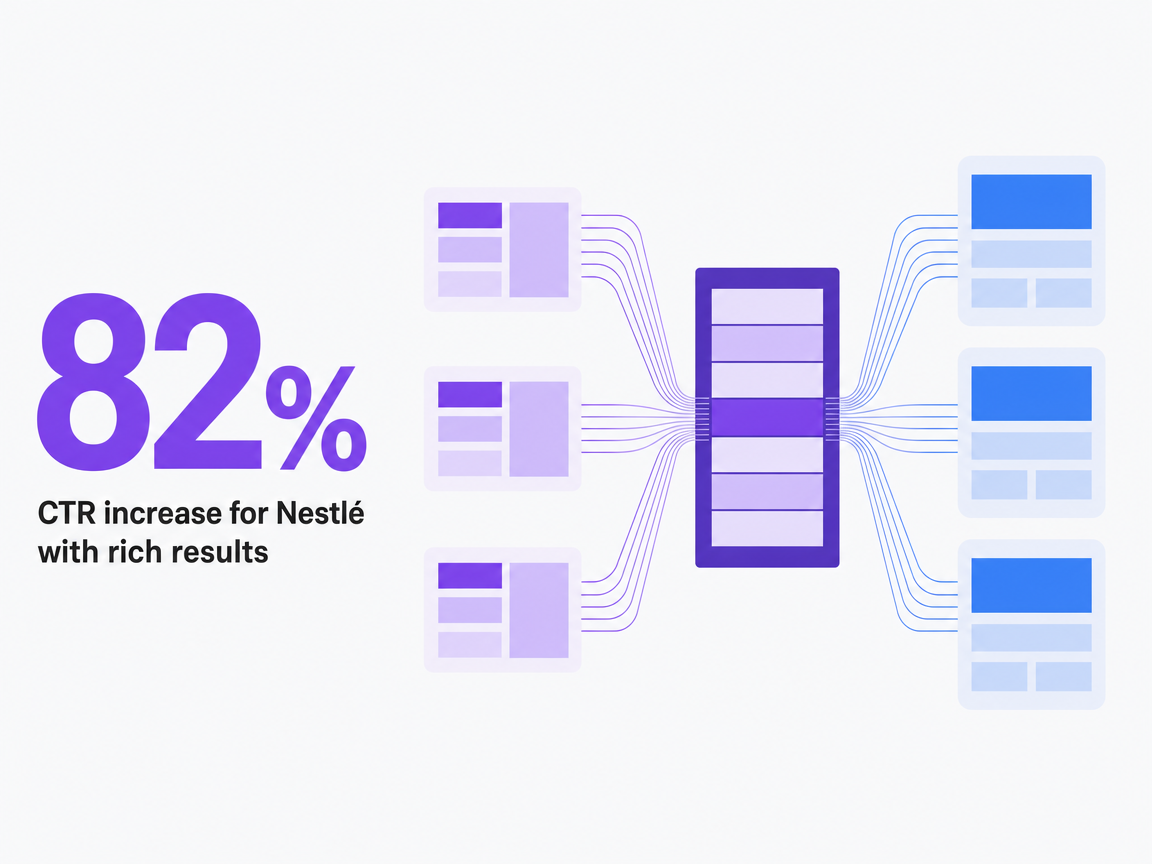 CTR increase for Nestlé with rich results
CTR increase for Nestlé with rich results
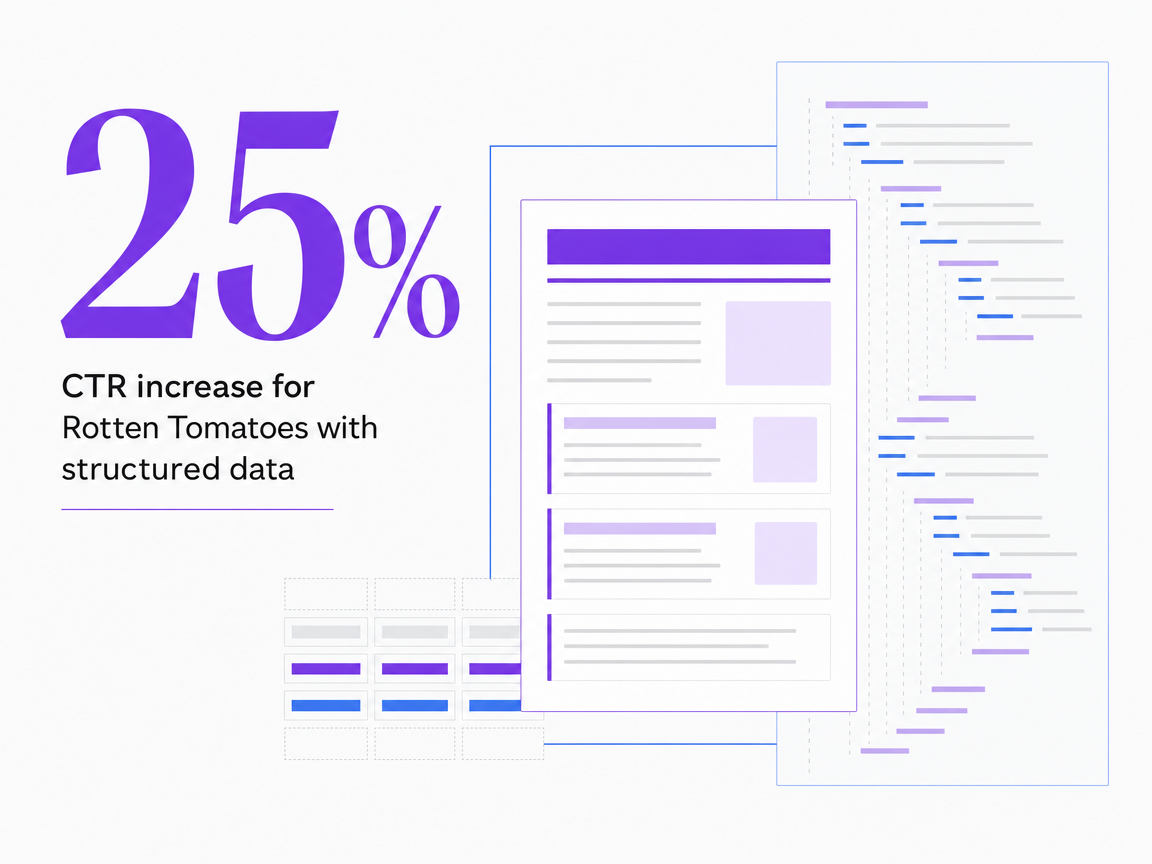 CTR increase for Rotten Tomatoes with structured data
CTR increase for Rotten Tomatoes with structured data
Rank Tracking and AI-Visibility Measurement
AccuRanker: Daily Rank Data That Matches Search Console's 24-Hour View
Rank tracking used to be a weekly discipline. Search Console's 24-hour view broke that cadence by exposing hourly granularity across Search, Discover, and News performance reports 5, and client expectations moved with it. When a category page slides three positions overnight, the account manager cannot wait until Monday's crawl to explain why.
AccuRanker earns its seat by matching that tempo. Its daily refresh across large keyword sets, combined with on-demand refreshes for priority terms, gives a specialist the same reaction window Search Console now offers on the CTR side. A strategist monitoring twenty-five clients can set movement thresholds per keyword group, receive alerts when a tracked cluster shifts, and pair the ranking delta with the Search Console impression data before the client asks.
The capacity gain sits in triage speed. Analysts who used to pull ranking reports every Monday can instead review exception alerts across the portfolio in under an hour a day. AccuRanker stops earning its seat when a client roster is small enough that Search Console's own reporting covers the movement analysis, or when the agency has consolidated rank tracking into a broader suite like Semrush or Ahrefs.
Semrush Position Tracking: Portfolio-Wide Share of Voice
Semrush Position Tracking answers a different question. Where AccuRanker optimizes for speed, Semrush optimizes for competitive context. Its share-of-voice metric aggregates ranking positions across a tracked keyword set into a single index, weighted by search volume, so a specialist can compare a client's visibility against a defined competitor set without exporting three separate reports.
For agencies pitching quarterly business reviews, that consolidation is the operational payoff. A strategist can build one dashboard per client showing share-of-voice trend, competitor movement, and featured snippet ownership, then replicate the template across the roster. Local pack tracking and device segmentation extend the same view to multi-location clients whose rankings vary by geography.
The trade-off is data freshness. Semrush's default weekly refresh trails AccuRanker's daily cadence, which matters less for QBR reporting and more for reactive triage. Agencies running both tools treat Semrush as the strategic layer and a daily tracker as the operational layer. The seat stops earning its cost when share-of-voice reporting is not part of the client deliverable and competitor benchmarking happens ad hoc rather than on a scheduled cycle.
Profound: AI Overviews and AI Mode Visibility Monitoring
Traditional rank tracking measures a shrinking share of the visibility surface. Google's Search Console now includes generative AI performance reports that expose impressions, pages, countries, devices, and time granularity for AI Overviews and AI Mode in Search and Discover 4. That expansion changes what agencies owe their clients in a monthly report.
Profound earns its seat by monitoring citation and mention frequency inside AI answer surfaces at a keyword and entity level. A specialist can track which client pages get pulled into AI Overviews for a given prompt set, which competitor domains dominate the citations, and how those patterns shift as the underlying models update. That data does not exist in a classic rank tracker because AI answers are not positions on a results page.
The tool aligns with Google's own AI-search guidance, which tells publishers to focus on unique, non-commodity content and technical accessibility so pages remain crawlable and citable 8. Profound's monitoring gives strategists the feedback loop to test whether editorial changes moved citation frequency, rather than guessing from anecdotal SERP checks.
The seat stops earning its cost when a client's category has minimal AI Overview coverage and the Search Console generative AI report alone is enough to track exposure. For agencies serving verticals where AI answers already intercept high-intent queries, monitoring belongs in the stack now, not next year.
Backlink Intelligence and Off-Site Signal Tooling
Majestic: Trust Flow and Referring Domain Quality at Scale
Backlink quality remains one of the strongest measurable inputs to ranking. The academic review of Google ranking factors identifies backlink quality and quantity, alongside bounce rate and SSL status, as the most significant variables tested 11. Agencies working outreach and disavow files at portfolio scale need a way to grade referring domains without a specialist manually reviewing each one.
Majestic earns its seat through its Trust Flow and Citation Flow metrics, which score referring domains on link neighborhood quality and volume separately. A link builder auditing a client's profile across two thousand referring domains can filter for Trust Flow above a threshold, spot toxic clusters that pull the ratio out of balance, and export prospect lists graded by topical relevance. That shifts backlink triage from days of manual review to a filtered dashboard a junior analyst can work through.
The Topical Trust Flow layer is where the seat pays for itself in outreach. Prospects grouped by subject category let a strategist target campaigns to domains that already carry authority in the client's vertical, which raises reply rates and reduces wasted specialist hours on cold pitches. Majestic stops earning its seat when an agency has already consolidated backlink data inside Ahrefs Site Audit or Semrush and does not need a second index for validation.
Scale SEO Operations with Unified, AI-Driven Workflows
Connect with our team to see how top agencies are using AI to centralize SEO execution, automate routine tasks, and maintain strategic oversight across multiple client portfolios.
Workflow Orchestration: The Approval Layer That Compresses Specialist Hours
Approval-First Execution Platforms
Every tool above solves one bottleneck. Orchestration platforms address the gap between them: the briefing cycles, status meetings, and handoff drag that eat specialist hours before any real work ships. In a portfolio agency, coordination overhead often consumes more delivery time than the technical work itself.
Approval-first execution platforms compress that middle layer. Instead of a strategist writing a brief, waiting for a writer, routing to an editor, then queuing a developer for schema deployment, the platform reads live client data, ranks recommended actions across content, technical, and structured data workstreams, and routes each one for human sign-off before execution. The specialist reviews reasoning and approves; the platform handles production. That shifts the specialist role from producer to editor of decisions.
The capacity math scales with portfolio size. Consider a 30-client, 6-specialist agency operating in a market projected to reach $108.28 billion in 2026 12, where competitive pressure keeps expanding scope per account:
| Variable | Baseline delivery | Orchestrated delivery |
|---|---|---|
| Clients per specialist | 5 | 10-12 |
| Full technical audits per specialist per week | 2 | 5-7 |
| Specialist hours per client per month on coordination | 6-8 | 2-3 |
| Approval decisions per specialist per day | Ad hoc | 15-25 ranked |
Vectoron operates in this category as an approval-first execution platform where specialist strategists surface ranked recommendations and route every action for human sign-off before publishing. The seat stops earning its cost when a portfolio is small enough that direct specialist execution beats the platform's coordination layer, typically below fifteen active accounts.
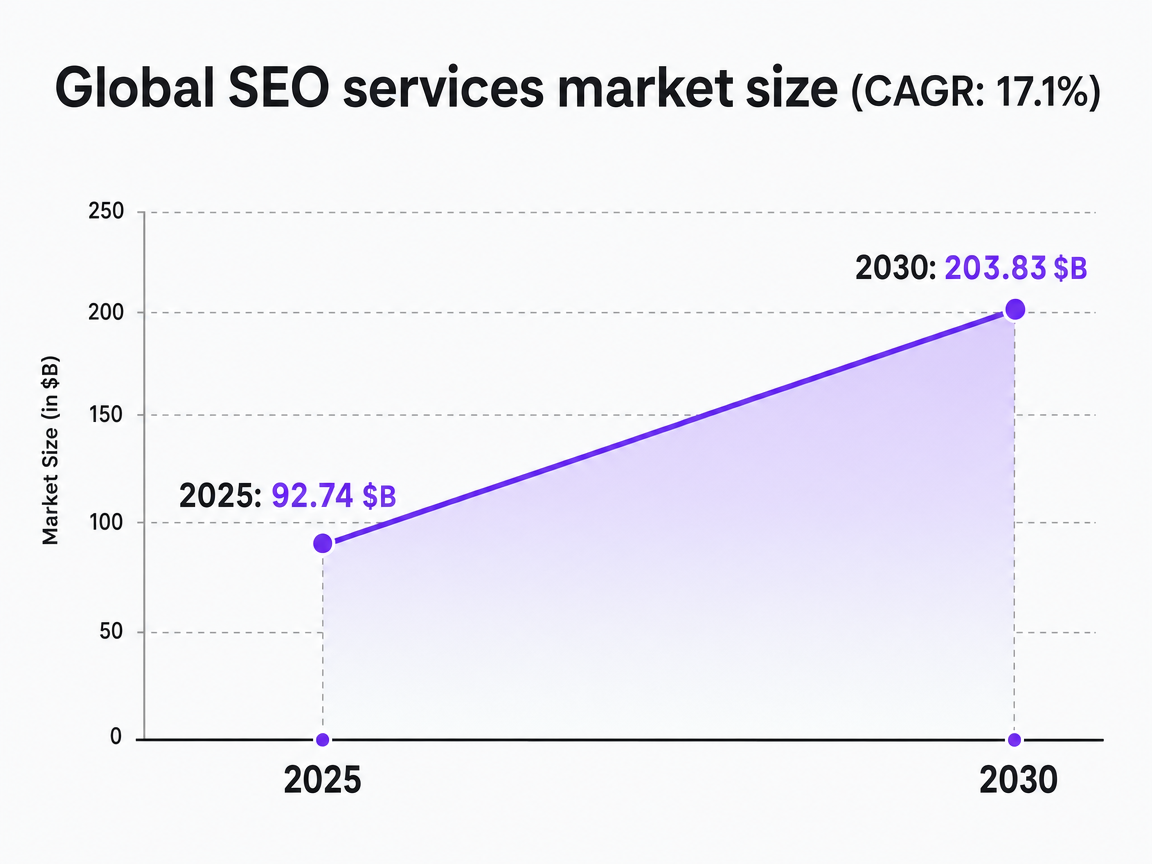 Global SEO services market size (CAGR: 17.1%)
Source: Search Engine Optimization Services Market Report 2026
If You Manage Multiple Locations or Franchise Portfolios
The stack above assumes a client roster of independent domains. Agencies serving multi-location operators, franchise systems, or DSO-style portfolios face a different capacity ceiling: one brand, many local pages, and a governance problem that scales with location count rather than client count.
Three shifts change how the eleven tools get deployed:
- Structured data validation moves from a per-domain task to a per-location-template task, because LocalBusiness schema errors replicate across every branch page the moment a template ships. The Rotten Tomatoes and Nestlé CTR cases Google published apply here too, but only when validation is enforced against the template rather than sampled by hand 3.
- Rank tracking splits into a geo-grid problem, where AccuRanker and Semrush position tracking are configured per market rather than per client, and share-of-voice is measured against local competitor sets.
- AI-visibility monitoring gets sharper because AI Overviews often intercept high-intent local queries before the map pack loads 4, 8.
Orchestration matters most in this scope. A 200-location brand with six specialists cannot approve schema, content, and technical fixes location by location without a ranked queue and template-level governance. The seat cost of an approval-first platform pays back fastest where one decision propagates across dozens of pages.
Consolidation Rules: When a Tool Stops Earning Its Seat
Stack bloat is the quiet margin killer. Every seat carries a license fee, a training cost, and a switching cost when the specialist who championed it leaves. Three consolidation rules keep the eleven-tool ceiling from becoming a fifteen-tool floor.
- Drop any tool whose primary output already appears inside a broader platform the agency runs. Ahrefs Site Audit and Semrush both ship crawl data joined to backlink and keyword context, which makes a second standalone crawler redundant below one million URLs.
- Drop any tool whose measurement surface Search Console now covers natively. The 24-hour view and generative AI performance reports shifted several third-party dashboards from primary source to redundant layer 4, 5.
- Drop any tool that produces output the team cannot defend against Google's people-first standard 1. A draft generator that ships publishable copy without editorial rework is a liability, not a seat.
The test is simple. If a tool cannot name the specialist task it replaces, the weekly capacity it returns, and the portfolio size that justifies its cost, it does not belong in the stack.
Frequently Asked Questions
References
- 1.Creating Helpful, Reliable, People-First Content.
- 2.Search Engine Optimization (SEO) Starter Guide.
- 3.Introduction to structured data markup in Google Search.
- 4.Introducing Search Generative AI performance reports in Search Console.
- 5.An improved way to view your recent performance data in Search Console.
- 6.SEO Guide for Web Developers.
- 7.Google Search Essentials (formerly Webmaster Guidelines).
- 8.Top ways to ensure your content performs well in Google's AI search features.
- 9.2022 Helpful Content Update.
- 10.SEO Guide: Content & Search Engine Success Factors.
- 11.Exploring the impact of SEO-based ranking factors for website ranking in Google search engine.
- 12.Search Engine Optimization Services Market Report 2026.
- 13.Google Updates Guidance On Helpful Content System and Discover.