
Key Takeaways
- AI summaries now absorb informational clicks, so lead pages must target resolved commercial questions with buying intent rather than definitions the summary layer already handles 15.
- Four locked layers decide whether a page produces pipeline: intent matched to a buyer decision, expertise signals a rater can recognize 12, technical gates on titles, schema, and Core Web Vitals 5, and measurement tied to CRM outcomes.
- Replace sessions and rankings with qualified leads per page and pipeline value, using the GA4 generate_lead event and Measurement Protocol to stitch form submissions to CRM status changes 10, 11.
- Focus the next quarter on auditing high-session low-lead pages, reworking the top ten against a single buyer question with named authors, then ranking the next batch by lead impact rather than publish date.
The Post-Summary Search Environment Changes What a Lead Page Has to Do
Google search stopped being a link menu somewhere in the last eighteen months. Pew Research analyzed March 2025 browsing data from 900 U.S. adults and found that 18% of Google searches surfaced an AI-generated summary, and 58% of users encountered at least one such summary during the study period. Click behavior on those result pages was measurably lower than on pages without a summary 15, 16. That single dataset reframes the job of a content page. The summary now answers the informational query. The link below it has to earn a different kind of click, one that carries buying intent rather than curiosity.
Content marketing managers who report to a VP on lead volume and cost per lead are the ones most exposed to this shift. Session counts on a definition post can hold steady, or even climb, while form fills flatten. The metric that looks stable is measuring the wrong thing. Impressions and sessions were always proxies. In the post-summary environment, they are weaker proxies than they were two years ago, because a growing share of the audience that used to click through has already been served the answer.
The practical consequence is that a lead page has to be designed for the reader who arrives after the summary, not the reader who arrives instead of it. That reader has a specific, resolved question and a next step in mind. They are shorter on time, longer on intent, and less tolerant of pages that restate what the summary already told them. A helpful definition, a taxonomy of subtopics, and a soft newsletter offer at the bottom does not clear that bar.
Content Marketing Institute's 2025 B2B research shows 74% of B2B marketers still credit content with generating demand or leads, and 87% credit it with brand awareness 17. Both numbers can stay high while the mechanics underneath them change. What has to change is the page itself: the intent it targets, the expertise it demonstrates, the technical signals it ships with, and the way it reports a lead back to the business. The rest of this playbook works through those four layers in order, and treats each one as a locked layer rather than a checklist item. A page that skips any of them will show traffic without pipeline, or pipeline the team cannot see.
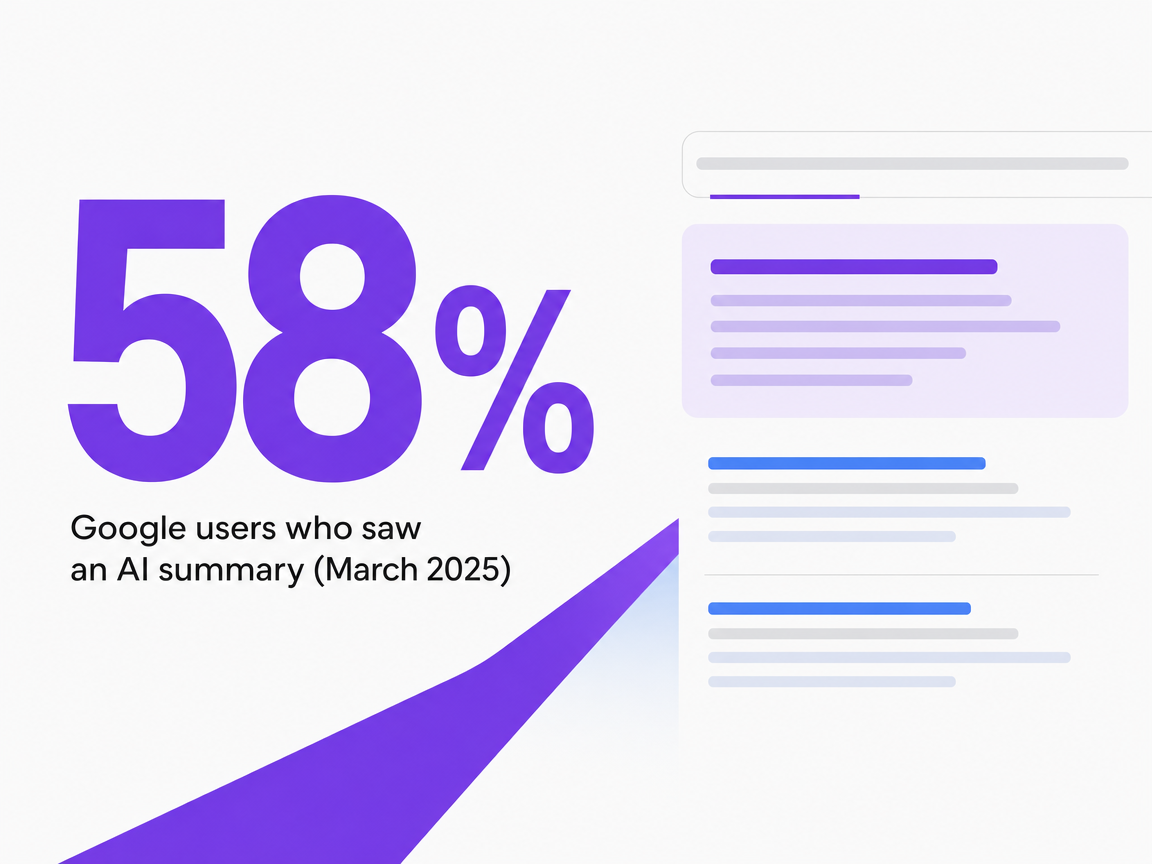 Google users who saw an AI summary (March 2025)
Google users who saw an AI summary (March 2025)
The Four Locked Layers of a Lead-Generating Page
Intent: Match the Specific Buyer Question, Not the Keyword Cluster
Intent is the layer most content teams think they have already solved. The brief names a keyword, the writer covers the topic, and the page ships. That process produces coverage, not intent. Google's helpful content guidance draws the distinction directly, asking whether a page offers a substantial, complete, or comprehensive description of the topic a specific user came to resolve 3. A keyword cluster is a category. A buyer question is a decision.
The operational move is to write pages against a single resolved question, not against a cluster of related phrases. A page targeting "contract review software" tries to rank for a category. A page answering "what does a Series B legal team look for in contract review software" answers a purchase question. The second page is narrower on paper and broader in commercial value, because the reader who arrives has already priced in most of the category-level education a summary layer now handles.
Google's own framing supports this narrowing. The Search Essentials guidance directs teams to place relevant keywords in prominent locations and to write content that helps a user decide whether to visit the site 1, 2. The decision framing is the tell. A definition page does not force a decision. A page that compares two paths, priced against a specific role or company stage, does.
The intent layer locks when three things are true on the page: the question is stated in the H1 or opening paragraph in the reader's own vocabulary, the answer is complete enough that no obvious follow-up question is left dangling, and the next step is the logical action for a reader who now has that answer. If the next step is a newsletter signup, the intent was informational. If the next step is a demo, quote, or consultation, the intent was commercial and the page has to have earned that ask.
Expertise: Build Pages the Quality Rater Framework Can Recognize
The expertise layer is where most lead pages fail quietly. They are written by capable people, but the page itself does not surface who wrote it, what that person knows, or why a reader should trust the answer. Google's Search Quality Rater Guidelines codify how human evaluators judge that surface. Page Quality rating asks how well a page achieves its stated purpose, and Needs Met rating asks how well it satisfies the query behind the visit 12, 13. Rater scores do not adjust rankings directly, but they calibrate the systems that do 14.
Translating that framework into production terms produces a short list of signals a page has to carry. The author has to be identifiable and have a credible reason to write on the topic. The claims on the page have to be checkable, either through primary sources, first-party data, or transparent methodology. The page has to disclose its purpose plainly, so a reader understands whether they are reading education, opinion, or a sales argument.
Content teams that publish under a generic "Staff" byline give up this layer for no gain. Named authors with linked profiles, credentials, and a public track record on the topic make expertise legible to both raters and readers. A public-awareness study of search users found that only 29.2% could reliably distinguish paid results from organic ones, while 59.2% believed SEO has a very strong impact on rankings 20. Non-expert readers cannot infer expertise. It has to be shown.
The practical test on a lead page is whether a stranger, reading the page cold, can answer three questions in under fifteen seconds: who wrote this, what do they know that qualifies them, and what did they base their claims on. If any of those answers is missing or requires a search off the page, the expertise layer is not locked. Rewriting the copy will not fix it. The fix is in the page furniture, byline, source list, and methodology block, that a rater, or a skeptical buyer, uses to decide whether to keep reading.
Technical: Titles, Schema, and Core Web Vitals as Pass/Fail Criteria
The technical layer is the one with the cleanest pass/fail criteria, which is why it is the easiest to audit and the most common place to find silent failures. Three checks decide whether a lead page can compete: whether it is indexable and clearly titled, whether it carries structured data that matches its visible content, and whether it meets Core Web Vitals thresholds.
Titles and meta descriptions come first because they are the layer Google uses to represent the page in results. Unique, descriptive titles and descriptions help Google show how a page is relevant and can increase search traffic 4. A lead page sharing a title pattern with fifty other pages on the same domain is competing against itself. Templated titles that pack keywords without describing the actual answer on the page underperform titles written to match the resolved question the page targets.
Structured data is the second check. Article schema helps Google understand a page and can improve how title text, images, and dates appear in results 8. Supported markup types can unlock richer appearances that increase click opportunity 9. The policy constraint is strict: markup must describe content that is actually visible on the page, and it cannot be used to mislead users 6. Adding schema and then measuring performance in Search Console over a period of months is the recommended validation loop 7.
Core Web Vitals is the third check, and the one where lead pages break most often because forms, embedded scripts, and third-party tags degrade performance without warning. Google's guidance sets three concrete pass thresholds: Largest Contentful Paint within 2.5 seconds, Interaction to Next Paint under 200 milliseconds, and Cumulative Layout Shift under 0.1 5. A page that misses any of the three is a page where a percentage of arrivals will abandon before the form loads or before the primary CTA becomes clickable.
The operational discipline is to treat these three checks as gates before publish, not diagnostics run after traffic drops. A lead page that fails the technical layer will show sessions but underperform on conversion, and the failure is invisible in a rankings report. Field data from CrUX or a real-user monitoring tool tells the truth. Lab scores alone do not.
Measurement: generate_lead Events, Measurement Protocol, and CRM Stitching
The measurement layer is where most content programs lose the argument with finance. Sessions, rankings, and time-on-page are activity metrics. A VP of Marketing reporting to a CEO on pipeline contribution needs a chain of evidence that starts on a content page and ends in a closed opportunity. Google Analytics 4 provides the taxonomy for the first half of that chain, and the Measurement Protocol provides the second half.
The starting event is generate_lead, part of the GA4 recommended event set, which measures when a lead has been generated, such as through a form submission 10. Firing that event with consistent parameters, form location, page URL, content topic, offer type, gives a content team a clean primary metric that is not confounded with newsletter signups, chatbot triggers, or unrelated engagement. The event has to be scoped to actions that a sales team would accept as a lead, not to any form on the site.
The gap most teams do not close is the one between a browser event and a CRM outcome. A form submission on a page tells you a lead entered the funnel. It does not tell you whether that lead qualified, converted, or churned. The Measurement Protocol lets a team record server-to-server and offline interactions in Google Analytics, which is how a downstream CRM status, sales-qualified, opportunity created, closed-won, gets stitched back to the original content page 11. Without that stitch, the content program is measured on volume of leads rather than quality of leads, and the two numbers diverge quickly.
Attribution is the third piece. IAB/MRC guidelines define attribution as assigning credit for consumer actions to specific marketing efforts, and the current IAB Tech Lab attribution use cases emphasize flexibility across multiple parties and custom models in a privacy-constrained environment 18, 19. For a content team, this means moving off last-click reports, which systematically undercredit early-funnel content, and toward a model that shows content's contribution across the path. Whether that model is data-driven attribution inside GA4, a marketing mix model, or a simpler first-touch-plus-last-touch report depends on data volume, but the direction is the same.
The output of a locked measurement layer is a report a content manager can bring to a leadership review that shows, per page, how many qualified leads it produced, what those leads were worth, and how that number moved after an optimization. Sessions do not appear on that report except as context. Rankings do not appear at all.
Trial AI-Driven SEO Content Workflows Yourself
Test an end-to-end SEO content optimization plan and publish real assets before committing.
What to Stop Doing on Pages That Used to Convert
Some of the tactics that built organic lead pipelines between 2018 and 2022 now actively suppress lead quality. They still generate sessions, which is why they survive in quarterly reports, but the sessions do not convert at the rate they used to. The cleanest way to raise lead volume in the next quarter is often to stop shipping the patterns below.
- Stop publishing definition posts targeting top-of-funnel informational queries. The AI summary now occupies that slot. A page that answers "what is contract lifecycle management" competes with a summary written from the same public sources and rarely wins the click that matters. Redirect the editorial budget toward commercial-intent questions the summary layer cannot resolve, comparisons between named options, role-specific evaluations, and pricing or scoping questions.
- Stop the generic "Staff" or "Editorial Team" byline. Google's rater framework explicitly evaluates who is responsible for the content and why they are qualified to write it 12, 13. A page without a named author with visible credentials cedes the expertise layer before the copy is read.
- Stop treating meta descriptions and title tags as SEO afterthoughts filled from a template. Unique, descriptive titles and descriptions materially change how Google represents the page in results and can lift search traffic 4. Templated titles on lead pages are a self-inflicted CTR ceiling.
- Stop adding structured data that does not match visible content. Marking up FAQs that are not on the page, or Article schema on a thin landing page, violates Google's structured data policy and risks manual action 6. The rich result gained is not worth the eligibility lost.
- Stop reporting content performance in sessions and average position. Neither metric survives the shift to lead-based accountability, and both drift further from pipeline every quarter the AI summary layer expands.
Production Velocity Without New Headcount: An Approval-First Workflow
The pressure most content managers actually feel is not strategic. It is arithmetic. A monthly lead target that grew 40% did not come with two additional writers, and the editorial calendar still has to ship. The intent, expertise, technical, and measurement layers described above raise the quality bar per page. They also raise the hours per page if the production model does not change.
The workflow that scales without new headcount treats every stage before human judgment as a candidate for automation, and every stage requiring judgment as a required approval gate. Brief generation, first-draft assembly against a locked structure, schema markup, title and description variants, internal link suggestions, and GA4 event scaffolding are mechanical work. Intent framing, expertise signal decisions, source vetting, brand voice calibration, and the final publish call are not. Separating the two lets a two-person team run the volume of a larger one without giving up the parts that determine whether the page converts.
The discipline that keeps this from degrading into automated slop is an approval-first sequence. Nothing ships without a named editor signing off on the intent statement, the expertise signals on the page, the technical checks against the pass/fail criteria in the previous section, and the lead event configuration. Google's helpful content guidance treats human accountability as a quality signal, not a nice-to-have 3. The approval gate is where that accountability lives.
Ranking work by expected lead impact rather than publish date is the second discipline. Pages that already sit on page two for a commercial query are usually a higher-yield use of an hour than a new post targeting an unproven keyword. A production system that surfaces those opportunities, drafts the update, and routes it to an editor for sign-off compresses the cycle from weeks to days. The output that matters, qualified leads per editor hour, moves in the direction the VP is asking about.
See How Data-Driven SEO Content Optimization Can Accelerate Qualified Lead Generation
Request a custom workflow assessment to identify measurable gaps in your current SEO content process and discover automation strategies that increase production velocity and lead volume—without expanding your team.
If You Manage Multiple Locations: A Consolidation Model for Per-Location Content Cost
A note on scope before this section develops: the framing shifts from a single-brand content team to operators running content across multiple locations, law firm offices, dental practices in a DSO, behavioral health facilities, home services branches, senior living communities. Single-brand readers can skip ahead. The math below only matters when the same core offer has to be localized across ten, fifty, or two hundred pages.
Per-location content cost is the number that decides whether an organic strategy is viable at portfolio scale. A page that costs $400 to produce and generates two qualified leads a quarter is a good page for one location and a budget disaster across two hundred. The three production models operators actually choose between are an agency retainer per location, an in-house writer allocated across N locations, and an AI-assisted production system with human approval on every page. Rather than invent retainer figures, the useful move is to fill in the variables and let the model produce the answer for a given portfolio.
| Model | Monthly cost formula | Cost per location per month | Approval hours per location |
|---|---|---|---|
| Agency retainer, per location | Retainer × N locations | = Retainer | Review hours only |
| In-house writer, allocated | Fully loaded writer salary ÷ N locations | = Salary ÷ N | Brief + review hours |
| AI-assisted, approval-first | Platform fee + (approval hours × editor rate) | = (Fee ÷ N) + approval cost | Approval hours only |
The variables that decide the outcome are the fully loaded writer cost, the retainer figure the agency actually charges, pages per month per location, and editor approval hours per page. Operators who plug in their own numbers usually find the crossover point sits somewhere between fifteen and thirty locations, above which the fixed-fee models collapse the per-location number faster than headcount can. Google's helpful content guidance still applies at every location 3. The approval gate is what keeps localized pages from becoming templated slop that fails the expertise layer described earlier.
A 90-Day Sequence to Move the Lead Number
A quarter is long enough to change the shape of a content program and short enough that a VP will remember the starting number. The sequence below assumes the four layers are the goal and the current program is not there yet.
- Days 1–30: audit and instrument. Pull the top twenty organic pages by session and rank them by qualified leads produced in the last two quarters. Pages with high sessions and low leads are the first candidates for intent rework. Fire the
generate_leadevent on every form that a sales team would accept as a lead, and stand up the Measurement Protocol connection between form submissions and CRM status changes 10, 11. Without that instrumentation, the rest of the quarter is guesswork. - Days 31–60: rework the top ten. For each page on the priority list, rewrite the H1 and opening against a single resolved buyer question, add a named author with visible credentials, and cut any section the AI summary layer already handles. Validate titles, descriptions, and Article schema against Google's policy that markup must match visible content 6, 8. Field-test Core Web Vitals after publish, not before 5.
- Days 61–90: report and rank next. Produce a per-page lead report that shows qualified leads, pipeline value, and the delta since rework. Use that report to rank the next twenty pages. The number the VP asked about now has a source, a method, and a queue behind it.
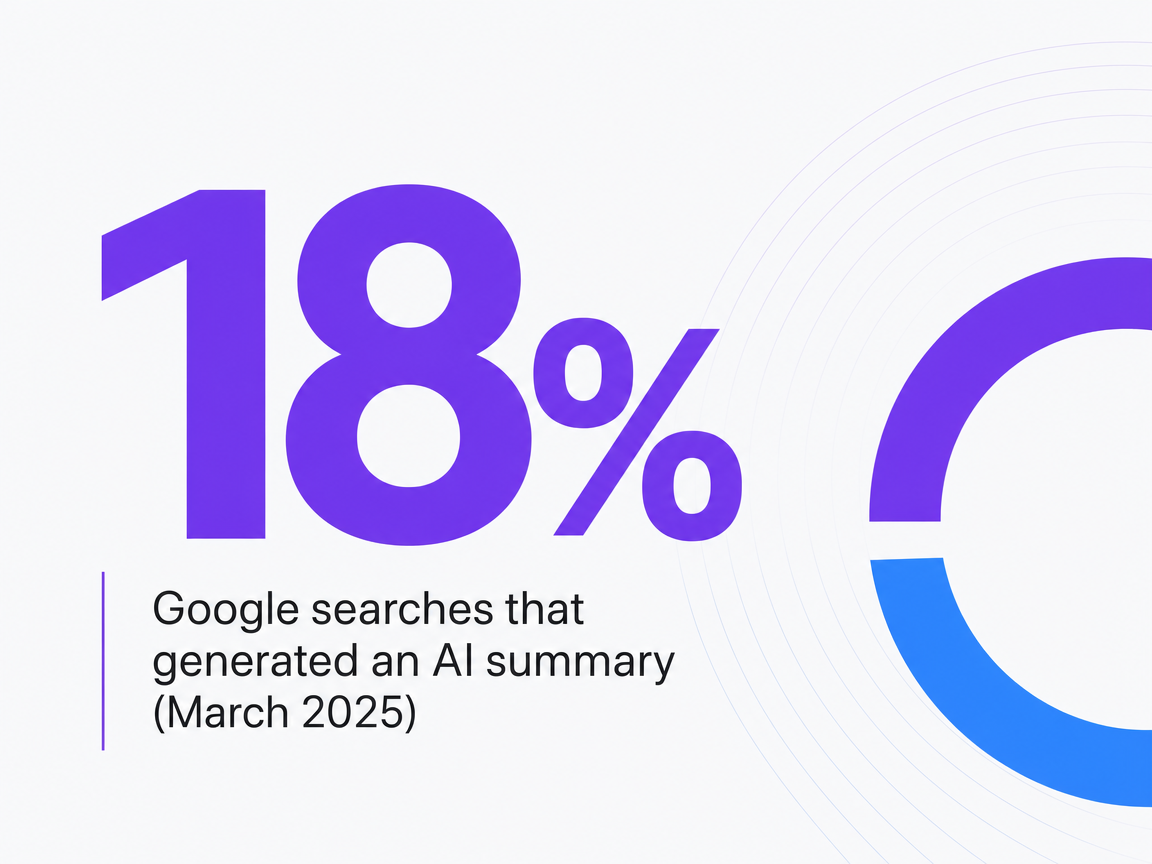 Google searches that generated an AI summary (March 2025)
Google searches that generated an AI summary (March 2025)
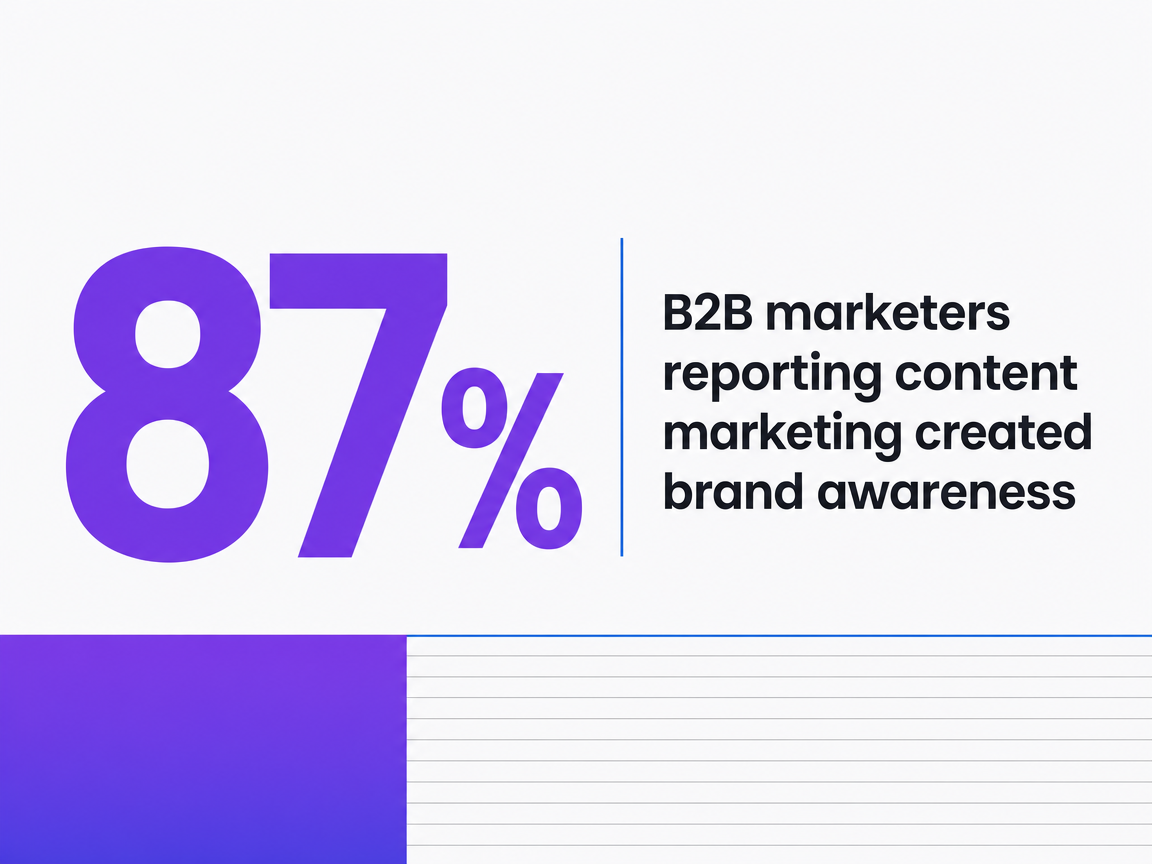 B2B marketers reporting content marketing created brand awareness
B2B marketers reporting content marketing created brand awareness
Frequently Asked Questions
References
- 1.Search Engine Optimization (SEO) Starter Guide.
- 2.Google Search Essentials.
- 3.Creating Helpful, Reliable, People-First Content.
- 4.SEO Guide for Web Developers.
- 5.Understanding Core Web Vitals and Google search results.
- 6.General Structured Data Guidelines.
- 7.Introduction to structured data markup in Google Search.
- 8.Learn About Article Schema Markup.
- 9.Structured Data Markup that Google Search Supports.
- 10.Analytics - Recommended events.
- 11.Measurement Protocol | Google Analytics.
- 12.Search Quality Rater Guidelines: An Overview.
- 13.General Guidelines.
- 14.Search Quality Raters Guidelines update.
- 15.Do people click on links in Google AI summaries?.
- 16.What Web Browsing Data Tells Us About How AI Appears Online.
- 17.B2B Content Marketing: 2025 Benchmarks & Trends.
- 18.IAB/MRC Retail Media Measurement Guidelines.
- 19.Attribution Use Cases Version 1.0.
- 20.Public awareness and attitudes towards search engine optimization.