
Key Takeaways
- Treat the booked repair order as the real unit of SEO output, not rankings or traffic — qualified call volume, answer rate, and close rate are what fund capacity.
- Urgent, planned-maintenance, and second-opinion searches behave differently, so a single funnel approach over-invests in traffic and under-invests in the intake handling that converts each call type.
- Google Business Profile accuracy, service-page depth, and review velocity are the three compounding levers, while transient roadside, brand-name dealership, and tow-driven calls sit largely outside organic reach.
- Call intelligence closes the gap between clicks and booked ROs by tagging qualified calls, exposing missed-call windows, and showing whether the next dollar belongs in content, GBP, or advisor training.
The Phone Call Is the Real Unit of SEO Output
Rankings do not pay technicians. Booked repair orders do. The most useful way to think about SEO for an auto repair shop is to trace what happens after a driver taps a result on a phone screen: a call rings at the front counter, a service advisor picks up (or does not), an appointment gets written (or does not), and a bay either fills on Tuesday morning or sits empty until Thursday.
That distinction matters because the binding constraint at most shops is rarely traffic. Industry guides aimed at shop operators describe local SEO as one of the most direct levers for increasing organic calls and appointments 13, and shop-management sources frame Google Business Profile as the first impression that drives calls and directions requests 13, 16. None of that produces revenue if the 11:00am call on a Tuesday rolls to voicemail.
Reframing SEO as a call-economics problem changes which numbers operators track. Impressions and keyword positions become leading indicators. The trailing indicators that actually move headcount are qualified call volume, answer rate, booked-RO conversion, and average repair order. A shop that doubles organic visibility while answering 62% of inbound calls is leaving the marginal job on the table — and the marginal job is exactly what funds another lift, another advisor, or the second-shift hire that ICIC research suggests can absorb meaningful local unemployment at the neighborhood level 3.
The rest of this article works backward from that phone call: the search moments that produce it, the demand pool behind it, and the intake and measurement layers that decide whether it becomes work.
Three Search Moments That Decide Whether a Bay Gets Filled
Urgent: The 7:45am Call Before Drop-Off
A driver pulls into a gas station with a check-engine light flashing on a 2017 Tacoma. The next thirty seconds happen on a phone screen: "brake repair near me," "transmission shop open now," "check engine light shop [city]." The decision window is short, the intent is high, and the caller will almost certainly dial the first result that looks credible enough to trust with the truck.
This is the moment local SEO was built for. Foundational Google research on local search behavior found that consumers searching near the point of need act quickly on what they find, often visiting or contacting a business within hours 9. The shop that wins these calls is rarely the one with the deepest content library — it is the one with a verified Google Business Profile, current hours, a clean review snippet, and a phone number that connects on the first ring.
Three intake details decide whether the search becomes a written RO. Hours have to be accurate down to the day, because a closed-on-Saturday tag kills the click. The call has to be answered live before 8am, when drop-offs cluster. And the advisor on the line needs a triage script that can hold a worried owner long enough to commit to an inspection slot, not a price quote over the phone. Shop-management guides repeatedly tie GBP accuracy and answer rate to the volume of organic calls and directions requests a shop captures 13, 16.
Planned: Maintenance Research and Comparison Shopping
The planned-maintenance searcher behaves nothing like the urgent caller. She is on a laptop on Sunday night, comparing three shops for a 60,000-mile service, reading reviews about timing-belt jobs, and checking whether anyone mentions BMWs in the photos. The decision can take a week. The conversion is rarely a same-day call.
Academic work on automotive search shows consumers in this mode sequence their information gathering — they sample multiple providers, weigh what each one signals, and only then decide whom to contact 10, 11. For repair shops, that means the win condition is depth, not urgency. Service pages that actually describe what a 60K service includes on a specific make, photos that show the bay environment, and reviews that mention the relevant job type all do measurable work in this moment. Practitioner guides for shop SEO emphasize the same point: service-specific pages and location content align the site with the longer, more specific queries planned maintenance generates 13, 16.
The call this searcher eventually makes is qualitatively different. She already knows the approximate price, has a service date in mind, and is screening for fit, not availability. The advisor who treats her like the 7:45am urgent caller — quick triage, push-to-book — will lose her. The advisor who can talk about the specific service for ninety seconds will write the RO.
Second-Opinion: The Caller Who Already Has a Dealership Quote
The third moment is the one most shops underweight. A driver picks up her Subaru from the dealership service drive, looks at a $2,400 estimate for a wheel-bearing assembly and a brake job, and goes back to Google. She searches "second opinion auto repair [city]," "independent Subaru mechanic," or simply types the line items from the estimate into the search bar.
McKinsey's consumer decision journey research describes exactly this behavior — buyers loop back into active evaluation after a triggering event, and post-purchase experiences (in this case, sticker shock at a dealership) become the strongest input into the next decision 12. The second-opinion caller is the highest-intent inbound a shop can receive: she has a specific job, a competing quote, and a reason to leave the dealership relationship.
Capturing her requires content the urgent and planned moments do not. Service pages that name the work explicitly, comparison content that addresses dealer-versus-independent pricing honestly, and review responses that demonstrate diagnostic competence all matter here. Collision-repair analysis makes the same point in adjacent territory: discovery via Google is step one, but conversion increasingly depends on the digital experience — online estimates, response speed, and review tone — that the searcher encounters before deciding whom to call 17.
These three moments share a search bar and almost nothing else. Treating them as a single funnel is the single most common reason shops over-invest in traffic and under-invest in the intake handling that decides whether any of it becomes work.
What Local Search Demand Actually Looks Like Right Now
The demand pool an auto repair shop is fishing in is large, local, and increasingly digital. Nearly half of all Google searches carry local intent — 46% by the most recent compilation 1— and consumer reliance on the open web for finding nearby businesses is essentially universal: 97% of consumers use the internet to search for local businesses, and 95% of vehicle buyers use digital channels during their research 4. Those three numbers, taken together, describe the shape of the opportunity before any tactic is applied.
The mobile share of that demand is the structural piece worth naming honestly. Google data from more than a decade ago already showed a 74% year-over-year jump in smartphone searches for repair services 5— a figure that was news at the time and is now baseline. The operational point is not that mobile is growing. It is that mobile is the default surface where the call decision gets made, which puts the burden on GBP fields, click-to-call buttons, and page load behavior rather than on desktop website aesthetics.
What the demand pool is not is uniformly addressable. The 46% local-intent figure aggregates every category of nearby search — restaurants, dry cleaners, plumbers, repair shops — and the share that resolves into a repair-relevant query in any given week varies by market size, vehicle density, and seasonality. A practical read for a single shop is that local demand is plentiful enough to support meaningful organic growth and competitive enough that visibility without intake discipline produces traffic without revenue. The job, then, is not to chase the entire pool. It is to win the specific slice — geographic, service-typed, and intent-qualified — that a well-run shop can actually close on the phone.
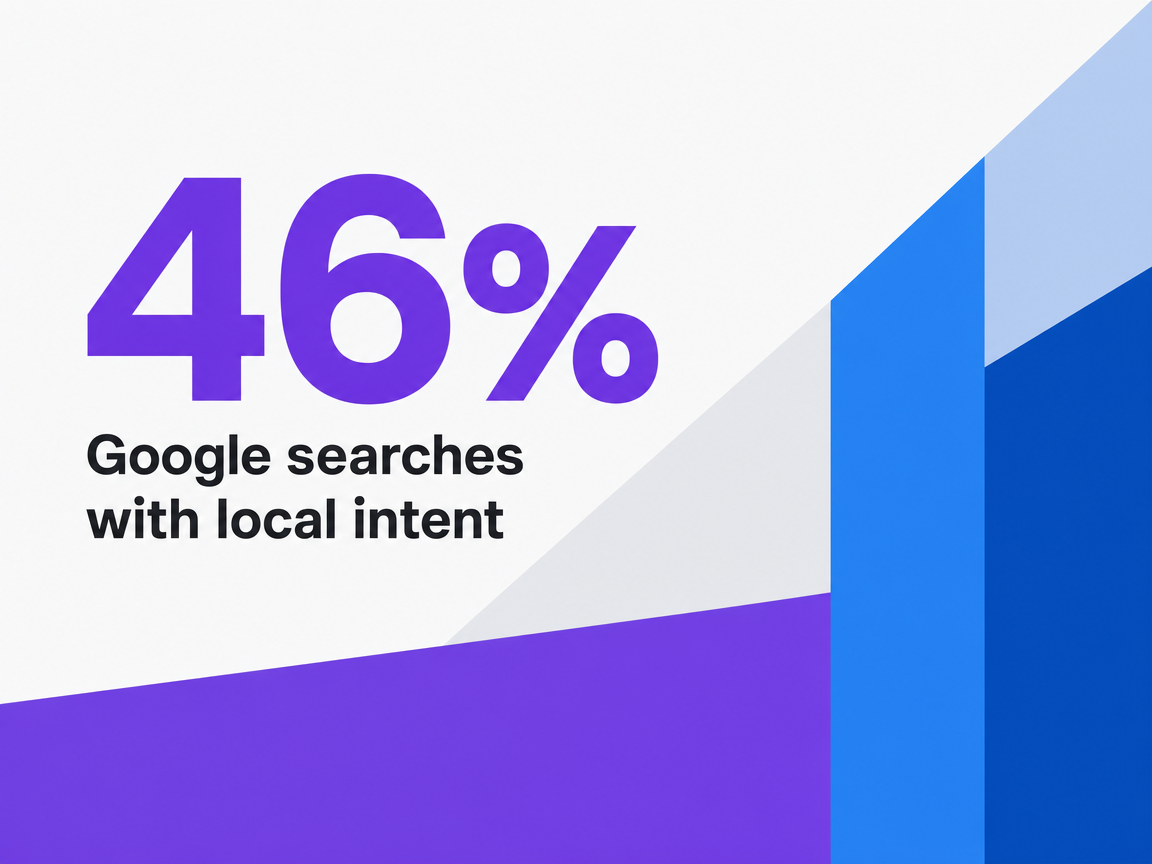 Google searches with local intent
Google searches with local intent
Test SEO strategies that drive repair bookings
See real data on which keywords and content generate more qualified calls for your auto shop.
What Local SEO Actually Moves — and What It Does Not
GBP Proximity, Service-Page Depth, and Review Velocity
Local SEO does three things well for an auto repair shop, and the work compounds when all three are running at once. The first is proximity weighting through Google Business Profile. A claimed, fully populated GBP — accurate hours, primary category set to the right repair vertical, photos refreshed monthly, services itemized — is what determines whether the shop appears in the three-pack for a driver standing two miles away. Practitioner guides aimed at shop operators describe GBP as the single highest-leverage asset for organic call volume, often framing it as the shop's actual storefront in search 13, 16.
The second is service-page depth. A shop that runs one generic "Services" page competes for nothing. A shop with separate pages for diagnostic work, brake service, transmission repair, and make-specific maintenance enters the long-tail queries that planned-maintenance and second-opinion searchers actually type. Shop-management sources tie service-specific pages and city-named location content directly to alignment with local queries, which is the precondition for showing up in the consideration set at all 16.
The third is review velocity — not just the average star rating, but the freshness and frequency of new reviews. BrightLocal-derived survey work cited in 2026 industry analysis shows 93% of consumers read online reviews before visiting a local business, a figure projected to climb further 15. Velocity matters more than absolute count past a threshold because searchers scan recency. A shop with four reviews from last week reads as active; a shop with 180 reviews where the most recent is fourteen months old reads as drift. Asking every paying customer for a review on the day they pick up the vehicle is the operational habit that keeps the velocity curve pointing the right way.
Where SEO Underperforms: Transient Roadside, Brand-Name Dealership, and Tow-Driven Calls
SEO does not capture every repair job, and pretending it does leads to misallocated spend. Three categories of demand sit largely outside its reach.
The first is the most transient roadside search — a driver fifteen minutes from home with a flat or an overheating engine. Those queries increasingly resolve through Local Services Ads, where Google's verified badge and pay-per-lead format give a paid placement above the organic map pack 8. Organic ranking can still earn the click, but the LSA unit competes for the same eyeball and often wins it on trust signals the shop has not yet earned organically.
The second is the brand-name dealership query. A driver searching "Subaru service [city]" is signaling she wants the dealership specifically, not an independent. No amount of on-page optimization changes that intent. Comparison content addressing dealer-versus-independent pricing on specific jobs is the partial workaround, but the brand-anchored query itself is not the shop's to win.
The third is the call that never starts with a search at all. Tow-driven decisions, AAA dispatches, insurance-directed collision referrals, and fleet contracts route work through channels where the driver's only choice is whether to accept the recommendation. SEO does not influence that decision. Recognizing which slice of demand each channel actually addresses is what keeps organic investment honest.
From Calls to Headcount: The Job-Creation Math
The chain from organic visibility to a new hire is shorter than most operators assume, but every link in it is a variable, not a benchmark. The honest way to model it uses the shop's own numbers — not industry averages that paper over differences in market, vehicle mix, and advisor skill.
Start at the top of the funnel and walk down. A shop generates some number of qualified organic calls per month — calls where the caller has an addressable repair need, not a parts price check or a warranty question for a vehicle the shop does not service. The service advisor closes some percentage of those into written ROs. Each RO carries an average ticket. Multiply through and the result is monthly organic-attributed revenue, which divides into the labor and gross-profit dollars that fund another bay, another advisor, or a second-shift tech.
The table below uses variables rather than invented figures. Operators should drop in their own close rate, ARO, and tech productivity to see where the marginal hire lives.
| Step | Variable | Operator Input |
|---|---|---|
| Monthly qualified organic calls | C | Tracked from call intelligence, not raw call volume |
| Booked RO close rate | R% | Advisor-specific; varies by shift and call type |
| Booked ROs per month | C × R% | The actual unit of SEO output |
| Average repair order | $A | Shop's trailing 90-day ARO |
| Monthly organic revenue | C × R% × $A | The number that funds capacity |
| Marginal tech threshold | ~$T weekly labor hours | Shop's productive-hour target per tech |
The reason this math is worth doing carefully is that the increments are small and the cumulative effect is not. BLS data show small businesses produced 55% of net new jobs from 2013 to 2023 and employed an average of 46% of the covered workforce over that period 2. ICIC's analysis of urban job creation found that a modest increase of one to three employees per small business would be enough to absorb currently unemployed residents in the inner-city markets it studied 3. For an auto repair shop, that threshold is not a thought experiment — it is the difference between one additional booked job per day and a posting for a second technician that the revenue actually supports.
The variable that bends this whole equation is R%, the close rate. A shop that grows C by 30% through better GBP and service-page work but holds R% flat captures only the conversion it was already getting. A shop that lifts R% by five points without touching traffic produces the same revenue gain at zero acquisition cost. Both are SEO outcomes if the measurement layer counts intake quality, not just clicks.
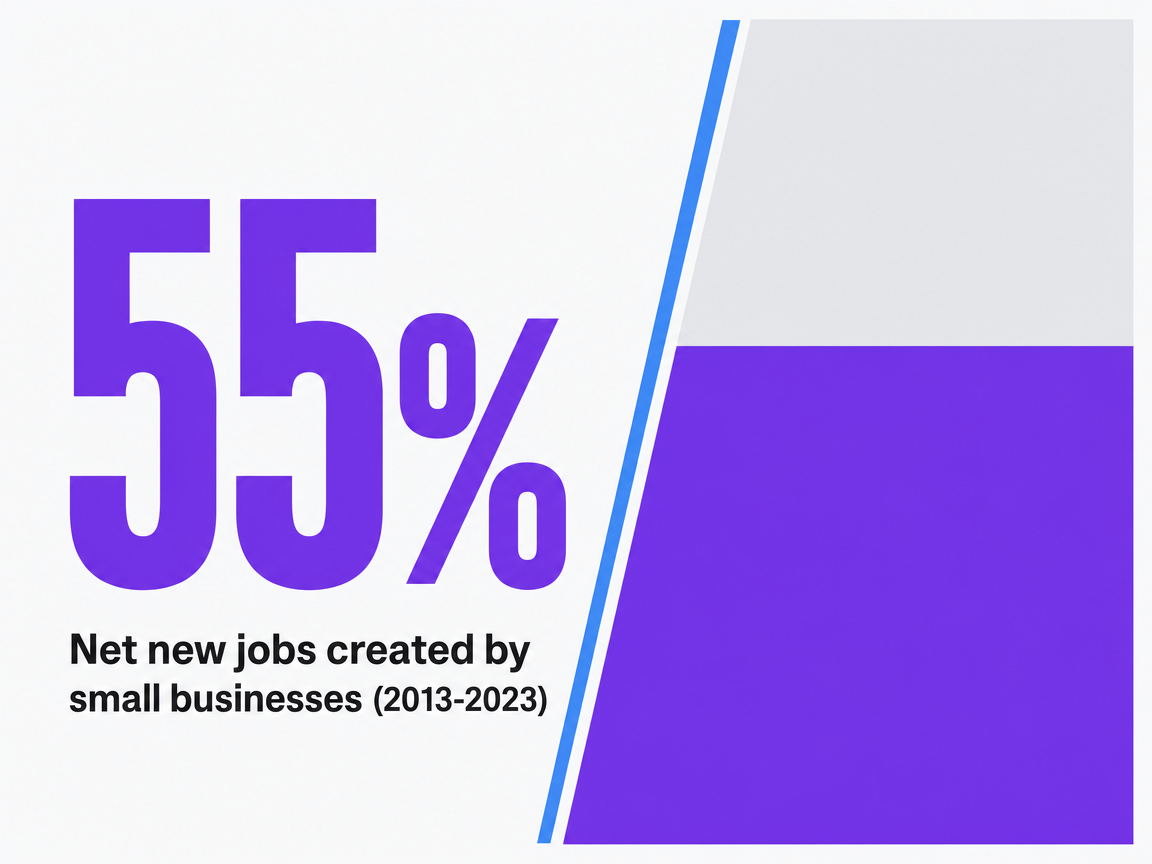 Net new jobs created by small businesses (2013-2023)
Net new jobs created by small businesses (2013-2023)
If You Manage Multiple Locations: GBP-Per-Location, Review Aggregation, and Call Routing
This section shifts scope from the single-shop operator to multi-location groups running three, ten, or thirty rooftops under one brand. The mechanics of organic search do not change at scale, but three operational decisions get harder: how Google Business Profile is structured per location, how reviews are gathered and surfaced across the group, and where the phone actually rings when a search clicks a number.
GBP-per-location is non-negotiable. Each rooftop needs its own claimed profile with a unique local phone number, store-specific hours, photos taken at that bay, and a service list that reflects what the location actually performs. Practitioner guides for shop SEO are explicit that location-specific content and city-named pages are what align a site with the geographic queries each market generates 16. A group that runs one consolidated GBP for the brand forfeits proximity weighting at every secondary location.
Review aggregation is the second decision. Reviews live on individual GBPs, not at the group level, so the operator running five locations is running five velocity curves in parallel. The 93% of consumers who read reviews before visiting a business 15are reading the reviews attached to the specific rooftop they searched, not the brand. Group-level dashboards that track per-location velocity, response time, and rating trend prevent the strongest location from masking a struggling one.
Call routing is where most multi-location SEO investment quietly leaks. A click-to-call on the Westside location's GBP should ring Westside's counter, not a central queue that loses the local-context cue. Tracking numbers preserve location attribution while keeping the routing tight.
See How Leading Agencies Deliver Measurable SEO ROI for Auto Repair Clients
Connect with our team to review real auto repair SEO performance data, discover actionable intake insights, and benchmark your results against top-performing multi-location brands.
Call Intelligence: The Measurement Layer That Turns SEO Spend Into Attribution
The reason most auto repair shops cannot tell whether SEO is working is that the unit of output — the qualified call — is the one metric the analytics stack does not natively capture. Google Search Console shows clicks. Google Business Profile shows calls initiated. Neither shows whether the phone was answered, who answered it, what the caller wanted, or whether an RO was written. The gap between "call placed" and "job booked" is where SEO budgets get judged on the wrong evidence.
Call intelligence closes that gap by recording inbound calls from tracked numbers and applying analysis to each one. The mechanics are straightforward: a dedicated tracking number on the GBP listing and another on the website route through a recording layer, and each call is tagged for caller intent, vehicle and service mentioned, advisor handling, outcome, and whether a follow-up was promised. The output is a per-call record that maps directly back to the search term, landing page, or GBP click that produced it.
Three operational reads come out of that data and nothing else produces them:
- The first is the qualified-call rate — what share of organic-attributed calls represent an addressable repair need versus a price check, warranty question, or wrong number. A shop with 180 monthly organic calls and a 55% qualified rate is running a different business than one with 180 calls at 85% qualified, and only call analysis distinguishes them.
- The second is the missed-call recovery picture: how many qualified calls rang out, when they happened (the Tuesday 11am gap is real), and how many were ever called back.
- The third is advisor-level conversion — which advisor closes the second-opinion caller and which one fumbles her, scored against actual recordings rather than memory.
Those three reads are what convert SEO from a faith-based line item into an attribution-grade one. They also tell the operator which lever to pull next. If qualified call volume is rising but close rate is flat, the next dollar belongs in advisor training, not more service pages. If volume is flat but qualified rate is climbing, the GBP and content work is doing exactly what it should, and the constraint has moved upstream to demand. Vectoron's call intelligence reads recorded calls, tags qualified inquiries, and surfaces the intake patterns that decide which of those scenarios a shop is actually in.
Organic SEO Versus LSAs and Paid Search: How They Coexist
Organic SEO, Local Services Ads, and Google Ads are not substitutes. They cover different slices of the same demand pool, and shops that treat them as competing line items usually overpay in one channel to compensate for weakness in another.
Organic SEO is the lower-variable-cost channel. Once a Google Business Profile is ranking and service pages are indexed, the marginal cost of an additional call approaches zero — the spend sits in the content and technical work that produced the position, not in each click. Analysis of automotive paid media notes that while search advertising continues to dominate digital performance in the category, organic search offers a complementary channel with materially different economics 7. The implication is not that paid is wasteful. It is that paid spend should be sized to the gap organic cannot close.
LSAs occupy the narrow band organic struggles with — verified, trust-anchored placements above the map pack that win the most transient roadside calls. Google positions the unit around verified business listings, customer reviews, and direct contact 8, which is exactly what a panicked driver scans for in fifteen seconds. A shop running organic SEO without LSAs cedes that band; a shop running LSAs without organic foundations pays per lead for visibility it could have earned. Google Ads, the third channel, fills demand organic cannot reach quickly enough — new service lines, seasonal pushes, or geographic expansion before content matures.
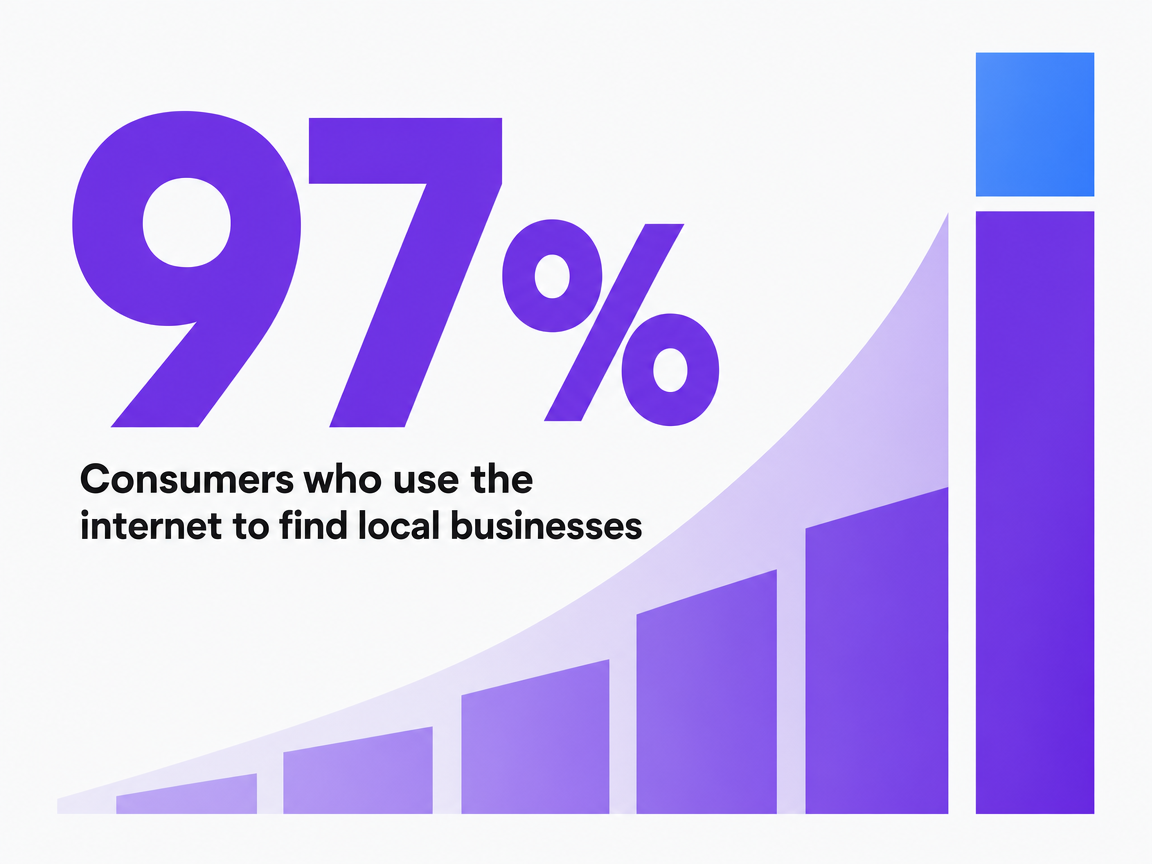 Consumers who use the internet to find local businesses
Consumers who use the internet to find local businesses
Frequently Asked Questions
References
- 1.Local SEO Statistics 2026: 120+ Data Points for Business.
- 2.Small businesses contributed 55 percent of the total net job creation from 2013 to 2023.
- 3.The Big Impact of Small Business on Urban Job Creation.
- 4.37 Local SEO for Car Dealerships Statistics.
- 5.Google Reveals Auto Repair Shopping Trends.
- 6.Does SEO Really Work? Understanding its Impact on Small Businesses.
- 7.30 Targeted Ad Performance in Automotive Statistics in 2025.
- 8.Why local business should use Google Local Services Ads in 2024.
- 9.Understanding Consumers' Local Search Behavior.
- 10.Consumer Search and Prices in the Automobile Market.
- 11.Consumer search in the U.S. auto industry: The role of dealership.
- 12.The consumer decision journey.
- 13.SEO for Auto Repair Shops: The Complete 2026 Guide.
- 14.16 Local Search Statistics Every Small Business Owner Should Know.
- 15.Local Consumer Review Survey 2026: The Role of Business Directories in Local Trust.
- 16.Auto Repair SEO: The Complete Guide for 2026.
- 17.From Word-of-Mouth to Web Search: How Collision Repair Customers Find Your Shop in 2025.