
Key Takeaways
- Google Analytics 4 is the non-negotiable baseline because every downstream ROI claim must reconcile against the conversion definitions the client's finance team already trusts 3.
- BrightEdge earns its seat by sitting alongside Adobe Analytics or GA4 without manual reconciliation, cutting analyst hours per client report and protecting retainer margin 8.
- Conductor ties organic-entry pages to downstream conversion events, giving CFOs a page-level view of what content produced pipeline instead of what content ranked 8, 6.
- Ahrefs delivers more value as a data feed into a TEI-style ROI workbook, contributing traffic estimates and paid-search cost equivalents rather than acting as a standalone dashboard 7.
- Profound tracks brand presence inside ChatGPT, Perplexity, Gemini, and Google AI Overviews, converting qualitative worry about AI search into a measured share-of-voice metric.
- Semrush's AI toolkit blends AI Overview presence with existing keyword tracking, letting agencies explain why session counts drift while ranks hold without opening a new platform.
- AlsoAsked paired with Perplexity Pages monitoring builds a defensible prompt set diagnostically, justifying a full GEO platform seat before committing budget to one.
- Screaming Frog combined with Sitebulb turns technical audits into a repeatable production line, letting one specialist carry twice the portfolio without QA collapsing 8.
- Clearscope compresses brief production from four hours to under one, lowering agency labor cost per published page without touching the writer's fee 6.
- Vectoron routes AI recommendations through an approval-first Command Center, collapsing the handoff gap where insight normally stalls before becoming shipped work 10.
- AirOps orchestrates handoffs between SEO exports, briefs, writers, and CMS into a versioned pipeline, cutting the translation loss that consumes coordination overhead 4.
The CFO Test Rewriting SEO Tool Selection
Renewal conversations rarely end on a keyword ranking anymore. They end on whether the agency can point a CFO to organic-sourced pipeline, defensible attribution, and evidence that retainer dollars produced revenue rather than impressions.
The measurement environment for these conversations is challenging. In the MMA State of Marketing Analytics survey, only 30% of marketers trusted their KPIs enough to drive strategy, 29% could trace decisions back to data, 22% described their analytics capabilities as robust, and 19% reported complete attribution 1. These figures describe self-reported confidence among marketing leaders across categories, not SEO teams specifically, but they set the ceiling on what a CFO will accept when an SEO retainer comes up for review. If fewer than one in five marketing organizations can produce end-to-end attribution, a ranking export will not secure a renewal.
The eleven platforms that follow are grouped by the proof burden they answer: measurement and attribution that a finance function will sign off on, visibility inside AI answer engines where discovery is migrating, and execution economics that keep client margin intact as budgets compress. Tools that only report keyword position are treated as consolidation candidates, not stack anchors.
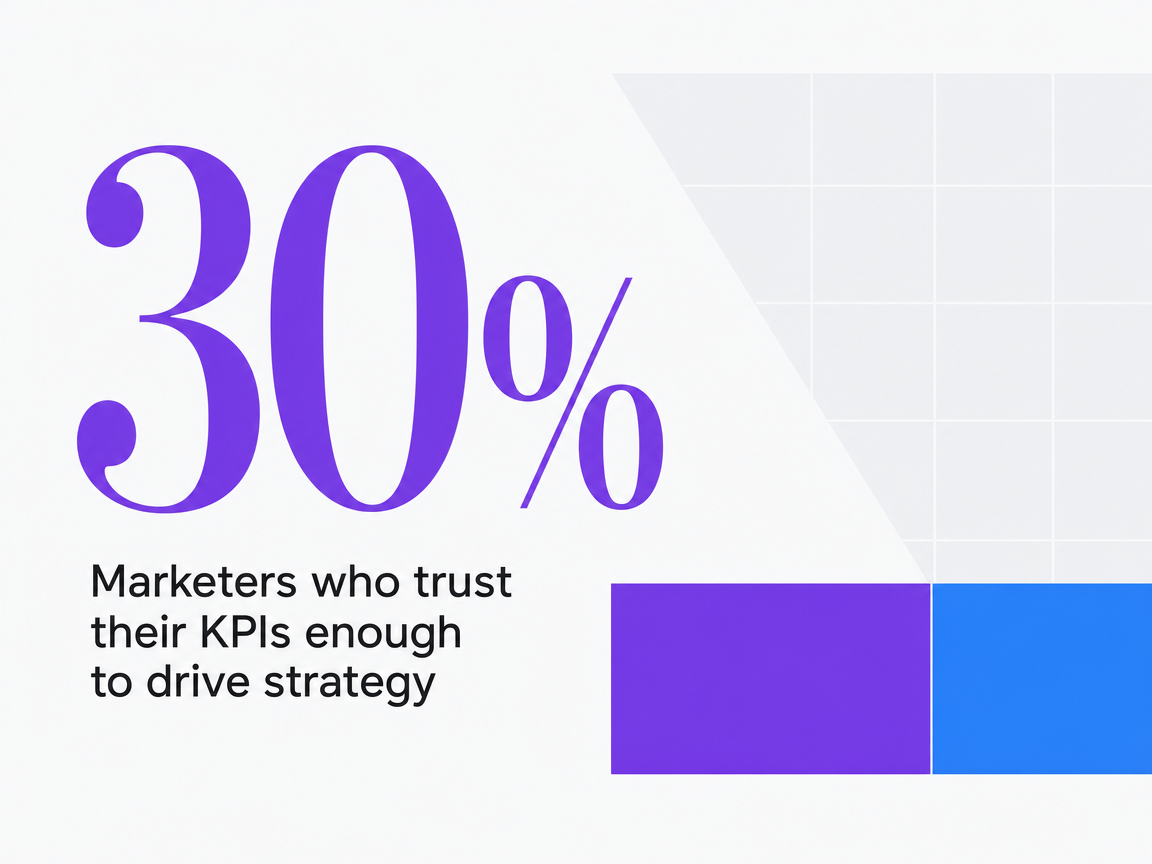 Marketers who trust their KPIs enough to drive strategy
Marketers who trust their KPIs enough to drive strategy
Three ROI Jobs Every Tool in the Stack Must Do
A stack earns its cost by answering three questions a client's finance lead will actually ask: what organic activity produced revenue, where is the brand showing up as search shifts into AI answers, and what did the work cost to produce relative to the outcome.
- Measurement and attribution is the first job. Forrester's Total Economic Impact model for SEO quantifies traffic gains, conversion lift, and paid media savings against technology, agency, and internal labor costs, which is the format executives expect when they sign off on a retainer 6. Tools that cannot feed that model with clean conversion data are hard to defend.
- AI-search visibility is the second. Discovery is migrating into AI summaries and answer engines, and platforms that only report blue-link rankings leave that surface unmeasured 2.
- Execution economics is the third. Analytics-connected decision making can free 15 to 30 percent of marketing budgets and lift sales 2 to 5 percent, but only when tools compress production time rather than add reporting overhead 4. Each of the eleven platforms below is scored against one of these jobs.
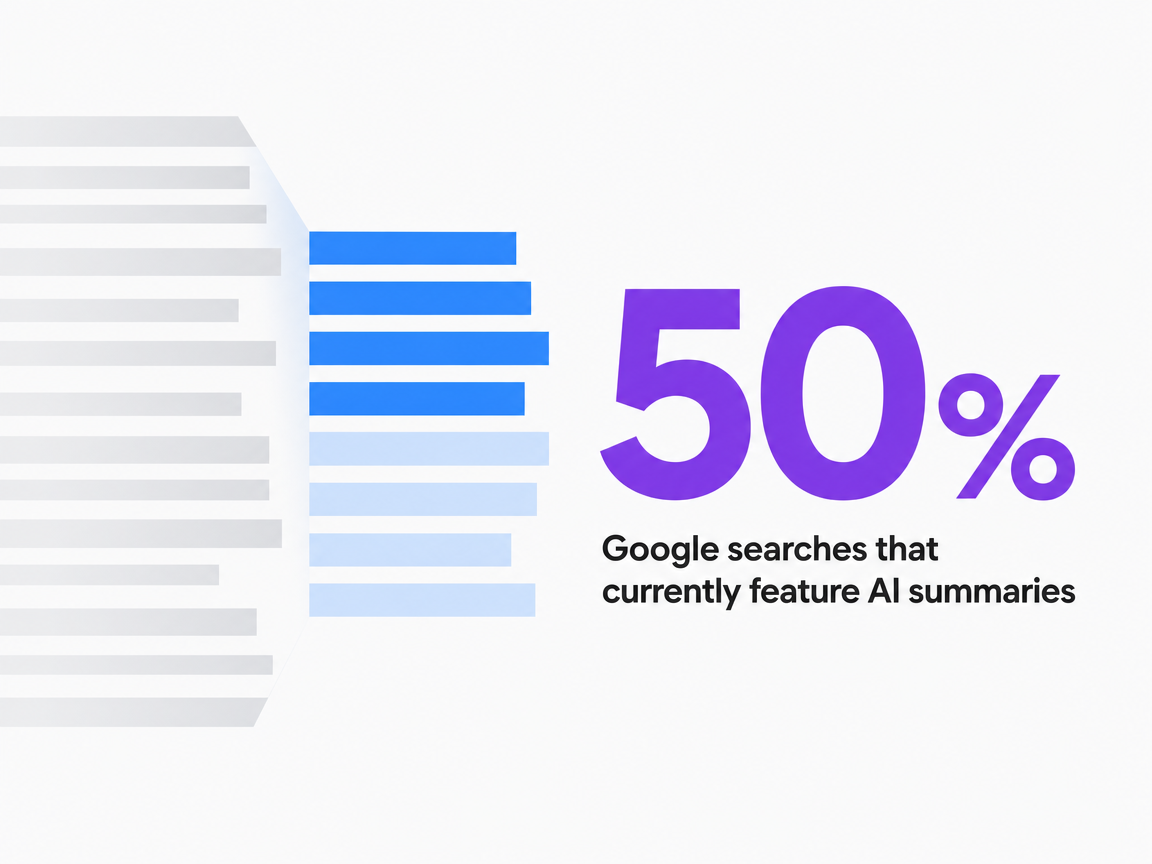 Google searches that currently feature AI summaries
Google searches that currently feature AI summaries
Measurement and Attribution: Tools That Speak CFO
Why Ranking-Only Platforms Are Being Consolidated Out
Google's own explanation of how results are generated leans on relevance, usefulness, and quality signals rather than a keyword's position on a page 9. That framing has been public for years, yet a large share of agency reporting still leads with a ranking screenshot. The gap is what makes ranking-only platforms easy line items to cut when a client audits spend.
Forrester's TEI model for SEO does not include "rankings improved" as a benefit line. It quantifies traffic, conversion rate lift, and paid media savings against technology, agency, and internal labor costs 6. A platform that cannot feed those four inputs is producing reports for the SEO team, not for finance. When margin gets tight, that is the seat the operations lead pulls first.
Google Analytics 4 as the Non-Negotiable Baseline
Every other tool in the measurement layer routes through GA4. Google positions the platform as the way to understand user behavior and measure business results, which in practice means it is where conversions, revenue events, and channel groupings are defined before any SEO platform inherits them 3.
An agency reporting stack that skips GA4 configuration and pulls organic conversion counts directly from a third-party crawler tends to produce numbers that do not reconcile against the client's own dashboards. That mismatch is what ends renewal conversations early. The practical rule is that GA4 conversion definitions, custom events for form fills and qualified calls, and consent-mode handling get locked before any SEO platform integration goes live. Every downstream ROI claim then references the same measurement contract the client's finance team already trusts.
BrightEdge for Enterprise Measurement Integration
BrightEdge earns stack space when the client already runs enterprise analytics and expects SEO data to appear inside the same reporting fabric. Forrester's 2020 Wave evaluated seven SEO platform providers against 28 criteria covering technical SEO, content optimisation, analytics, and reporting, and the analytics and integration dimensions are where enterprise buyers separate contenders 8.
The ROI job here is measurement plumbing. BrightEdge's value to an agency Head of SEO is not its recommendation engine but its willingness to sit next to Adobe Analytics or GA4 without forcing manual reconciliation each month. That reduces the analyst hours per client per report, which is the variable most directly tied to retainer margin. Agencies without at least one client on enterprise BI tooling get less lift from the seat and should score it lower against their own portfolio.
Conductor for Revenue-Linked Content Reporting
Conductor's ROI angle is content attribution. It ties organic-entry pages to downstream conversion events, which lets an agency present a client CFO with a page-level view of what content produced pipeline rather than a keyword-level view of what content ranked. That is closer to the language executives use during budget review.
The evaluation framework matters here. The Forrester Wave criteria around content optimisation and reporting are the dimensions on which platforms like Conductor tend to score, and those dimensions map directly onto the TEI benefit lines of traffic and conversion lift 8, 6. For a portfolio of mid-market clients where content is the primary lever, Conductor's reporting layer replaces two or three separate exports with one that the account lead can put in front of a finance stakeholder without translation. That collapses reporting time, which is where margin lives.
Ahrefs Portfolio Reporting Recast for TEI-Style Modeling
Ahrefs is usually described as a research tool. For agencies that already own the seat, the sharper use is as a data feed into a TEI-style ROI model rather than as a standalone reporting surface.
The reference point is Forrester's composite modeling. In the underlying analysis, the modeled composite organization recognized a 611% ROI from its SEO program, calculated by quantifying benefits (traffic, conversion lift, paid media savings) against costs (technology, agencies, internal salaries and time) 7. That figure describes a composite construct built through the TEI methodology, not a guaranteed outcome for any single client, and the number only means anything when the inputs behind it are visible.
Ahrefs contributes two of those inputs cleanly: organic traffic estimates and keyword-level paid-search cost equivalents that feed the paid media savings line. Piping those into a client-specific TEI workbook, alongside GA4 conversion data and internal labor hours, produces the format a CFO recognizes. Used this way, the seat pays for itself as a modeling input, not as another dashboard.
Test Full-Scale SEO Optimisation in Real Time
Validate workflow efficiency and content impact across active client campaigns before making a commitment.
AI-Search Visibility: The Category Most Stacks Are Missing
GEO as a Reporting Line, Not a Buzzword
Discovery is moving inside the answer. Roughly half of Google searches now surface AI summaries, and McKinsey projects that share to climb above 75% by 2028, while only 16% of brands systematically track their visibility inside AI search 2. That gap is the single largest blind spot in most agency reporting decks.
Generative engine optimization does not replace organic rank tracking. It adds a parallel reporting line: whether the client is cited, quoted, or linked inside the AI answer for prompts that map to their commercial intent. A Head of SEO who can produce that line item, week over week, has a defensible answer when a client asks why blue-link traffic is flat while impressions are still climbing.
The practical bar for a GEO tool is narrow. It has to name the prompts, name the engines, and log presence over time in a format that reconciles against the client's existing organic report.
Profound for AI Answer Engine Visibility Tracking
Profound answers the narrowest version of the GEO question: is the client showing up inside ChatGPT, Perplexity, Google AI Overviews, and Gemini for the prompts that matter, and which sources are the models citing when the client is absent.
The ROI job here is evidence of presence. An agency running Profound against a defined prompt set can present a client CFO with a share-of-voice metric for AI answers, alongside the sources displacing the brand. That converts a qualitative worry about AI search into a tracked number, which is the prerequisite for any budget conversation.
The seat pays off when the client's category is one where buyers actually prompt an assistant before a purchase. For portfolios weighted toward considered B2B services, professional services, and complex healthcare decisions, prompt-level tracking sits closer to pipeline than a keyword rank does. For pure transactional retail, the return is thinner.
Semrush AI Toolkit for Blended SERP and AI Overview Share
Semrush's AI toolkit sits alongside its existing keyword and position tracking, which is the point. Most agencies already own the seat, and the incremental job is to reconcile AI Overview presence with traditional SERP rank inside a single report the account lead is already exporting.
The reporting angle is a blended view: for a tracked keyword set, what share of results include an AI Overview, whether the client appears inside it, and how organic click share moves in response. That is the number an agency can put next to the classic ranking table when a client asks why session counts are drifting while ranks hold.
Semrush will not replace a dedicated prompt-monitoring platform for deep GEO work. Its value is coverage across the existing tracked keyword footprint without opening a new tab. For agencies triaging where to start GEO measurement, that consolidation is where the initial hours are saved.
AlsoAsked and Perplexity Pages Monitoring for Prompt-Level Presence
AlsoAsked maps the question tree that People Also Ask surfaces and, by extension, the prompt structures AI answer engines tend to expand. Paired with manual or scripted monitoring of Perplexity Pages for tracked entities, it gives a Head of SEO a lightweight way to build the prompt set before committing budget to a dedicated GEO platform.
The ROI job is diagnostic. Before a client signs off on a GEO reporting line, the agency needs a defensible answer to which prompts matter for that client's pipeline. AlsoAsked produces the input; Perplexity Pages monitoring produces the current-state read on whether the brand is referenced inside a working answer engine's persistent surfaces.
Used together, they cost less than a full monitoring platform seat and produce enough evidence to justify one. For agencies with clients still skeptical that GEO deserves budget, that sequence, diagnostic first and platform second, is the cheaper path to the same reporting line.
Execution Economics: Tools That Protect Margin
Screaming Frog Plus Sitebulb for Technical Throughput at Scale
Technical audits are where analyst hours quietly leak. Screaming Frog handles the raw crawl, and Sitebulb wraps the output in prioritized issue reports that a mid-level analyst can hand to a client without rewriting the export. Paired, they shift technical delivery from a specialist bottleneck to a repeatable production line.
The ROI job is throughput. An agency running 40 client sites through a single senior technical SEO cannot scale linearly with headcount, and the Forrester Wave analytics and reporting criteria that separate contenders reward platforms that reduce manual reconciliation between crawl output and business reporting 8. Screaming Frog produces the data feed; Sitebulb converts it into a defensible issue list with severity scoring. That combination cuts the audit-to-recommendation cycle enough that the same specialist can carry twice the portfolio without the QA layer collapsing. Margin holds because delivery hours per client drop while the deliverable quality stays audit-ready.
Clearscope for Brief-to-Publish Compression
Clearscope's role in the stack is narrow: it compresses the distance between keyword research and a brief a writer can execute against without a strategist rewriting it. That matters because brief production is one of the highest-cost, least-visible line items in a content retainer.
The ROI angle is cycle time. Forrester's TEI benefit lines credit traffic and conversion lift against costs that include technology, agency fees, and internal salaries 6. When brief production drops from four hours to under one, the agency labor cost per published page falls without touching the writer's fee. That is a direct margin improvement the account lead can point to when a client questions retainer scope.
Clearscope will not replace strategic content planning, and treating it as a strategy tool overstates what it does. Used as brief infrastructure, it protects the hours that would otherwise disappear into template rewrites.
Vectoron for Approval-First Content Automation
Content production is where retainer margin either survives or evaporates. Vectoron addresses that line by routing specialist AI strategists through a single approval workflow: recommendations for content, SEO, backlinks, and adjacent channels surface in a Command Center, the account lead approves or edits, and execution runs after sign-off rather than after another briefing cycle.
The ROI job is execution economics. McKinsey's synthesis of roughly 400 marketing ROI engagements found that smart analytics can reclaim 15 to 20 percent of otherwise wasted marketing spend, a band that only materializes when reporting insight actually converts into shipped work 10. Most agency stacks stall between the insight and the execution because handoffs consume the hours the analytics were supposed to save. Approval-first automation collapses that gap while keeping human judgment on every deliverable.
For a Head of SEO defending retainers against in-house AI adoption, the argument shifts from "our team writes better briefs" to "our team ships more approved work per dollar," which is the sentence a client CFO already understands.
AirOps for Agency-Grade Workflow Orchestration
AirOps sits underneath the content stack rather than inside it. Its job is orchestration: connecting the SEO platform export, the brief generator, the writer's workspace, and the CMS into a workflow the account lead can monitor without opening five tabs.
The economic argument is coordination overhead. Analytics-connected decision making can free 15 to 30 percent of marketing budgets when insight reaches execution without translation loss 4, and translation loss is exactly what happens when a strategist exports a keyword list, a writer misreads the brief, and an editor rewrites the draft to fit the client's tone guide. AirOps codifies those handoffs into a versioned pipeline.
The seat pays off for agencies with at least a handful of clients on similar content programs. For portfolios where every client has bespoke workflow requirements, the setup time cancels the throughput gain and a lighter project-management tool serves better.
See How Leading Agencies Quantify SEO ROI With Unified Analytics
Request a walkthrough of integrated SEO optimisation workflows designed for agencies managing complex, multi-channel campaigns—complete with live KPI tracking, approval-first automations, and measurable client impact.
If You Manage a Portfolio of 20+ Clients: The Consolidation Math
For agency heads managing portfolios of 20 or more clients, the tool stack conversation stops being about capability and becomes a margin equation. Every SaaS seat multiplied across account teams, every hour spent reconciling exports between platforms, and every handoff between insight and shipped work compounds against retainer profitability.
The recoverable-ROI bands from the analytics literature bound the math. McKinsey's synthesis of roughly 400 marketing ROI engagements found that smart analytics can reclaim 15 to 20 percent of otherwise wasted marketing spend 10. A separate McKinsey analysis of analytics-connected decision making shows that firms freeing 15 to 30 percent of marketing budgets typically increase sales 2 to 5 percent or return the difference to the bottom line 4. Those are directional ranges from cross-industry engagements, not agency-specific guarantees, and they only apply when consolidated tooling actually shortens the distance between reporting and execution.
The compact model below uses only sourced ranges and agency-defined variables. No per-seat vendor prices are assumed.
| Variable | Input | Source |
|---|---|---|
| Client portfolio size | C clients (agency-defined) | variable |
| Analyst hours reclaimed per client per month | H hours (agency-defined) | variable |
| SaaS seats consolidated | S seats collapsed | variable |
| Recoverable marketing ROI band | 15–20% | 10 |
| Budget-freed / sales-lift band | 15–30% freed, 2–5% sales lift | 4 |
Applied to a 40-client portfolio reclaiming three analyst hours per client per month, the modeled monthly hour recovery is 120 hours before any seat consolidation. Layering the 15 to 20 percent efficiency band across the retainer base gives the outer bound of what an agency can credibly present to a client CFO as reclaimed margin, provided the reclaimed hours are redeployed into shipped work rather than absorbed by internal meetings. The number is modeled, not promised, and the assumption most agencies get wrong is that seat consolidation alone produces the gain. It does not. The gain comes from the hours the consolidated stack frees, and only when those hours end up on a deliverable a client will pay to renew.
How to Score a Tool Against a Specific Proof Burden
Every platform in the stack should answer one question a client will actually ask, and the score is whether the tool produces evidence in the format that question requires. A short rubric keeps the evaluation honest.
- First, does the tool feed a TEI-style benefit line? Traffic, conversion lift, and paid media savings are the inputs a Forrester-shaped ROI model expects 6. A platform that only exports rankings fails this test regardless of database size.
- Second, does it reconcile with GA4 conversion definitions without manual translation 3? If the account lead has to rebuild the number before showing it to a client, the seat is producing internal work, not client evidence.
- Third, does it cover a proof burden the current stack does not? AI-search visibility is the clearest gap, given that only 16% of brands track it systematically 2. Adding a fourth ranking tool scores zero on this dimension.
- Fourth, does it reduce analyst hours per client per month? That is the variable tied to retainer margin, and the one a Head of SEO can defend in a portfolio review.
A tool that scores on at least two of the four earns a seat. One-dimensional tools become consolidation candidates at the next renewal cycle.
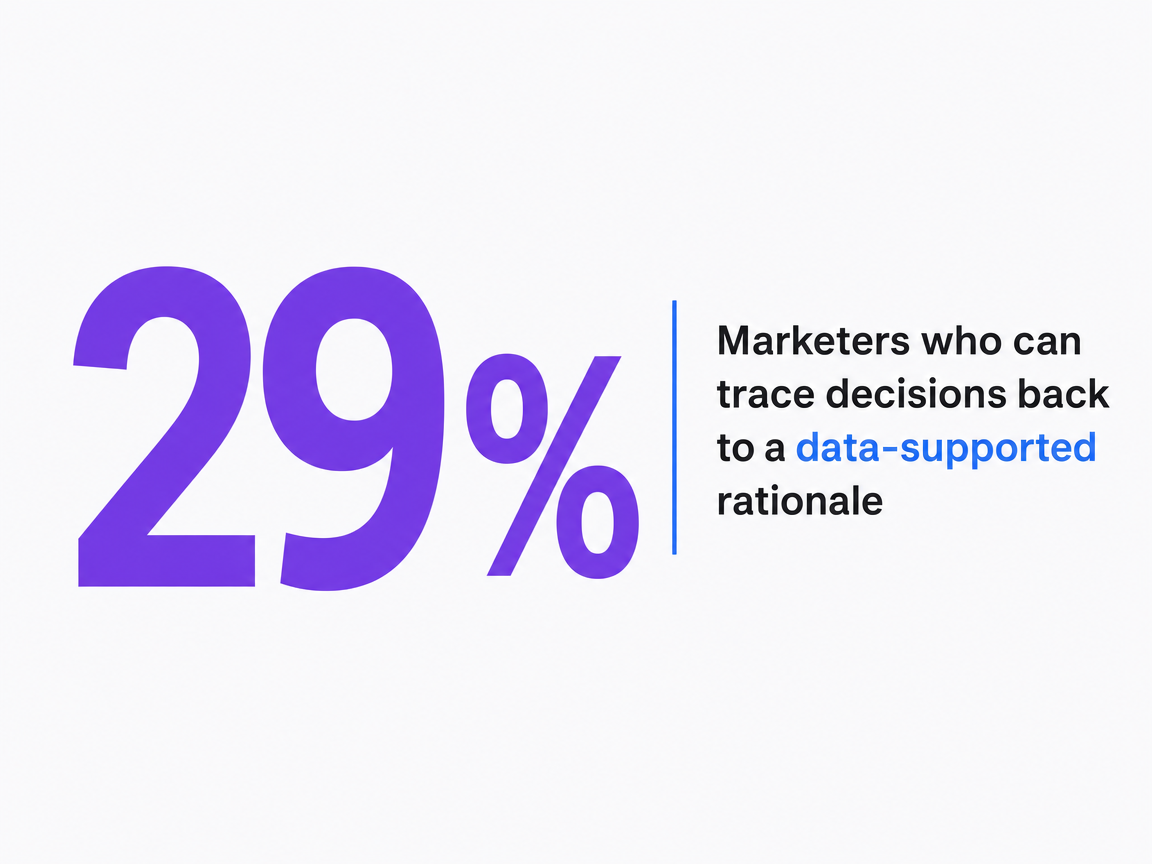 Marketers who can trace decisions back to a data-supported rationale
Marketers who can trace decisions back to a data-supported rationale
Frequently Asked Questions
References
- 1.How Marketers Make Decisions: The State of Marketing Analytics.
- 2.New front door to the internet: Winning in the age of AI search.
- 3.Measure business results with Google Analytics.
- 4.The secret to great marketing analytics? Connecting with decision makers.
- 5.Big data, analytics, and the future of marketing & sales.
- 6.The ROI Of SEO - Forrester.
- 7.You Can Quantify The ROI Of SEO.
- 8.The Forrester Wave™: SEO Platforms, Q3 2020.
- 9.How Search Works.
- 10.“Smart analytics” can tap up to 20% of lost ROI.
- 11.The Forrester Wave™: Search Engine Optimization (SEO) Platforms, Q3 2018.