
Key Takeaways
- Catalog growth has turned product descriptions into a supply chain problem, where drafting is not the bottleneck—governance over structured inputs, generation, and review is.
- A three-layer model works: clean PIM data as input, LLM or multimodal generation on top, and tiered editorial review that gates every draft before publish.
- Google's rules target outcomes, not tools; governed pipelines producing attribute-accurate, shopper-language copy stay compliant, while boilerplate variants from thin data cross the line 1, 2.
- Writers should shift from drafting to category ownership, exception editing, prompt maintenance, and sampled QA, with a 90-day pilot on high-revenue categories as the practical starting point.
The Catalog Growth Problem Writers Can't Outrun
Catalog growth has broken the old copywriting math. A team of two in-house writers producing 400-word product descriptions at a realistic pace of 8 to 12 SKUs a day cannot keep pace with a merchandising calendar that adds thousands of variants a quarter. Freelance overflow closes part of the gap and blows the budget doing it.
The demand side is not slowing down. Deloitte Digital reports a 54% year-over-year increase in the volume of content marketing teams need to produce, and generative AI users are already reclaiming an average of 11.4 hours per week 16. Content marketing managers running SEO for large catalogs feel that gap directly: category pages rank on the strength of their SKU-level descriptions, and thin or duplicate copy caps organic revenue.
Hiring is not the answer executives will fund. Adding writers scales linear cost against exponential SKU growth. The teams pulling ahead are treating product descriptions as a supply chain instead of a writing assignment, with structured inputs, an automated drafting layer, and editorial governance sitting where writing capacity used to sit. This article maps that model, the search compliance boundaries around it, and the throughput math a two-writer team can actually hit.
Why Product Descriptions Became a Supply Chain Problem
Content Demand Has Outpaced Headcount
The economics have inverted. In-house writing teams were sized for a world where a merchant added a few hundred SKUs a year, not a world where merchandising, private label, and marketplace expansion push thousands of variants into the queue every quarter. The workload curve is steep, and the hiring curve is flat.
Deloitte Digital's marketing survey quantifies the pressure directly: 26% of marketers already use generative AI for content production, another 45% plan to adopt it by the end of 2024, and current users report saving an average of 11.4 hours per week 9. That survey covers marketing content broadly, not product descriptions specifically, but the direction is unmistakable. Teams that have absorbed AI-assisted workflows are working with a different baseline than teams still drafting SKU by SKU.
The demand side is moving faster than adoption. Marketers report a 54% year-over-year increase in the volume of content they need to produce 16. Product catalogs sit at the sharp end of that increase because SEO performance on category and PLP pages depends on unique, attribute-rich descriptions at the SKU level. Thin copy and boilerplate variants leave organic revenue on the table, and duplicate content across variant pages actively suppresses ranking.
Content marketing managers running SEO for large catalogs are not being asked to write faster. They are being asked to ship 10x the volume against a headcount plan approved before the demand curve steepened.
Drafting Is Not the Bottleneck; Governance Is
The instinct is to treat throughput as a writing problem and hire more writers. That instinct misreads where time actually goes.
Drafting a 250 to 400-word product description from structured attribute data is the fastest part of the job for an experienced writer. The slower parts are the ones that determine whether the description ships and ranks:
- pulling accurate attributes from the PIM,
- aligning on category-level keyword clusters,
- checking brand voice,
- catching factual errors from source data,
- deduplicating variant copy,
- and getting merchandising sign-off.
Those steps are governance work, not writing work.
Deloitte's comparative research found that consumers assessed GenAI-produced marketing content mostly on par with output from professional writers, and that the AI-produced work was delivered faster and at lower cost 11. The finding is narrower than a blanket endorsement of automation. It says that when generation is governed properly, quality parity is achievable. The bottleneck moves upstream to the review layer.
That reframes the scaling question. A team of two writers cannot draft 25,000 SKU descriptions in a quarter. The same team can govern a pipeline that generates 25,000 drafts against structured inputs, then routes them through defined quality checks. The production model has to change before the numbers move.
The Three-Layer Production Model
Layer One: Structured Product Data as the Input
Generation quality is capped by input quality. The teams shipping accurate descriptions at catalog scale are the ones that treat their PIM as the source of truth and stop asking writers to reconstruct product facts from spec sheets, vendor emails, and image alt text.
A production-grade input layer has four components:
- A normalized attribute schema per category: dimensions, materials, compatibility, certifications, and use cases mapped to defined fields rather than free text.
- Product imagery tagged and linked to each SKU record.
- A keyword cluster assigned at the category and subcategory level, drawn from actual shopper search language.
- A brand voice specification captured as machine-readable constraints, not a PDF style guide.
Google's ecommerce guidance is direct about what this data feeds into: informative product descriptions that match the search terms shoppers actually use 2. That match cannot happen if the drafting engine is guessing at attributes. It has to read them.
Content marketing managers usually inherit a PIM that is 60 to 80% populated. Closing that gap is the highest-leverage work before any generation runs. A pipeline generating from partial data will produce partial descriptions, and no amount of editorial review at the output stage recovers what was missing at the input stage.
Layer Two: LLM and Multimodal Generation
Once the input layer is clean, the drafting engine sits on top of it. Two approaches have moved from research into production: LLMs fine-tuned on category-specific description corpora, and multimodal models that generate from images and metadata together.
The text-only path is the more familiar one. An ACL/GEM paper documented an LLM fine-tuned on Walmart product descriptions, evaluated with NDCG, click-through rates, and human assessments, and reported improved scalability and reduced human workload compared to manual drafting 3. That work is a useful reference point for teams whose PIM data is rich enough that images add little marginal information.
The multimodal path matters more for catalogs where written source material is thin. A multimodal in-context tuning approach that generates descriptions from product images plus marketing keywords reported improvements of up to 3.3% on Rouge-L and 9.4% on diversity compared to baseline generation 4. The diversity gain is the operationally interesting number. Duplicate variant copy is one of the failure modes that suppresses SKU-level ranking, and a generator that produces more varied outputs across similar items directly attacks that failure mode.
Vision-language models push the same idea further. A Stanford evaluation using CLIP, BLIP, BLIP-2, and OFA on the Amazon Berkeley Objects dataset reported a roughly two-order-of-magnitude increase in CIDEr score for description generation when product images were combined with metadata, versus baseline models working from metadata alone 5. The practical read is that images carry attribute signal the PIM often misses, and models that consume both write more specific copy.
None of this removes the need for a human gate. The same Stanford paper flagged limitations in interpreting complex product attributes from images, which is exactly the failure class the review layer has to catch 5.
Layer Three: Editorial Review as the Quality Gate
The review layer is where writers actually work in this model. Every generated draft passes through a defined queue before it reaches the storefront, and the queue is engineered, not improvised.
Three review tiers cover most catalogs:
- Tier one is automated: schema validation, brand voice pattern checks, duplicate detection against existing SKU copy, and keyword coverage against the assigned cluster.
- Tier two is spot-check human review, sampled by category risk and revenue weight.
- Tier three is full human edit, reserved for hero SKUs, regulated categories, and any draft that fails tier-one gates.
Google's helpful content guidance is the operative standard at this stage. The self-assessment questions ask whether content is original, comprehensive, and worth bookmarking, and warn against extensive automation used to produce content on many topics without added value 1. A governed review layer is what converts automated drafts into content that clears those questions.
Deloitte's comparative research supports the model. Consumers assessed GenAI-produced marketing content mostly on par with output from professional writers when the work was governed, and the AI-produced work was delivered faster and at lower cost 11. Parity is not automatic. It is the result of the review layer doing its job, which is why the writers on this pipeline spend their time editing, sampling, and setting rules rather than drafting from scratch.
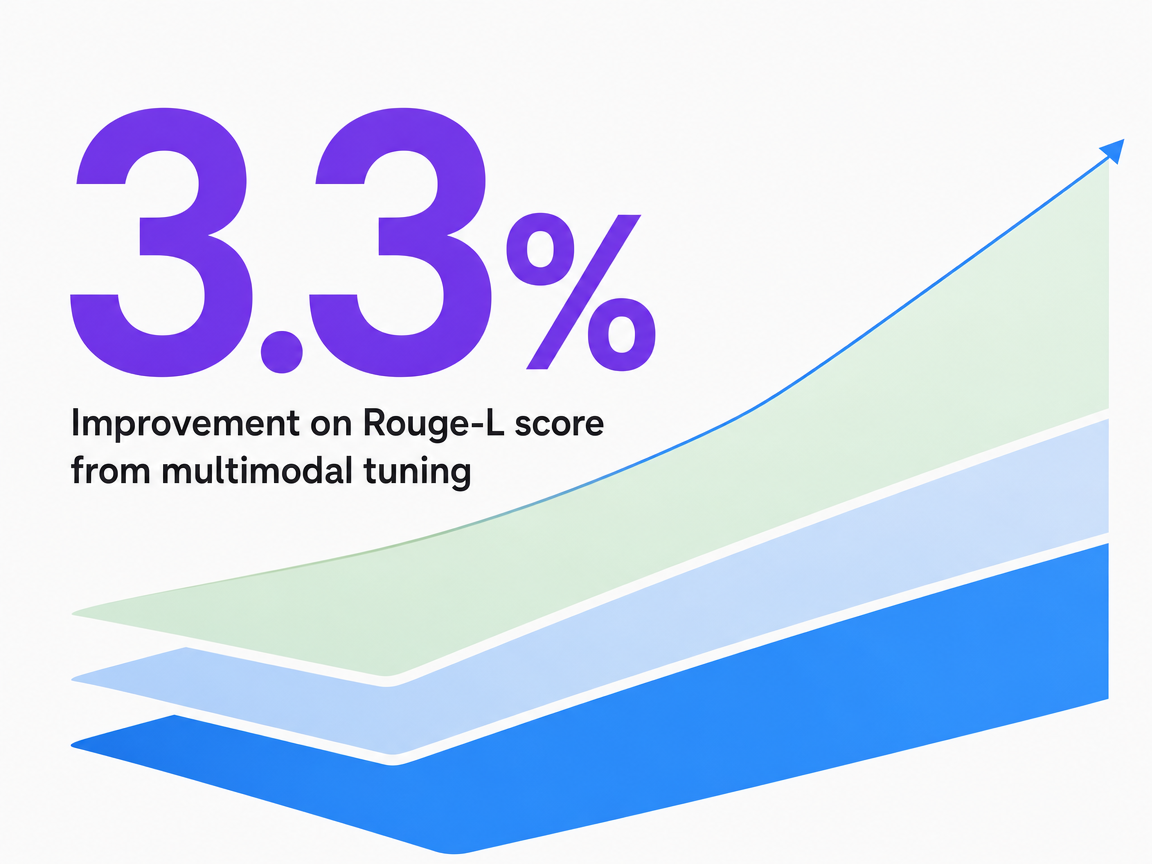 Improvement on Rouge-L score from multimodal tuning
Improvement on Rouge-L score from multimodal tuning
Test AI-driven SEO product description workflows now
Experience faster product description production and measure SEO impact using your live catalog, risk-free for 7 days.
Staying Inside Google's Scaled Content Rules
What Separates Automation From Spam
Google's spam policies do not prohibit automated generation. They prohibit content produced primarily to manipulate rankings without added value. The distinction matters because the same pipeline can produce compliant descriptions or policy violations depending on how it is governed.
The helpful content self-assessment is the operative test. Google asks whether content is original, comprehensive, and worth bookmarking, and it explicitly warns against extensive automation used to produce content on many topics without adding value 1. A pipeline generating 25,000 SKU descriptions from thin PIM data with no editorial gate fits the pattern the policy targets. A pipeline generating from rich structured inputs, running duplicate detection, and routing outputs through a review queue does not.
Three operational tests separate the two:
- Does each description contain information a shopper cannot infer from the product image or title alone: fit, compatibility, materials, use case, care instructions?
- Does the description differ meaningfully across near-variants, or does it recycle the same paragraph with a color swap?
- Is there a documented review process, even if most reviews are automated tier-one checks?
Teams that can answer yes to all three are running automation. Teams that cannot are running a spam engine that happens to use an LLM.
The scaled content abuse rule targets outcomes, not tools. Manual copywriting that produces boilerplate variants across 5,000 SKUs is closer to the policy line than governed generation that produces distinct, attribute-accurate copy. The review layer described in the previous section is what keeps the pipeline on the right side of that line.
Matching Shopper Search Language at the SKU Level
Compliance is not just about avoiding penalties. It is about producing descriptions that earn ranking on their merits, and Google's ecommerce guidance is direct about what that requires: informative product descriptions that match the search terms shoppers actually use 2.
Shopper language rarely matches merchant language. Merchants describe a product by its SKU taxonomy and vendor specs. Shoppers describe the same product by problem, fit, and comparison. A generator prompted only from PIM attributes will produce spec-sheet copy. A generator fed a category-level keyword cluster drawn from search console data, related-search scraping, and marketplace query logs will produce copy that matches the language shoppers type.
The keyword cluster belongs at the category and subcategory level, not the SKU level. Assigning individual keywords to individual SKUs is where teams re-import the manual bottleneck the pipeline was built to eliminate. Cluster once per category, let the generator distribute the language across SKUs, and use the review layer to catch cases where the match drifted.
Throughput Economics: What Two Writers Can Actually Ship
The right way to size a production model is not cost per description. It is writer-hours per SKU and time-to-publish across a full catalog release. Once those two variables are honest, the case for a governed pipeline stops being aspirational.
Manual drafting caps out at roughly 8 to 12 SKUs per writer per day for 250 to 400-word descriptions with attribute lookup and internal review folded in. A governed pipeline changes the shape of the work. Writers stop drafting and start sampling, editing tier-one failures, and setting category-level rules. The reclaimed capacity is the operative number. Deloitte's survey of generative AI users in marketing reports an average of 11.4 hours per week in time savings, roughly a quarter of a working week reallocated to higher-leverage work 9. McKinsey's macro estimate points in the same direction, projecting that generative AI could lift marketing function productivity by 5 to 15% of total marketing spending 6.
The table below sizes those variables across three catalog scenarios a mid-to-large ecommerce team actually faces. Writer-hours-per-SKU covers all in-scope work: attribute cleanup, drafting or review, keyword alignment, and merchandising sign-off. Time-to-publish assumes a two-writer team working the release full-time.
| Catalog size | Model | Writer-hours per SKU | Time-to-publish (two writers) |
|---|---|---|---|
| 500 SKUs | Manual in-house | 0.75 to 1.0 | 3 to 4 weeks |
| 500 SKUs | Governed pipeline | 0.15 to 0.25 | 4 to 7 days |
| 5,000 SKUs | Manual in-house | 0.75 to 1.0 | 7 to 10 months |
| 5,000 SKUs | Governed pipeline | 0.10 to 0.20 | 6 to 12 weeks |
| 25,000 SKUs | Manual in-house | 0.75 to 1.0 | Not feasible without freelance overflow |
| 25,000 SKUs | Governed pipeline | 0.05 to 0.15 | 4 to 8 months |
The manual row on 25,000 SKUs is the honest one. That release does not happen with two writers. It happens with a freelance panel that erodes brand voice, burns budget, and still misses the merchandising calendar. The pipeline row is where a two-writer team becomes a governance team and the catalog release meets the quarter it was scoped for.
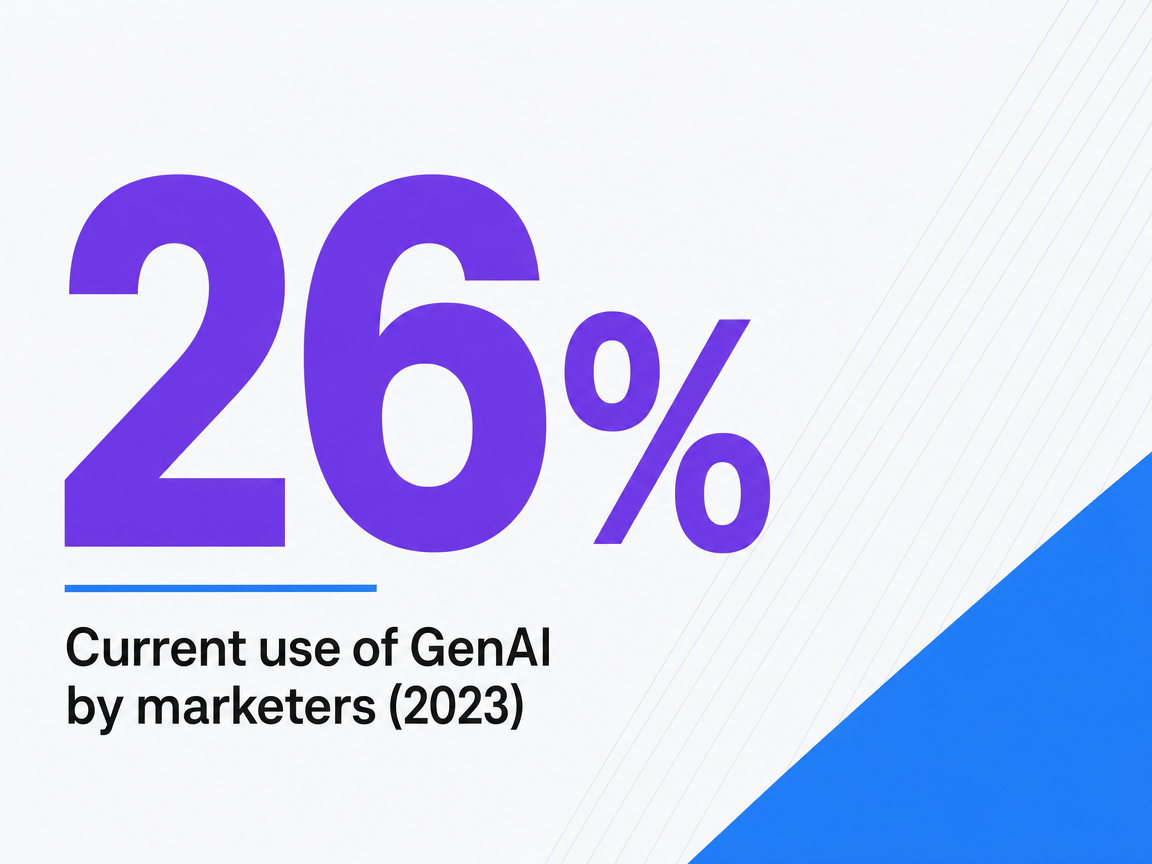 Current use of GenAI by marketers (2023)
Current use of GenAI by marketers (2023)
Reassigning the Writer's Role
The writers who thrive on a governed pipeline stop measuring their week in words shipped. They measure it in categories governed, rules tightened, and drafts routed correctly. That is a different job description, and treating it like the old one is how teams stall halfway through the transition.
Four responsibilities absorb most of the reclaimed hours:
- Category ownership: a writer owns the keyword cluster, brand voice constraints, and attribute completeness thresholds for a set of categories, and revises them as search language and merchandising shift.
- Exception editing: hero SKUs, regulated categories, and any draft that fails a tier-one gate lands in the writer's queue for full human edit rather than a rubber-stamp pass.
- Prompt and rule maintenance: when a category's outputs drift toward generic phrasing or miss a recurring attribute, the writer adjusts the generation instructions rather than editing each draft.
- Sampled QA: a defined percentage of auto-approved drafts pull into a review queue weekly so the writer can catch systemic errors before they compound across thousands of SKUs.
Deloitte's comparative research is the operative evidence that this reassignment produces work consumers accept. Its finding of on-par quality assessments versus professional writers only held where GenAI output was governed 11. The writer's role is what makes that governance real.
See How Leading Teams Scale SEO Product Descriptions—Without Expanding Headcount
Request a walkthrough of workflow automation that accelerates high-volume, on-brand product content—driven by live data and measurable SEO impact—designed for agencies and enterprise ecommerce teams.
Bias, Provenance, and Production-Grade Governance
Bias and provenance are usually filed under compliance. On a generation pipeline running at catalog scale, they are production concerns. A model that consistently under-describes attributes for certain product categories, or that recycles training-data phrasing without a record of where it came from, will surface those failures across thousands of SKUs before a writer sees the pattern.
NIST's bias standard frames the problem as a lifecycle issue rather than a model-selection issue: bias enters through training data, prompt design, evaluation choices, and deployment context, and it has to be measured at each stage 14. For a product description pipeline, that translates into three concrete checks:
- Category coverage: does the generator produce comparable specificity across product classes, or does it write richer copy for high-volume categories and thinner copy for the long tail?
- Attribute selection: does it consistently foreground the same attributes shoppers care about, or does it drift toward whichever fields the training corpus emphasized?
- Language patterns: does it use consistent tone across price tiers, or apply aspirational language only to premium SKUs?
Provenance closes the second gap. NIST's GenAI profile calls for transparency policies documenting the origin of training data and generated content 15. A pipeline that logs which model version, prompt template, input snapshot, and reviewer touched each description gives the team an audit trail when a SKU underperforms, gets flagged, or has to be rolled back. Without those logs, debugging a 25,000-SKU release means guessing.
A 90-Day Path to a Governed Pipeline
McKinsey recommends starting gen AI adoption with a 90-day pilot and a cross-functional group that prioritizes use cases, manages risk, and forces early decisions 7. Product descriptions are a strong first pilot because the inputs are structured, the outputs are measurable, and the review layer is contained inside one team.
- Days 1 through 30 belong to the input layer. Audit PIM coverage against a normalized attribute schema for the two or three highest-revenue categories. Assign keyword clusters at the category level from search console data and marketplace query logs. Capture brand voice as machine-readable constraints rather than a style PDF. Nothing generates yet.
- Days 31 through 60 stand up the drafting engine and the review queue against a single pilot category of 500 to 1,000 SKUs. Configure tier-one automated checks for schema validation, duplicate detection, and keyword coverage. Route tier-two sampled reviews and tier-three hero-SKU edits to the two writers who will govern the pipeline. Track drafts shipped, reviewer time per SKU, and pre-publication rejection rate.
- Days 61 through 90 extend the model to two additional categories and set the standing metrics: writer-hours per SKU, time-to-publish, category-level organic revenue lift, and provenance completeness on shipped drafts 15.
By day 90, the pilot either clears the throughput and quality gates for full rollout or the team has the diagnostic data to fix the input layer before scaling. Platforms such as Vectoron are built around this approval-first loop for teams that would rather configure a governed pipeline than assemble one.
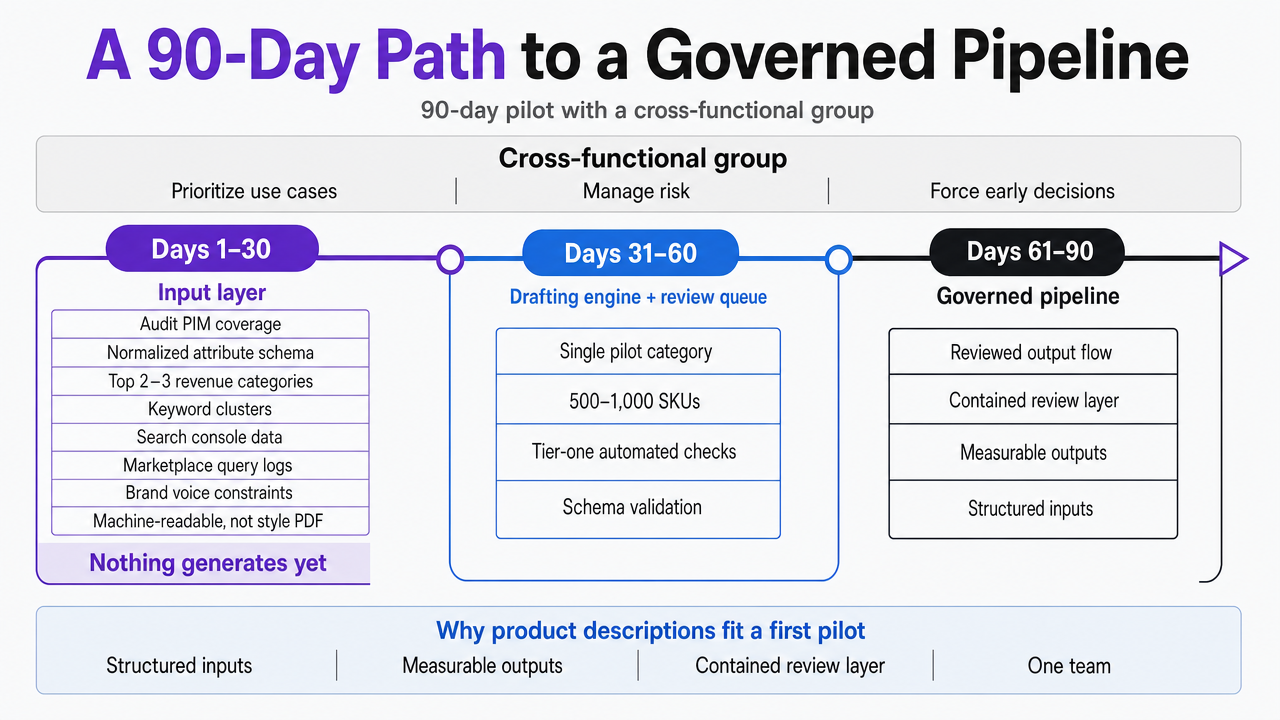 Visualize the three-phase 90-day pilot roadmap the section outlines, matching McKinsey's cited 90-day pilot framing
Frequently Asked Questions
References
- 1.Creating Helpful, Reliable, People-First Content.
- 2.Best practices for ecommerce sites in Google Search.
- 3.Leveraging Large Language Models for Enhanced Product Descriptions in eCommerce.
- 4.A Multimodal In-Context Tuning Approach for E-Commerce Product Description Generation.
- 5.Automated Product Description Generation for E-commerce via Vision-Language Models.
- 6.The economic potential of generative AI: The next productivity frontier.
- 7.How generative AI can boost consumer marketing.
- 8.Marketing and sales soar with generative AI.
- 9.Generative AI's Transformation of Content Marketing.
- 10.Marketing content automation - Deloitte Digital.
- 11.Human-AI marketing collaboration.
- 12.How Generative AI is powering next-gen.
- 13.Generative AI Media Production.
- 14.Towards a Standard for Identifying and Managing Bias in Artificial Intelligence.
- 15.NIST.AI.600-1.GenAI-Profile.ipd.pdf.
- 16.Deloitte Digital's latest research forecasts generative AI's impact on marketing content production.