
Key Takeaways
- AccuRanker delivers on-demand SERP refresh at portfolio scale, closing weekend reporting gaps for agencies managing large keyword sets across multiple sub-accounts 1.
- SE Ranking consolidates rank tracking, backlink monitoring, and site auditing into one contract, matching how mid-market agencies already run performance stacks 8.
- Ahrefs ties keyword movement to referring-domain velocity, exposing the link-acquisition lever that Backlinko's data shows separates the #1 result from positions #2-10 2.
- Semrush surfaces content gaps and template-level audit issues under one contract, addressing text relevance as the top correlation factor in 2024 ranking data 4.
- Nightwatch pulls ZIP, city, and coordinate-level ranks for multi-location clients, preventing national averages from masking underperforming markets in franchise portfolios.
- ProRankTracker prioritizes white-label client portals with custom domains and scheduled delivery, removing the need for a separate reporting vendor 1.
- Advanced Web Ranking exposes ranking data through APIs and scheduled exports, letting agencies with BigQuery or Looker Studio pipelines model rank against pipeline revenue 1.
- seoClarity monitors content relevance and CMS-driven technical regressions at enterprise scale, catching the 21-point gap between canonical and meta robots usage across templates 10.
- Vectoron sits above rank trackers as an execution layer, routing prioritized, approval-gated tasks from six specialist strategists rather than replacing existing data feeds 9.
Why rank tracking became a data feed, not a product
A Head of SEO managing numerous client accounts doesn't face a problem with rank tracking itself; positions are pulled daily, dashboards update, and Google Search Console fills gaps. The real challenge lies in interpreting these shifts: identifying which position changes warrant an analyst's attention, which correlate with backlink velocity or content gaps, and which stem from technical issues like canonical tags. The rank tracker has evolved into a foundational data layer within the agency SEO stack.
The 2024 Search Engine Journal agency report highlights that agencies integrate rank tracking with analytics, backlink analysis, and content audits as a unified performance stack, rather than using it as a standalone tool 8. This shift is further supported by the 2024 Ranking Factors Study, which places text relevance at the top of correlation tables and notes that top-ranking pages average 2,418 backlinks 4. These critical signals often originate outside traditional keyword grids.
For agency operators, this redefines the purchasing decision. The question is no longer "which rank tracker is most accurate?" but "which platform seamlessly integrates into a delivery workflow that already manages backlink intelligence, content auditing, technical monitoring, and client-ready reporting, without requiring additional analyst headcount?"
The tools in this shortlist are evaluated based on their operational utility within a multi-client agency environment. Each entry is scored on specific functions such as enterprise tracking speed, local pack granularity, white-label reporting, backlink correlation, content-gap surfacing, API access, AI-search coverage, and overall execution, rather than a direct feature comparison against tools like Ahrefs or Semrush 1.
How this shortlist was scored against agency delivery economics
Each tool in this list was assessed based on whether it reduces analyst hours per client account or adds complexity to the workflow. This approach moves beyond feature-parity comparisons, categorizing each platform into one of six operational lanes:
- Enterprise tracking speed
- Local pack granularity
- Backlink correlation
- Content-gap surfacing
- API/BI integration
- White-label reporting
These categories align with the feature checklist agencies prioritize when acquiring rank software 1.
Backlink intelligence was given significant weight in the scoring. Backlinko's analysis of 11.8 million Google search results revealed that the #1 result typically has 3.8 times more backlinks than positions #2 through #10 2. The FrontPage Data technical report further clarifies that #1 and #2 URLs hold approximately 3.8x and 2x the backlinks of lower-ranked results on the same SERP 3. While distributions are skewed, this strong correlation indicates that a rank tracker lacking adjacent referring-domain data overlooks a crucial ranking factor.
Content and technical signals also formed a key part of the rubric. The 2024 Ranking Factors Study highlights text relevance as a primary correlation factor 4, and the SEJ agency report confirms that analytics, backlink analysis, and content audits are already integrated into a single stack within most agencies 8. Tools that fail to incorporate these inputs necessitate additional analyst time for compensation.
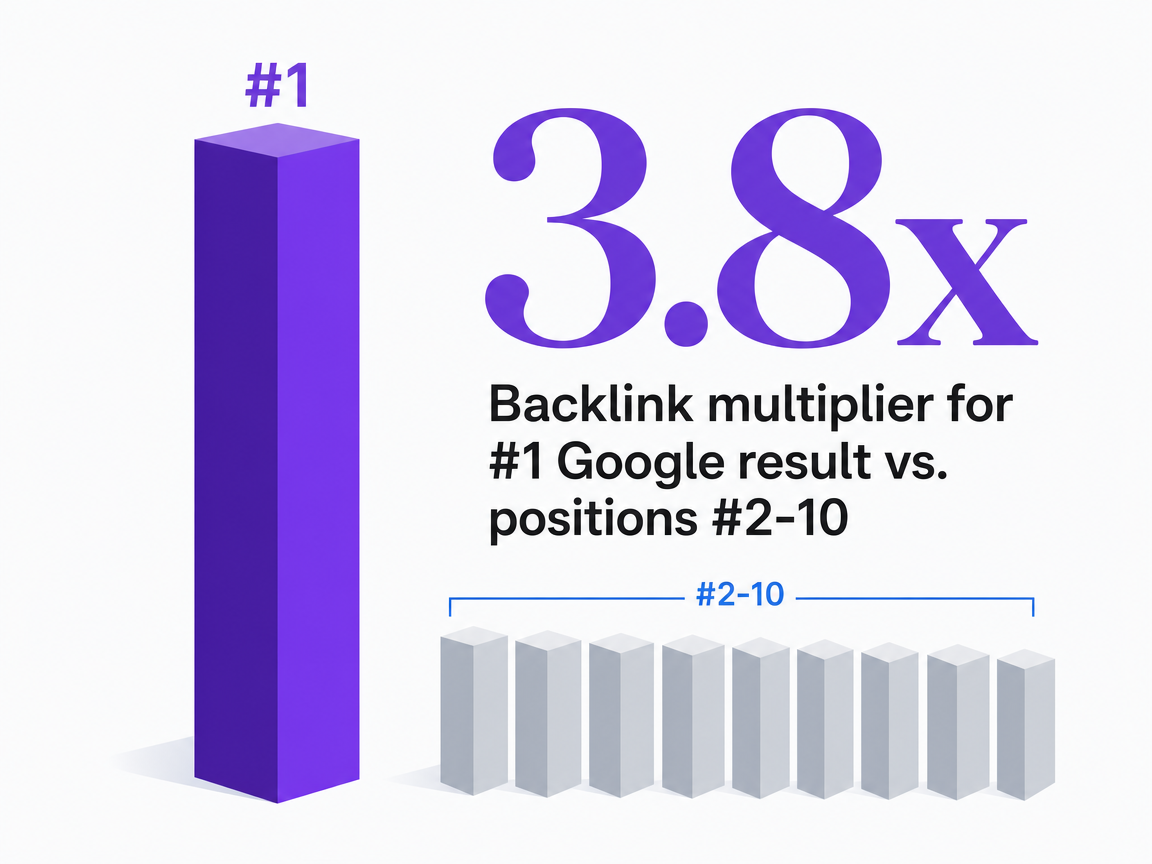 Backlink multiplier for #1 Google result vs. positions #2-10
Backlink multiplier for #1 Google result vs. positions #2-10
AccuRanker: enterprise-speed daily tracking for high-volume portfolios
AccuRanker is included for its refresh speed at portfolio scale. Agencies managing numerous client accounts with extensive keyword sets require a tracker that can repopulate data on demand, avoiding delays. DesignRush's 2025 agency roundup identifies AccuRanker's on-demand SERP refresh as a key feature for agencies 1.
Its operational value is evident in reporting cadence. When a client needs weekend movement data for a large keyword set across multiple sub-accounts by Monday, a tracker with daily batch updates can create reporting gaps. AccuRanker's segmentation, tagging, and share-of-voice views integrate smoothly with Looker Studio and GA4, addressing agency needs for multi-client support, white-label reporting, and BI integrations 1.
The trade-off is its specialized scope. AccuRanker functions primarily as a rank tracker, not a backlink or content-audit platform. It excels as a fast keyword-position feed within a broader SEO stack. Agencies often pair it with a referring-domain source and a content auditor to achieve comprehensive coverage without feature overlap.
SE Ranking: unified rank + backlink + audit for mid-market agencies
SE Ranking is valuable for consolidating three agency invoice line items into one: rank tracking, backlink monitoring, and site auditing. This aligns with how mid-market agencies operate, integrating analytics, backlink analysis, and content audits into a single performance stack rather than managing separate logins 8. For SEO managers overseeing many accounts with tight margins, this consolidation offers significant operational efficiency.
The tracking layer supports multi-client loads, offering sub-accounts, keyword grouping, competitor analysis, and integrations with Google Analytics and Looker Studio. These features meet DesignRush's criteria for agency-critical tools, including multi-client support, white-label reporting, local and global tracking, and BI integrations 1. Its backlink module displays referring-domain trends alongside the keyword grid, addressing the critical role of referring domains in first-page correlation data that standalone rank trackers often miss 5.
The compromise is depth. While SE Ranking's backlink index and site auditor are suitable for mid-market agencies, enterprise portfolios with extensive link-acquisition programs typically supplement it with a dedicated referring-domain source. As a unified solution, it streamlines vendor management without disrupting analyst workflows.
Ahrefs: referring-domain intelligence that ties tracking to link acquisition
Ahrefs is included because it frames rank tracking as an outcome of link acquisition, rather than a standalone metric. For agencies running link-intensive campaigns across multiple accounts, this perspective is crucial. Backlinko's analysis of 11.8 million SERPs found that the #1 result typically has 3.8 times more referring domains than positions #2 through #10 2, and Google's alleged ranking signals consistently place referring domain count high on the correlation table 5. A rank tracker that cannot connect link placements to keyword grid movement leaves a significant lever unmonitored.
Operationally, Ahrefs is effective when an agency's link building and SEO teams collaborate closely. Referring-domain velocity, lost and gained link deltas, and anchor distributions are presented alongside position history. This allows an SEO manager to trace a client's ranking improvement on a commercial term back to specific link placements that closed the referring-domain gap. Site Explorer's competitive views also identify domains from which competitors acquired links, providing actionable insights for outreach teams.
The trade-off is in reporting. Ahrefs excels as an analyst workstation but is less suited as a direct client-facing portal. Agencies typically integrate its data into Looker Studio or a white-label layer for client reports. When compared to a dedicated backlink vendor plus a separate rank tracker, Ahrefs often consolidates costs 1.
Test Full-Fidelity SEO Execution at Scale
Experience live ranking improvements by publishing real client content during your free trial—no limitations, no delays.
Semrush: content-gap surfacing and reporting breadth under one contract
Semrush is featured for its ability to streamline content-gap analysis across client portfolios. For SEO managers needing to justify content briefs, its Keyword Gap and Topic Research modules generate a defensible list of shared terms competitors rank for but the client does not, prioritized by volume and difficulty. This eliminates the need for manual spreadsheet analysis each cycle. This is particularly relevant given the 2024 Ranking Factors Study's emphasis on text relevance as a primary correlation factor 4.
Its comprehensive reporting is another key advantage. Position Tracking, Site Audit, Backlink Analytics, and the My Reports builder are all under one contract, aligning with how agencies integrate analytics, backlink analysis, and content audits 8. White-label PDFs and Looker Studio connectors provide client-facing reports without requiring an additional reporting vendor.
The audit layer is valuable for portfolio-scale operations, especially since WordPress, Shopify, and Wix account for 73% of the CMS market, leading to recurring technical patterns across client sites 10. Semrush's Site Audit identifies these CMS-driven issues—such as canonical conflicts, indexation defaults, and template-level meta problems—at a template level, rather than per URL. This approach is essential for analysts managing a large backlog of accounts efficiently.
Nightwatch: local pack and geo-granular tracking for multi-location clients
Nightwatch is recognized for its ability to pull accurate ranks from thousands of specific geographic points without averaging them nationally. For agencies serving multi-location businesses like dental groups, home services franchises, or law firm networks with numerous offices, this granularity is crucial for delivering precise local reports. It ensures that reports are defensible and provide actionable insights, unlike generalized spreadsheets.
The tracker supports location-level tracking at ZIP, city, and coordinate levels, aligning with DesignRush's criteria for local and global tracking 1. Analysts can group locations by market, region, or franchise cohort and distribute segmented dashboards to stakeholders. Local pack, map pack, and organic positions are displayed in the same grid, allowing SEO managers to identify if a ranking loss stems from a competitor's new Google Business Profile listing rather than an on-page issue.
Its integration capabilities support reporting cadence. Google Search Console and Google Analytics sync into the same location grid, and Looker Studio connectors facilitate data transfer to existing white-label reporting systems 1. This is important because agencies typically run analytics, backlink analysis, and content audits as a combined stack 8; a local tracker that cannot feed into this pipeline would force analysts to reconcile multiple data sources per client.
The limitation is its specialized focus. Nightwatch is a tracking specialist, not a backlink or content-audit platform. Agencies often pair it with a referring-domain source when local clients also engage in link acquisition. Compared to generalist trackers that treat local as an add-on, Nightwatch typically offers superior geo-granularity per dollar.
ProRankTracker: white-label client portals and reporting cadence
ProRankTracker is included for its emphasis on client-facing reports. For agencies that deliver branded portals rather than shared spreadsheets, its white-label reporting, custom domains, and per-client login capabilities eliminate the need for a separate reporting vendor. This aligns with DesignRush's identification of white-label functionality as a core agency selection criterion 1.
The tracking layer supports desktop, mobile, local, and video positions across sub-accounts, with scheduled report delivery configured once per client. This is beneficial for SEO managers handling numerous accounts with varying reporting rhythms. Google Analytics and Search Console integrations feed into the same portal, allowing clients to view rank movement alongside session data without additional exports 1.
The trade-off is analyst depth. ProRankTracker is primarily a reporting-focused tracker, not a backlink or content-audit platform. Agencies typically pair it with a referring-domain source when clients also have link acquisition programs.
Advanced Web Ranking: API and BI feeds for custom analyst workflows
Advanced Web Ranking is recognized for exposing ranking data as a feed rather than solely a dashboard. For agencies with in-house analysts or data engineers who have established Looker Studio or BigQuery layers, its API and scheduled data exports allow ranking positions to integrate with GA4 sessions, GSC clicks, and CRM revenue. This enables modeling rank movement against pipeline data without analysts manually reconciling multiple exports weekly.
The tracking layer supports desktop, mobile, local, and over 170 search engines with configurable refresh intervals. Its share-of-voice and visibility metrics aggregate to sub-account and portfolio views. DesignRush's 2025 agency roundup specifically highlights Advanced Web Ranking for custom reporting and integrations, aligning with agency needs for multi-client support, white-label reporting, local and global tracking, and BI integrations 1. A white-label reporting builder is also available for clients who do not require a custom BI pipeline.
The primary trade-off is the initial setup cost. Agencies without the internal analyst or engineering capacity to utilize the API may find it a competent tracker but at a higher price point than simpler tools. However, when compared to a rank tracker combined with a separate reporting vendor and a custom ETL contract, it often proves cost-effective for agencies that already possess data warehousing capabilities.
See How Leading Agencies Streamline SEO Rankings Tracking at Scale
Connect with our team to review data-driven workflows for managing multi-client SEO performance, approval processes, and reporting—purpose-built for high-volume agency operations.
seoClarity: enterprise content and technical monitoring at scale
seoClarity is included because it prioritizes content and technical signals alongside rankings, which is essential for enterprise agency portfolios. Content Fusion identifies topic gaps and provides relevance scoring at the template level. Clarity Audits crawl at a frequency that detects CMS-driven regressions before new releases, addressing two critical levers, especially given the 2024 Ranking Factors Study's emphasis on text relevance 4.
Its technical layer is crucial due to the inconsistent defaults inherited across web properties. Search Engine Journal's analysis of CMS-driven technical patterns shows canonical tag usage at 68% of desktop pages and meta robots usage at 47% 10. This 21-point disparity directly leads to indexation and duplication issues that an enterprise auditor must identify during client onboarding. A tracker without this diagnostic capability would require analysts to use tools like Screaming Frog for each account, which is not scalable for large client bases.
The main trade-off is price. seoClarity is designed for enterprise portfolios, not smaller agencies. Agencies with numerous accounts and dedicated technical SEO resources can justify the cost by eliminating the need for separate auditing and content-gap tools.
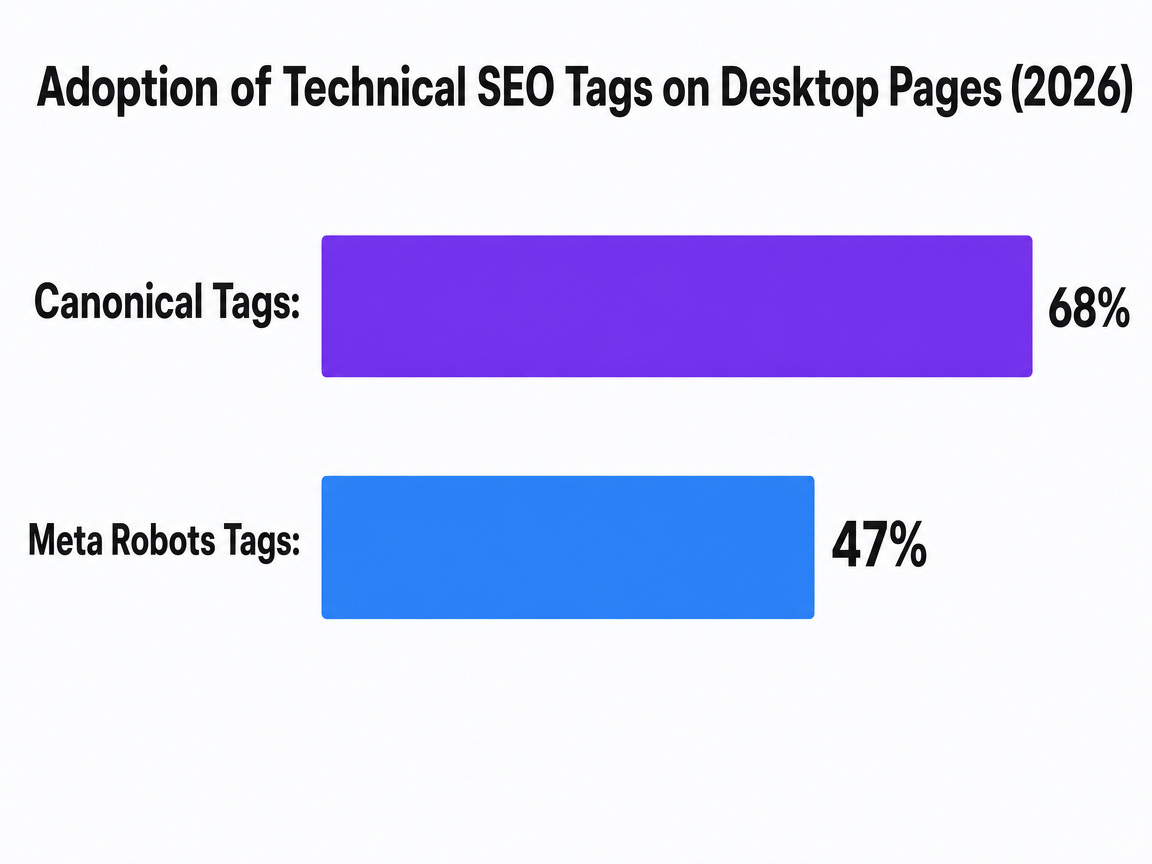 Adoption of Technical SEO Tags on Desktop Pages (2026)
Shows the percentage of desktop pages that utilize canonical tags (68%) and meta robots tags (47%) as of 2026 data, indicating the adoption rates of technical SEO best practices.
Vectoron: the execution layer that consumes ranking data
Vectoron distinguishes itself from the other tools. It is not a rank tracker but an execution layer that processes ranking, backlink, and content data as inputs. It generates prioritized, approval-gated tasks across content, SEO, PPC, backlinks, social, and call intelligence. For an SEO manager overseeing many accounts, this shifts the focus from "which tracker feeds the analyst" to "which platform allows the analyst to apply judgment rather than managing ticket triage."
Its operational fit aligns with existing agency workflows. Analytics, backlink analysis, and content audits are typically integrated into a single performance layer 8. Search Engine Journal's 2024 tools guide identifies AI process optimization as a core competency for future-proof tools 9. Vectoron's six specialist strategists—Content, SEO, PPC, Backlinks, Social, Call Intelligence—interpret ranking movement, referring-domain velocity, and pipeline signals from existing agency systems. They then prioritize actions through a Command Center, routing recommendations for human approval before implementation.
The trade-off is its category. Agencies adopting Vectoron are not replacing tools like AccuRanker or Ahrefs; instead, they are addressing the coordination overhead between these data feeds and the actual work.
Modeling the per-client cost of a fragmented stack vs. a unified layer
Many agencies lack a clear understanding of their per-client tooling costs because invoices arrive from various vendors on different cycles. An SEO manager with numerous accounts using a fragmented stack typically pays for a rank tracker, a backlink source, a content and technical auditor, and a reporting layer. These four contracts correspond to the four capabilities agencies already integrate: analytics, backlink analysis, content audits, and rank data 8. The purpose of modeling this stack is not to declare a winner, but to identify overlapping line items and the associated analyst hours they consume.
The variables below are derived from vendor invoices and utilization reports. Fragmented-stack costs typically scale with tracked keywords and seat licenses, while unified-layer costs scale with client sub-accounts and execution scope.
| Cost driver | Fragmented stack | Unified execution layer |
|---|---|---|
| Rank tracking | x tracked keywords × per-keyword rate | bundled |
| Backlink intelligence | seat license × analyst count | bundled |
| Content and technical audit | crawl volume × per-URL rate | bundled |
| Reporting layer | white-label vendor + BI hours | bundled |
| Coordination overhead | z analyst hours × blended rate | approval workflow replaces triage |
| Named entry point | varies by contract | Vectoron trial at $599/mo |
The "coordination overhead" in the fragmented column often surprises operators. This refers to the analyst hours spent moving data between multiple logins, reconciling exports, and preparing client reports. While rarely tracked as a tooling cost, it's where the unified-layer model demonstrates significant savings. Search Engine Journal's 2024 tools guide emphasizes AI process optimization as a core competency for tools that will endure 9, indicating that the coordination layer is a prime area for agencies to reduce costs. Agencies should input their own vendor invoices and blended analyst rates into this table before renewing any contracts.
If you manage multi-location or franchise clients: local pack coverage vs. reporting overhead
This section addresses agency operators whose client base includes multi-location dental groups, home services franchises, senior living portfolios, and law firm networks—clients whose SEO value is primarily within the local pack, not the national grid.
For this scope, the choice of tracker changes. A national keyword grid averaged across a 60-location dental group can obscure underperforming markets and high-performing franchisees. Location-level tracking at the ZIP, city, and coordinate level is essential for creating defensible monthly reports for franchise operations leads. This is why local and global coverage is a key feature agencies consider 1. Nightwatch specializes in this granularity, while Advanced Web Ranking and SE Ranking offer it as a secondary feature for accounts requiring API feeds or unified auditing.
Reporting overhead is a significant challenge. A 60-location client requires 60 segmented dashboards, not a single national roll-up. Any tracker that cannot push per-location views into a white-label layer will incur substantial analyst hours per location per cycle. Therefore, when evaluating local trackers, prioritize Looker Studio or GSC integration depth over the sheer number of geo-points tracked.
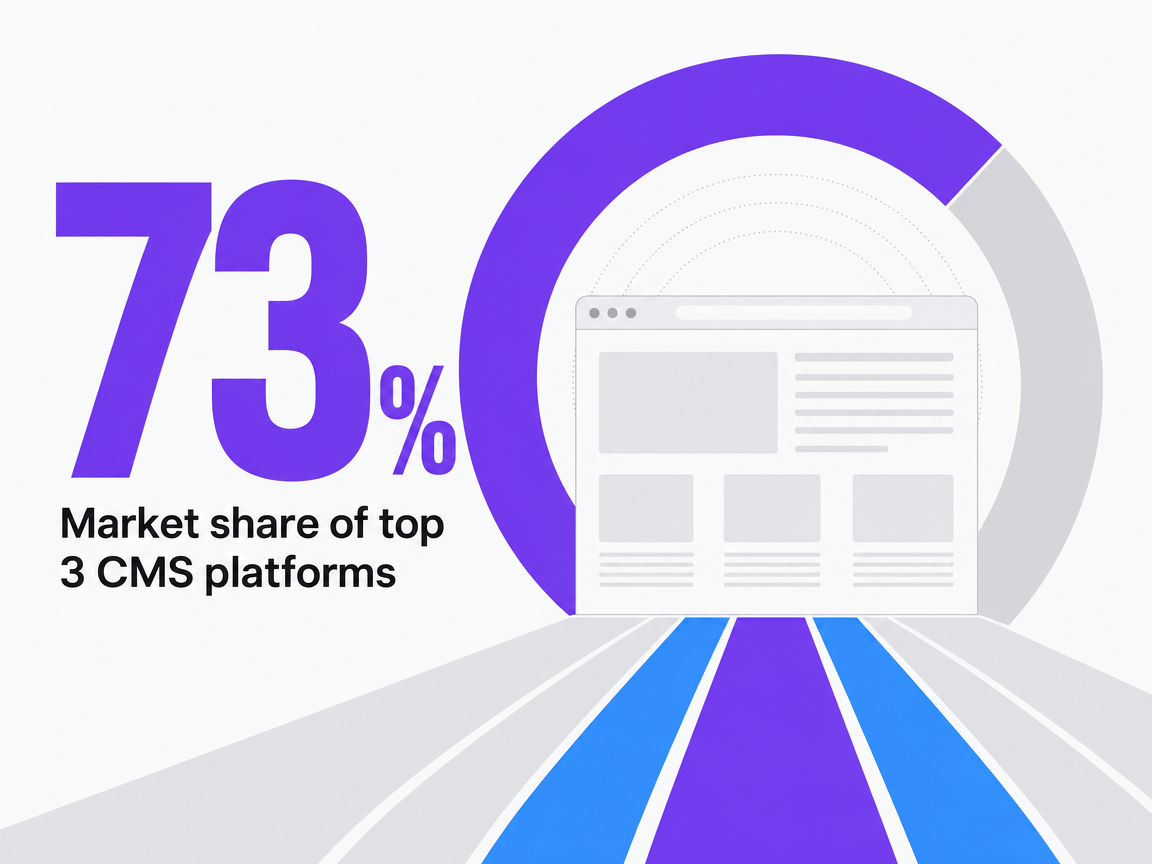 Market share of top 3 CMS platforms
Market share of top 3 CMS platforms
Frequently Asked Questions
References
- 1.Discover the Top 6 Agency Rank Tracking Tools for 2026.
- 2.We Analyzed 11.8 Million Google Search Results. Here's What We Learned About SEO.
- 3.We Analyzed 11.8 Million Google Search Results. Here's What We Learned About SEO (Technical Report).
- 4.Ranking Factors (2024 Study).
- 5.Google's 200 Ranking Factors: The Complete List (2026).
- 6.How Google's Algorithm Evaluates Backlinks in 2026 | Backlynk.
- 7.State Of SEO 2024: Agency Report.
- 8.SEO Performance In 2024.
- 9.2024 SEO Guide: Tools To Boost Your Strategy & Efficiency.
- 10.3 CMS Platforms Control 73% Of The Market & Shape Technical SEO Defaults.