
Key Takeaways
- SEO and GEO share the same foundation: crawlability, indexability, and trust signals determine both ranked placement and eligibility for citation inside generative answers, so framing them as rivals mis-scopes the retainer.
- GEO shifts the optimization target from URL slots to sentence-level citations, rewarding passage-level structure, source attribution inside copy, and factual density over traditional keyword and page-level tuning.
- A defensible QBR uses a three-layer scorecard—foundation, SEO outcomes, and GEO citation share against an agreed query set—so downstream actions attribute to both surfaces on the same window 2.
- Compliance sets the delivery ceiling: the FTC's October 2024 reviews rule, NIST AI 600-1 governance, and roughly 50% of generated statements lacking supportive citations force a source-verification QA loop before publish 3, 5, 10.
- The integrated SEO+GEO pod with AI-assisted production under human approval is the only model that survives the Nth-location test, because templates, prompt sets, and dashboards amortize instead of duplicating per rooftop.
The false binary agencies keep budgeting around
The framing of SEO versus GEO has become a budgeting mistake dressed up as a strategic question. Heads of SEO are being asked to choose between two disciplines that share the same underlying substrate: crawlability, indexability, technical soundness, and demonstrable trust. Google itself treats AI Overviews and AI Mode as eligibility problems, not separate optimization channels. Pages that cannot be crawled, indexed, or trusted for a snippet will not surface in a generative answer either.
What has changed is the visibility surface, not the foundation. Generative engines add a citation layer where source authority, factual clarity, and answer-level presence determine whether a client's brand appears inside the response or gets summarized away. The Princeton/ACM KDD 2024 paper that formalized GEO measured up to a 40% visibility lift from targeted content changes under benchmark conditions, though the authors are explicit that the result is experimental and does not guarantee transfer across verticals, models, or YMYL queries 1. That caveat matters more than the headline number when the client is a regional dental group or a behavioral health network.
The delivery question for an agency is not which discipline wins the budget line. It is how a pod covers both surfaces without doubling specialist hours, how reporting reconciles ranked links with cited answers, and how compliance risk is contained when AI-assisted production scales across a portfolio. Treating GEO as a bolt-on invites cost bloat. Treating it as a replacement for SEO breaks the eligibility chain that feeds it. Integration is the only model that survives contact with a P&L.
What GEO actually optimizes that SEO does not
Traditional SEO optimizes for placement in a ranked list of ten blue links. GEO optimizes for inclusion inside a synthesized answer. The unit of visibility changes from a URL slot to a sentence-level citation, and that reframes what a specialist is actually producing.
The Princeton/ACM KDD 2024 paper that introduced GEO-bench tested content-side interventions—citation additions, quotation from authoritative sources, statistical grounding, fluency edits, and structured evidence blocks—against generative-engine responses. The authors report visibility gains of up to 40% under benchmark conditions, though they are explicit that the figure is experimental and does not guarantee transfer across verticals, models, languages, or YMYL queries 1. For an agency running a dental DSO or a behavioral health network, the useful takeaway is not the number itself but the causal mechanism: certain content patterns raise the probability that a generative engine will quote a page rather than paraphrase past it.
That probability is the new optimization target. Rankings still describe whether a URL is retrievable; citation share describes whether the brand's language survives into the answer. The two are correlated but not identical. A page can rank in position three and never be cited, and a page that ranks in position eight can be quoted verbatim if its passages are cleaner, more attributable, or more directly responsive to the query.
Four surfaces distinguish GEO work from SEO work in practice:
- Passage-level structure matters more than page-level structure, because generative engines extract spans rather than titles.
- Source attribution inside the copy—naming institutions, dates, and study conditions—raises citation likelihood in ways meta tags cannot.
- Factual density per paragraph replaces keyword density as the tuning variable, since models reward passages that resolve a question without ambiguity.
- Answer-adjacent monitoring—did the client appear, in which engines, with what surrounding context—replaces the rank-tracking cadence that has anchored SEO reporting for two decades.
None of this displaces SEO. The GEO-bench interventions only reach the model if the page is crawlable, indexable, and eligible for retrieval in the first place. What changes is the deliverable a Head of SEO signs off on: a page that ranks and gets cited, measured against both surfaces on the same production cycle.
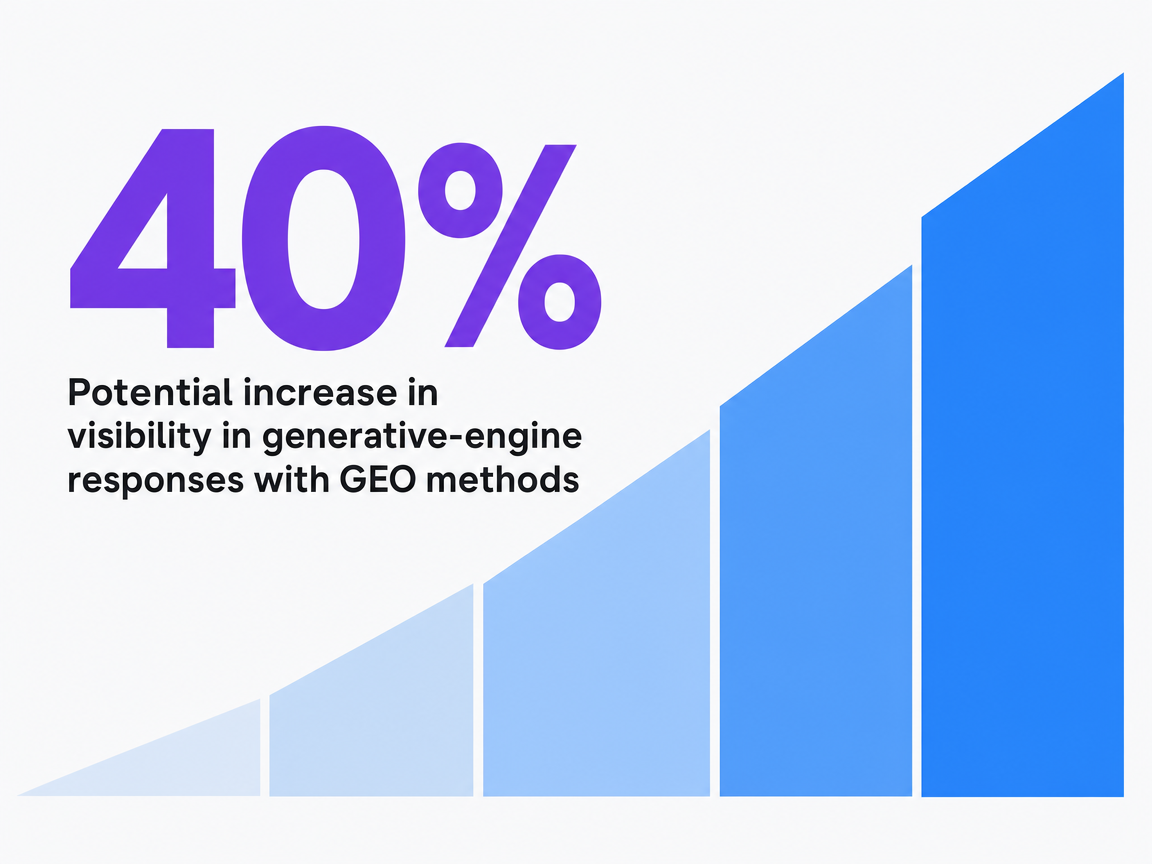 Potential increase in visibility in generative-engine responses with GEO methods
Potential increase in visibility in generative-engine responses with GEO methods
Where the two disciplines share the same foundation
Google's own guidance on AI Overviews and AI Mode is unusually clear on this point: no special markup, no separate optimization channel, no distinct SEO variant. A page qualifies for a generative answer through the same eligibility mechanics that qualify it for a featured snippet—crawlable HTML, indexed URL, technically sound rendering, useful content, and demonstrable trust signals. GEO does not bypass that gate. It competes for citation slots inside answers that only draw from pages already past it.
That shared foundation collapses most of the imagined budget conflict. Technical SEO work—log-file analysis, render diagnostics, canonical hygiene, internal linking, structured data, Core Web Vitals—produces the retrieval eligibility that both surfaces depend on. E-E-A-T signals like author credentials, cited primary sources, and update timestamps raise both ranking probability and citation likelihood in generative answers. A dental group's location page that fails mobile rendering does not rank, and it does not get quoted in an AI answer about implant costs in its metro either.
The practical implication for a Head of SEO is that the existing technical audit, content quality bar, and trust-signal checklist do not get thrown out. They get extended. Passage structure, source attribution inside body copy, and factual density are added on top of the same crawl and trust foundation, not built alongside it. A pod that already runs disciplined technical SEO has done roughly 70% of the work required for GEO eligibility before a single answer-tracking tool is licensed.
What needs to be added is measurement of the second surface and QA for the content patterns generative engines actually reward. What does not need to be added is a parallel technical stack, a duplicate audit cadence, or a separate crawlability workstream. The foundation is the same; only the top of the funnel widens.
Test advanced SEO and geo workflows now
Experience real-time, publishable results comparing SEO and geo strategies—no commitment required.
A dual scorecard Heads of SEO can defend in a QBR
Reporting is where the false binary does the most damage. Ranking dashboards do not describe answer presence, and answer-tracking tools do not describe organic sessions or conversions. A Head of SEO who walks into a quarterly review with only one of the two surfaces is now underreporting the client's actual visibility, and clients notice. Stanford HAI's 2025 Index found that the share of surveyed organizations using generative AI in at least one business function rose from 33% in 2023 to 71% in 2024 2. That is a demand-side signal, not a GEO ROI claim, and it is enough to explain why a client's marketing committee is now asking where their brand appears inside ChatGPT, Perplexity, and Google's AI Mode alongside where it ranks in the ten blue links.
The scorecard that survives contact with a QBR has three layers rather than two competing columns:
- The foundation layer covers the shared inputs both surfaces depend on: crawlability, index coverage, Core Web Vitals, E-E-A-T signals, and factual accuracy at the passage level.
- The SEO layer covers the traditional outcomes—non-branded rankings, organic sessions, click-through rate on tracked query sets, and conversions attributed through analytics.
- The GEO layer covers the answer surface: citation share across tracked engines and prompt sets, answer presence rate on priority queries, brand mention frequency inside responses, and qualified downstream actions such as calls, form fills, and bookings that follow generative-answer exposure.
Two reporting habits keep the scorecard defensible. First, every GEO metric is scoped to a query set the client agreed to at the start of the quarter, the same way non-branded ranking baskets are scoped for SEO. Citation share on 200 tracked prompts across three engines is a number a Head of SEO can defend; a generic 'we improved AI visibility' claim is not. Second, downstream actions get measured against both surfaces on the same attribution window, so a call driven by an AI answer that cited the client's location page shows up in the same pipeline view as a call driven by an organic session. That single view is what lets a QBR conversation move from 'did we rank' to 'did the client's brand show up where buyers looked, and did those buyers act.'
The practical constraint is that citation share and answer presence require a monitoring cadence pods have not staffed for. Weekly rank checks become weekly prompt runs against a fixed query set, with delta tracking on which engines cited which pages and which competitor pages displaced the client. That work is repetitive, structured, and well-suited to AI-assisted execution under a specialist's review—which is exactly where the integrated pod model, covered in the next section, absorbs the load without adding headcount.
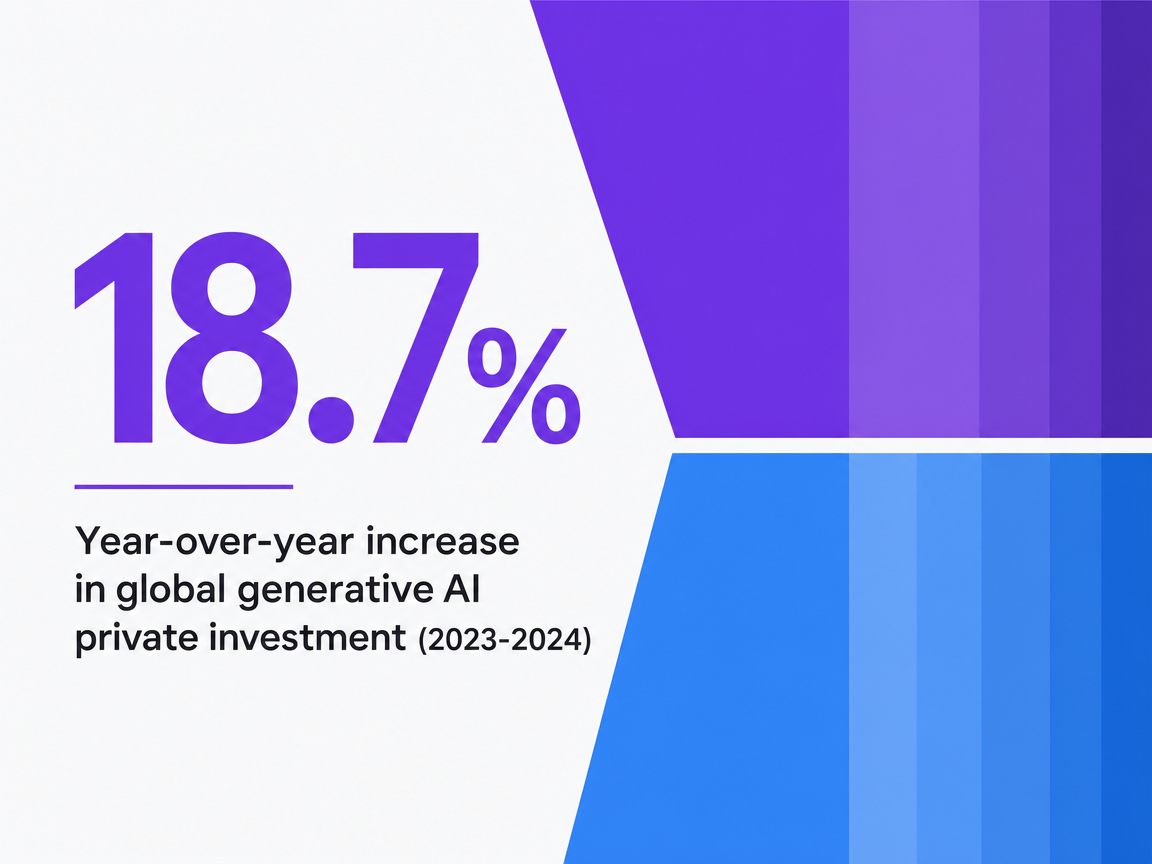 Year-over-year increase in global generative AI private investment (2023-2024)
Year-over-year increase in global generative AI private investment (2023-2024)
Compliance as a delivery constraint, not a legal footnote
Compliance is what determines whether AI-assisted GEO production can actually run at portfolio scale. For agencies serving legal, behavioral health, dental, senior living, home services, and healthcare clients, three overlapping constraints now shape the workflow before a single passage ships: the FTC's Consumer Reviews and Testimonials Rule, NIST's Generative AI Profile, and the citation-accuracy gap documented in generative answers themselves.
The FTC rule went into effect October 21, 2024 and carries civil-penalty exposure for knowing violations 5. It prohibits creating, selling, buying, or disseminating fake or false reviews and testimonials, including AI-generated reviews that misrepresent the reviewer or their experience, and it bans incentives conditioned on a particular sentiment 4, 8. The Sitejabber action in November 2024 confirmed that AI involvement does not soften the truthfulness obligation; the platform was pursued for presenting ratings from consumers who had not yet received the products or services 6. For an agency, that changes the operating rules around local landing pages, testimonial modules, review-request automations, and any AI workflow that repurposes customer language. Endorsements must reflect honest opinion and cannot make claims the marketer could not otherwise substantiate, and material connections between the brand and any endorser must be disclosed 7, 9.
NIST released the Generative AI Profile, NIST AI 600-1, on July 26, 2024, extending the broader AI Risk Management Framework to generative systems 3. It is voluntary, but for regulated verticals it has become the reference document clients cite when asking how AI-assisted content is governed. Agencies that cannot describe their evaluation, documentation, and human-review steps in NIST-aligned language are being asked to fix that gap before renewal.
The third constraint is the one most agencies still treat as someone else's problem: the citations inside generative answers are not reliably accurate. Stanford's verifiability research found that roughly 50% of generated statements lacked supportive citations, and only about 75% of the citations that were provided actually supported the claim they were attached to 10. That gap has two operational consequences for a Head of SEO. When the client's page is cited, the surrounding claim may misrepresent what the page actually says, and correcting it requires monitoring the answer text, not just the citation link. When AI is used to draft passages the pod will publish, the same failure mode applies in reverse: cited sources may not support the drafted claim, and shipping without verification exposes the client to substantiation risk under FTC endorsement guidance and, in regulated verticals, to clinical or legal review failures.
The delivery response is a QA loop, not a disclaimer. Three checkpoints absorb the constraint without stalling production:
- Every AI-drafted passage that includes a statistic, quotation, or attributed claim gets a source-verification pass before human approval, with the reviewer confirming the cited source actually supports the specific sentence.
- Every review, testimonial, or endorsement asset flowing through the pod carries a provenance record documenting who said it, when, under what incentive, and with what disclosed connection.
- Every client engagement in a regulated vertical maps its content workflow to the NIST AI 600-1 action categories, so the governance answer exists before the client's compliance officer asks for it.
That loop is the reason compliance belongs inside the delivery model rather than in a legal appendix. It sets the ceiling on how fast AI-assisted production can move and defines which steps a human specialist cannot delegate. Sections that follow assume this loop is running; where it changes an operational decision, the constraint is named again.
If you manage multiple locations: staffing an integrated SEO+GEO pod
This section shifts to Heads of SEO running multi-location, franchise, and portfolio accounts, where the delivery math changes and the compliance surface widens. A single-location client can absorb a bolt-on GEO specialist as a line item. A 40-location DSO, a five-state behavioral health network, or a home-services franchisor with 120 rooftops cannot. At that scale, the question is not whether GEO belongs in the retainer but how the pod is staffed, sequenced, and governed so that citation monitoring, passage-level QA, and the compliance loop from the previous section run across every location without a linear cost increase.
Portfolio operators also change what a specialist is optimizing for. Location pages multiply the surface where a passage can be cited, and generative engines pull answers about "implant costs in [metro]" or "intensive outpatient near me" from whichever location page resolves the query most cleanly. That means passage structure and source attribution have to be templatized at the location level, not authored one page at a time, and citation-share tracking has to roll up by market as well as by client.
Three delivery models compared for portfolio economics
Three staffing models are in play across agency portfolios right now. Each has a different cost curve as the Nth location is added, and each covers the SEO+GEO surface differently. The comparison below uses variables rather than invented dollar figures, because specialist hours and blended rates vary by agency; the sourced obligations are fixed.
| Delivery model | SEO-only pod | SEO pod + separate GEO bolt-on | Integrated SEO+GEO with AI-assisted production under human approval |
|---|---|---|---|
| Specialist hours per client per month | H (baseline) | H + G (added GEO hours, roughly linear per location) | H + a fraction of G (shared production, AI-assisted drafting and monitoring) |
| AI Overview eligibility work | Partial (technical SEO covers retrieval; passage-level structure not systematic) | Yes, but duplicated across two workstreams | Yes, embedded in the same production cycle |
| Citation share and answer-presence monitoring | No | Yes, on a separate cadence | Yes, on the same weekly cadence as rank tracking |
| Compliance QA loop for FTC reviews rule and NIST AI 600-1 | Partial (reviews only) | Partial (GEO drafts often reviewed outside the SEO QA loop) | Yes, single loop covering both surfaces 3, 5, 8 |
| Marginal cost to add the Nth location | Low, but leaves generative surface uncovered | High and roughly linear | Low and sub-linear as templates and monitoring assets are reused |
- The SEO-only pod underprices the retainer because it ignores a visibility surface clients are increasingly asking about.
- The bolt-on model prices correctly for one client and breaks at portfolio scale, because a separate GEO specialist duplicates the audit, the reporting cadence, and the compliance review for every location.
- The integrated model is the one that survives the Nth-location test, because passage templates, prompt sets, citation-monitoring dashboards, and the source-verification QA step are built once and reused across the portfolio.
Where AI-assisted production earns its keep under human approval
AI-assisted production earns its keep in the repetitive, structured work that a human specialist should not be doing by hand at portfolio scale. Three tasks fit that description without triggering the compliance ceiling set earlier:
- Weekly prompt runs against a fixed query set across ChatGPT, Perplexity, and Google's AI Mode, with delta tracking on which pages were cited.
- Passage-level drafting of location-page updates against a templated structure that a specialist approves before publish.
- Source-verification passes that flag any statistic, quotation, or attributed claim whose cited source does not actually support the sentence, so the human review step focuses on judgment rather than lookup.
What AI-assisted production does not do is ship anything without approval. Every draft, every prompt-run summary, and every review or testimonial asset routes through the same human gate the pod already runs for SEO deliverables. That gate is what keeps the NIST AI 600-1 governance answer intact and the FTC substantiation obligation covered 3, 7. The economic result is that the pod adds a second visibility surface without adding a second headcount per client, which is the only way the retainer math works past ten locations.
See How Unified SEO and GEO Strategy Impacts Client Results at Scale
Request a data-backed assessment of your agency’s current SEO and geographic execution processes, with actionable recommendations for scaling multi-location campaigns efficiently.
Pricing and packaging without doubling cost per client
Retainer math is where the integration argument gets tested. If GEO is priced as a separate scope, the client sees a second line item, questions the overlap with existing SEO fees, and often refuses the increase. If GEO is absorbed silently into the existing retainer, margin compresses on every account and the pod runs at a loss on the visibility surface clients are increasingly asking about. Neither outcome is stable across a portfolio.
Three packaging patterns hold up in practice:
- The first repositions the retainer around visibility outcomes rather than deliverable counts, so the scope of work covers both ranked placement and citation share against an agreed query set, with pricing tied to the size of that query set and the number of tracked engines rather than to hours spent.
- The second keeps the base SEO retainer intact and adds a GEO module priced at a fraction of a bolt-on specialist, justified by the shared production cycle and reused monitoring infrastructure described earlier.
- The third is a portfolio tier for multi-location clients where per-location pricing declines as templates, prompt sets, and citation dashboards amortize across rooftops.
Two pricing inputs deserve explicit client-facing language at contract time. Regulated verticals carry a documented governance step mapped to NIST AI 600-1, which is billable review time rather than overhead 3. Review, testimonial, and endorsement workflows carry a provenance and substantiation step required by the FTC's 2024 rule and endorsement guidance, and that step is scoped into the retainer rather than assumed away 5, 7. Naming both keeps the price defensible when procurement asks why the integrated retainer costs more than a commodity SEO package and less than a bolt-on GEO engagement.
The 90-day integration plan for existing pods
Integration fails when it is announced as a strategy and succeeds when it is sequenced as a delivery change. A 90-day plan gives an existing pod enough runway to add the second visibility surface without breaking the reporting cadence clients already expect, and it isolates the compliance loop so that AI-assisted work does not ship ahead of the QA step.
Days 1 through 30 are diagnostic and infrastructure work. The pod agrees a fixed query set per client—typically 100 to 300 prompts scoped to non-branded intents that map to revenue—and runs a baseline pass across ChatGPT, Perplexity, and Google's AI Mode to establish current citation share, answer presence, and which competitor pages are displacing the client. Existing technical audits get extended rather than rerun: passage-level structure, source attribution inside body copy, and factual density become audit line items on the same crawl and E-E-A-T checklist. Governance documentation is drafted against NIST AI 600-1 action categories so the human-review gate, source-verification step, and provenance record are named before the first AI-assisted draft moves 3.
Days 31 through 60 are production and monitoring. Location-page and priority-topic templates are rebuilt to the passage patterns generative engines reward, with AI-assisted drafting routed through the same approval gate the pod runs for SEO deliverables. Weekly prompt runs replace ad-hoc answer checks, and delta tracking on citation share joins the rank-tracking dashboard on the same cadence. Review, testimonial, and endorsement workflows are audited against the FTC's 2024 rule and endorsement guidance, with provenance records added to any asset touching AI-assisted repurposing 5, 7.
Days 61 through 90 are reporting and pricing. The dual scorecard replaces the single-surface QBR deck, downstream actions are attributed against both surfaces on the same window, and the retainer is repriced or repackaged against the visibility scope the client can now see measured. Pods that complete the sequence enter quarter two with citation share on the same weekly rhythm as rankings and a governance answer that survives a client compliance review—which is the operational baseline the rest of the market is still assembling.
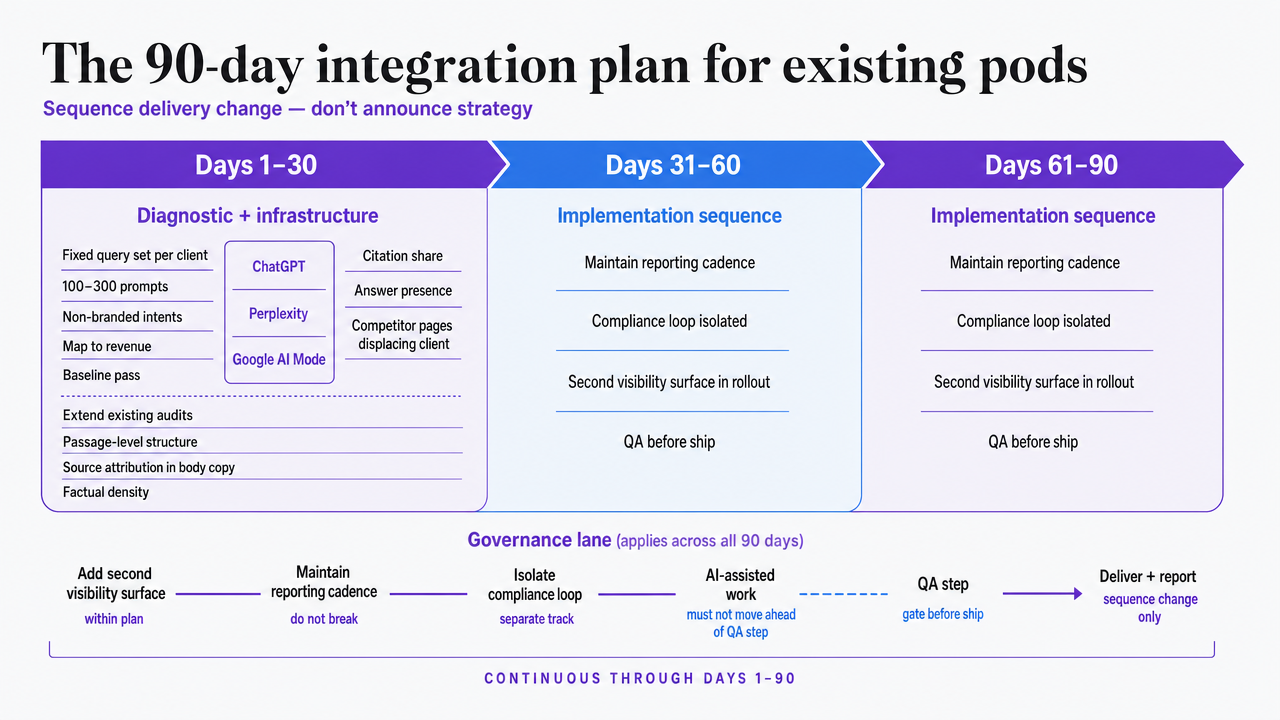 Process infographic mapping the three sequential 30-day phases described in the section, so readers can see the integration sequence at a glance
Frequently Asked Questions
References
- 1.GEO: Generative Engine Optimization.
- 2.The 2025 AI Index Report.
- 3.AI Risk Management Framework.
- 4.Federal Trade Commission Announces Final Rule Banning Fake Reviews and Testimonials.
- 5.The Consumer Reviews and Testimonials Rule: Questions and Answers.
- 6.FTC Order Against AI-Enabled Review Platform Sitejabber Will Ensure Consumers Get Truthful, Accurate Information.
- 7.FTC's Endorsement Guides: What People Are Asking.
- 8.16 CFR Part 465: Trade Regulation Rule on the Use of Consumer Reviews and Testimonials (Final Rule).
- 9.Disclosures 101 for Social Media Influencers.
- 10.Generative Search Engines: Beware the Facade of Trustworthiness.