
Key Takeaways
- AccuRanker delivers fast, on-demand position accuracy that matters most when a one-spot shift at the top of a commercial query becomes a same-day revenue event 13.
- Semrush Position Tracking wins on workflow consolidation, giving mixed-channel agencies one platform for rankings, research, backlinks, audits, and paid intelligence rather than four stitched tools 14, 15.
- STAT handles six-figure keyword portfolios with full SERP composition and share-of-voice segmentation, making it the depth pick for enterprise and programmatic SEO teams 13.
- Nozzle measures pixel real estate and feature ownership across the rendered SERP, surfacing competitive shifts that traditional position numbers miss entirely 15, 12.
- SE Ranking reduces analyst hours per client through user roles, white-label reporting, and a client portal, lowering marginal delivery cost across mid-market rosters 15, 12.
- Local Falcon's geo-grid sampling shows how map-pack rankings shift by physical distance from a location, giving multi-location operators actionable spatial resolution 13.
- LLMrefs tracks which prompts trigger AI Overviews and which domains get cited, addressing a visibility state where cited pages capture materially more clicks 2, 13.
- Advanced Web Ranking collapses reporting hours across large client rosters through templated white-label deliverables and scheduled client-portal access 15, 12.
Why 'competition' on the SERP stopped meaning position
Pew Research's March 2025 study of U.S. Google users offers the cleanest read yet on what an AI Overview does to click behavior. When an AI-generated summary appeared at the top of the results, users clicked a traditional organic link on just 8% of visits, compared with 15% on visits without a summary. Clicks on the source links inside the AI summary itself landed at 1% 1. The sample covered real search sessions, not opinion, and the behavior held across 58% of users who saw at least one AI summary that month 1.
For an agency delivering SEO across a client portfolio, that pattern changes what a ranking tool has to do. A page can hold position one on an informational query and still lose the click if the AI Overview satisfies the intent above the fold. A competitor that never ranks in the top ten can still be quoted inside the summary. Position, by itself, no longer maps to visibility, and visibility no longer maps to traffic.
The competitive surface has fragmented into AI answers, feature blocks, local packs, and traditional links, each with its own click economics. A SERP competition ranking tool that reports only position numbers is measuring one lane of a multi-lane road. The rest of this piece evaluates eight tools against that reality, starting with the criteria that actually separate them at agency scale.
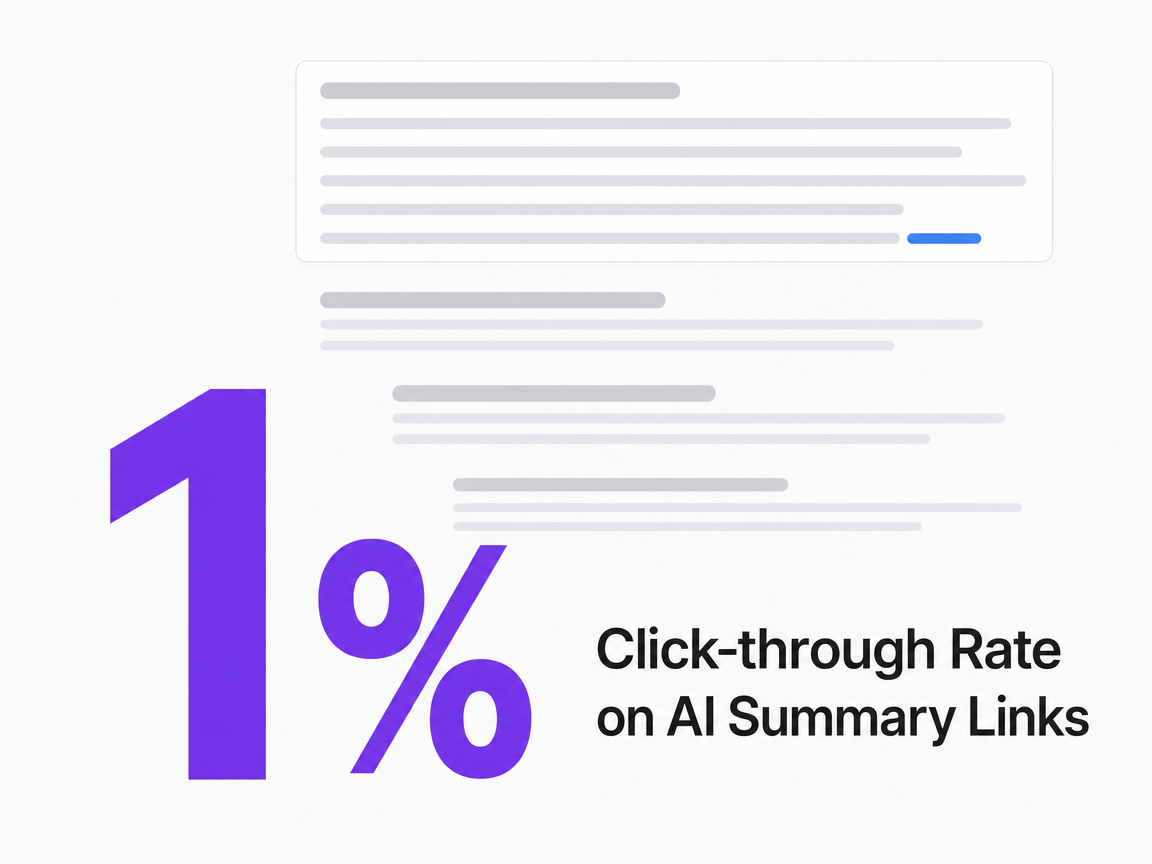 Click-through Rate on AI Summary Links
Click-through Rate on AI Summary Links
Four dimensions that separate agency-grade trackers from the rest
Most vendor comparisons rank tools on feature counts. That framing misses what actually breaks at agency scale. Four dimensions do the real sorting.
- SERP feature and AI visibility depth. A tracker has to detect the surfaces Google itself categorizes, not just blue-link positions. Google's Search Console documentation defines dozens of search appearance types, from rich results to video carousels to AI-driven answer blocks, and treats them as distinct performance categories 3, 19. Tools that still report a single position number per keyword are stripping out most of the signal.
- Portfolio-scale accuracy and update cadence. An agency tracking 40 clients with 500 keywords each needs consistent daily refreshes across geographies and devices, not sampled updates that shift when volume spikes. Practitioner testing across live client accounts consistently flags accuracy and update speed as the first filters that separate viable trackers from unusable ones 13.
- Reporting and client-workflow throughput. Automated white-label reports, alerting, and multi-user permissions determine how many accounts one analyst can service. Zapier's 2026 comparison singles out SE Ranking on collaboration and Advanced Web Ranking on reporting for this reason 15.
- Integration with execution systems. SERP data that stops at a dashboard is overhead. Tools that expose APIs, alerts, and structured exports let ranking signals feed content and PPC workflows directly 18.
Test SERP competition strategies with real outputs
See measurable SERP shifts by deploying live, production-ready content during your trial period.
The eight picks
AccuRanker: speed and accuracy when position still decides revenue
AccuRanker earned its reputation on one thing: fast, precise position data on demand. Practitioner testing across live client accounts in 2026 still ranks it first for accuracy and update speed among dedicated trackers, ahead of broader suites 13. For queries where AI Overviews are absent or suppressed, that speed maps directly to revenue decisions.
The reason is baseline click distribution. First Page Sage's aggregated CTR data shows the top three organic positions still capture more than two-thirds of clicks on queries where they hold visible ground, and the #1 organic result pulls 19 times the clicks of the top paid ad 5. Where the SERP is still a traditional stack, a one-position move at the top is a measurable revenue event, and knowing about it in hours rather than days changes what an agency can act on.
The pressure on that top-position value is real, though. GrowthSRC's 200,000-keyword study recorded a 17.92% decline in organic CTR across positions #1 through #5 between 2024 and 2025 6. The rank still moves the needle; the needle itself has narrowed.
Where AccuRanker breaks at scale: it is a rank tracker, not a SERP intelligence platform. Feature detection and AI Overview visibility are lighter than what specialist tools offer, so agencies pair it with something that watches the surrounding surface.
Semrush Position Tracking: the suite bet for mixed-channel agencies
Semrush Position Tracking is not the fastest or the deepest rank monitor on the market, and that is not the reason agencies buy it. It sits inside a platform that also covers keyword research, backlinks, site audits, content gap analysis, and paid search intelligence, which is the reason it keeps landing in the top tier of 2026 comparisons scored across all-in-one capability 14, 15.
For a Head of SEO managing delivery across accounts that mix SEO, PPC, and content, the argument is workflow consolidation rather than best-in-class tracking. One login, one keyword database, one seat structure. Practitioner reviews describe Semrush as "heavy but unmatched" when the alternative is stitching four separate tools into a client reporting pipeline 12.
Position Tracking itself supports device and location segmentation, SERP feature detection, cannibalization alerts, and share-of-voice calculations against a defined competitor set, which is more than adequate for most client work outside enterprise-scale portfolios.
Where it breaks at scale: refresh cadence on large keyword sets lags dedicated trackers, and AI Overview visibility remains a coarse signal compared with tools built specifically for LLM citation monitoring. Agencies with programmatic sites or heavy AI-answer exposure typically layer a specialist tracker on top.
STAT: enterprise SERP depth for programmatic and long-tail portfolios
STAT is the tool that shows up when the keyword count crosses six figures. It is built for enterprise SEO teams and agencies running programmatic or long-tail portfolios where sampling is not acceptable and daily refreshes across every keyword are the baseline expectation. The 2026 testing-based comparison from SEO Agency USA names STAT as the pick for enterprise scale specifically because of that depth 13.
The depth is not just refresh volume. STAT surfaces full SERP composition per keyword, tracks ownership across every visible feature, and segments share of voice by intent, market, and device without forcing analysts to rebuild dashboards for each cut. For a portfolio with 200,000 tracked terms across multiple markets, that structural discipline is what makes the data usable rather than a dump.
Where it breaks at scale: STAT is priced and configured for enterprise volume, so it is overbuilt for agencies whose typical client tracks a few hundred keywords. The interface also assumes an analyst who knows what segmentation they want; it is not a self-serve reporting tool for account managers. Agencies that adopt it usually pair it with a lighter reporting layer for client-facing deliverables.
Nozzle: SERP feature and pixel visibility at scale
Nozzle takes a different premise than most trackers: what matters is not the position number but the pixel real estate a result occupies on the actual rendered SERP. Zapier's 2026 guide selects Nozzle for precise, pixel-aware tracking, and the practitioner comparison at One Little Web calls it "enterprise-level SERP depth" for teams that need to see the full feature landscape, not just blue links 15, 12.
The measurement approach lines up with how Google itself categorizes visibility. Search Central documentation defines dozens of search appearance types, each with distinct presentation and CTR economics 3, 19. Nozzle tracks ownership and share across those surfaces at scale, so an analyst can answer questions like which competitor gained pixel share on a keyword cluster last week even when nobody moved in the traditional ranking.
The reporting is built for teams that write their own queries against the underlying data warehouse. That is a strength for agencies with an analyst who can work in SQL or BigQuery, and a barrier for teams that expect templated dashboards out of the box.
Where it breaks at scale: it demands technical fluency to extract full value. Non-technical account teams struggle to self-serve.
SE Ranking: agency collaboration and client-workflow throughput
SE Ranking is the tool agencies pick when the operational bottleneck is not data quality but analyst hours per client. Zapier's 2026 comparison names it the best rank tracker for agencies specifically because of collaboration tooling: user roles, project permissions, white-label reporting, and a client portal that offloads routine status checks 15. The One Little Web review echoes that positioning, framing it as a mid-market choice for teams that need multi-user workflows without enterprise pricing 12.
The tracking itself is competent rather than differentiating. Daily updates, SERP feature detection, competitor tracking, and local pack monitoring all sit inside the platform, along with lighter research and audit tools that reduce the number of adjacent subscriptions an agency needs to maintain.
The economics matter more than the feature list. When one analyst can service more accounts because reporting is automated and clients pull their own dashboards, the marginal cost per client drops. That is a different value proposition than accuracy or feature depth, and it is the one that governs delivery margin.
Where it breaks at scale: SERP depth and AI Overview coverage trail specialist tools. Enterprise portfolios usually outgrow it.
Local Falcon: geo-grid coverage for local and multi-location work
Scope shift: this section is for agencies running local and multi-location portfolios, where the competitive surface is the map pack rather than the ten blue links.
Local Falcon is built around geo-grid tracking. Instead of one ranking per keyword per market, the tool samples rankings across a matrix of physical points around each business location, so an agency can see that a client ranks #3 in the pack near the office and #14 three miles east. The 2026 SEO Agency USA comparison names Local Falcon the pick for local geo-grid coverage, and practitioner reviews consistently place it in the local-first category rather than the general rank-tracker category 13.
For a franchise, dental group, home services roll-up, or senior living operator with dozens of locations, that spatial resolution is the difference between a report that says "you rank fifth" and one that says "you rank fifth at the centroid and drop off entirely two miles north." The second version is actionable at the listings and citations layer.
Where it breaks at scale: it is a local specialist. Informational, national, and AI Overview visibility all sit outside its remit and require a separate tracker.
LLMrefs: citation tracking inside AI Overviews and LLM answers
The strongest evidence for treating citation status as a first-class metric comes from Seer Interactive's tracked measurement of informational-query CTR with AI Overviews present. Between June 2024 and September 2025, organic CTR on those queries fell from 1.76% to 0.61%, and cited pages received materially more clicks than uncited ones on the same SERPs 2. Being inside the AI answer, not just ranking below it, is now a distinct visibility state with its own CTR economics.
LLMrefs is one of the specialist tools built to measure that state. The 2026 SEO Agency USA comparison names it the pick for AI search citation tracking, and practitioner reviews in the same year describe an emerging category of trackers focused on visibility inside AI-generated answers rather than the ranked list beneath them 13, 16.
Operationally, that means tracking which prompts trigger AI Overviews, which domains and URLs get cited, how citation sets shift over time, and where the client's pages sit relative to the sources the model actually names. That data feeds a different kind of optimization: entity coverage, source authority, and structured answers, rather than title-tag tuning.
Where it breaks at scale: the category is young. Coverage across LLM surfaces beyond Google's AI Overview is uneven, and methodologies vary by vendor.
Advanced Web Ranking: reporting throughput for large client rosters
Advanced Web Ranking gets picked when the constraint is not data acquisition but data presentation. Zapier's 2026 guide names it the best rank tracker for reporting, and the One Little Web review calls it "trusted by agencies for its polished reports and scalable tracking" 15, 12. Both descriptions point at the same operational reality: an agency with 50 client accounts spends more analyst time assembling deliverables than analyzing them, and the reporting layer is where hours actually leak.
The tool ships with a deep library of customizable, white-label report templates, scheduled delivery, and a client portal that reduces ad-hoc reporting requests. Tracking itself covers daily updates, SERP feature detection, competitor sets, and local segmentation, at a scale that supports large keyword portfolios per account.
The value calculation is different from a purely accuracy-driven purchase. If templated reporting collapses one hour of monthly analyst work per client across a 50-client roster, the tool has paid for itself before its ranking accuracy matters.
Where it breaks at scale: the interface reflects its long tenure in the market, and AI Overview coverage is less developed than in newer specialist tools. Reporting is the strength; cutting-edge SERP surface intelligence is not.
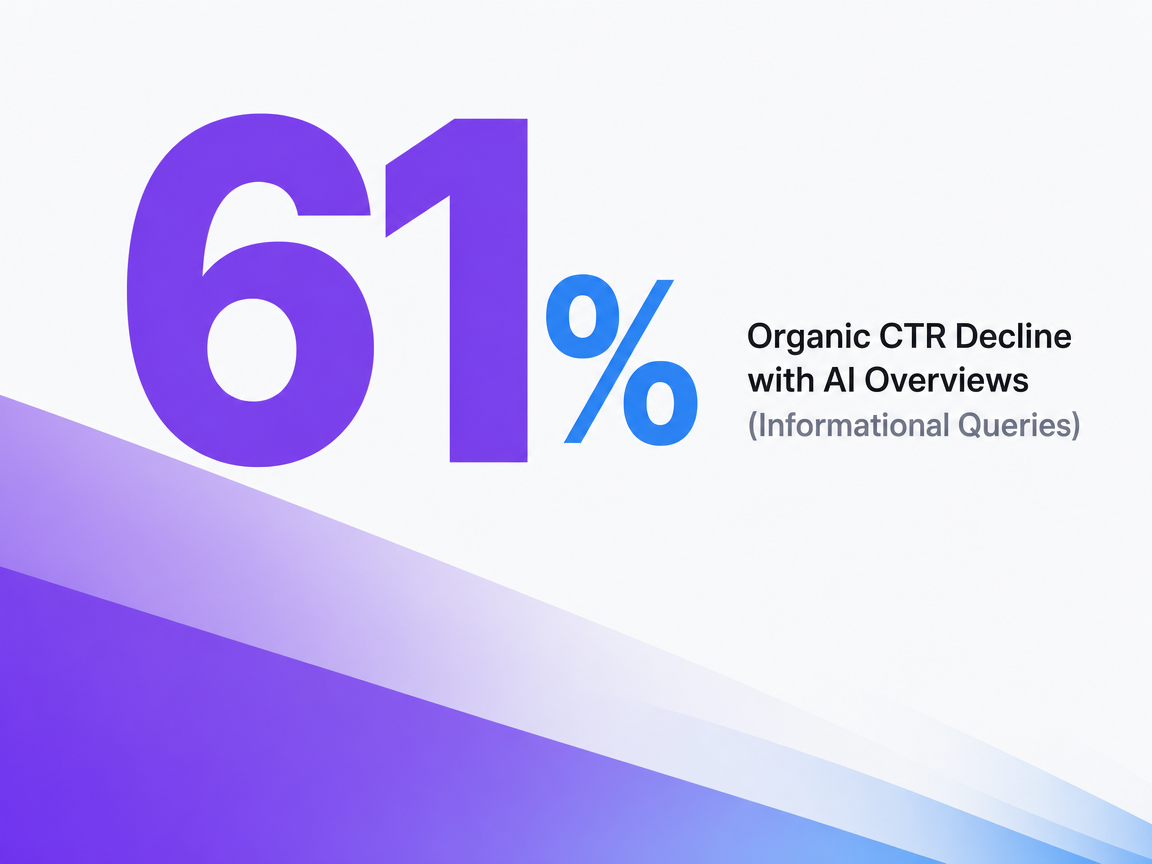 Organic CTR Decline with AI Overviews (Informational Queries)
Organic CTR Decline with AI Overviews (Informational Queries)
Matching tools to agency operating models
No single tracker fits every delivery model, and the 2026 comparisons make that explicit by assigning tools to distinct operator profiles rather than crowning one winner 13, 15. Four profiles cover most agency portfolios, and each one weights the four dimensions from earlier differently.
- Local and multi-location heavy. Agencies whose revenue concentrates in map-pack visibility across dozens of physical locations need geo-grid resolution first and national keyword tracking second. Local Falcon anchors this profile, usually paired with a lighter general tracker for the branded and informational queries that still sit outside the pack 13.
- Informational content heavy. Portfolios built on blog and resource traffic take the hardest hit from AI Overviews, where Seer measured informational-query CTR collapsing from 1.76% to 0.61% between June 2024 and September 2025 2. This profile pairs a citation-aware tool like LLMrefs with a suite such as Semrush to connect AI visibility to content gaps 13, 15.
- Enterprise and programmatic. Six-figure keyword counts across markets rule out sampled data. STAT for depth, Nozzle for pixel-aware feature ownership, and AccuRanker for on-demand accuracy form the core stack 12, 13, 15.
- AI-answer visibility focused. Agencies whose clients compete inside AI Overviews and LLM answers lead with LLMrefs and layer Advanced Web Ranking or SE Ranking underneath for reporting throughput to the client roster 13, 15.
See How Leading Agencies Benchmark SERP Competition at Scale
Connect with experts to explore advanced SERP competition ranking workflows purpose-built for agencies managing multi-client SEO. Learn how to centralize analysis, speed up approvals, and maintain oversight across high-volume portfolios.
If you manage a portfolio: cost-per-tracked-keyword vs. reporting hours saved
Scope shift: this section is for the Head of SEO calculating tool spend across a client roster, not per-project ROI on a single account.
Tool cost is usually framed as cost-per-tracked-keyword, which is the wrong denominator at portfolio scale. The variable that actually governs delivery margin is analyst hours per client per month, and the largest slice of those hours goes to reporting assembly rather than SERP interpretation. 2026 practitioner comparisons treat reporting throughput, alerting, and integrations as first-order selection criteria for exactly this reason 15, 18.
Three variables set the calculation, and each agency plugs its own numbers in: (1) fully loaded analyst hourly cost, (2) reporting and status hours per client per month before automation, and (3) how many of those hours a tool's templated reports, client portal, and alerts actually collapse. When a reporting-focused tracker removes an hour per client across 40 accounts, the recovered analyst capacity typically dwarfs the per-keyword line item, even before factoring in the accuracy gains that reduce rework on client escalations 15.
Score tools against hours-saved-per-client, not per-keyword price. The per-keyword number is a rounding error at scale.
Turning SERP intelligence into approved work
A dashboard is not a deliverable. The tools above generate ranked-priority signals every day: a competitor gained pixel share on a money cluster, a page dropped out of an AI Overview citation set, a location fell off the map pack two miles from the storefront. Whether any of that becomes revenue depends on how quickly the signal turns into a published change on a client site.
That handoff is where agency delivery leaks the most time. 2026 practitioner comparisons flag alerting and integration as first-order criteria specifically because SERP data has to reach the workflow that produces the fix, not sit in a tab an analyst opens on Monday 18. Google Research's CAS model reinforces the same point at the measurement layer: clicks, attention, and satisfaction are distinct signals, and treating them as one number obscures which change to ship next 4.
Practically, an execution layer sits downstream of the trackers. It reads the signals they surface, ranks the work by expected impact, routes each recommendation for human approval, and publishes the approved change across content, on-page, or listings. Vectoron plays that role for agencies that want SERP intelligence to end in shipped work rather than in another status meeting.
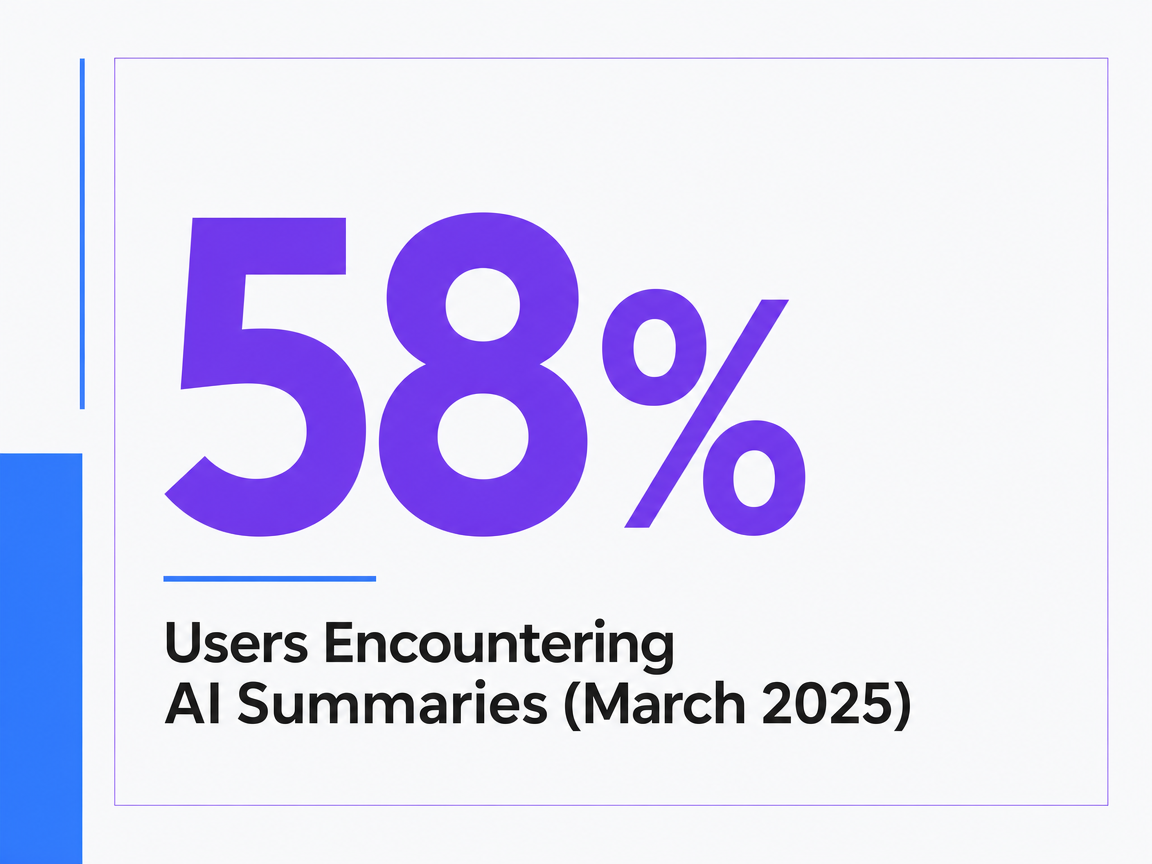 Users Encountering AI Summaries (March 2025)
Users Encountering AI Summaries (March 2025)
Frequently Asked Questions
References
- 1.Do people click on links in Google AI summaries?.
- 2.AIO Impact on Google CTR: September 2025 Update.
- 3.Google Search Appearance | Google Search Central | Documentation | Google for Developers.
- 4.Incorporating Clicks, Attention and Satisfaction into a Search Engine Result Page Evaluation Model.
- 5.Google Click-Through Rates (CTRs) by Ranking Position.
- 6.Google Organic CTR 2025 [New Study of 200K Keywords].
- 7.Pew Research Confirms Google AI Overviews Is Eroding Web Ecosystem.
- 8.Google's AI Overviews are cutting off the oxygen to the web.
- 9.Surprising no one, new research says AI Overviews cause massive drop in search clicks.
- 10.1% click-through rate: How Google AI Overviews is killing publishers.
- 11.Google's AI summaries are ending search sessions and reducing click-through behavior.
- 12.15 Best Rank Tracking Software We're Using for 2026.
- 13.Best Rank Tracker Tools Comparison 2026: 16 Trackers.
- 14.Top 10 Best Search Ranking Software: 2026 Comparison.
- 15.The 12 best rank tracker tools.
- 16.14 best rank tracker software I'm using for SEO in 2026.
- 17.15 Best Keyword Tracking Tools For 2026: AI & Pixel Rank.
- 18.11 Best Rank Tracking Software in 2026 (Compared).
- 19.Search appearance - Google Search Central Documentation.