
Key Takeaways
- Botify tackles crawl scale for domains exceeding 100,000 URLs, reconciling log files with crawl data to expose orphaned templates and wasted crawl budget on enterprise sites.
- Ahrefs Enterprise delivers referring-domain intelligence at portfolio depth, supporting competitive link-gap analysis via API since referring domains and Domain Rating correlate strongest with position 12.
- Semrush Enterprise tracks GEO and AI Overview visibility 15, showing which queries trigger generative surfaces and how citation share shifts when rankings stay stable but clicks drop.
- seoClarity consolidates reporting and client rollups across 100+ domains, replacing manual deck assembly with templated, permissioned dashboards that free analyst hours for actual analysis.
- Conductor maps content inventories against topical clusters and integrates brief workflows, addressing coverage as an increasingly predictive on-page signal per Search Engine Journal's 2024 study 2.
- STAT provides ZIP-level daily rank precision for multi-location businesses, surfacing local pack and Maps signals that national trackers obscure for franchise and DSO portfolios.
- Vectoron handles AI execution orchestration with approval-gated workflows across content, SEO, backlinks, PPC, and social, compressing the fix segment from weeks to days.
The Three-Layer Split in Site Ranking Software
Backlinko's analysis of 11.8 million Google search results found the #1 organic result carries an average of 3.8x more backlinks than positions #2 through #10 6. This significant gap highlights why rank-tracking software alone is insufficient. Knowing a client is at position seven is merely a status update; understanding that this position reflects a deficit in referring domains compared to the top result provides a clear directive for action.
The site ranking software category has evolved into three distinct layers, and agency Heads of SEO often engage with all three, whether explicitly planned or not.
The first layer is rank monitoring: this involves daily or weekly position tracking across various keyword sets, devices, and locations. This is the most commoditized layer, and often where agencies initially focus their procurement efforts.
The second layer focuses on ranking-factor diagnostics: this includes tools like crawlers, backlink indexes, content scoring, and SERP feature intelligence. These tools explain the underlying reasons for position changes. Correlation research from a 2024–2025 study of millions of SERPs 1 and Search Engine Journal's 2024 content data study 2 consistently point to link authority, topical coverage, and technical health as key diagnostic factors.
The third layer is execution orchestration: these are tools designed to bridge the gap between a diagnosed problem and its implemented solution. Historically, this layer relied on human effort—briefs, writers, development tickets, and outreach specialists. Increasingly, this function is being automated through software.
Agencies that only budget for the first layer often find themselves paying analysts to manually perform tasks that fall into the second and third layers. The seven tools discussed below are categorized by the layer they address and the specific bottleneck they aim to remove.
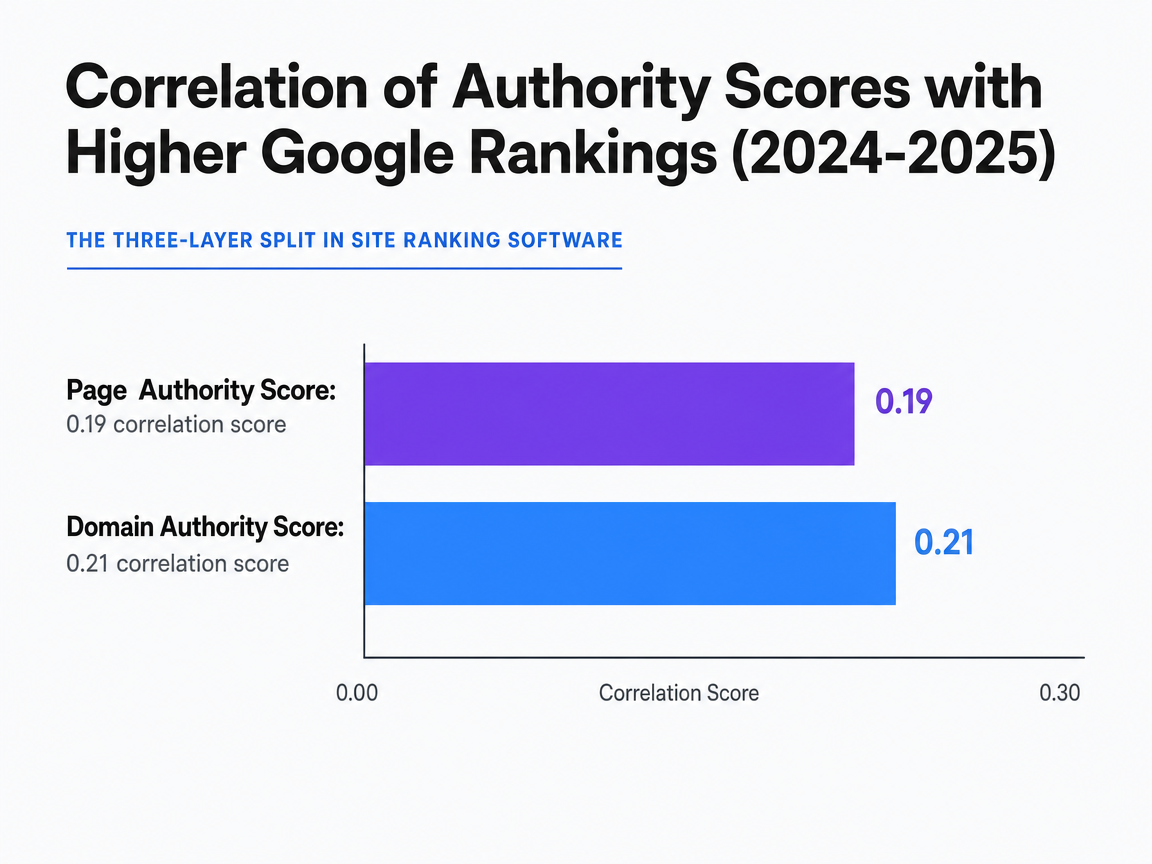 Correlation of Authority Scores with Higher Google Rankings (2024-2025)
Data from a 2024-2025 study shows the Spearman correlation scores for Page Authority Score (PAS) and Domain Authority Score (DAS) with higher search engine rankings.
Why Portfolio-Scale Tooling Budgets Are Shifting
The global SEO software market, valued at $86.1 billion in 2025, is projected to reach $293.54 billion by 2034, demonstrating a compound annual growth rate of 14.6% 7. This growth indicates a fundamental shift in how agencies allocate resources to improve rankings, rather than simply an increase in agencies purchasing more individual software seats.
The economic rationale is clear. A peer-reviewed analysis of individual search behavior revealed that dropping from rank 1 to rank 2 on the same page can reduce click-through rates by one-third to two-thirds, depending on the query 3. Each drop in position represents a quantifiable revenue loss for the client. Consequently, every hour an analyst spends manually reconciling rank drops across numerous domains is an hour not spent actively addressing and closing those gaps.
Agencies managing 20 to 300 client sites have encountered limitations with the traditional seat-based software model. Adding an analyst to manage another 15 domains scales linearly. In contrast, implementing a crawler that can ingest an entire portfolio, or an AI execution layer that deploys approved fixes via a fixed subscription, offers non-linear scalability. Procurement discussions are evolving from "which rank tracker should we buy?" to "what combination of tracking, diagnostics, and execution software will minimize our cost to maintain a top-three position?" The following seven tools are presented in the context of this evolving question.
The Seven Tools, Mapped to the Bottleneck Each Removes
Botify — Crawl Scale for Large Domain Portfolios
Crawl budget becomes a critical concern when an agency manages a client with 400,000 indexable URLs and complex JavaScript rendering issues. Botify is designed to address this specific challenge: crawling and rendering domains at a scale where conventional site auditors either fail or provide overly sampled, unhelpful reports.
Botify's key differentiator is its ability to ingest log files alongside crawl data. This allows for a direct comparison between how Googlebot actually navigates a site and the crawl map generated by Botify. This comparison quickly reveals orphaned templates, wasted crawl budget on faceted URLs, and rendered content that never gets indexed. For enterprise e-commerce, publishers, and directory-style clients, these issues often conceal significant ranking opportunities.
Enterprise tool comparisons categorize Botify specifically for "massive-scale technical SEO," distinguishing it from tools focused on content or backlink workflows 15. This aligns with its procurement reality: agencies typically acquire Botify not for rank tracking, but because a single large retail client's URL count exceeds the rest of their portfolio combined, and no other crawler can complete the job efficiently.
A key consideration is suitability. Agencies whose largest client has fewer than 50,000 URLs may find themselves paying enterprise prices for unused capacity. In such cases, a combination of Screaming Frog and a smaller SaaS crawler remains a viable alternative.
Ahrefs Enterprise — Referring-Domain Intelligence at Portfolio Depth
A 2026 correlation study of 100,000 pages identified referring-domain count (0.74), Domain Rating (0.68), and content depth (0.62) as the three strongest signals within the entire ranking-factor set 12. Given that two of these three are backlink metrics, there's a strong diagnostic case for investing in a dedicated referring-domain intelligence tool, rather than treating link data as a secondary feature within a broader suite.
Ahrefs Enterprise specifically addresses the challenge of maintaining accurate and comprehensive link data across numerous client domains simultaneously. Its rapid index refresh rate and robust API access establish it as an authoritative source for backlink data across a portfolio, supporting both diagnostic dashboards and outreach initiatives. The enterprise tier's BI integration is a practical advantage over the standard product, allowing link data to be consolidated with rank and revenue data for portfolio-level analysis 15.
For agencies, a primary use case is competitive gap analysis at scale. If a client ranks fourth in a commercial category, the critical question isn't whether authority matters, but rather which specific referring domains the top three competitors acquired in the last 90 days, and which of those are realistically attainable. Ahrefs Enterprise provides these answers with a speed unmatched by manual research.
However, link data alone is diagnostic, not executional. It identifies the gap, but closing it still requires an outreach or digital PR function, which operates outside the tool itself.
Semrush Enterprise — GEO and AI Overview Visibility Tracking
The search ranking landscape has expanded beyond traditional organic results. A client might hold position three in the ten blue links but still lose clicks to an AI Overview that prominently features a competitor. Tracking this requires a different measurement approach than conventional rank tracking, and Semrush Enterprise has been proactive in developing solutions for this.
Enterprise tool comparisons specifically highlight Semrush Enterprise for its "GEO / AI search visibility tracking" as a distinguishing feature among major platforms 15. This functionality allows agencies to monitor which queries trigger AI Overviews for a client's keyword set, identify the sources cited within those overviews, and track shifts in citation share over time. For agencies whose clients report traffic drops despite stable rankings, this reporting layer provides crucial answers.
An additional benefit is its extensive keyword and SERP feature breadth. Semrush's deep index enables portfolio-level pattern detection, such as a new SERP feature rolling out across an industry vertical or a competitor gaining featured snippets for commercial queries, making these trends visible before they impact downstream traffic reports.
A limitation is that GEO tracking across vendors is still evolving. Citation attribution methodologies vary, sample sizes differ, and generative surfaces can change without notice. Agencies should interpret AI Overview visibility numbers as directional signals rather than precise measurements comparable to traditional rank tracking.
seoClarity — Enterprise Reporting Across Client Rollups
Reporting can significantly erode agency delivery margins. An analyst spending four hours weekly creating client decks for 25 accounts dedicates 100 hours per week to assembly rather than analysis. seoClarity directly addresses this bottleneck by offering portfolio-scale rollups, customizable scorecards, and API-fed reporting, thereby eliminating manual data compilation.
The platform is designed with a high keyword capacity and granular permissioning, allowing for client-facing dashboards without exposing the full workspace. For agencies managing over 100 domains, this architectural design is more critical than any single feature. It can mean the difference between one analyst supporting 15 accounts versus 40.
Enterprise comparisons position seoClarity among tools built for cross-team content workflows and integrated reporting, rather than a single specialized function 15. This is accurate; agencies typically choose seoClarity not for its crawling or link index capabilities, but because its reporting layer streamlines analyst time into templated views that clients readily accept.
A caveat is that reporting consolidation is only effective when the underlying data pipeline is clean. Agencies relying on inconsistent tagging or fragmented keyword lists will simply transfer these issues into their dashboards.
Conductor — Content-to-Rank Execution and Topical Coverage
Search Engine Journal's 2024 content data study revealed that its proprietary Content Score—a composite measure of topical coverage—was the strongest on-page predictor of high rankings, with its correlation strengthening from 0.18 in 2023 to 0.21 in 2024 2. This trend indicates that topical coverage is becoming increasingly predictive of search position. Therefore, effective content tools should prioritize measuring coverage over mere keyword density.
Conductor is built around this measurement principle. It maps a client's content inventory against relevant topical clusters, identifies gaps in coverage compared to ranking competitors, and integrates brief creation into content workflows that connect writers, editors, and publication systems. The agency bottleneck it removes is the translation step: converting a diagnosed content gap into an actionable brief that can be written and published without multiple rounds of clarification.
Enterprise comparisons identify Conductor's strength in facilitating cross-team content workflows and integrated planning, distinguishing it from tools solely focused on tracking or auditing 15. For agencies where content production represents a significant portion of their retainer, this workflow integration provides substantial value.
A limitation is that while Conductor accelerates the brief-to-published cycle, it still assumes human writers will perform the drafting. Agencies seeking to compress the drafting stage itself will require a different layer of tooling, which the final tool addresses.
STAT — Local and Multi-Location Rank Precision
For agencies managing portfolios heavily weighted towards multi-location service businesses—such as dental groups, law firm networks, home services franchises, or senior living operators—precise rank tracking at the ZIP-code level is fundamental to their reporting. National keyword tracking is largely irrelevant for a 60-location dental service organization where each site competes within a distinct local market.
STAT's key differentiator is its daily rank tracking capabilities, offering high keyword volume with granular geo-targeting. This includes the ability to track the same keyword across dozens of markets simultaneously and compare results side-by-side. For a Head of SEO reporting on a franchise account, this geo-comparison is crucial for having a defensible retention conversation, as opposed to presenting a generic traffic chart.
An additional benefit is its SERP feature intelligence at the local level. Local pack composition, review count thresholds, and Maps prominence signals vary significantly by market. STAT effectively surfaces these differences, which national tools often obscure.
The caveat is that STAT is a tracking tool, not a diagnostic or execution platform. It accurately reports position. However, closing a ranking gap in a specific market still necessitates local citation work, review acquisition, or on-page localization, all of which are handled by other tools or human workflows.
Vectoron — AI Execution Orchestration Across the Portfolio
While measurement layers identify what needs to change, the execution layer determines how quickly those changes are implemented. This distinction is where AI orchestration platforms are beginning to replace traditional agency delivery models, with adoption data indicating a clear trend. The 2024 State of Marketing AI report found that 66% of marketers consider AI to be very or critically important to their success in the next 12 months 16, and 57.1% of SEO professionals now use ChatGPT as their primary AI tool 4.
Vectoron occupies the execution orchestration role. The platform integrates specialist AI strategists—covering content, SEO, backlinks, PPC, social, and call intelligence—with a unified approval workflow. Every recommendation undergoes human sign-off before execution. For agency Heads of SEO, this offers the operational advantage of compressing the diagnosis-to-published loop across a client portfolio without requiring additional analyst headcount for each new account.
The core mechanism is its approval architecture. Recommendations are presented with their strategic rationale, allowing the analyst to approve or edit, after which the platform executes. This governance model makes AI orchestration viable for agencies where creative control and oversight are non-negotiable.
A practical limitation is that execution orchestration assumes the measurement layer is already in place. Vectoron reduces the cost and time of implementing fixes, but it does not replace the need for authoritative rank, link, and crawl data to inform those decisions.
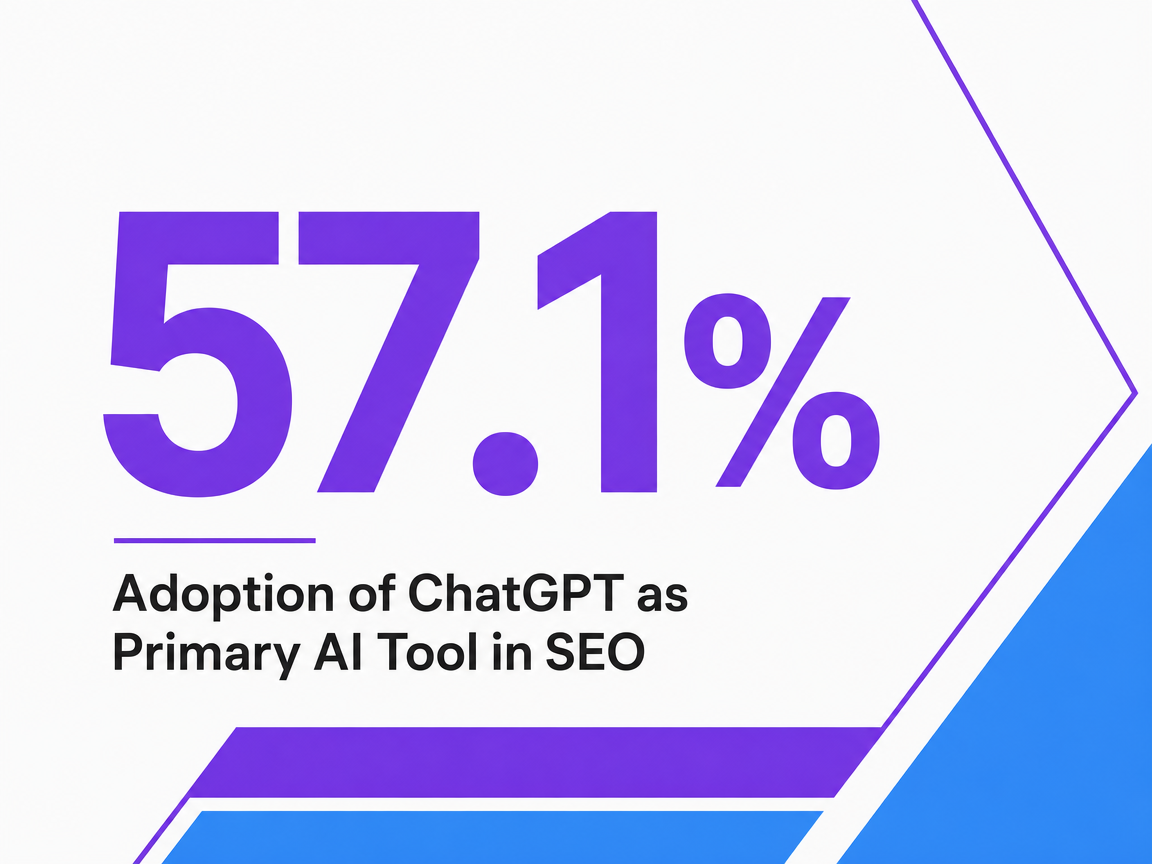 Adoption of ChatGPT as Primary AI Tool in SEO
Adoption of ChatGPT as Primary AI Tool in SEO
Experience Real-Time SEO Impact in One Week
Test live site ranking improvements by publishing and measuring real campaign content during your trial period.
Signal-to-Shipped-Work Latency: The Metric Agency Leads Actually Manage
Rank position is a lagging indicator. The metric that more accurately predicts client retention is signal-to-shipped-work latency: the time elapsed between detecting a ranking-factor gap and deploying the corresponding fix on the site.
Most traditional delivery processes measure this in weeks. For example, a crawler might flag thin coverage on a category template on Tuesday. The audit is summarized on Friday. The brief enters a content queue the following Wednesday. A draft returns nine days later, followed by edits, client approval, and finally a development ticket for on-page changes. A three-to-five-week turnaround from detection to publication is common, and this is where retainer margins often diminish.
The three-layer split in tooling is significant because each layer compresses a different segment of this timeline. Rank monitoring reduces detection time from weeks to hours. Diagnostic tools like referring-domain intelligence and topical coverage scoring shorten the analysis phase from days to minutes 12, 2. Execution orchestration targets the longest segment—from brief creation to drafting to shipping—where analyst hours are most concentrated.
Agency Heads of SEO who track this latency metric across accounts find a stronger correlation with retention than with absolute position. A client whose fixes are deployed in four days is more likely to tolerate a slow month than a client waiting five weeks for a resolution.
If You Manage a Multi-Client Portfolio: A Consolidation Table
For agency Heads of SEO managing 20 to 300 domains, the procurement decision is rarely about a single platform. Instead, it's about identifying the combination of tools that minimizes the diagnosis-to-shipped-work loop at the lowest total cost of ownership. The table below maps the seven tools to the specific bottleneck each removes and the qualitative latency between signal detection and fix deployment. Starting prices for enterprise tools are based on a 2026 enterprise comparison 15.
| Bottleneck | Tool Category | Agency Use Case | Signal-to-Shipped-Work Latency |
|---|---|---|---|
| Crawl scale on 100k+ URL domains | Botify | Enterprise ecommerce, publishers, directory sites with log-file reconciliation | Detection: hours. Fix: weeks (dev cycle) |
| Referring-domain intelligence at portfolio depth | Ahrefs Enterprise | Competitive link-gap analysis feeding outreach queues via API | Detection: hours. Fix: weeks (outreach) |
| AI Overview and GEO visibility | Semrush Enterprise | Citation-share monitoring across generative surfaces | Detection: days. Fix: weeks |
| Portfolio reporting and client rollups | seoClarity | Templated dashboards across 100+ domains, permissioned client views | Detection: hours. Fix: n/a (reporting layer) |
| Content-to-rank workflow | Conductor | Topical coverage mapping into brief-to-publish workflows | Detection: days. Fix: weeks |
| Local and multi-location precision | STAT | ZIP-level rank tracking for franchise and DSO portfolios | Detection: hours. Fix: weeks |
| AI execution orchestration | Vectoron | Approval-gated execution across content, SEO, backlinks, PPC, social | Detection: hours. Fix: days |
The latency column is crucial for consolidation decisions. Three of the seven categories primarily address detection or reporting. The remaining four focus on the fix segment, with only one compressing it to days rather than weeks. Agencies that stack all seven tools risk redundant tracking. A more efficient approach involves selecting one vendor from each layer—crawl, links, tracking, and execution—to cover the entire loop without duplicated expenditure.
See How Leading Agencies Streamline Site Ranking and Reporting at Scale
Request a tailored walkthrough of integrated site ranking solutions designed for agencies managing large client portfolios—covering unified tracking, automated workflows, and scalable oversight.
Correlation Is Not Causation — Reading the Diagnostics Honestly
Every ranking-factor study mentioned is observational. The 2024–2025 correlation research across millions of SERPs reported Domain Authority Score at 0.21 and Page Authority Score at 0.19 1. The authors explicitly caution against interpreting these numbers as causal levers. A separate academic thesis analyzing common on-page attributes found that none of the isolated factors studied showed a strong standalone impact on ranking 5. Both findings are important for how agency leads interpret their dashboards.
The practical implication is not to disregard correlations, but to avoid treating them as a checklist. A tool that flags a Domain Rating gap identifies a symptom that frequently co-occurs with lower rankings in aggregate. It does not prove that acquiring more referring domains will move a specific client from position seven to position three for a particular query. Confounding factors—such as brand strength, historical dwell time, and query intent match—underlie these numbers but rarely appear in reports.
Agency Heads of SEO who interpret diagnostics honestly use tools for triangulation rather than mere confirmation. The working standard involves two independent signals pointing to the same gap, verified by a live test on a subset of URLs. Anything less can lead to confident dashboards but stagnant rankings.
A Direct Recommendation for the Next Renewal Cycle
Agency Heads of SEO approaching their next tool renewal should audit their spending based on the three layers, rather than focusing solely on vendor names. The recommendation is to select one authoritative source for crawl and technical health, one for referring-domain intelligence, one for rank and SERP feature tracking (including AI Overview surfaces), and one execution layer that can compress the fix segment from weeks to days. Investing in two vendors within the same layer often leads to budget bloat without improving retention. The measurement layers only yield returns when diagnosed gaps are translated into approved work. This "last mile" is where Vectoron excels—providing approval-gated AI execution across content, SEO, backlinks, PPC, social, and call intelligence. It is priced at $599 per month after a two-week trial for teams ready to reduce signal-to-shipped-work latency across their portfolio.
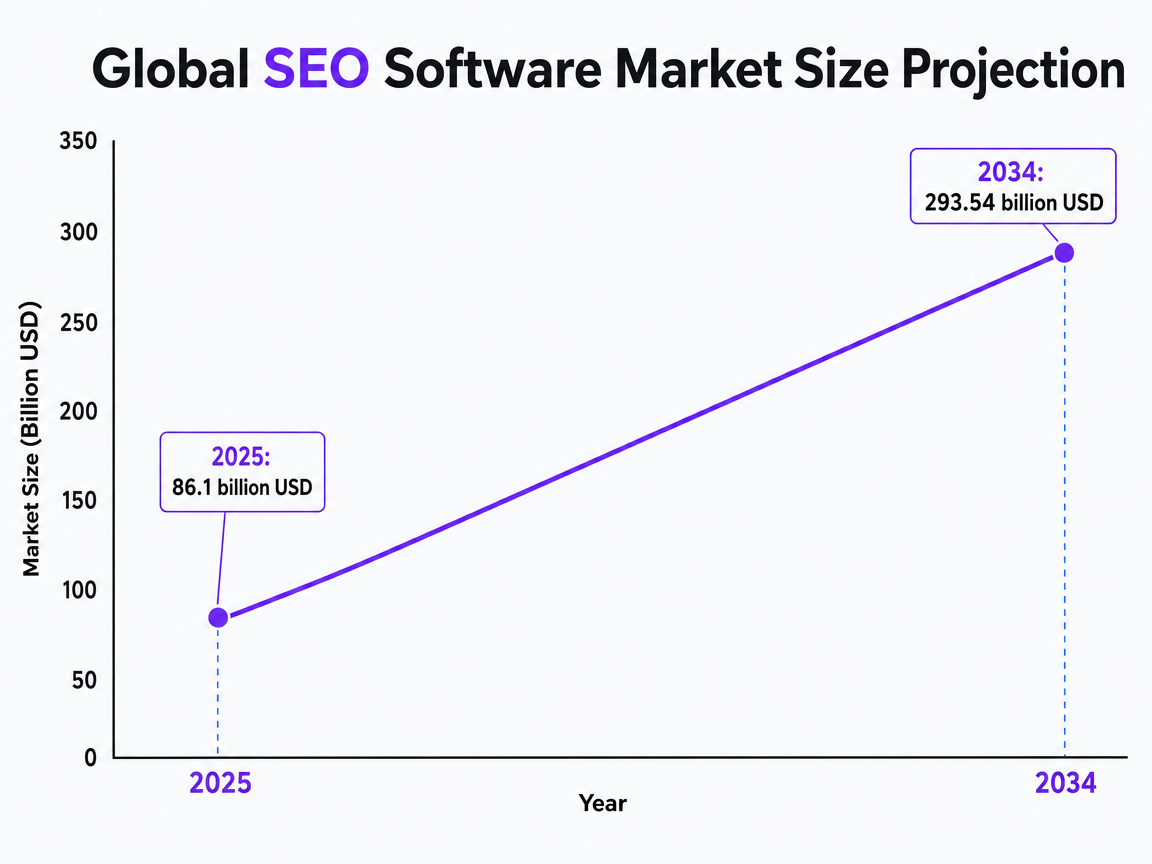 Global SEO Software Market Size Projection
The global SEO software market was valued at $86.1 billion in 2025 and is projected to grow to $293.54 billion by 2034.
Frequently Asked Questions
References
- 1.Ranking Factors.
- 2.Here's How Google Evaluates Your Content [Data Study].
- 3.How Does Ranking Affect User Choice in Online Search?.
- 4.AI SEO Benchmark Report: Key Stats & Insights.
- 5.Analysing Google SERP.
- 6.We Analyzed 11.8 Million Google Search Results. Here's What We Learned about SEO.
- 7.SEO Software Market Size, Share, Growth, Analysis, 2034.
- 8.Search engine optimization and its role in digital marketing: A systematic literature review.
- 9.Share of marketing budget spent on digital in organizations worldwide.
- 10.Sizing the prize: What’s the real value of AI for your business and how can you capitalise?.
- 11.SEO Ranking Factors Study 2025: Analysis of 10M Search Results.
- 12.SEO Ranking Factor Study 2026: A 100,000-Page Correlation.
- 13.Important Factors for Improving Google Search Rank.
- 14.Exploring the impact of SEO-based ranking factors for enhanced information retrieval.
- 15.Best Enterprise SEO Tools in 2026 Compared.
- 16.The 2024 State of Marketing AI Report from Marketing AI Institute and Drift.
- 17.Introduction to structured data.