
Key Takeaways
- Link decay follows a measurable curve—roughly 4.7% annual attrition normalized from Pew's decade-long web measurement 8—so treating broken links as a one-off cleanup guarantees the backlog returns.
- Most portfolio failures are not clean 404s but soft 404s, pseudo-404s, redirect chains, stranded equity from mismatched 301s, and content drift where the URL still resolves 200 9.
- A four-path decision tree—restore, 301 to a relevant equivalent, 410 for permanent removals, or update the linking page—handles nearly all remediation when driven by a ranked queue tied to traffic and inbound equity.
- Manual triage stops scaling past a few thousand annual decisions, so plan for standardized production workflows, durable slug conventions, and strategist review reserved for the ambiguous 10% of restore-versus-retire calls.
Link decay is a measurable curve, not a housekeeping task
Pew Research measured a decade of web content and found that 38% of webpages accessible in 2013 were gone by 2023 8. Averaged across ten years, that is roughly a 4.7% annual attrition rate on the URLs a portfolio depends on, whether those URLs live on client domains, on partner sites, or inside cited third-party research. This is a measured baseline for how the public web behaves.
For an agency managing multiple client sites, this baseline changes how broken-link management should be approached. It is not an annual audit line item but a decay curve. Every quarter without remediation moves a predictable share of internal links, outbound citations, and backlink targets into the broken column. A 3,000-URL client site can reasonably expect around 140 link failures per year from external references alone, not counting internal breaks from migrations, redesigns, product changes, or CMS edits.
The operational implication is straightforward. Treating broken links as a one-off cleanup guarantees the backlog reappears on a fixed timeline. Treating remediation as a continuous, decision-tree-driven process built into the retainer is the only model that keeps a portfolio's link graph aligned with the content it was built to support.
The failure taxonomy agency teams actually see in the field
Hard 404s, soft 404s, and the crawler's read on each
A hard 404 is unambiguous: the server returns a 404 status, the crawler drops the URL from active indexing over time, and any inbound equity from internal or external links dead-ends there. This is the clean case, but it is also the minority of what agency teams actually find in a portfolio audit.
The messier and more common failure is the soft 404, where the server returns 200 OK but the page delivers a thin "not found" template, an empty category shell, or a generic homepage redirect. Google's classifier flags these as soft 404s and treats them as low-value, but damage accumulates in the interval between the break and the classification. Internal links keep pointing to the URL, sitemaps keep submitting it, and analytics keeps counting hollow sessions.
The third variant is the pseudo-404: a page that returns 200, loads real HTML, but presents an error state inside the DOM. Examples include e-commerce out-of-stock pages, gated-content walls after a plan change, and JavaScript-rendered product templates that fail silently. Crawlers read the status code, not the user's screen, so these can persist for months. Portfolio audits need to key on rendered content signals, not just HTTP responses, to catch them.
Redirect chains, loops, and stranded equity after migrations
Every domain consolidation, platform migration, and URL-structure refactor leaves redirect debt. A common pattern is a URL resolving through a multi-hop chain (e.g., four hops) before landing on the live page, due to successive changes over time. Each hop is a small tax on crawl budget and, on mobile, on time to first byte.
Redirect loops are a harder failure. For instance, A points to B, B points to C, and C points back to A, usually because different teams edited redirect rules without a single source of truth. Crawlers give up, browsers surface an error, and the URL functionally joins the broken column even though every individual rule appears correct.
Stranded equity is the third pattern and often underestimated by agencies. A URL that once earned strong external links gets deprecated in a migration and redirected to the homepage or a generic category page rather than a topical equivalent. The 301 fires cleanly, but the topical relevance signal collapses, and the inherited authority is largely wasted. Portfolio audits should flag any 301 whose source and destination differ significantly in topic or intent.
Content drift: when the URL resolves but the page no longer matches the link's promise
Content drift is a failure mode often missed in standard broken-link reports because the URL resolves, the status code is 200, and the page loads. However, the content behind the URL has changed enough that any inbound link now points to something different from what the linking page described.
The scholarly literature has measured this directly. A MEDLINE study found roughly 81% of URL citations were available 90% to 100% of the time, but noted that some URLs no longer contained the information originally cited 3. This highlights that availability and accuracy are not the same measurement. The OSTI paper on robust linking makes the same distinction explicit: links can fail because content disappears (link rot) or because content changes at the same address (content drift), and both undermine the reference 9.
For agency work, drift appears in three recurring forms:
- Client-side: a product page URL is repurposed for a new SKU, causing old backlinks to point to an unrelated product.
- Editorial-side: a linked third-party study is quietly rewritten, and the cited statistic no longer appears in the source.
- Structural-side: a category page is emptied during a taxonomy change, so the URL still exists but the topical payload is gone.
None of these issues trigger a crawler or appear in a Screaming Frog 4xx export. They require content-diff monitoring against a baseline snapshot, not just status-code scanning.
External reference rot in cited third-party content
Internal breaks are agency-controllable, but external reference rot is not and decays on a different clock. When a client's cornerstone article cites a vendor whitepaper, government report, or peer-reviewed study, the linking page inherits the persistence characteristics of the target. Peer-reviewed work quantifies how weak that persistence can be: one study of URL citations in general medical journals found only 61% of cited URLs still accessible at the time of measurement 2.
This failure rate is particularly critical in regulated verticals where cited sources carry evidentiary weight. Legal, healthcare, and financial content lose credibility when the study behind a claim no longer resolves. Reviewers who spot-check citations are less forgiving than crawlers. For agencies producing content in these verticals, outbound citation health is part of the deliverable.
The operational approach is to treat external references as a monitored surface, not a set-and-forget asset. Log every outbound citation on client sites, revalidate on a rolling schedule, and route failures into the same remediation queue that handles internal breaks. The four remediation paths still apply; only the ownership of the target URL changes.
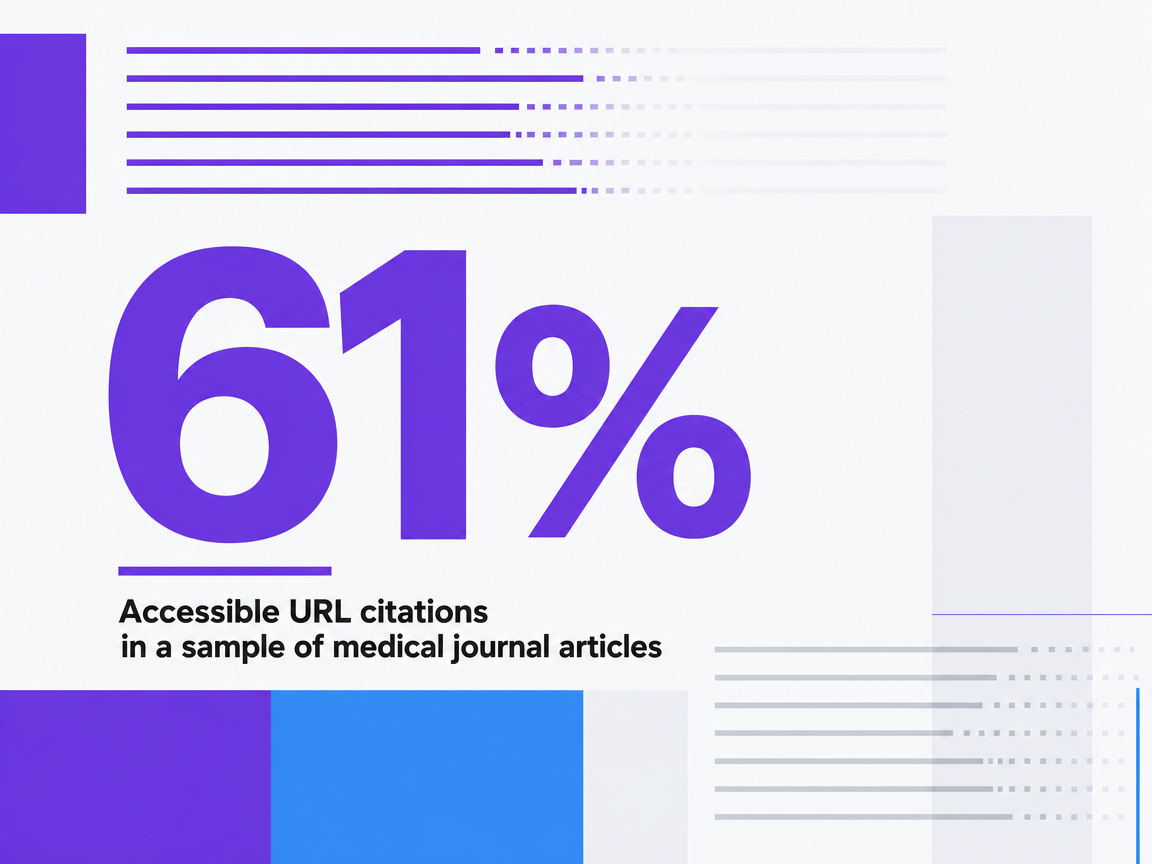 Accessible URL citations in a sample of medical journal articles
Accessible URL citations in a sample of medical journal articles
Detection at portfolio scale: crawl, log, and diff
What a portfolio-grade audit signal set includes beyond a Screaming Frog export
A weekly 4xx export from Screaming Frog is a starting line, not a finish line. It catches hard 404s and clean server errors but misses almost everything described in the failure taxonomy above. A portfolio-grade audit combines four signal streams and reconciles them against a single URL inventory per client.
- The crawl itself, run on a rolling schedule with JavaScript rendering enabled to surface client-side error states as content signals rather than false 200s.
- Server log analysis, which shows which broken URLs still receive crawler hits or referral traffic, indicating triage priority. A 404 on a URL Googlebot visits weekly is not the same problem as a 404 on a URL nothing has touched in a year.
- Search Console's coverage and links reports, cross-referenced with the crawl to catch soft 404s the crawler read as 200.
- Content diffing against a baseline snapshot, which is the only reliable way to detect content drift where the URL resolves but the payload has changed 9.
Persistent identifiers and stable slug conventions reduce, but do not eliminate, the need for diffing 5. The output is a ranked queue keyed to traffic, inbound links, and business value, not a flat CSV.
Separating agency-controllable internal breaks from partially controllable external rot
Internal breaks and external rot require different queues because they have different owners, remediation paths, and SLAs. Conflating them often results in audit reports that are unactionable.
Internal breaks are entirely agency-controllable. The client owns the CMS, redirect map, and linking pages, so every failure resolves through one of the four remediation paths without external dependency. Turnaround should be measured in days, and the queue should feed directly into the production team's ticket system.
External rot is partially controllable. The agency owns the linking page but not the target, so remediation involves updating or removing the outbound reference rather than fixing the destination. The volume of external rot is often higher than expected: one study of URL citations in general medical journals found only 61% of cited URLs still accessible at measurement 2. This decay compounds across a portfolio's outbound reference graph. This queue needs its own cadence, typically quarterly, with editorial rather than technical ownership. Both queues should route through the same decision-logging system so client reports show what was found, what was decided, and who approved the fix.
Fix broken links and monitor SEO health now
Detect, repair, and track broken links across live client sites with full reporting during your trial.
The four-path remediation decision tree
Restore the original content
Restore is the correct call when the broken URL still carries meaningful inbound signal and the original content is recoverable or reconstructable. Two triggers make this obvious: the URL has live backlinks from domains the client cannot easily replace, or the URL still receives organic impressions in Search Console despite returning an error. Either signal indicates the addressable equity is worth the production cost.
Recovery starts with the Wayback Machine snapshot, the client's own CMS trash or version history, and any editorial drafts. Republish under the original slug, preserve the publish date if it existed, and update stale references before pushing live. Restore is also the right move when a soft 404 was triggered by an accidental depublish rather than a deliberate content decision, which is common in portfolio work.
301 to a relevant equivalent
A 301 to a relevant equivalent is the right path when the original content is gone or intentionally retired, and a topically equivalent page already exists on the same domain. The key is "equivalent." A retired blog post about "technical SEO audits for Shopify" redirects cleanly to a current guide on the same subject, but not to the homepage, blog index, or a loosely related services page.
Portfolio audits should flag every 301 whose source and destination differ significantly in topic, because Google treats topically mismatched redirects as soft 404s, causing inherited authority to collapse. The decision is binary: either a relevant equivalent exists, in which case redirect, or it does not, in which case the correct answer is 410 or restore. Building a redirect to "somewhere close enough" is how portfolios accumulate the stranded equity problem, one migration at a time.
Return 410 for permanent removals
The 410 status code tells crawlers the resource is intentionally and permanently gone. Google drops 410 URLs from the index faster than 404s. When a client retires a product line, sunsets a service, or deletes seasonal content that will not return, 410 is the honest signal and the faster cleanup.
Agencies underuse 410 because 301 feels safer, but redirecting every removal to a generic page pollutes the redirect map and confuses relevance modeling. Use 410 when three conditions hold:
- The content is deliberately removed.
- No relevant equivalent exists on the domain.
- The URL carries no meaningful inbound backlink profile worth preserving.
If the third condition fails, reconsider restore. If the second condition fails, 301 wins. Otherwise, 410 is the cleanest exit.
Update the linking page instead of the target
This path applies when the broken link is outbound from a client page to an external URL that has rotted or drifted. The target is not agency-controllable, so remediation happens on the linking side. Three moves cover most cases:
- Swap the citation for a current source that supports the same claim.
- Rewrite the surrounding sentence to remove the dependency.
- Point the link to a Wayback Machine snapshot when the original source carried evidentiary weight the replacement cannot match.
Content drift needs the same treatment even when the URL still resolves. If a cited third-party study was rewritten and the original statistic no longer appears at the source, the link is functionally broken regardless of its 200 status 9. Content-diff monitoring against a baseline snapshot surfaces these cases, and editorial ownership rather than technical ownership drives the fix.
Portfolio workload math and why manual triage stops scaling
Normalizing Pew's decade-long finding—38% of 2013 webpages gone by 2023 8—to an annual rate, the math lands near 4.7% per year on external references alone. Internal breaks compound that number every time a client ships a migration, taxonomy change, or product delist. The question is what that translates to in staffing hours across a book of business.
Consider a 25-client book where sites range from 500 to 5,000 URLs, averaging roughly 2,000 URLs each. That is a 50,000-URL portfolio. Applying a conservative 4.7% annual link-loss rate to the outbound reference surface—call it 15% of URLs carrying at least one external citation—yields around 350 external failures per year across the book, before counting internal breaks from client-side changes.
| Portfolio variable | Value |
|---|---|
| Client sites under management | 25 |
| Average URLs per site | 2,000 |
| Total portfolio URLs | 50,000 |
| Annual external link-loss rate (normalized from Pew) 8 | ~4.7% |
| Annual external failures (URLs with citations) | ~350 |
| Internal breaks per client per year (migration, edits, delists) | 40–120 |
| Total annual triage decisions across book | 1,350–3,350 |
| Minutes per manual triage decision (inspect, decide, log, execute) | 12–20 |
| Annual hours at midpoint | ~470–780 |
At the midpoint, that is roughly 0.3 to 0.4 FTE of specialist time absorbed by triage alone, before any strategic work. Most retainers do not carry that headroom, which is why the backlog reappears every quarter and audits get sold as one-off projects rather than continuous delivery. The workable model is a standardized four-path decision tree, executed by production staff against a ranked queue, with strategist review reserved for the ambiguous 10%—restore-versus-410 calls where inbound equity and content recoverability are genuinely contested. Everything else is a pattern match, not a judgment call.
Eliminate Broken Links Across Client Sites—Without Manual Audits
Get a custom walkthrough of automated link monitoring and bulk remediation workflows designed to reduce SEO risk and maintenance time for high-volume portfolios.
Building durable URL structures so remediation load flattens over time
Remediation volume is downstream of URL design. Portfolios that treat slugs as disposable—encoding dates, campaign codes, session tokens, or CMS-generated numeric IDs into the path—generate their own backlog every time content is refreshed, republished, or restructured. Portfolios that treat slugs as durable identifiers, with topic-anchored paths that survive content updates, produce far fewer forced redirects and fewer opportunities for stranded equity.
The persistent-identifier literature quantifies the payoff directly. A 2024 study measuring the availability of shared data links found that plain supplemental URLs disappeared at a 5.4% rate, while DOI-based references disappeared at only 1.7% 6. Persistent identifiers work because they decouple content identification from content location, so the address stays stable when the underlying storage, platform, or file path changes 5. Client sites cannot mint DOIs, but the operating principle transfers: pick a slug that describes the topic rather than the delivery mechanism, and hold it steady across CMS migrations, redesigns, and editorial refreshes.
Three conventions carry most of the weight in agency practice:
- Keep slugs semantic and short—/technical-seo-audits outlasts /2021/blog/47823-technical-seo-audits-shopify-final-v2.
- Avoid embedding transient categories in the path, because taxonomy changes then force redirects on every child URL.
- Version content in place rather than at a new URL when the topic is unchanged; a 2024 refresh of a 2021 guide should replace the payload at the original address, not spawn a parallel URL that eventually competes with or cannibalizes the first.
Each convention removes a class of future breaks from the queue before it enters.
Defending link hygiene as a retainer deliverable, not a one-off audit
Clients buy audits because audits produce a deliverable they can hold. The problem is that a one-off audit ages out on the same decay curve the audit was meant to address, and six months later the backlog is back. The retainer conversation lands harder when link hygiene is framed as continuous surface maintenance against a measured attrition rate, not as a project with a finish line.
Three arguments support this approach with client-side stakeholders:
- Decay is empirical, not theoretical: peer-reviewed measurement puts scholarly reference rot at roughly one in five articles 1, and the same failure modes—deletions, migrations, and content drift—operate on commercial sites.
- The remediation work splits cleanly into a standardized decision tree and a small ambiguous residue, meaning most of the workload is scheduled production rather than open-ended discovery.
- Every fix is logged with its trigger, decision path, and approver, so the retainer produces a monthly report showing what decayed, what was restored, what was redirected, what was retired, and what carried forward. That log is the deliverable.
Structured this way, link hygiene stops competing with strategic work for retainer hours and starts protecting it. The strategist's time goes to the 10% of decisions that require judgment; the other 90% moves through a governed workflow with human approval at the gate. This is where platforms like Vectoron fit, treating remediation as a queue with reasoning attached to each recommendation rather than a spreadsheet handed off between teams.
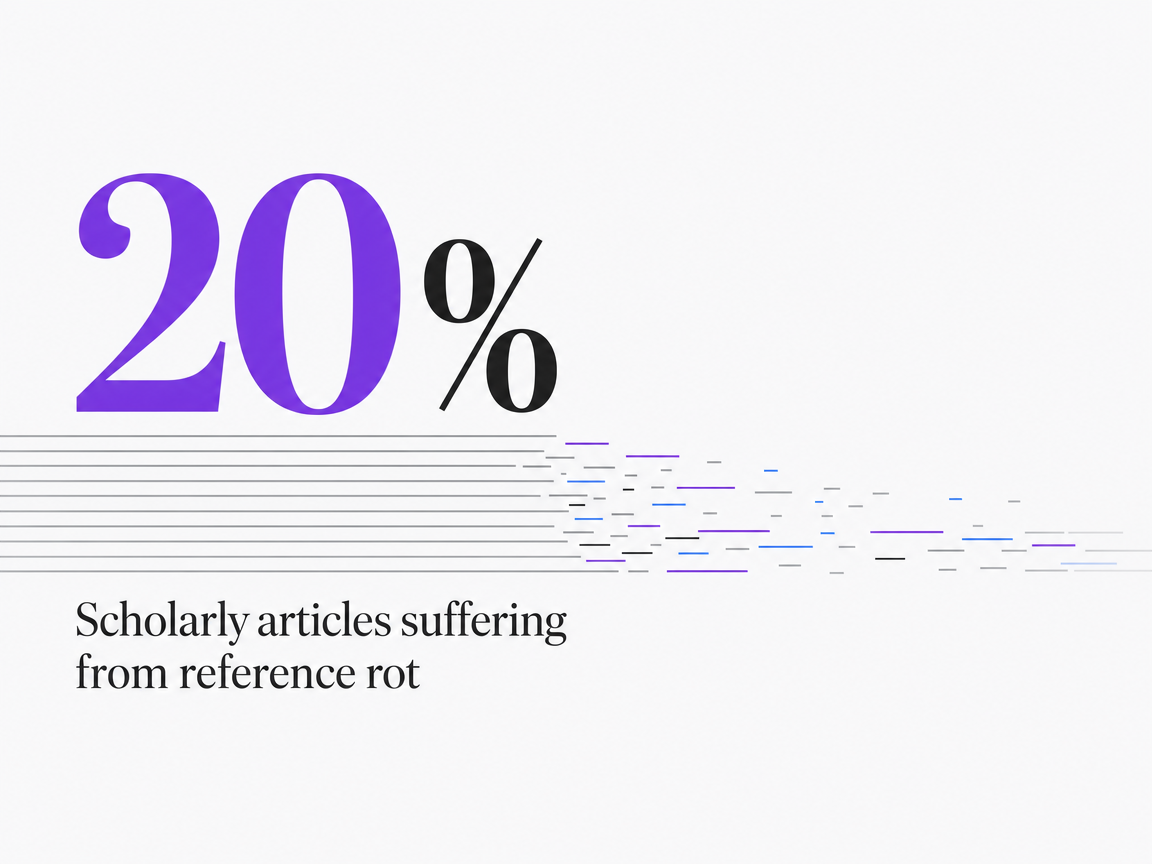 Scholarly articles suffering from reference rot
Scholarly articles suffering from reference rot
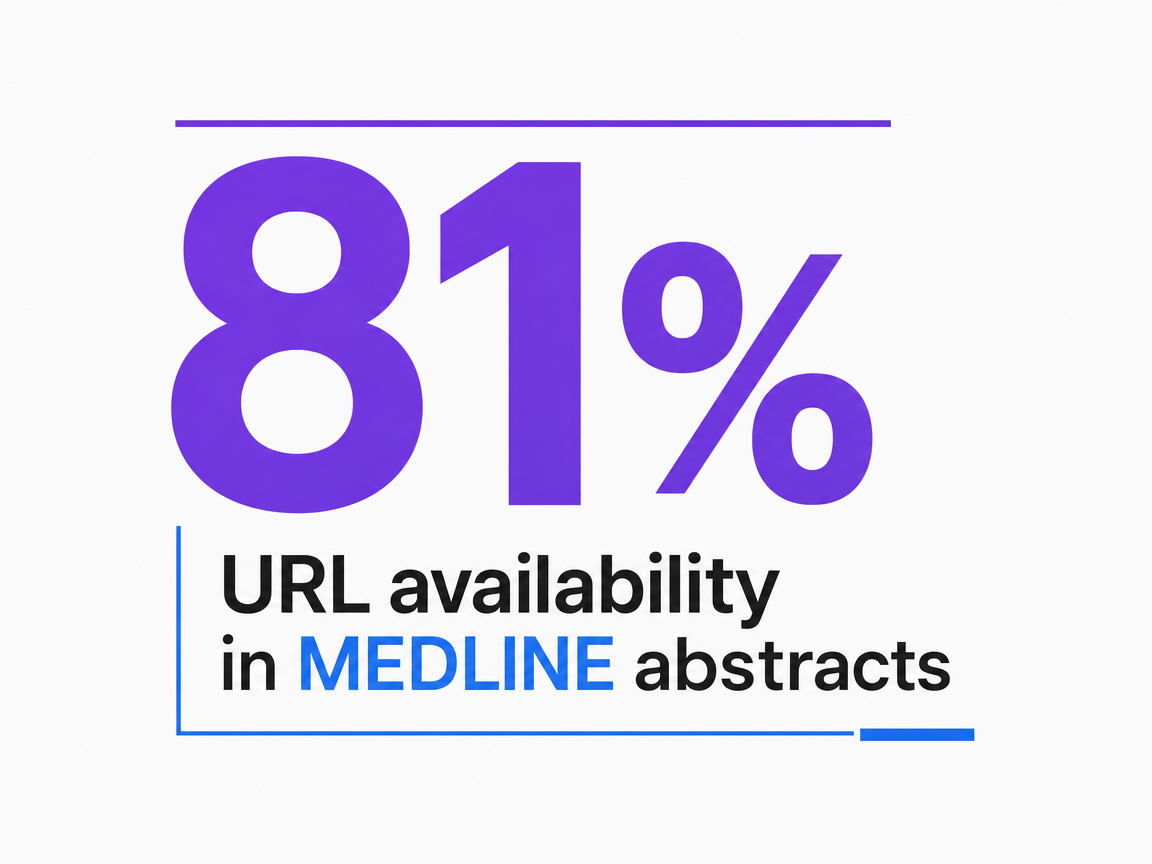 URL availability in MEDLINE abstracts
URL availability in MEDLINE abstracts
Frequently Asked Questions
References
- 1.Scholarly Context Not Found: One in Five Articles Suffers from Reference Rot.
- 2.Decay of References to Web sites in Articles Published in General Medical Journals.
- 3.An update on Uniform Resource Locator (URL) decay in MEDLINE abstracts.
- 4.The Impact of Link Rot on Legal Research.
- 5.Signing data citations enables data verification and citation integrity.
- 6.Measuring data rot: An analysis of the continued availability of shared data from published studies.
- 7.The permanence paradox in decentralized storage and scholarly preservation.
- 8.When Online Content Disappears.
- 9.Robustifying Links To Combat Reference Rot.
- 10.The Impact of Link Rot on Legal Research.