
Key Takeaways
- Semrush anchors research at portfolio scale because familiarity across strategists and clients speeds onboarding and consolidates keyword, position, and audit work into one workspace.
- Ahrefs leads on backlink intelligence, but tier jumps from Advanced to Enterprise expose how credit and seat limits break the assumed link between client count and tool spend 13.
- Screaming Frog remains the indispensable technical audit utility because no suite has matched its crawl depth, though templated configurations are required to prevent analyst bottlenecks.
- Moz Pro works as a lower-cost secondary license for junior analysts or budget-constrained accounts, preserving margin without leading the stack beyond 30 clients.
- Surfer earns its slot by compressing brief creation and content optimization inside production, filling the gap research suites leave between draft and rank-ready page 6.
- AgencyAnalytics turns two to four hours of manual report assembly per client into scheduled white-label delivery, redirecting analyst time toward strategy conversations 8.
- SE Ranking consolidates tracking, research, and dashboards at a lower price point, suiting 10 to 20 client portfolios where enterprise-tier data depth is not required 13.
- Conductor and BrightEdge only pencil out above roughly $15,000 monthly retainers where clients demand enterprise tooling and can absorb weeks of unbilled implementation time 4.
- Vectoron sits in the emerging execution layer, replacing production hours across content, links, and reporting through approval-gated workflows built for 15 to 80 accounts 7.
- Looker Studio serves as a custom reporting escape hatch for one or two enterprise accounts, but maintenance overhead makes it unsuitable as a portfolio-wide reporter 13.
The Stack Question Has Changed for Agency Heads of SEO
The tool decision facing agency heads of SEO in 2026 is no longer which suite carries the deepest keyword index. It is which combination of platforms removes the most production hours per client account without surrendering strategic control. This shift has been building for two years, and benchmark data now confirms it.
In the most recent AI SEO Benchmark Report, 49.2% of surveyed respondents reported improved rankings following Google algorithm updates after adopting AI-enabled SEO tools, and 71.5% reported a reduction in time-to-rank for new content 1. While this sample reflects organizations already using AI, not the full market, and 16.9% of the same respondents said it remained too early to judge long-term impact 1, these numbers indicate that AI tooling has moved beyond experimentation to significantly impact delivery economics.
For portfolio operators managing 10 to 80 client accounts, this direction matters more than any single feature comparison. Research access, technical crawling, and rank tracking remain necessary but are no longer sufficient. The ten tools ranked below are evaluated by their role in a consolidated stack and by the credible reduction in client work hours each layer provides to the delivery team.
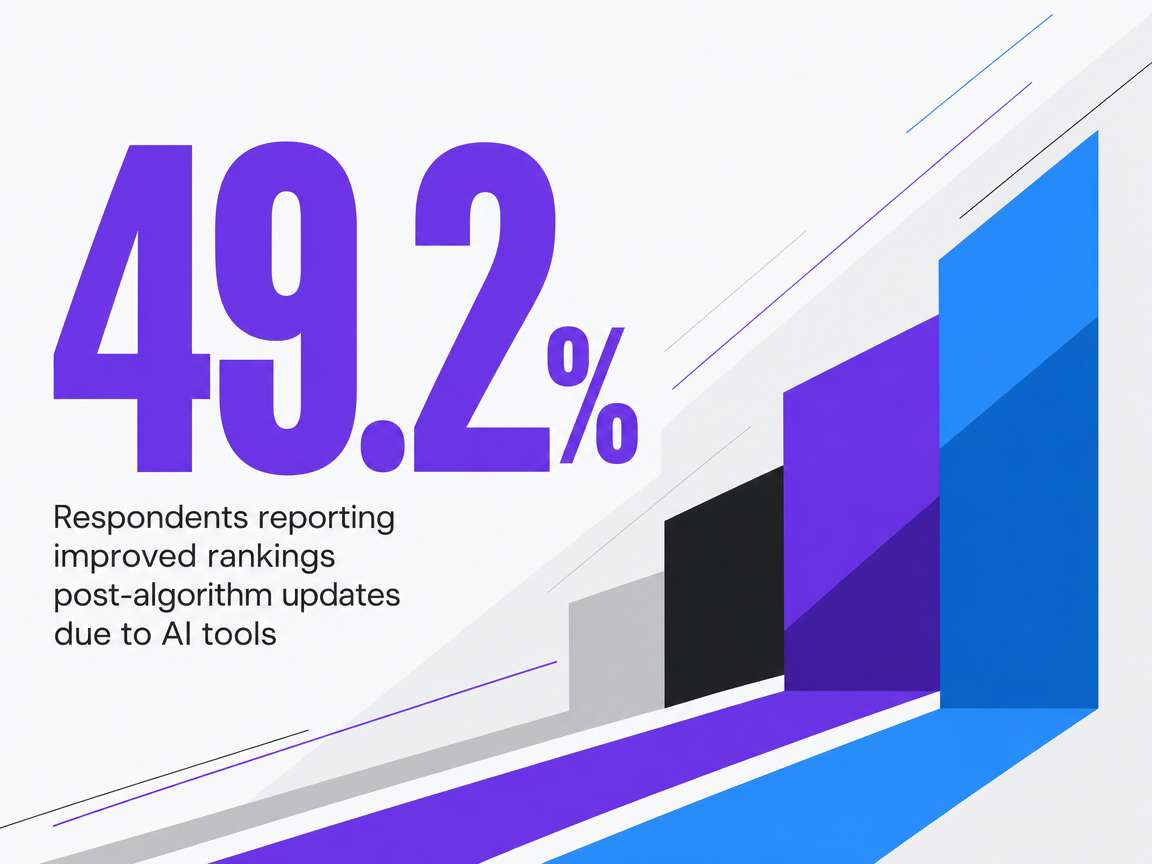 Respondents reporting improved rankings post-algorithm updates due to AI tools
Respondents reporting improved rankings post-algorithm updates due to AI tools
How This Ranking Is Built: Consolidation Role Over Feature Checklists
Feature parity has collapsed as a useful comparison lens. Every major suite crawls, tracks rankings, audits backlinks, and generates reports. What separates them at portfolio scale is which production hours each removes and where each sits in a coordinated workflow. Forrester's most recent evaluation of enterprise SEO platforms found leaders differentiating on AI-powered recommendations, workflow automation, and integrations with analytics and CRM systems rather than on data coverage alone 4.
Each of the ten tools below is scored against three questions:
- What layer does it own in a portfolio stack (research, technical audit, content optimization, reporting, or execution) 6?
- How does its pricing and API structure behave as client counts move from 20 to 40 to 80 accounts 5?
- And how many hours of delivery labor does it credibly remove, either through automation or through AI-assisted production?
Rankings reflect stack utility for an agency head of SEO managing margin and delivery quality, not a laboratory feature count. A tool that dominates one layer beats a suite that partially covers three.
The Ten Tools Ranked by Stack Role
Semrush: The Default Research Anchor at Portfolio Scale
Semrush earns the top slot based on its stack utility. For agencies managing 20 or more client accounts, it is the most common primary research tool, used by an estimated 30% to 40% of professional SEO agencies as the anchor for keyword discovery, competitive analysis, and site auditing 10. This prevalence streamlines operations: onboarding new strategists is faster when the research layer is familiar, and client deliverables are clearer when both sides reference the same visibility scores and keyword databases.
Its value at scale lies in project limits and workflow consolidation. A single Semrush workspace can handle research, position tracking, on-page auditing, and backlink analysis for numerous domains, reducing the number of tools a strategist needs to access per client hour. Cross-tool exports to a dedicated reporter complement its native client reporting, which is functional but rarely the primary reason agencies invest in Semrush.
Challenges with Semrush include per-seat cost as headcount grows and project caps that may necessitate upgrades before an agency is ready. Heads of SEO focused on tight margins should regularly audit seat utilization rather than defaulting to blanket licenses 5.
Ahrefs: Backlink Intelligence and Agency Pricing Dynamics
Ahrefs remains the industry benchmark for backlink data, and its pricing structure significantly impacts agency economics. Its published tiers range from Lite at $99 to Enterprise at $999 per month, with each tier gating crawl credits, seats, and API access 13. The jump from Advanced to Enterprise often reveals to portfolio operators that scaling client counts and tool spend are not linearly correlated.
Most agencies with 10 to 20 accounts typically use the Standard or Advanced tiers, primarily for link prospecting, referring domain audits, and content gap analysis. Beyond approximately 30 accounts, API limits and multi-user needs often push agencies towards the Enterprise tier or towards supplementing Ahrefs with a lower-cost secondary research tool to conserve credits.
Ahrefs' strategic strength lies in its analytical depth on link graphs. Agencies specializing in authority building and digital PR derive greater value from Ahrefs than those focusing on local SEO or content optimization. Heads of SEO should evaluate renewal by mapping credit consumption per client per month against seat needs across the delivery team. If credit exhaustion occurs before mid-month, the current tier is likely undersized 5.
Screaming Frog: The Indispensable Technical Audit Utility
Screaming Frog occupies a unique position as a desktop crawler, priced as a utility rather than a comprehensive suite. No all-in-one platform has effectively displaced it for deep technical audits. Agencies leverage it for site migrations, redirect mapping, log-adjacent crawl analysis, structured data validation, and custom data extraction that enterprise crawlers charge significantly more for.
Its stack role is narrow but enduring. Screaming Frog does not track rankings, generate client reports, or produce content briefs; it specializes in crawling, extracting, and exporting data. This focused utility is why it is featured in almost every recommended agency stack, including the four-tool configuration for portfolios exceeding 40 clients 9.
The primary operational cost is analyst time, not license fees. A senior technical SEO can run Screaming Frog against a dozen client sites weekly if crawl configurations are templated. Without templates, the tool can become a bottleneck. Heads of SEO scaling beyond 20 accounts should dedicate a sprint to developing reusable crawl profiles and export templates before onboarding additional clients.
Moz Pro: A Supporting Research Layer for Cost Efficiency
Moz Pro is less frequently used as a primary research tool today but maintains a valuable role as a lower-cost supplement or a secondary license for strategists. Its Domain Authority metric remains widely referenced in client discussions, providing communication utility even if its keyword database isn't the most extensive 4.
Its place in the stack is primarily economic. Agencies using Semrush or Ahrefs as their main research platform sometimes reserve Moz Pro for junior analysts, freelance contributors, or specific client engagements where budget constraints prevent adding a premium seat. This partitioning helps preserve margins without compromising delivery capacity.
Moz Pro does not lead a modern stack for portfolios exceeding 30 clients. It serves a supporting function for specific roles within the delivery team, and heads of SEO should approach it with this perspective rather than comparing it directly with higher-priced tools.
Surfer: Content Optimization Integrated into the Production Workflow
Surfer earns its position because it addresses content optimization where traditional research suites fall short. Writers require structured briefs, real-time content scores against ranked competitors, and tools to bridge the gap between a first draft and a page optimized for ranking potential 6.
This is the role Surfer fills in the recommended four-tool stack for agencies scaling beyond 40 clients: Semrush for research, AgencyAnalytics for reporting, Screaming Frog for technical audits, and Surfer for content optimization 9. This combination works because each tool specializes in one layer without attempting to cover others.
The production-hour savings are direct. A strategist manually creating briefs might spend two hours per piece assembling target queries, competitor headings, and entity coverage. Within Surfer, this process is significantly compressed, though actual savings depend on the agency's discipline in templating the brief-to-writer handoff. Heads of SEO should measure content optimization time per piece before and after adoption, rather than solely relying on vendor efficiency claims.
AgencyAnalytics: White-Label Reporting for Multi-Tenant Portfolios
Reporting is a critical scaling point for agency stacks. AgencyAnalytics is designed specifically for marketing agencies, rather than being adapted from a general analytics tool, which is why it consistently appears in recommended stacks for portfolios exceeding 20 clients 12.
Its stack function is white-label, multi-tenant reporting. A single workspace can host numerous client dashboards, each with isolated data sources, branding, and delivery schedules. Native integrations pull data from Google Analytics, Search Console, Google Ads, social platforms, and rank trackers, with scheduled report delivery eliminating the manual assembly that consumes analyst time 11.
The economic benefit is the reduction in production hours per client per month. Manually assembling a monthly client report in a slide deck can take two to four hours for data pulls, formatting, and commentary. Automating this process at the client level redirects that time toward analysis and strategy discussions, which are often the true value agencies are paid to deliver 8.
A key consideration is that AgencyAnalytics reports on data produced by other tools; it does not replace research or crawling. Heads of SEO adopting it should precisely map which data sources feed each report before determining the appropriate tier.
SE Ranking: A Mid-Market Alternative for Tracking and Dashboards
SE Ranking bridges the gap between enterprise suites and pure reporting tools. It offers rank tracking, keyword research, site auditing, and white-label client dashboards in a single platform, priced below Semrush and Ahrefs for comparable seat counts 13.
Its stack role is consolidation for smaller portfolios or for agencies whose retainers do not warrant a top-tier research license. Instead of Semrush plus AgencyAnalytics, some agencies with 10 to 20 clients use SE Ranking as a combined, lighter layer, supplementing it with Screaming Frog for technical depth.
The trade-off is an analytical ceiling. Keyword databases are shallower, competitor intelligence is less granular, and enterprise clients often expect data from a more established suite. Heads of SEO should view SE Ranking as a margin-optimization tool for the appropriate client segment, rather than an upgrade path from Semrush.
Conductor and BrightEdge: Enterprise Platforms for High-Value Retainers
Conductor and BrightEdge operate in a distinct economic sphere. Forrester's evaluation positions them among enterprise SEO platforms that differentiate through AI-powered recommendations, workflow automation, and integrations with analytics and CRM systems, rather than just data coverage 4.
Their stack role is focused on enterprise account delivery, not broad portfolio management. These platforms are priced for organizations that integrate SEO across product, content, and technical teams. For agencies, their use is typically justified by retainers exceeding $15,000 per month, where the client specifically requires enterprise tooling. Below this threshold, the licensing costs are rarely viable.
The onboarding process is also extensive, often requiring weeks for implementation, taxonomy setup, and integration. Heads of SEO should factor this ramp-up period as unbilled delivery time. For most agencies with 10 to 40 clients, a combination of Semrush, a dedicated reporter, and Screaming Frog can achieve comparable operational output at a fraction of the enterprise cost 10.
Vectoron: An AI Execution Layer for Approval-Gated Workflows
Vectoron represents an emerging category in agency stacks: the execution layer. While research tools identify opportunities, reporters communicate outcomes, and audit crawlers pinpoint technical debt, none of these directly produce the content, links, or client reports that consume significant delivery hours. This production work is where AI execution platforms are now competing for stack real estate.
Its role involves specialist workflows for content, SEO recommendations, backlinks, and reporting, all coordinated through an approval step before client deployment. Vectoron positions its specialist strategists as replacements for production hours across these layers, particularly suited for agencies managing 15 to 80 accounts where labor cost is a primary constraint on growth 7. The approval-first design is crucial, as agency heads of SEO need visibility and control over automated strategic outputs.
The stack implication is that execution-layer tools like Vectoron do not replace foundational tools like Semrush or Screaming Frog. Instead, they replace the delivery labor that transforms research and audit outputs into client-ready work. This distinction explains its placement in the ranking, separate from research anchors. Forrester's observation that enterprise platforms are increasingly differentiating on workflow automation and AI recommendations aligns with this trend from the enterprise perspective 4.
Looker Studio: The Custom Reporting Escape Hatch
Looker Studio concludes this list as the solution for agencies whose reporting needs extend beyond templated dashboards. It is free, integrates natively with Google's data sources, and supports the custom visualizations occasionally demanded by enterprise clients 13.
Its stack role is for bespoke reporting for one or two specific accounts, not as the default reporter for an entire portfolio. Building and maintaining Looker dashboards requires significant analyst time, potentially exceeding the automation benefits of a dedicated white-label reporter. Heads of SEO should reserve it for clients whose contracts explicitly cover custom reporting, keeping the rest of the portfolio on a purpose-built agency reporting platform.
Test AI-Driven SEO Workflows on Live Projects
Publish and measure real SEO improvements across client sites during your free trial—no commitments required.
Operator Economics: Cost at Scale
Tool spend is only one component of cost; the larger factor is the delivery labor each layer either preserves or removes. This dynamic shifts significantly as client counts surpass 20 and again at 40 accounts. McKinsey's productivity analysis estimates that generative AI could boost marketing productivity by 5% to 15% through automated content creation, personalization, and performance analysis, setting a realistic ceiling for the labor savings offered by execution-layer tools 3.
For 10 to 20 clients, the recommended stack is a two-tool configuration: a primary research suite paired with a dedicated reporter 10. Ahrefs at the Standard or Advanced tier ($199 to $399 per month) often anchors this setup, complemented by AgencyAnalytics or a similar reporting tool 13. Between 20 and 40 accounts, Semrush becomes the more common anchor, used as the primary tool by an estimated 30% to 40% of professional SEO agencies at this scale 10. Beyond 40 clients, the recommended stack expands to four tools: Semrush, AgencyAnalytics, Screaming Frog, and Surfer, dedicating layers to research, reporting, technical auditing, and content optimization 9.
Two constraints often distort these ranges. Per-seat pricing scales with headcount rather than revenue, and API limits on enterprise suites can force tier upgrades prematurely 5. Heads of SEO should model tool spend per client account monthly, not just total license cost, and consider any tier that exhausts credits before mid-month as undersized for the current portfolio.
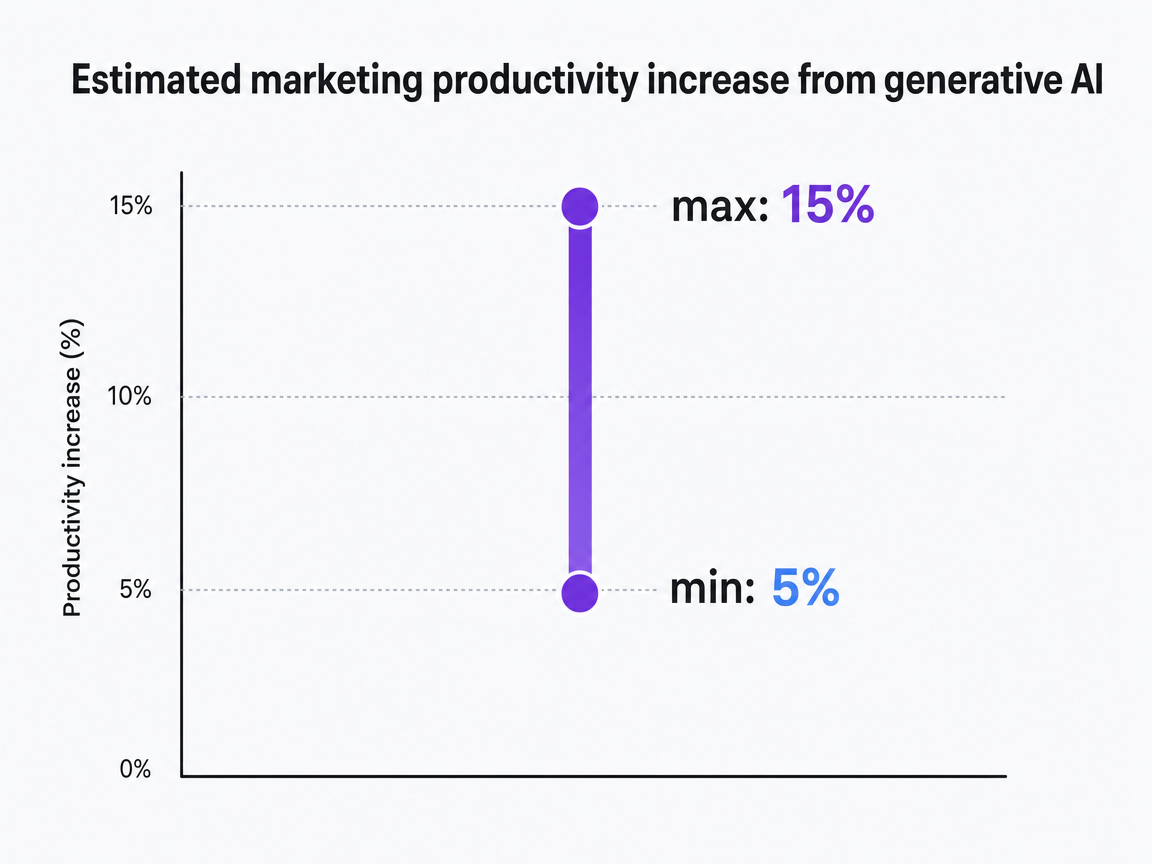 Estimated marketing productivity increase from generative AI
McKinsey estimates that generative AI could increase marketing productivity by 5% to 15% through automation of tasks like content creation and analysis.
Measuring What AI Overviews Broke: Visibility Beyond Position One
The measurement challenge has moved beyond simple ranking. Ahrefs' December 2025 analysis revealed that AI Overviews reduce click-through rates (CTR) on position-one results by 34.5% to 58%, with the range depending on query type rather than domain authority or content quality 2. This isn't a ranking loss but a click loss on already-earned rankings, disrupting the causal link between position tracking and traffic delivery that most client reports still assume.
For heads of SEO, the operational consequence is that rank-tracking dashboards alone no longer fully explain client performance. A retainer defending position one on a commercial query can still experience a 40% traffic decline if that query triggers an AI Overview. Clients may interpret this as underperformance unless the measurement layer differentiates ranking movement from SERP-feature displacement. Reporters relying solely on rank trackers and Search Console miss crucial interpretive data: which queries triggered an AI Overview, whether the client's content was cited within it, and how much of the CTR gap is due to this new SERP feature versus competitor movement.
The practical adjustment is dual measurement. Portfolio operators should integrate AI Overview citation tracking and SERP-feature presence into standard rank and traffic dashboards. Monthly client narratives should then be reframed around visibility share rather than position alone. Current tools have not fully caught up, and this gap is where execution-layer platforms and updated reporters will differentiate themselves through 2026 4.
See How Leading Agencies Streamline SEO Operations with Unified AI Workflows
Request a demo to explore how automated, approval-first platforms enable agencies to scale SEO delivery, maintain quality standards, and reduce operational overhead across multi-client portfolios.
If You Manage a Multi-Location or Franchise Portfolio
The guidance above assumes a portfolio of distinct client brands. Agencies providing SEO for multi-location operators, franchise systems, or DSO-style rollups face a different tooling challenge. The unit of work is the location, not the domain, and a single client might have 40 to 400 locations under one parent site.
The stack implication is that rank tracking and reporting configurations built around domains become inadequate. Position tracking must operate at the location-plus-query level, which significantly multiplies keyword volume and inflates credit consumption on enterprise suites faster than client count alone would suggest 5. Heads of SEO underwriting these engagements should price tools based on tracked location count, not seat count, and confirm API allowances before signing retainers that assume weekly location-level data pulls.
Reporting also inverts. Multi-location clients require per-location dashboards rolled up into a parent view, a multi-tenant isolation pattern that dedicated agency reporters are designed for 11. Execution-layer platforms are particularly valuable in these portfolios because location-scale content and citation work are where labor costs become prohibitive first 7.
Choosing the Stack: A Decision Rubric for the Next Twelve Months
The decision process can be distilled into three sequential questions:
- What layer is the current stack weakest at (research, technical audit, content optimization, reporting, or execution) 6?
- Which of these weaknesses is incurring the most delivery hours per client per month?
- And which tool addition can eliminate those hours without triggering a per-seat or API tier upgrade that erodes the margin gain 5?
Heads of SEO managing 10 to 20 accounts should prioritize a two-tool configuration: a primary research suite plus a dedicated white-label reporter, resisting stack sprawl until client count exceeds 20 10. For agencies with 20 to 40 accounts, adding Screaming Frog for templated technical audits typically pays for itself in analyst hours within a quarter. Beyond 40 accounts, the four-tool split—research, reporting, technical, and content optimization—becomes the operational baseline, with an execution-layer platform evaluated based on the delivery labor it credibly removes rather than solely on the data it provides 9, 7.
The next twelve months will favor operators who regularly audit tool spend per client account and strategically reallocate resources toward execution capacity as AI Overviews continue to redefine what clients pay retainers to defend.
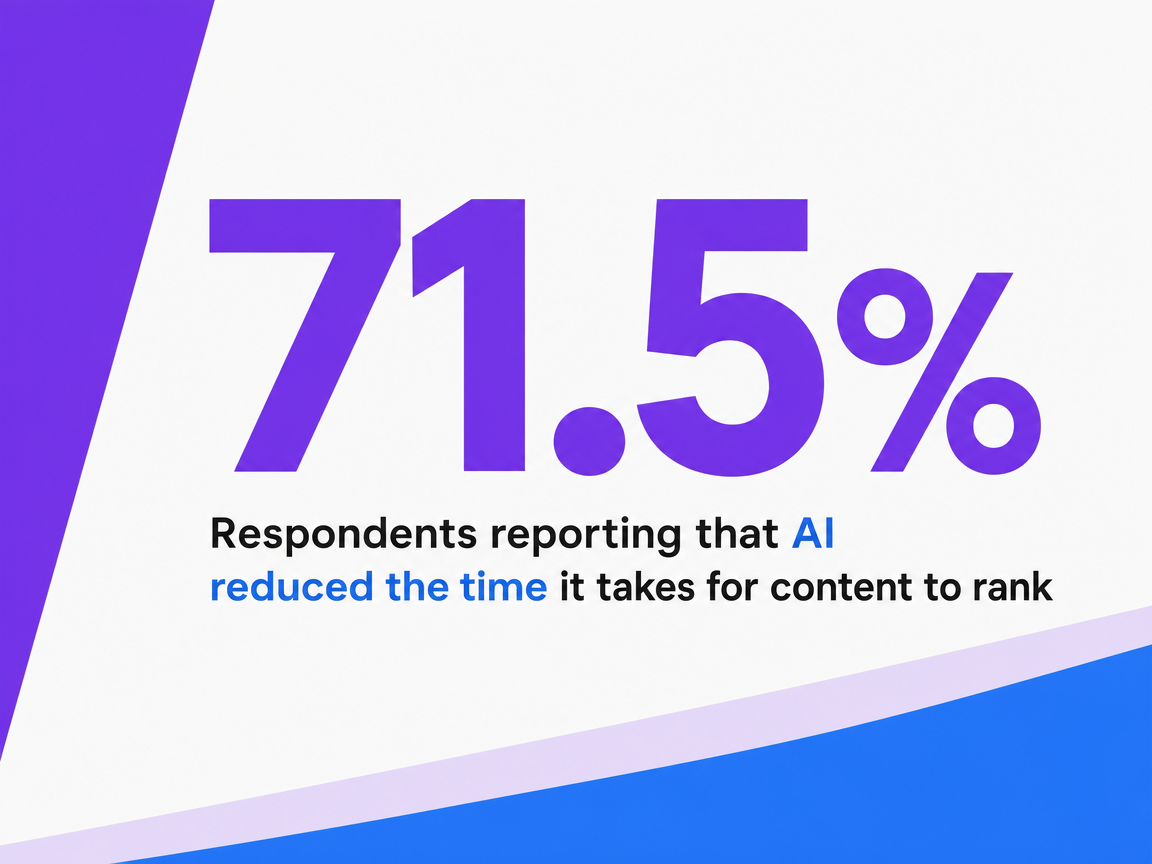 Respondents reporting that AI reduced the time it takes for content to rank
Respondents reporting that AI reduced the time it takes for content to rank
Frequently Asked Questions
References
- 1.AI SEO Benchmark Report: Key Stats & Insights.
- 2.AI SEO Statistics 2026: AI Overviews, Zero-Click & GEO Data.
- 3.The Economic Potential of Generative AI: The Next Productivity Frontier.
- 4.The Forrester Wave: SEO Platforms, Q2 2024.
- 5.16 Best SEO Agency Tools to Scale Client Reporting - RankDots.
- 6.6 Best SEO Tools for Agencies to Scale Client Results - SEOBoost.
- 7.Seo software for agency teams to boost client results fast - Vectoron.
- 8.Best SEO Automated Reporting Tools 2026: Top 5 Ranked.
- 9.16 Secret SEO Tools Top Agencies Use to Rank Fast.
- 10.Best SEO Software for Agencies in 2026: 8 Tools Tested.
- 11.9 Best SEO Tools for Automated Reporting (2026 Expert Guide).
- 12.21 SEO Agency Tools To Scale Effectively & Deliver Great ....
- 13.Best AI SEO Reporting Tools in 2026.