
Key Takeaways
- Profound runs recurring prompt sweeps across ChatGPT, Perplexity, Gemini, Claude, and AI Overviews, replacing manual citation screenshotting with a longitudinal view of client citation share.
- Peec AI measures prompt-level share of voice against named competitors, translating LLM answer visibility into the share-of-voice artifact clients already read at renewal.
- Otterly.AI offers lightweight brand and URL mention tracking across major assistants, giving smaller accounts a baseline AI-visibility signal without a heavy procurement cycle.
- Ahrefs Brand Radar bolts AI citation signals onto the backlink and rank data agencies already pull, consolidating AI visibility into an existing workflow rather than a separate subscription.
- Semrush AI Toolkit flags AI Overview presence on every tracked keyword, letting a Head of SEO segment QBRs by query class without exporting to a BI tool.
- InLinks audits entities and generates schema so source pages carry the clarity needed to be cited, operationalizing the entity portion of the E-E-A-T checklist 9.
- Clearscope grades drafts against query-level entity coverage, setting a shared floor across distributed writers that survives freelancer and editor staffing changes.
- MarketMuse models topical authority at the site level and ranks briefs by expected impact, shifting senior time from building cluster maps to judging topic priority across a portfolio.
- AlsoAsked maps the People Also Ask tree as a proxy for assistant sub-questions, guiding which queries a single page must resolve to be citation-worthy.
- Vectoron unifies execution across content, SEO, PPC, backlinks, social, and call intelligence in one approval workflow, absorbing the coordination tax that fragments senior time across portfolios.
Why the Reporting Stack Broke in the AI Overview Era
The traditional agency reporting stack was built for a query lifecycle that ended with a click. Rank tracker pulls position, Search Console confirms impressions and CTR, a CMS plugin ties conversions back to the landing page. That chain worked when the SERP was ten blue links and a few ads. It no longer describes what happens to a growing share of client queries.
Pew Research measured browsing behavior across 900 U.S. adults in March 2025 and found that users clicked a traditional search result on 15% of visits without an AI summary present, compared with only 8% of visits when a summary appeared. Clicks on the citation links inside the summary itself landed at just 1% of visits 1. Roughly half the click volume, evaporated inside the answer.
For a Head of SEO defending a retainer, that gap is the problem. Rankings can hold or improve while sessions decline, because the query resolved before the user ever reached a result list. A QBR that still opens with average position and organic sessions is reporting on a shrinking portion of the funnel.
Forrester's Q4 2025 review of AI and LLM tools in search marketing concluded that LLM-based analysis tools have moved from experimentation to production, particularly inside agencies managing large portfolios 7. The reporting layer has to catch up to where the queries are actually going. Everything that follows in this list is organized around that reality.
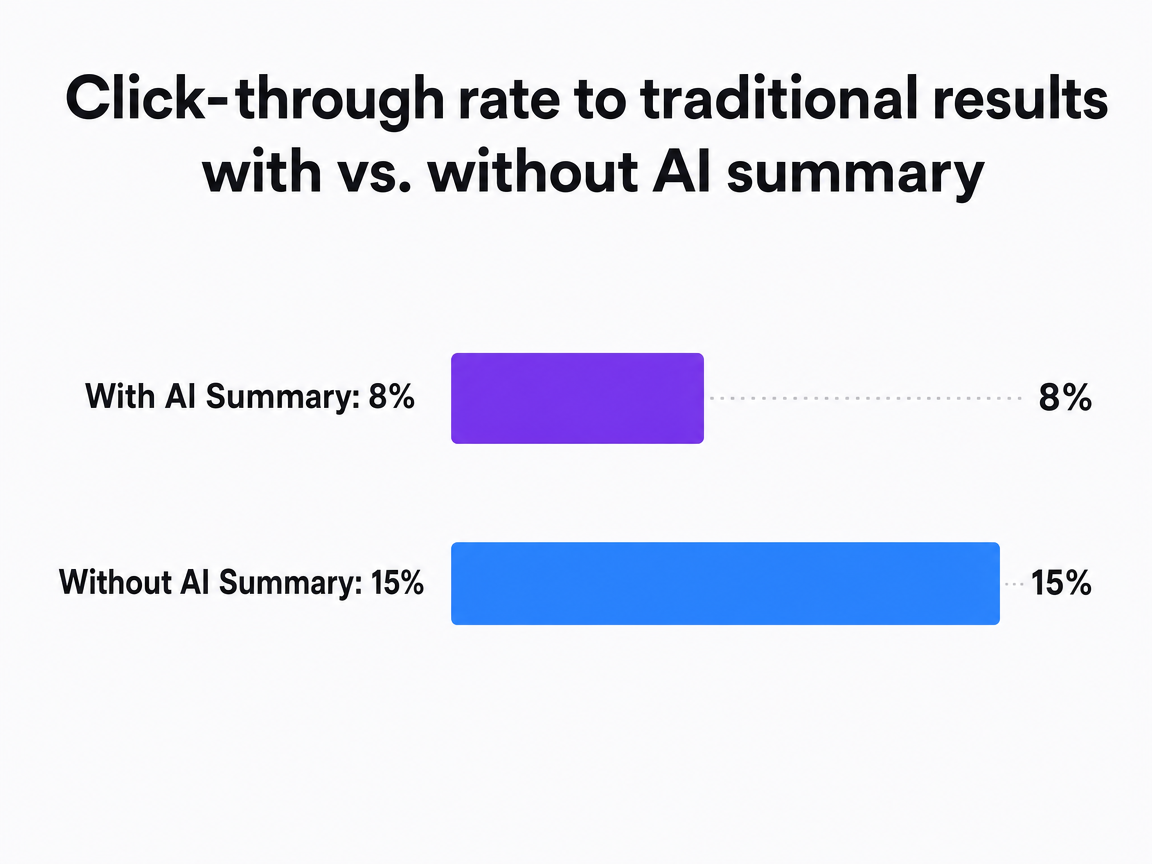 Click-through rate to traditional results with vs. without AI summary
Pew Research found that users clicked a traditional search result in 8% of visits when a Google AI summary appeared, compared to 15% of visits when no summary was present. This illustrates the click-suppressing effect of AI Overviews.
The Two-Report Obligation Agencies Now Owe Clients
Two reports now belong in every retainer deliverable. The first is the familiar organic performance view: rankings, impressions, non-branded sessions, assisted conversions. The second measures how often the client's brand, products, and source pages appear inside AI assistants and AI Overviews, and under which query classes. Both matter, because exposure to AI answers is no longer a fringe experience.
Pew's October 2025 survey of U.S. adults found that 65% at least sometimes encounter AI-generated summaries in their search results, while only 6% say they trust those summaries a lot 2. That gap is the operational argument for the second report. Users see the surface constantly. They do not fully trust it. They still act on it, and they click into it at rates that shape client pipeline.
A Head of SEO who only reports on the first surface is describing half the funnel. A Head of SEO who reports on both can defend budget by showing which content is earning citations inside AI answers, which entities the client owns in assistant responses, and where competitors are being surfaced instead. That is the reporting shift a growing share of agency clients now expect at QBRs 10.
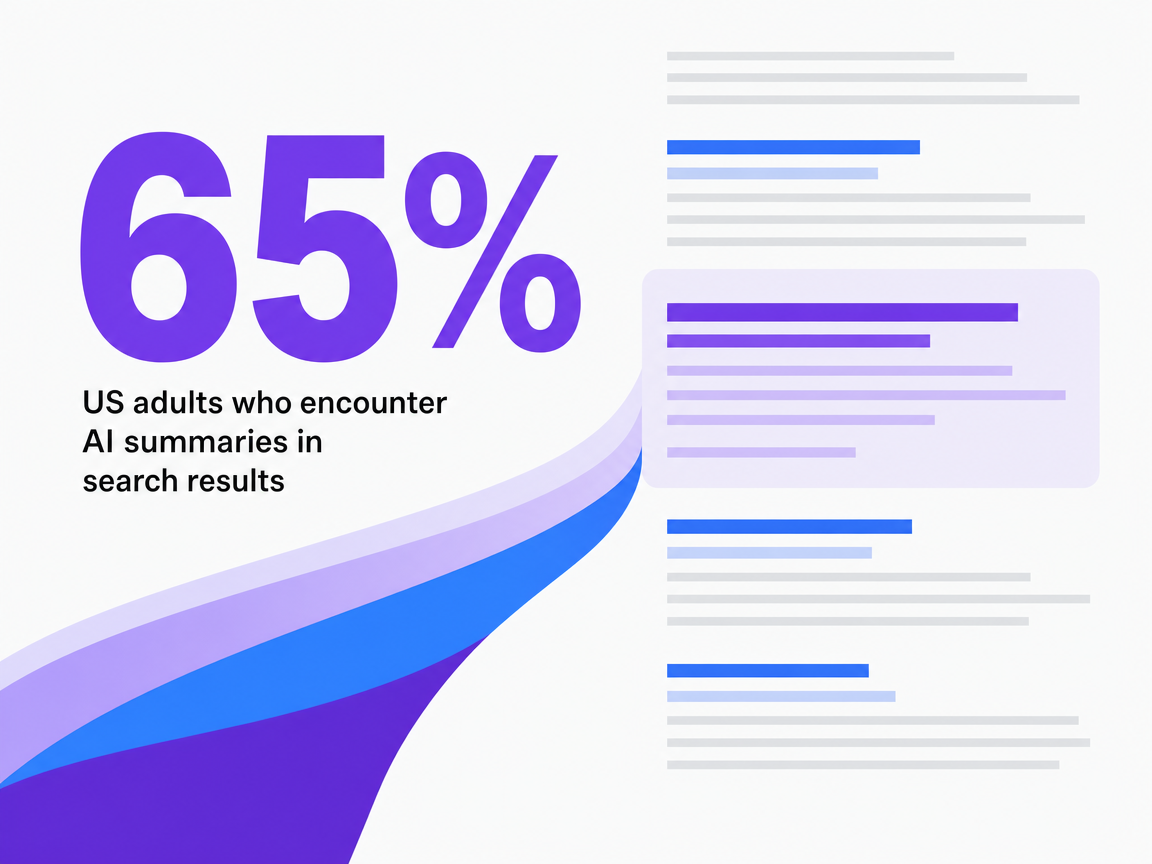 US adults who encounter AI summaries in search results
US adults who encounter AI summaries in search results
How to Read the 10 Tools: Three Jobs, Two Reports
The tools that follow are grouped by the job they do, not by vendor size or feature parity. Three jobs sit underneath the llm seo analysis software category:
- auditing whether source pages are structured and authoritative enough to be cited,
- producing content that answers specific queries with entity clarity, and
- monitoring which AI surfaces actually surface the work 11.
A tool worth a purchase order either does one of those jobs unusually well or unifies them into a single reporting layer.
Each tool below carries three tags: the job it performs, the report it feeds (organic performance, AI-surface visibility, or both), and what it replaces in the current agency workflow. That third tag matters most. A Head of SEO does not need another dashboard. They need to retire a spreadsheet, a manual citation sweep, or a senior specialist's Friday afternoon.
Read the list as a coverage check against the current stack, not a ranking.
Test AI-Driven SEO Analysis in Practice
Run live SEO analyses and publish real reports using your own client data before making a commitment.
The 10 Tools by Job
Profound — AI Citation Monitoring Across Assistants
Profound sits in the AI citation monitoring category. It runs recurring prompt sweeps across ChatGPT, Perplexity, Google AI Overviews, Gemini, and Claude, then reports which domains, brands, and source pages get named in the answer. For a Head of SEO, the useful output is not a raw citation count but a longitudinal view of which client pages hold citation share on a defined prompt set.
Job: Citation monitoring. Report it feeds: AI-surface visibility. What it replaces: The manual Friday afternoon a senior specialist spends copying prompts into five chat interfaces and screenshotting results into a client deck.
The limitation worth naming is sampling drift. Assistant responses vary run to run, and Profound's outputs can contradict themselves week over week when the prompt set is too narrow 10. Agencies using it in production typically hold the prompt library steady for a full reporting cycle and add sampled human review before anything reaches a QBR slide.
Peec AI — Prompt-Level Share of Voice in LLM Answers
Peec AI is narrower than Profound and more useful for it. Instead of broad citation sweeps, it measures share of voice at the prompt level: for a given commercial query, what percentage of assistant responses name the client versus each named competitor, and how the mix shifts as the prompt is rephrased.
Job: Citation monitoring, competitive cut. Report it feeds: AI-surface visibility. What it replaces: The competitive gap analysis a senior strategist otherwise builds by hand for a pitch or renewal deck.
Peec's strength for agencies is that its output maps cleanly to a familiar SEO artifact — share of voice — which clients already understand. That translation matters at renewal time. A client who has spent three years reading share-of-voice charts for the ten-blue-link SERP will absorb the same chart for LLM answers without a training session.
Otterly.AI — Lightweight AI-Visibility Tracking for Smaller Portfolios
Otterly.AI covers the same monitoring surface as Profound and Peec at a fraction of the setup weight. It tracks brand and URL mentions across a defined set of prompts on the major assistants, with alerting when a citation appears or disappears.
Job: Citation monitoring. Report it feeds: AI-surface visibility. What it replaces: Nothing sophisticated — it replaces the absence of any AI-visibility signal in reporting for accounts that cannot justify a heavier tool.
For agencies running a mixed portfolio where a handful of enterprise accounts warrant Profound and the rest need baseline coverage, Otterly is the pragmatic bottom-of-the-stack option. It gets a client from zero AI-visibility data to a defensible monthly signal without a procurement cycle. Do not expect competitive share-of-voice depth from it. That is not the tier.
Ahrefs Brand Radar — Citation Signals Bolted to a Familiar Data Layer
Ahrefs added AI citation tracking to its Brand Radar feature, which now surfaces mentions of a client's brand and URLs inside AI Overviews and select assistant responses alongside the traditional backlink, keyword, and rank data agencies already pull from the platform.
Job: Citation monitoring, joined to organic performance data. Report it feeds: Both reports, from a shared data layer. What it replaces: A separate AI-visibility subscription for agencies already paying for Ahrefs seats across the team.
The strategic point is integration depth, not feature parity. Brand Radar does not match Profound's assistant coverage or Peec's competitive precision. It matches the workflow. A senior SEO who already lives inside Ahrefs pulls AI citation data in the same session as a link audit, which is how consolidation actually happens in production — one saved tab at a time 7.
Semrush AI Toolkit — AI Overview Presence Inside the Existing Rank Workflow
Semrush's AI Toolkit tracks AI Overview presence, cited sources, and the queries triggering AI answers across a client's tracked keyword universe. The reporting attaches directly to the position tracker most agencies already use for weekly rank checks.
Job: AI-visibility tracking, keyword-tied. Report it feeds: Both reports. What it replaces: The manual reconciliation between the rank tracker and any standalone AI-visibility monitor.
What sets the Semrush approach apart operationally is the query-class join. Every tracked keyword now carries a flag for whether it triggers an AI Overview, whether the client is cited, and which competitors are surfaced instead. That single field lets a Head of SEO segment a QBR by query type — informational queries losing clicks to AI answers, commercial queries where the client owns the citation — without exporting to a BI tool. For agencies whose reporting is already built on Semrush data, this is the lowest-friction path to a two-report deliverable.
InLinks — Entity Auditing and Schema for E-E-A-T Signals
InLinks handles the second job in the LLM SEO stack: making source pages structured and authoritative enough to be cited in the first place. It maps a site's entities, identifies coverage gaps against the topic, and generates schema markup that clarifies which entities each page is actually about.
Job: Entity auditing and schema. Report it feeds: Organic performance, upstream. What it replaces: A schema consultant engagement and the manual entity-gap audit a senior strategist otherwise builds in a spreadsheet.
The category matters because Google's guidance on AI-assisted content is method-neutral. Search rewards original, people-first material that demonstrates E-E-A-T regardless of how it was produced 8. Industry practice has settled on a concrete checklist:
- unique take beyond the top results,
- human editing and fact-checking,
- links to external authoritative sources, and
- clear author signals 9.
InLinks operationalizes the entity and schema portion of that checklist at scale. The editorial governance still sits with the agency, which is why this is a category to own with a tool rather than a prompt.
Clearscope — Content Grading Against Query-Level Entity Coverage
Clearscope grades draft content against the entities and terms present in the top-ranking pages for a target query. The output is a coverage score and a term list writers work against before publication.
Job: Content grading. Report it feeds: Organic performance, upstream. What it replaces: The senior editor pass where a strategist rewrites a junior writer's draft to add missing subtopics.
For an agency, Clearscope's real utility is quality control across a distributed writer bench. When a client's content is produced by four freelancers and two in-house editors, a shared coverage score sets a floor that survives staffing changes. It does not replace editorial judgment. It replaces the argument about whether a draft is ready.
MarketMuse — Topical Authority Modeling for Portfolio Content Planning
MarketMuse models topical authority at the site level. It maps what a domain already covers, what its competitors cover, and where the cluster gaps sit — then ranks briefs by expected impact on authority for the target topic.
Job: Content planning and entity auditing. Report it feeds: Organic performance, upstream. What it replaces: The quarterly content strategy offsite where a senior SEO builds a cluster map from scratch for each account.
Portfolio delivery is where MarketMuse earns its seat cost. A Head of SEO running 20 accounts cannot personally build 20 cluster maps every quarter. MarketMuse produces a defensible starting brief for each domain that a strategist edits rather than authors. That shifts senior time from map-building to judgment on which topics actually convert for the client.
AlsoAsked — Query Fan-Out Mapping for AI Answer Coverage
AlsoAsked visualizes the branching People Also Ask tree for a seed query. In the AI Overview era, that tree is a proxy for the sub-questions an assistant will attempt to answer inside a single response.
Job: Query fan-out mapping. Report it feeds: Organic performance and AI-surface visibility, upstream. What it replaces: The keyword-clustering exercise a strategist runs before writing a pillar page.
A Head of SEO uses AlsoAsked to decide which sub-questions a single page must resolve to be citation-worthy against an AI answer, versus which deserve their own supporting page. It is cheap, focused, and does one job. That specificity is why it survives inside stacks that otherwise consolidate.
Vectoron — Unified Execution and Reporting Layer
Vectoron sits in a different tier from the nine tools above. It is not a citation monitor or a content grader. It is an execution layer that runs specialist AI strategists across content, SEO, PPC, backlinks, social, and call intelligence inside one approval workflow, with reporting that joins organic performance and AI-surface visibility into a single client view.
Job: Unified reporting and execution. Report it feeds: Both, from one workflow. What it replaces: The briefing cycles, status meetings, and vendor coordination overhead that sit between strategy and published work.
McKinsey estimates agentic AI could power as much as two-thirds of current marketing activities and accelerate campaign creation and execution by 10 to 15 times 3. The operational premise of a unified layer is that reading signals, ranking priorities, and executing approved work belong in one governed loop rather than seven tabs. Nothing ships without human sign-off. The Head of SEO keeps editorial control while the layer absorbs the coordination tax that fragments senior time across a portfolio.
Category Coverage Map: Where Your Current Stack Has Gaps
The ten tools above sort cleanly onto two axes. On one axis is the job: citation monitoring, entity auditing, AI-visibility tracking, content grading, and unified reporting. On the other is integration depth: point tool, reporting layer, or execution layer. Plotting a current stack against that grid usually exposes one of three gaps within a few minutes.
The most common gap is entity auditing. Agencies with strong rank tracking and a new AI citation monitor almost always lack a structured way to verify that source pages carry the entity clarity and schema that make them citable in the first place. InLinks and MarketMuse cover that column; nothing else on the list does.
The second gap is integration depth. Point tools accumulate. A stack running Profound, Peec, Otterly, Clearscope, AlsoAsked, and a rank tracker covers the jobs but leaves a senior specialist assembling the QBR by hand. Production maturity is where a reporting or execution layer starts paying for itself.
The third gap is competitive share-of-voice inside AI answers. Broad citation monitors miss it. Peec fills it. A stack without prompt-level competitive data cannot answer the renewal question a client will ask by mid-2026.
If You Manage 20+ Client Accounts: The Consolidation Math
Scope shift: this section is written for Heads of SEO running portfolio delivery across 20 or more retained accounts, not for single-account operators. The economics change at that volume, and so does the argument for consolidation.
At 20 clients, a fragmented stack typically bills across five line items:
- a rank tracker (per-domain),
- an AI citation monitor (per-brand or per-prompt-set),
- an entity auditor (per-seat or per-domain),
- a content grader (per-seat), and
- a reporting BI tool (per-seat).
Call the monthly per-client cost C_tools. That number is visible on the P&L.
The invisible line is senior specialist time. Assume H hours per client per month spent stitching outputs from those five tools into one QBR-ready view, at a fully loaded rate of R per hour. Portfolio-wide hidden cost is 20 × H × R. In most agencies, H lands between four and eight hours per client per month once AI-visibility reporting is added to the existing organic report. That is one senior FTE absorbed into report assembly before any strategy work happens.
A unified reporting or execution layer collapses the per-tool line items and, more importantly, compresses H. McKinsey estimates generative AI could increase the productivity of marketing spend by 5 to 15 percent 5. Applied to a 20-client book, a 10% reduction in senior stitching time returns roughly 8 to 16 hours per month to strategy — the work clients actually renew for.
| Cost line | Fragmented stack (20 clients) | Unified layer |
|---|---|---|
| Tool subscriptions | 5 × per-seat or per-domain fees | 1 platform fee |
| Senior stitching time | 20 × H × R per month | ~(1 - 0.10 to 0.15) × 20 × H × R |
| Report assembly risk | Manual reconciliation across 5 exports | Shared dimensions across one layer |
The consolidation case is not that tool fees drop. It is that senior hours return to margin-producing work.
See How Leading Agencies Quantify SEO Impact With Advanced LLM Analysis
Connect with a strategist to benchmark your current SEO reporting stack against AI-driven analysis platforms proven to increase reporting efficiency and demonstrate measurable client ROI.
Folding LLM SEO Outputs Into QBR Reporting
A QBR that opens with average position is describing a shrinking surface. The fold-in question is where each new signal lands on the slide deck without creating a second meeting to explain it.
Three dimensions carry the weight:
- Query class comes first — informational, commercial, navigational — because AI answers absorb informational traffic at rates that no longer belong hidden in a keyword export.
- Citation status comes second: for each tracked query, is the client cited in the AI answer, is a competitor cited, or is no source surfaced.
- Engine comes third, since citation share on Perplexity often diverges from AI Overviews for the same prompt set 10.
Those three dimensions should join the existing organic slide, not sit in an appendix. A client reads one chart: sessions and conversions on the left axis, citation share on the right, segmented by query class. That single view answers the renewal question directly. Sourced work is being surfaced, or it is not, and the reason is visible in the same frame as the traffic trend 4.
A Buying Order for the Next Two Quarters
Sequencing matters more than tool selection. A Head of SEO who buys in the wrong order ends up with citation data for pages that were never citable to begin with.
- Q1 belongs to entity auditing. Before any citation monitor produces a useful signal, source pages need the schema and entity clarity that make them eligible to be surfaced. InLinks or MarketMuse goes in first, paired with the existing content grader.
- Q2 adds the AI-visibility layer — Semrush's AI Toolkit if the reporting is already built on Semrush data, or Profound and Peec for agencies that need deeper assistant coverage and prompt-level competitive share.
- Consolidation is a Q3 decision, not a Q1 one. Prove the two-report deliverable first. Then collapse the stack toward a unified layer once the workflow has settled and the senior stitching hours are documented.
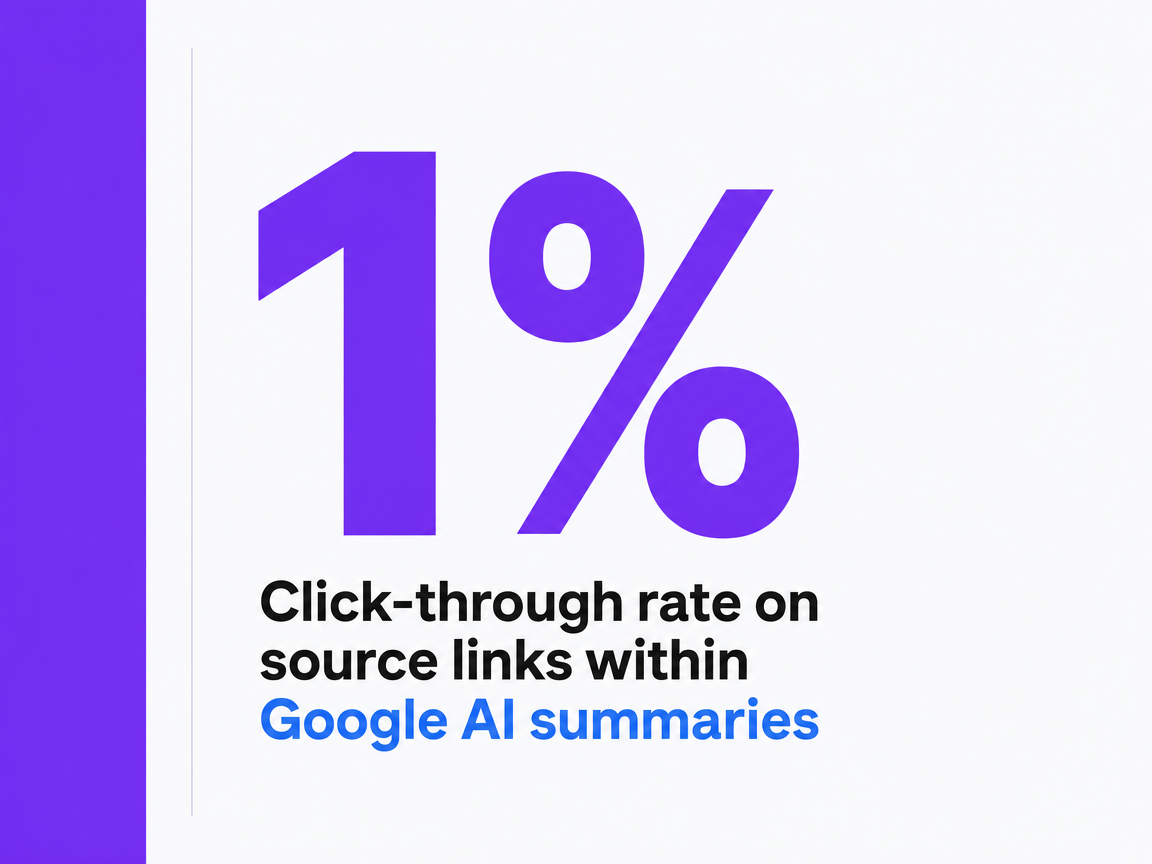 Click-through rate on source links within Google AI summaries
Click-through rate on source links within Google AI summaries
Frequently Asked Questions
References
- 1.Do people click on links in Google AI summaries?.
- 2.Americans have mixed feelings about AI summaries in search results.
- 3.Reinventing marketing workflows with agentic AI | McKinsey.
- 4.Marketing and sales soar with generative AI.
- 5.A marketing organization that thrives with AI | McKinsey.
- 6.The State Of Artificial Intelligence And Machine Learning Adoption In B2B Marketing 2025.
- 7.AI and LLM Tools in Search Marketing, Q4 2025.
- 8.Hướng dẫn của Google Tìm kiếm về nội dung do trí tuệ nhân tạo tạo ra.
- 9.How to demonstrate E-E-A-T in AI-generated content.
- 10.Best LLM SEO Analysis Software for Scalable Client Reporting.
- 11.Best LLM SEO Software for Agencies with Top Features.